

In this article
The visual narrative of fishing often concludes the moment a fish swims away from the boat, kicking into the depths. We watch the splash, feel the satisfaction of the release, and assume the story ends there. However, the physiological reality of that interaction operates on a vastly different, invisible timeline.
As someone who has spent decades on the water, both catching and releasing, I have learned that the “swimming away” moment can be deceptive. This phenomenon, which I call the “Cortisol Clock,” dictates that a catch and release fish’s survival is not determined solely by its ability to leave your hands. It is determined by a complex cascade of neuroendocrine and metabolic adjustments—the physiological stress response—that persist for hours after the encounter.
The fight is not just a battle of wills; it is a quantifiable biological event. Every second of angling duration, every degree of water temperature, and every moment of air exposure debits the animal’s limited survival budget.
What Happens Inside the Fish During the Fight?
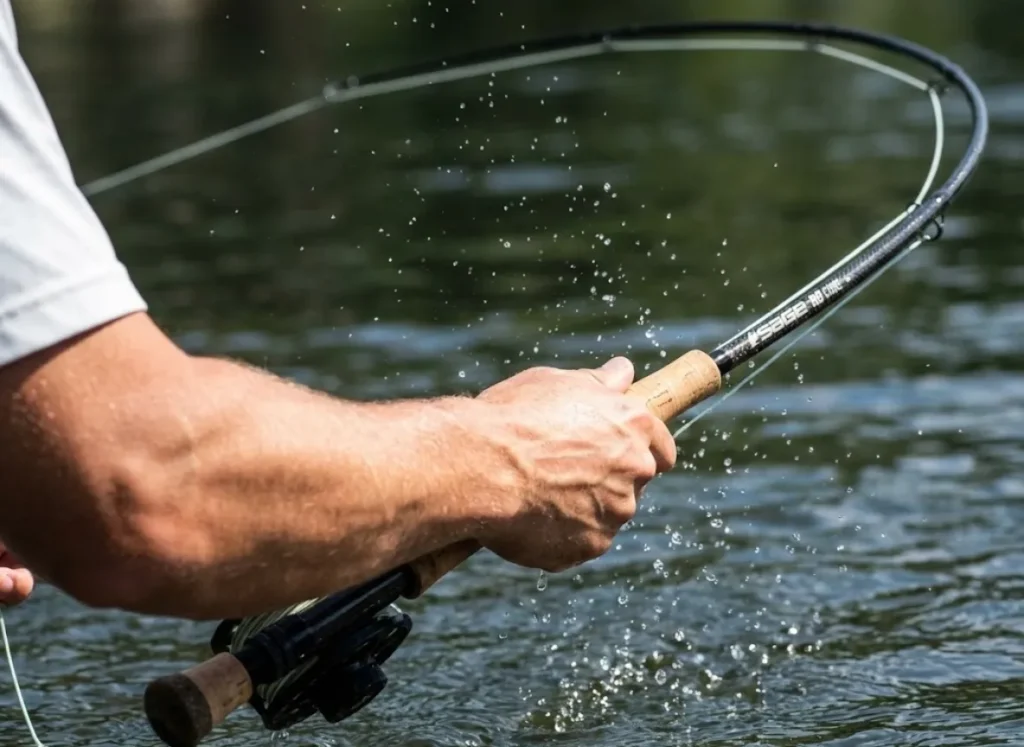
A fish under stress undergoes a massive physiological shift, moving from aerobic efficiency to anaerobic survival mode. This triggers surges of stress hormones and toxic chemical byproducts that peak long after the fish has been released.
How does the HPI Axis drive the stress response?
Unlike mammals, which rely on the HPA axis, teleost fish utilize the Hypothalamus-Pituitary-Interrenal (HPI) axis to mediate stress. When a fish feels the hook and the restriction of the line, the hypothalamus immediately releases Corticotropin-Releasing Factor (CRF). This signals the pituitary to release ACTH, which travels to the head kidney to trigger the synthesis of cortisol.
This process initiates the primary stress response. Before cortisol concentrations spike, the chromaffin tissue releases catecholamines—specifically adrenaline (epinephrine) and noradrenaline. These hormones act as a rapid-response system.
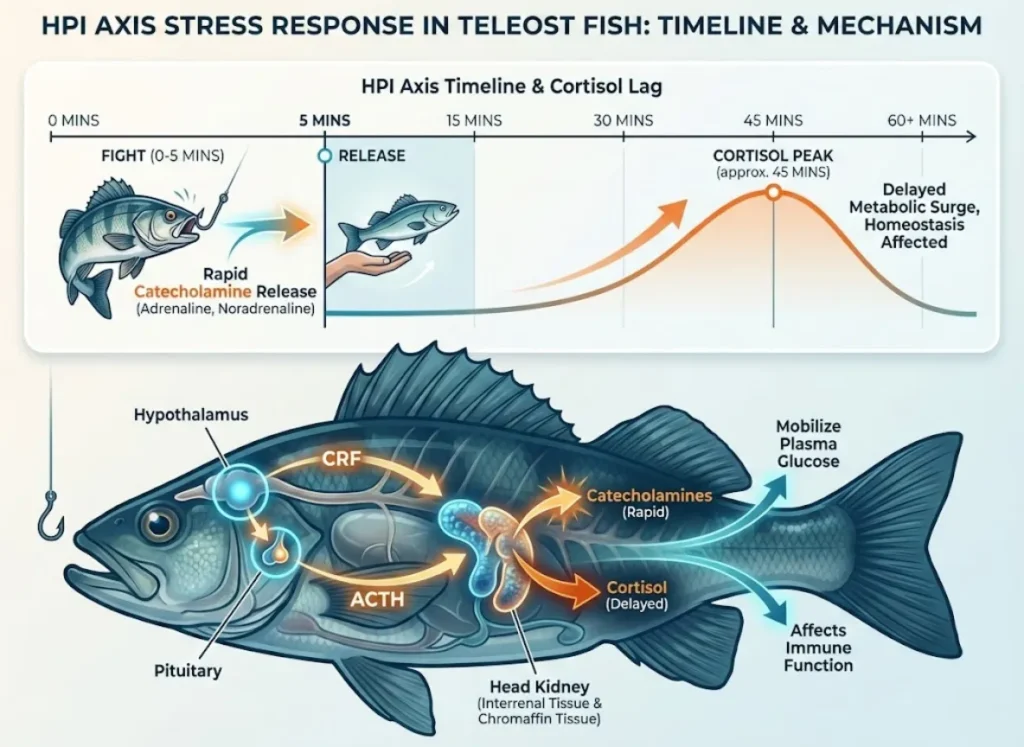
Following this, cortisol is the main glucocorticoid released during stress responses in most fish. It acts as a high-octane fuel injection, mobilizing plasma glucose to power the fish’s fight for freedom. This constitutes the secondary stress response, affecting homeostasis and immune function.
Crucially, this system operates with a distinct latency. Time-course studies on Atlantic salmon metabolites indicate that plasma cortisol levels often do not peak until 30 to 60 minutes after the stressor has ceased. This creates a deceptive window where a fish appears vigorous upon release but faces a debilitating hormonal surge minutes later. Understanding the science of catch & release requires accepting that the fish is still fighting for its life even after it leaves your sight.
Why does muscle activity lead to metabolic acidosis?
The high-intensity bursting required to fight a rod and reel forces the fish to switch from aerobic respiration (red muscle) to anaerobic glycolysis (white muscle). This anaerobic pathway produces ATP without oxygen but generates lactate and protons ($H^+$) as waste products.
While lactic acid itself is often blamed, it is the accumulation of protons that drops blood pH balance, resulting in a condition known as metabolic acidosis. This disruption of the internal chemical environment is a significant anaerobic byproduct of the fight.
This acidification triggers the Bohr and Root effects, where hemoglobin loses both its affinity for and capacity to carry oxygen. Consequently, a fish suffering from severe acidosis is functionally hypoxic—suffocating—even if returned to oxygen-rich water. The physiological effects of brief air exposure compound this, making recovery slow. Unlike mammals, fish process lactate primarily in the liver, meaning it can take 4 to 12 hours to fully clear the metabolic debt.
Which Environmental Factors Accelerate the Clock?
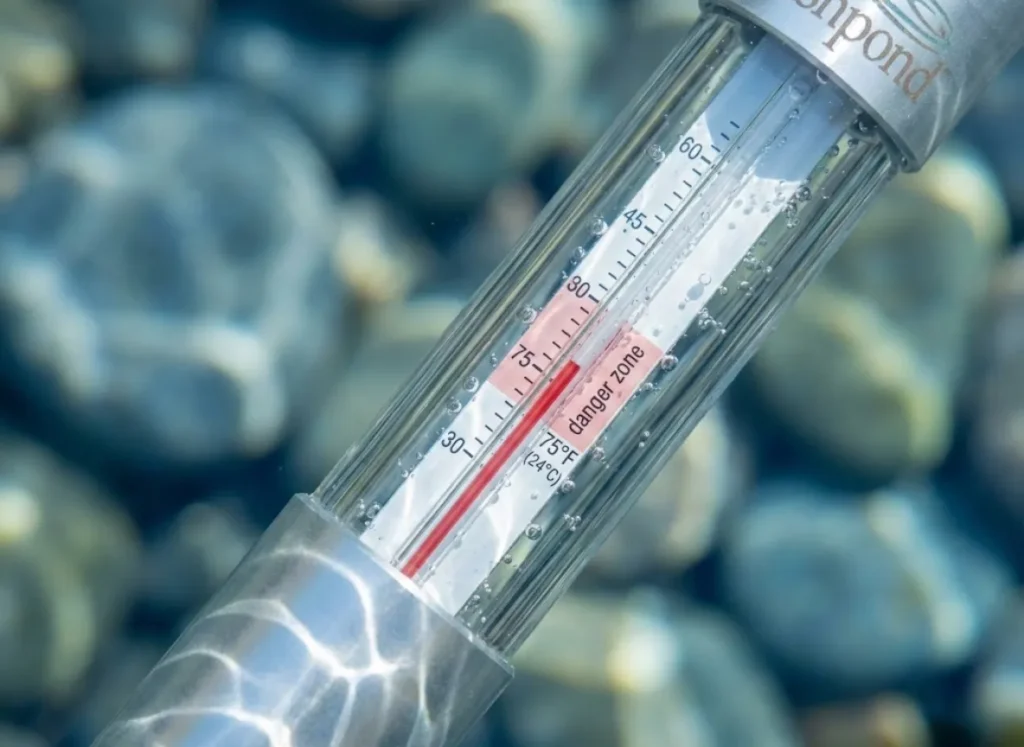
Environmental variables such as temperature, air exposure time, and depth act as “multipliers” to the physiological stress response. These factors often determine the difference between a successful recovery and delayed mortality.
Why is water temperature the master variable?
Fish are poikilotherms, meaning their metabolism increases exponentially as water temperature rises. This creates a “respiratory squeeze.” The fish requires more dissolved oxygen to support its revving metabolism precisely when warmer water holds less oxygen.
For example, the risk of mortality for salmonids like rainbow trout (Oncorhynchus mykiss) and coho salmon increases sharply above a thermal ceiling of 20°C (68°F). Conversely, warm-water species like largemouth bass, bluegill, and yellow perch have higher tolerances but still face a lethal threshold.
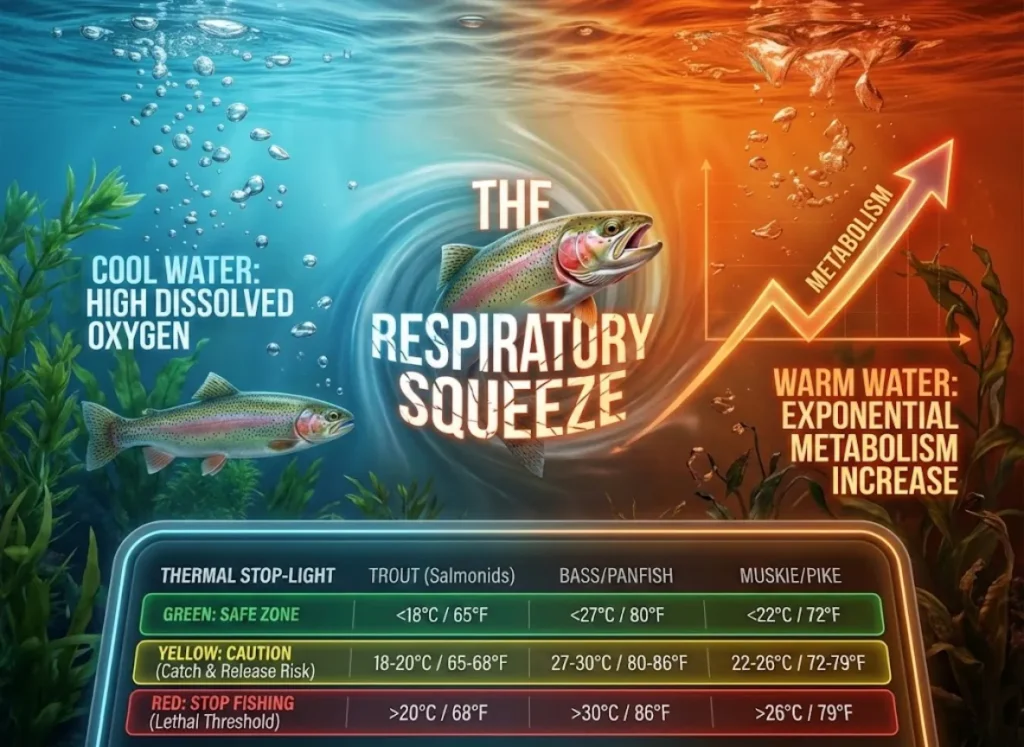
High temperatures exacerbate the toxicity of exercise. The synergistic effect of thermal stress and acidosis often leads to cardiac collapse. Recent data suggests that water temperature at the time of the catch-and-release event is a better predictor of survival than other variables. Anglers must understand the physiological impacts of water temperature to know when to stop fishing entirely.
How quickly does air exposure cause damage?
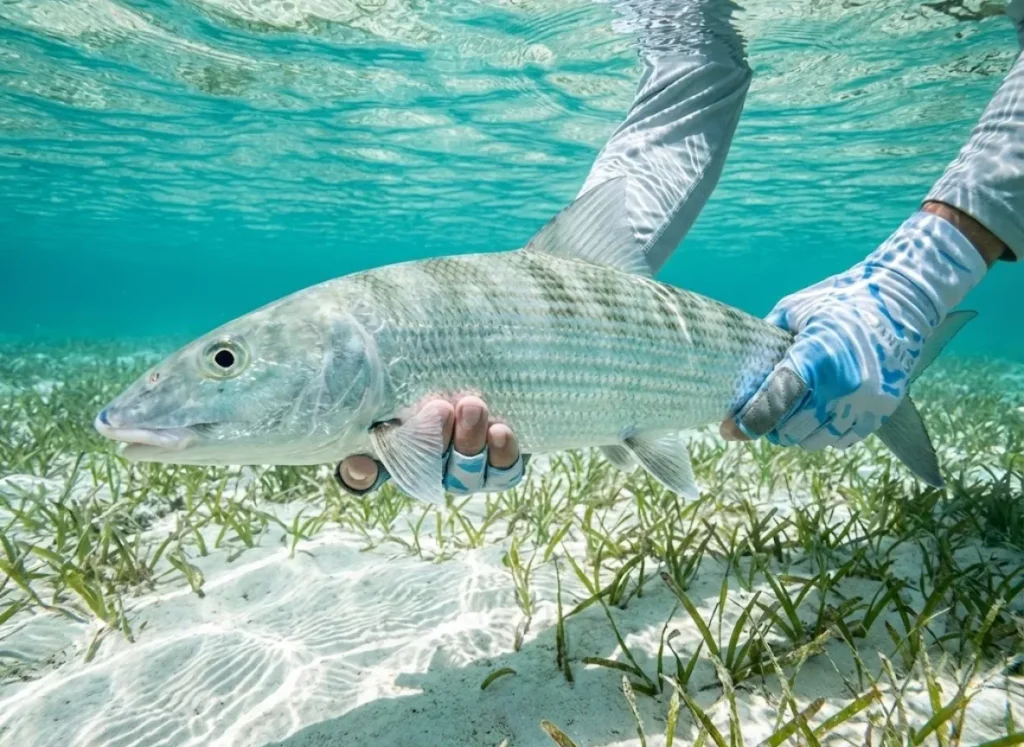
Air exposure is a binary state: in water, water flows over the gills and operculum; in air, the delicate gill lamellae collapse due to surface tension, functionally choking the fish. For high-performance species like trout and bonefish, the “safe zone” is incredibly narrow—often less than 10 to 15 seconds. Exceeding this threshold leads to a loss of equilibrium and reflex impairment.
The damage is multiplicative, not additive. One minute of air exposure can drop survival rates from nearly 90% to below 30% in exercised fish. Additionally, acidosis can cause visual function impairment in fishes, leaving them blind to predators. This is why principles like Keep Fish Wet and holding fish correctly are critical for stress reduction.
Pro-Tip: If you must take a photo, hold your breath the moment you lift the fish out of the water. When you need to breathe, the fish needs to breathe. Put it back immediately.
What is barotrauma and how does depth affect survival?
According to Boyle’s Law, gas volume expands as pressure decreases. Reeling a fish up from depth causes the swim bladder to expand rapidly, a condition known as barotrauma. This manifests as the stomach everting out of the mouth, bulging eyes (exophthalmia), and organ compression. A fish released in this state cannot submerge and will float, susceptible to thermal stress and predation.
Venting requires precision and carries infection risks. Recompression via descending devices is the scientifically preferred method. These devices return the fish to depth, naturally reversing gas expansion. The DESCEND Act requirements and definitions mandate this gear in specific fisheries, acknowledging the physics of swim bladder mechanics.
How Can Anglers Measure and Mitigate Risk?
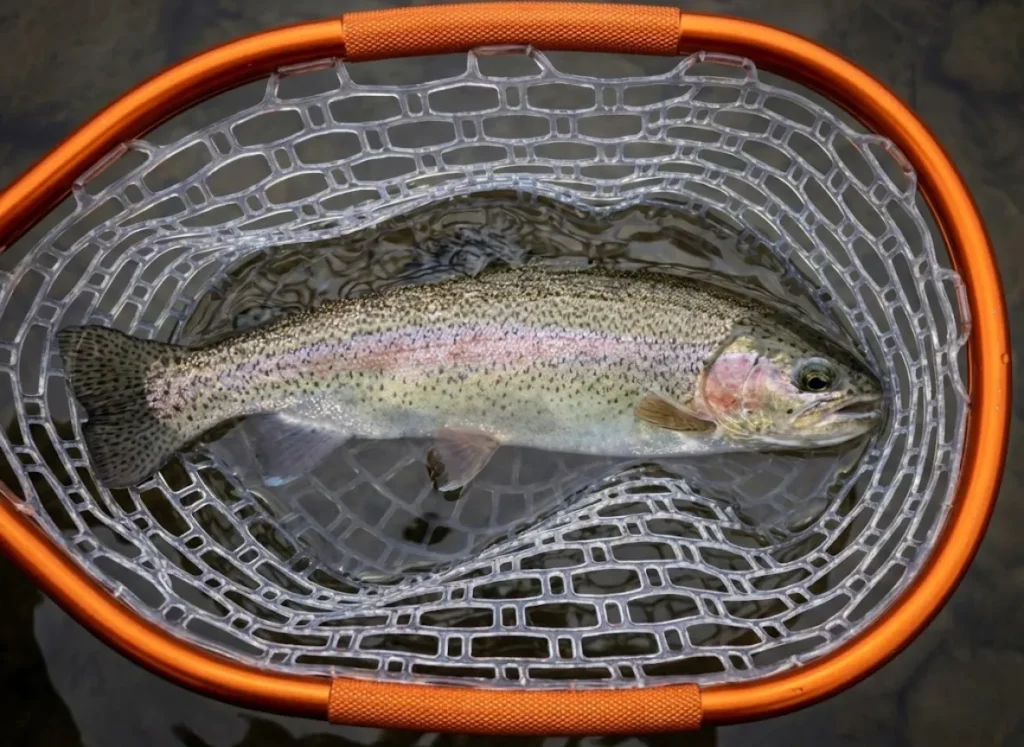
Recognizing the risks is only half the battle. The competent angler must also possess the tools and frameworks to assess the fish’s condition in real-time and mitigate invisible damage.
What is the RAMP framework for assessing vitality?
RAMP (Reflex Action Mortality Predictors) allows anglers to check “vital signs” by observing specific reflexes before release. Key reflexes include the Tail Grab (does the fish try to burst away?), the Righting Reflex (does it flip upright in 3-5 seconds?), and the Vestibulo-Ocular Reflex (do the eyes stabilize when the fish is rolled?).
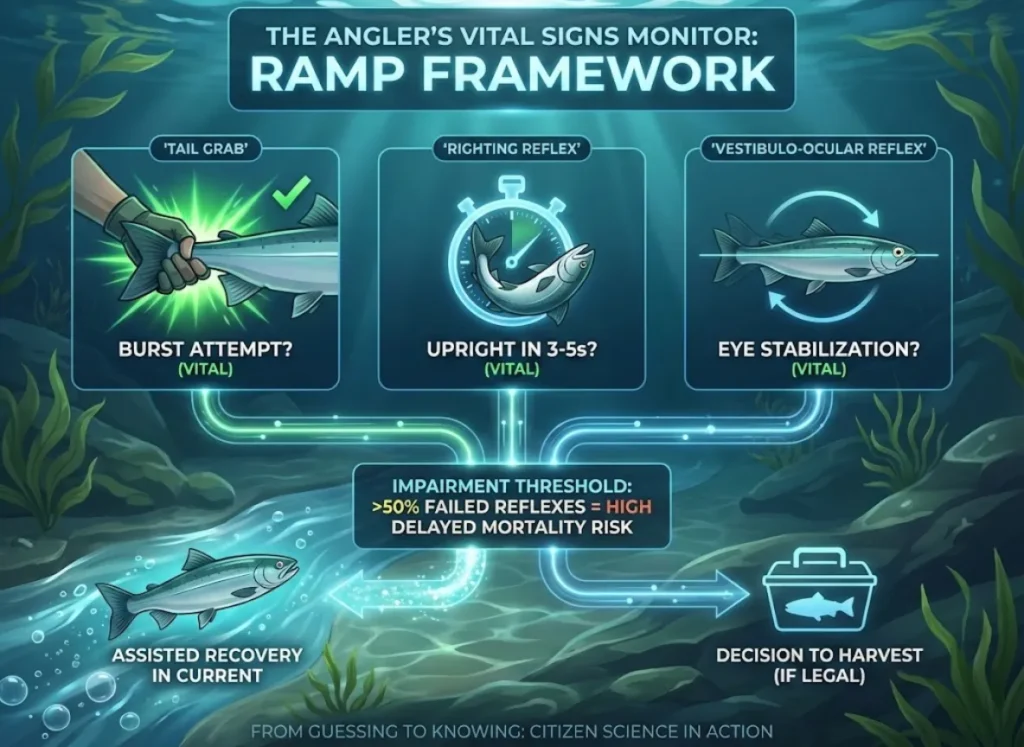
A fish exhibiting impairment in more than 50% of these reflexes has a high probability of delayed mortality. Using reflex action mortality predictors moves us from guessing to knowing. If a fish fails the test, it requires assisted recovery in current or a decision to harvest if legal. This approach turns anglers into citizen scientists observing behavioral responses to stress.
How does gear selection influence the outcome?
Knotted nylon nets act as abrasives, stripping the protective mucus layer and causing fin necrosis. Rubber or coated knotless mesh is the gold standard for reducing injury and preserving skin-mucus cortisol barriers. A landing net mesh type injury study confirms that gear choice is a primary driver of physical damage.
Using heavier tippet allows anglers to land fish faster, improving the recovery-to-fight ratio. Barbless hooks significantly reduce handling time, which directly correlates to reduced air exposure. Understanding barbless hooks physics reveals that they penetrate easier and exit cleaner. Finally, tools like the SeaQualizer allow for release without touching the fish, preserving the slime coat and minimizing handling stress.
Do Different Species React Differently to Stress?
A “one size fits all” approach does not work in conservation. Different species, from channel catfish to Atlantic salmon, have unique physiological engines that dictate how they handle the stress of the fight.
Why are trout and bonefish so vulnerable to handling?
Bonefish and tuna are sprinters, possessing a high density of white muscle fibers for explosive speed. This makes them prone to rapid lactate buildup. Because they burn fuel reserves instantly, post-release equilibrium loss makes them highly susceptible to predation. Studies on post-release mortality of bonefish show that even short air exposure can be a death sentence in shark-rich waters.
Trout are cold-water specialists. Their enzyme activity denatures at temperatures that warm-water fish tolerate easily. They are also prone to Saprolegnia infections if their mucus is compromised. Reviewing strategic rainbow trout facts helps anglers understand why wet hands are mandatory for these fragile species compared to hardier cyprinid fish or Cyprinus carpio (carp).
How do hard-fighting muskie and tarpon handle exhaustion?
Muskie, the apex predators, have poor tolerance for warm water due to their massive oxygen demand. Delayed mortality is common, making release tools like large nets and bolt cutters critical to minimize fight duration. Understanding the science of catching musky involves knowing when the water is simply too hot to fish for them safely.
Tarpon possess a vascularized swim bladder allowing them to breathe air, but the stress of the fight can suppress this behavior. Large tarpon should never be lifted vertically; their internal anatomy lacks skeletal support out of water. For striped bass, impacts of catch and release on striped bass show that high temperature combined with low salinity creates a lethal “osmo-thermal” stress.
Pro-Tip: When reviving a large fish like a tarpon or muskie, do not move it back and forth. This acts like a valve, closing the gills on the backward stroke. Move the boat forward slowly or hold the fish facing into the current.
The Steward’s Responsibility
The transition from a consumer of resources to a steward requires a shift in perspective. It demands looking beyond the splash of the release to the invisible physiological processes ticking away inside the fish. The “Cortisol Clock” is a biological reality governed by hormone kinetics, blood pH, and thermodynamics.
By adopting the RAMP framework, utilizing fish-friendly gear, and adhering to thermal thresholds, we ensure that the release is as successful as the catch. The future of sustainable angling depends on the survival of the fish, determined in the invisible minutes after it leaves the angler’s hands.
- The Lag is Real: A vigorous release does not guarantee survival; plasma cortisol peaks 30-60 minutes post-fight.
- Air Kills: Keep air exposure under 10 seconds to prevent gill collapse.
- Temp Matters: Carry a thermometer and respect the 68-degree rule for trout.
- Check Reflexes: Use RAMP to objectively assess vitality before letting the fish go.
Upgrade your conservation kit today—start with a rubber net and a stream thermometer.
FAQ – Frequently Asked Questions
How long does it take for a fish to recover from cortisol stress?
Full physiological recovery, including the clearance of lactate and restoration of blood pH balance, typically takes 4 to 12 hours. Research by Cooke et al and Meka & McCormick suggests that while the fish may swim away sooner, it remains metabolically compromised and vulnerable to predators during this window.
Does touching a fish with dry hands really hurt it?
Yes. Dry hands, towels, and fabric gloves strip the protective mucus layer (slime coat) that serves as the fish’s immune barrier. This disruption leads to osmotic stress and leaves the fish highly susceptible to fungal infections like Saprolegnia and bacterial lesions.
What is the 68-degree rule for trout fishing?
Promoted by organizations like Trout Unlimited, the 68-degree rule suggests that anglers should stop fishing for trout when water temperatures exceed 68°F (20°C). Above this threshold, the combination of anaerobic exercise and low dissolved oxygen drastically increases the risk of delayed mortality.
Can a fish survive if it bleeds from the gills?
Survival chances are very low. Gill filaments are highly vascularized and difficult to clot, meaning significant bleeding often leads to fatal blood loss. If legal in your jurisdiction (check MyFWC or local regulations), it is often more ethical to harvest a gill-bleeding fish than to release it to a slow death.
Risk Disclaimer: Fishing, boating, and all related outdoor activities involve inherent risks that
can lead to injury. The information provided on Master Fishing Mag is for educational and informational purposes
only. While we strive for accuracy, the information, techniques, and advice on gear and safety are not a substitute
for your own best judgment, local knowledge, and adherence to official regulations. Fishing regulations, including
seasons, size limits, and species restrictions, change frequently and vary by location. Always consult the latest
official regulations from your local fish and wildlife agency before heading out. Proper handling of hooks, knives,
and other sharp equipment is essential for safety. Furthermore, be aware of local fish consumption advisories. By
using this website, you agree that you are solely responsible for your own safety and for complying with all
applicable laws. Any reliance you place on our content is strictly at your own risk. Master Fishing Mag and its
authors will not be held liable for any injury, damage, or loss sustained in connection with the use of the
information herein.
Affiliate Disclosure: We are a participant in the Amazon Services LLC Associates Program, an
affiliate advertising program designed to provide a means for us to earn advertising fees by advertising and linking
to Amazon.com. As an Amazon Associate, we earn from qualifying purchases. We also participate in other affiliate
programs and may receive a commission on products purchased through our links, at no extra cost to you. Additional
terms are found in the terms of service.