
In this article
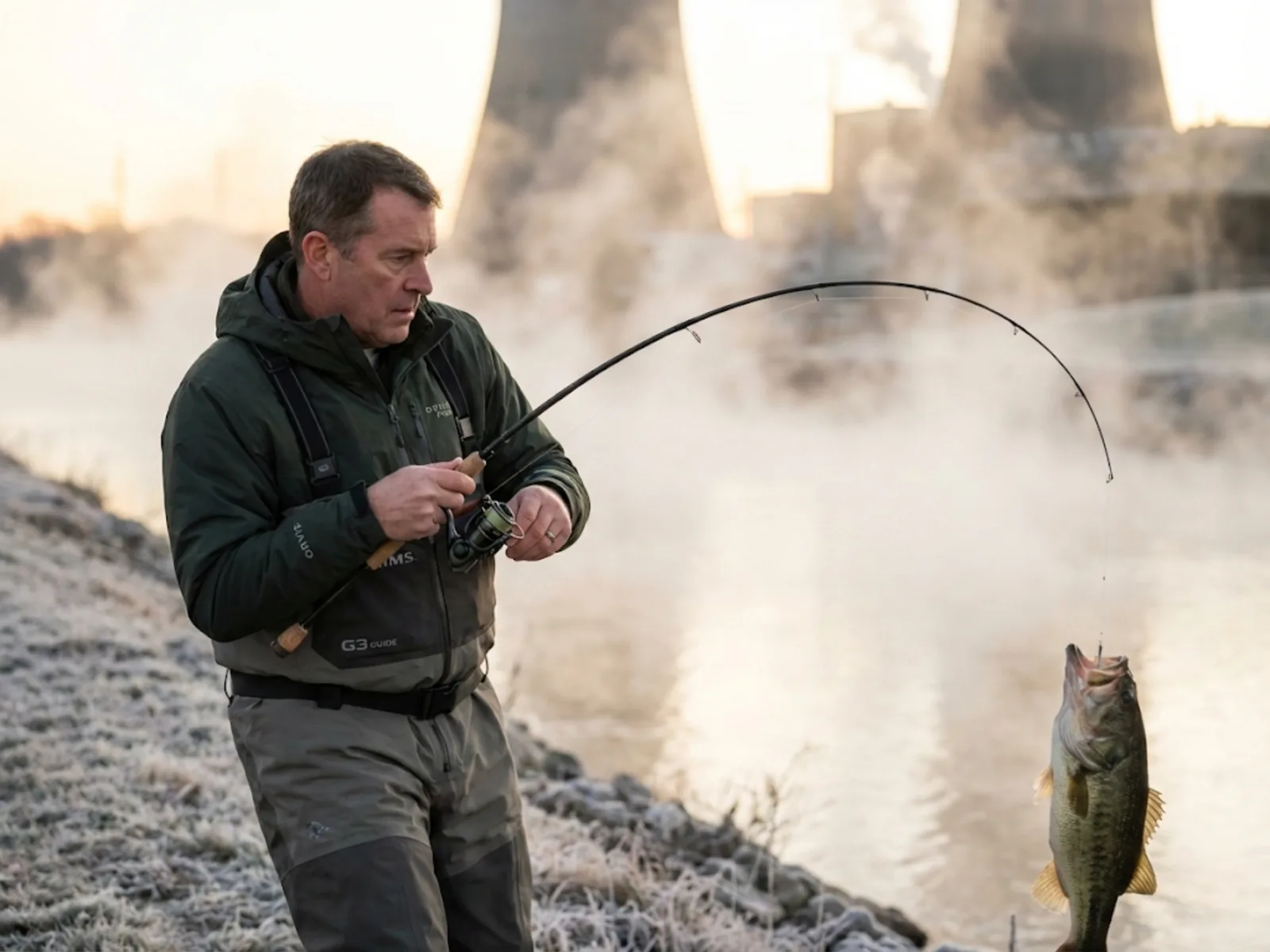
The steam was still rising off the water at sunrise. My thermometer read 62°F while frost crunched underfoot on the bank. Three casts later, a fat largemouth crushed my lipless crankbait like it was mid-May. Outside this thermal plume, every other lake in a 200-mile radius sat frozen solid.
After fifteen years chasing warm water discharges through Illinois, Tennessee, and the Carolinas, I’ve learned one thing: while everyone else hangs up their rods for winter, these industrial hot spots keep producing. You just need to know where to look and how to fish them.
This guide breaks down exactly why discharge fishing works, where to find the best locations, species-specific tactics, and the safety protocols you need to fish these waters responsibly.
⚡ Quick Answer: Warm water discharges from power plants create artificial spring conditions in winter, heating water 15-40°F above the surrounding lake. Fish stack up in these thermal refuges because their metabolism stays elevated, forcing them to feed actively. Target the mixing zones where warm and cold water meet, use lipless crankbaits and jigs mimicking dying shad, and always respect security buoy lines near nuclear facilities.
The Science That Makes Hot Holes Work
How Power Plants Heat Your Fishing Spot
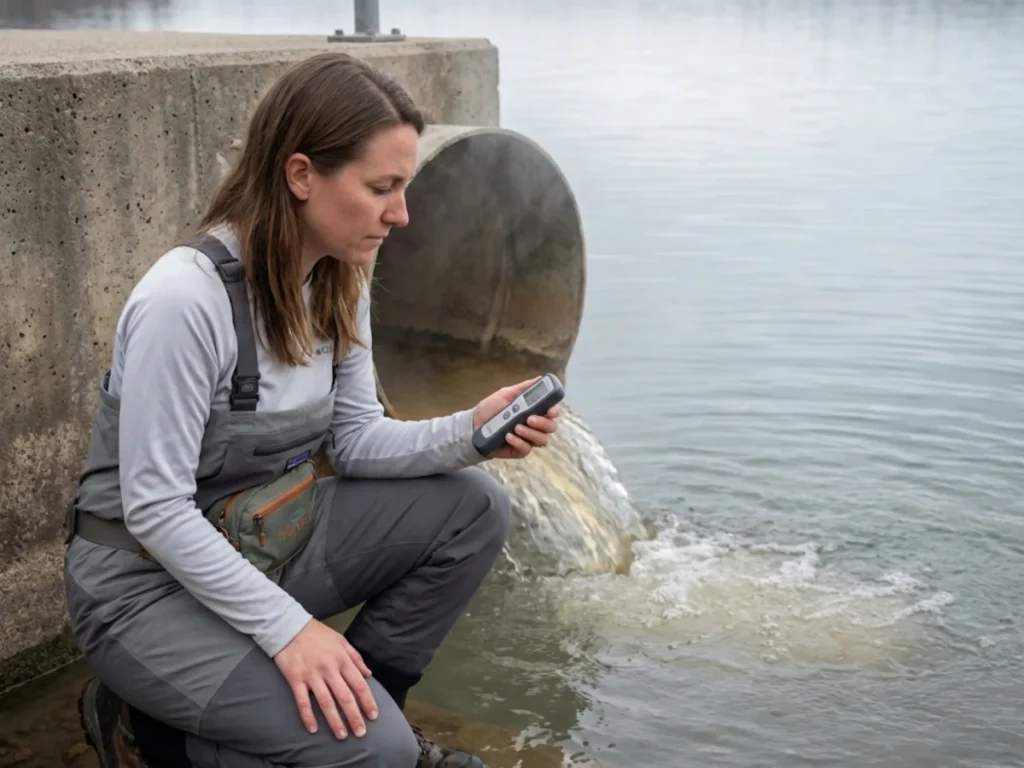
Power plants are fishing machines—they just don’t know it. The Rankine cycle that generates electricity requires massive amounts of cooling water. Older plants with “once-through” cooling systems draw lake water through condensers, heat it by 15-40°F, and discharge it directly back into the lake. That’s your thermal refuge.
The key number is Delta T—the temperature differential between the discharge and the main lake. On a brutal January day when the lake sits at 35°F, the discharge zone might hit 60°F or higher. Modern cooling towers dissipate heat into the air instead, making those plants less productive for fishing.
Pro tip: The coldest days produce the hottest fishing. When your furnace runs nonstop, so does the power plant—maximum generation means maximum discharge flow.
You can see the sweet spot from across the lake. Steam rising from the water tells you the plant is generating. The warm water floats on top of the cold (because it’s less dense), spreading outward in a wedge pattern. Fish stack up along this thermal stratification layer, and understanding this structure is essential for interpreting thermal patterns on your sonar.
Why Fish Stack Up at Discharges
Bass, crappie, and catfish are cold-blooded. Their internal engines run as hot or cold as their environment. At 35°F, a largemouth’s digestive enzymes work so slowly that a single meal might take a week to process. At 60°F, that same meal clears in hours.
The result? Fish in the discharge zone aren’t just willing to eat—they’re compelled to. Their elevated metabolism demands fuel. This is especially critical for Florida-strain largemouth bass in the Southeast, which have genetic cold intolerance and may only remain active near discharges during severe cold snaps.
Fish here also grow faster than their main-lake counterparts. The year-round warmth acts like a growing season accelerator, producing heavier fish with longer feeding windows. Understanding how water temperature controls fish metabolism explains why these spots produce when nothing else does.
The Shad Kill: Nature’s Winter Buffet
Threadfin shad are the key to the whole system. These tropical-origin baitfish can’t handle cold water—temperatures below 45°F stress them, and anything below 42°F is often lethal. When winter hits, the entire lake’s shad population migrates toward the discharge arm for survival.
But the mixing zone is a death trap. Shad that wander into the boundary where warm meets cold experience cold shock. They flutter erratically, their muscles spasming as thermal gradients scramble their nervous system. This dying flutter is exactly what predators are hunting.
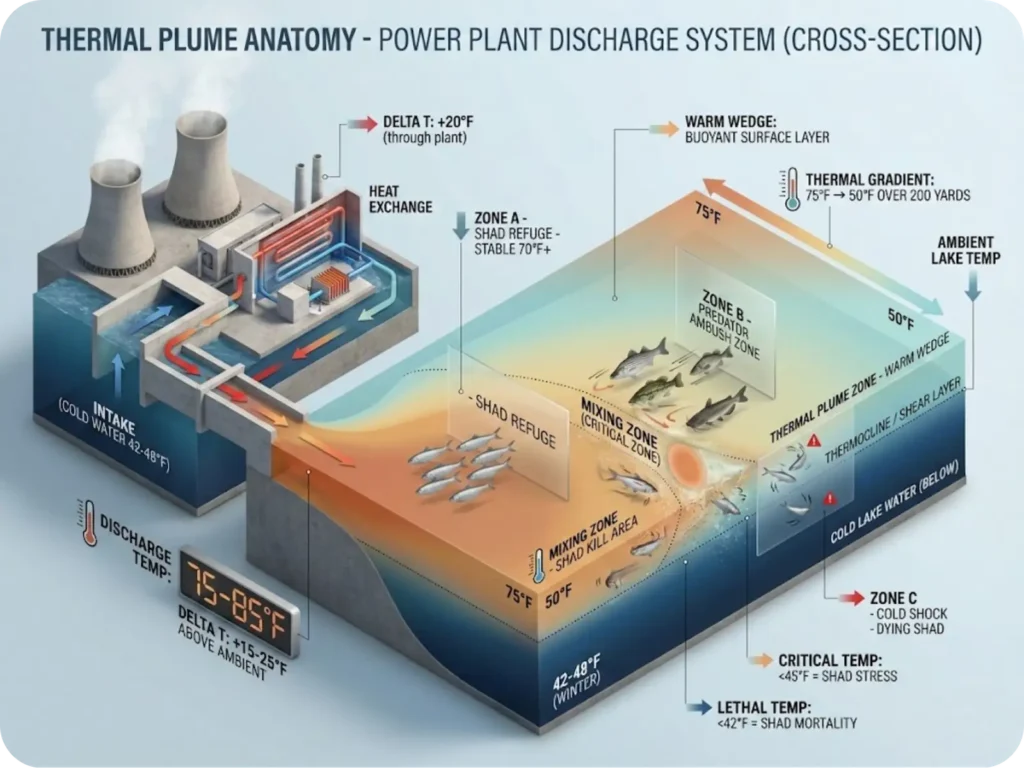
Stripers, bass, catfish, and hybrids patrol these mixing zones specifically to scavenge stunned baitfish. When you see shad flickering at the surface—struggling rather than schooling—you’ve found the kill zone. This dynamic connects directly to how shad behavior patterns trigger predator feeding throughout the year.
Reading the Invisible River: Current Dynamics
Finding the Seams and Eddies
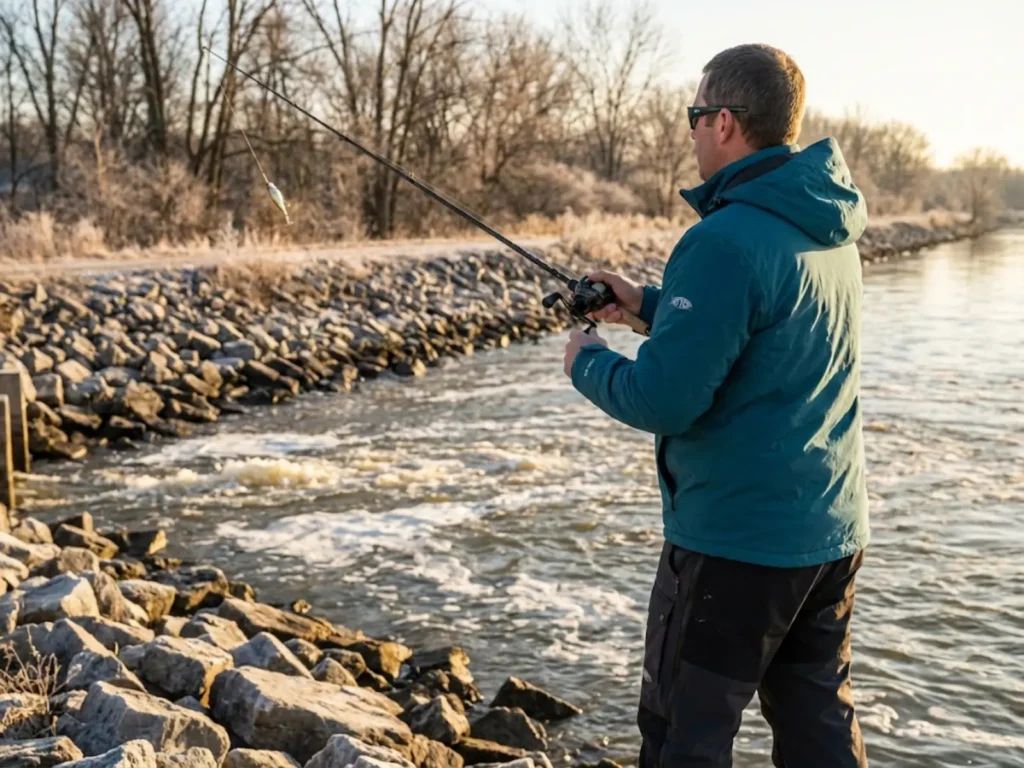
The discharge creates its own river system within the lake. Hot water jets out of the pipes, but gamefish don’t hold in the strongest flow—it wastes too much energy. They position themselves in ambush zones where they can rest and strike.
Eddies form behind rocks, pilings, and points. The water curls back on itself, creating reverse-current pockets where fish face “downstream” even though they’re technically upstream of the discharge. Current seams are visible as foam lines where fast water meets slack. Predators patrol this edge because dying shad drift right into their strike zone.
Cast upstream into the fast water and let your lure drift naturally across the current seam boundaries. A lipless crankbait ripped through the plume and fluttered down across the seam perfectly mimics a shad hitting cold water and shutting down.
The Scour Hole: Catfish Headquarters
The force of discharge water often carves a depression directly downstream of the pipes—the scour hole. This is typically the deepest point nearby and acts as a collection bowl for dying and dead shad washing out of the plume.
Blue catfish and channel cats dominate this position, sitting in the depression while current passes overhead. Stripers also stage here during inactive periods before moving shallow to feed. If you’re targeting cats at discharge areas, the scour hole is your primary location.
Pro tip: Fresh dead shad works better than frozen. Discharge catfish are keyed into the scent signature of shad dying right now—not something that’s been crystallized for weeks.
Use heavy weights (3-4 oz minimum) to keep baits pinned in the scour hole. Lighter rigs get swept away by the current before they can fish effectively.
Using Your Electronics in Turbulence
The density difference between warm discharge and cold lake water creates a visible “line” or haze on 2D sonar—this IS the mixing zone. Fish often suspend directly on this thermal interface, and recognizing it on your screen is a critical skill.
Bubbles and turbulence create “noise” on your display. Reduce sensitivity or activate surface clutter reduction to see through the interference. Side imaging works better than down imaging in heavy current, helping you identify structural ambush points like rip-rap and pilings. Once you learn how to interpret interference on your fish finder, you’ll read discharge zones like a map.
Mark GPS coordinates of thermal boundaries as you find them. They shift as generation levels change, but knowing yesterday’s hot zone gets you in the ballpark.
Where to Find Hot Holes: Region-by-Region Database
Midwest: The Frozen Belt’s Hidden Gems
The Midwest has the most dramatic contrast—frozen tundra lakes with steam rising from power plant discharge arms.
Clinton Lake, IL features a “Cooling Loop” creating miles of thermal gradient from the Clinton Nuclear plant. Famous for winter crappie and hybrid stripers. Security is tight near the plant, but the outflow arm is public and productive. Understanding crappie temperature triggers and staging patterns helps you locate concentrations.
Newton Lake, IL near the Newton Power Station is known as the “bassin’ factory.” Water hits 70°F even during snowstorms. Topwater fishing in January is genuinely possible here.
Powerton Lake, IL offers excellent multispecies action with open water year-round when other frozen lakes are locked up.
Southeast: The Duke Energy Corridor
Duke Energy dominates the Carolinas, and their plants create some of the best winter fisheries in the region.
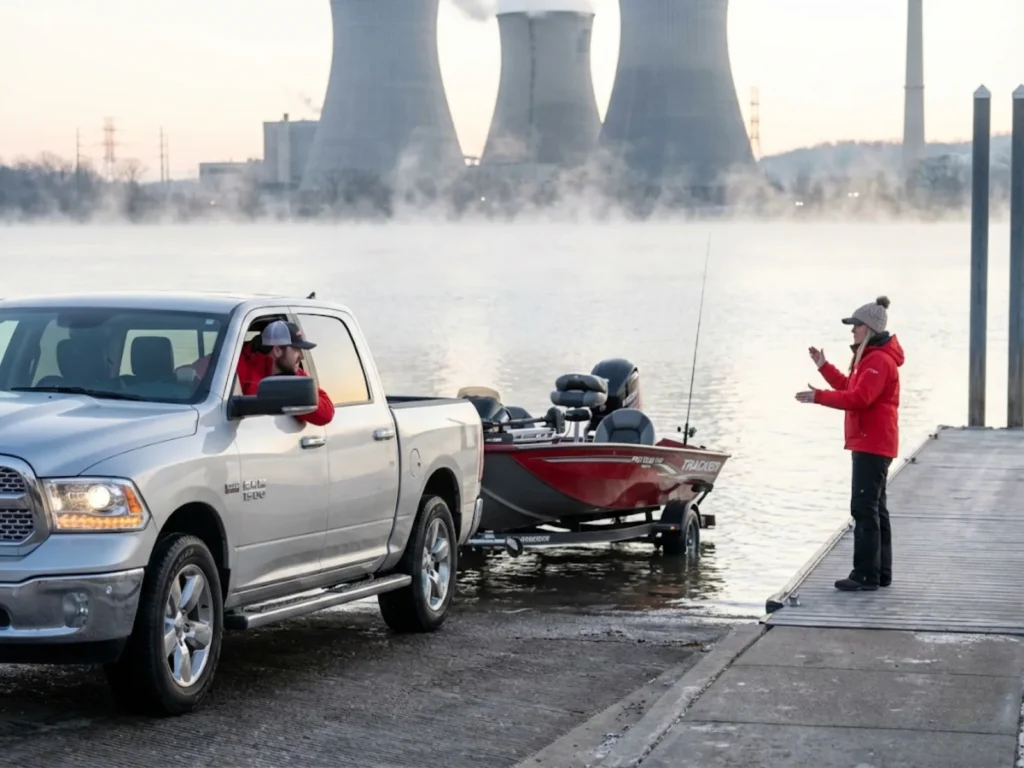
Lake Norman, NC has two major discharges. Marshall Steam Station off Hwy 150 is known locally as “The Hot Hole” and features a free public fishing pier with bank access. McGuire Nuclear warms the lower lake—access via Blythe Landing, but respect the strict buoy lines.
Belews Lake, NC offers clear water with a massive discharge tube creating 10°F+ temperature rises. Big bass concentrate here January through February.
Lake Wylie, SC at Allen Steam Station has dingy water and current that favor spinnerbaits and vibrating jigs. Bank access at South Point.
Old Hickory, TN near Gallatin Steam Plant is a premier trophy striper fishery. “The Boil” attracts massive bait schools, with 40-pound stripers possible. Understanding striped bass biology and thermal preferences helps you target these giants.
Texas: The Power Plant Circuit
Texas power plant lakes run warm year-round, extending the growing season.
Fayette County Reservoir is a cooling pond maintaining stable warm temps all year—one of Texas’s best bass lakes due to 365-day growing season.
Lake Calaveras and Braunig near San Antonio have unique freshwater Red Drum populations stocked by TPWD. The “Crappie Wall” area near the discharge produces redfish, hybrids, and catfish.
Pro tip: In Texas, tilapia are classified as invasive. If caught, they MUST be gutted or beheaded immediately—returning them alive is illegal.
Understanding Texas trophy bass tactics and Florida-strain genetics applies directly to these warm power plant fisheries.
East Coast: Saltwater/Brackish Discharges
Calvert Cliffs, MD on Chesapeake Bay pumps 1-2 million gallons per minute. The spot known as “The Rips” holds incredible striper concentrations. Boats allowed in the eastern outflow; shore fishing prohibited.
Millstone Nuclear, CT on Long Island Sound—”The Waterford Discharge”—holds winter holdover stripers. Boats allowed, shore closed.
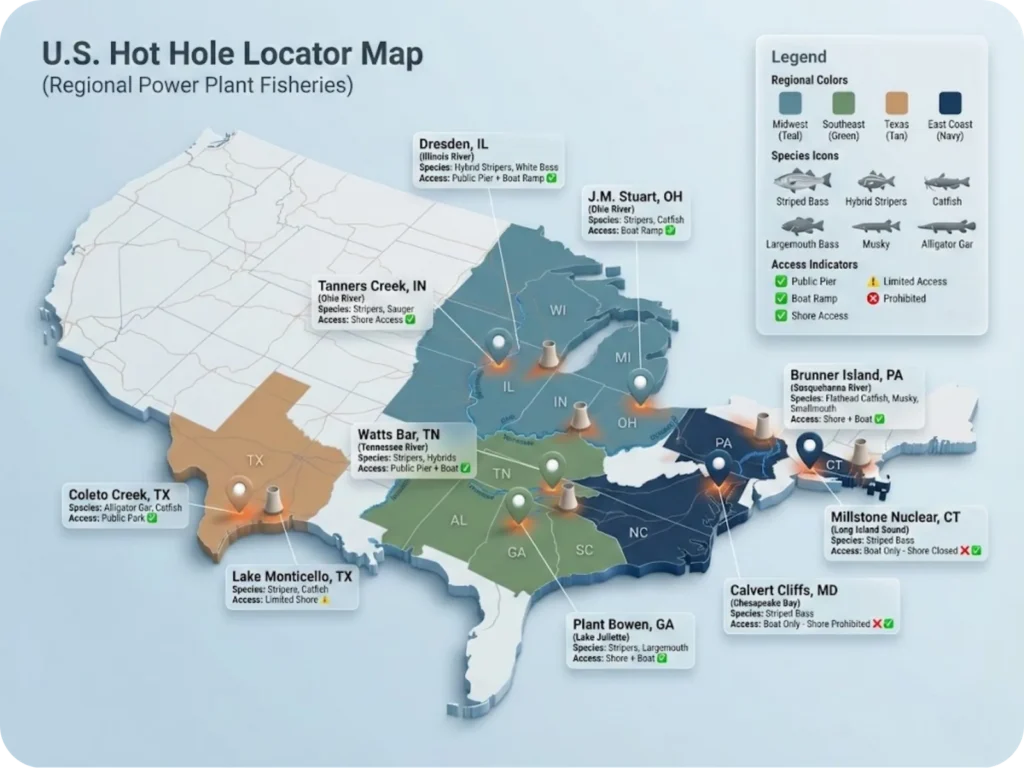
Brunner Island, PA on the Susquehanna attracts flathead catfish and musky. Winter smallmouth fishing stays productive. These landlocked striper behavior patterns translate to many East Coast discharge fisheries.
Species-Specific Tactics for Discharge Fishing
Bass: The Lipless Crankbait Game
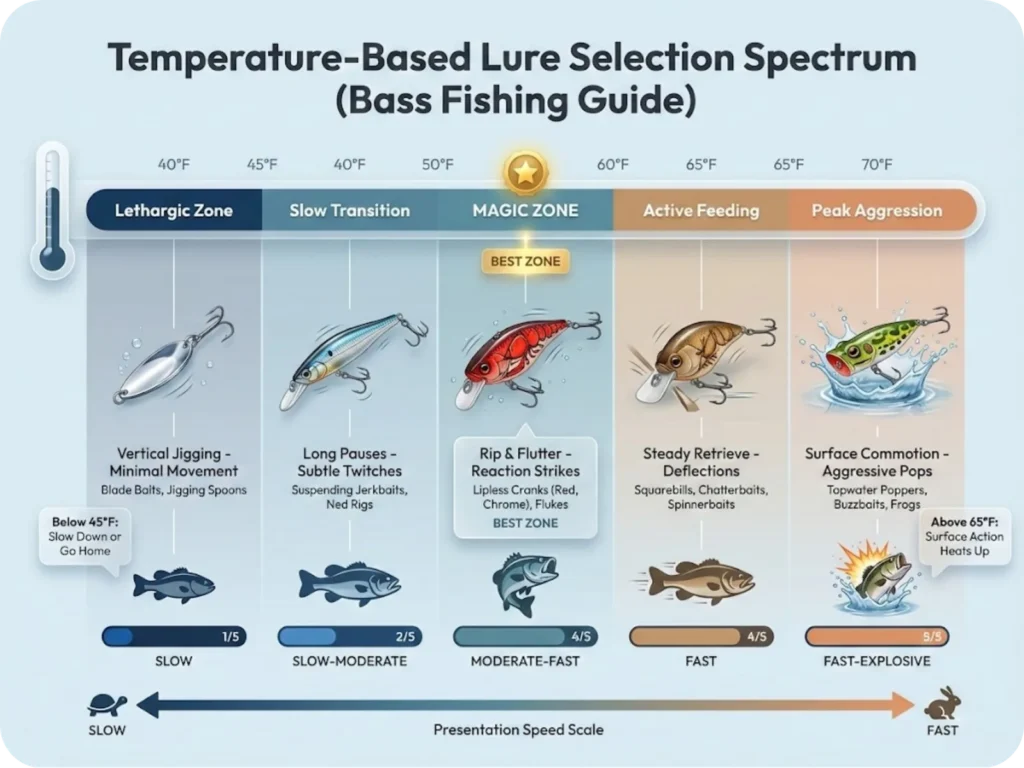
The magic temperature zone sits between 50-60°F. Above 50°F, bass chase moving baits aggressively. Below 45°F, they go lethargic and want slower presentations.
Lipless crankbaits are the primary search tool. Red, Crawfish, or Chrome patterns match the dying shad profile. Rip them through the current, let them flutter down across seams. That wobbling fall triggers reaction strikes from bass conditioned to grab struggling baitfish.
Dead-sticking flukes also produces. Drift a weightless soft jerkbait with the current, letting the flow provide all the action. Minimal rod work—just maintain tension and watch your line.
Focus on rip-rap shorelines where current hits structure. These rocks absorb both solar heat AND plume warmth—a dual warming effect that concentrates baitfish and the bass hunting them. Learning about bass temperature transition patterns helps you predict where fish stage at different temperatures.
Crappie: The Slider Do-Nothing Technique
Crappie school tightly in eddies ADJACENT to main flow, not in the heavy current itself. They often suspend 10-20 feet over brush or drop-offs at the plume edge.
Spider-rigging—slow trolling multiple rods along the current edge—is deadly at places like Clinton Lake. The Charlie Brewer Slider technique dominates: 1/16 oz jigheads with small grubs, steady “do nothing” retrieve.
Winter crappie are active but unwilling to chase erratic baits. Slow and steady wins. Understanding crappie feeding mechanics and physiology explains why finesse outperforms power.
Catfish: Scavenging the Shad Kill
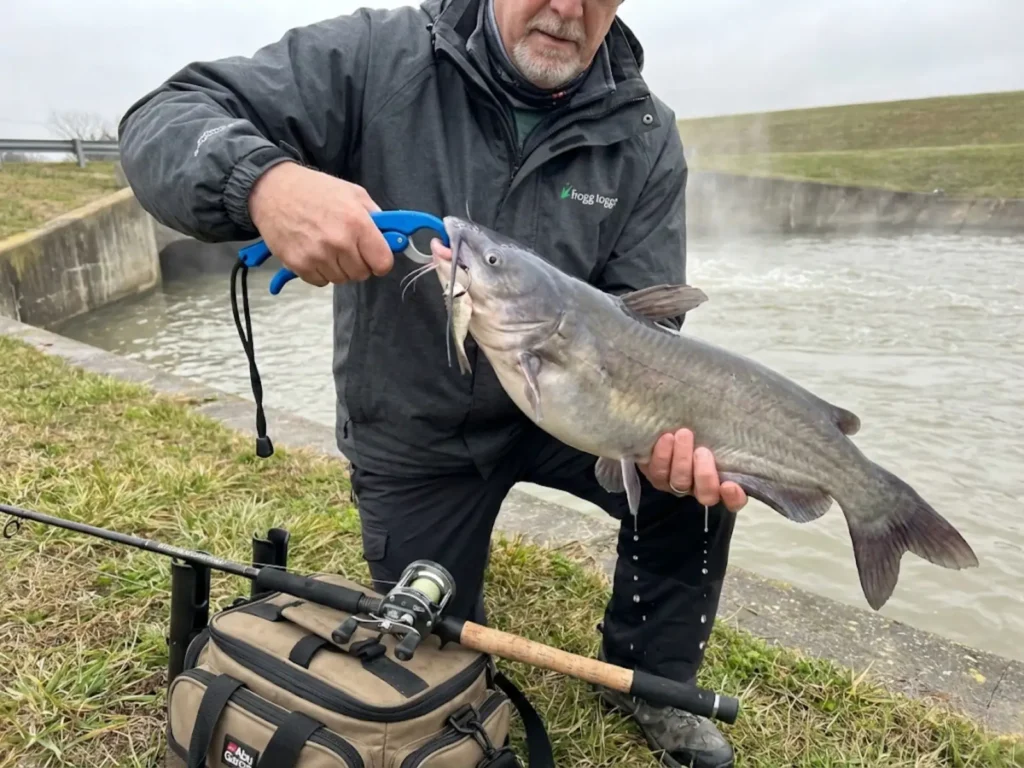
Blue and channel catfish stay active all winter in discharge plumes. Flatheads go dormant unless water exceeds 60°F.
Primary location: the scour hole and deep channels downstream of pipes—anywhere dying shad collect. Fresh cut shad or skipjack is essential. NOT frozen. The bite profile must match “fresh dead” shad from cold shock. Understanding why blue catfish reject stale bait explains the chemistry behind this preference.
Use 3-4 oz weights minimum to hold bottom in heavy current. Drifting through the plume is effective, but anchoring in current requires extreme caution.
Stripers and Hybrids: Current Kings
Stripers and hybrids are the most current-tolerant species—they’ll hunt directly in “the boil.” They herd shad against the surface, creating visible topwater blowups even in winter.
Watch for seagulls. Diving birds are a better fish finder than electronics—gulls working stunned shad means stripers or hybrids are underneath.
Bucktail jigs and large swimbaits ripped through the boil work when fish are aggressive. When water exceeds 60°F, topwater pencil poppers produce explosive surface strikes—in January.
Balloon rigs suspend live shad at the exact depth of the warm water wedge for trophy specimens. Understanding striped bass hunting behavior and lateral line sensitivity helps you trigger strikes from educated fish.
Safety, Security, and Stewardship
Post-9/11 Exclusion Zones
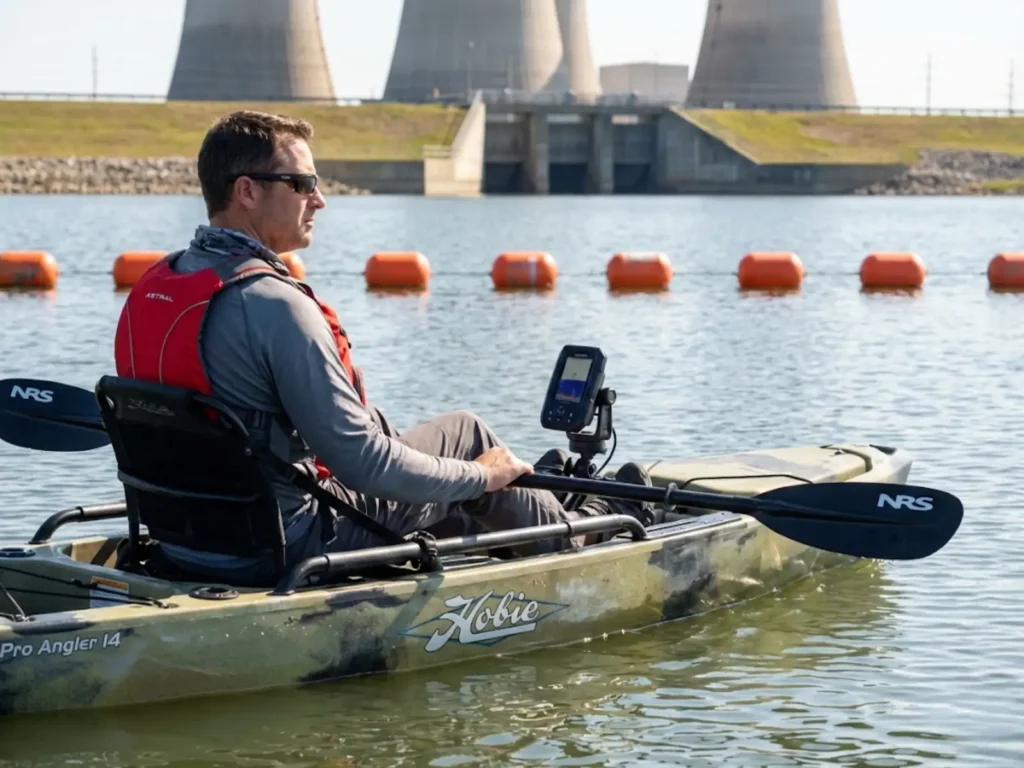
Federal regulations (CFR Title 33) established security zones around nuclear and critical infrastructure. Crossing buoy lines can result in federal charges, fines, and boat seizure.
Photography of plant infrastructure—intakes, cooling towers, security features—is often prohibited. Don’t test this.
Here’s the good news: you don’t need to fish the fence. The thermal plume extends well beyond restricted zones, and the best fishing often happens at the mixing boundaries, not the discharge point itself. Fish the water, not the fence.
Always verify current access status before traveling. Rules change, plants decommission, and a three-hour drive to a closed fishery is a bad day.
Hypothermia and Current Hazards
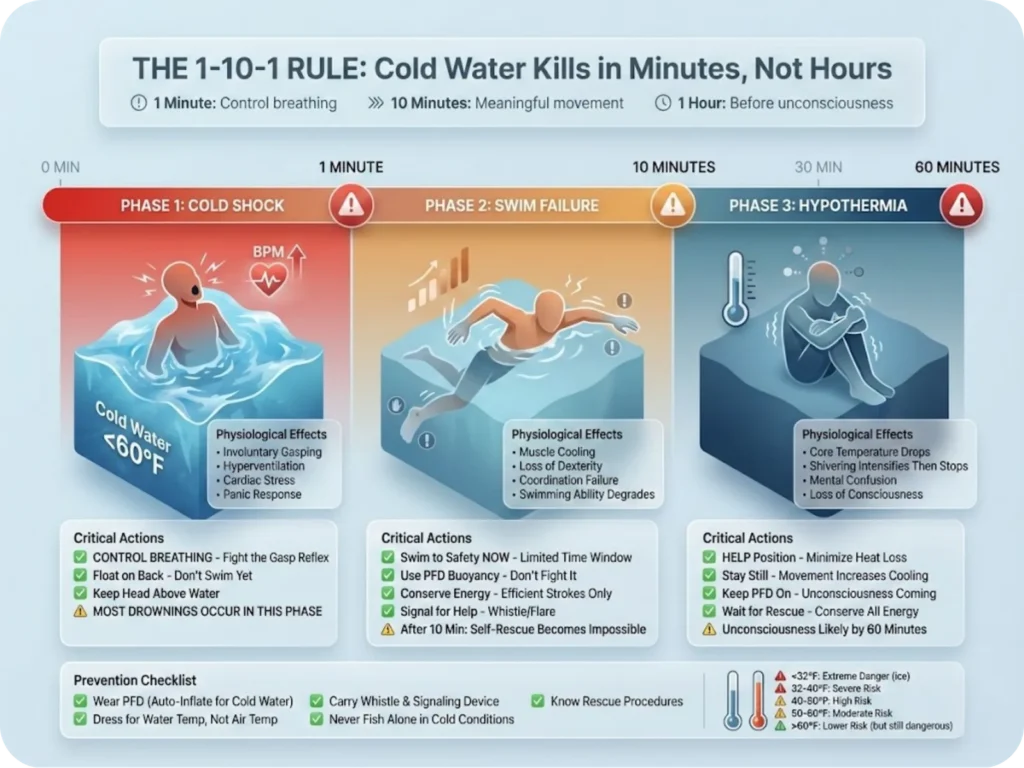
Steam makes the air feel tropical, but that’s an illusion. Fall in downstream of the warm zone and you’re in cold water. The 1-10-1 Rule applies: 1 minute to control breathing (cold shock), 10 minutes of meaningful movement, 1 hour before hypothermia renders you unconscious.
Discharge boils and eddies can swamp small craft or capsize kayaks. Choosing the right auto-inflate vs manual PFD for cold water conditions could save your life. Wear it at all times—not stowed, WORN.
Never anchor from the stern in current. This risks swamping the boat as water piles up over the transom. And keep a knife accessible to cut anchor lines if they snag.
Invasive Species: Clean, Drain, Dry
Power plant lakes are hotspots for invasives: Zebra Mussels, Tilapia, Hydrilla. Warm water allows species to overwinter where they’d otherwise die.
Drain all water from livewell and bilge AT THE RAMP before leaving. Flush your motor with hot water (140°F) if possible. Let your boat dry 5+ days before launching elsewhere. Following state invasive species decontamination protocols and understanding the angler’s guide to aquatic invasive species protects every water you fish.
Generation Schedules: Timing Your Trips
The Cold Snap Connection
Power demand spikes during cold weather—everyone’s heating their homes—which means maximum generation and maximum discharge. The coldest days of winter often produce the best fishing.
If the plant is offline for maintenance, the “hot hole” becomes just a “hole.” Verify conditions before long drives.
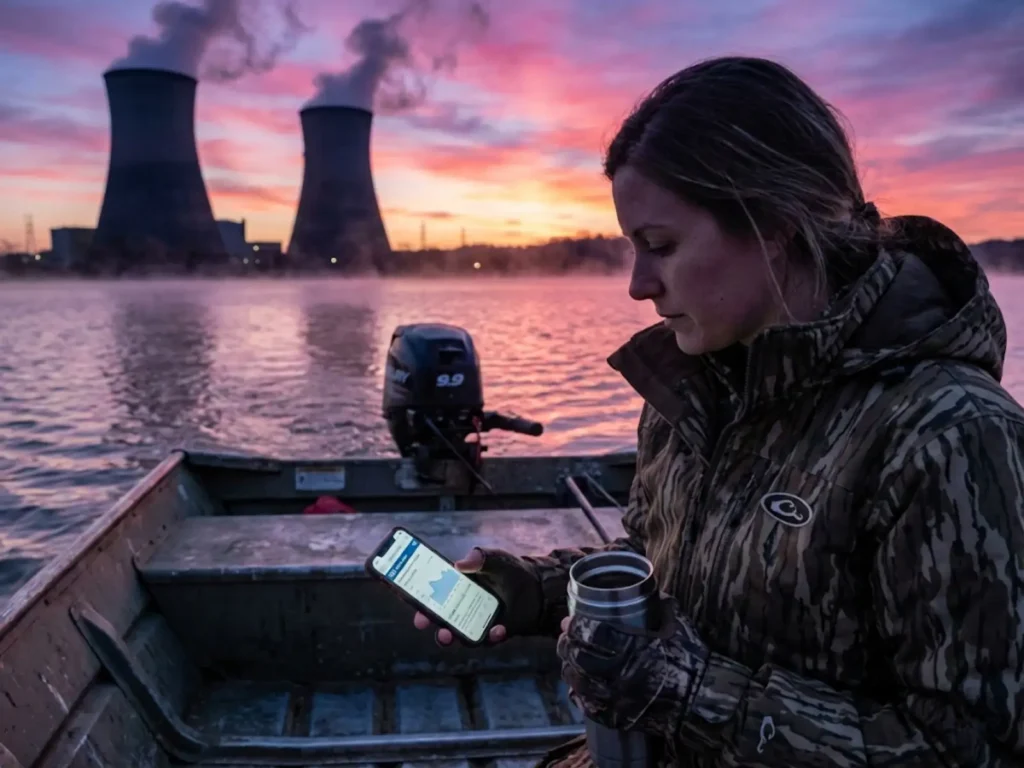
Visual confirmation: steam rising from cooling towers or smokestacks means active generation. No steam, no guaranteed warm water.
Where to Find Real-Time Data
TVA (Tennessee): tva.com/environment/lake-levels publishes hourly CFS release data for all their facilities.
Duke Energy: lakes.duke-energy.com shows scheduled flow releases for Carolina lakes.
US Army Corps: rivergages.mvr.usace.army.mil tracks dam discharge schedules that affect downstream temperatures.
Local intel works too. Call plant security or nearby bait shops. “Are the stacks smoking?” is a legitimate question.
Pro tip: I keep a shortcut to the TVA lake levels page on my phone. A 2-minute check before loading the boat has saved me more than one wasted 3-hour drive.
This same concept applies to generation schedules for tailwater fishing—timing releases is everything.
Conclusion
Warm water discharges flip winter on its head. While everyone else waits for ice-out, these industrial thermal plumes keep fish feeding actively, their metabolisms humming along at spring rates. The science is simple: warm water forces fish to eat more, shad pile in and die in the mixing zones, and predators stack up to exploit the easy buffet.
Success comes down to three things: finding the thermal seams where warm meets cold, matching your presentation to the species and temperature, and respecting both the security boundaries and the water itself.
Find a power plant lake within driving distance, check the generation schedule on the next cold snap, and experience what year-round open water fishing actually feels like. Steam rising from 60-degree water while snow falls on the bank is something every serious angler should witness at least once.
FAQ
Is it safe to fish near nuclear power plants?
Yes. The water is heated but not radioactive—it’s simply used as a coolant in a closed loop. The discharge water never contacts the reactor core. Security zones exist for facility protection, not radiation concerns. Stay outside marked buoys and follow posted regulations.
How warm does the water get at a discharge?
The temperature differential typically ranges from 15-40°F warmer than the main lake. In winter, this means discharge zones can reach 55-70°F while the surrounding lake hovers near freezing.
Can you eat fish from power plant lakes?
Generally yes, but always check local consumption advisories. Some older facilities have historical contamination issues from coal ash. Your state DNR website publishes fish consumption guidelines for specific waters.
Where can I find warm water discharges near me?
Search for coal-fired or nuclear power plants in your state, then verify if they use once-through cooling (direct discharge) rather than cooling towers. State energy websites, fishing forums, and local bait shops can identify specific access points.
What’s the best bait for discharge fishing?
It varies by species. For bass, lipless crankbaits and flukes mimicking dying shad. For crappie, small jigs (1/16-1/32 oz) retrieved slowly. For catfish, fresh-cut shad—not frozen. For stripers, bucktail jigs or live shad on balloon rigs.
Risk Disclaimer: Fishing, boating, and all related outdoor activities involve inherent risks that
can lead to injury. The information provided on Master Fishing Mag is for educational and informational purposes
only. While we strive for accuracy, the information, techniques, and advice on gear and safety are not a substitute
for your own best judgment, local knowledge, and adherence to official regulations. Fishing regulations, including
seasons, size limits, and species restrictions, change frequently and vary by location. Always consult the latest
official regulations from your local fish and wildlife agency before heading out. Proper handling of hooks, knives,
and other sharp equipment is essential for safety. Furthermore, be aware of local fish consumption advisories. By
using this website, you agree that you are solely responsible for your own safety and for complying with all
applicable laws. Any reliance you place on our content is strictly at your own risk. Master Fishing Mag and its
authors will not be held liable for any injury, damage, or loss sustained in connection with the use of the
information herein.
Affiliate Disclosure: We are a participant in the Amazon Services LLC Associates Program, an
affiliate advertising program designed to provide a means for us to earn advertising fees by advertising and linking
to Amazon.com. As an Amazon Associate, we earn from qualifying purchases. We also participate in other affiliate
programs and may receive a commission on products purchased through our links, at no extra cost to you. Additional
terms are found in the terms of service.