

In this article
The wind shifts suddenly. The water turns a slate-grey color. You feel the static charge in the air make the hair on your arms stand up. This isn’t a theory; it is the specific warning sign of a “Bolt from the Blue,” a positive lightning strike that can hit ten miles ahead of the rain.
Survival in this moment doesn’t rely on luck. It relies on taking specific actions immediately. The problem is that the right things to do often feel wrong.
In my years on the water, I have seen seasoned captains panic when the horizon darkens. They often rely on speed alone to outrun a lightning storm. That is a losing calculation. To survive, we have to understand why we are targets, how our boats handle electricity, and a specific medical rule that saves lives when the worst happens.
Why is fishing the primary vector for lightning fatalities?
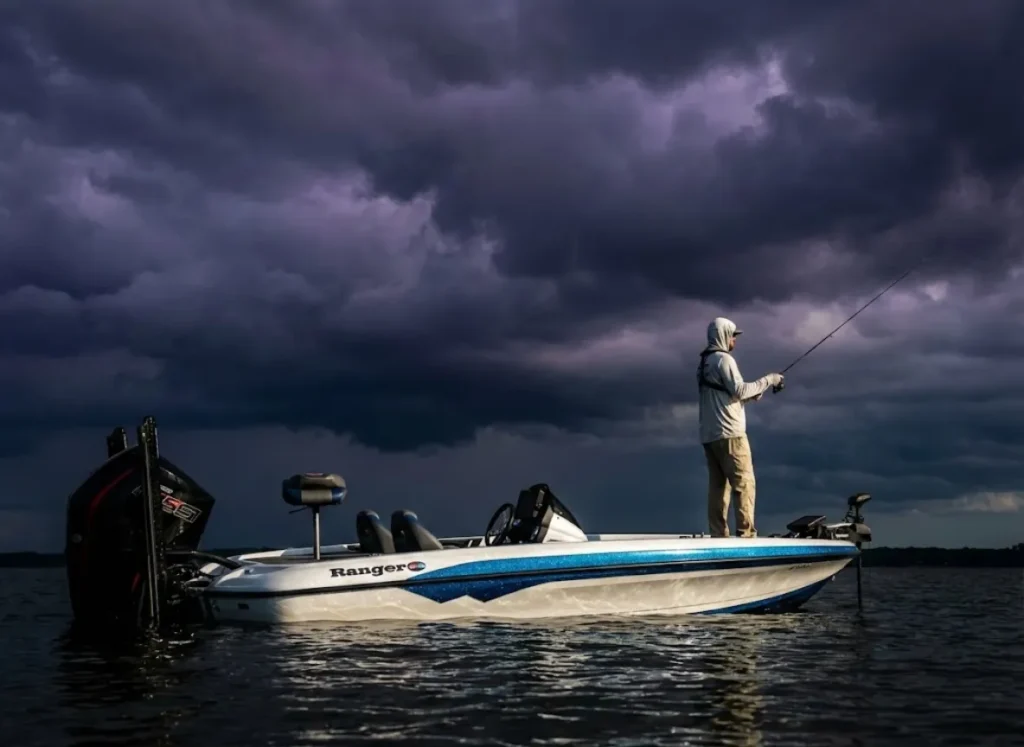
We usually think of golfers as the ones most at risk for thunderstorm safety. However, the data paints a different picture. We need to look at why anglers are actually in more danger and debunk the “golf myth.”
How do the fatality statistics reshape our understanding of risk?
Most people believe golf is the most dangerous hobby during a storm, but the numbers disagree. A NOAA analysis of lightning fatalities by leisure activity from 2006 to 2015 shows that fishing accounts for 26 fatalities. That is more than three times the number of golf-related deaths.
John Jensenius, known as “Dr. Lightning” from the National Lightning Safety Council, points out a critical “danger zone” between 12:00 PM and 4:00 PM. This is when the heat of the day creates local storms that pop up quickly. Golf courses have sirens and shelters. We don’t. We are out in remote spots, often in a bass boat, canoe, or rowboat, so we have to make the safety calls ourselves.
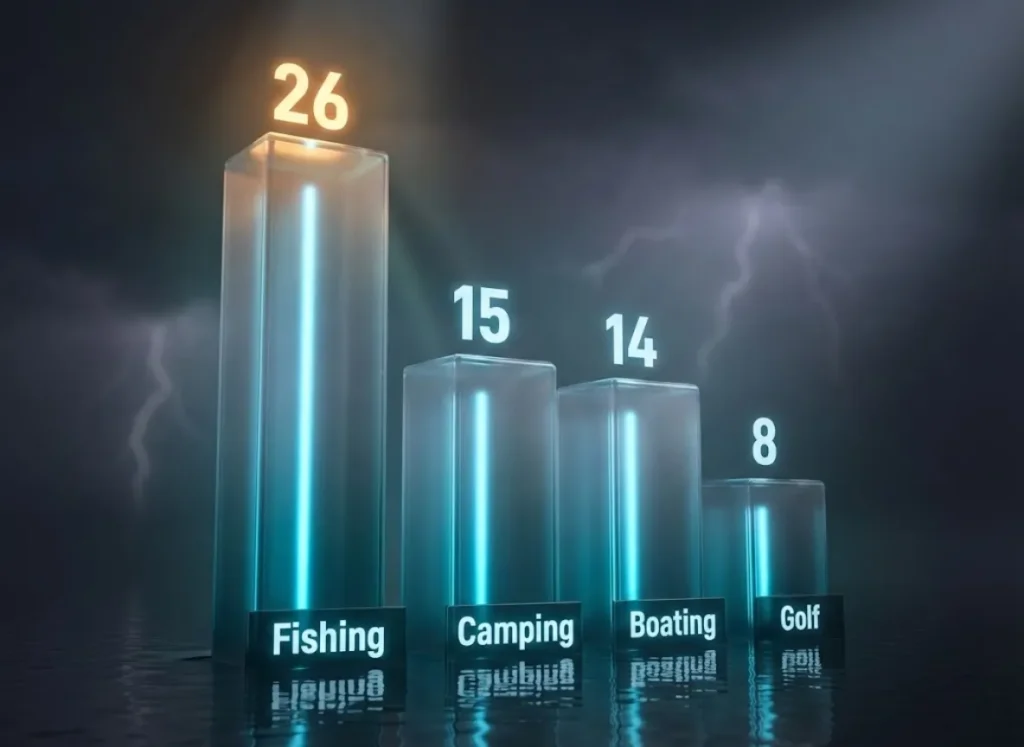
The data also shows that 82% of victims are male. This connects to a mindset many of us have: the “just one more cast” syndrome. We wait too long to leave because we want to catch one more game fish.
The storm itself is also deceptive. A strike can happen 10 to 12 miles away from the rain core. That means you can be sitting in sunshine and still get hit by a storm that looks safe on the horizon. This is why monitoring fishing barometric pressure and checking radar apps is critical. It isn’t just about finding fish; it is an early warning system for bad storms and high winds.
How does the physics of a marine strike differ from terrestrial events?

Lightning behaves differently on water than it does on land. We need to look at how it hurts you. It isn’t always a direct lightning stroke. The most common danger is something called step voltage.
Why is “Step Voltage” the silent killer on a boat?
A direct hit to the head is terrible, but it is rare. It causes only about 5% of injuries. The bigger threat is ground current or “Step Voltage.”
When lightning strikes the water or your boat, the electricity spreads out across the wet deck. If your feet are spread apart, they are at different distances from the strike. The electricity enters one foot and exits the other. This path sends the current right through your body and vital organs.
Pro-Tip: If you are caught in an open boat during a storm, bring your feet and knees together immediately. This closes the circuit and reduces the chance of current flowing through your body.
The water makes this worse. The mechanisms of lightning injury including ground current are amplified by saltwater. Saltwater conducts electricity about 140 times better than freshwater. This lets the danger spread over a huge area, putting anyone wading flats at extreme risk.
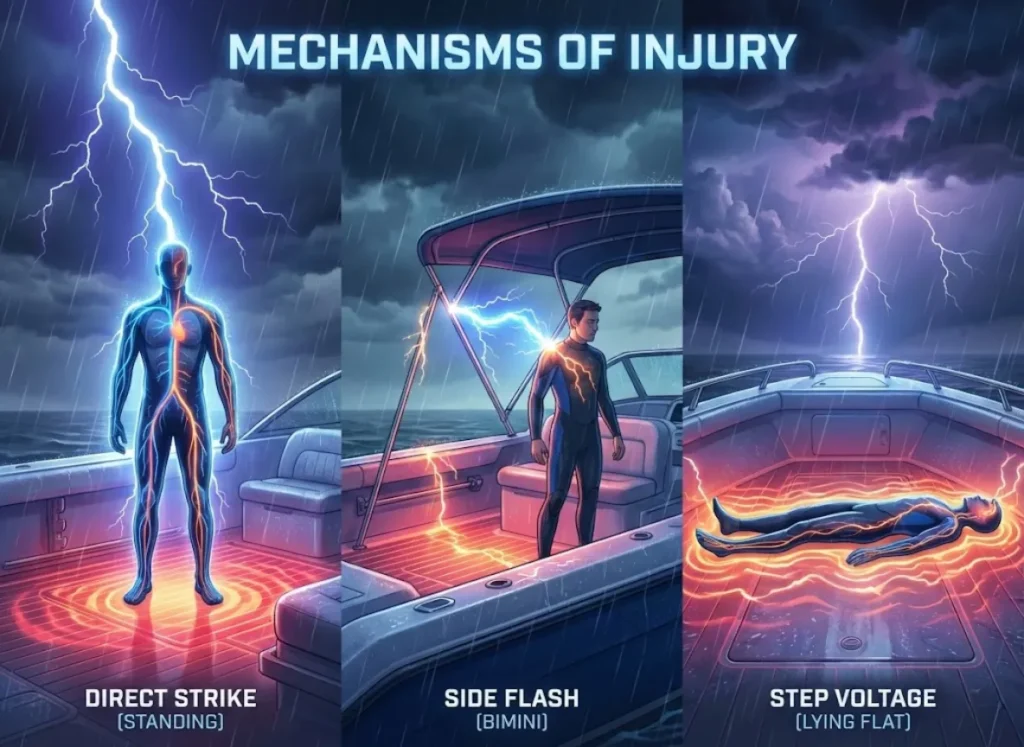
Freshwater has a different risk. Because the conductivity of water here is lower, it resists electricity more. A human body in the water becomes the “easy path” for the current. This means lying flat on the deck is actually dangerous. It puts your head and toes far apart, inviting the current to travel through you.
How do modern fishing materials increase the danger?
Our gear has improved, but high-performance materials conduct electricity very well. Graphite rods and carbon fiber are standard in modern fishing. These materials are excellent conductors.
When you hold a 7-foot graphite rod up in the air, you are basically acting like a lightning rod. You are reaching out to connect with the storm’s energy. It helps to look at how carbon fiber modulus fishing rods are explained to understand the material. The same stiffness that helps you feel a bite will also conduct a massive charge instantly.
Even fiberglass rods are dangerous when wet. Wet fishing line creates a direct electrical wire from the water right to your hands.
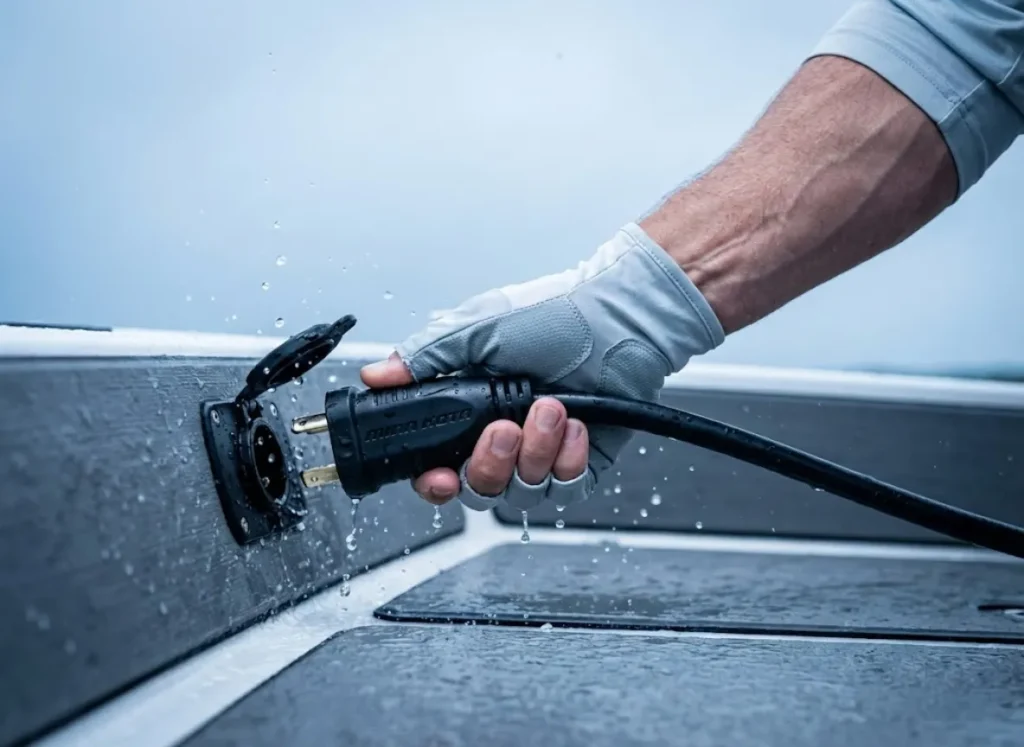
Trolling motors are another hidden danger. The motor is in the water, and it is connected by thick wires to your batteries. This creates a direct path for lightning to enter your boat. Following safety guidelines for working outdoors with conductive equipment is hard on a boat, but you have to be careful. If you don’t disconnect these motors, you risk exploding your lithium batteries or frying your fish finders.
What are the immediate protocols when you cannot get to shore?
Sometimes the sky darkens and you simply can’t make it back to a substantial building or hard-top vehicle. You need a plan. Here is what to do with your gear and your body when you are trapped.
Why is the “Drop, Disconnect, Retreat” doctrine critical?
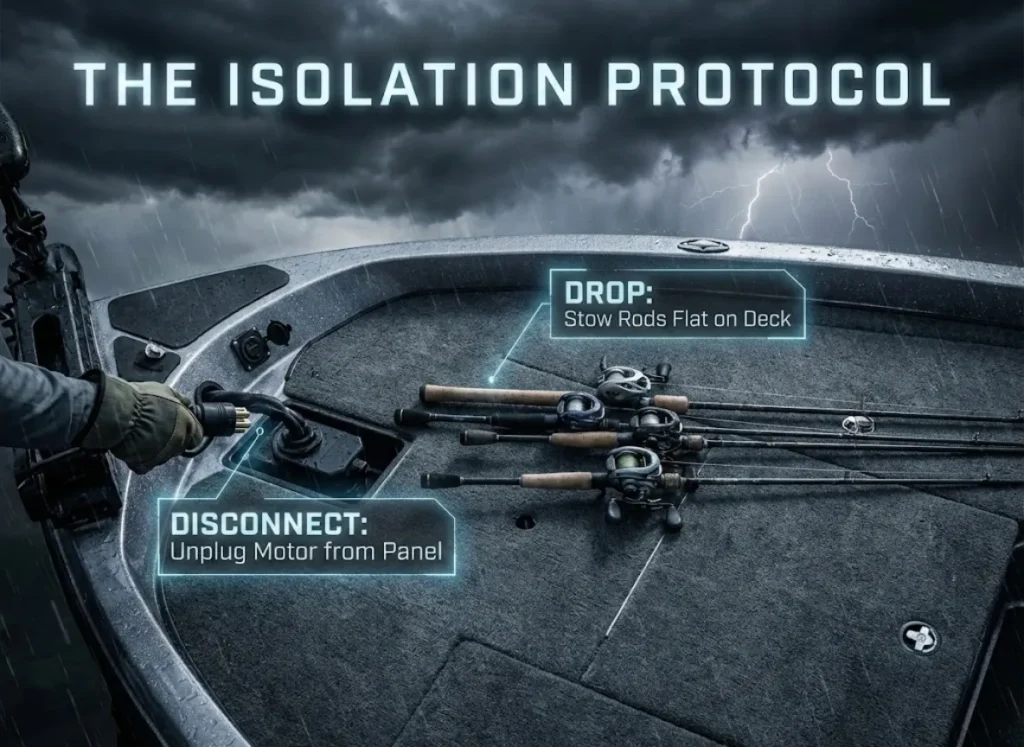
Survival starts with three simple moves: Drop, Disconnect, and Retreat.
First, Drop all rods. Take them out of the vertical holders right away. Lay them flat on the floor of the boat. You don’t want anything pointing up. This reduces fishing rod conductivity risks.
Second, Disconnect the trolling motor. You have to physically unplug the motor from the front panel. Just turning it off isn’t enough. The wires are still connected. This follows basic engineering rules for protecting rural substations and electronics from surges—unplugging it is the only way to be safe.
Finally, Retreat to the center of the boat. If you are in an open bass boat, stay away from the metal sides, the steering wheel, and the metal frames of any canopy to avoid splash lightning.
We also need to protect our navigation tools from the electromagnetic pulse (EMP). You can use a “Microwave Hack” to save your handheld GPS or backup radio. Put them inside the boat’s microwave (make sure the microwave is unplugged). The metal box acts as a shield against the EMP of the storm.
After a strike, check the bottom of the boat. Lightning can blow out the fittings that go through the hull, causing leaks. Protecting gear is good, but as we discuss in our guide to protecting the best trolling motor battery, unplugging the motor protects the whole boat from electrical fires.
How should you position your body to survive?
For years, experts told us to use the lightning crouch—squatting on the balls of our feet. That advice has changed. It is hard to hold that position, and it doesn’t help much.
The position statement on lightning safety for athletics and recreation now says to “Get Low, But Not Flat.” If you are in an open boat, sit on a lifejacket or a foam cushion. This insulates you from the wet deck.
If you have an aluminum boat with a cabin, get inside. The cabin acts like a metal cage that directs the electricity around you. Just don’t touch the metal walls or the radio. This is a big factor when choosing a fishing boat; a metal cabin offers safety that a fiberglass boat cannot.
If you are in a fiberglass boat with a bimini top, stay away from the metal frame. The electricity can jump from the frame to you. Finally, if your hands are free, cover your ears. Thunder from a close strike is loud enough to burst your eardrums.
What is the “Reverse Triage” protocol for lightning victims?
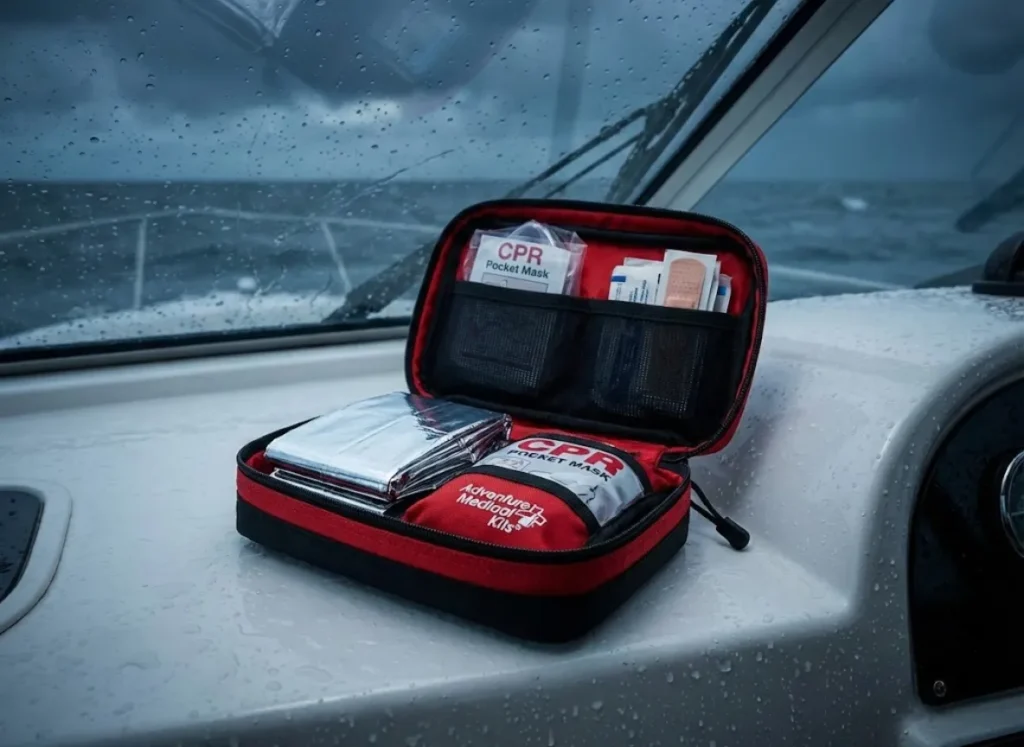
If lightning hits, you need to act fast. The medical rules for lightning victims are different than normal accidents. You have to help the people who look like they are already gone.
Why must you treat the “dead” first?
Lightning causes a short-circuit in the nervous system. It creates a temporary paralysis that stops the heart and the breathing at the same time.
In a normal accident, you treat the people screaming for help first. With lightning, you use Reverse Triage. You must help the victims who appear dead—the ones who are not breathing and have no pulse. The victims who are screaming or moaning are breathing. They are stable enough to wait.
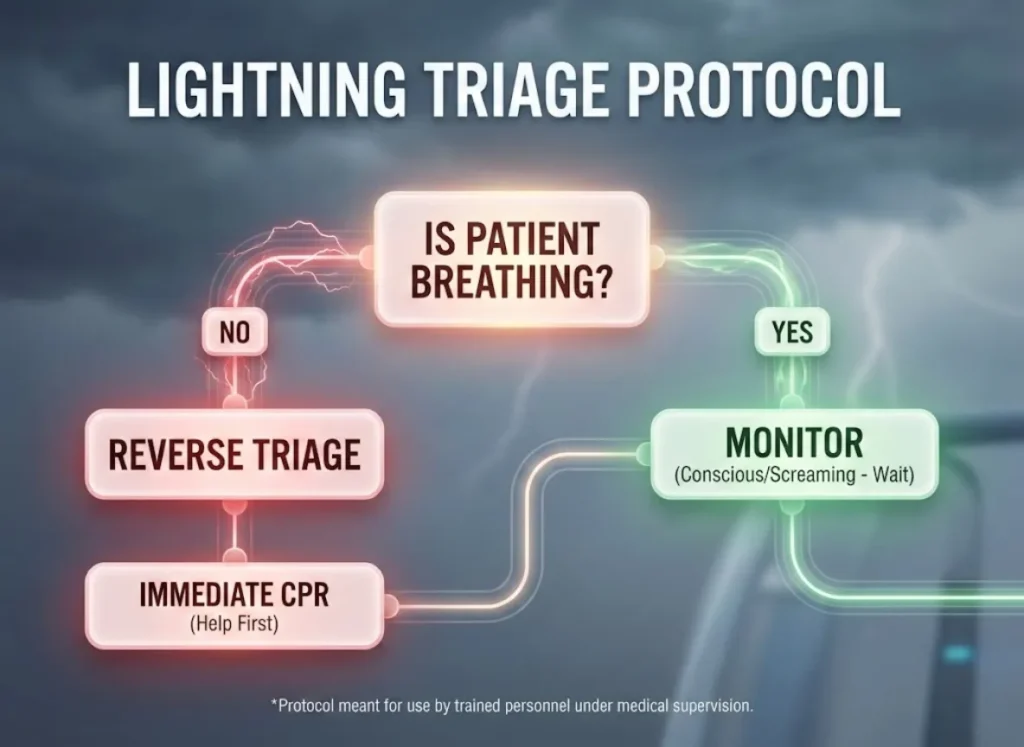
The reason is simple. The heart often restarts on its own pretty quickly. However, the part of the brain that controls breathing stays paralyzed longer. If you don’t start CPR first aid for lightning victims immediately, the heart will stop again because it runs out of oxygen.
Final Thoughts
Survival on the water isn’t about fighting nature; it is about respecting it. We know now that fishing is the number one lightning-related killer in the U.S. That fact means we need to do more than just glance at a weather app.
We know that electricity spreading across a wet deck is the main threat. This makes the old advice of lying flat dangerous.
By isolating your gear—unplugging motors and laying rods down—you stop your boat from acting like an antenna. Most importantly, understanding “Reverse Triage” ensures that if the worst happens, you know to treat the silent victims first.
Check your storm-ready gear checklist today. Make sure you can unplug your trolling motor easily and that you have foam cushions to sit on. When it comes to angler safety protocol, being prepared is the only way to fish another day.
FAQ – Frequently Asked Questions
Does rubber protect you from lightning on a boat?
No. Lightning strikes travel miles through the air. A few millimeters of rubber on your shoes won’t stop it. Boats are safe only if they are enclosed metal cabins that direct electricity around you.
What should I do with my fishing rod if lightning starts?
Immediately take the rod out of the holder. Lay it flat on the floor of the boat. Rods held up in the air act like lightning rods. Even wet fishing line can carry electricity right to the rod tip.
Is it safe to be in an aluminum boat during a thunderstorm?
An aluminum boat with an enclosed cabin is safer than an open fiberglass boat. The metal hull guides the current into the water, shielding you inside. However, you must stay away from the metal walls. An open aluminum skiff without a cabin is still very dangerous.
When can I resume fishing after a storm?
The National Weather Service recommends the 30-30 rule (or 30-minute rule). If you hear thunder, you are close enough to be struck. Wait at least 30 minutes after the last rumble of thunder before going back out.
Why is the lightning crouch no longer recommended?
New studies show that the lightning crouch doesn’t protect you much from the electricity on the ground. It also makes it hard to move if you need to. The current advice for open boats is to sit low on a foam cushion or lifejacket. Keep your feet close together and don’t touch any metal.
Risk Disclaimer: Fishing, boating, and all related outdoor activities involve inherent risks that
can lead to injury. The information provided on Master Fishing Mag is for educational and informational purposes
only. While we strive for accuracy, the information, techniques, and advice on gear and safety are not a substitute
for your own best judgment, local knowledge, and adherence to official regulations. Fishing regulations, including
seasons, size limits, and species restrictions, change frequently and vary by location. Always consult the latest
official regulations from your local fish and wildlife agency before heading out. Proper handling of hooks, knives,
and other sharp equipment is essential for safety. Furthermore, be aware of local fish consumption advisories. By
using this website, you agree that you are solely responsible for your own safety and for complying with all
applicable laws. Any reliance you place on our content is strictly at your own risk. Master Fishing Mag and its
authors will not be held liable for any injury, damage, or loss sustained in connection with the use of the
information herein.
Affiliate Disclosure: We are a participant in the Amazon Services LLC Associates Program, an
affiliate advertising program designed to provide a means for us to earn advertising fees by advertising and linking
to Amazon.com. As an Amazon Associate, we earn from qualifying purchases. We also participate in other affiliate
programs and may receive a commission on products purchased through our links, at no extra cost to you. Additional
terms are found in the terms of service.