
In this article
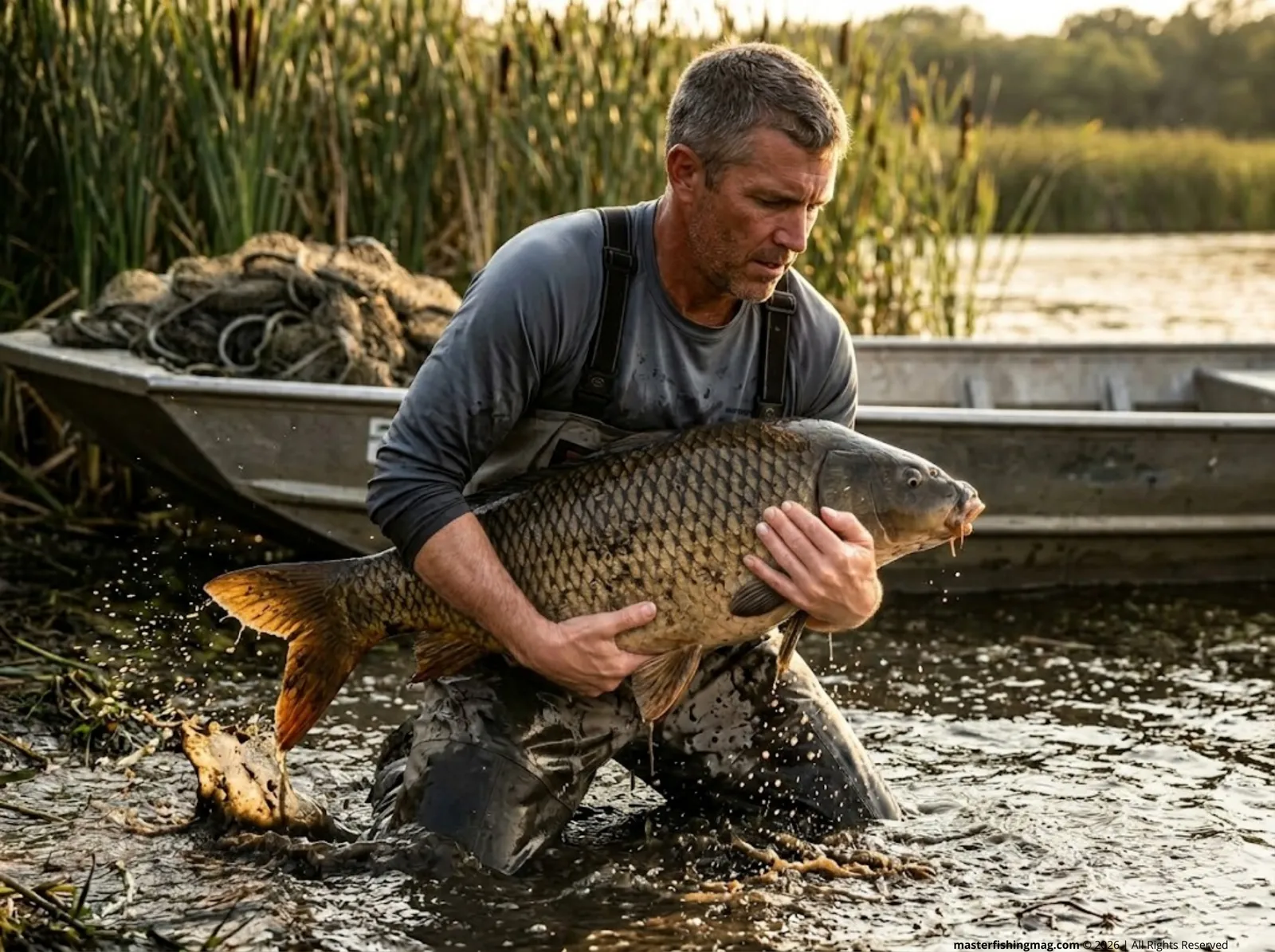
The water looked like pea soup. Our test nets were returning nothing but mud-stained scales, and the once-thriving native bass population had vanished entirely. It wasn’t a chemical spill or agricultural runoff—it was an invasion of common carp, acting as autonomous bulldozers across the lakebed. Hauling out a few ugly fish with a bow or a heavy rod feels good, but it does not fix the ecosystem. Carp removal is a high-stakes ecological intervention. You have to break their recruitment cycle completely to see your water clear up. I have watched managers waste thousands of dollars on half-measures. This guide strips away the folklore and delivers the exact, field-tested removal methods, predator-stocking ratios, and acoustic technologies required to restore your lake’s water clarity once and for all.
⚡ Quick Answer: Effective fishery restoration requires driving common carp populations below the critical 100 kg per hectare biomass threshold. You achieve this through high-intensity mechanical harvests like winter seining or acoustic herding, not casual trapping. Once adult numbers drop, you must immediately stock dense populations of bluegill and bass to eat the inevitable explosion of carp eggs and juveniles, permanently sealing off their recovery.
The Science of Carp Damage: Defining the Ecosystem Tipping Point
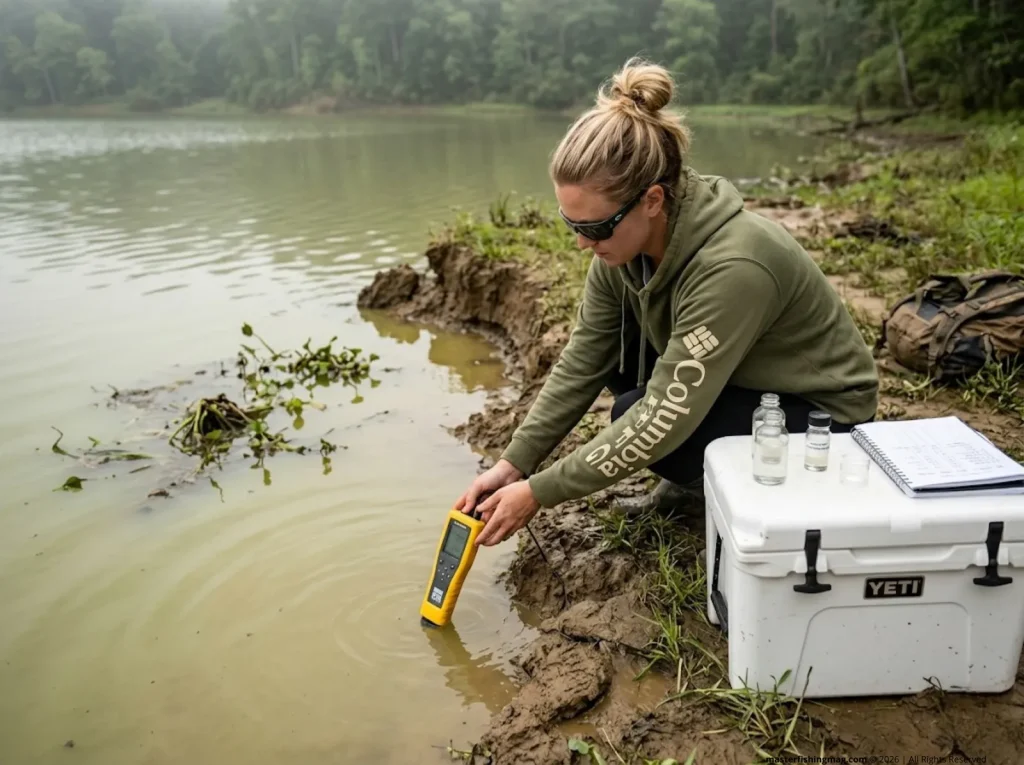
You cannot fix a lake if you do not understand exactly how it is breaking. Common carp ruin water quality through mechanical destruction and chemical loading. They are not just swimming around; they are fundamentally rewiring how the lake processes nutrients.
The Biomass Threshold and Internal Phosphorus Loading
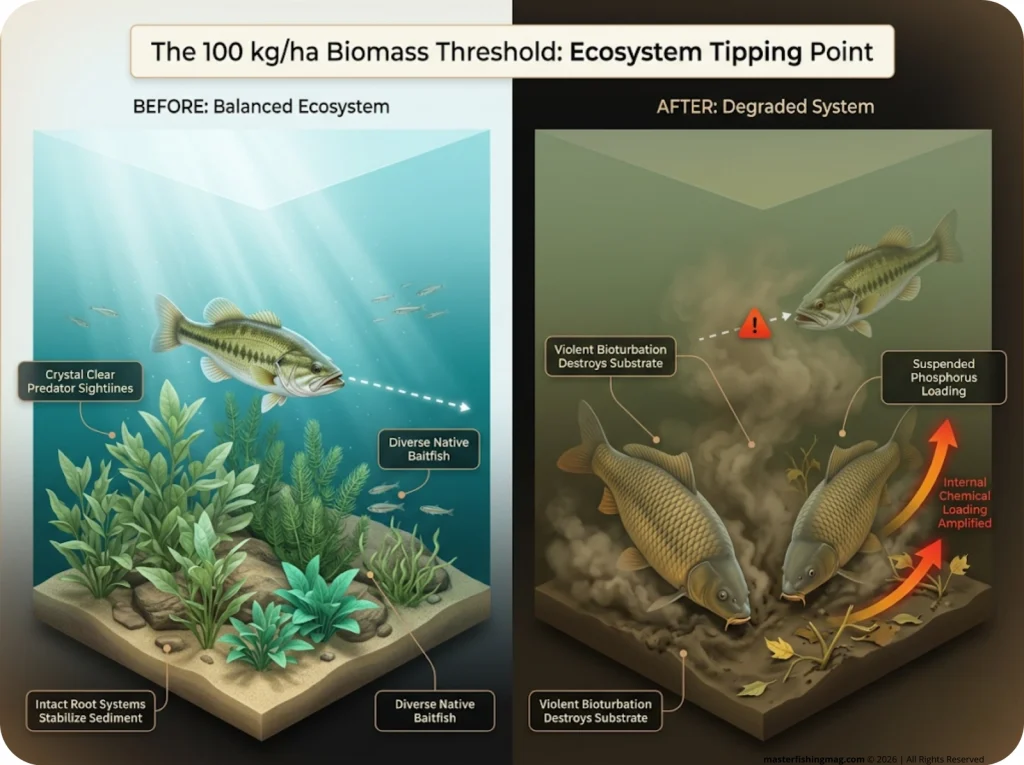
There is a hard mathematical line where a lake goes from stressed to severely impaired. The research conducted by the Minnesota Aquatic Invasive Species Research Center (MAISRC) proves that this management threshold sits right at 100 kg per hectare, which translates to roughly 90 pounds of carp per acre.
Keep the population below that line, and your native vegetation stands a chance. Let it cross that line, and severe water quality degradation begins immediately.
Unmanaged carp populations act as massive internal loaders of nutrients. In a heavily infested lake, carp excrete highly bioavailable phosphate directly into the water column. We have seen systems where the carp alone contribute up to 360 pounds of phosphorus annually. This metabolic excretion fuels massive, suffocating cyanobacteria blooms that block out sunlight. It is a vicious cycle of tp reduction failure.
The Bioturbation Cycle: How Substrate Disruption Ruins Clarity
Carp are bottom-feeders. They feed by burying their faces in the mud to suck up insect larvae and plant seeds. This constant physical mixing of the lake bottom is called bioturbation.
When hundreds of heavy fish plow through the top six inches of sediment every single day, they completely uproot the native plant diversity. The underwater weeds that normally hold the bottom together get shredded.
Without those root systems, the mud stays permanently suspended in the water. Your lake turns the color of chocolate milk. This turbidity blinds your sight-feeding predators, cutting off the predatory feeding habits of largemouth bass and northern pike, leaving them unable to hunt effectively.
The Phosphorus Trap: When Simply Netting Fails
Here is the brutal truth that trips up a lot of well-meaning lake associations: pulling out the carp does not guarantee instant clear water. The impact of anoxic bottom layers during lake turnover can keep your water green even after the invasive fish are gone.
If the deep water in your lake loses all its oxygen during the summer, the sediment will chemically release phosphorus on its own, completely independent of fish activity. This deep-water loading must be addressed.
Pro-Tip: Do not expect immediate clear water just because you netted out a few tons of fish. If your lake still suffers from internal loading from oxygen-starved deep water, you must follow up the carp removal with an alum treatment to permanently cap that sediment.
The Modified Unified Method: High-Tech Acoustic Herding
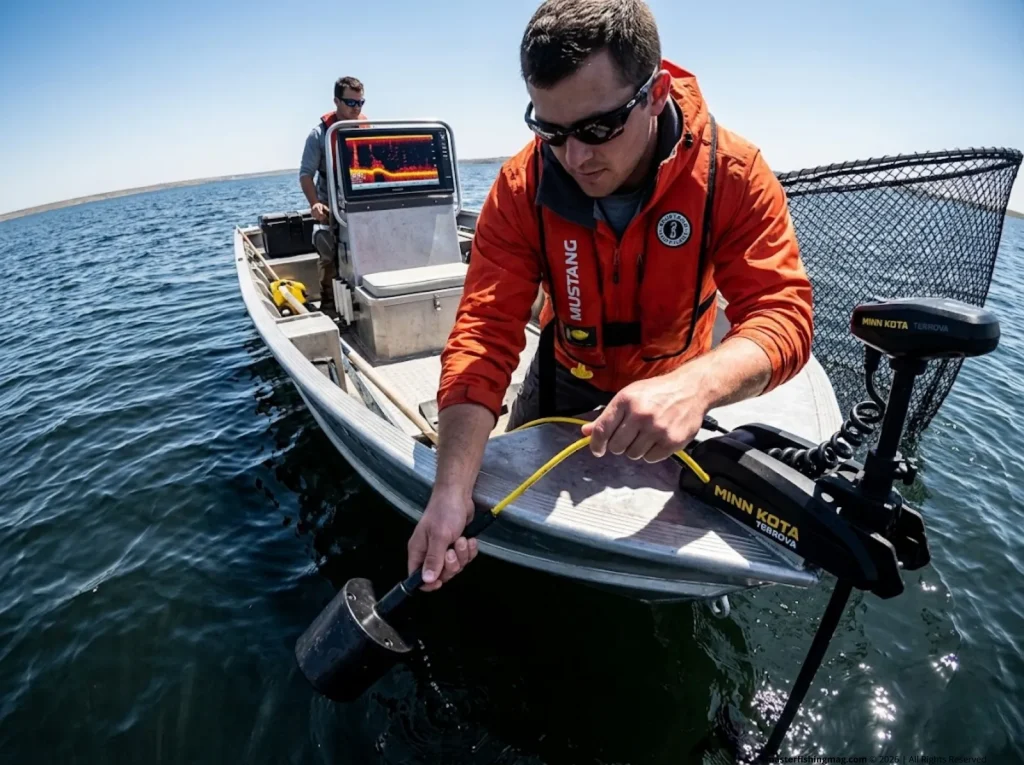
Traditional netting is sloppy. Drop a gill net or a fyke net in a big lake, and the carp will just swim around it. To hit the required biomass reduction, professionals use the Modified Unified Method developed by the U.S. Geological Survey (USGS). This technique is basically a massive underwater cattle drive.
Exploiting Fish Anatomy with Sound
The modified unified method relies on partitioning a lake with massive block nets. These nets must be dragged perfectly tight against the absolute bottom substrate. You then use customized underwater speakers to blast specific sound frequencies between 50 and 3000 Hz.
Carp have a specialized bone structure called the Weberian apparatus connecting their swim bladder to their inner ear. Native game fish lack this connected structure.
When you hit the water with these frequencies, native fish just hunker down in the weeds. Bighead carp and common carp, however, panic. They exhibit a massive flight response. Managers use this panic to drive the invasive fish forward through the partitioned cells, cleanly separating them from the natives.
Clearing Grid Cells with Guided Electrofishing
Once the sound pushes the carp into a corner, electrofishing boats sweep the cell. By sending a mild electrical field into the water, technicians stun any stragglers hiding in the mud and push them toward the final collection zone.
Properly reading the right transducer angles on your fish finder is critical here. Side-scan sonar operators sit at the console and physically watch the massive schools of fish move across the screen. Once the sonar confirms a grid cell is empty, the crew drops another block net to seal the door behind them.
Pro-Tip: The biggest execution mistake I see is a gap under the lead line of the block net. A 2-inch gap is a highway to failure; those nets must seal against the mud. If a carp finds a hole, the entire school will follow it out.
Pneumatic Transport Dynamics (The Whooshh System)
The logistics of moving tens of thousands of pounds of thrashing fish are a nightmare. You cannot do it with dip nets without wearing out your crew across an entire week.
The modern solution is a pneumatic transport system, often called the Whooshh system. It uses a flexible, pressurized tube to shoot the live fish out of the water and directly into holding tanks on a transport barge. During a spring migration run in a constricted creek, an automated crew can move 4,000 fish in a few hours.
Winter Targeting: The “Judas Fish” Telemetry Tactic
Summer removals deal with scattered fish and heavy weed cover. I prefer hunting them when it gets brutally cold. When the water freezes, carp consolidate, and you can corner them effectively.
Winter Aggregation Habits Below the Ice
As the water temperatures drop below 40 degrees Fahrenheit, common carp change their behavior completely. To conserve energy, they form incredibly dense, tight winter aggregations.
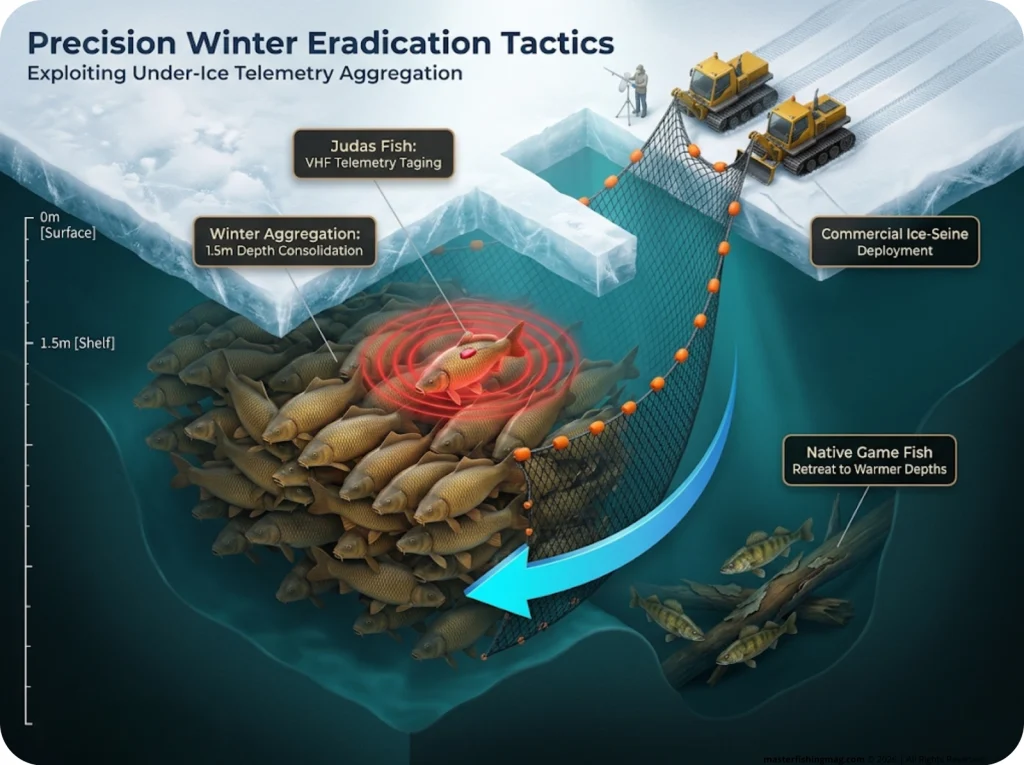
They do not seek out the deepest, warmest holes like you might expect. These aggregations predictably form in the shallow shore zones, sometimes stacked right on top of each other just five feet directly under the ice sheet. Because they clump up so tightly, you can target the entire population in a space no bigger than a football field.
Planting and Tracking the Tagged Operators
The problem is finding that specific football field under thousands of acres of solid ice. This is where judas fish tracking changes the math.
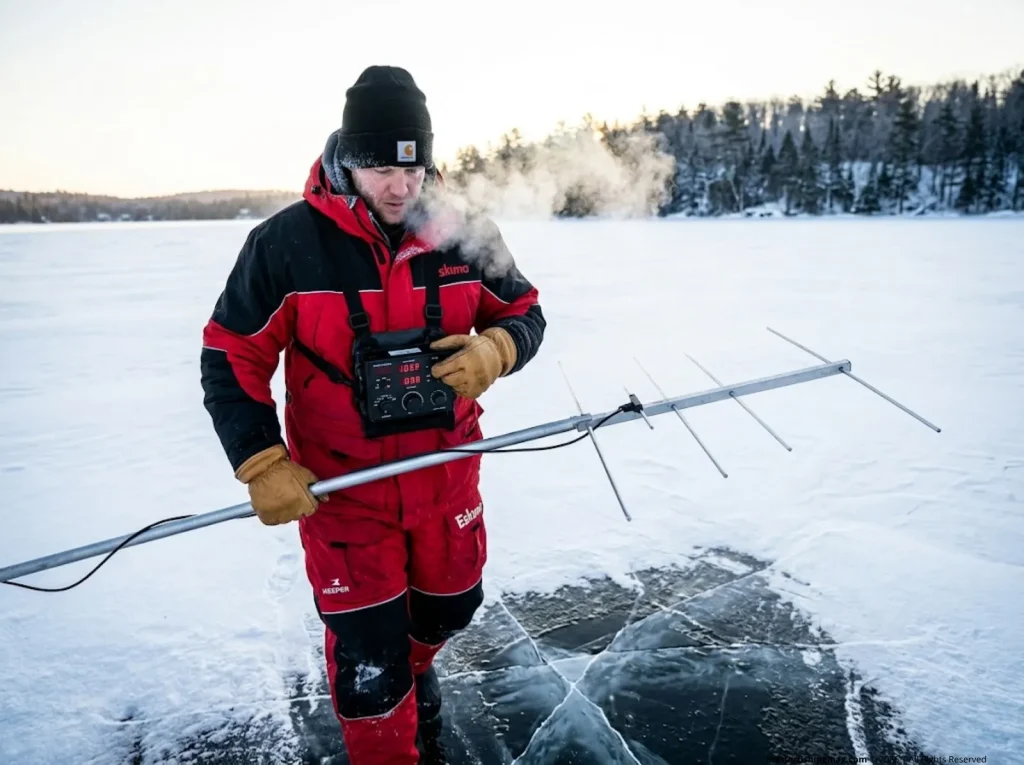
Biologists pull a few carp in the fall and surgically implant them with VHF radio or acoustic tags. We call them Judas fish because they betray their own kind. These tagged individuals swim freely, and when the deep freeze hits, they naturally rejoin the massive winter schools.
Using a directional antenna above the ice, a single technician can walk directly to the largest concentration of carp in the lake.
Pro-Tip: Use sterilized, feminized males for your Judas fish so your trackers do not end up directly contributing to the spring recruitment problem if they evade capture.
Precision Winter Seining Execution
Once the telemetry pinpoints the school, commercial crews cut a massive rectangular slot in the ice. They feed a specialized seine net under the frozen surface using motorized ice crawlers.
There are obvious physical hazards involved. Anyone driving heavy machinery on a frozen lake needs a strong grasp of understanding ice load-bearing physics or they are going to put a tractor on the bottom.
When you pull a seine under the ice, the carp are virtually comatose. They lack the energy to jump the float line. A highly coordinated winter netting operation can achieve a 94 percent total biomass reduction in a single furious afternoon.
Biological Suppression: The Predator Ratios You Need
If you run a brilliant winter netting operation and leave it at that, you will fail. A mechanical removal event creates a vacuum. With the adult competition gone, the surviving carp will spawn aggressively.
Within two to three years, you will face an explosive recruitment surge. Your lake will look exactly like it did before you spent the money. You need biological control. You need an army of teeth in the water.
Bluegill: Your First Line of Defense Against Eggs
Forget exotic solutions; your best weapon against a carp invasion is the native panfish. Bluegill sunfish are ravenous, highly specialized predators of carp eggs and newly hatched larvae.
To create a genuine biological wall, you need heavy stocking ratios. You want to push 500 to 1,000 bluegill per acre into the system. Whole-lake experiments utilizing native predator reductions prove that when bluegill populations collapse, carp recruitment spikes violently. When bluegill are dense and hungry, almost zero carp eggs survive the week.
Largemouth and Tiger Muskie: The Juvenile Suppressors
A few carp will always hatch out and grow fast enough to escape the bluegills. At one to four inches long, they become prey for the next tier of the food chain.
You need the predatory feeding habits of largemouth bass to intercept these fast-growing juveniles. You need between 50 and 100 bass per acre actively hunting the shallows.
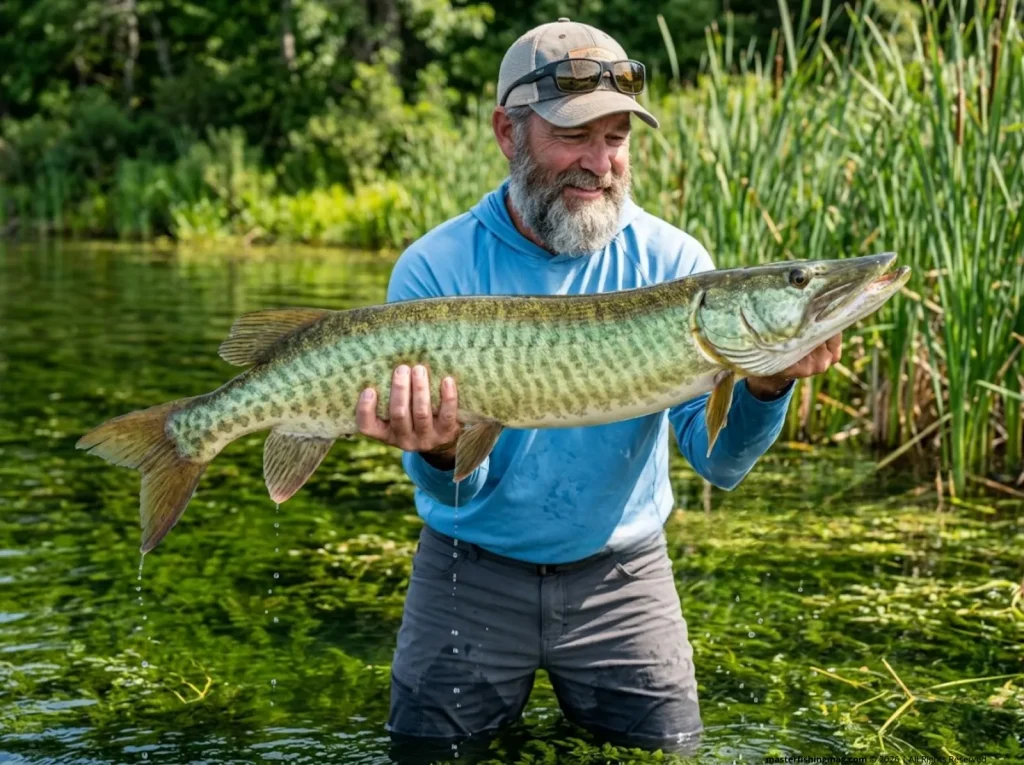
When the surviving carp hit the six to ten-inch mark, standard bass cannot eat them anymore. This is when you deploy tiger muskies. Dropping roughly 10 of these sterile apex predators per acre puts extreme pressure on the teenage carp, ensuring they never reach giant, breeding sizes.
The Winter Die-Off Vulnerability in Shallow Marshes
This biological shield has a fatal flaw. Carp can survive brutally low oxygen levels, but bluegills perish quickly when the oxygen crashes.
Many connecting shallow marshes suffer from a severe winter die-off when snow covers the ice and aquatic plants decay. This creates a predator-free nursery. Come spring, adult carp swim into these dead zones, spawn millions of eggs, and without bluegills to eat them, a massive new generation survives.
Pro-Tip: Do not just dump tiger muskies in and hope for the best. If you suffer a severe winter die-off of your bluegills, your carp recruitment barrier collapses immediately. Prioritize winter aeration in your shallow bays.
Behavioral Exploitation: Acoustic Conditioning and Avoidance
Fishing pressure changes how animals behave. We all know pressured bass get smart, but social learning in carp is incredibly complex. They possess sharp cognitive memory, and we have to exploit those habits to trick them.
Synchronization via Acoustic Baiting
Traditional trapping involves throwing cracked corn in a net and hoping the fish swim in. It works poorly. The modern upgrade is acoustic conditioning.
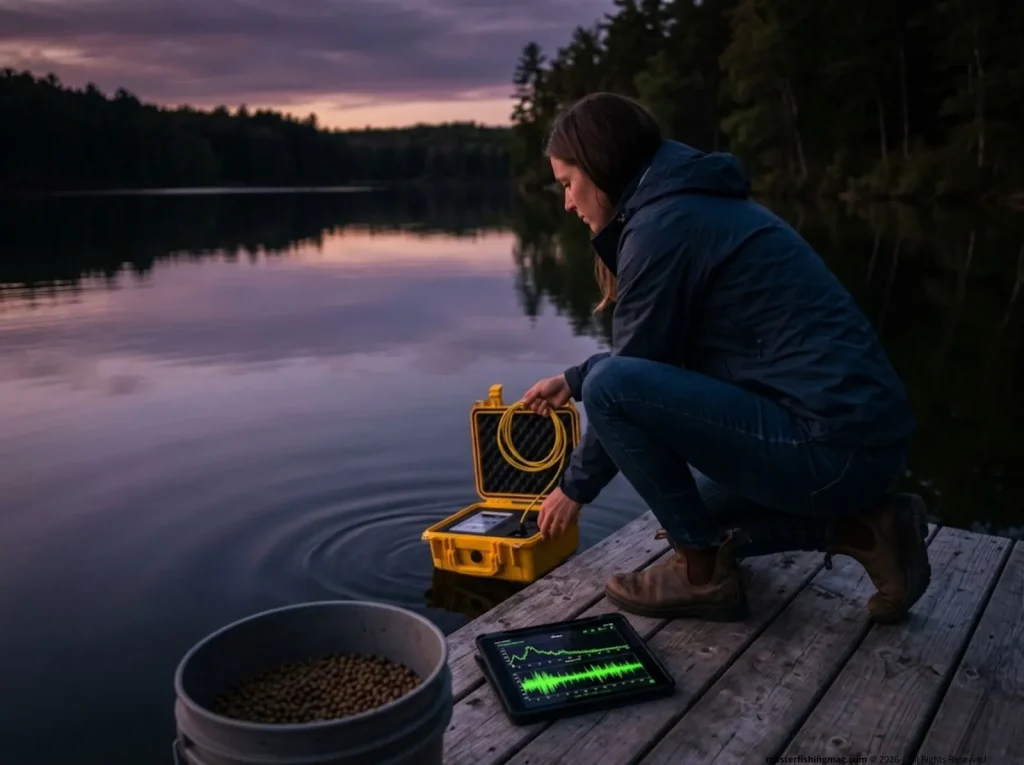
Biologists pair an underwater sound with the release of sinking pellet bait. The fish literally learn to associate the tone with dinner. Learning how fish process vibration through their lateral line tells us that they hear low-frequency thumps perfectly.
This synchronization strategy lures 11 percent more carp into the trap and brings them into the target zone 28 percent faster than using bait alone.
Sustaining Captures with Less Bait
A neat quirk of carp psychology is their stubborn memory. If you bait the trap every single time you play the sound, the carp learn the pattern quickly. But if you stop feeding them, they abandon the zone in just nine days.
However, if you only drop bait one out of every three times you play the sound, you scramble their expectations. They will keep responding to the acoustic trigger for thirty consecutive days even after you completely cut off the food supply. You can hold a massive school of fish in a small area for a month using almost no food, setting up the perfect net strike.
Beating Selective Net Avoidance
Carp are deeply cautious animals. The documented cases of social net avoidance are frustratingly clear. If you trap twenty carp on Monday, the surviving fish watch the capture happen. They memorize the threat. They will not go near that net on Tuesday.
This proves that slow, multi-day trapping programs are a waste of time. You are literally educating the school on how to avoid your gear.
The rule of thumb for any netting operation is that it must be high-intensity and “one-and-done.” You bait them, you build absolute trust over a week, and then you slam the door shut once.
The Logistics of Disposal: From Harvest to Fertilizer
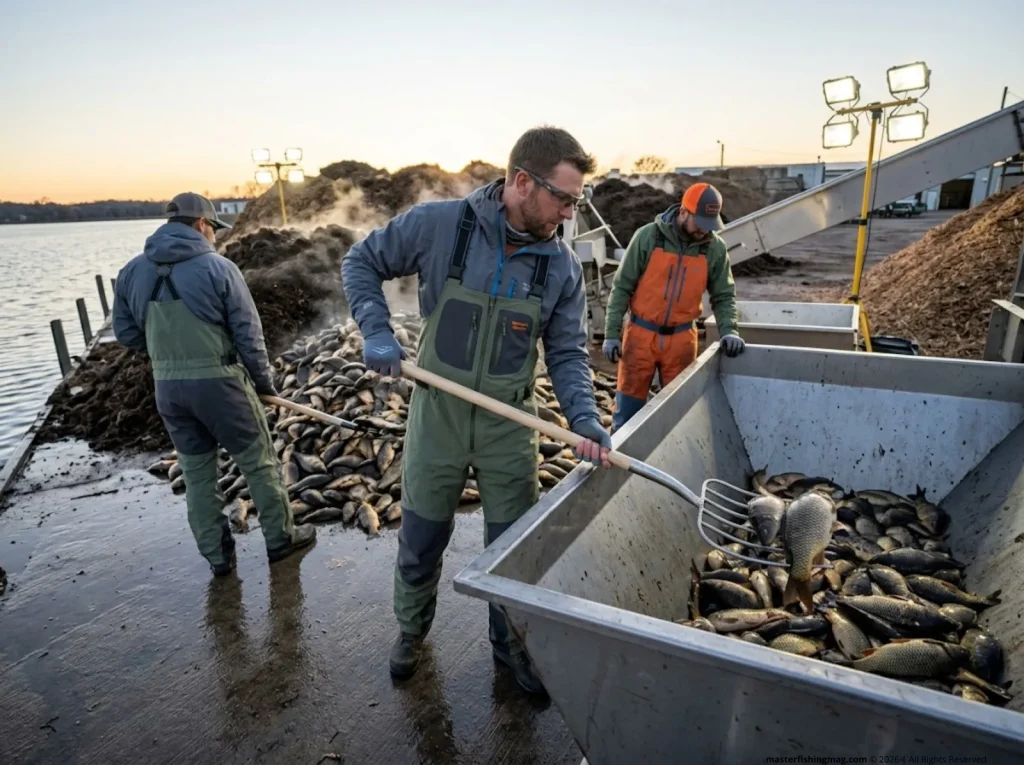
Nobody talks about the heavy lifting that happens after the boats hit the ramp. If you successfully pull 250,000 pounds of silver carp out of a lake, you now own a massive waste pile. You cannot just dump it in the woods.
The Heat of Carp Composting
Landfilling thousands of fish costs an outrageous amount in tipping fees, ruining your cost-per-kg metrics. A better approach is aerobic windrow composting.
Proper guidelines for large-scale fish and shellfish waste composting dictate mixing high-nitrogen fish carcasses with a massive volume of coarse carbon, usually wood chips.
If you stack the rows correctly, the microbial breakdown kicks into high gear. The internal temperature of the pile spikes high enough to destroy pathogens and invasive weed seeds. Over a few months, high-heat biological composting reduces the physical mass by 90 percent, turning a foul-smelling liability into premium topsoil.
Pro-Tip: Never underestimate the smell and the scavengers. If you are doing direct burial without proper carbon layering, you are just ringing the dinner bell for every raccoon and feral hog in the county.
Liquid Fertilizers vs. Contaminant Risks
Some advanced operations use digestion tanks to liquify the carp. This creates an extremely valuable organic fertilizer that farmers pay good money for. It turns an invasive species problem into a lucrative recycling system.
There is a catch. In many urban environments, carp spend decades vacuuming up lake mud filled with heavy metals and chemical runoff. These toxins accumulate in their fatty tissues. You cannot spray contaminated carp juice onto a commercial tomato crop. Before you plan a fertilizer operation or consider making pet food, you must test the fish for severe contaminant loads.
The Path Forward
True lake restoration requires respecting the carp as a highly adaptable, habitat-destroying engineer, not just a nuisance rough fish. We have left the era of random bowfishing and blind netting behind. By deploying telemetry tracking, acoustic conditioning, and precise biological suppression walls, we can systematically break the recruitment cycle. Take this exact blueprint to your local conservation authorities. Clear water is never an accident; it is the direct result of a calculated, integrated management approach executed without compromise.
Carp Management FAQ
What is the most effective way to get rid of carp in a private pond?
Total eradication often requires a rotenone application, paired with physically draining the pond dry. However, for a sustainable approach without chemicals, utilizing aggressive mechanical removal combined with stocking a heavy concentration of bluegill to eat the subsequent carp eggs is the most effective long-term method for a private property.
Will largemouth bass eat baby carp?
Yes, adult largemouth bass aggressively target small, one to four-inch juvenile carp in the shallows. An established population of roughly 100 bass per acre acts as an essential secondary barrier to suppress any juveniles that manage to survive the initial bluegill predation on their eggs.
Is it okay to put invasive carp back in the water if you catch them on rod and reel?
In most jurisdictions, releasing common or bigheaded carp back into open waterways is highly discouraged, and in some states, definitively prohibited. You must consult your local Department of Natural Resources or the fish & wildlife service before fishing, as regulations depend heavily on the specific lake’s management goals.
Why don’t traditional nets keep carp numbers completely controlled?
Common carp exhibit advanced social intelligence and learn net avoidance rapidly through observation. As soon as a portion of the school is captured, the surviving fish memorize the threat, making any subsequent, low-intensity netting efforts highly inefficient.
Risk Disclaimer: Fishing, boating, and all related outdoor activities involve inherent risks that
can lead to injury. The information provided on Master Fishing Mag is for educational and informational purposes
only. While we strive for accuracy, the information, techniques, and advice on gear and safety are not a substitute
for your own best judgment, local knowledge, and adherence to official regulations. Fishing regulations, including
seasons, size limits, and species restrictions, change frequently and vary by location. Always consult the latest
official regulations from your local fish and wildlife agency before heading out. Proper handling of hooks, knives,
and other sharp equipment is essential for safety. Furthermore, be aware of local fish consumption advisories. By
using this website, you agree that you are solely responsible for your own safety and for complying with all
applicable laws. Any reliance you place on our content is strictly at your own risk. Master Fishing Mag and its
authors will not be held liable for any injury, damage, or loss sustained in connection with the use of the
information herein.
Affiliate Disclosure: We are a participant in the Amazon Services LLC Associates Program, an
affiliate advertising program designed to provide a means for us to earn advertising fees by advertising and linking
to Amazon.com. As an Amazon Associate, we earn from qualifying purchases. We also participate in other affiliate
programs and may receive a commission on products purchased through our links, at no extra cost to you. Additional
terms are found in the terms of service.