
In this article
The water rose three feet in under forty minutes. One second I was knee-deep in the White River, drifting a caddis pupa through a seam below Rim Shoals. The next, cold current was pushing against my waist and my felt soles were losing grip on slick Ozark limestone. I scrambled for the bank, heart hammering, rod tip wobbling overhead. That was the day I learned that the Arkansas Ozarks don’t hand out easy lessons.
After fifteen years fishing these Ozark Mountain rivers and Ozark Mountain lakes, I’ve found that the best water isn’t where the tourism brochures point you. The spots that consistently produce big fish are the ones most visiting anglers drive past on their way to the obvious tailraces. This guide breaks down the overlooked fishing spots that locals actually fish, the timing secrets that separate a productive trip from a frustrating one, and the regulations that trip up every out-of-state angler at least once.
⚡ Quick Answer: The most productive and least pressured fishing in the Arkansas Ozarks lies beyond the famous Bull Shoals tailrace. Spring River stays 58°F year-round for winter trophy browns. The Norfork “middle basin” between the dam and White River confluence sees a fraction of the pressure. And the Buffalo National River holds 74 fish species with smallmouth that rarely see artificial lures. Check the USACE generation schedule before every trip — ignoring it is the single biggest mistake visiting anglers make.
Where the Ozarks Hide Trophy Trout (And Why You’re Missing Them)
The First 32 Miles Below Bull Shoals Dam
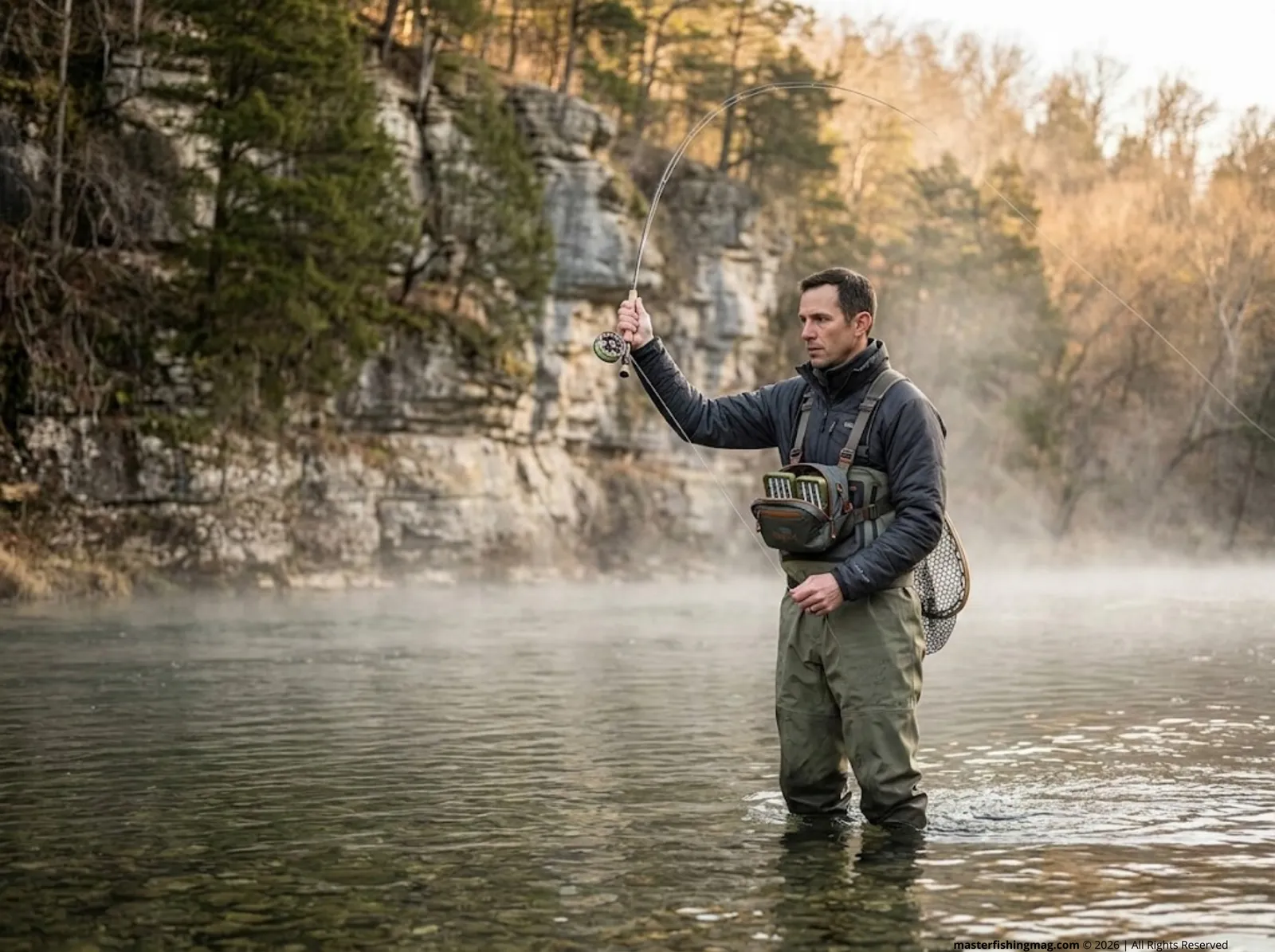
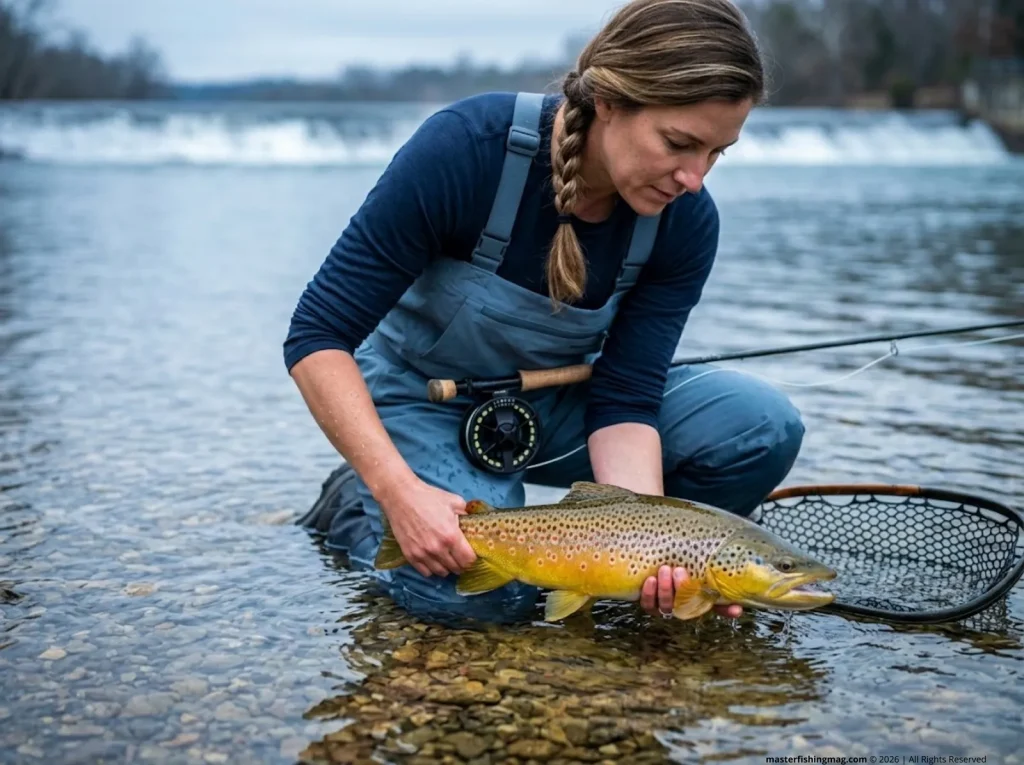
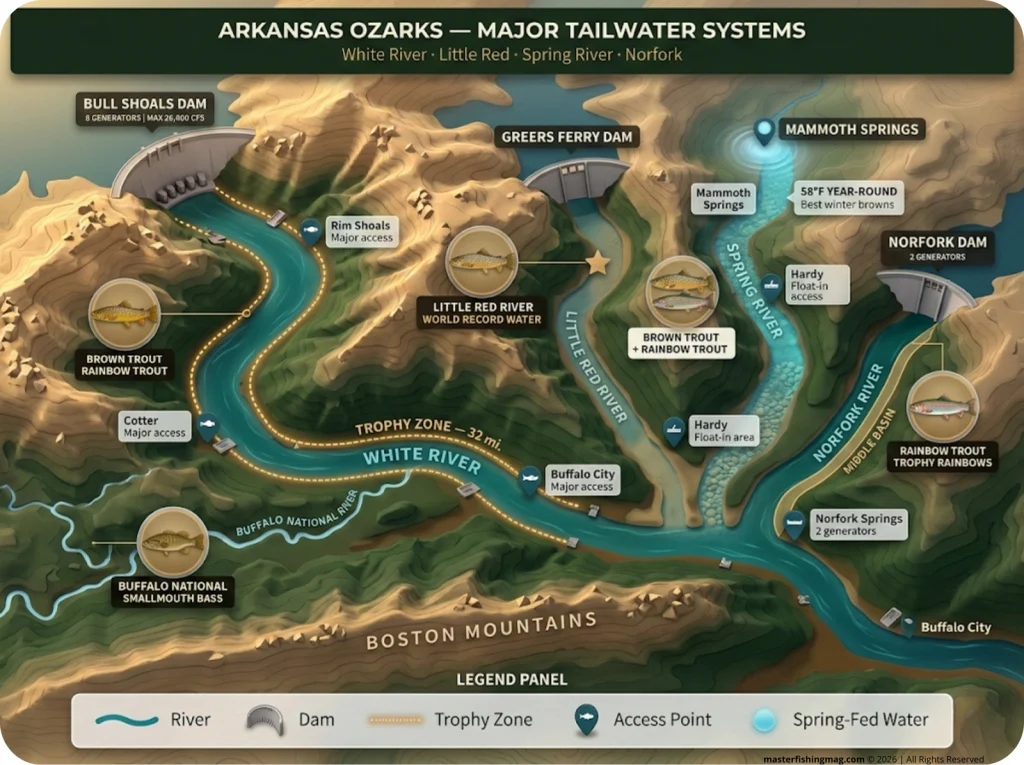
The White River tailwater spans 92 miles below Bull Shoals Dam, but the trophy brown trout density concentrates in the first 32 miles from the dam down to Buffalo City. The water runs 45-58°F year-round thanks to cold releases from the bottom of the reservoir, creating a trout fishery that holds some of the largest browns in the country.
The state record brown from the White came in at 38 pounds 7 ounces, 36.6 inches long. That fish didn’t come from some secret spot. It came from water that thousands of anglers float past every season without understanding how tailwater systems work differently from regular rivers.
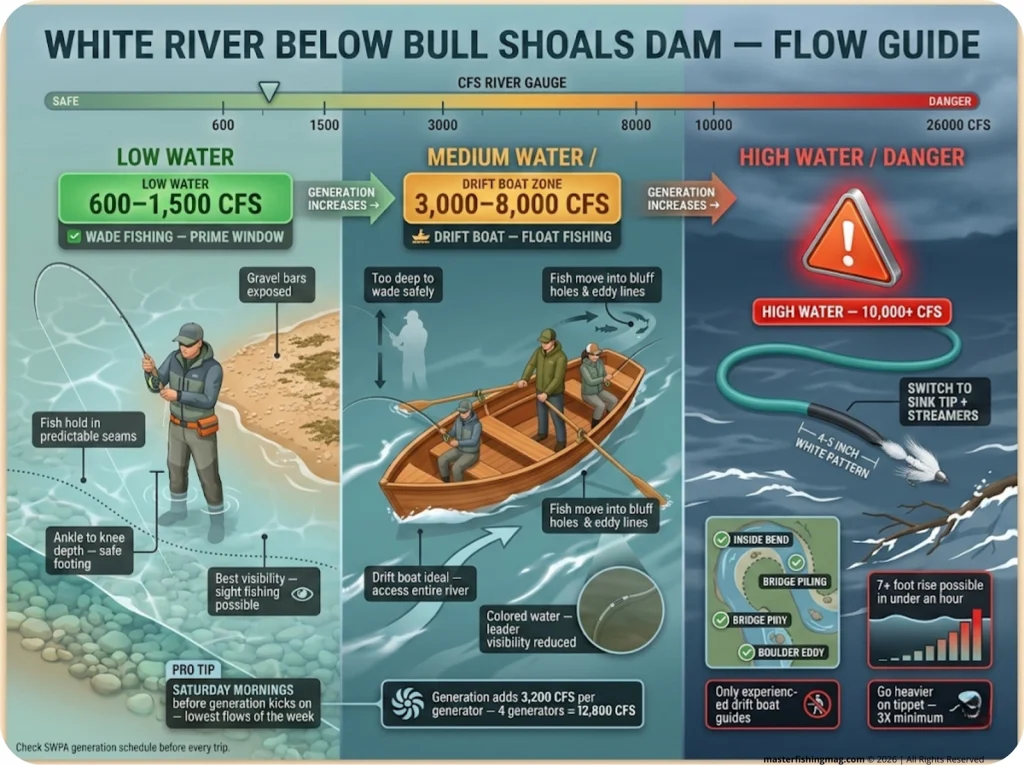
Bull Shoals has eight generators. Each one adds roughly 3,200 CFS to the flow. At minimum generation, the river is a calm 600 cfs — perfect for wade fishing. Turn on four generators and you’re looking at 12,800 cfs of cold water pushing through a canyon. That’s the difference between a productive morning of nymphing and a dangerous swim.
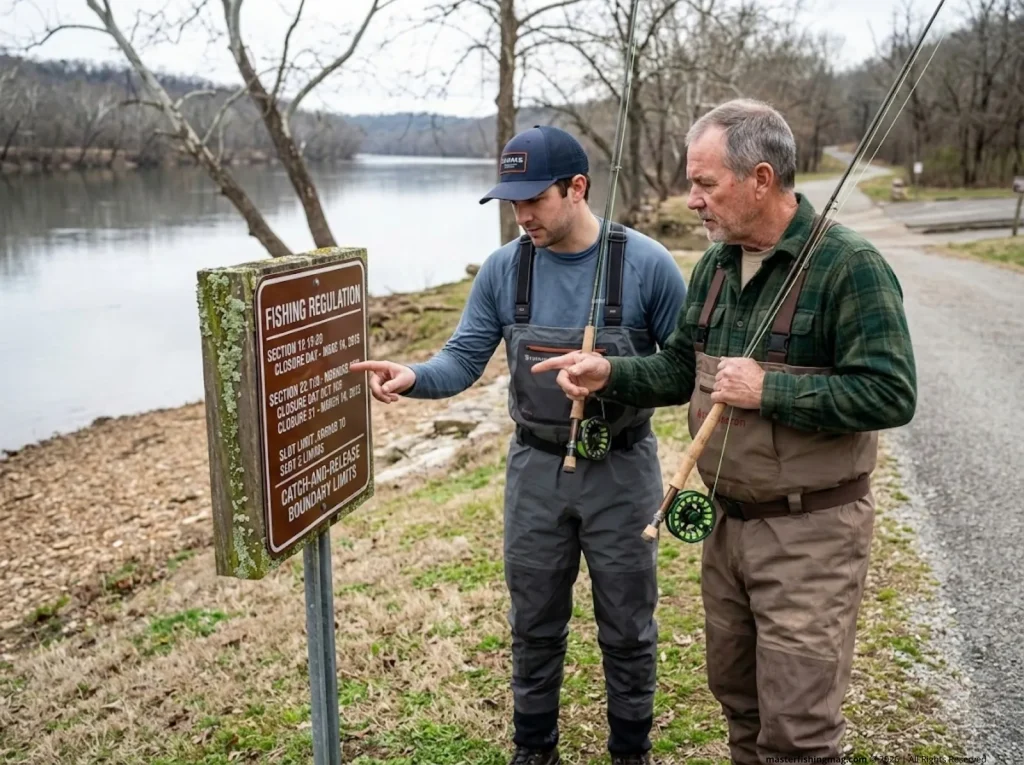
Pro tip: The catch-and-release area right at Bull Shoals Dam closes November 1 through January 31 to protect spawning browns. Plan your fall trip around that date or you’ll find the best water off-limits.
Little Red River Below Greers Ferry Dam
Greers Ferry Lake reaches depths over 200 feet, and the tailwater below it holds the world record brown trout — 40 pounds 4 ounces, caught in 1992. That record still stands. The Little Red River gets a fraction of the pressure that the White River sees because most visiting anglers bypass it heading north to Bull Shoals.
Greers Ferry also holds the world record walleye at 22 pounds 11 ounces. The Greers Ferry National Fish Hatchery stocks the Little Red directly, keeping the trout population strong even during low-flow years.
Spring River — The 58-Degree Winter Secret
Here’s what most anglers don’t realize: while the White River and Norfork run cold and high through January, Spring River stays 58°F year-round. Fed by Mammoth Springs — one of the largest springs in North America — this river fishes comfortably all winter when everything else in the region shuts down.
February through March produces the biggest browns of the year here. The Jim Hinkle Spring River State Fish Hatchery keeps the stocking program consistent, and the Arkansas Game and Fish Commission weekly reports consistently call out this window as prime time. Most anglers don’t even consider Spring River as a winter fishing destination because it doesn’t carry the name recognition of the White. That’s exactly why it fishes so well.
Ozark Bass Water Nobody Writes About
Buffalo National River Smallmouth
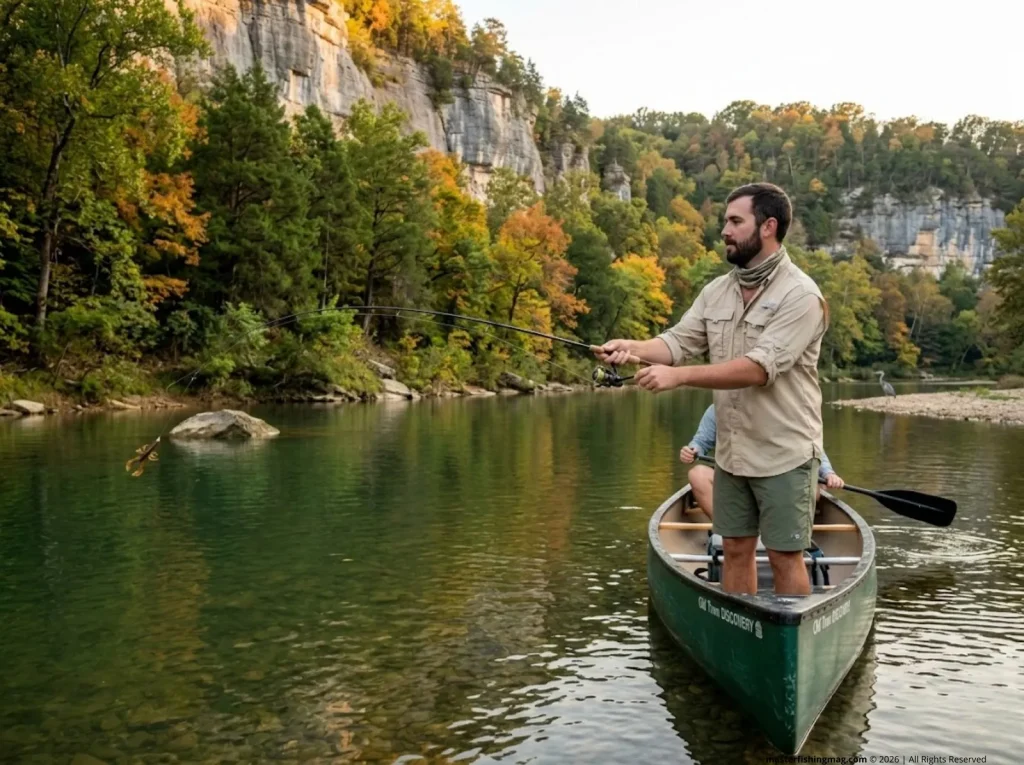
The Buffalo National River contains 74 different fish species, including smallmouth bass that rarely see artificial lures. Designated as America’s first National River in 1972, this water flows through remote Ozark canyons that you can only access by canoe or kayak. That isolation is what keeps the fishing pressure at a fraction of what comparable streams see.
Float fishing here is the way to do it. You pick a put-in, you pack your gear into the canoe, and you spend a full day drifting through bluffs that look like they belong in a national park — because they do. The best months run late spring through early fall when flows are wadeable and the smallmouth are holding on current breaks along cut banks and boulder gardens.
Keep in mind that the Buffalo requires a National Park fishing license in addition to your Arkansas state license. Check Buffalo National River fishing regulations before you go.
Beaver Lake — Striper Hybrids and Deep Structure
Beaver Lake covers 28,200 to 31,700 acres depending on the season, with nearly 490 miles of shoreline and an average depth of 58 feet. Maximum depth hits 216 feet. That’s a lot of deep structure for striped bass hybrids and largemouth holding on underwater structure maps worth studying before you launch.
The sleeper bite here is winter. When threadfin shad die off in cold water, they trigger explosive feeding frenzies along bluff walls that can last for weeks. If you have a fish finder and can locate the shad schools suspended over submerged creek channels, you’ll find stripers stacked underneath them. Most anglers show up in June. The locals fish December through February.
Eleven Point River — The Dual-Personality Fishery
This one almost nobody covers. The Eleven Point River holds coldwater trout in its upper sections and warmwater smallmouth in its lower sections, all in one float. You can start your morning catching stocked rainbows in 55-degree spring-fed current and finish the afternoon sight-fishing for bronze-backed smallmouth in 70-degree riffles.
The Eleven Point is designated a National Wild and Scenic River, and the limited access keeps the pressure low. If you’re the kind of angler who likes hidden smallmouth rivers most anglers miss, put this one at the top of your list.
The Generation Schedule Secret Most Anglers Never Learn
How to Read CFS and What the Numbers Mean
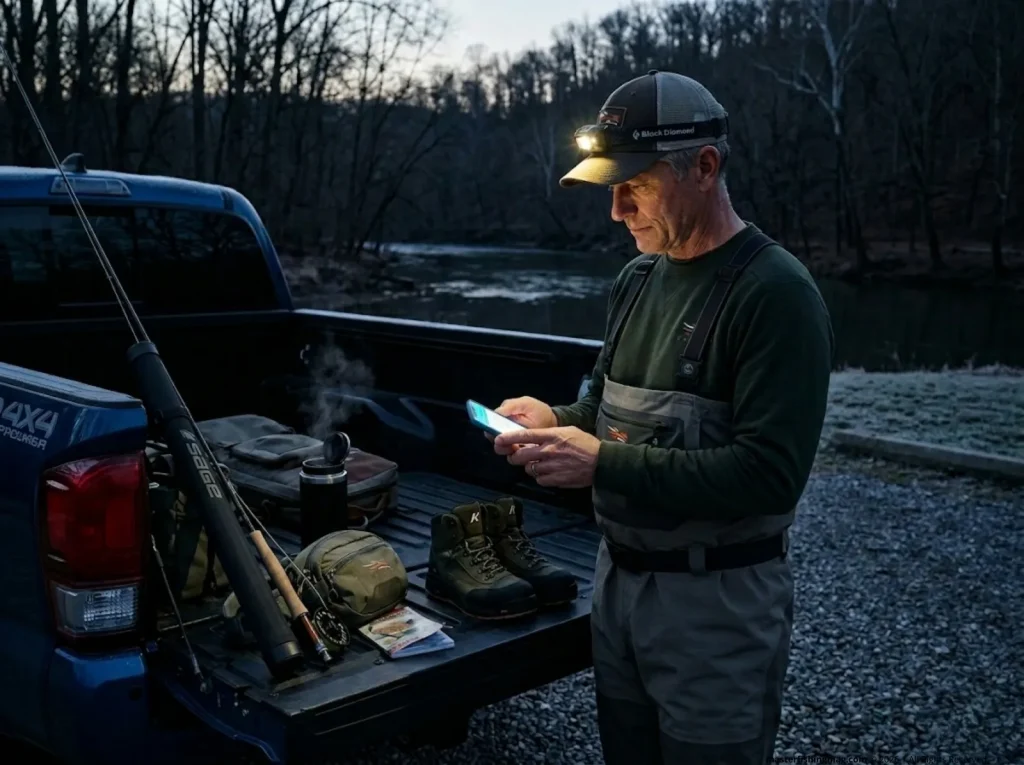
If you take one thing from this article, let it be this: check the generation schedule before every single trip. The tailwater flow rate on the White River swings from 600 cfs to over 26,000 cfs depending on how many generators Bull Shoals is running. That’s the difference between standing in ankle-deep water and watching your truck disappear under a rising river.
At 600 to 1,500 cfs, you’re in prime wading access territory. The gravel bars are exposed, the fish hold in predictable lies, and you can cover water on foot. Push past 3,000 cfs and you need a boat. Above 10,000 cfs, only experienced drift boat guides should be on the water.
There’s a direct connection between water level changes and fish behavior that most articles skip over, so here it is: when generation kicks on, fish that were holding in shallow riffles pull into bluff holes and eddy lines within minutes. If you know where those refuges are, you can fish high water productively. If you don’t, you’re throwing flies at empty current.
When to Go — Weekday vs. Weekend Flows
Weekend flows are typically lower than weekday flows because power demand drops on Saturdays and Sundays. That Saturday morning window before generation kicks in offers the best wading spots of the week. The SWPA (Southwestern Power Administration) posts generation projections online, and most local fishing guide services build their booking calendar around those projections.
Pro tip: Check generation schedules at mcflyshop.com/pages/generation-schedules before every trip. If the schedule shows four or more generators running, switch your plan to streamer fishing from a drift boat — don’t try to wade.
High Water Tactics That Actually Work
When flows hit 8,000 cfs and above, most visiting anglers pack up and head to a restaurant. The guides stay on the water because that’s when the biggest browns feed aggressively in colored water. Heavy current pushes baitfish into eddies and inside bends, and the predators follow.
Switch to a sink-tip line and throw articulated streamers — big white patterns in the 4-5 inch range. Target anywhere the current slows down: inside bends, bridge pilings, the slack water behind large boulders. The fish can’t see your leader in dirty water, so go heavier on your tippet. Losing a 24-inch brown because you were running 5X at 12,000 cfs is a mistake you only make once.
The Overlooked Spots Locals Actually Fish
Dry Run Creek — The Permit-Only Gem
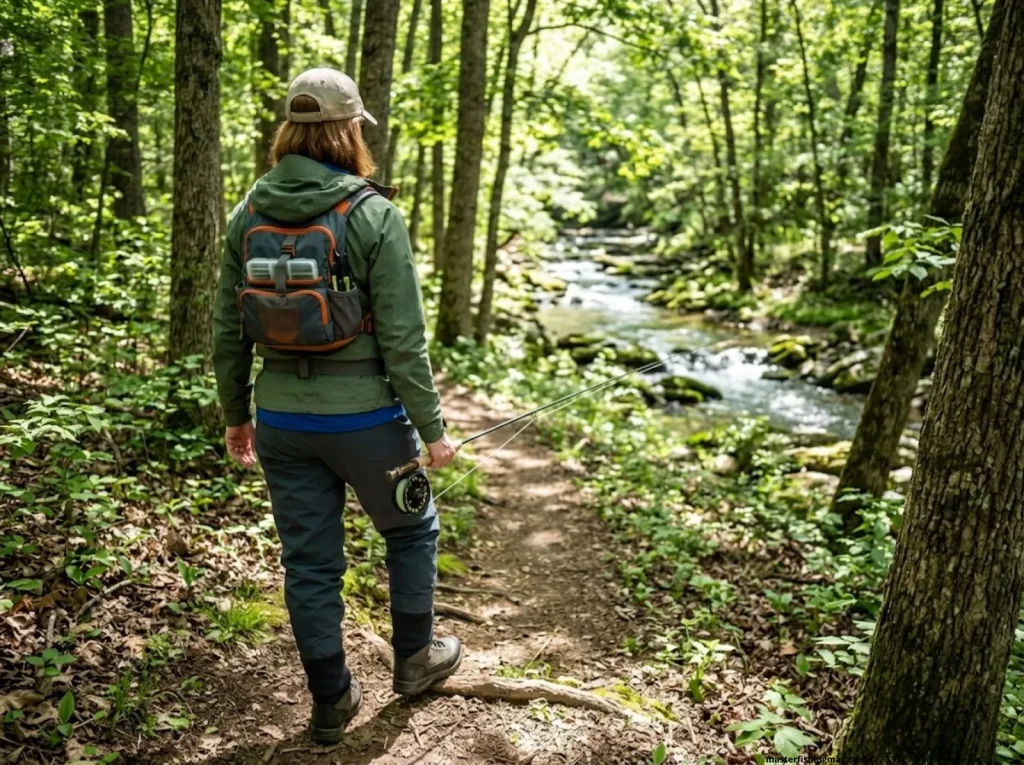
Dry Run Creek near Norfork Dam is a catch-and-release trout stream that most anglers don’t know exists. The creek is spring-fed, crystal clear, and holds massive trout visible from the bank. But here’s the catch — it’s restricted to children and mobility-impaired anglers only. Special arrangements through the Arkansas Game and Fish Commission are required.
If you qualify or you’re planning a trip with kids, this is one of the best catch-and-release waters in the state for introducing someone to trout fishing without the dangers of wading a tailwater.
Collins Creek Cascade and the Norfork “Middle Basin”
Collins Creek is spring-fed at 40,000 gallons per hour, isolated enough that it barely registers online. Small stream, no boat ramps, no crowds. You hike in, you fish, and you leave without seeing another angler.
The Norfork River “middle basin” — the section between Norfork Dam and the confluence with the White River — is where local guides take their personal days. Norfork Lake only has two generators compared to Bull Shoals’ eight, so the flows are more manageable and predictable. Trophy trout hold in this water, and you’ll see a fraction of the boat traffic. This is the kind of freshwater fishing destination that never makes the tourism lists.
Ozark Regulations That Trip Up Out-of-State Anglers
Ozark Zone vs. Statewide Limits
The Ozark Zone is a designated region in northern Arkansas with its own set of fishing regulations. The one that catches out-of-state anglers most often: smallmouth bass have a 12-inch minimum in the Ozark Zone versus 10 inches statewide. The AGFC enforces these zone-specific rules, and ignorance doesn’t reduce the fine.
If you’re not sure which zone you’re fishing in, check the Arkansas statewide fishing regulations and daily limits before you wet a line. It takes five minutes and saves you a multi-hundred-dollar ticket.
Trout Permits and License Stacking
Arkansas requires a separate trout permit in addition to your standard fishing license if you plan to keep trout. Catch-and-release fishing only requires the standard license. The community fishing program and trout stocking schedule mean the AGFC releases over 50,000 catchable-sized rainbow trout each winter between November and February, with February being the heaviest month at 12,000 fish released.
Understanding how slot limits and bag limits work in this region will keep you on the right side of the AGFC daily limits and save you from an unpleasant encounter with a game warden.
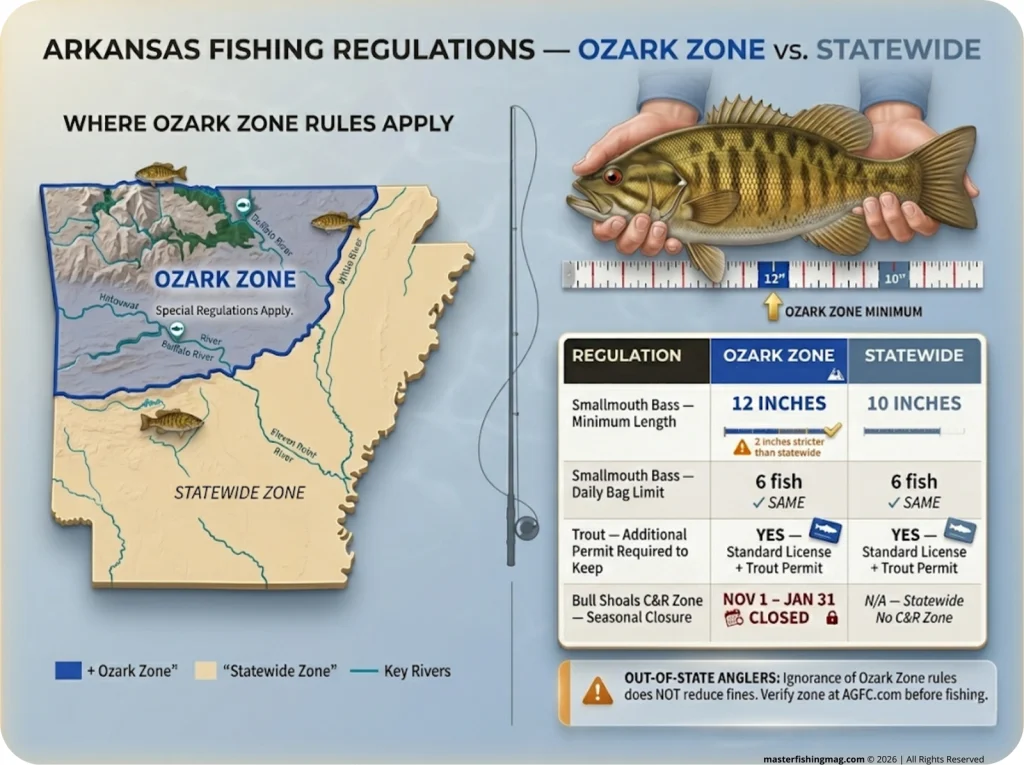
Pro tip: The Bull Shoals catch-and-release zone closes November 1 through January 31 for spawning protection. If you’re planning a late-fall trip, verify boundary markers on the water before you start casting.
Planning Your Ozark Trip — Gear, Guides, and Timing
Best Months by Species and Location
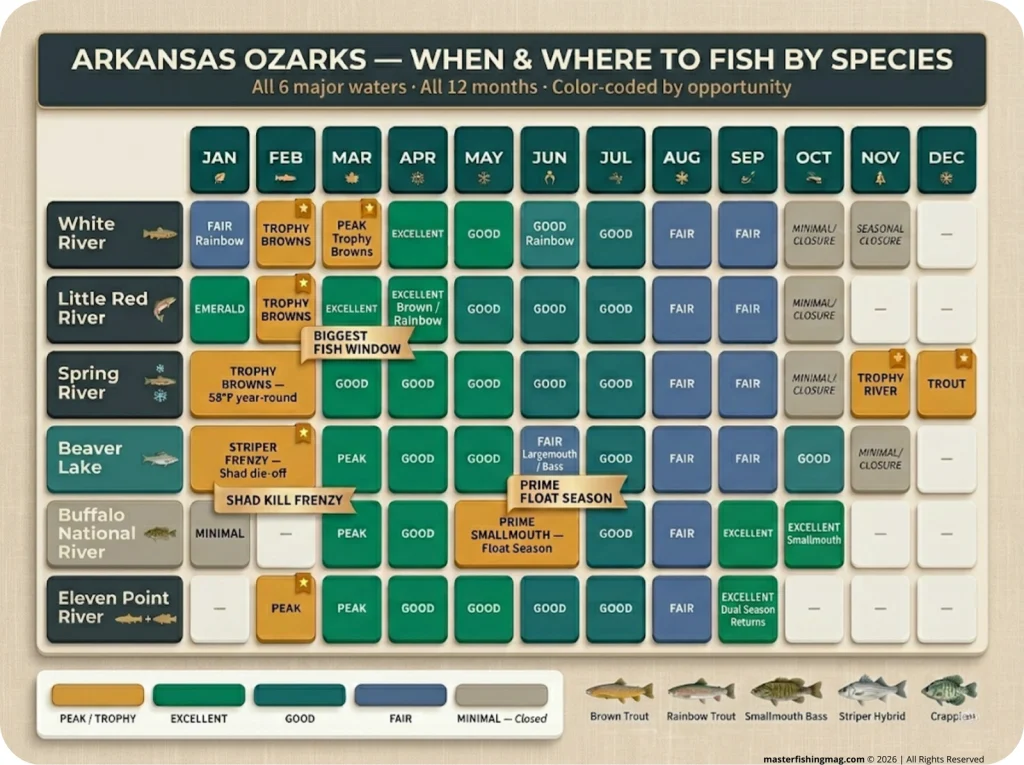
Year-round fishing is one of the biggest draws of the Arkansas Ozarks, but each season produces different results on different water. February through March is when trophy browns feed aggressively before the spawn — this is the big fish window. April through May brings world-class caddis hatches on the White River and the seasonal peaks that fly fishing anglers plan entire trips around. October through November offers the lowest flows and the best wading access of the year. And in winter, Spring River is the only game in town unless you’re running a drift boat.
Beaver Lake peaks during winter shad kills for stripers and spring for crappie. The Buffalo National River produces its best bass fishing from late spring through early fall when you can wade the gravel bars.
Gear Essentials for Ozark Tailwaters
Stockingfoot waders are mandatory for cold tailwater wading. Serious anglers run something in the Simms G3 or G4 range. Felt soles grip Ozark limestone better than rubber in most conditions, but check your state’s invasive species transport regulations before crossing borders with felt-soled boots.
A 5-weight fly rod covers 80% of White River situations. Bring a 7-weight for high-water streamer fishing. Spinning anglers do well with a medium-light rod, 6-pound fluorocarbon, and 1/16-ounce marabou jigs — especially on freshly stocked rainbows. When choosing between stockingfoot and bootfoot waders, go stockingfoot for tailwater work. The ankle support and interchangeable sole options are worth the extra setup time.
Guides Worth Booking
The White River Trout Club in Flippin, AR, offers luxury lodging and jet-drive guide boats. Co-owner Stephen Balogh put it plainly: “Not only do we have one of the highest average sizes of brown trout in the country, but we also have plenty of big rainbows, cutts, and a wide variety of warmwater species.”
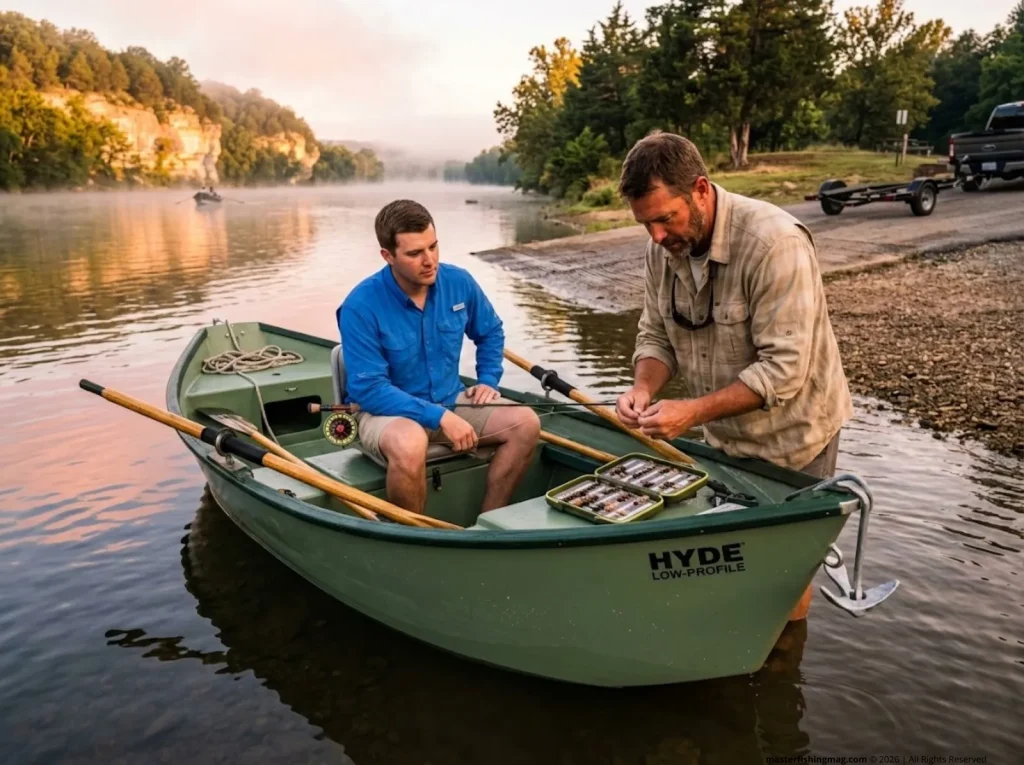
Cotter Trout Dock has been running guide services on the White for decades. Rising River Guides specializes in wade trips. And for Norfork Lake stripers, SRT Outdoors with Sean Reynolds is the call. Expect to pay $250-400 for a half day and $400-600 for a full day. Booking fishing guides early — especially for the October and November low-water windows — is the difference between getting on the water and watching from the bank.
Conclusion
The biggest mistake visiting Ozark anglers make isn’t picking the wrong fly. It’s not checking the generation schedule before they leave the truck. The most productive fishing spots in the Arkansas Ozarks are the ones that don’t show up on the tourism brochures — Spring River in the middle of February, the Norfork middle basin on a Tuesday morning, Collins Creek when you need solitude more than you need a 20-inch fish.
Pull up the SWPA generation schedule, pick a spot from this guide, and plan a trip during a low-flow window this season. The Ozarks reward preparation more than any freshwater fishing destination I’ve fished.
FAQ
Do I need a trout permit to fish in Arkansas Ozarks?
Yes. Arkansas requires a separate trout permit in addition to your standard fishing license if you want to keep trout. Catch-and-release fishing for trout requires only the standard license, but always verify current regulations with the AGFC before your trip.
What is the best time of year to fish the White River in Arkansas?
February through March produces the biggest brown trout during pre-spawn feeding. October through November offers the lowest flows for wading access. April through May brings world-class caddis hatches. Each season has advantages depending on your target species and preferred method.
How dangerous is wading the White River below Bull Shoals Dam?
Extremely dangerous if you ignore the generation schedule. The White River can rise over seven feet in under an hour during dam releases. Always check current CFS readings before wading, wear a wading belt, and carry a wading staff. If generation starts while you’re in the water, move to shore immediately.
Can I fish the Buffalo National River with just an Arkansas fishing license?
No. The Buffalo National River is managed by the National Park Service, so you need both an Arkansas fishing license and a National Park fishing permit. The river contains 74 fish species including smallmouth bass. Check NPS regulations for specific slot limits and seasonal restrictions.
What CFS range is safe for wading the White River?
Generally 600 to 1,500 cfs is considered safe for experienced waders. Above 3,000 cfs, boat fishing is recommended. Above 10,000 cfs, only experienced drift boat anglers should be on the water. CFS can change rapidly with generation schedules, so monitor readings throughout your trip rather than checking once in the morning.
Risk Disclaimer: Fishing, boating, and all related outdoor activities involve inherent risks that
can lead to injury. The information provided on Master Fishing Mag is for educational and informational purposes
only. While we strive for accuracy, the information, techniques, and advice on gear and safety are not a substitute
for your own best judgment, local knowledge, and adherence to official regulations. Fishing regulations, including
seasons, size limits, and species restrictions, change frequently and vary by location. Always consult the latest
official regulations from your local fish and wildlife agency before heading out. Proper handling of hooks, knives,
and other sharp equipment is essential for safety. Furthermore, be aware of local fish consumption advisories. By
using this website, you agree that you are solely responsible for your own safety and for complying with all
applicable laws. Any reliance you place on our content is strictly at your own risk. Master Fishing Mag and its
authors will not be held liable for any injury, damage, or loss sustained in connection with the use of the
information herein.
Affiliate Disclosure: We are a participant in the Amazon Services LLC Associates Program, an
affiliate advertising program designed to provide a means for us to earn advertising fees by advertising and linking
to Amazon.com. As an Amazon Associate, we earn from qualifying purchases. We also participate in other affiliate
programs and may receive a commission on products purchased through our links, at no extra cost to you. Additional
terms are found in the terms of service.