
In this article
You drove seven hours, aired down the tires, parked on the beach, and your first three casts landed in a dead flat stretch of ocean with zero structure. That’s the reality for a lot of first-time OBX visitors who pick a spot based on proximity to their rental house. After years of fishing these beaches through every season, I’ve learned that the difference between a cooler full of fillets and a sunburn with nothing to show for it comes down to knowing which stretches of sand actually hold fish — and when.
This is the spot-by-spot breakdown I wish someone had handed me before my first trip to the Outer Banks. You’ll get seasonal timing windows, access details, the water-reading tricks locals use, and the gear that works in this specific surf.
Quick Answer: The best Outer Banks surf fishing spots include:
- Cape Point on Hatteras Island — where two ocean currents collide and trophy red drum stack up in fall
- Oregon Inlet — fast tidal current that pulls baitfish and predators within casting range year-round
- South Nags Head — accessible structure with sloughs close to shore
- Buxton and Frisco beaches — less crowded Hatteras Island stretches with consistent fall runs
- Ocracoke Island — remote sand with light fishing pressure and strong spring drum action
Why the Outer Banks Produces Fish Other Beaches Can’t
Most East Coast beaches are just sand and waves. The Outer Banks is something different. The fish that show up here aren’t random — they’re drawn by geography and ocean forces that don’t exist anywhere else on the Atlantic seaboard.
Where the Labrador Current Meets the Gulf Stream
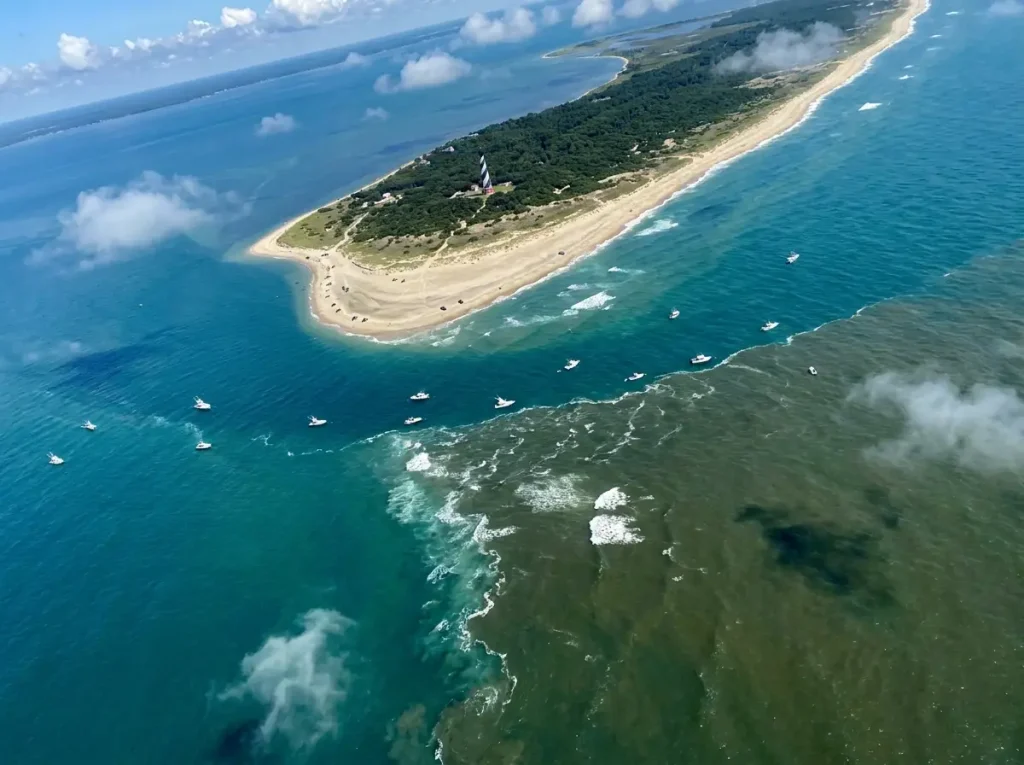
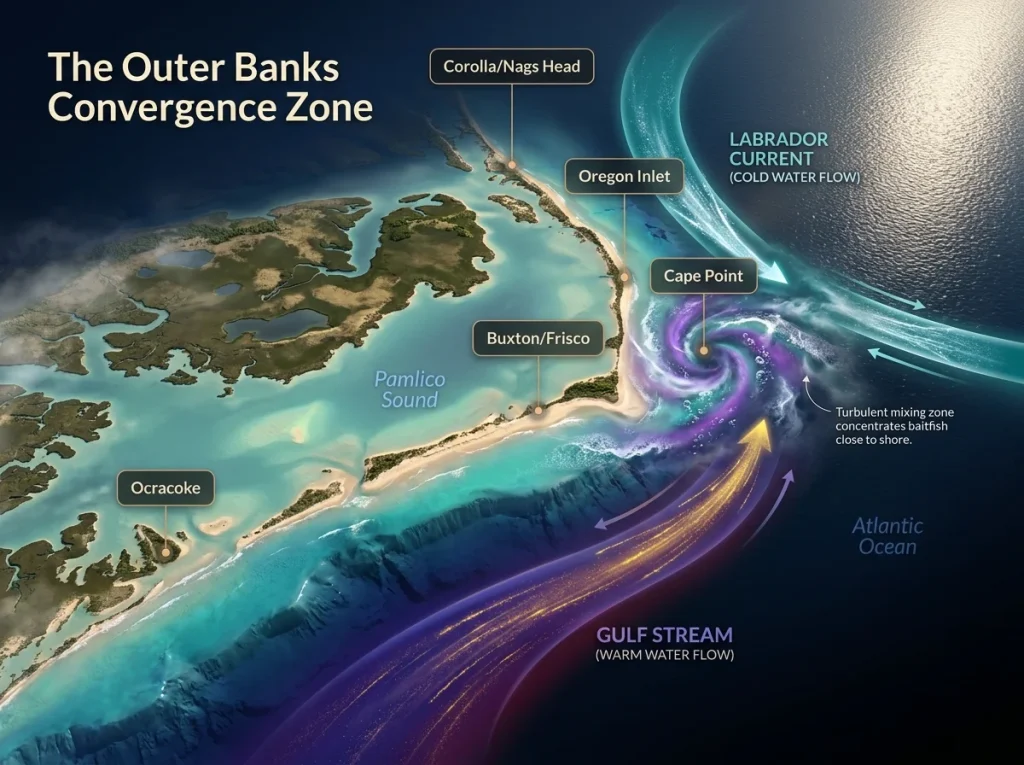
The cold, nutrient-rich Labrador Current flows south along the coast. The warm Gulf Stream pushes north just offshore. These two massive systems collide right off Cape Hatteras, creating a turbulent mixing zone packed with bait and the predators that follow it. This convergence is the reason the Outer Banks consistently produces species you’d normally need a boat to reach — cobia, big bluefish, and Spanish mackerel all push within surf casting range because the bait concentrates near shore.
Pro tip: When you see a visible color change in the water — dark green shifting to blue within a few hundred yards — you’re looking at the edge of the Gulf Stream influence. Fish that boundary. The bait stacks up where the temperatures mix.
How Barrier Island Geometry Creates Year-Round Structure
The Outer Banks isn’t one straight beach. It’s a chain of barrier islands that curve, shift, and create natural structure at every turn. Inlets cut through the islands and funnel tidal current. Points jut into the ocean and create current breaks. Shoals build up offshore and form underwater highways for migrating fish.
This geometry means structure that most beaches don’t have. On a typical Atlantic beach, you’re casting into featureless sand. On the OBX, every mile has potential — sloughs, cuts, points, and inlet mouths that create the kind of current breaks where fish ambush bait.
The Inlet Effect on Baitfish Migration
Every inlet along the Outer Banks acts as a funnel. When the tide changes, water rushes in or out of the Pamlico Sound through these cuts, carrying mullet, menhaden, shrimp, and other forage with it. Predators — red drum, striped bass, flounder — know this and position themselves at inlet mouths to intercept the flow.
Oregon Inlet is the most dramatic example, but Hatteras Inlet and Ocracoke Inlet follow the same pattern. If you want to understand how fish respond to current and structure at a deeper level, it comes down to energy conservation — predators park where the current delivers food so they don’t have to chase it. Time your fishing around tidal changes at any of these inlets and you’ll see the difference immediately.
Cape Point — The Spot Every Surf Angler Hears About First
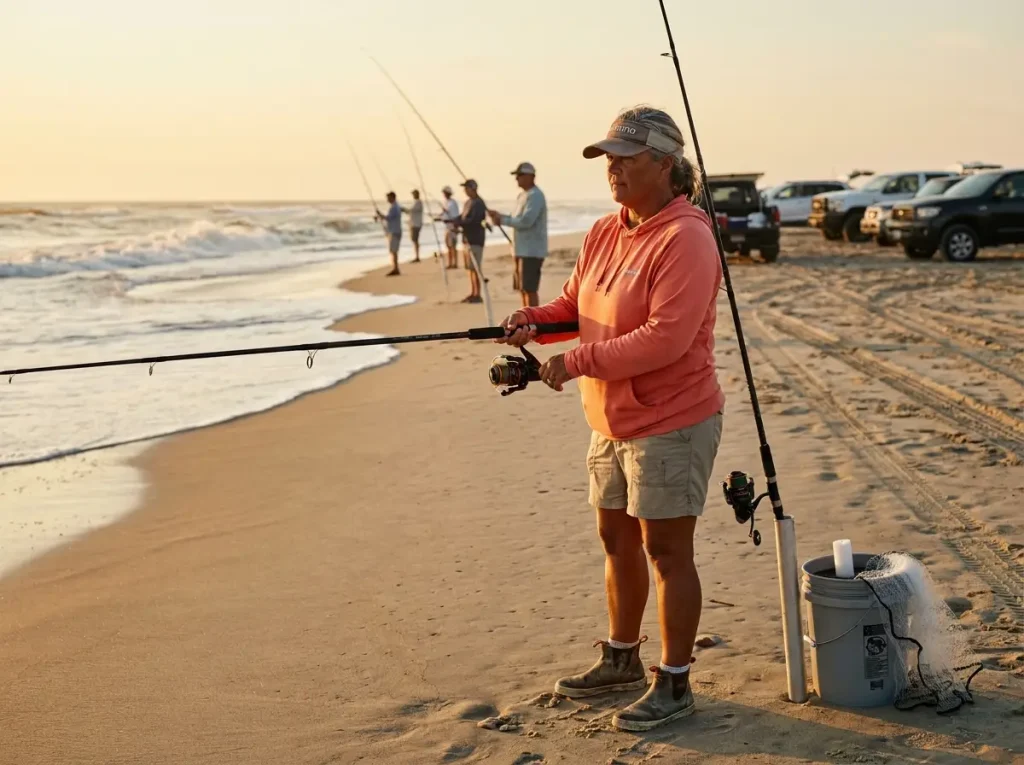
If you’ve read anything about Outer Banks surf fishing, you’ve heard about Cape Point. It’s the tip of Hatteras Island where the beach curves sharply and two directions of current slam together. The reputation is earned — but it’s not magic. Knowing when to fish it and how to get there matters more than just showing up.
What Makes Cape Point Different from Every Other Beach
Cape Point sits at the elbow of the Outer Banks where the coastline shifts from running north-south to running east-west. Two sets of waves break against each other here, creating a zone of turbulent, churning water that concentrates bait. The bottom drops off sharply compared to surrounding beaches, which means deeper water within casting range.
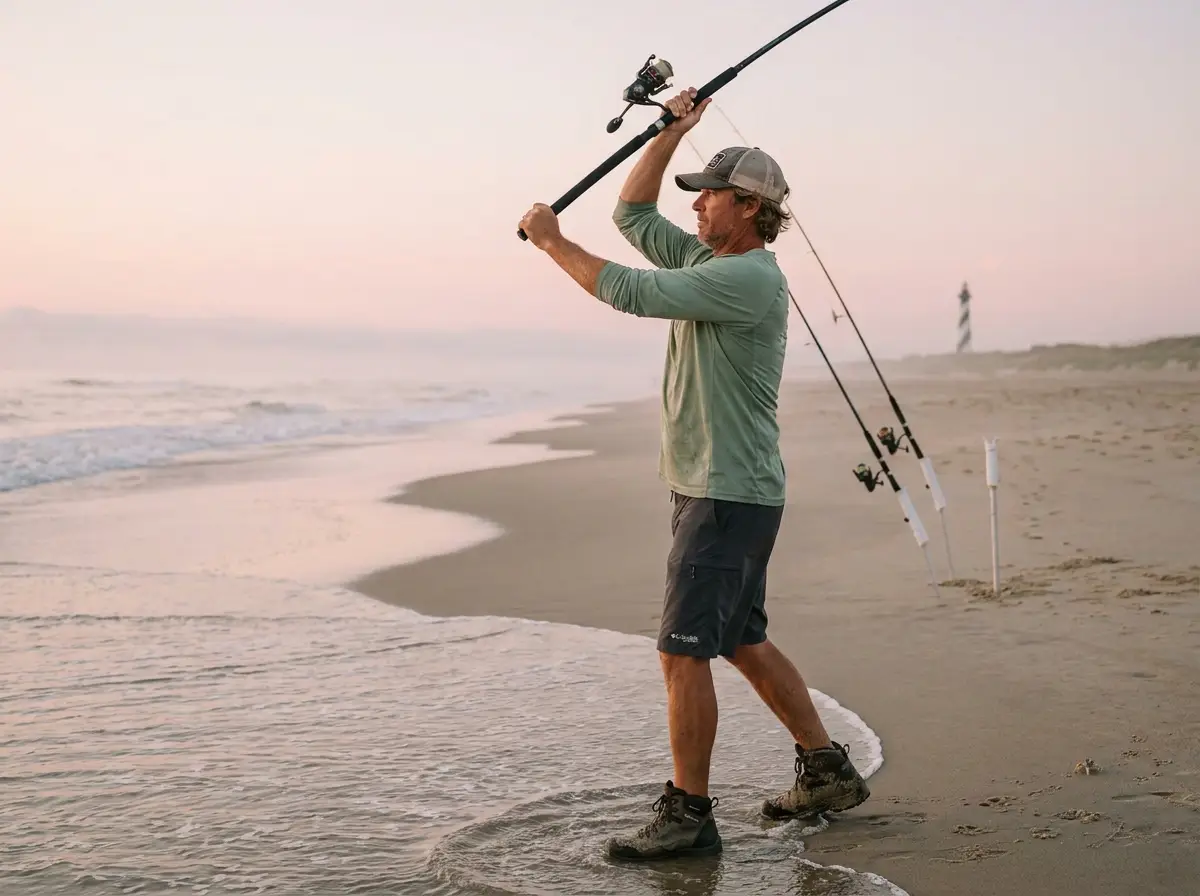
On a good day at the Point, you’ll see dozens of surf rods lined up in sand spikes along the tip. The regulars know exactly where the best casting lanes are and they’ll be there before dawn.
Best Species and Months at Cape Point
Spring (April–May): Large red drum in the 35–50 pound range move through during their northward migration — understanding red drum biology and tailing behavior helps you predict where they’ll stage. Striped bass are still around early in the season. Pompano and sea mullet fill the gaps.
Summer (June–August): Spanish mackerel push within range on calm mornings. Bluefish of all sizes patrol the point. Cobia show up occasionally, usually following rays in the shallows.
Fall (September–November): This is peak season. The big red drum return — fish in the 40–70 pound range — and the bluefish blitz can be legendary. Flounder, puppy drum, spot, and croaker round out the catch. October is the month that fills parking lots.
Winter (December–February): Quieter but not dead. Striped bass return in good numbers, and the lack of crowds means you can fish the best spots without competition.
Pro tip: Cape Point fishes best on an incoming tide with a moderate south or southeast wind. The incoming tide pushes bait into the point, and the wind creates just enough chop to give fish confidence to feed in shallower water.
Access, Parking, and the 4WD Reality
Cape Point requires a 4WD vehicle and a Cape Hatteras National Seashore ORV permit. You’ll access it through one of several numbered beach ramps — Ramp 44 is the most common approach. Air your tires down to 20 psi before hitting the sand, and don’t park below the high tide line unless you want to watch the Atlantic reclaim your truck.
From May 1 through November 15, night driving is prohibited on the seashore from 9 PM to 7 AM due to sea turtle nesting. Plan accordingly — the pre-dawn bite means arriving at first legal driving time.
Oregon Inlet and the South Nags Head Stretch
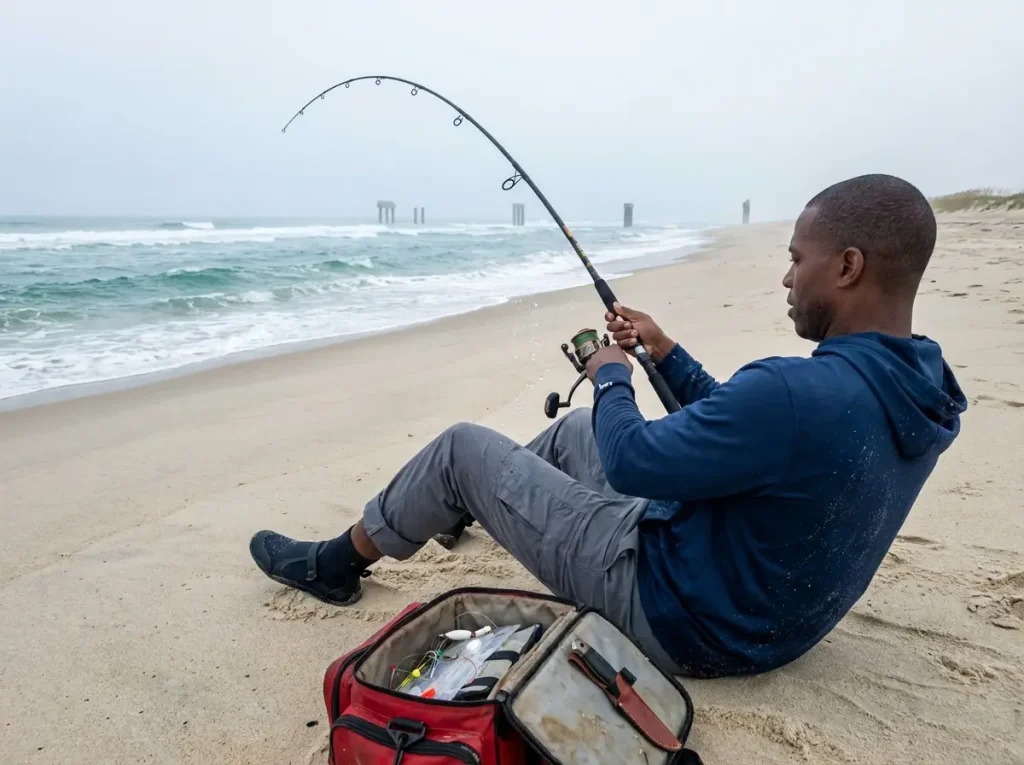
Oregon Inlet doesn’t get the fame that Cape Point does, but pound for pound, it might be the most consistently productive surf fishing spot on the Outer Banks. The fast-moving tidal current that rips through this inlet creates conditions that fish can’t resist.
Why the Inlet Current Changes Everything
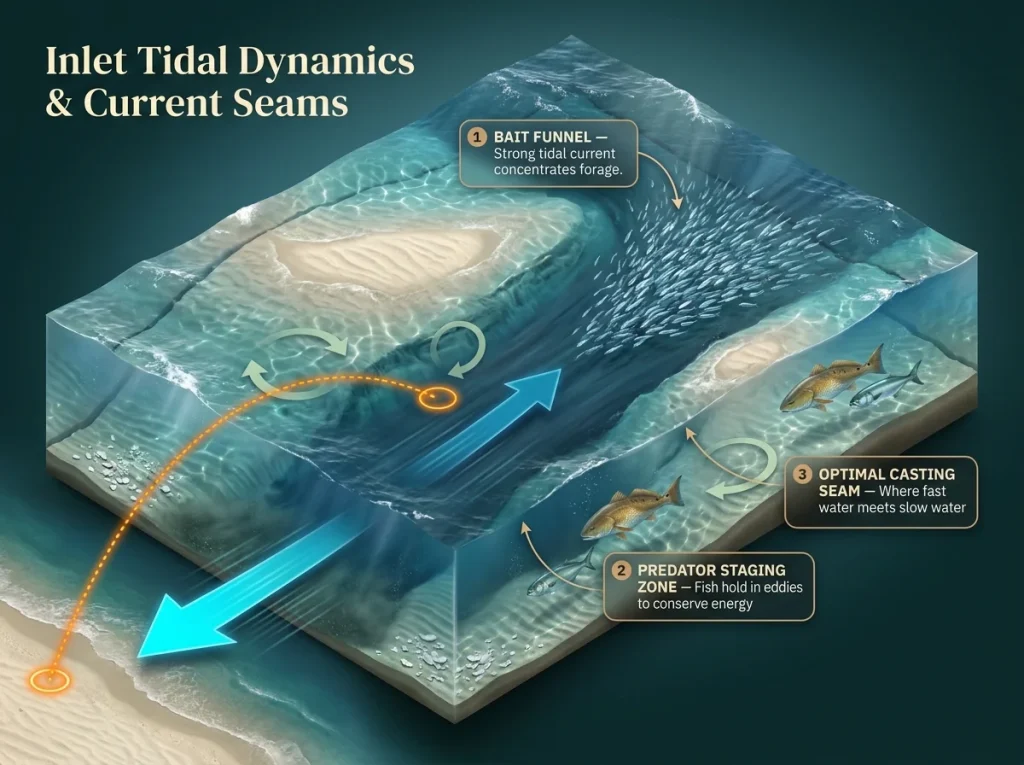
Oregon Inlet is the primary connection between the Atlantic Ocean and the Pamlico Sound. Twice a day, massive volumes of water push through this cut, carrying bait in concentrated streams. Unlike ocean beaches where bait is spread thin, the inlet funnels everything into a narrow corridor.
This means predators concentrate too. Red drum, striped bass, and big bluefish hold in the eddies and current seams just outside the inlet mouth, waiting for food to wash past.
Species and Seasonal Windows at Oregon Inlet
Year-round: Bluefish and sea mullet are almost always present. Flounder hold along the sandy edges where current meets calm water from spring through fall.
Spring: Large red drum and striped bass follow the same migration pattern as Cape Point but often show up at Oregon Inlet first because the inlet mouth concentrates them.
Fall: Spot and croaker school heavily in the inlet currents. Bigger drum push through on their way south. This is prime time for live-bait fishing with finger mullet.
Fishing the South Side vs. North Side
The south side of Oregon Inlet offers more beach and fewer crowds. You can park along the road and walk over, or use the beach driving access if you have a 4WD and an ORV permit. The north side — accessible from the South Nags Head area — gives you a long, productive stretch of beach with visible sloughs and structure.
Whichever side you fish, cast into the current seams where fast-moving water meets slower water. That edge is where fish hold. If you’re struggling to reach the seam, learning a proper pendulum cast for maximum surf distance makes a real difference at inlet mouths where the sweet spot is 80+ yards out.
Nags Head, Kill Devil Hills, and the Northern Beaches
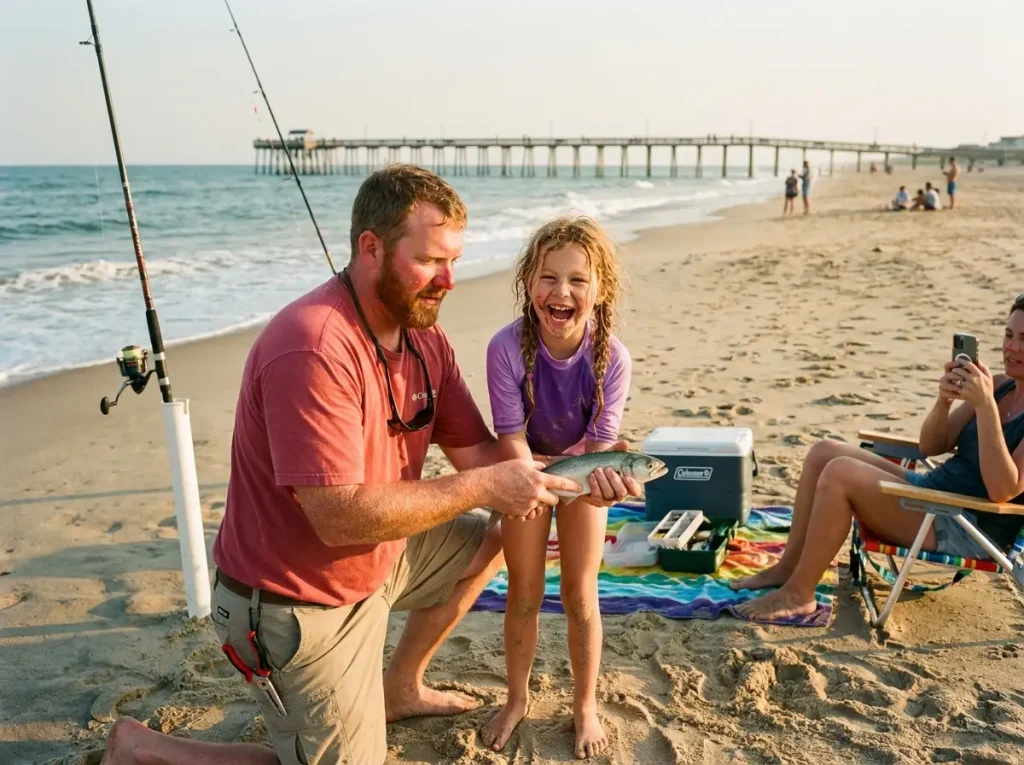
The northern Outer Banks beaches from Nags Head through Kill Devil Hills and up to Kitty Hawk get dismissed by serious surf anglers because they’re the tourist stretches. That’s a mistake. These beaches produce fish — you just need to know where to look.
What the Tourist Beaches Still Offer Surf Anglers
The species mix on the northern beaches is solid: bluefish, spot, pompano, sea mullet, croaker, and puppy drum all show up in season. You won’t find the trophy red drum runs that Cape Point and Hatteras Island deliver, but for consistent action on eating-sized fish, these beaches are hard to beat.
The big advantage here is access. No 4WD required. No ORV permit. Just park at a public beach access, walk out with your gear, and fish. For families and anglers without a truck, this is where OBX surf fishing starts.
Finding Productive Structure on Flat Sand
The northern beaches look flat and featureless at first glance. They’re not. Walk the beach at low tide and you’ll find subtle sloughs — troughs of deeper water running parallel to shore — every hundred yards or so. These depressions hold fish, and they’re easy to miss if you’re just staring at the waves.
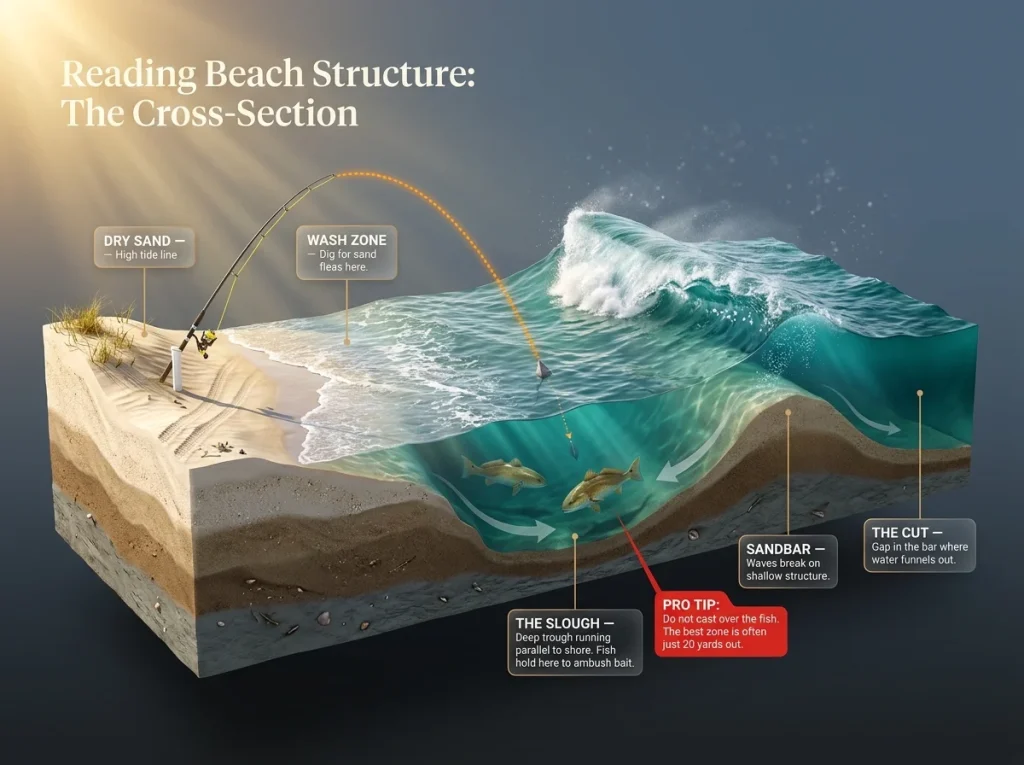
Look for waves that break offshore on a sandbar, then reform and break again closer to shore. The gap between those two break zones is the slough, and that’s where your bait needs to land.
Pier-Adjacent Surf Fishing Spots
The Outer Banks Fishing Pier in South Nags Head and the Avalon Pier in Kill Devil Hills attract baitfish to their pilings, which attracts predators. Fishing the surf 50–100 yards down the beach from a pier puts you in the zone where fish patrol without paying the pier entrance fee and without needing a NC saltwater fishing license (pier fishing is license-exempt, but surf fishing is not).
Pro tip: Fish the down-current side of any pier. The pilings break up the longshore current and create a calm zone on the downstream side where bait collects and predators ambush. Check the current direction before you set up.
If you’re just getting started, our complete surf fishing guide for beginners covers the gear and technique basics you’ll want before your first OBX trip.
Hatteras Island Spots Beyond Cape Point
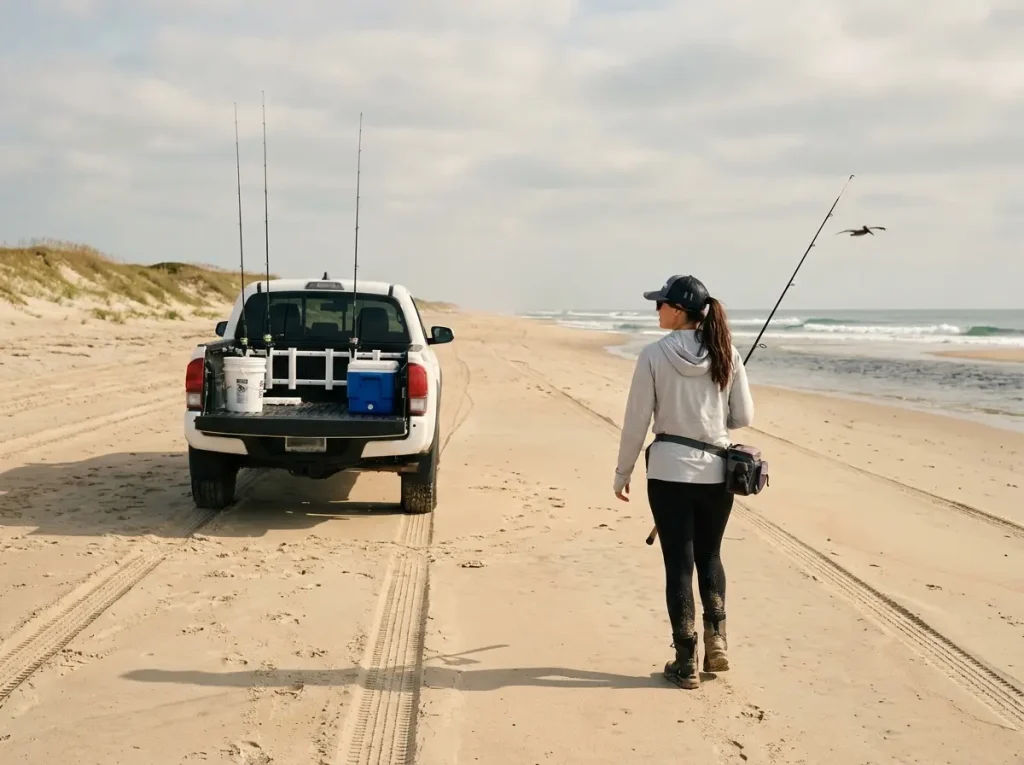
Everyone talks about Cape Point, but Hatteras Island has 40 miles of beach, and the sections between the villages produce fish with a fraction of the pressure. If you’re willing to drive past the crowds, you’ll find some of the best surf fishing on the East Coast — often with the entire beach to yourself.
Rodanthe to Avon — The Overlooked Middle Section
The stretch from Rodanthe south through Waves, Salvo, and down to Avon is classic barrier island surf. Long, straight beaches with periodic sloughs and sandbars. In fall, puppy drum and bluefish cruise these beaches in good numbers, and you’ll rarely see more than a handful of other anglers.
Access here is mostly through beach ramps that require an ORV permit. Ramps 23, 27, 30, and 34 spread out along this section. The beaches between ramps see almost zero fishing pressure.
Buxton and Frisco Beaches
Buxton sits just south of Cape Point and benefits from the same current dynamics without the crowds. The beach here faces more directly south, which means different wave and current patterns than the north-facing beaches above it.
Frisco is even quieter. The beaches here have excellent structure — multiple sandbar systems with well-defined sloughs — and the fall drum run hits these beaches hard.
Ocracoke Island for Anglers Who Want Solitude
You have to take a ferry to Ocracoke from Hatteras Village, and that extra step keeps the crowds away. The island has miles of undeveloped national seashore beach accessible only by 4WD. The spring red drum run here is strong, and in fall, the bluefish blitzes can match anything Cape Point delivers.
The trade-off is logistics. You need to plan ferry times, and the island has limited tackle shops and bait options. Bring everything you need. Knowing how to read water temperature and its effect on fish location is especially useful on Ocracoke, where you’re relying on your own observation rather than tackle shop intel.
Reading OBX Beach Structure Like a Local
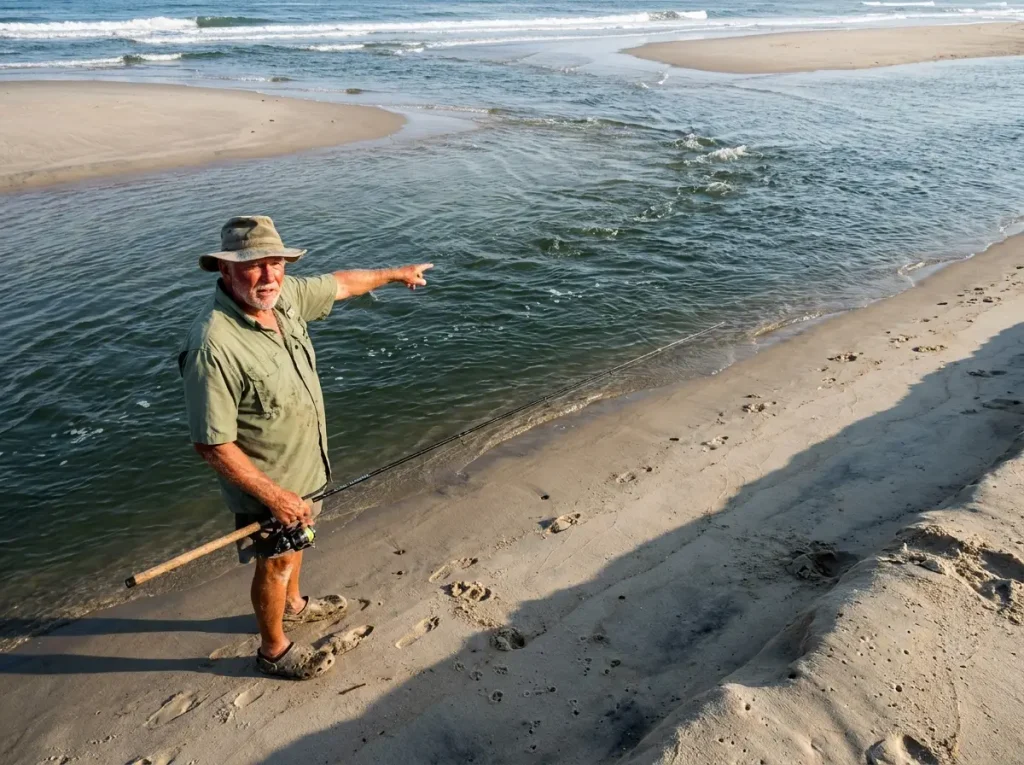
The best spot in the world won’t produce fish if you’re casting into the wrong part of it. Reading beach structure is the skill that separates the regulars who consistently catch fish from the visitors who go home empty-handed. The good news: it’s not complicated once you know what to look for.
Finding Sloughs, Cuts, and Holes at Low Tide
A slough is a trough of deeper water running parallel to the beach, typically between the dry sand and the first sandbar. Fish use sloughs like highways — they swim along them hunting bait that gets trapped in the deeper water.
Walk the beach at low tide. Look for darker water close to shore. That color difference — pale sandy shallows next to a band of darker green — tells you exactly where the slough is. Some stretches of OBX beach have sloughs every 50 yards. Others have none. The sloughs move, too, especially after storms.
A cut is a gap in the sandbar where water flows between the slough and the open ocean. Fish stage at cuts because bait gets funneled through them with every wave cycle. If you can find a cut, fish it. Cast directly into the gap and let the current do the work.
How Sandbars Shift After Storms
Nor’easters and hurricanes reshape OBX beaches every year. A sandbar that was 30 yards offshore last October might be 50 yards out this fall, or it might have merged with the beach entirely. This is normal for barrier islands.
After any significant storm, the structure resets. The locals know this and scout their spots at low tide after rough weather. You should too. The anglers who catch fish consistently aren’t the ones with the most expensive rods — they’re the ones who walk the beach first.
The Color and Current Tells That Reveal Fish
Dark water close to shore = deeper than the surrounding area. Fish it.
A line of foam or debris running parallel to the beach = a current seam where two flows meet. Fish hold on seams.
Birds working the surface in one concentrated area = baitfish below. Get a cast into that zone before they move.
Bait flipping on the surface anywhere near a slough or cut = predators are pushing them up. Drop everything and cast there immediately.
Pro tip: Bring a good pair of polarized sunglasses — not fashion sunglasses, real fishing polarized lenses with amber or copper tint. They cut through surface glare and let you see the bottom contours, sloughs, and even individual fish in the shallows. Costa and Smith both make purpose-built fishing lenses that change the game for reading water.
Knowing how to read a fishing weather forecast ties directly into structure scouting — wind direction and recent storm history tell you how the sandbars have shifted before you even leave the house.
Gear, Rigs, and Bait That Work in the OBX Surf
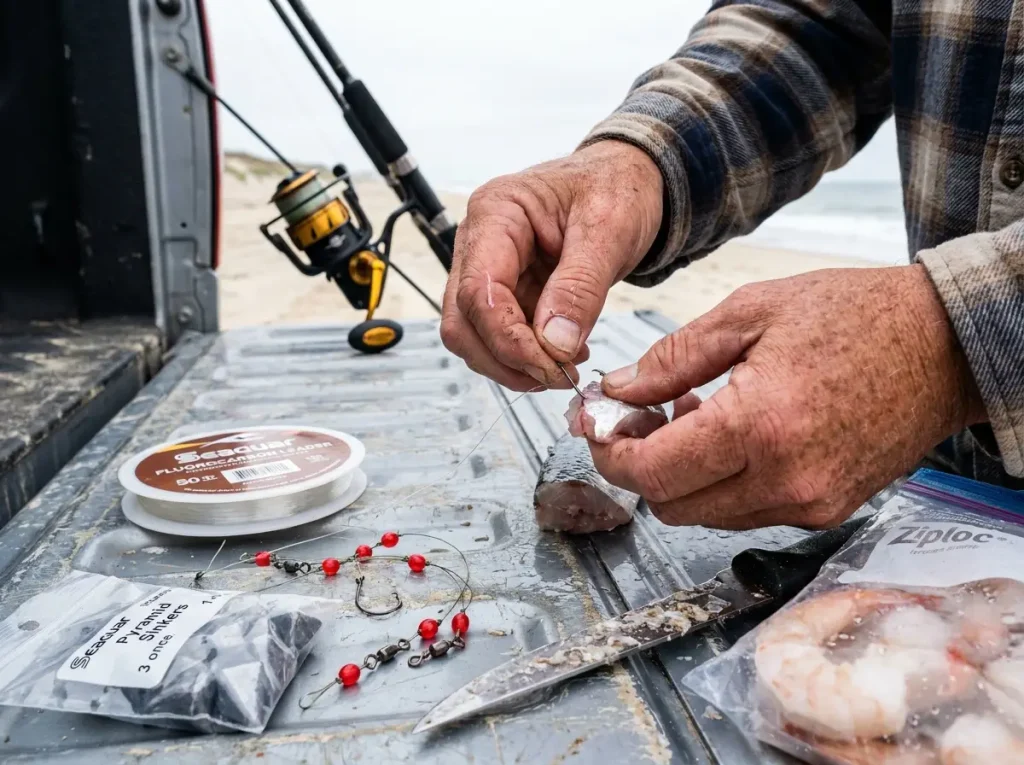
You can overthink surf fishing gear, and plenty of websites will sell you an entire truck bed full of equipment you don’t need. Here’s what actually matters for fishing the Outer Banks specifically.
Rod and Reel Setups for OBX Conditions
A 10 to 12-foot medium-heavy surf rod covers most situations on the OBX. Shorter rods don’t cast far enough to reach the outer sandbars where big fish hold. Longer rods (13–15 feet) are specialty tools for distance casting at Cape Point — useful, but not necessary for most spots.
Pair the rod with a 4000–6000 size spinning reel loaded with 20–30 pound braided line and a 40–50 pound fluorocarbon or monofilament shock leader. The shock leader absorbs the stress of casting heavy sinkers and protects against abrasion from shells and structure.
Penn, Daiwa, and Shimano all make surf-specific reels that handle saltwater well. Don’t buy the cheapest option — salt will eat a budget reel in one season. But you also don’t need to spend $400. The $100–$200 range gets you a reel that’ll last years with proper rinsing after each session. If your casts are falling short, the issue is usually technique, not gear — our guide on how to cast a spinning reel farther covers the mechanical fixes that add real distance.
The Three Rigs That Cover 90% of OBX Surf Fishing
Fish finder rig (sliding sinker rig): The workhorse of OBX surf fishing. A pyramid sinker slides freely on the main line above a swivel, with a 2–3 foot leader to a circle hook. The sliding design lets fish pick up the bait and run without feeling resistance from the weight. Use this for red drum, striped bass, and flounder.
Double-drop bottom rig: Two hooks on dropper loops above a fixed sinker. This rig covers more of the water column and lets you present two different baits at once. Standard for spot, croaker, sea mullet, and pompano.
Floating rig: Similar to a bottom rig but with small floats above the hooks to suspend bait off the bottom. Use this when targeting bluefish — they feed higher in the water column and respond better to bait that moves with the current rather than sitting on the sand.
Bait Selection by Season and Target Species
Cut mullet is the all-purpose OBX bait. It works year-round for nearly everything. Buy it fresh from local tackle shops, not frozen from a gas station.
Fresh shrimp is the second-best all-around option and works especially well for pompano, spot, and flounder in warmer months.
Sand fleas (mole crabs) are free if you dig for them in the wash zone. Pompano eat them aggressively. The best collecting happens in late summer when populations are highest.
Finger mullet — live, if you can cast-net them — are the go-to fall bait for big red drum and bluefish. Hook them through the lips or behind the dorsal fin.
Menhaden (bunker) is the heavy-hitting cut bait for bluefish and striped bass. The oil content drives predators toward it from a distance.
Pro tip: Whatever bait you use, keep it cold and fresh. Warm, mushy bait falls off the hook on the cast and doesn’t put out the same scent trail. A small cooler with ice next to your rod holders makes a noticeable difference in both hookups and bait longevity.
One last gear note: salt eats everything. After every session, give your reels a proper rinse — cleaning a spinning reel after saltwater takes five minutes and saves you from buying a replacement mid-trip.
NC Fishing License, 4WD Permits, and Regulations You Need to Know
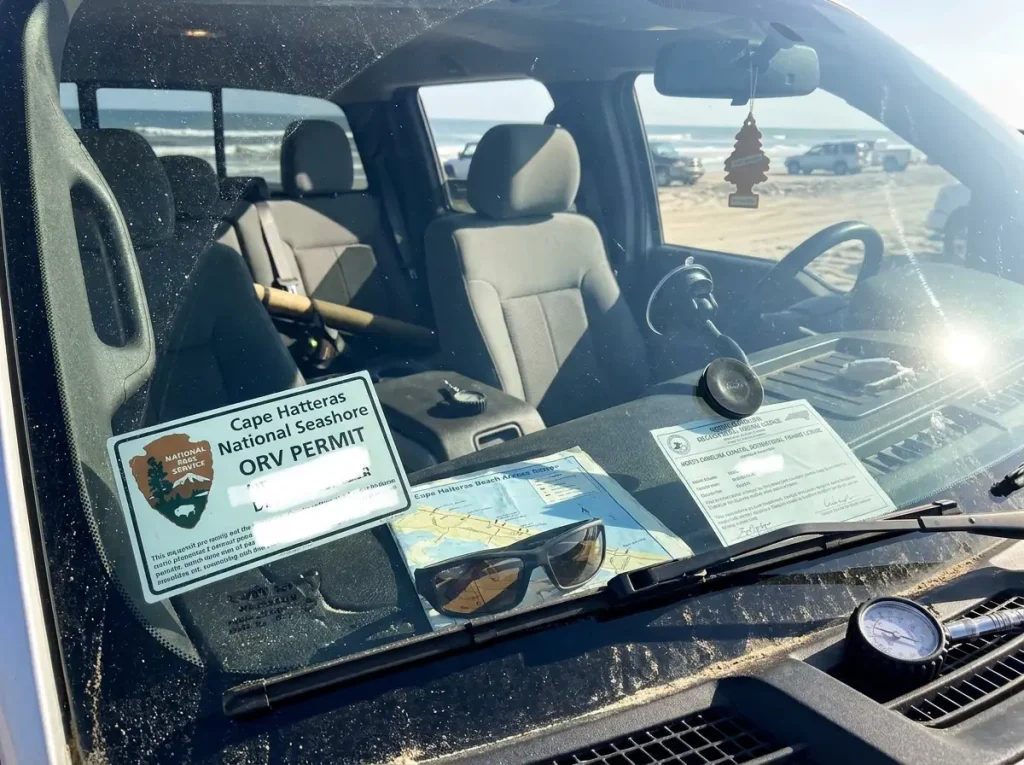
Nobody wants to talk about permits and regulations, but ignoring them is a fast way to ruin a fishing trip. Here’s the short version of what you need before you hit the OBX sand.
Coastal Recreational Fishing License Basics
Every angler 16 or older needs a North Carolina Coastal Recreational Fishing License to fish any saltwater beach, sound, or inlet in the state. Buy it online at ncwildlife.org or at any local tackle shop. Non-resident annual licenses run about $32, and 10-day options are available for vacationers.
Two exceptions worth knowing: you do not need a license to fish from a public pier in North Carolina, and you do not need one for clamming or oystering. The license applies only to finfish.
Cape Hatteras ORV Permit and Beach Driving Rules
If you want to drive on the beach within Cape Hatteras National Seashore — and you do, because that’s how you reach Cape Point, most Hatteras Island spots, and Ocracoke’s best beaches — you need an ORV permit from the National Park Service through Recreation.gov.
The permit must be printed and displayed on your windshield. You’ll access the beach through numbered ramps — Hatteras Island has 11 of them. Air tires down to 20 psi before driving on sand, and carry a tire deflator and compressor. Getting stuck at low tide is embarrassing. Getting stuck at high tide gets expensive.
Night driving restriction: From May 1 through November 15, beach driving is prohibited between 9 PM and 7 AM due to sea turtle nesting. From mid-November through April, night driving is allowed. This matters for fall fishing when the pre-dawn bite is prime.
For current ramp status and closures, text “CAHAORV” to 333111 for text alerts from the National Park Service.
Size and Bag Limits for Key Species
The regulations you’ll encounter most on an OBX surf fishing trip:
Red drum: Slot limit of 18–27 inches total length. One fish per person per day. Any red drum over 27 inches must be released. As of December 2025, all harvested red drum must be reported online at deq.nc.gov.
Bluefish: 15 per day, only 5 of which can exceed 24 inches total length.
Flounder: Check current NC Division of Marine Fisheries regulations, as flounder limits have changed frequently in recent years and vary between summer and southern flounder.
Spanish mackerel: 15 per day, minimum 12 inches fork length.
Striped bass: 2 per day in Atlantic waters, minimum 27 inches total length. Sound regulations differ — check before you fish.
These limits change. Always verify current regulations at the NC DEQ Marine Fisheries page before your trip. If you’re keeping fish to eat, it’s also worth checking fish consumption advisories for mercury — some coastal species have guidelines that vary by size and location.
Conclusion
Three things separate the OBX anglers who catch fish from the ones who come home sunburned and empty-handed. First, pick your spot by structure, not convenience — sloughs, cuts, inlets, and current seams hold fish while flat, featureless sand doesn’t. Second, match your timing to the species — the fall drum run at Cape Point and the spring striper push at Oregon Inlet happen on a schedule, and showing up at the right time matters more than having the right lure. Third, handle the logistics before you leave home — your fishing license, ORV permit, tire compressor, and fresh bait should be sorted before you hit the sand, not figured out at the beach ramp.
Walk the beach at low tide before your first cast. Find the dark water, the cuts, the places where current moves. That ten minutes of scouting is worth more than ten hours of blind casting.
Q1 What is the best month to surf fish in the Outer Banks?
October is widely considered the best month for Outer Banks surf fishing. The fall red drum run peaks, bluefish school heavily along the beaches, and water temperatures are still warm enough to keep a wide variety of species active. Spring months — April and May — are a strong second for big drum and striped bass.
Q2 Do you need a license to surf fish in North Carolina?
Yes. All anglers 16 and older need a North Carolina Coastal Recreational Fishing License for surf fishing. You can buy one online at ncwildlife.org or at local tackle shops. Fishing from public piers is the one exception — no license required there.
Q3 Can you drive on the beach to fish in the Outer Banks?
You can drive on designated beaches within Cape Hatteras National Seashore with an ORV permit from Recreation.gov. A 4WD vehicle is required, and you need to air tires down to 20 psi. Night driving is restricted from May through mid-November for sea turtle nesting.
Q4 What fish can you catch surf fishing in the Outer Banks?
Red drum, bluefish, flounder, Spanish mackerel, striped bass, pompano, spot, croaker, and sea mullet are the most common surf catches. Species availability changes by season — fall and spring produce the widest variety and largest fish.
Q5 Where is the best place to fish without a boat in the Outer Banks?
Cape Point on Hatteras Island is the top shore-fishing destination, though it requires 4WD access. For anglers without a truck, Nags Head and Kill Devil Hills beaches offer walk-on access with consistent catches of bluefish, spot, and pompano. Public fishing piers are another strong no-boat option.
Risk Disclaimer: Fishing, boating, and all related outdoor activities involve inherent risks that
can lead to injury. The information provided on Master Fishing Mag is for educational and informational purposes
only. While we strive for accuracy, the information, techniques, and advice on gear and safety are not a substitute
for your own best judgment, local knowledge, and adherence to official regulations. Fishing regulations, including
seasons, size limits, and species restrictions, change frequently and vary by location. Always consult the latest
official regulations from your local fish and wildlife agency before heading out. Proper handling of hooks, knives,
and other sharp equipment is essential for safety. Furthermore, be aware of local fish consumption advisories. By
using this website, you agree that you are solely responsible for your own safety and for complying with all
applicable laws. Any reliance you place on our content is strictly at your own risk. Master Fishing Mag and its
authors will not be held liable for any injury, damage, or loss sustained in connection with the use of the
information herein.
Affiliate Disclosure: We are a participant in the Amazon Services LLC Associates Program, an
affiliate advertising program designed to provide a means for us to earn advertising fees by advertising and linking
to Amazon.com. As an Amazon Associate, we earn from qualifying purchases. We also participate in other affiliate
programs and may receive a commission on products purchased through our links, at no extra cost to you. Additional
terms are found in the terms of service.