
In this article
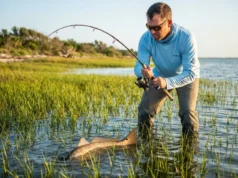
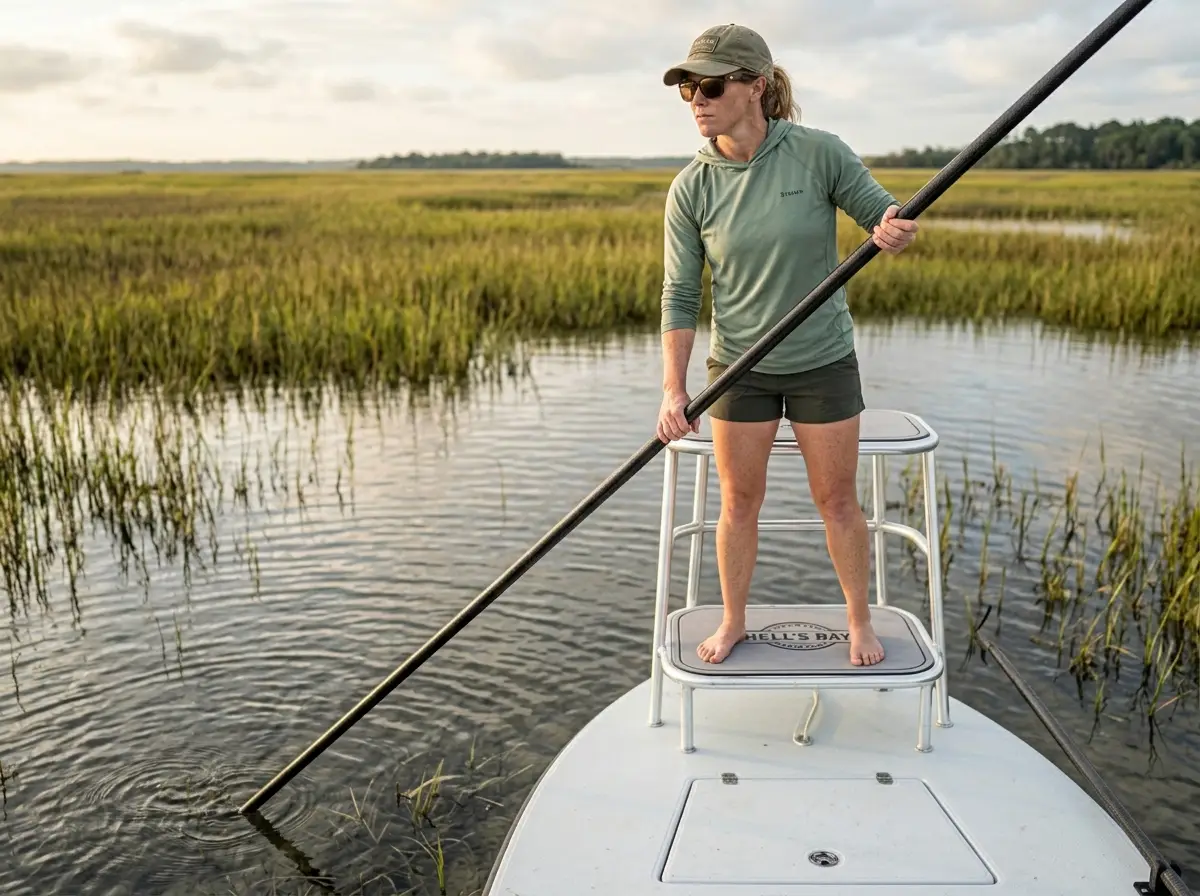
The copper tail breaks the mirrored surface of the flooded spartina grass, shimmering in four inches of water as the tidal current rushes past my shins. Most anglers just see a target. But spend enough days chasing them, and you start seeing a natural equation solving itself. We aren’t just looking for fish; we are intercepting their physiological needs. If you want to improve fishing outcomes and stop guessing, the answers aren’t hanging on pegs at the local tackle shop. They happen in the mud, the current, and the physical constraints of the estuary. Here is exactly how to read tailing behavior and apply advanced catch strategies—no luck required.
⚡ Quick Answer: Tailing happens when redfish pin crabs against hard mud in water so shallow their fins break the surface. Built with mouths tucked underneath their heads to vacuum the bottom, they have to physically stand on their noses to eat. Finding them means tracking the first push of warm, salty water against marsh grass edges and matching your lure’s size and sink rate to the natural forage crawling across the flats.
| Biological Metrics Overview | |
|---|---|
| Biology Fact | Key Metric |
| Optimal Feeding Temp | 70°F – 85°F |
| First Year Growth | 12 to 14 inches |
| Suction Power | Intense vacuum pressure |
| Sound Level limits | 140 dB (comparable to a jet) |
| Larval Need | 20 ppt salinity to stay buoyant |
The Anatomical Framework of a Bottom Predator
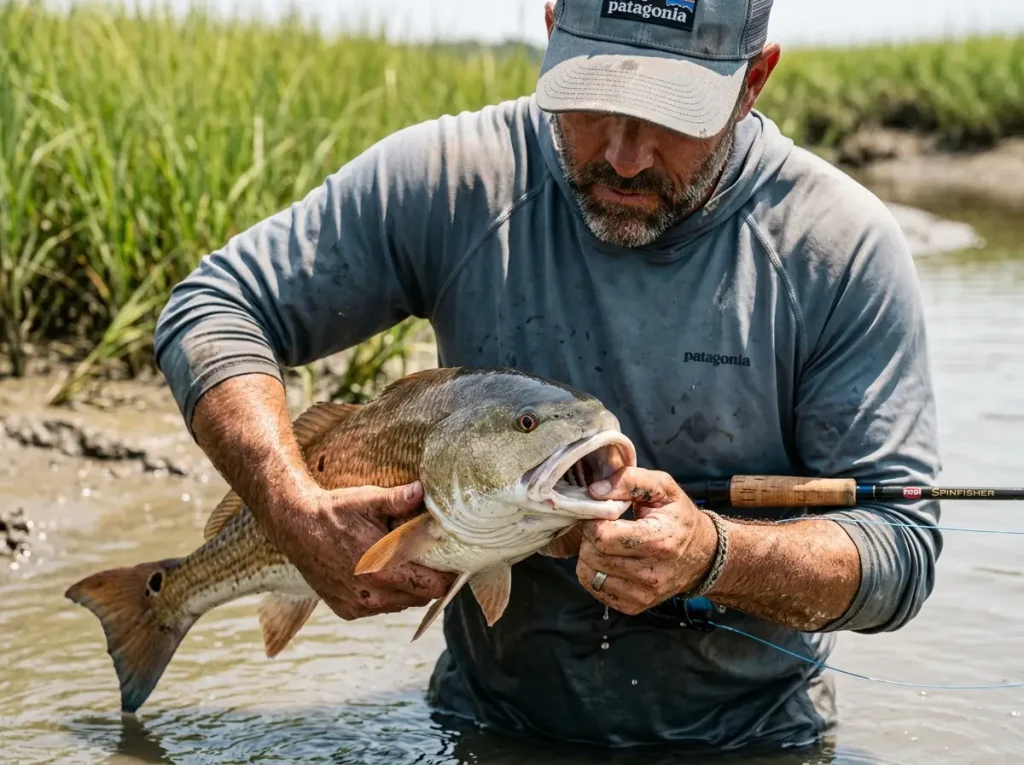
A red drum’s profile is built solely for bottom excavation. They don’t chase bait at speed like mackerel; they simply cruise and pin. Their flat belly keeps them stable riding inches above the mud. Understanding this physical hardware changes how you present a lure.
The Sub-Terminal Vacuum: Suction Feeding
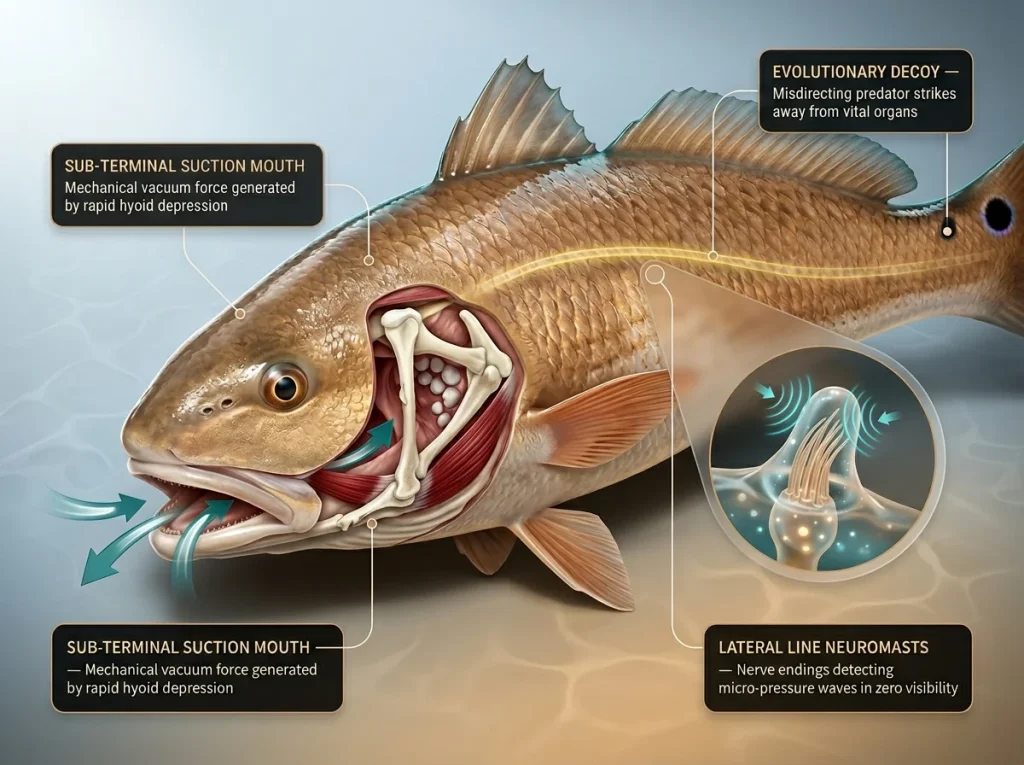
Their feeding relies on a sub-terminal mouth located underneath the head, letting them hover over crabs without rolling. Dropping the bone in their throat creates an instant, violent vacuum that rips prey from the mud. According to research on suction mechanics, this explosive process works best over hard bottom like packed sand or oyster shell. Soft silt absorbs the suction force, letting the crab escape. This explains their strict feeding habits—they stage exactly where the bottom gets firm. Throwing a bait into bottomless mud means the fish physically cannot eat it the way they want to.
The Tail Spot: An Evolutionary Decoy
That distinct black tail spot is an evolutionary decoy. Sharks target the head to ensure a quick strike. By wearing a fake eye on its tail, the redfish tricks predators into grabbing the wrong end. This saves countless fish, leaving them with torn fins instead of severed spines. When you fish soft plastics with contrasting painted eyes, you borrow this same visual trick to predict exactly where the fish will bite.
Knowing how they eat and defend themselves is only half the battle when the conditions deteriorate. Once the water gets choked with runoff and silt, they have to rely on an entirely different set of tools to find your bait.
Sensory Arrays: Hunting in Zero Visibility
In muddy estuarine runoff, vision is useless. A redfish relies on the nerve endings lining its side to detect tiny pressure waves bouncing off structure and bait. To consistently catch fish in chocolate milk water, you have to leverage the lateral line system. Scent is equally critical. Their nostrils detect amino acid trails instantly. When the wind churns up the flats, switch to lures that push heavy water and lather them in fresh scent. They will track the vibration and smell long before they see anything, granting them exceptional shallow water foraging capability.
I used to pack up and go home when the wind turned the marsh into Yoo-hoo. It wasn’t until I started throwing wide-profile dark baits smeared in crab scent that I realized they actually feed harder in the mud—they just aren’t using their eyes to do it.
Bioacoustics: The Noise That Triggers Bites
The “drum” name comes from the low, heavy thumping noise males make. This isn’t vocal; it’s a mechanical collision happening inside them, and understanding this noise gives you a massive advantage when picking surface lures.
Muscle Frequencies and Sound Power
Redfish have specialized sonic muscles attached near their swim bladders. These are some of the fastest muscles in nature. During a call, they slam against the gas-filled chamber, pumping out heavy vibration. Studies on sonic muscle mechanics show this noise hits an ear-splitting 140 decibels underwater—roughly the volume of a jet takeoff. The bigger the fish, the deeper the pulse. Even freshwater drum use this same method to communicate across lakes.
Spawning Broadcasts and Location
This drumming ramps up near inlets at dusk during late-summer spawning. It’s a broadcast to females signaling size and exact location. This group spawning behavior brings massive schools together over offshore sandbars. The heavy vibration cuts through the chaos of dumping tides and offshore surf.
While drumming is primarily used for finding a mate, the noise creates a secondary effect that analytical anglers can exploit. Understanding how fish react to heavy unnatural sounds completely changes how you fish a cork.
Triggering Strikes with Heavy Surface Noise
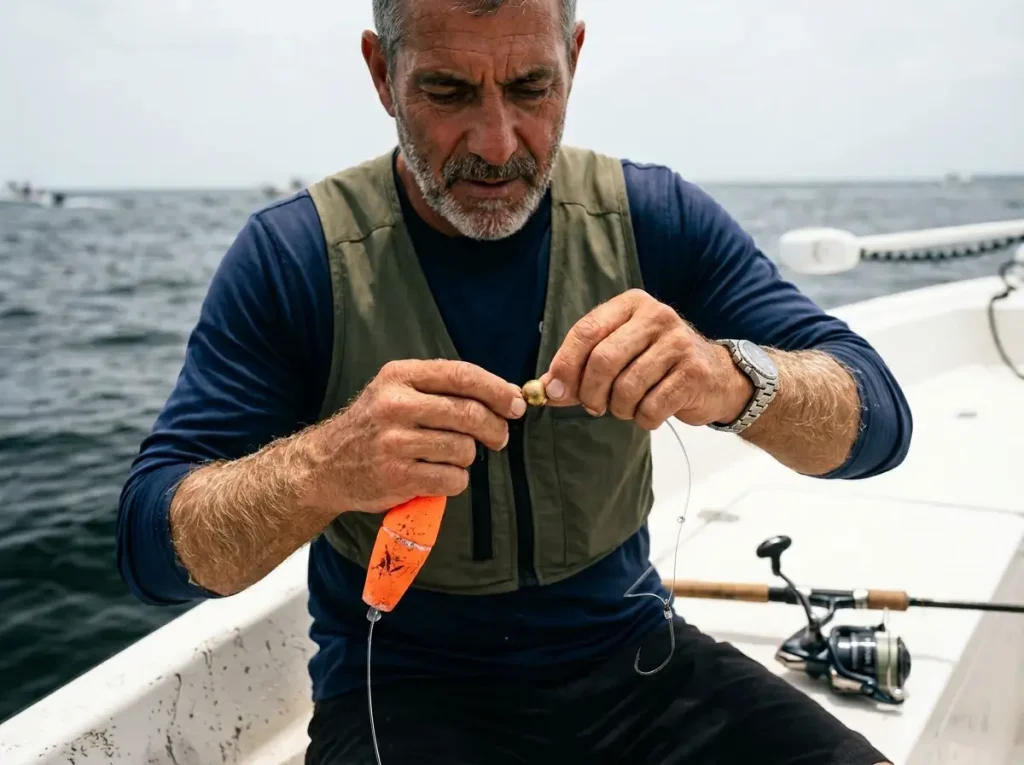
You use this knowledge directly when rigging a heavy popping cork. A violent chug throws a low-frequency shockwave that mimics the boom of competitive feeding. That heavy vibration triggers an involuntary predatory reaction for fish sitting thirty feet away in dirty water. The noise rings the dinner bell. Use cupped-face corks on windy days to punch a hole in the water instead of just skipping it across the surface.
Pro tip: Do not constantly rip the cork. Give it one aggressive, heavy pop, and let it sit dead still for five full seconds. The sound gets their attention, but the motionless shrimp falling straight down gets the bite.
Life Cycle: From Ocean Drifters to Estuary Hunters
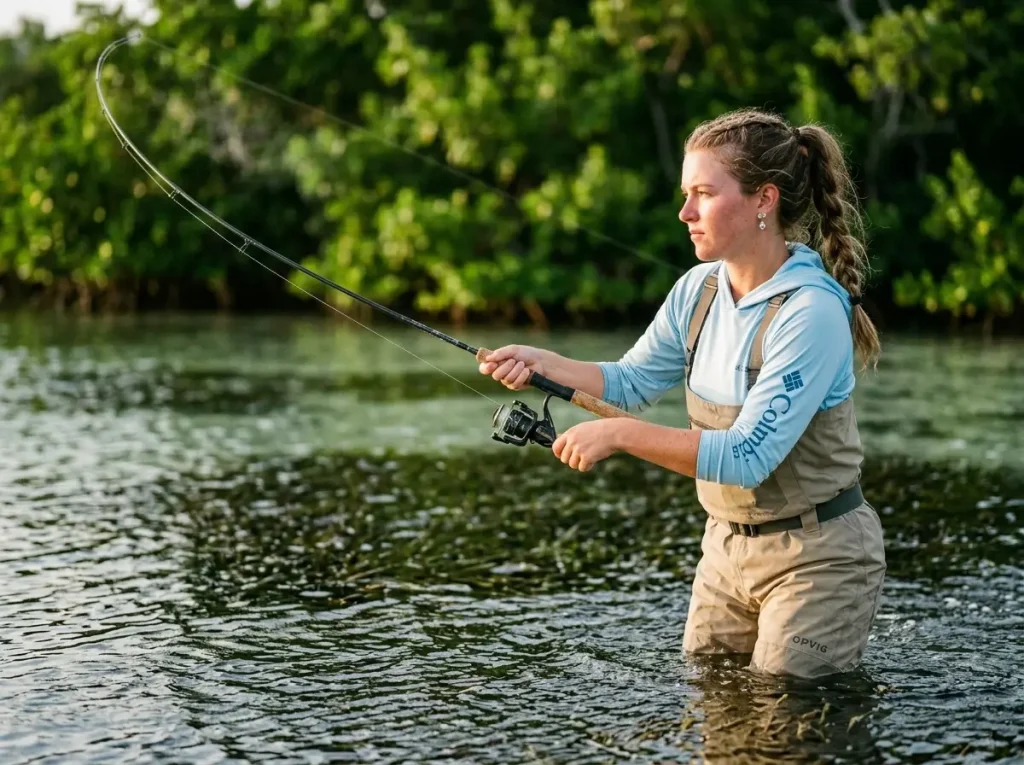
Living up to 50 years and pushing 61 inches, reaching that size means surviving a brutal transition from ocean eggs to back-marsh juveniles. This timeline reveals exactly where to look for them.
Salinity Rules for Larval Survival
A mature female drops roughly 1.5 million eggs in the surf zone. Once hatched, microscopic larvae are entirely at the mercy of the wind and tides, drifting through passes into the backwaters. They have a strict requirement: the water must be salty enough (at least 20 parts per thousand) to keep them afloat. If heavy rains crash the salinity, they sink into the muck and die. Data on larval buoyancy limits explains why dry years produce massive populations while flood years feel empty.
Seagrass Nurseries and Rapid Growth
Surviving larvae settle directly into seagrass beds to hide from birds and gorge on tiny shrimp. They grow an exceptional 12 to 14 inches their very first year. These intense growth-at-age rates mean they are always hungry. To target them, mimic the tiny crabs hiding in the grass blades. When you understand saltwater flats ecosystems, you see why these sheltered margins dictate their habitat preferences.
That frantic early growth phase doesn’t last forever. As they pack on size, their dietary needs shift drastically, forcing them to abandon the safety of the shallow grass for deeper, more dangerous currents.
The Offshore Transition
By age three, they hit 24 to 28 inches. At this point, their biology pushes them out of the shallow estuaries into the Gulf of Mexico and up the Atlantic coast. To find these heavier fish, focus your habitat mapping on nearshore inlets, jetties, and deep sandbars during outgoing tides. These “tweener” fish stack up behind structure waiting for bait to flush out of the marsh. Set up on the deep edge of the drop-off and throw heavy swimbaits into the rip.
Environmental Limits: Salinity, Heat, and Oxygen
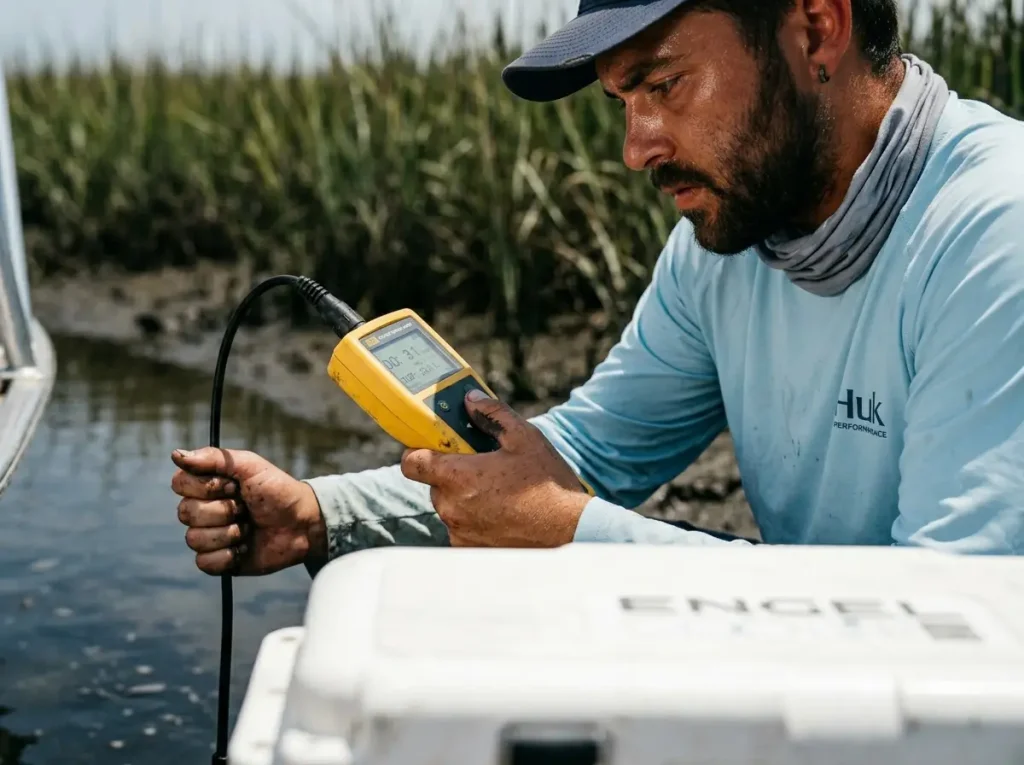
Water is an active obstacle course of chemical barriers. If you map their temperature tolerances and seasonal diet shifts, you’ll stop casting into dead water.
Temperature and the Feeding Window
Redfish have a hard limit on temperature. Their metabolic sweet spot sits between 70°F and 85°F, where digestion is lightning fast and they feed violently. When water plummets below 50°F during a cold front, they shut down. You’ll find them hovering over deep, black mud bottoms that absorb the sun’s heat. This thermal refuge is real. In late February, don’t fish at dawn. Wait until 2:00 PM when the mud has soaked up direct sunlight. That subtle bump in warmth flips the active feeding switch.
The Toll of Winter Creeks
When massive winter tides force them into the very back of freshwater creeks during their winter migration, they face severe freshwater shock. Transitioning to low salinity takes a toll on their gills. Because wintering in tidal creeks burns calories just to stay alive, the metabolic costs leave them sluggish. You have to drag your bait at a microscopic pace. Stop retrieving and let the current do the work.
While winter cold forces them into energy conservation mode, brutal summer heat presents an entirely different type of physical threat. Surviving August requires them to manipulate how they breathe.
I learned the hard way that a redfish in January won’t move six inches to chase a bait. If you aren’t dragging it so slowly that you feel every single oyster shell, you’re fishing beneath them.
Surviving Stagnant Summer Marshes
August heatwaves bake the flats. Hot water physically holds less oxygen, pushing most fish deep. Redfish, however, can temporarily alter their breathing to survive stagnant, suffocating water, according to research on low oxygen survival. Still, if you want aggressive bites during a blistering afternoon, target the deep inlet drains. Tracking how dissolved oxygen levels shift keeps your rod bent while everyone else is roasting. Moving water injects life-saving oxygen straight into their gills.
The Mechanics of Tailing Behavior
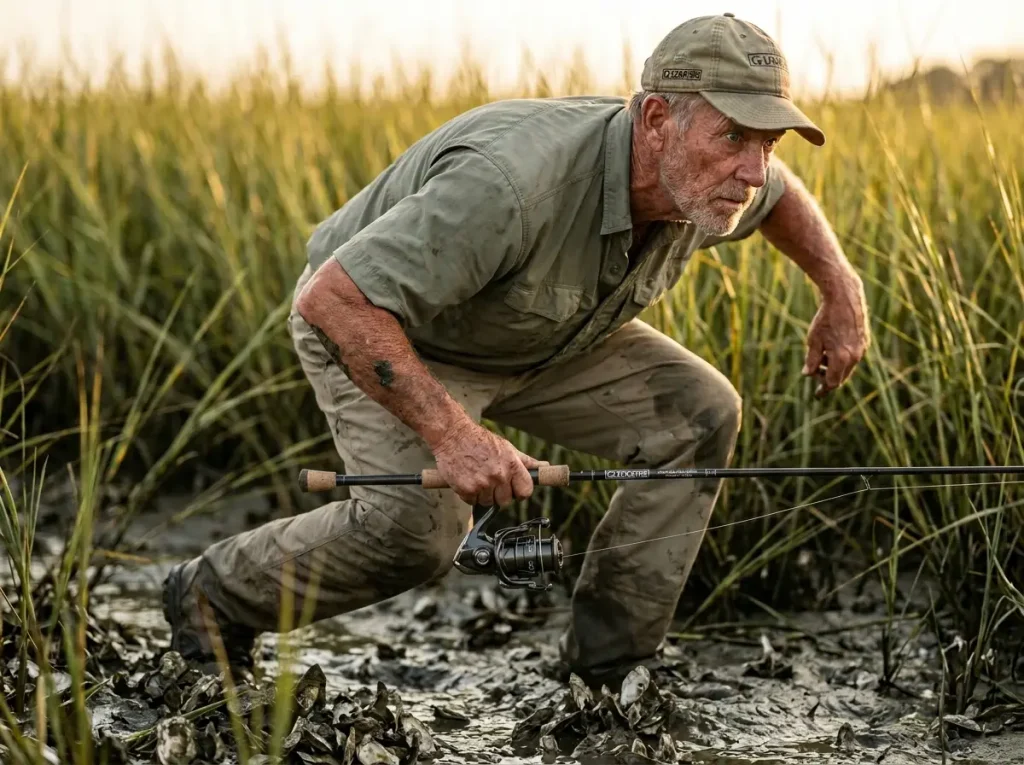
Seeing a copper tail wave in the air is the best visual in saltwater fishing. But exposing fins to eagles is a massive caloric gamble. The layout of the flooded marsh dictates exactly when and where they take that calculated risk.
Current Drag and Resistance in the Grass
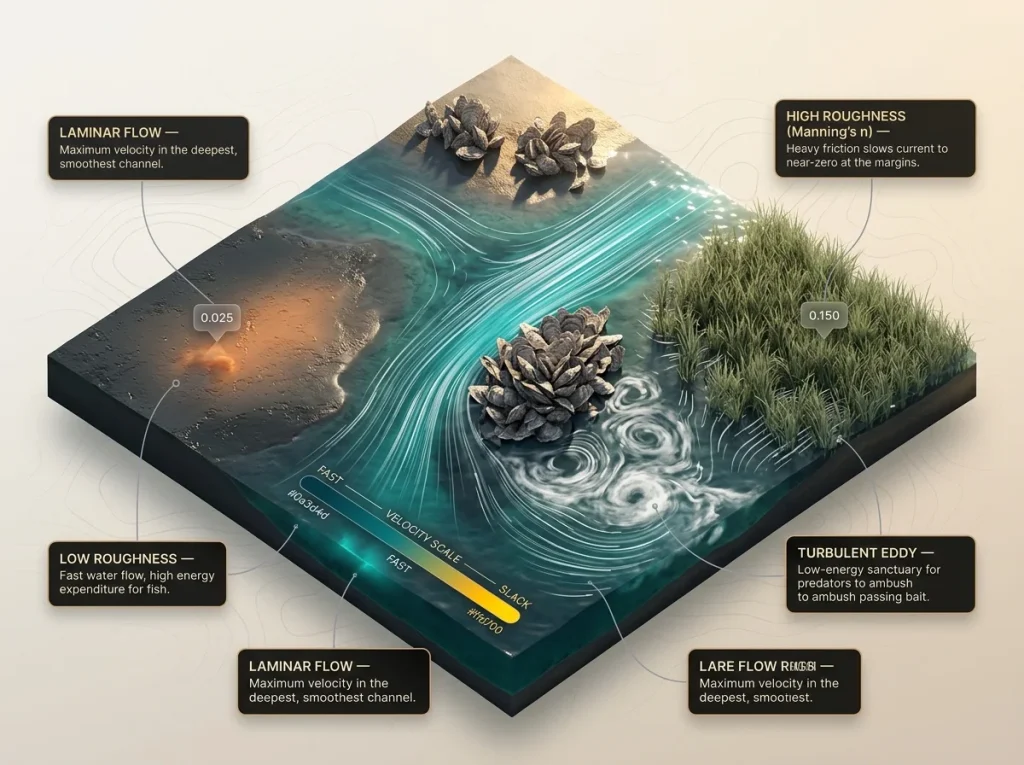
Water slows down when it hits friction. Clean sand is fast and slick, but thick spartina grass creates heavy resistance. During a rushing tide, redfish use the marsh boundaries to hide from the heavy flow. They tuck into the swirling water behind oyster mounds where the velocity drops. This lets them hold their position without beating their tails constantly, dropping their energy expenditure to near zero. Throw up-current from the oyster mound and let your bait drift naturally into the slack-water eddy. The vulnerability of nursery habitats is intensely tied to how these natural friction zones protect juvenile drum.
The Calorie Game of the Shallow Flat
Tailing usually happens during flood tides when high water unlocks dry marsh that hasn’t seen fish in weeks. The dinner bell rings. But trapping a fiddler crab in inches of water requires severe physical contortion. Fighting a brutal energy-to-caloric-gain ratio, the fish stands on its nose to pin the crab down against the hard bottom. To extract fish from this jungle, you have to master fishing in thick turtle grass without snagging. Weedless hooks and perfectly weighted soft plastics keep you in the strike zone.
Identifying the right depth and grass density gets you into the zone, but how the fish actually locate their prey changes completely once they transition into this ultra-shallow posture.
Sight vs. Scent on the Flood Tide
When they belly-crawl through four inches of water, their lateral line goes deaf because the surface tension distorts the pressure waves. The drum switch entirely to sight and smell, rooting through the grass with their noses buried in the mud to track the pure scent of crabs. Drop your weedless plastic three feet in front of their path and don’t move it. Let the fish find it. A sudden twitch in skinny water will spook them instantly.
Weather Forcing and Tackle Selection
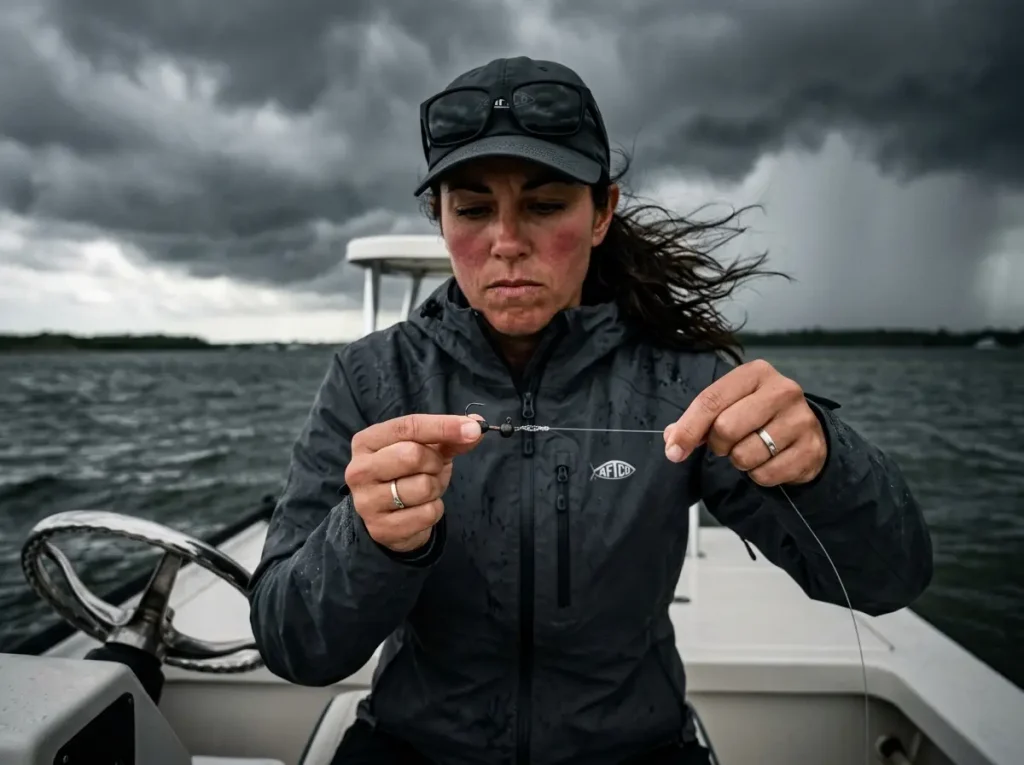
Weather dictates the bite, but few anglers actually rig their rods to match the atmospheric data. To master nearshore sportfishing, tune your gear to match the pressure and current exactly, using physiological drivers to engineer a better trap.
Barometric Pressure and the Air Bladder
The swim bladder is a gas bag subject to pressure limits. When a low-pressure storm front approaches, the atmospheric weight lifting off the water causes the gas inside the bladder to expand rapidly. The fish feels the shift. This dropping pressure acts as an alarm, triggering a frantic feeding window before the storm hits. Conversely, a high-pressure bluebird day shrinks the bladder, making them lethargic. Don’t wake up early on a post-front, high-pressure morning. Sleep in and wait for the sun.
Velocity Over Tide Height
Tide height is secondary to water velocity. Tidal currents dictate exactly when fish eat. The hardest bites happen during the first two hours of the incoming tide, and the last two hours of the outgoing tide, when the water flow physics hit maximum speed. Bait rips helplessly through the drains, and the predators set up ambush points on the creek mouths. If you learn to utilize tidal velocity over height, you stop wasting hours casing dead water. Once the current stops, pick up the trolling motor.
Current gets the fish staged and ready to eat, but delivering a bait into that strike zone requires careful attention to how your terminal tackle behaves.
Lightweight Jig Heads in Shallow Water
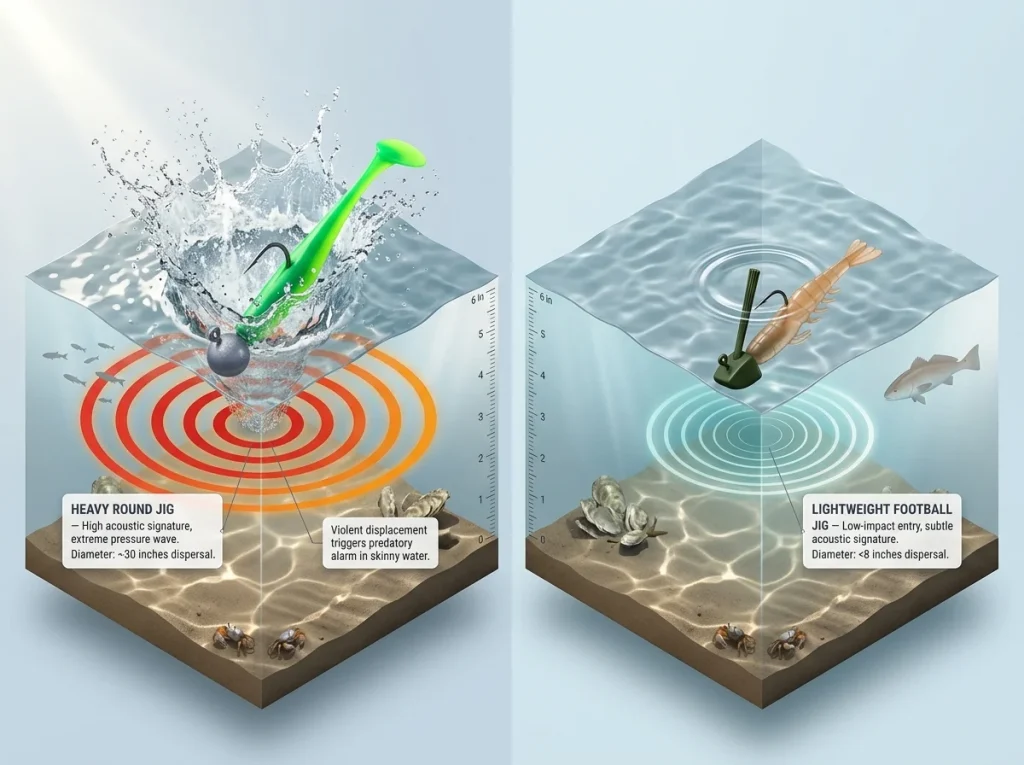
Dropping a heavy lead head into six inches of water sounds like a gunshot, sending every redfish running for their lives. Over shallow grass, scale down to a 1/16 ounce weight. The terminal velocity of a light jig is drastically slower. It hovers, glides, and lands softly without ringing the alarm. The shape matters too—flattened football jig head shapes catch more resistance, extending hang time right above the grass. You also need a medium-action rod that absorbs the violent head-shakes once hooked, according to state gear recommendations. A stiff broomstick rips the hook straight out of their soft mouths.
Pro tip: Check your leader for abrasion after every single oyster reef fish you land. Snapping off a giant because you were too lazy to retie a frayed fluorocarbon leader will haunt you for weeks.
Conservation Science: The Reality of the Release
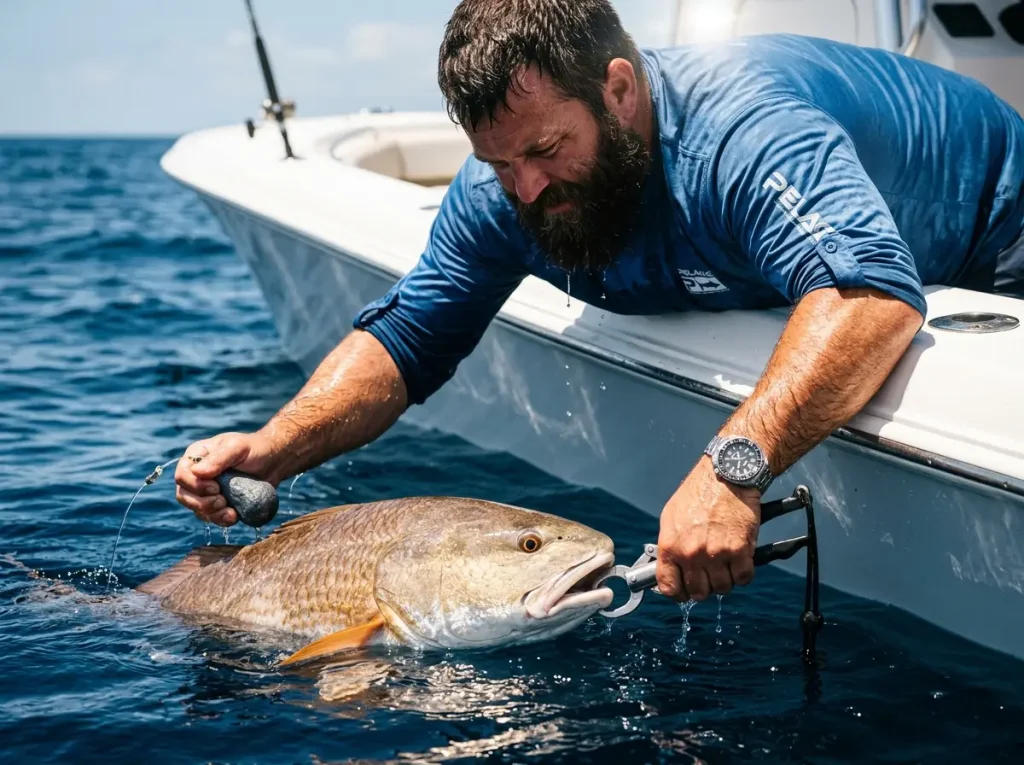
Harvesting an oversized breeding fish cripples the estuary. Catching mature adults from deep water kicks off a chain of lethal biological events inside the fish. Real mastery means releasing the fish so it actually survives the trauma.
The Threat of Barotrauma
Cranking a heavy forty-pound bull from a deep channel drops the surrounding pressure drastically on the way up. The swim bladder expands violently, forcing the stomach out the mouth and crushing internal organs. If you unhook the fish and toss it back, it physically cannot swim down. It floats helpless on the surface, waiting for a shark. These barotrauma risks kill countless fish during the winter jetty runs.
Why Descending Devices Work
Anglers used to stab fish behind the pectoral fin to vent gas, creating a terrible wound prone to infection. Today’s proper method is a descending device. Clamp a weighted release tool to the jaw and drop the fish. The heavy lead pulls them straight down, naturally recompressing internal gases. The hard data on descending device survival rates is undeniable. Keeping a spare rod rigged with fish descending devices is an absolute requirement if you fish deep water.
While depth causes invisible internal damage, how you handle the fish once it crosses the gunwale dictates whether it survives the immediate shock of the catch.
Minimizing Slime Coat Damage
Never hang a heavy fish vertically by its jaw. Gravity dislocates their spinal column and tears internal organs because they lack the buoyant support of the water. Support the belly fully with two wet hands. Dry hands strip the protective slime coat, condemning the fish to a slow demise from an infection days later. And extending the fight on light tackle destroys the muscle tissue. Extreme exhaustion kills the fish hours after you watch it swim away. Use gear heavy enough to break their spirit fast and get them back in the water.
Pro tip: Keep the fish fully submerged in the landing net alongside the boat while you dig for your pliers. Ten seconds of open air exposure drastically cuts their survival rate. Hold your own breath while the fish is out of the water to remind yourself of the clock ticking.
Conclusion
- Tailing behavior is a predictable natural equation that balances current, high-calorie food, and water friction over grass to create feeding windows.
- The heavy drumming muscle and sub-terminal mouth demand exact lure choices matching the acoustic signature and the bottom-focused feeding profile.
- You bear total responsibility for the survival of the breeding stock. Neutralizing barotrauma with a descender and supporting their frame guarantees they live to spawn again.
Apply your understanding of tidal drag on the next heavy flood tide, and watch the subtle surface disturbance reveal edges where these fish patiently sit.
FAQ
What biology facts influence where redfish feed?
They rely almost entirely on a mouth tucked under their nose that functions as a vacuum. They physically require hard substrates like sand or crushed oyster to pin crabs before suctioning them up. Bottomless silt prevents this, explaining why they heavily favor specific firm edges.
How fast do they grow in the estuary?
They experience explosive early development, typically reaching 12 to 14 inches hidden in protective seagrass. By their third year, they hit roughly 26 inches before moving to nearshore inlets to prepare for their offshore migration.
Why do they have a spot on their tail?
The dark spot is an anti-predator decoy designed to look like an eye. It redirects violent strikes from dolphins away from the vital organs of the head toward the expendable tail fin, increasing survival rates in the wild.
Can they survive low oxygen environments in the summer?
Yes, they inherently possess adaptability in low-oxygen water. However, they will strategically abandon miserable stagnant water midday for deep, highly oxygenated tidal drains to prevent exhaustion.
Risk Disclaimer: Fishing, boating, and all related outdoor activities involve inherent risks that
can lead to injury. The information provided on Master Fishing Mag is for educational and informational purposes
only. While we strive for accuracy, the information, techniques, and advice on gear and safety are not a substitute
for your own best judgment, local knowledge, and adherence to official regulations. Fishing regulations, including
seasons, size limits, and species restrictions, change frequently and vary by location. Always consult the latest
official regulations from your local fish and wildlife agency before heading out. Proper handling of hooks, knives,
and other sharp equipment is essential for safety. Furthermore, be aware of local fish consumption advisories. By
using this website, you agree that you are solely responsible for your own safety and for complying with all
applicable laws. Any reliance you place on our content is strictly at your own risk. Master Fishing Mag and its
authors will not be held liable for any injury, damage, or loss sustained in connection with the use of the
information herein.
Affiliate Disclosure: We are a participant in the Amazon Services LLC Associates Program, an
affiliate advertising program designed to provide a means for us to earn advertising fees by advertising and linking
to Amazon.com. As an Amazon Associate, we earn from qualifying purchases. We also participate in other affiliate
programs and may receive a commission on products purchased through our links, at no extra cost to you. Additional
terms are found in the terms of service.