
In this article
You watched a guide pull 14 slabs out from under a covered boat lift while you couldn’t get a jig within five feet of the pilings. You tried casting sidearm. You tried skipping. You tried a slip bobber. Nothing got back into the shade where the fish actually live. After 12 years on Kentucky Lake and a bunch of wasted weekends figuring it out the hard way, the fix is the same fix every Mr Crappie pro uses: a real dock shooting crappie jigs technique that turns your spinning rod into a slingshot. This guide walks through exactly how to load the rod, how to grip the jig without putting a hook through your thumb, what gear actually works, and why most beginners blow their bite the second they idle into casting range.
Quick Answer: Dock shooting puts a jig under shaded structure where standard casting can’t reach. The shot has five steps:
- Pinch the jighead with the hook tip pointing AWAY from your hand
- Open the bail and trap the line with your finger
- Pull the rod tip back parallel to the water to load it
- Release the jig first, then release the line a split second later
- Let it fall on slack line — most strikes come on the drop
Why Crappie Live Under Docks (and When the Bite Is Best)
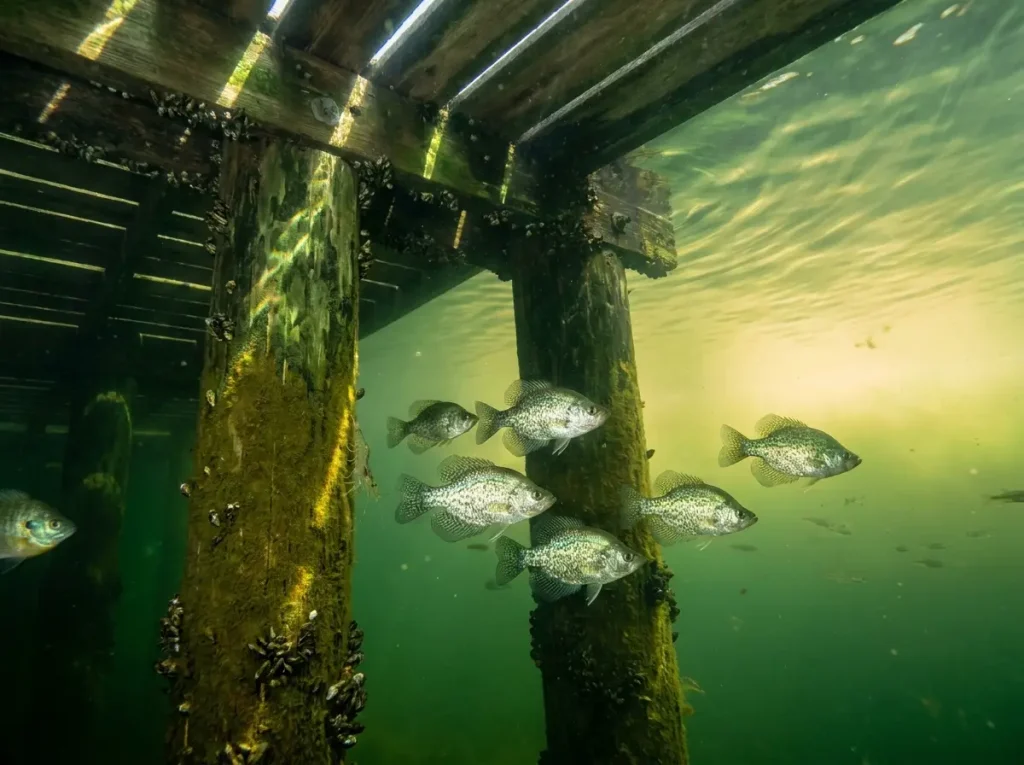
Crappie are shade-seekers, ambush feeders, and structure huggers — and a wooden boat dock checks all three boxes better than almost anything natural in the lake. The dock provides cover from overhead predators like ospreys, the pilings hold algae and zebra mussels that pull baitfish, and the water under the dock can run 5 to 8 degrees Fahrenheit cooler than open water in direct sun. By August on a Tennessee reservoir, that 5-degree gap is the difference between feeding fish and lockjaw.
Shade and the Suspension Habit
A school of black or white crappie will routinely suspend 5 to 8 feet off the bottom around dock pilings, hanging in the shaded inner zone where their dark-adapted vision gives them an edge over baitfish drifting in from the bright side. The productive zone is usually the inside corner of a covered dock or boat lift, not the open ends. If you can see clear water under a piling, the fish aren’t there — they’re in the dark.
Seasonal Windows
Dock shooting works year-round on most southern reservoirs, but the prime windows are post-spawn through early summer (when crappie pull off the bank and stage on shaded structure) and late fall through winter (when the deepest docks become refugia for tightly schooled fish). Mid-spawn, fish are often shallower and tighter to the bank than the docks themselves; in deep summer above 80°F, fish push out to deeper main-lake structure and only the deepest docks hold consistent numbers.
Pro tip: Carry a cheap surface thermometer. When dock-edge water reads 5°F below open water, the bite is on. When it reads less than 2°F different, move to a different cove or come back at first light.
The Right Rod, Reel, Line, and Jig for Shooting Docks
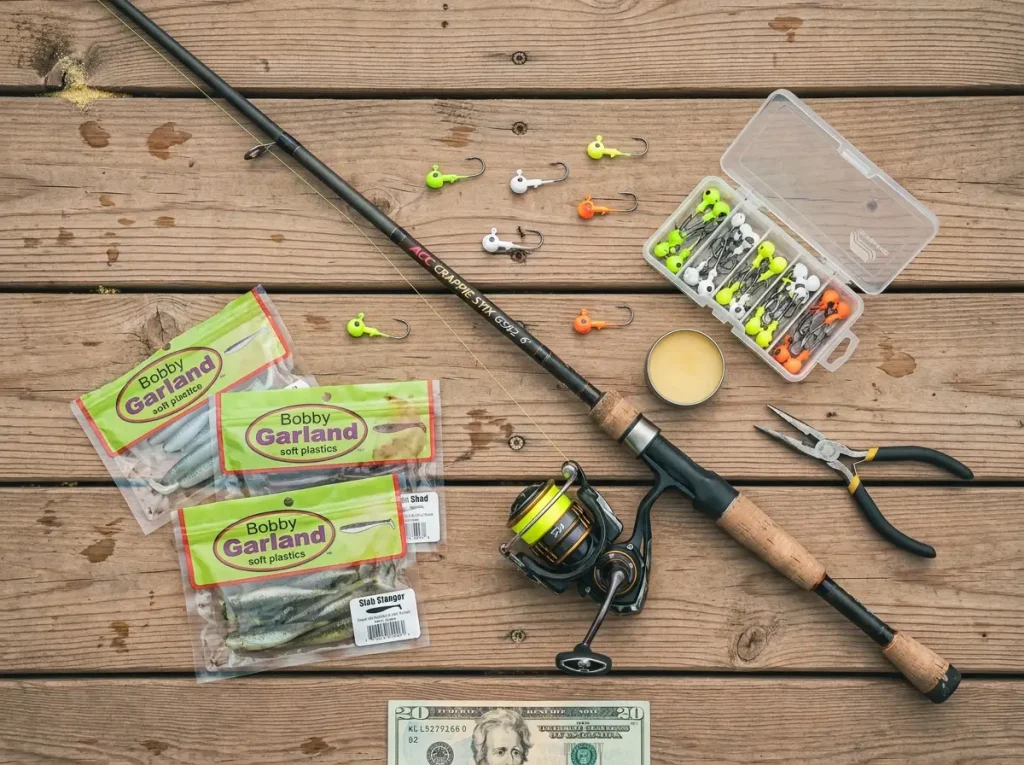
The wrong gear is the single biggest reason beginners can’t get the jig back where the fish live. You don’t need a $400 setup, but every component matters because you’re loading and releasing a 1/32-ounce projectile through a 3-foot opening.
Rod Power and Length
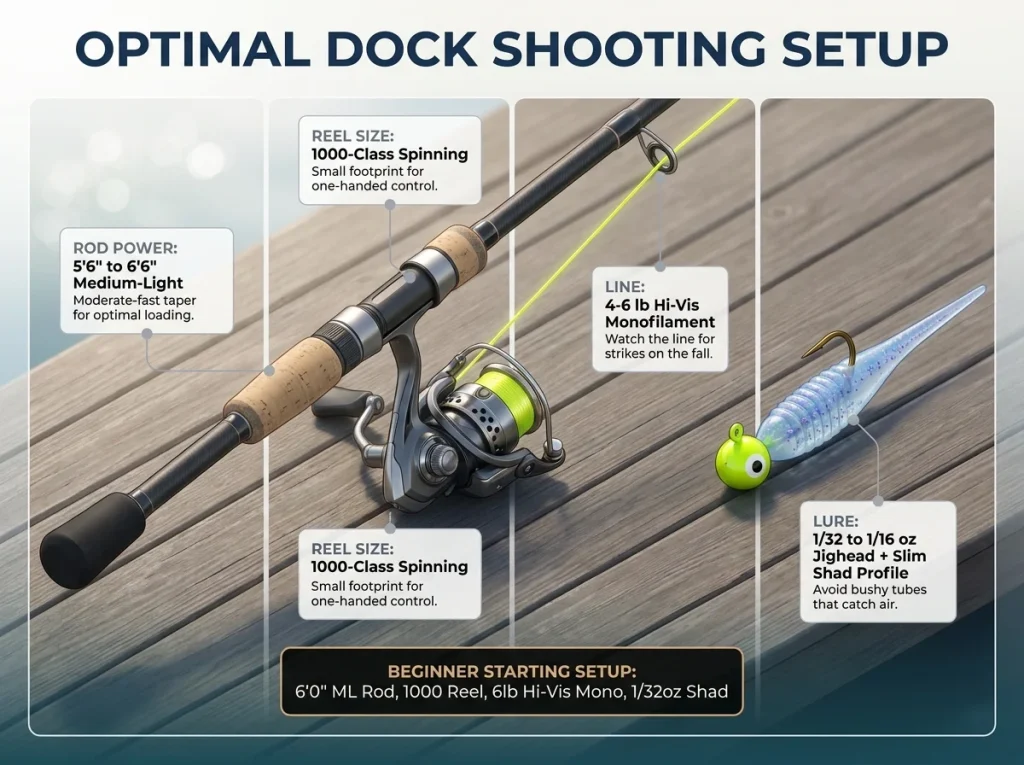
A medium-light spinning rod between 5’6″ and 6’6″ is the sweet spot. Light-action rods load too easily and lose accuracy past 20 feet. Anything heavier than medium-light won’t load enough on a 1/32-ounce jig to fling it any meaningful distance. Look at purpose-built sticks like the ACC Crappie Stix GS62 or the Lew’s Wally Marshall Speed Shooter — they’re built specifically with the right taper for this technique. For more on matching rod to technique, our breakdown of casting rods for jig fishing covers the same load-and-release physics.
Reel Size and Line
A 1000-class spinning reel is the right size — small enough to grip and trigger one-handed, large enough for smooth line lay. Spool with 4 to 6-pound monofilament, ideally hi-vis chartreuse or yellow. Half the strikes you’ll get under a dock you’ll see on the line, not feel — a hi-vis line lets you watch the line for the slightest twitch on the fall. Fluorocarbon shoots harder but doesn’t float, so you can’t see the take as easily; mono is the better trade-off for this technique.
Jig Weights and Plastic Shapes
Use 1/32 to 1/16-ounce jigheads — the lighter, the better when the dock opening is small. A 1/32-ounce jig under a hi-vis line falls slow enough to spend more time in the strike zone and skips off the water cleaner if you need to thread a tight gap. For plastics, pick a slim shad or spear-tail profile — Bobby Garland Baby Shads, Strike King Mr Crappie Shad Pole, or similar straight-bodied shapes shoot like darts. Bushy tubes and curl-tail grubs catch air, slow the shot, and tumble in flight.
The Five-Step Dock Shot, Broken Down
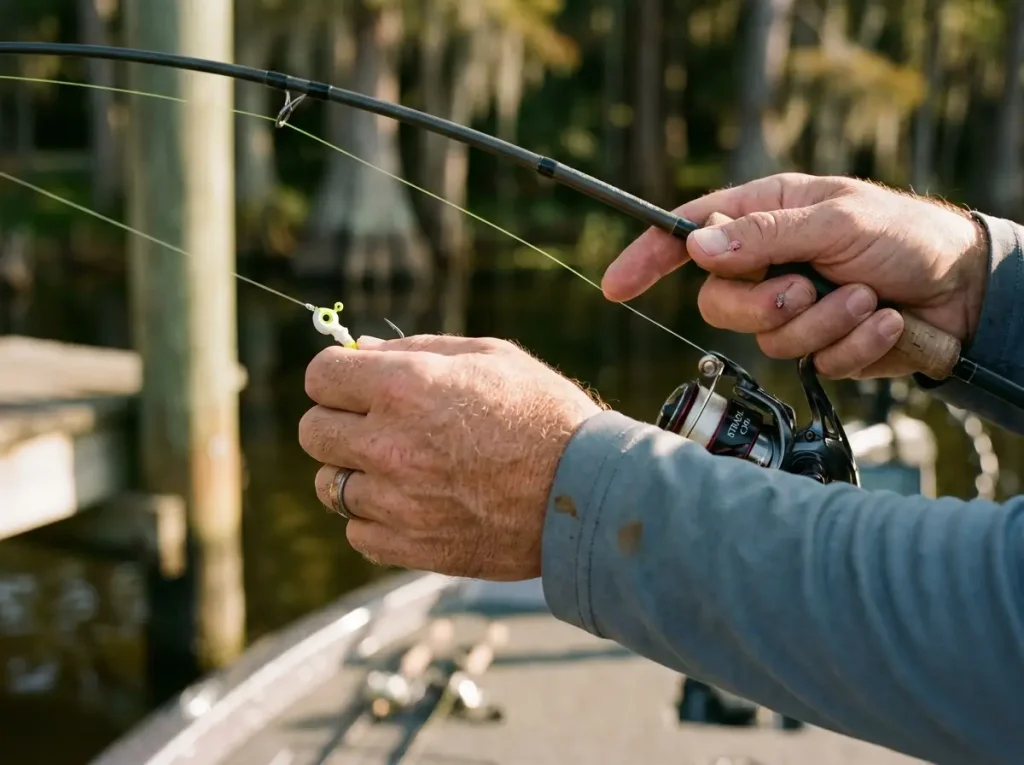
This is the part that takes practice. The first 200 shots will feel awkward; somewhere around shot 500 it clicks and you’ll wonder how you ever fished any other way.
Step 1 — The Grip
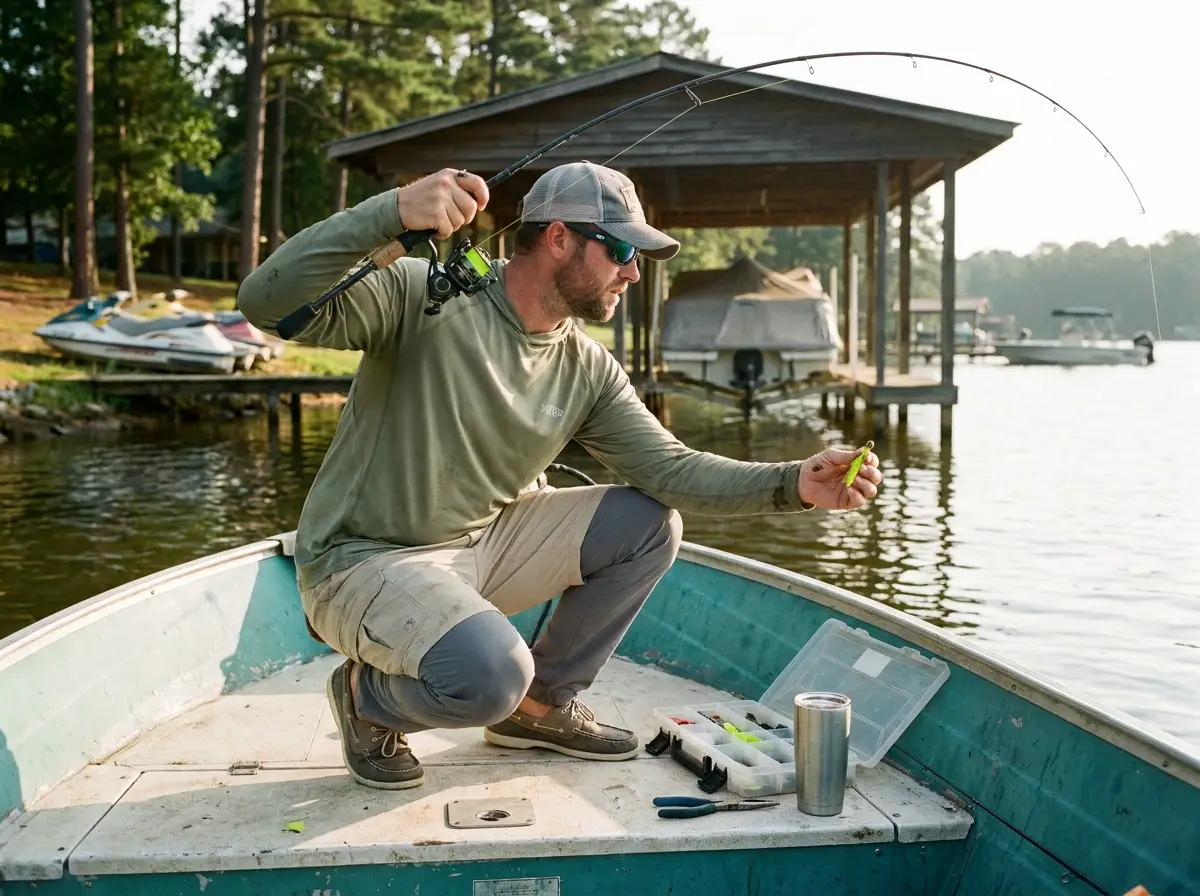
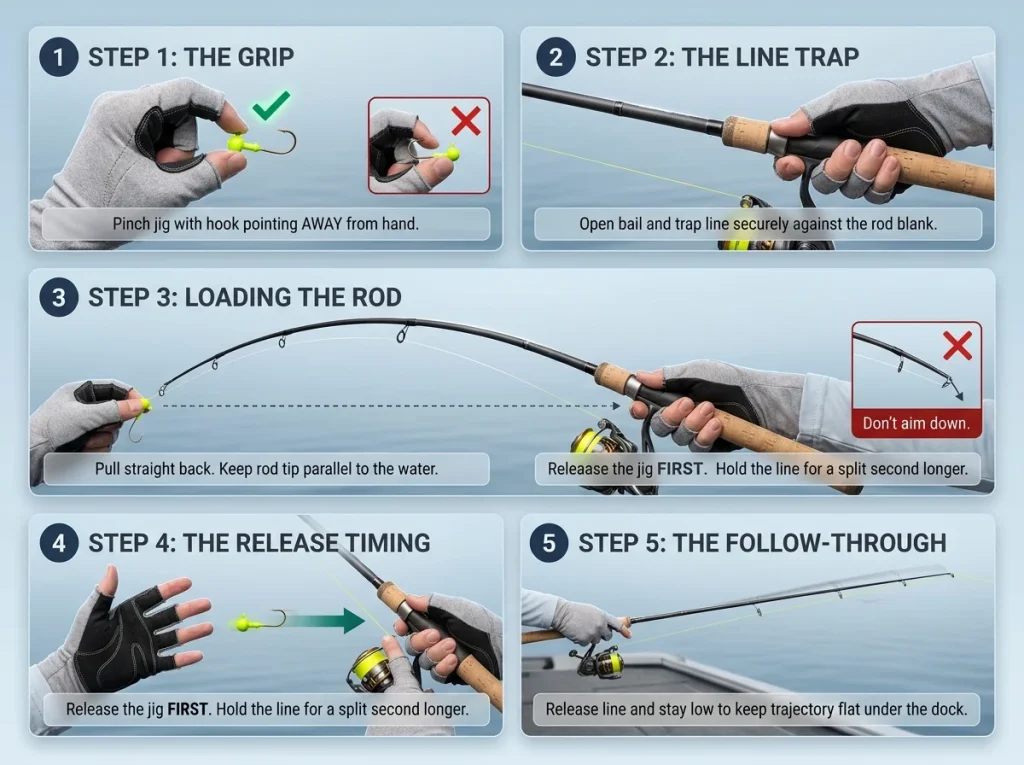
Pinch the jighead between your thumb and forefinger at the bend of the hook OR at the head — but always with the hook tip pointing AWAY from your palm. The classic beginner mistake (and the reason a lot of guys quit) is gripping the jig with the hook lined up parallel to the meat of the thumb. When the rod fires and the jig leaves your fingers, momentum drives the hook into your thumb. Point the hook outward and that scenario disappears entirely.
Step 2 — The Line Trap
Let out 3 to 4 feet of line from the rod tip — about the length from rod tip down to the bottom of the reel. Open the bail and trap the line against the rod blank with the index finger of your rod hand. Until you release that finger, the line can’t feed.
Step 3 — Loading the Rod
Point the rod tip directly at the spot you want to hit, then pull back on the pinched jig — straight back, parallel to the water, not down. The rod blank bends into a deep arc, storing the energy that’s about to launch the jig. If your rod tip drifts down, the jig will splash hard at the surface; if it drifts up, the jig will sail over the dock.
Step 4 — Timing the Release
This is the most-missed detail in every dock-shooting article. Release the jig FIRST, then release the trapped line a split-second LATER. If you let go of both at the same time, there’s no momentum transfer — the jig just plops two feet from the boat. If you wait too long on the line, the jig pulls up short. The timing should feel like a smooth two-stage trigger pull.
Step 5 — Stance and Posture
Stay low. Crouch at the boat deck level so your rod is parallel to the water. The lower your release point, the flatter the trajectory and the deeper your jig skips back under the dock. Standing straight up sends the jig high and short almost every time.
Reading Docks — Which Ones Hold Fish and Which Don’t
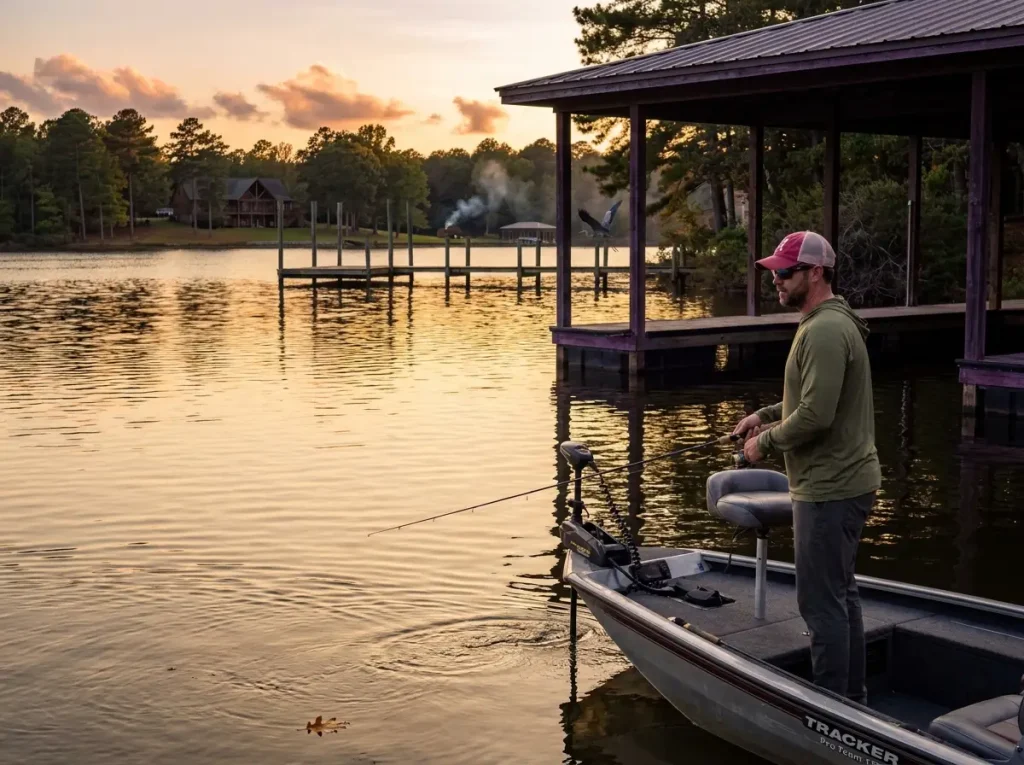
Most anglers assume every dock holds crappie equally. They don’t. After fishing 40 or 50 docks on the same lake, patterns start to emerge — and the patterns are rarely about how nice the dock looks.
Depth Gradients
A productive dock has a depth gradient under it — typically 2 to 3 feet of water near the walkway and 8 to 12 feet at the outer pilings. Crappie use that grade to slide shallower or deeper based on light, temperature, and forage. Flat-bottom docks where the water is 4 feet deep across the entire footprint rarely hold quality fish.
Cover Under the Pilings
Anything submerged underneath — sunken cedar trees, brush, an old tire, even a dropped trolling motor — turns a mediocre dock into a magnet. The owners who fish their own docks often sink brush under them in winter to load them up by spring. If you see a brush pile silhouette through polarized lenses, that dock just moved to the top of your list. Approaches to highly fished water also benefit from the principles in our guide to fishing pressured waters.
Floating vs Fixed Docks
Floating docks shift with the water level and tend to gather more shade-loving fish through the summer pool drawdown; fixed wooden docks usually outproduce metal pole docks because the wood pilings hold more periphyton and baitfish. Covered docks (with roofs or boat lifts) almost always outproduce open docks of the same depth.
The Retrieve (and the No-Retrieve)
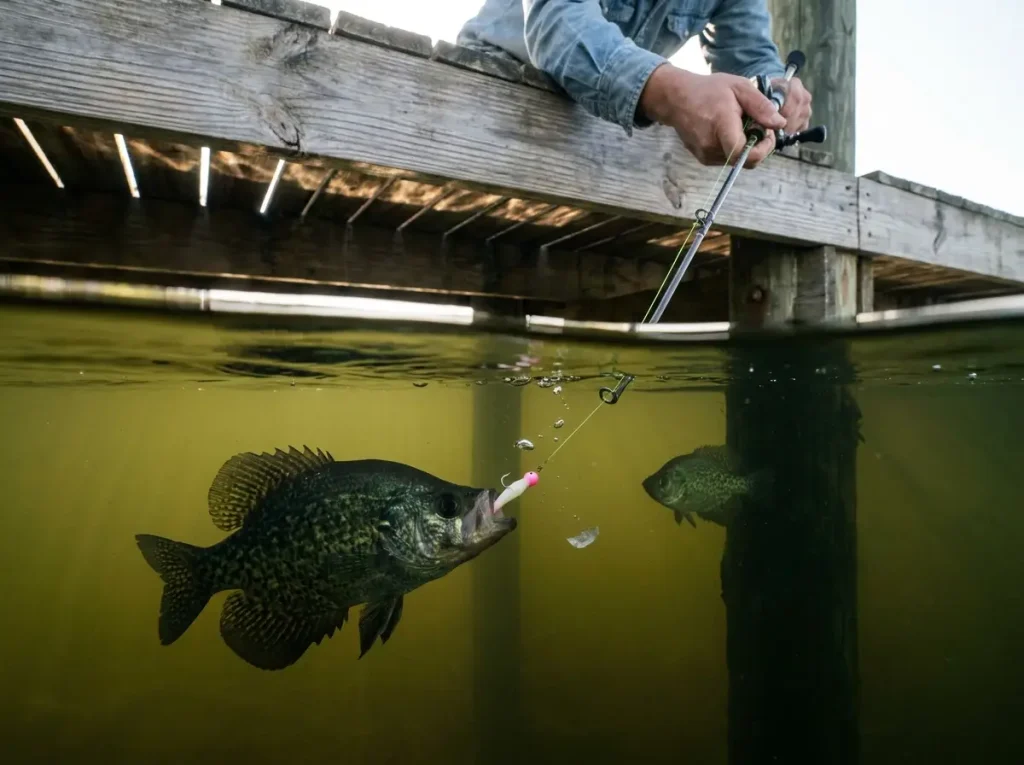
You’ve made the perfect shot and the jig is two feet under the back piling. Now what?
Slack-Line Fall
The number-one productive retrieve is no retrieve at all for the first 5 to 10 seconds. Let the jig fall on a controlled slack line, watching the hi-vis tip for any twitch, sideways jump, or sudden stop. Most dock crappie eat on the fall, before you’ve moved the rod tip an inch. If you don’t see a take in 8 seconds, swim it back with slow, two-inch twitches — Wally Marshall calls this the “Wally shake” — pause every 4 feet, and let it fall again.
Bobber-Assisted Shots
Pinning a small slip bobber or fixed ice bobber above the jig adds another tool. With a slip bobber set 3 feet deep, you can shoot the rig under a dock, then twitch the bobber back like a tiny jerkbait while the jig holds at constant depth. It’s particularly effective on heavily pressured docks where suspended fish have ignored falling jigs all morning.
Pro tip: When a dock is loaded with bait and crappie won’t commit, switch from a 1/32 to a 1/64-ounce jig and add 24 inches between the bobber and the lure. The slower fall combined with the longer drop pulls strikes from inactive fish that watched four faster jigs go past.
Mistakes That Wreck Your Bite (Even With Perfect Mechanics)
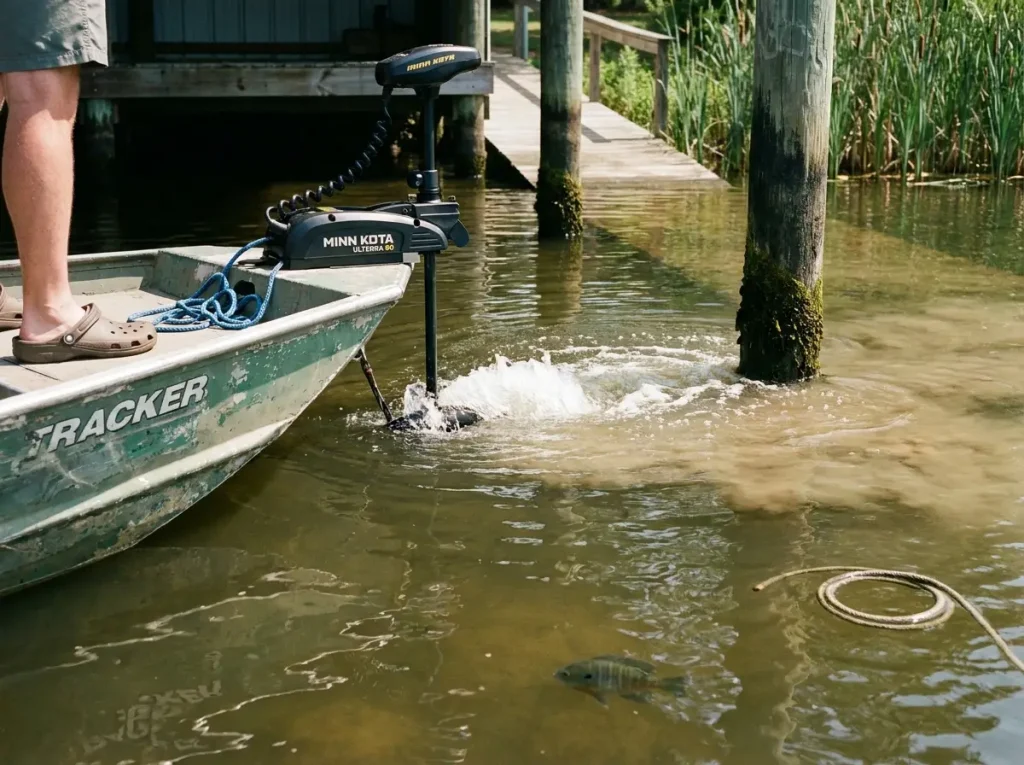
You can have textbook form and still empty a productive dock by ignoring these.
Trolling Motor Prop Wash
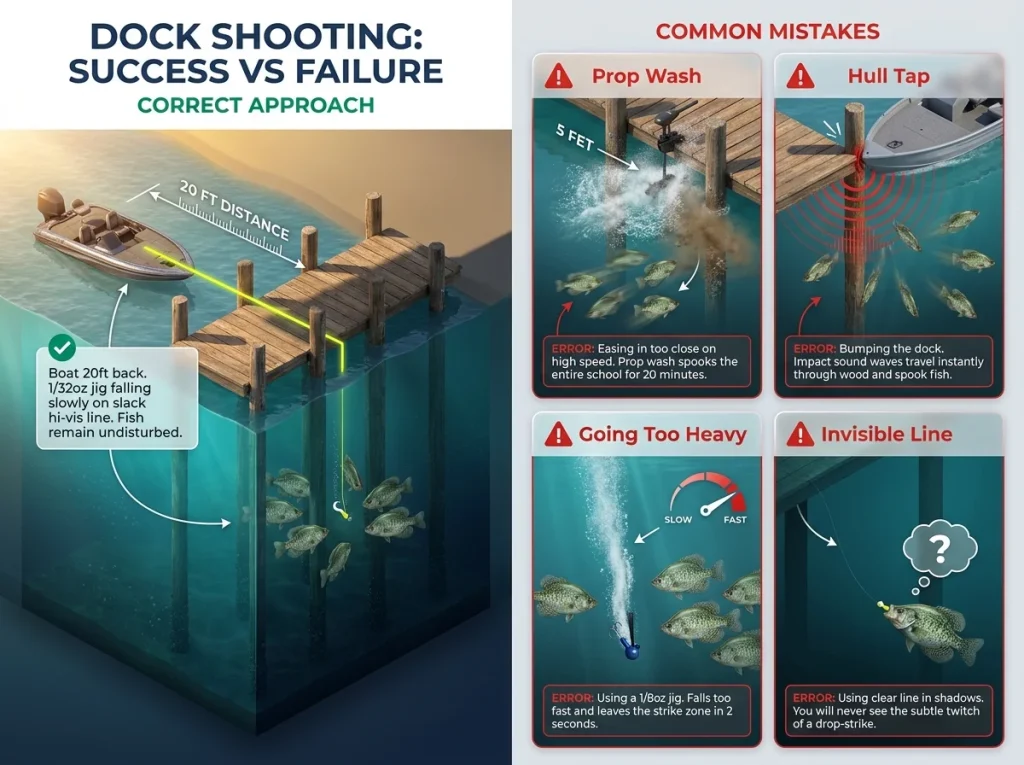
This is the single most-overlooked mistake in dock shooting. When you ease in too close on speed 4 or 5, the prop pushes a cone of bubbled, sediment-stirred water under the dock. That puff of disturbed water spooks every fish under the structure for 10 to 20 minutes. Stay 15 to 20 feet off the dock and shoot from distance, or idle in on the lowest speed and use spot-lock to hold position before you cast.
Bumping the Dock
A boat hull tap on a dock piling sends a thump through the entire structure. Crappie feel it. Stay off, learn to shoot from a longer distance, and you’ll catch more fish AND save a lot of broken rods.
Going Too Heavy on the Jig
The most common mistake is reaching for a 1/8-ounce jig because the wind is up. The added weight crushes your fall rate and pulls the lure out of the strike zone in two seconds. If you can’t shoot a 1/16 because of wind, change docks instead — find one in a sheltered cove rather than fighting physics.
Line You Can’t See
If you’re using clear monofilament because someone told you crappie are line-shy, you’re missing strikes you’ll never know happened. Mr Crappie hi-vis yellow is in the freezer of every serious crappie pro for a reason. The fish under the dock are in shadow — they can’t see your line clearly even in hi-vis, but you can.
Conclusion
Dock shooting takes a few hundred reps to feel natural and a few thousand to feel automatic — but once it clicks, you’ll fish docks the rest of your life. Practice on dry land first (start with a bucket, then a soda can, then a roll of duct tape standing on edge), stay low and stay back to keep your trolling motor from wrecking the bite, and watch the line on the fall because that’s where the fish eat. Tie up half a dozen 1/32-ounce jigs with slim shad bodies, find the closest covered boat lift on your lake, and put 100 shots on it before lunch. You’ll be a different angler by Saturday.
Q1 What is the best rod for dock shooting crappie?
The best rod for dock shooting crappie is a 5’6 to 6’6 medium-light spinning rod with a moderate-fast taper — purpose-built models like the ACC Crappie Stix GS62 or Lew’s Wally Marshall Speed Shooter load best. Avoid stiff rods or anything over 7 feet, which lose accuracy.
Q2 What size jig should I use for dock shooting?
Use a 1/32 or 1/16-ounce jighead with a slim shad or spear-tail soft plastic. The 1/32 falls slower and stays in the strike zone longer, while the 1/16 cuts wind better and reaches deeper docks faster. Avoid bushy tubes — they tumble in flight.
Q3 Why do crappie hold under docks?
Crappie hold under docks because the structure provides shade, ambush cover, and water 5 to 8 degrees cooler than open water in summer. The pilings concentrate algae, mussels, and baitfish, creating a year-round forage zone where crappie can feed without exposing themselves to predators.
Q4 What line is best for dock shooting crappie?
Hi-vis 4 to 6-pound monofilament is best for dock shooting crappie because half of all strikes are visual rather than felt. Yellow or chartreuse Mr Crappie line is the standard among pros. Fluorocarbon sinks and disappears, which makes detecting drop-strikes much harder.
Q5 How far should I stand from the dock when shooting?
Stay 15 to 20 feet off the dock when shooting. Closer than 12 feet and your trolling motor prop wash spooks fish under the structure for 10 to 20 minutes. The added distance also forces better practice and reduces the chance of bumping the dock with your hull.
Risk Disclaimer: Fishing, boating, and all related outdoor activities involve inherent risks that
can lead to injury. The information provided on Master Fishing Mag is for educational and informational purposes
only. While we strive for accuracy, the information, techniques, and advice on gear and safety are not a substitute
for your own best judgment, local knowledge, and adherence to official regulations. Fishing regulations, including
seasons, size limits, and species restrictions, change frequently and vary by location. Always consult the latest
official regulations from your local fish and wildlife agency before heading out. Proper handling of hooks, knives,
and other sharp equipment is essential for safety. Furthermore, be aware of local fish consumption advisories. By
using this website, you agree that you are solely responsible for your own safety and for complying with all
applicable laws. Any reliance you place on our content is strictly at your own risk. Master Fishing Mag and its
authors will not be held liable for any injury, damage, or loss sustained in connection with the use of the
information herein.
Affiliate Disclosure: We are a participant in the Amazon Services LLC Associates Program, an
affiliate advertising program designed to provide a means for us to earn advertising fees by advertising and linking
to Amazon.com. As an Amazon Associate, we earn from qualifying purchases. We also participate in other affiliate
programs and may receive a commission on products purchased through our links, at no extra cost to you. Additional
terms are found in the terms of service.