
In this article
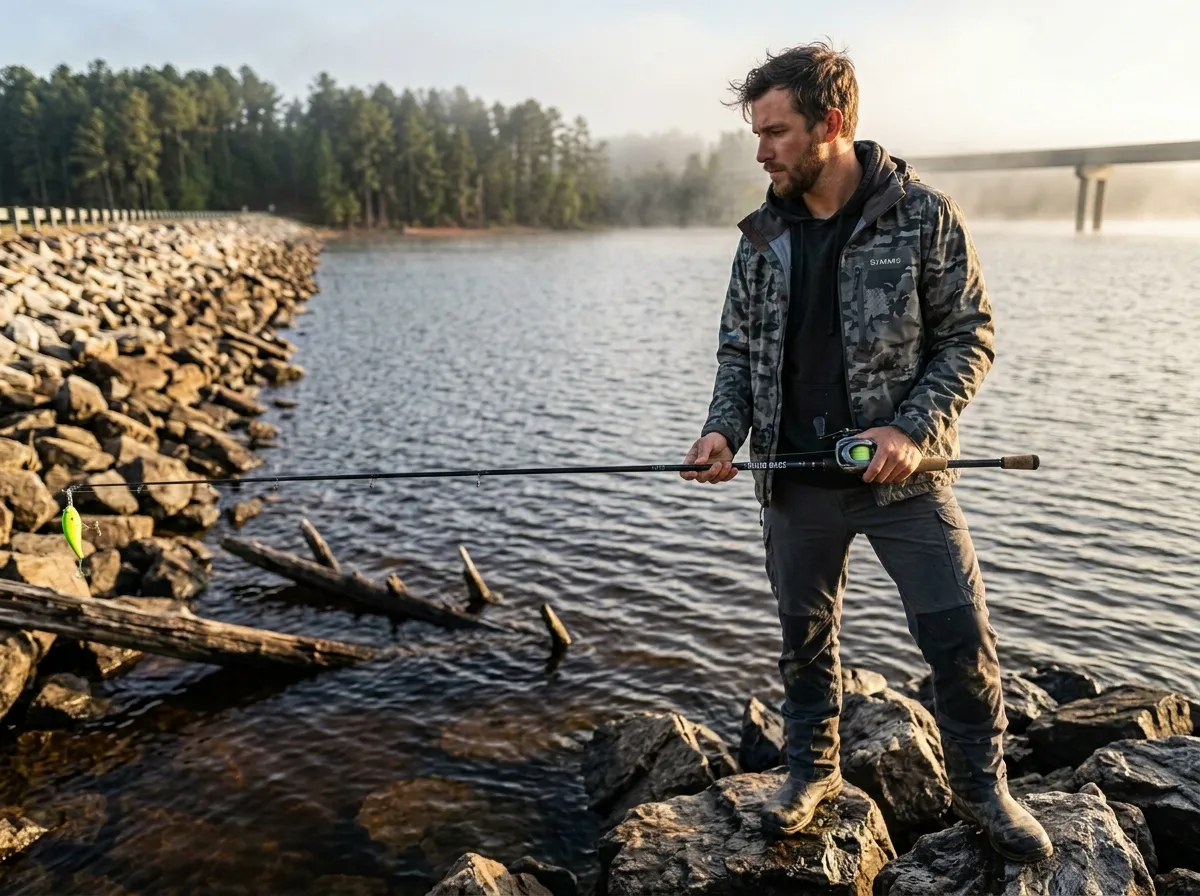
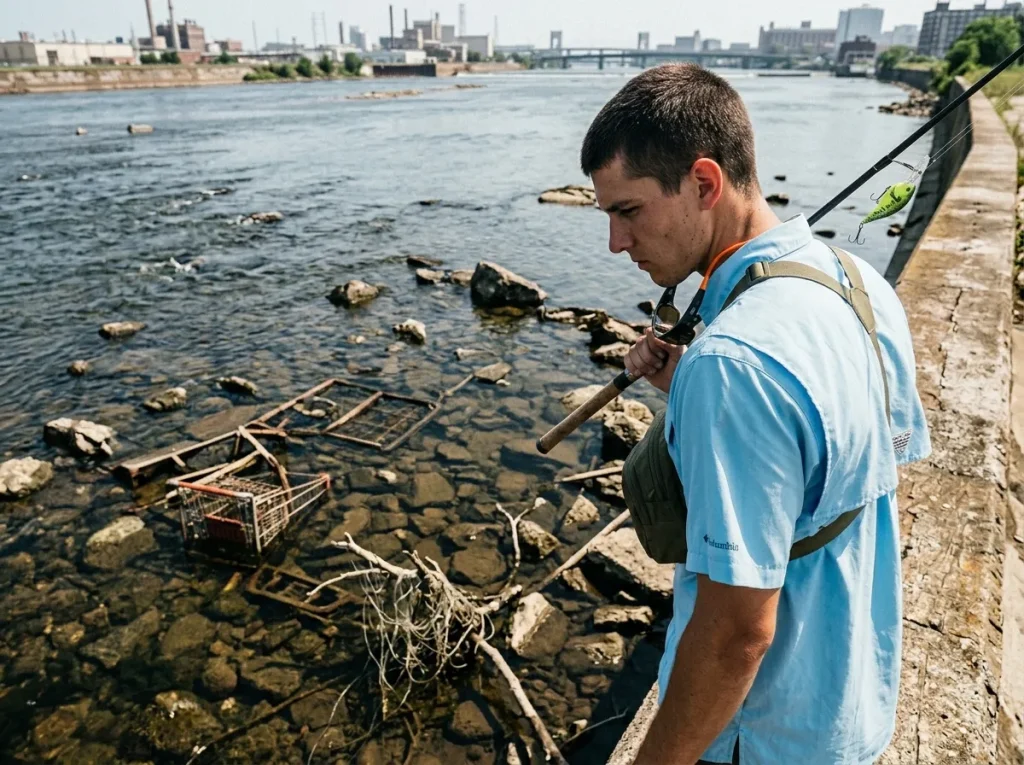
You’ve already lost three crankbaits in twenty minutes. The last one — a $14 balsa square-bill — is wedged between two boulders you can’t reach, the line going nowhere no matter how many times you snap the rod. On a boat, you would have cranked back over it and freed it in seconds. From this rip-rap bank, you’re done. You flip open the tackle box, grab something cheap, and start again. Most bank anglers treat snagging as bad luck. It isn’t. It’s a vector problem you haven’t solved yet.
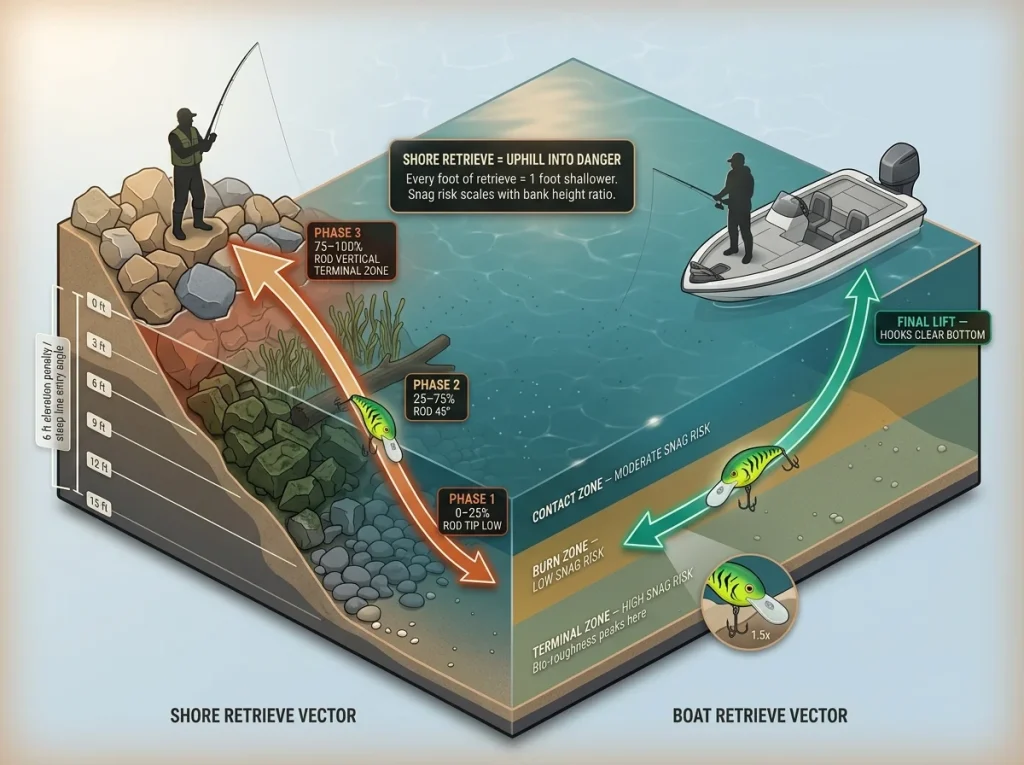
Boat-based retrieves move the lure toward deeper water near the end — the lure naturally clears the bottom before the final lift to the boat. Bank fishing with crankbaits reverses this entirely. You cast into deep water and drag the lure uphill into progressively shallowing, structure-packed water. Understanding that single geometric reality is where everything about anti-snag science begins.
This guide breaks down exactly why crankbaits snag from shore — the retrieve geometry, bill shape, lure materials, Manning’s n substrate risk, and line dynamics — and gives you a systematic, substrate-matched framework to fish the nastiest bank structure without emptying your tackle box.
⚡ Quick Answer: Crankbaits snag from the bank because the shore retrieve forces the lure uphill into increasingly shallow, structure-dense water — the opposite of a boat retrieve. To stop it: use a square-bill on a floating balsa body with 10–12 lb monofilament, manage your rod tip through three elevation phases (vector cranking), and cast parallel to the bank whenever possible. When a snag happens, never pull hard — deploy the Trigger Method instead.
The Uphill Problem — Why Bank Geometry Changes Everything
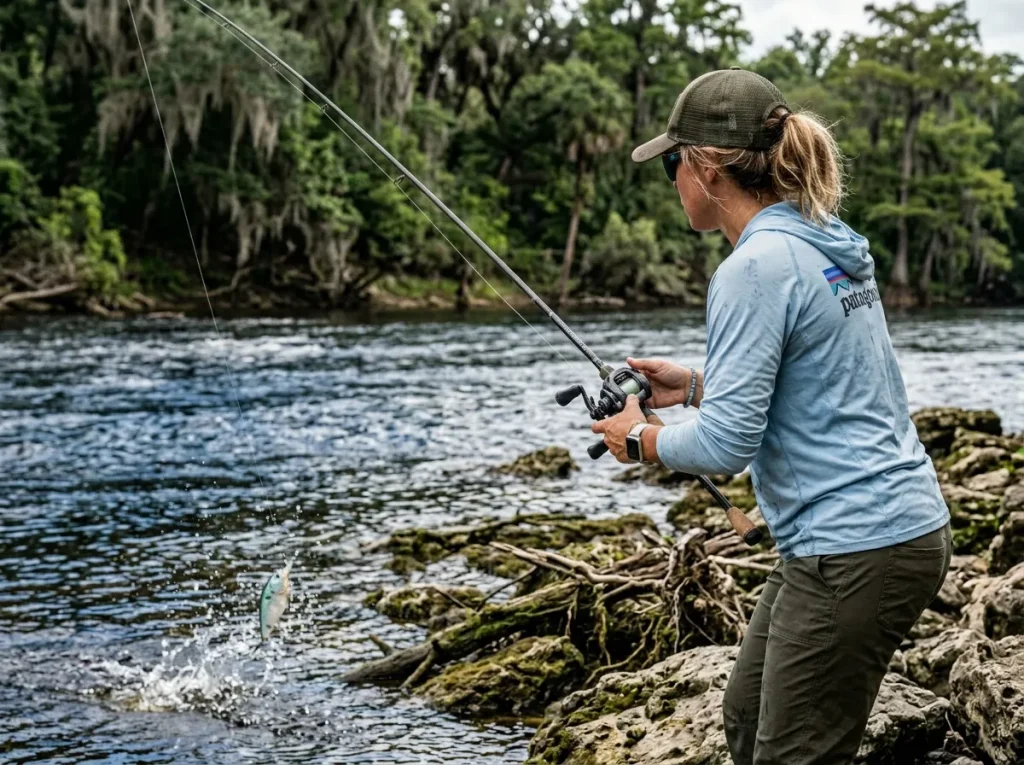
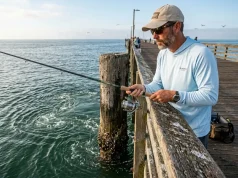
From a boat, your lure descends into progressively deeper water as you retrieve it. By the time it reaches you, it’s often clearing the bottom entirely on the final vertical lift. Shore fishing flips this: you cast into the deep zone and retrieve into the shallow spawning grounds and structure-laden littoral shelf. Every foot of retrieve is a foot shallower, and the snag risk climbs with it.
Studies on streambank erosion confirm that the bank height ratio — the relationship between bank elevation and maximum water depth — directly affects the pulling vector on any submerged object. For anglers, the practical implication is stark: standing 6 feet above the water surface creates a measurably higher snag rate on rocky substrates compared to fishing at water level, because the steep line entry angle prevents a horizontal pulling vector during the critical terminal phase of the retrieve.
This is why how to select bank positions that minimize your elevation penalty matters as much as lure selection. The smart bank angler reads the geometry before the first cast, not after the third lost lure.
Pro tip: Fish rip-rap banks from the water’s edge, not from a high embankment, whenever safely possible. That 6-foot elevation drop changes everything about where your lure runs and what it catches on.
Vector Cranking and Rod Tip Elevation
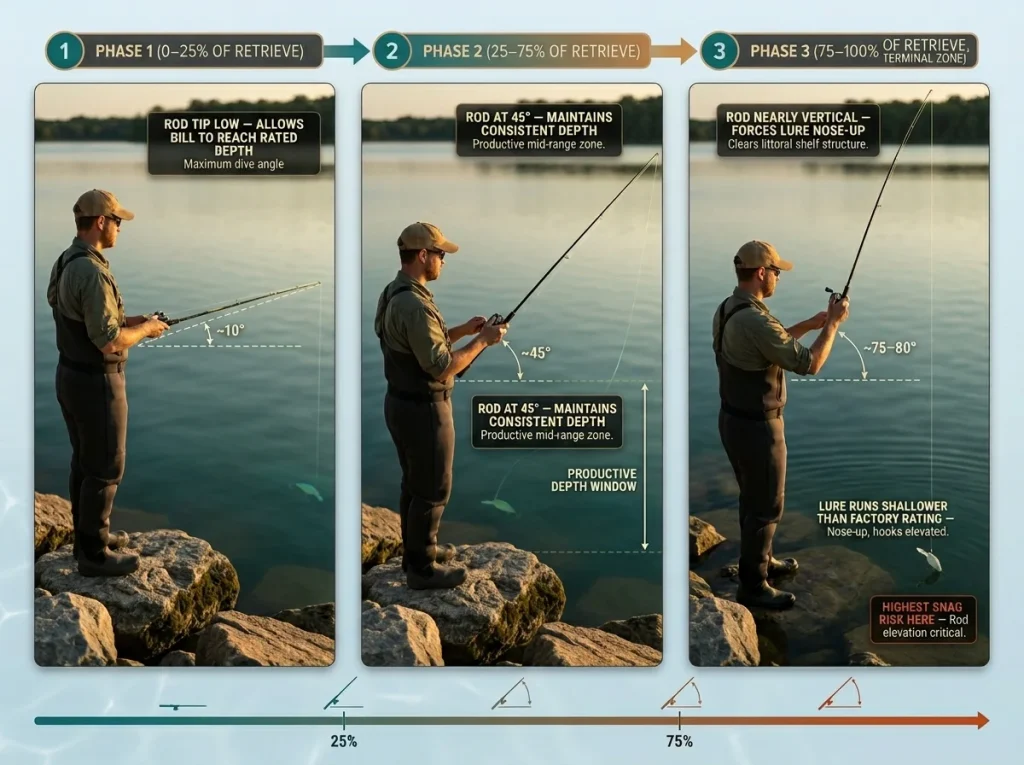
Vector cranking is the deliberate management of rod tip position across three phases to manipulate effective dive depth throughout the retrieve. This is not passive — it requires your full attention on every cast.
Phase 1 (0–25% of cast): Rod tip low, near the water surface. This maximizes the bill’s angle of entry and lets it reach rated depth fast. A common mistake is holding the rod high here — it kills the bill’s angle of attack and wastes the entire mid-retrieve window where contact bites occur.
Phase 2 (25–75%): Rod elevated to roughly 45 degrees. This maintains constant depth through the productive mid-range zone.
Phase 3 (75–100%): Rod held nearly vertical. This lifts the lure’s nose and forces it to run shallower than its factory rating — allowing it to pivot up and over the high-roughness littoral zone shelf before your feet.
Understanding the mechanics of how bill angle governs your dive curve makes this technique click. Once you see why angling the rod translates directly to changed dive depth, the three-phase sequence becomes instinct.
Bank Height Ratio and the Elevation Penalty
High-bank anglers have a specific problem that low-bank anglers don’t: the steep line entry angle prevents the lure from hitting its rated depth. An angler standing 10 feet above the water on a bridge or levee, fishing a lure rated for 15 feet, may achieve only 9 feet of effective depth in the final third of the retrieve. The angle physically prevents it.
The practical fix is to select shallower-rated bills than you think you need. The elevation penalty already reduces effective dive — compensate by choosing a lure one rating shallower than the water depth appears to demand.
Pro tip: When fishing from a bridge or elevated embankment, make longer casts than instinct suggests. Distance buys you a longer window of productive depth before the terminal uphill phase collapses the dive curve.
The Littoral Zone — Why This Is Where Fish Live (And Why Your Lure Hates It)
The littoral zone — the shallow nearshore area — is the most biologically productive region of any lake or river. Macrophytes, periphyton growth, aquatic invertebrates, and apex predators like largemouth bass all concentrate here. Bass near the bank are often there to conserve energy, not actively hunt. They respond to a reaction strike — a startle response — not a pursuit strike.
The same biological richness that holds fish creates what hydrologists call “bio-roughness” — the tangled wood, aquatic vegetation, and boulder clusters that generate the highest snag risk. The sediment transport dynamics of the bank are also dynamic: floods move large wood into new positions, scour holes appear after heavy rain, and embeddedness levels shift with sedimentation cycles.
Walk the bank when water is low and map the submerged structure before you fish it. That information is exclusive to bank anglers — boats can’t read a bank from this angle.
Bill Geometry — The Physics of the Pivot
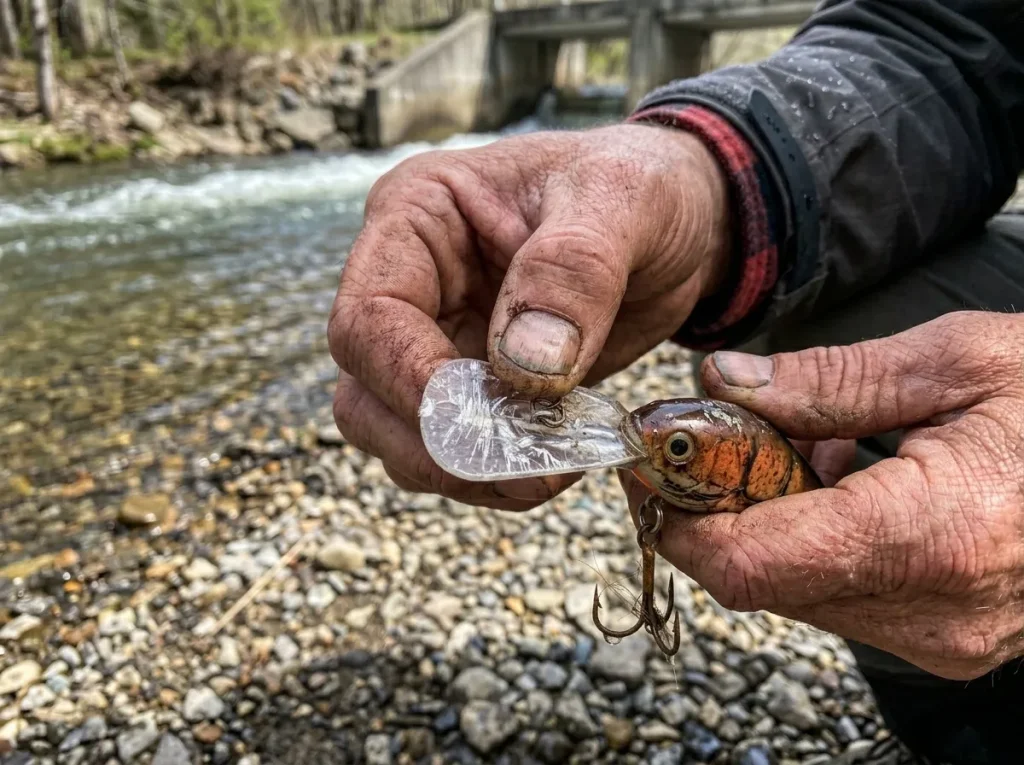
A crankbait bill does three things: generates depth, induces vibration, and protects the trailing treble hooks. The hook-protection function is the one most bank anglers ignore, and it’s the most critical.
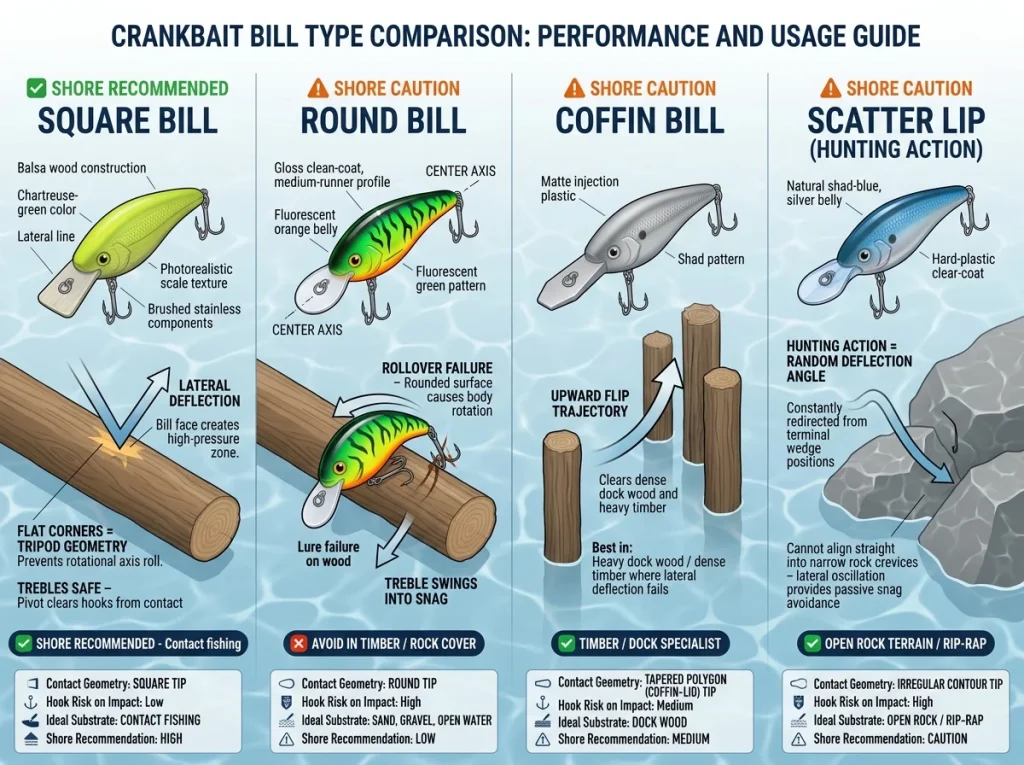
When a square-bill contacts a submerged log or rock, the flat, wide front creates a high-pressure zone that causes the lure to deflect sharply to the side — the lateral vector bounce. The flat corners act as a tripod that prevents the lure body from rotating along its longitudinal axis, which keeps the trebles safely behind the bill’s profile.
Round bills fail at this. When a rounded lip contacts a branch at an angle, the lure rolls over it — it rotates on its long axis, and the treble hooks swing toward the snag. This is geometry, not bad luck, and it’s why round bills belong in clean sand or gravel substrates from shore, not in timber or rip-rap.
Rick Clunn’s maxim holds: “If you’re afraid of getting snagged, you’ll never be a square-bill fisherman.” Confidence in contact is the mindset shift. The stutter — the moment of bill-to-structure impact — should be embraced. Provoking stutters is the goal.
The upgrading treble hooks to improve your clearance geometry piece on this site extends the bill-protection discussion naturally: if the bill is guarding the trebles, the hook gap width and shank length affect both clearance and hookup ratio.
Square-Bill Mechanics — The Lever System
Square bills are engineered at approximately a 45-degree attack angle. That angle converts forward momentum into lateral deflection energy on solid contact — the lure bounces off structure rather than driving into it. Their effective range is 0–6 feet, which maps perfectly onto the bank’s terminal zone.
Lure material changes the stutter character. Balsa wood reacts faster with more buoyancy for a sharper, quicker float-up after impact. Plastic bodies with tungsten weighting handle concrete and rock impacts better without cracking. Through-wire construction in the line-tie eyelet is non-negotiable for bank anglers — glued-in bills fail on repeated high-impact contacts with bridge footers and rip-rap. Check the bill-to-body joint before throwing any lure into the nasty stuff.
Round-Bill Failure Modes on Shore Terrain
Round bills reach depths of 25 feet or more — but that advantage is meaningless from shore, where water rarely permits their rated depth. What you’re left with is their primary failure mode: the longitudinal rotation on branch contact that drives hooks into wood.
In current near bridges and spillways, effective bottom roughness decreases as high-velocity flow flattens vegetation and debris. In those specific conditions — and only those — a round-billed bait in the 6–10 foot range can justify its presence from shore. The moment timber or rock clusters appear in the target zone, swap it out.
Coffin Bills and Circuit-Board Lips — Niche Applications
Coffin bills flip upward or careen sideways on contact before recovering — genuinely useful in dense dock wood and heavy timber where lateral deflection isn’t always possible. Circuit-board (G-10) bills reach their protection angle almost immediately after the cast, which matters on short bank casts with little travel time before the first obstacle.
Circuit-board failure mode: repeated high-impact contact with concrete or rock delaminates the G-10 material. Reserve these for wood cover. The Scatter Rap‘s hunting action keeps it out of narrow crevice alignment — the lateral oscillation constantly redirects it away from terminal wedge positions.
Pro tip: Coffin bills paired with flat-sided cold-water balsa are a cold-weather shore specialist setup. Tight wiggle plus superior buoyancy plus protected hooks equals the winter bank combination almost no one uses.
Material Science — Buoyancy as Your Recovery System
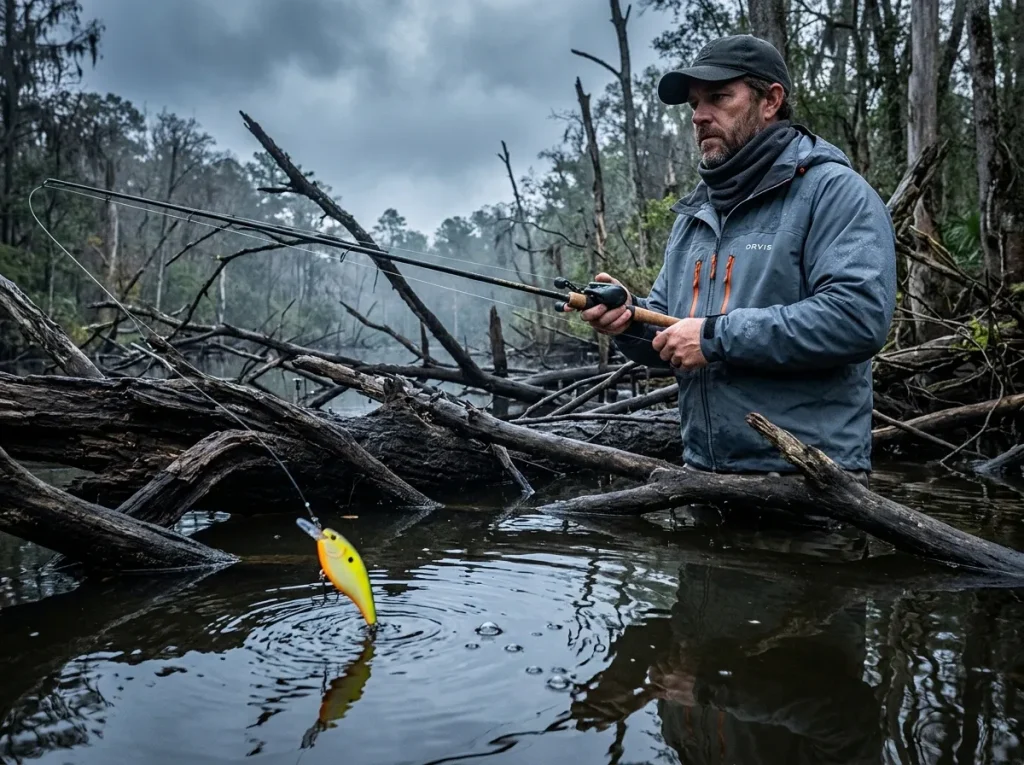
Buoyancy is the mechanical force that lets a snagged lure back out of an obstacle when you release line tension. It is determined by material density and trapped air volume — and it is the most overlooked variable in bank fishing with crankbaits.
Balsa wood (density approximately 0.16 g/cm³) generates what field-testing calls an instantaneous rise rate. The Rapala DT Series in balsa clears a 1-foot obstruction in approximately 1.5 seconds. The Bomber Fat Free Shad in plastic needs 3–4 seconds. Suspending baits provide zero upward movement — when they contact structure and tension releases, they simply stay there. Suspending lures are an active liability from the bank in structure-heavy environments.
Wesley Strader on balsa in cold water: “In the winter, the water is denser… with a balsa bait, it deflects easier because of its buoyancy, whereas a plastic is really affected by the water density.” Cold water is more dense, which increases buoyant force. Balsa’s advantage gets wider in winter.
The Archimedes buoyancy physics behind rise rate calculations article quantifies exactly why these rise rate differences exist — worth reading if you want to evaluate any new lure’s recovery potential before you buy it.
One critical warning: never slap a balsa lure on the water to clear weeds. Balsa is constructed by gluing two halves together, with an internal air chamber providing the buoyancy advantage. A high-velocity slap creates a pressure spike that can split the seam or shatter the wood, destroying the lure’s structural integrity and its buoyancy-to-weight ratio advantage. Pick weeds off by hand.
WWF Ghost Gear data on the environmental cost of lost hard lures in freshwater systems frames this in terms most anglers don’t consider: every lure lost in the littoral zone is a piece of lead that may remain available for ingestion by loons, eagles, and waterfowl for 100–300 years. Recovery isn’t just economically smart — it’s conservation.
Balsa vs. Injected Plastic — The Shore Angler’s Decision Matrix
The core tradeoff is durability vs. buoyancy. Balsa escapes snags faster; plastic survives repeated impact with concrete better. Bank anglers fishing rock-heavy rip-rap may legitimately prefer plastic square-bills; timber-heavy banks reward balsa every time.
Suspending plastic (neutral density approximately 1.0 g/cm³) offers no ascent capability and is categorically wrong for bank fishing in structure-heavy environments. Never bring them to a snaggy bank session.
The “Anti-Sell” Reality of Premium Silent Crankbaits
In murky bank water with visibility under 12 inches, fish rely primarily on their lateral line vibration sensitivity to locate prey. A silent crankbait is not just fragile in this environment — it’s acoustically invisible.
A $25 circuit-board-billed silent crankbait typically shatters its bill on the third collision with a concrete bridge footer. This is not a corner case — it is the expected outcome. A $7 Strike King KVD 1.5 with loud internal rattles and a durable molded-in bill flatly outperforms a premium silent lure in these conditions. The durability-first principle: the best shore crankbait is one you can confidently crash into the nastiest structure on every cast.
Manning’s n — Reading Substrate Snag Risk Like an Engineer
Manning’s roughness coefficient is a hydraulic engineering measure of channel friction. For the analytical bank angler, it functions as a direct snag risk index. No other fishing framework applies this data directly to lure selection — here’s how it works in practice.
Burn Zones (n < 0.03): Smooth cement, clean earth channels, gravel beds. Nearly any crankbait geometry and retrieval speed works here. Snag risk is negligible — focus on distance and depth.
Contact Zones (n = 0.03–0.06): Cobble, winding channels with stones. Square-bills and coffin bills are required. Constant contact with structure is the technique goal — dredge the bill into rocks and logs to create the erratic sound profile that triggers strikes.
Terminal Zones (n > 0.06): Sluggish reaches with heavy timber, dense brush, boulder fields. Even a balsa square-bill fails here without aggressive Burn-and-Pause technique to allow maximum vertical clearance. The USGS Guide for Selecting Manning’s Roughness Coefficients for Natural Channels is the primary scientific source for all reference values here.
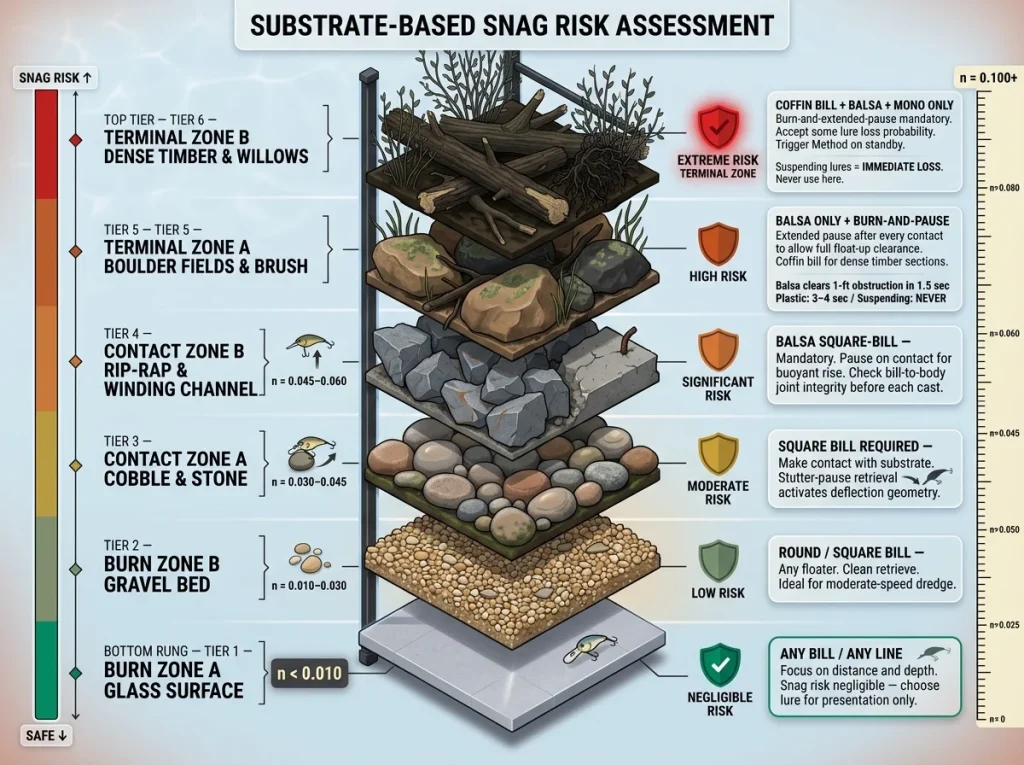
Dynamic roughness is worth understanding: in high-velocity current conditions, effective n decreases as vegetation and debris flatten. The same bank that registers Terminal Zone in low flow may become a Contact Zone during high-flow conditions after heavy rain. The how Manning’s n also governs carp habitat selection in the same rip-rap environments article shows how this framework transfers across species targeting the same substrate types.
Site Assessment Protocol — Reading a Bank Before You Fish It
Three-step visual assessment before your first cast:
- Identify dominant substrate material (timber / rock / sand / gravel).
- Estimate your Manning’s n category (Burn / Contact / Terminal).
- Select bill shape, material, and retrieval technique accordingly.
Walk the bank at low water enough to expose the substrate. Map your mental snag geometry before committing any lure. After a significant flood or storm, assume new large wood has entered previously clean zones — sediment budget awareness lets you predict where new snags will appear before they cost you tackle.
High-n zones near bridges and culverts often have current-modulated roughness. Fish these spots after high water recedes, when the n value drops and lure passage improves while bass hold tight to edge structure.
The Substrate-to-Lure Decision Tree (Murky Water)
When visibility is under 12 inches, lateral line vibration becomes the dominant strike trigger — color and flash are secondary. The decision sequence:
Heavy wood present? → Use large-profile balsa square-bill with high-decibel internal rattle.
Primarily rock? → Switch to plastic square-bill (avoids shattering).
Water temp above 55°F? → Burn at speed for reaction strike.
Below 55°F? → Flat-sided balsa with coffin bill for cold-water subtle action.
Line Dynamics — Pulling Vectors, Stretch, and the Dive Curve
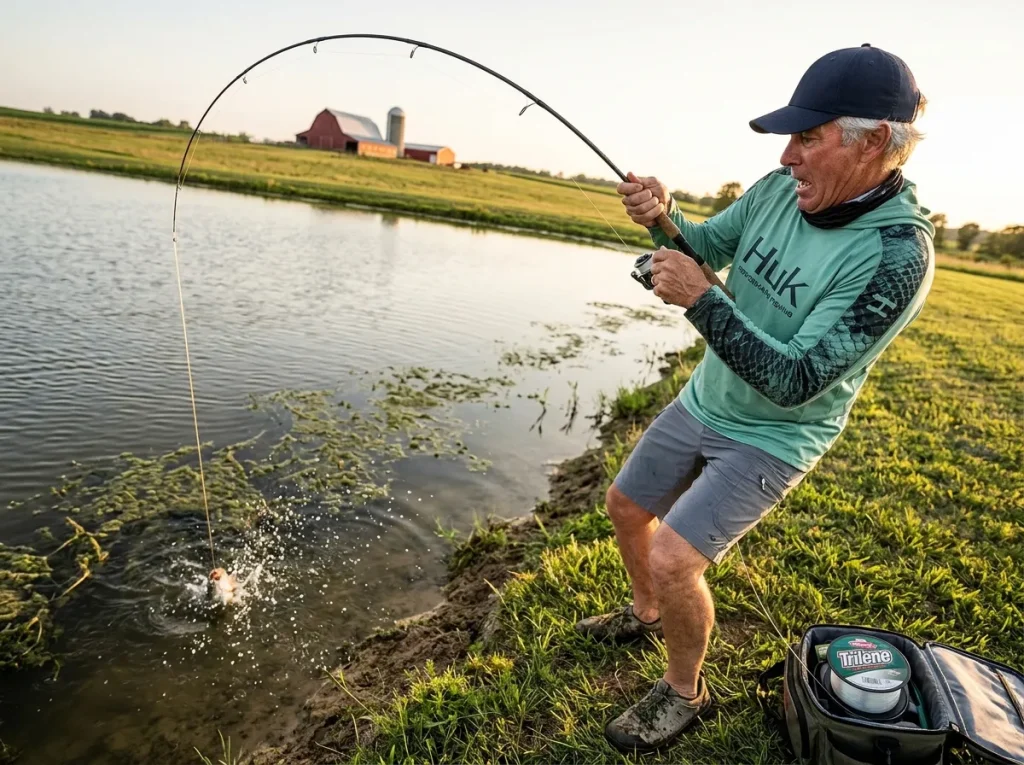
Line choice from the bank is not a breaking-strength question — it is a pulling vector question. The three main line types interact with the uphill retrieve geometry in fundamentally different ways, and getting this wrong costs you depth control, snag recovery, and hookups simultaneously.
Fluorocarbon sinks, creating a line belly that pulls the lure from a lower angle. In an uphill bank retrieve, this belly drags the bill directly into the substrate during the mid-retrieve phase. From a boat targeting deep water, fluorocarbon’s sinking belly is an asset — from the bank, it’s the wrong direction entirely. Fluorocarbon’s legitimate bank use case: 12–18 inches of fluoro leader material only, providing low-visibility profile near the lure without the full-line belly problem.
Monofilament is nearly neutrally buoyant, maintaining a direct rod-tip-to-lure pulling vector. Its stretch absorbs the jarring shock of sudden reaction strikes — the biological startle response bite that rattling square-bills trigger in lethargic bank-holding bass is often a violent reflex, and mono’s stretch prevents hook rips. Understanding why monofilament’s 2–9% stretch reality is critical for reaction-strike fishing explains the full stretch story.
Braided line floats — which creates an upward pull vector that can help clear weed tops in specific scenarios. But zero stretch means maximum hook-rip risk on explosive reaction strikes, and maximum sensitivity that bypasses the feel advantage entirely. Braid also cannot execute the Trigger Method recovery effectively.
David Fritts’ standard: rarely exceeds 10–12 lb test, even for deep applications. Heavier line stiffness kills the action of the crankbait — feel is everything when you’re trying to detect bill-to-structure contact before hooks engage.
Lure Recovery Physics — When the Snag Happens
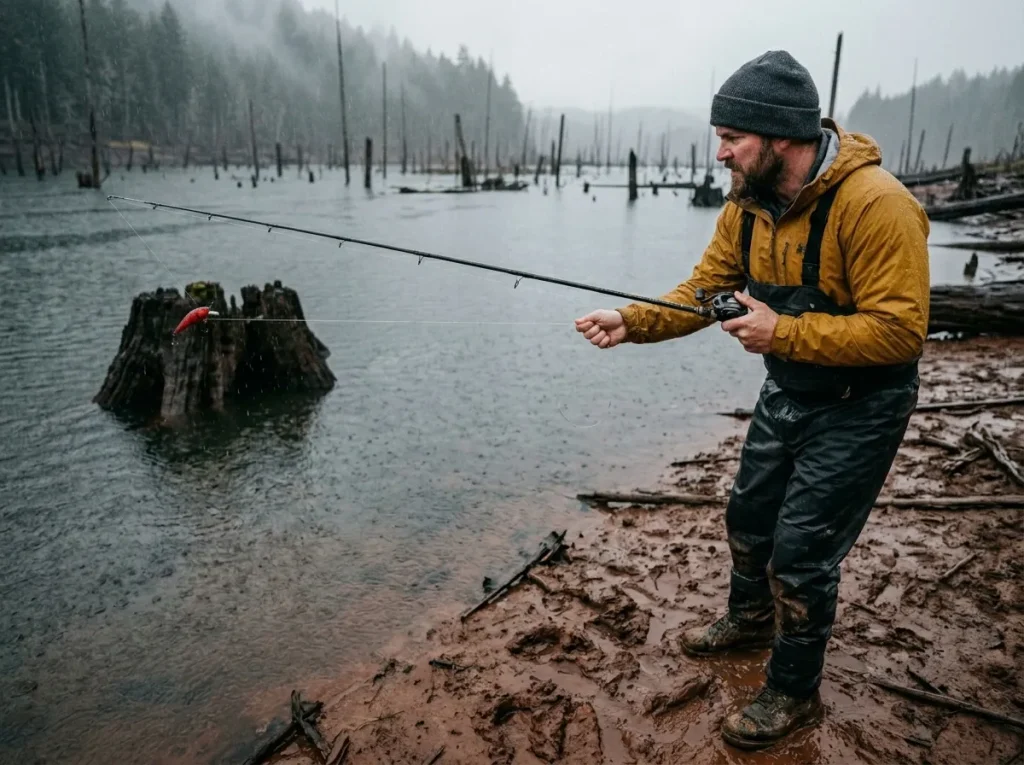
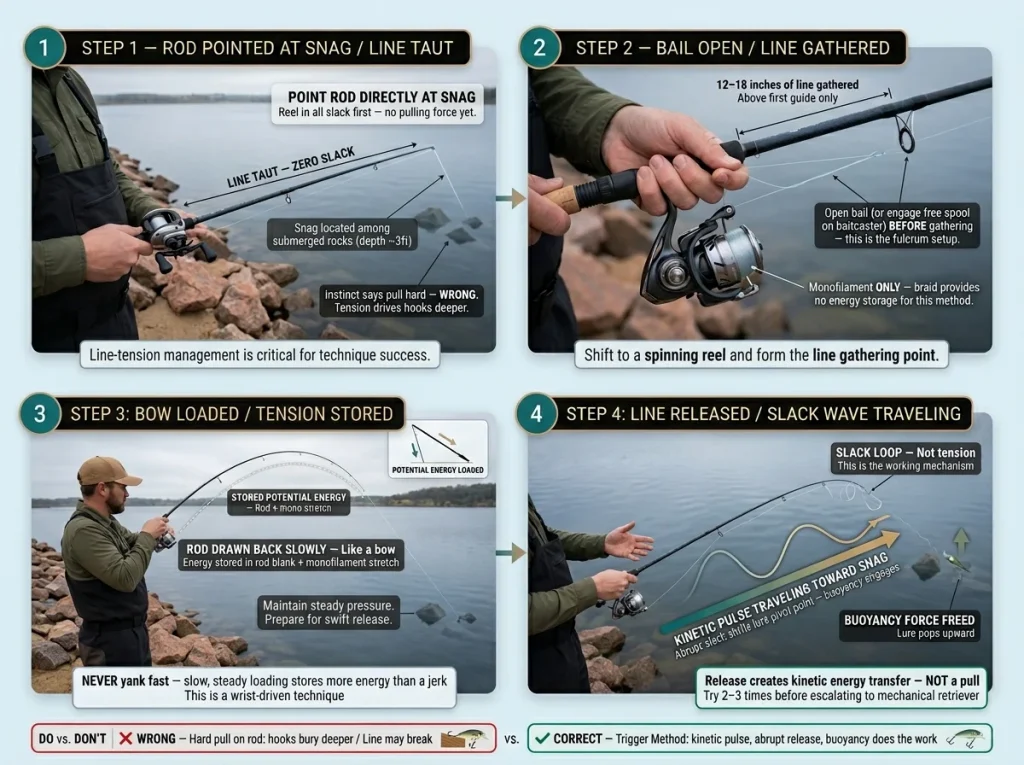
The instinctive response when snagged — pulling hard on the rod — is the guaranteed failure mode. In wood, tension drives hook barbs deeper into wood fibers. In rock, tension wedges the lure body more firmly into the crevice. Hard tension is the enemy. Lure recovery requires kinetic energy transfer, not sustained tension application.
Two physics-based methods handle the majority of bank snags: the Trigger Method and Standing Wave Theory. The Hound Dog retriever is the final-escalation tool.
Always attempt the kinetic approach first — it doesn’t require approaching the snag and won’t spook adjacent fish.
The full environmental case for recovering every lost lead-weighted crankbait puts this in conservation context: nearly half of bald and golden eagles in the U.S. suffer from chronic lead exposure. Every lure recovered is one that won’t spend the next century as a toxin in the littoral zone. Oklahoma State University Extension: lead tackle toxicity and bioaccumulation data provides the specific numbers behind this claim.
The Trigger Method (Bow-and-Arrow Snap)
This is your first-response tool for the majority of rock and wood snags from shore.
Step 1 — Preparation: Point the rod tip directly at the snag. Reel in all slack until the line is taut. No pulling force yet.
Step 2 — Loading: Open bail (spinning) or engage free spool (baitcaster). Gather 12–18 inches of line between the reel and the first guide with your finger or thumb.
Step 3 — Tensioning: Pull the rod backward slowly and steadily, drawing it like a bow. This stores potential energy in both the rod blank and the line stretch — monofilament is critical here. Braid provides no storage medium.
Step 4 — Release: Release the line abruptly. The stored tension discharges as a kinetic pulse down the line. This sudden slack shifts the lure’s pivot point, engaging buoyancy and popping it free.
This is a wrist-driven technique. A full-arm yank defeats the purpose — it reapplies tension instead of creating the abrupt slack release that actually works.
Standing Wave Theory — The Vibration Approach
Standing Wave Theory creates a vibrational pattern in the line to wiggle hooks free from soft material — submerged weed mats, soft mud, loose leaf accumulation — where the Trigger Method is less effective.
The critical setup detail: grab the line above the first rod guide, not below it. Guide friction kills the wave before it reaches the lure if you initiate from below the first guide. Create a bow of slack by pulling the captured line away from the rod, then release it sharply to send a high-frequency wave directly to the snag point.
Pro tip: Try two or three standing-wave attempts before escalating to the Hound Dog retriever. Impatience — going immediately to the mechanical retriever — is common and often unnecessary.
The Hound Dog Retriever — Bank Modification Protocol
The standard Hound Dog setup — a lead weight with a wire ring that slides down your line to dislodge snags through kinetic impact — was designed for boat use with steep line angles. From shore, the line angle is too shallow for the weight to slide effectively under gravity.
Field modification: attach the retriever to a 3-foot section of spare rod blank and spool the heavy cord on a large baitcasting reel. This lets you manually drive the retriever down the line and jiggle it against the snag. Alternative: a 4-ounce bank sinker on a large paper clip slipped onto the line, then walk up-bank to achieve a steeper angle — the improved gravity-drive angle often does the job.
Use the Hound Dog only after both kinetic methods have failed. Walking toward the snag zone will spook any remaining fish in the area.
Parallel Casting and Positional Mechanics — The Bank Advantage Strategy
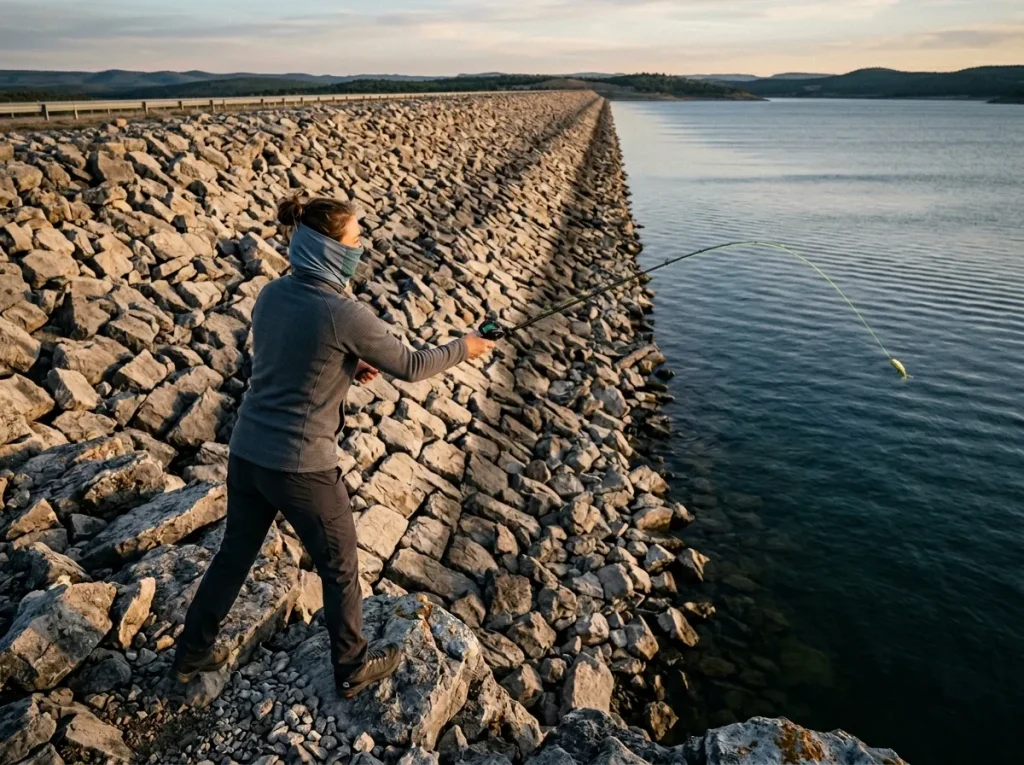
Parallel cranking — casting along the bank rather than out from it — is the single most effective tactical adjustment a shore angler can make. The geometry advantages are significant:
Perpendicular casts maintain productive depth contact for roughly 50% of the retrieve before the terminal uphill phase begins. Parallel casting maintains consistent horizontal depth throughout the retrieve because you’re not fighting a depth gradient — productive contact near 100% of the cast. Lures striking rip-rap at parallel angles are also meaningfully less likely to wedge between stones compared to perpendicular retrieves.
This is how the complete shore angling tactical guide for reading and positioning along banks frames the positional advantage: geometry first, lure selection second.
Stand farther from the water’s edge than instinct suggests when parallel cranking — this increases the parallel window before the lure curves toward the bank in front of you. Make longer casts than necessary to extend the productive window.
Parallel Casting Mechanics and Strike Zone Math
The math is straightforward once you see it. A perpendicular cast from a standard bank position has the lure reaching maximum depth at the midpoint, then climbing through the terminal zone — half the retrieve is productive at best. A parallel cast along rip-rap keeps the lure at consistent depth because there’s no uphill slope to fight.
The oblique contact angle from parallel casting also deflects rather than drives. Lures hitting rip-rap stones head-on wedge between them; lures hitting at a glancing angle bounce off. This is the same geometric principle that makes square-bill corner geometry work — angle of attack determines whether contact results in deflection or burial.
Reading Shoreline Transition Points
Transition points — where rip-rap meets gravel, where timber meets open substrate, where bank slope changes degree — concentrate fish consistently. A bass holding at a rip-rap-to-gravel transition is positioned where preferred ambush structure, forage concentration, and thermal refuge may all intersect simultaneously.
Target transitions with the first cast of each position. They deserve fresh, un-spooked water. Don’t waste casts on uniform stretches of bank — move fast between identified transition points and spend most of your time cranking the 5-foot radius on either side of each transition.
Seasonal Water Temperature — Adjusting Retrieve and Lure Profile
Water temperature determines fish metabolic rate and governs the correct retrieve speed and lure type completely:
Below 48°F: Flat-sided balsa with coffin bill. Slow roll with extended pauses. Let the lure hunt and hover on transition edges. KVD’s counter-intuition applies here: cold fish will still respond to the startle trigger from a rattling lure, which provokes a reflex response rather than a pursuit. The “fish won’t bite fast lures in cold water” belief is folklore, not physics.
48–58°F: Stop-and-go retrieve with balsa square-bill. The buoyant rise on pause is the strike trigger in this range.
58–68°F: Steady grind with standard square-bill at moderate speed. The metabolic cost calculation shifts — fish are willing to commit to a consistent retrieve.
Above 68°F: Burn retrieve with rattling square-bills at large profile. Bass positioned near current funnels will chase aggressively because the energy expenditure of an attack is justified by the calories available.
The Bank Angler’s Path Forward
Three things to carry off this page:
First — snagging from the bank is not random misfortune. It is a predictable consequence of uphill retrieve geometry, solved by managing rod tip elevation through all three phases of the retrieve, selecting the right bill, and assessing the substrate before the first cast.
Second — material matters more than almost any other variable in a shore-specific setup. Balsa’s instantaneous rise rate — clearing a 1-foot obstruction in 1.5 seconds versus 3–4 seconds for plastic — is a mechanical recovery system, not a fishing preference. Match it to high-roughness substrates and accept that some durability tradeoff is worth the snag-clearance speed.
Third — when a snag happens, counter-intuition is your friend. Release tension. Execute the Trigger Method. Use the lure’s own buoyancy to extract it. Every lure you recover stays out of the ecosystem for another hundred years.
Before your next shore session, walk the bank at low water and classify every 20-foot section as Burn Zone, Contact Zone, or Terminal Zone. Pack your box accordingly. One hour of pre-trip reconnaissance replaces six hours of guessing — and the recovered tackle pays for itself before you land the first fish.
FAQ
Can you use deep-diving crankbaits from the bank?
Technically yes, but the bank height ratio and uphill retrieve geometry make deep-divers effectively shallower than their factory ratings in practice. An angler on a 10-foot bank fishing a 15-foot-rated lure may achieve only 9 feet of effective depth in the final third of the retrieve. In most bank scenarios, square-billed crankbaits rated for 0–6 feet outperform deep-divers that never reach their rated depth anyway.
How do you not get snagged with crankbaits?
The short answer is bill, material, and technique working together. Use a square- or coffin-bill with a floating (balsa or hard plastic) body, and execute vector cranking — rod tip low at the start, elevated to nearly vertical in the final 25% of the retrieve. Embrace contact rather than fearing it; the stutter-and-pause is the recovery mechanism, not a warning sign.
What line is best for bank cranking?
Low-memory monofilament in 10–12 lb test is the bank crankbait standard. Its neutral buoyancy maintains a direct pulling vector, its stretch absorbs violent reaction strikes, and it provides the mechanical foundation for the Trigger Method lure recovery. Fluorocarbon’s sinking belly increases the downhill pulling vector — the wrong direction for an uphill bank retrieve.
What’s the difference between balsa and plastic crankbaits for snag clearance?
Balsa clears a 1-foot obstruction in approximately 1.5 seconds when the retrieve is paused. Plastic lures with slower buoyancy require 3–4 seconds. Suspending baits provide zero upward movement. In a Terminal Zone environment (heavy timber, n > 0.06), that 1.5-second difference is the margin between clearing the snag and losing the bait.
Is carp fishing in similar rip-rap environments affected by the same Manning’s n substrate factors?
Yes — Manning’s n applies to any species targeted in rip-rap or cobble-bottom environments. The hydraulic roughness values that predict crankbait snag risk also describe the bottom composition that carp use as habitat corridors in North American waters, making MasterFishingMag’s Manning’s n framework transferable across multiple freshwater disciplines.
Risk Disclaimer: Fishing, boating, and all related outdoor activities involve inherent risks that
can lead to injury. The information provided on Master Fishing Mag is for educational and informational purposes
only. While we strive for accuracy, the information, techniques, and advice on gear and safety are not a substitute
for your own best judgment, local knowledge, and adherence to official regulations. Fishing regulations, including
seasons, size limits, and species restrictions, change frequently and vary by location. Always consult the latest
official regulations from your local fish and wildlife agency before heading out. Proper handling of hooks, knives,
and other sharp equipment is essential for safety. Furthermore, be aware of local fish consumption advisories. By
using this website, you agree that you are solely responsible for your own safety and for complying with all
applicable laws. Any reliance you place on our content is strictly at your own risk. Master Fishing Mag and its
authors will not be held liable for any injury, damage, or loss sustained in connection with the use of the
information herein.
Affiliate Disclosure: We are a participant in the Amazon Services LLC Associates Program, an
affiliate advertising program designed to provide a means for us to earn advertising fees by advertising and linking
to Amazon.com. As an Amazon Associate, we earn from qualifying purchases. We also participate in other affiliate
programs and may receive a commission on products purchased through our links, at no extra cost to you. Additional
terms are found in the terms of service.