In this article
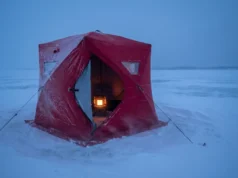
You are three miles from the truck, the wind chill is hitting -20°F, and your Ion or K-Drill power head just cut out mid-hole because the battery overloaded. The engine isn’t the problem. The problem is the microscopic edge geometry of your auger blades fighting the ice rather than slicing it.
A dull blade doesn’t just waste time; it increases drilling effort, drains power, strains your joints, and turns a precision sport into a physical brawl.
I’ve spent decades on the hardwater, and if there is one truth I’ve learned, it’s that true outdoor competence isn’t defined by the gear you buy. It is defined by how you maintain it when the elements turn against you. This instructional/how-to guide shifts the focus from “buying a new blade” to mastering the physics of the edge.
We are going to cover the critical “Rhombus Angle” and why simple sharpness isn’t enough to restore cutting performance. We will walk through workshop protocols using the sandpaper arc method to restore a factory edge without destroying the temper. Finally, we’ll discuss field triage—how to diagnose “auger skates” issues and safely swap blades in sub-zero conditions.
Why Do Ice Auger Blades Fail and How Can You Diagnose the Issue?
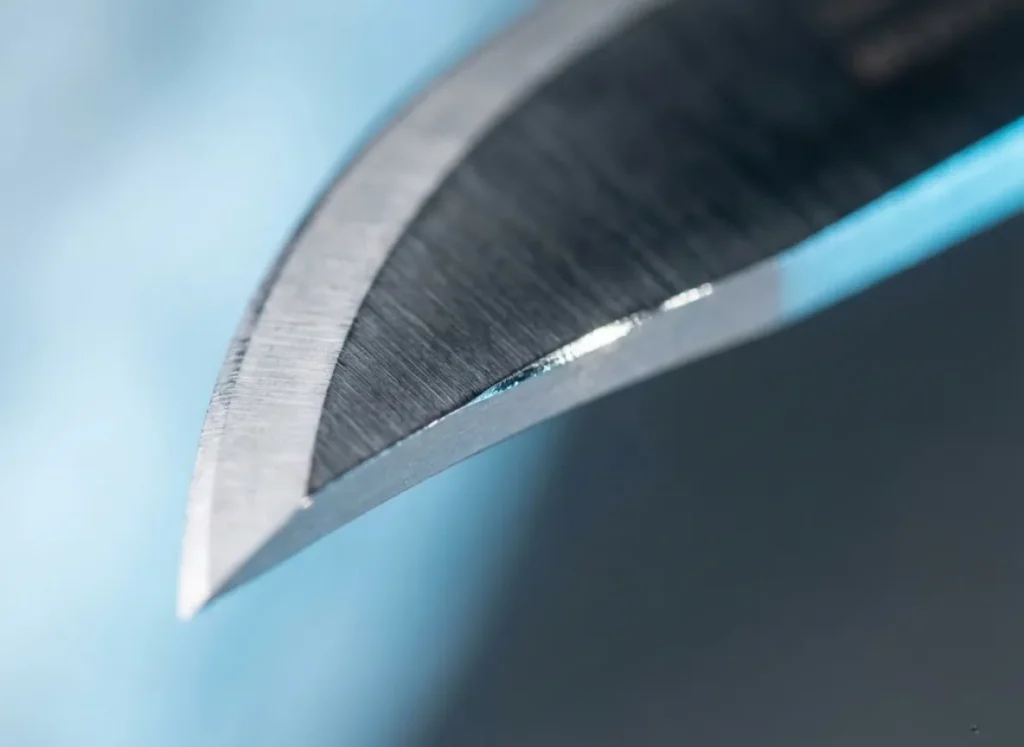
Before you take a honing stone to steel, you must understand the mechanical soul of your machine. Not all ice augers cut the same way, and identifying the specific failure mode is the only way to apply the correct fix.
What is the Difference Between Shaving and Chipping Blade Mechanics?
Ice auger blades generally fall into two categories: Shavers and Chippers. “Shaver blades,” like those found on Strikemaster Lazer, Nils, or Mora hand augers, utilize curved, razor-thin edges. These are designed to peel ribbons of ice, relying on a precise angle of attack to self-feed. They are surgical instruments.
“Chipper” mechanics, common on Strikemaster Chipper, Jiffy, or Eskimo units, function as rotary chisels. They use serrated or flat teeth to pulverize ice through high torque and down-pressure rather than slicing.
Ice Auger Blade Comparison
Shaver vs. Chipper Blades: Performance, Durability & Maintenance
Cutting Speed
High (Benchmark). Operates on the principle of slicing thin ribbons of ice; considered the benchmark for shaving speed.
Durability
Low (Brittle). Prone to chipping on dirty ice and oxidation; a rolled edge stops cutting immediately.
Ice Suitability
Clean Ice. Requires pristine ice; extremely sensitive to pitch alterations and debris.
Maintenance
High (Precision). Requires surgical sharpness (600-1000 grit) and precise curves; difficult to master manually.
Cutting Speed
Moderate (High Torque). Functions as a rotary chisel that pulverizes ice into granular chips; requires high torque.
Durability
High (Rugged). Structural integrity allows operation even with minor dulling; “tooth” design is resilient.
Ice Suitability
Dirty Ice / Re-Opening. Favored for ice laden with sand/sediment; excellent for re-opening frozen holes.
Maintenance
Low (Forgiving). Focuses on edge structure rather than polish; flat blade variants are the easiest for DIY honing.
The tolerance levels between the two are vastly different. Shaver blades fail catastrophically with minor dings; a single nick can stop the auger dead. Chippers, however, can continue working—albeit slowly and loudly—even when dull.
This distinction is vital because Mora blades and other shavers are often harder and more brittle. They adhere to the principles of wedge mechanics and material hardness that require fine abrasives for restoration.
Conversely, Chipper blades are the preferred choice for “dirty ice” laden with sand, whereas shaver blades will roll their edge instantly upon contact with sediment. Shavers require honing and polishing, while Chippers often require re-profiling with coarser files. Understanding this helps you build your foundational ice fishing gear checklist with the right expectations for preventative maintenance.
Why is the “Rhombus Angle” Critical for Cutting Efficiency?
Sharpness is irrelevant if the geometry is wrong. The cutting efficiency of your auger is governed by the “Rhombus Angle“—the specific geometric angle, often around 7.13°, at which the blade addresses the ice relative to the shaft axis. If this angle is off by even a degree, the blade fails.
When the bevel angle is too obtuse (steep), you experience “skating.” The edge cannot bite into the surface, and the auger spins harmlessly. If the angle is too acute (shallow), you experience “binding.” The auger bites too aggressively, stalling the motor or wrenching the handles from your grip.
This is why understanding the geometry of cutting tools, specifically relief and rake angles, is essential.
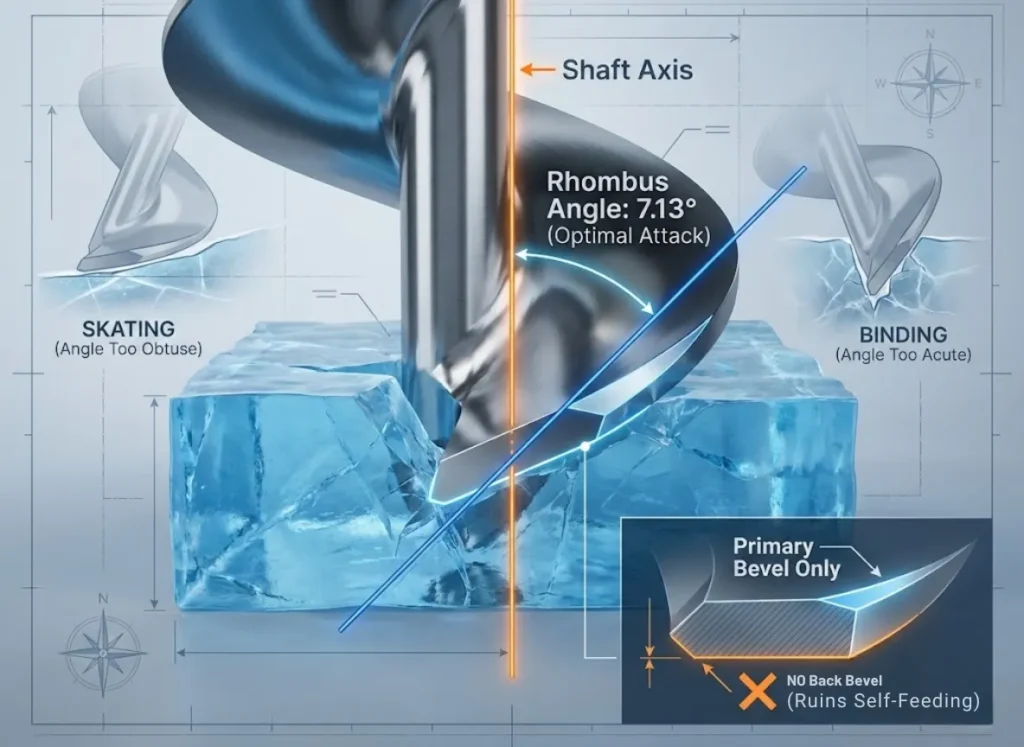
Most do-it-yourself solution attempts fail here. Augers rely on a single primary bevel. A common mistake is sharpening the flat (bottom) side of the blade, creating a “back bevel.” This lifts the cutting edge off the ice, ruining the self-feeding action.
This geometry is similar to the physics-based sharpening for higher hook-up rates, where precise triangular points matter more than brute force. Even a sharp auger with the wrong pitch increases torque requirements, causing rapid battery drain on electric units like RAZR ice augers.
How Can You Diagnose Blade Failure Before Sharpening?
You don’t always need to sharpen; sometimes you just need to inspect. Start with a visual blade health diagnostic for “glinting.” Hold the edge up to a light. If you see light reflecting off the very apex of the edge, you have folded metal, nicks, or chips. A razor-sharp edge reflects no light because it has zero width.
Next, perform the fingernail test. Gently drag your fingernail across the edge (perpendicular to the blade, not along it). A good blade edge will bite into your nail immediately. A dull blade will slide. Be careful.
If the blade passes these tests but still won’t cut, use the “Sharpie Trick.” Color the edge and the entire bevel with a Sharpie marker, assemble the auger, and turn it once on the ice. The wear pattern on the ink will reveal your angle issues.
Pro-Tip: Check for “Lost Temper.” If you see blue or rainbow discoloration on the steel, a previous owner likely overheated the blade on a grinder. That steel is now soft, will not hold an edge, and the blade must be trashed.
Finally, assess “runout.” If the main blades are sharp but the auger won’t start a hole, the auger bit pilot point is likely dull. If the auger wobbles violently, the bent blade mount or drill plate itself may be warped—common after dropping the unit.
According to standards for the visual inspection of material fatigue, structural deformation cannot be fixed by sharpening. You’ll need essential fishing tools like pliers to safely check these components without slicing your fingers.
How Do You Restore Auger Blades in the Workshop?
We are avoiding power tools. High-speed grinding generates heat that destroys the heat treatment of carbon steel. Once you ruin the temper, the blade is useless. We will use a manual method that offers superior control.
What Tools Are Required for a Professional DIY Edge?
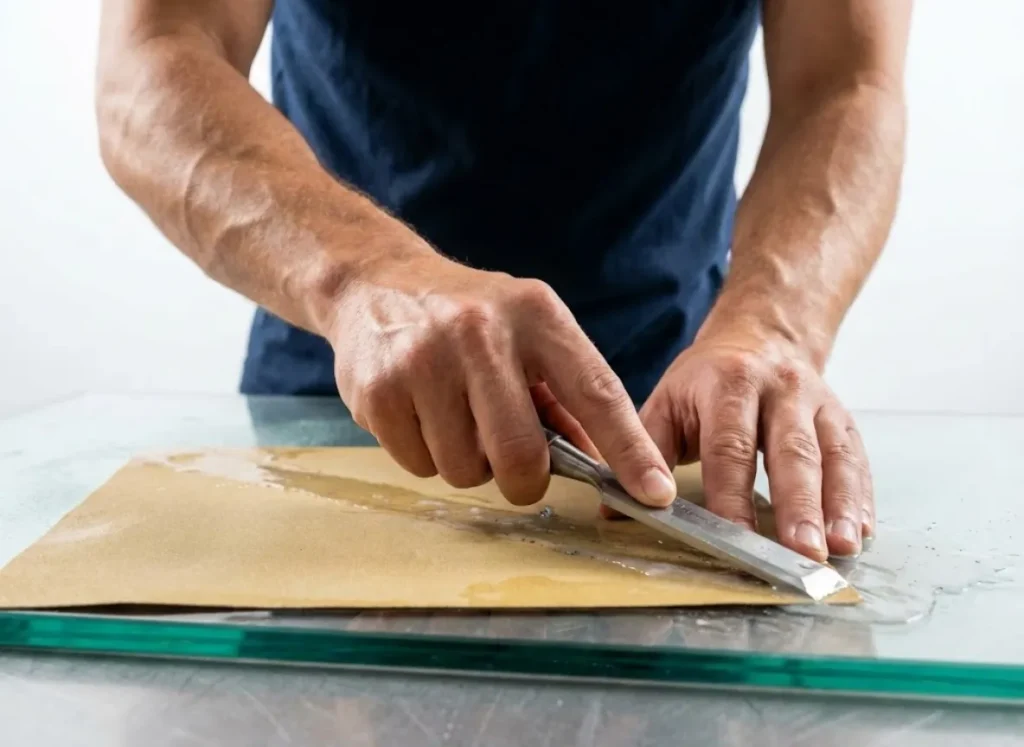
Put the bench grinder and cheap puck sharpeners away. It is impossible to hold a complex 7° curve freehand against a spinning wheel without overheating the edge. Instead, we rely on the “Scary Sharp” system used by fine woodworkers for wood chisels and hand plane blades.
You will need wet/dry sandpaper, specifically 600-1000 grit sandpaper and up to 2000 for polishing. You also need a “dead-flat” substrate. A piece of thick plate glass, a mirror, or a polished granite tile works best. If you prefer rigid tools, a 6-inch diamond stone or Arkansas stone (Fine/Extra Fine) is excellent.
Workspace lighting is critical to see the burrs forming. Lubrication is non-negotiable; use water or window cleaner to float away the metal swarf and prevent the abrasive from clogging. This keeps the sharpening process consistent. Safety handling is also critical; wear cut-resistant gloves and use a non-slip mat.
Comparing the $15 cost of sandpaper and glass to the $50+ cost of replacement Lazer hand auger blades makes this a high-value skill. However, you must respect the metallurgy. The heat treatment of carbon steel is precise, and manual sharpening preserves it. This aligns with a philosophy of sustainable fishing gear maintenance, keeping gear out of landfills.
How Do You Execute the “Sandpaper on Glass” Method?
Begin by adhering the sandpaper to your glass plate. Use water tension or a light spray adhesive to ensure the paper lies perfectly flat with no bubbles or ripples. Any texture here will transfer to your blade edge.
Place the bevel flat against the paper. If you used the Sharpie marker earlier, the ink will guide you. For curved shaver blades, use a sandpaper arc method: match the bevel and drag backward in an arc following the contour of the edge. Apply firm, even pressure directly over the bevel interface. Do not press on the spine, or you will rock the blade and round over the edge.

Start on the coarse grit (400 or 600). Continue using consistent strokes until you feel a “burr“—a microscopic wire of metal that curls over to the flat side of the blade. You must feel this burr along the entire length of the edge. If you don’t feel it, you haven’t sharpened the very edge yet.
Once the burr is established, switch to the finest grit (2000). Flip the blade backward (flat-side down). Take one single, very light pass to shear the burr off. Do not lift the spine. The goal is to remove the burr without creating a secondary bevel or back bevel.
Finally, polish the primary bevel on the 2000 grit to a mirror finish. This reduces friction and prevents water from freezing to the steel. Understanding abrasive grit standards helps you move from removal (sharpening) to polishing (honing). Use your field-tested fishing pliers to carefully handle the blade if checking the edge close-up.
How Do You Handle Emergency Repairs and Field Maintenance?
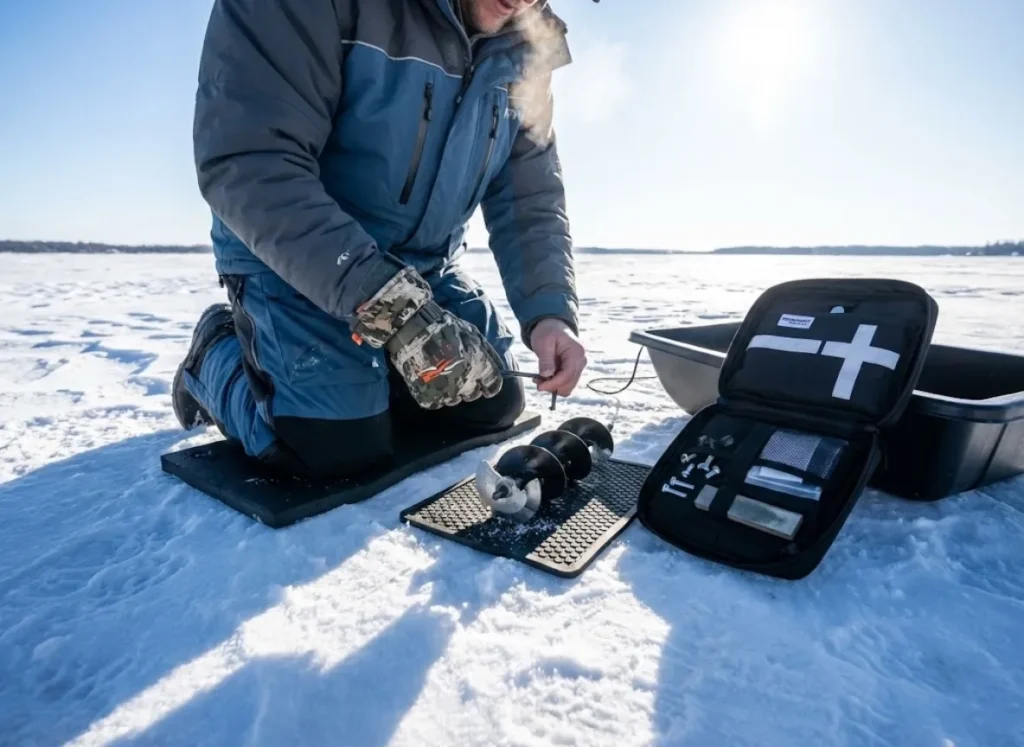
Sometimes, the best workshop practices aren’t enough when you are miles from shore. Equipment fails. When it does, your ability to triage determines if you fish or go home.
What Should Be Included in an Auger “Triage Kit”?
You need a specific on-the-ice emergency field kit, separate from your tackle, dedicated solely to the auger. This kit must include a three-blade set (spares) in a hard case. Loose blades in a bag are a recipe for injury.
You also need the proper Allen wrenches or hex keys—specifically a T-handle design, as standard L-keys often can’t generate enough screw torque in frozen hands. Carry a small diamond stone credit card for touch-ups.
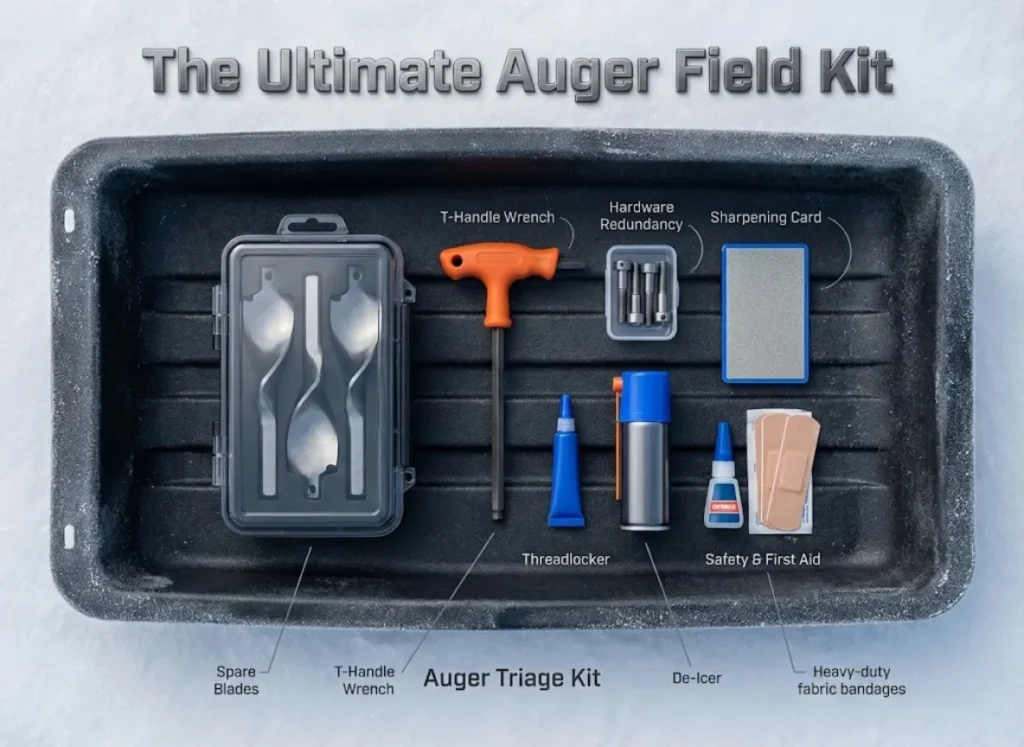
Most importantly, carry hardware redundancy. You must have at least four spare collar bolt or blade screws. If you drop a bolt in deep snow, it is gone forever. Without that bolt, your ice auger is useless.
Pro-Tip: Use Blue Threadlocker on your bolts before you head out, and keep a small tube in your kit. Vibration loosens bolts, leading to blade chatter and breakage.
Include a small bottle of de-icer or WD-40 to displace water. Cold weather impairs fine motor skills, increasing the risk of cuts. Include superglue and heavy-duty fabric bandages in your kit.
This preparation is vital for preventing hypothermia and frostbite by minimizing the time you spend with bare hands on cold metal. It is the definitive guide to safety for any serious angler.
How Do You Fix a “Frozen” or “Skating” Auger on the Ice?
If your sharp auger suddenly stops cutting, it is likely “ice glaze.” Friction melts water during the cut, which instantly refreezes on the sub-zero steel blades. This microscopic layer of ice dulls the geometry. Do not bang the auger on the ice. This bends the shaft and flighting. Instead, use a rubber mallet or the handle of your scoop to tap the flighting gently.
You can proactively prevent this by spraying the blades with oil or de-icer before drilling. If the auger is clean but still skating, the culprit is often the pilot point, not the main blades. Use your diamond card to sharpen the center point into a sharp pyramid shape. This allows the auger to track and begin the cut.
You can also perform field honing using the stone honing method. Run the diamond card flat against the primary bevel for 5-10 strokes. This realigns a rolled edge without requiring you to remove the blades. Always disconnect the spark plug or battery before touching the flighting.
The “Death Spin”—accidental activation while your hands are on the blades—is a career-ending injury. Understanding the physics of ice friction explains why this glazing happens. Protect your hands during these repairs with the best fishing gloves for cold weather.
Conclusion
A sharp auger is a joy to use; a dull one is a curse. We’ve established that cutting efficiency is governed by the 7.13° “Rhombus Angle,” not just edge sharpness. We’ve walked through the “Sandpaper Arc Method” as the safest do-it-yourself solution to extend blade life.
We’ve also highlighted that field failures are often caused by center point issues or ice buildup, not dull main blades. By building a dedicated “On-the-ice emergency field kit” with spare bolts and tools, you ensure that a mechanical failure never ends your trip. Maintain your edge, respect the physics, and the ice will open up for you every time.
Share your own “auger disaster” stories or your personal field-fix hacks in the comments below to help build our community knowledge base.
FAQ – Frequently Asked Questions
Does sharpening my own ice auger blades void the warranty?
Generally, sharpening is considered routine maintenance and does not void warranties unless you significantly alter the bevel angle or damage the mounting points. However, using power tools that overheat the steel or modifying the pitch will likely void coverage on the power head.
How often should I sharpen my ice auger blades?
You should perform a fingernail test check before every trip and lightly hone the blades with a fine diamond stone every 3-5 outings. A full restoration is typically needed once per season, or immediately if you drill into dirty ice (sand or debris).
Can I use a regular knife sharpener or kitchen steel on auger blades?
No, standard V-notch pull-through sharpeners will destroy the specific geometry of ice auger blades. A flat honing stone or diamond paddle is required to match the single-bevel geometry unique to ice tools. You can use a whetstone or knife sharpener for precise honing, but only if they offer a flat surface.
Why does my auger spin but not cut (skate) even after sharpening?
This is usually caused by a dull center point (pilot bit) or a back bevel created by sharpening the flat side of the blade. Ensure the bottom of the blade is perfectly flat. Also, check for a bent blade mount; if the mount is warped, even new blades won’t cut.
Risk Disclaimer: Fishing, boating, and all related outdoor activities involve inherent risks that
can lead to injury. The information provided on Master Fishing Mag is for educational and informational purposes
only. While we strive for accuracy, the information, techniques, and advice on gear and safety are not a substitute
for your own best judgment, local knowledge, and adherence to official regulations. Fishing regulations, including
seasons, size limits, and species restrictions, change frequently and vary by location. Always consult the latest
official regulations from your local fish and wildlife agency before heading out. Proper handling of hooks, knives,
and other sharp equipment is essential for safety. Furthermore, be aware of local fish consumption advisories. By
using this website, you agree that you are solely responsible for your own safety and for complying with all
applicable laws. Any reliance you place on our content is strictly at your own risk. Master Fishing Mag and its
authors will not be held liable for any injury, damage, or loss sustained in connection with the use of the
information herein.
Affiliate Disclosure: We are a participant in the Amazon Services LLC Associates Program, an
affiliate advertising program designed to provide a means for us to earn advertising fees by advertising and linking
to Amazon.com. As an Amazon Associate, we earn from qualifying purchases. We also participate in other affiliate
programs and may receive a commission on products purchased through our links, at no extra cost to you. Additional
terms are found in the terms of service.