In this article
A twenty-five-dollar crankbait that swims on its side is not just a waste of money; it is a tactical liability that eliminates your presence in the strike zone. I’ve seen countless fishermen on the water toss a brand new hard-bodied lure into the trash because it spiraled during a retrieve, blaming the manufacturer for a “lemon.” But after decades of guiding and tournament fishing, I’ve learned that the distinction between a novice and a master often lies in the needle-nose pliers, not the purchase.
True post-purchase skill mastery involves understanding the hydrodynamics of your tackle and asserting control over it. You must be able to transform a mass-produced piece of plastic into a precision instrument that behaves exactly as the environment demands. In this guide, we will break down the physics of water resistance and alignment, master the “Opposite Rule” for correction, and explore advanced modifications like bill shaving to customize your presentation for educated fish.
Why do fishing lures fail to swim straight?
This section deconstructs the mechanical layer of lure instability, explaining the “why” before the “how” to establish a foundation for troubleshooting.
What forces cause a lure to become unstable?
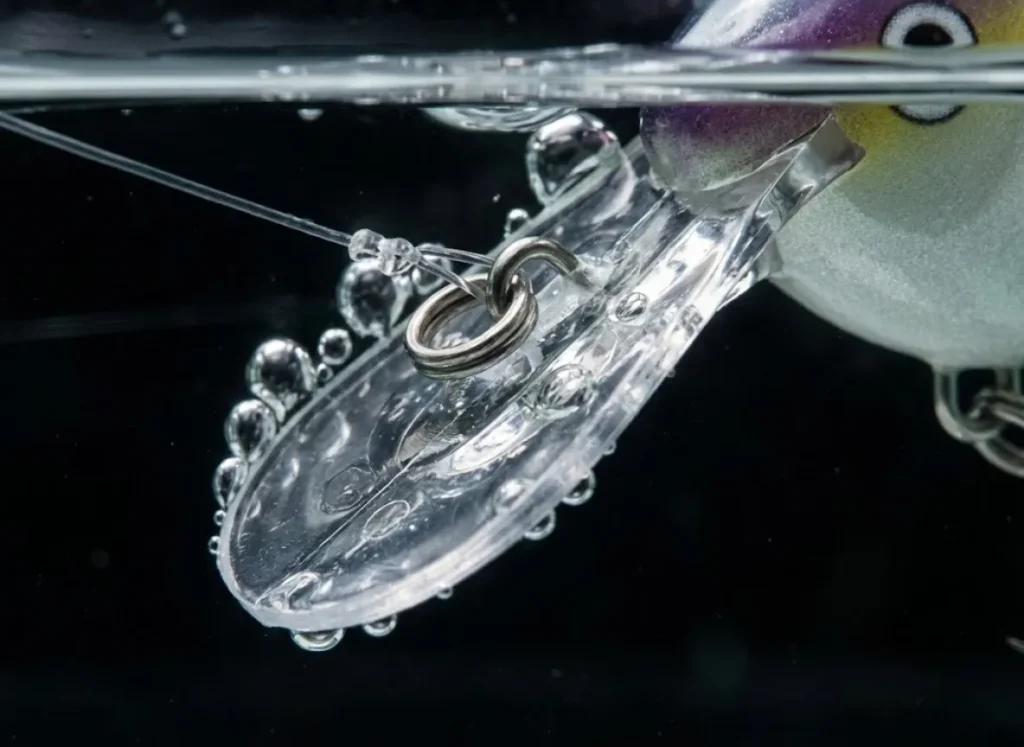
Artificial lures, specifically fishing plugs and jerkbaits, function essentially as hydrofoils. The lip, bib, or bill generates a downward force vector known as drag, while the body provides lift through buoyancy. This interaction creates the controlled instability we call “wobble.” For a lure to track straight, the Center of Pressure (CP) on the bill must oscillate evenly across the vertical axis relative to the lure’s Center of Gravity (CG). When the line tie or eyelet is slightly misaligned, that Center of Pressure shifts permanently to one side, generating asymmetric lateral force that pushes the lure off course.
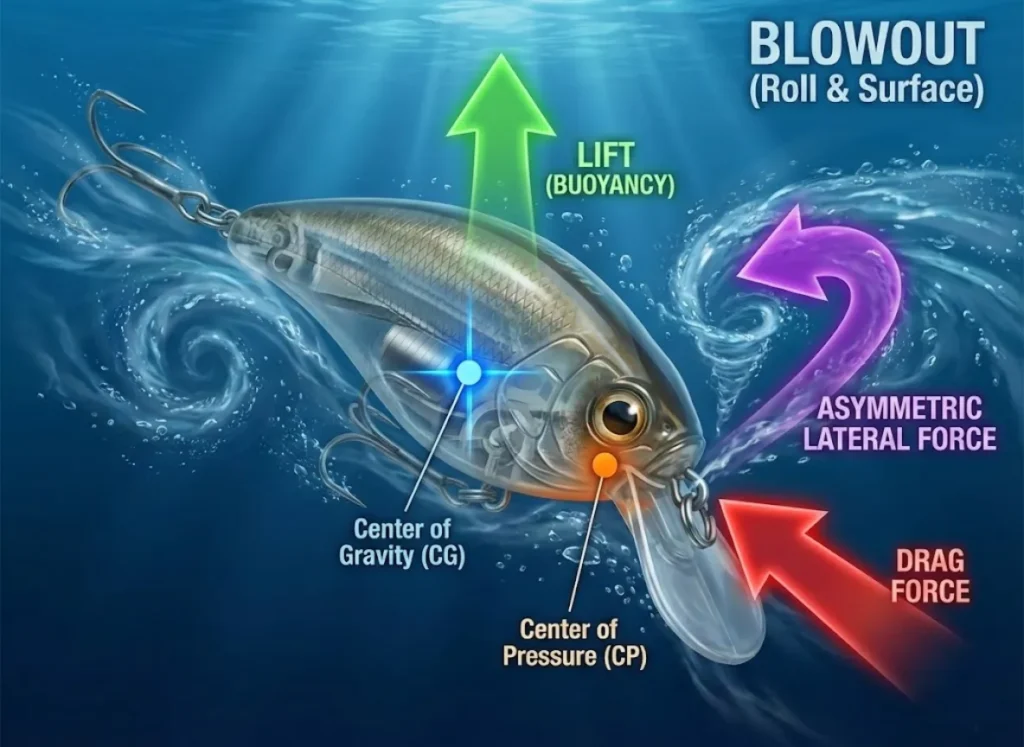
This eyelet alignment error often manifests as a “blowout,” where the lateral force overcomes the gravitational force of the ballast, causing the lure to roll onto its side and surface. Because principles of fluid dynamics and drag dictate that forces scale with the square of velocity, a minor error invisible at slow speeds will cause catastrophic failure during a high-speed “burn” retrieve.
Certain geometries are more prone to this than others. For example, the square bill is inherently unstable due to turbulent vortices created at its sharp corners, unlike the laminar flow of a round bill found on some metal lip swimmers. Understanding the hydrodynamics governing dive depth confirms that a wayward lure isn’t broken—it is simply unbalanced.
How do you perform the standard tuning protocol?
This section provides the actionable, step-by-step methodology for the “Opposite Rule,” the foundational technique for all lure performance optimization.
How does the “Opposite Rule” correct tracking errors?
The fundamental law of tuning is the Opposite Rule: If the lure tracks to the left, you must bend the line tie to the right, and vice versa. To diagnose lure failure accurately, make a short 30-foot cast and retrieve at a moderate-to-fast pace. Slow retrieves often fail to generate enough water pressure to reveal the subtle tracking direction errors that cost you fish.
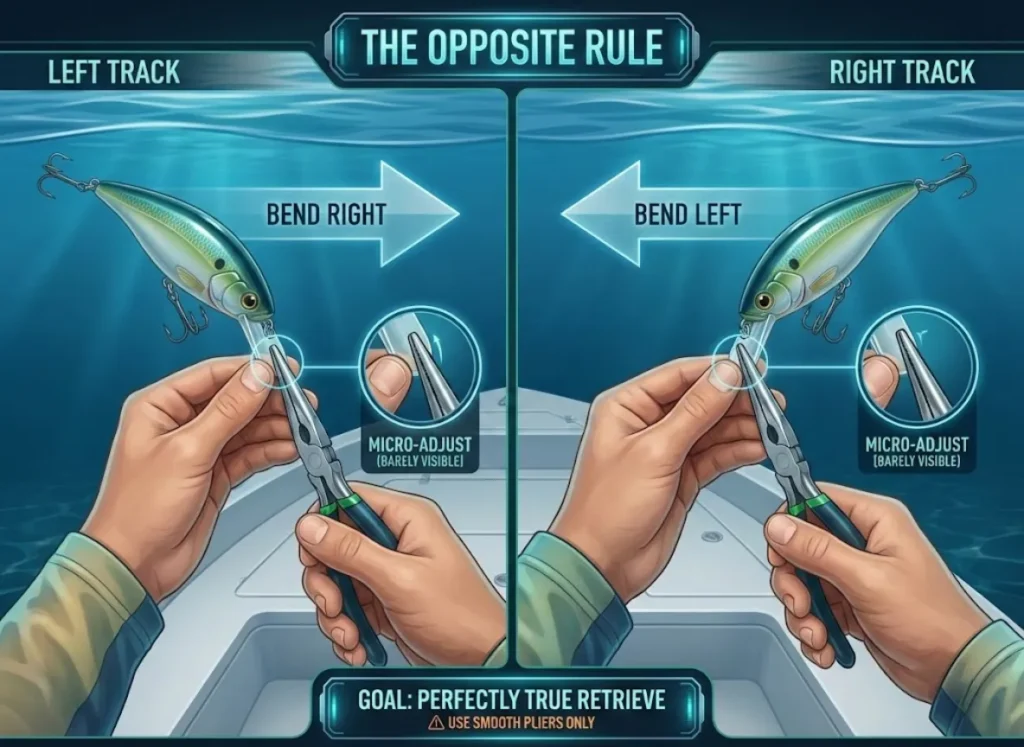
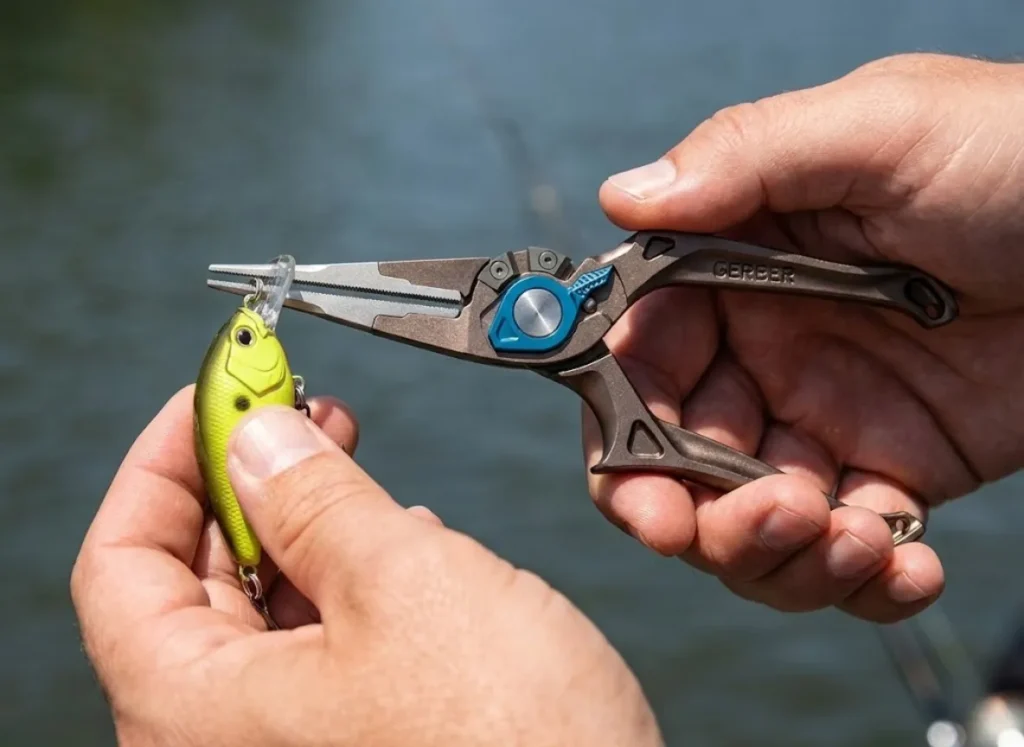
When you are ready to adjust, grip the lure firmly by the bill—never the body—to isolate the eyelet. Use smooth-jawed needle-nose pliers or even hemostats to make the adjustment. It is critical to select the best fishing pliers for this task, as serrated jaws can score the wire, creating weak points that may snap under the load of a hard-fighting fish.
Pro-Tip: Adjustments must be microscopic. If you can see the metal move with the naked eye, you have likely over-corrected and ruined the tune. Apply barely enough pressure to feel the wire yield, then retest immediately.
The goal is to shift the tow point back toward the center of the hydrodynamic pressure field without fatiguing the metal wire. Repeat the process, “splitting the difference” after every cast until the lure action is perfect and it runs true at your maximum intended retrieve speed.
How do environmental factors affect lure performance?
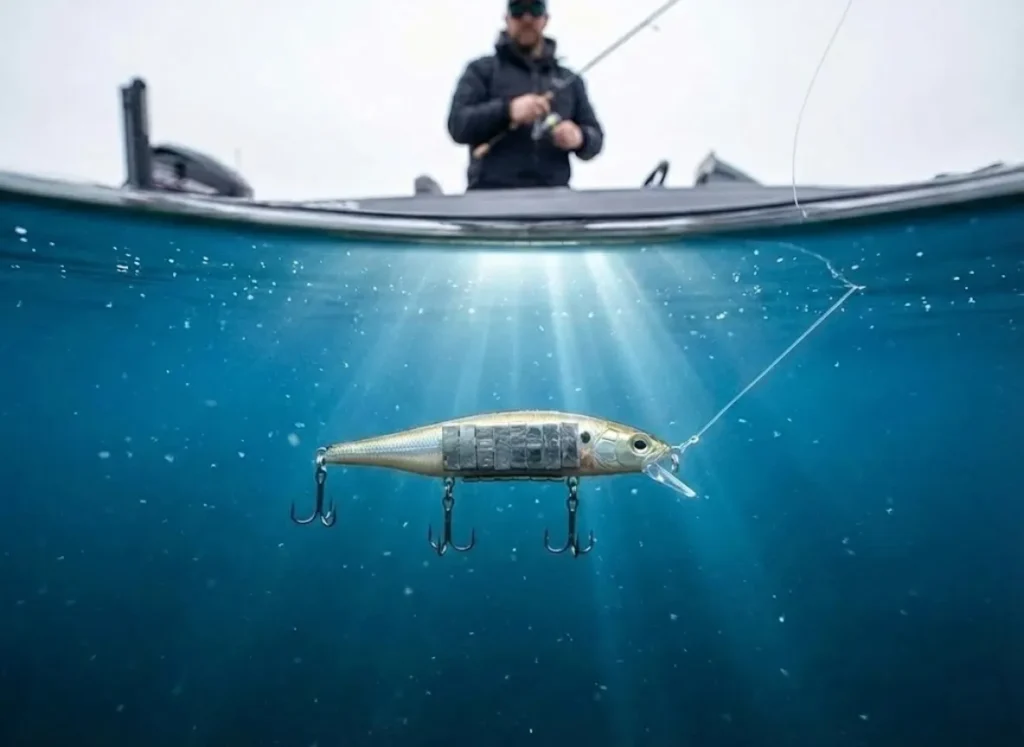
This section introduces the advanced concept of thermal buoyancy and water density tuning, differentiating this content from basic “how-to” guides by addressing thermal physics.
How does water temperature dictate suspension and sink rates?
Water density is not static; it peaks at approximately 39.2°F (1.000 g/mL) and decreases as the water warms. This fluctuation significantly affects lure buoyancy. Properties of water density and temperature dictate that in cold winter water, the buoyant force is stronger. A standard “suspending” stickbait or jerkbait will often float upward out of the water column because the water is denser than the lure. Conversely, in warm summer water, the same lure will often sink because the less dense fluid provides less lift against the lure’s mass.
| Lure Buoyancy & Water Temperature Tuning Guide | ||
|---|---|---|
| Water Temp (°F) | Density Regime | Required Action |
| 35° – 45° | High Density (Max Lift) Buoyant force is stronger; lures tend to float. |
Add Weight / Upsize Hooks Target a “Slow Sink (Nose Down)” to mimic dying baitfish. Add SuspendStrips behind the bill or upsize the front hook (+1 size). |
| 46° – 60° | Moderate Density Balanced buoyancy environment. |
Micro-Tune for Neutrality Target “Dead Neutral” suspension. Use standard hooks and perform micro-adjustments to weight to make the lure hover. |
| 61° – 80° | Low Density (Min Lift) Buoyant force is weaker; lures tend to sink. |
Remove Weight / Downsize Hardware Target “Slow Rise / Float”. Use stock hooks or remove split rings if necessary to lighten the lure and prevent sinking. |
To counteract this, master anglers use a Temperature-Density Tuning Matrix. In winter, we add weight—such as SuspenStrips, tungsten putty, or heavier hooks—to achieve neutral buoyancy. In summer, we may downsize split rings or switch to lighter wire hooks to prevent the bait from sinking too rapidly. This relationship is why we also consider fluorocarbon line’s sinking properties and line diameter, which can help drag a buoyant lure down in cold water or accentuate the sink rate in warm water. Achieving “dead neutral” suspension is often the only way to trigger bites from lethargic, cold-water bass.
Why does fish physiology demand a “nose-down” tune?
Biological realism is key when tuning for suspension. Dying baitfish, such as shad, often lose the ability to regulate their swim bladder and tend to sink slowly, head-first. Swim bladder function and buoyancy control studies suggest that as equilibrium fails, the lure head becomes the heaviest point. To mimic this, bass fishing pros tune small stick baits to sink with a nose-down attitude by placing adhesive weight (like lead tape) specifically between the bill and the first hook hanger.
Upsizing the front treble hook while leaving the rear hook standard also shifts the weight distribution forward. This presentation exploits the metabolic constraints of cold-water predators, who are far less likely to chase a bait that is rising or swimming horizontally. Understanding swim bladder mechanics helps you replicate the exact posture of vulnerable prey. This specific tune is critical for models like the Smithwick Rogue, Megabass Vision 110, or Berkley Stunna when targeting pre-spawn fish.
What are the advanced “destructive” modifications?
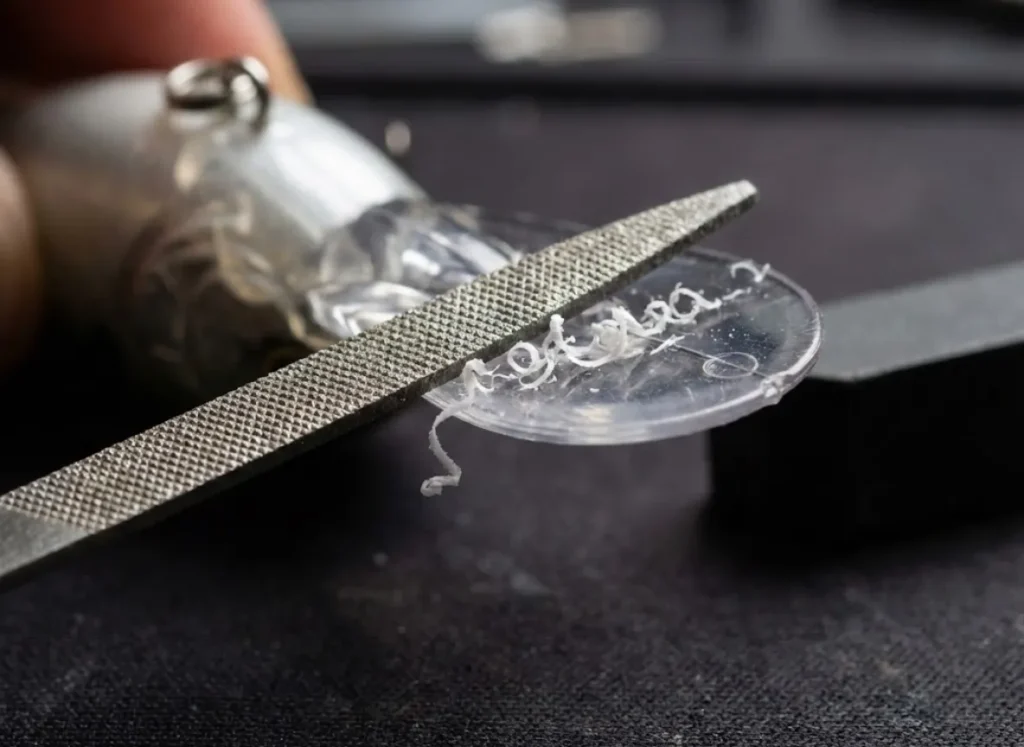
This section covers irreversible modifications (“Bill Shaving” and “De-tuning”) used by pros like Randy Blaukat or Mike Iaconelli to gain specific performance characteristics.
How can you modify the bill to alter action and tracking?
When the Opposite Rule fails, or a specific action is required, material removal via filing the bill is the next intervention. The “Fritts Cut” involves sharpening the underside of the leading edge with a metal file to delay boundary layer separation. This allows the lure to dive deeper and cut water more efficiently. Narrowing the bill width reduces the Aspect Ratio, which tightens the wobble, converting a wide-thumping crankbait into a finesse tool for educated fish.
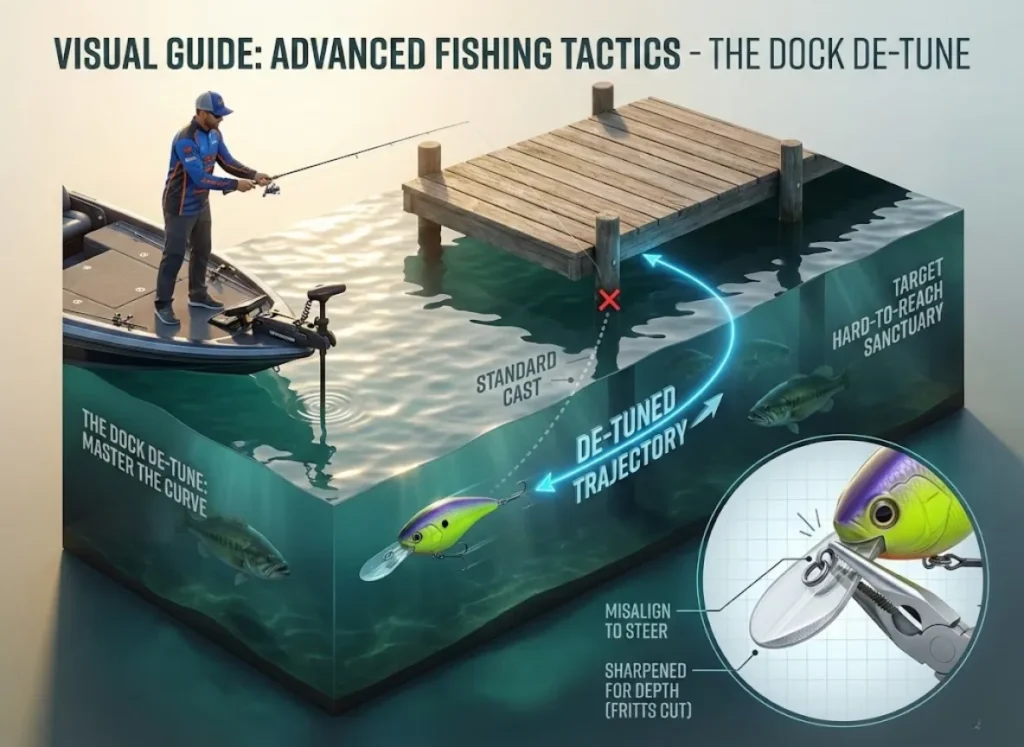
Intentional de-tuning is the misalignment of the eyelet to force a lure to run under cover. For example, if you are fishing heavy cover like a dock or jetty, you can “crab” a square bill under the platform. To fish the right side of a dock, tune the lure to run left; to fish the left side, tune it to run right. This allows the bait to hunt in the dark water beneath the piling where standard casting cannot reach.
Pro-Tip: If you fish riprap often, file the corners of your square bill to create a “coffin” shape. This modifies the deflection angle, softening the impact against rocks and reducing snags while maintaining an erratic hunting action.
Final Thoughts
Lure failure is rarely a manufacturing defect but a hydrodynamic imbalance that can be corrected via the Opposite Rule. We have seen how seasonal density changes with water temperature, requiring anglers to add weight in winter and reduce weight in summer to maintain neutral buoyancy lures. Additionally, advanced modifications like bill shaving and directional de-tuning allow you to customize lure action for specific fish-holding structure and biological triggers.
Before your next trip on the boat or canoe, take your top three confidence baits to a local pool or clear shallow water and practice these micro-adjustments. Mastering these nuances is what separates the weekend fisherman from the expert. Share your results or your own fishing gear maintenance secrets in the comments below.
FAQ – Frequently Asked Questions
Why does my crankbait spin in circles when I reel fast?
This is called blowing out or crankbait spin, caused by the center of pressure shifting too far to one side at high speeds. It indicates a severe eyelet misalignment that requires an immediate adjustment using the Opposite Rule (bend the eyelet away from the spin direction).
How do I make my suspending jerkbait stop floating in winter?
Cold water is denser than warm water, increasing the buoyant force on the lure. You must add weight—such as SuspenStrips, tungsten putty, or larger hooks—to counteract the density and achieve a neutral hover.
Can I tune a plastic lure the same way as a balsa wood lure?
The technique (bending the eyelet) is the same, but balsa lures are more sensitive and buoyant due to wood’s non-uniform density. Balsa crankbaits often require more frequent tuning, especially after hitting hard cover, compared to consistent ABS plastic lures.
What happens if I file the bill of my crankbait?
Filing or shaving the bill alters the water flow, typically sharpening the diving angle or tightening the wobble. Sharpening the leading edge (the Fritts Cut) helps the lure dive deeper, while narrowing the sides creates a tighter, more subtle vibration.
Risk Disclaimer: Fishing, boating, and all related outdoor activities involve inherent risks that
can lead to injury. The information provided on Master Fishing Mag is for educational and informational purposes
only. While we strive for accuracy, the information, techniques, and advice on gear and safety are not a substitute
for your own best judgment, local knowledge, and adherence to official regulations. Fishing regulations, including
seasons, size limits, and species restrictions, change frequently and vary by location. Always consult the latest
official regulations from your local fish and wildlife agency before heading out. Proper handling of hooks, knives,
and other sharp equipment is essential for safety. Furthermore, be aware of local fish consumption advisories. By
using this website, you agree that you are solely responsible for your own safety and for complying with all
applicable laws. Any reliance you place on our content is strictly at your own risk. Master Fishing Mag and its
authors will not be held liable for any injury, damage, or loss sustained in connection with the use of the
information herein.
Affiliate Disclosure: We are a participant in the Amazon Services LLC Associates Program, an
affiliate advertising program designed to provide a means for us to earn advertising fees by advertising and linking
to Amazon.com. As an Amazon Associate, we earn from qualifying purchases. We also participate in other affiliate
programs and may receive a commission on products purchased through our links, at no extra cost to you. Additional
terms are found in the terms of service.