
In this article
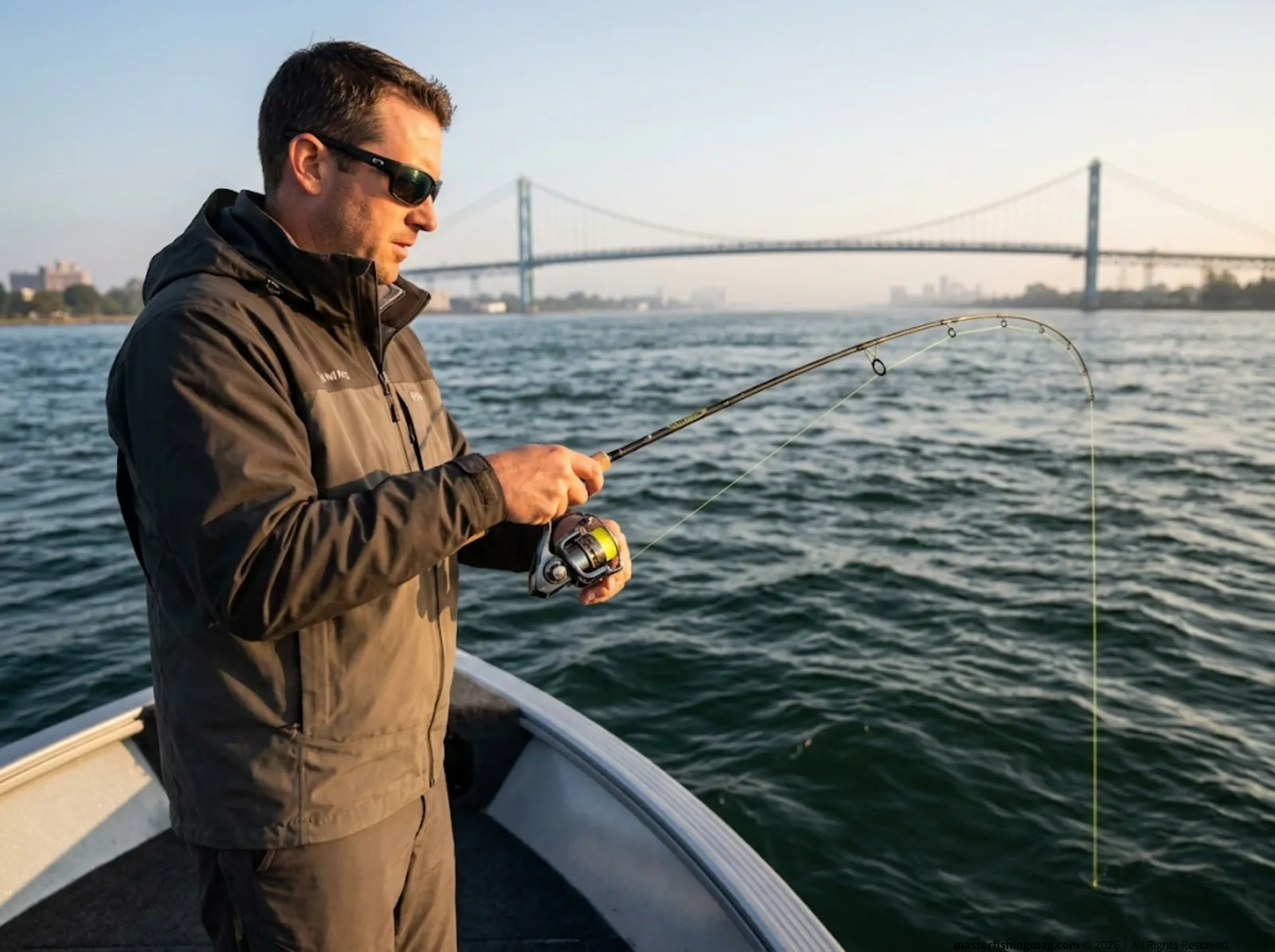
The 1-oz Thump jig hit bottom, and before I could lift three inches, the rod loaded sideways. In 40 feet of Detroit River current, you don’t get second chances at staying vertical — the walleye peeled off before I could correct my trolling motor heading. That single lost fish changed how I approach every drift on this river.
After years of chasing walleyes from Lake St. Clair down to Lake Erie, I’ve learned that the Detroit River rewards systems, not luck. Your jig weight, line angle, motor input, and jigging cadence all have to work together. Break one link and you’re just feeding the current.
This guide breaks down every piece of that system — from the gear setup that handles fast current to the shallow-water trophy walleye blueprint that most guides won’t talk about. Every tactic here comes from on-water testing in the 26-mile corridor between the two Great Lakes.
⚡ Quick Answer: Use ¾–1.5 oz lead-head jigs tipped with 3–5 inch black or brown worm plastics on 8–10 lb hi-vis braid with an 18–24 inch fluorocarbon leader. Maintain perfect vertical presentation by matching your trolling motor drift to the current. Feel the jig thump bottom, lift 4–12 inches, pause, and repeat. The Detroit River runs year-round for walleye with a 6-fish daily limit and 15-inch minimum.
The Gear Setup That Handles 7 mph Current
Rods and Reels Built for River Sensitivity
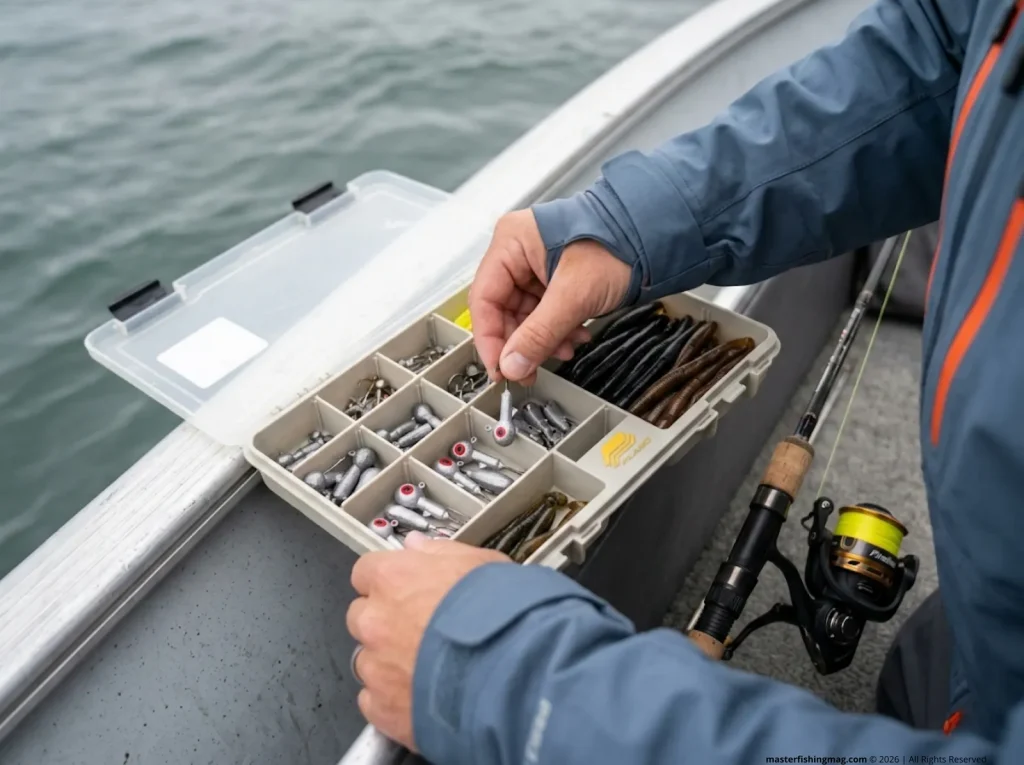
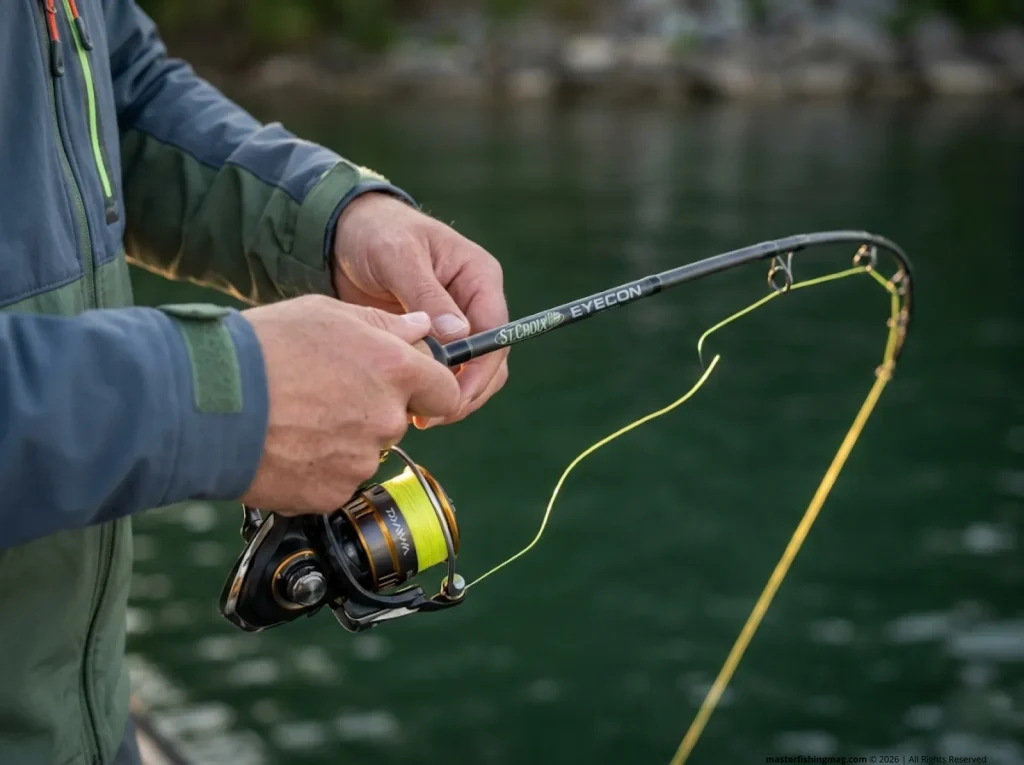
Your fishing rod needs to do two jobs at once down here — feel a subtle tick at 40 feet while still having enough backbone to set across heavy current. A 6’6″ to 7-foot medium or medium-heavy spinning reel combo with fast action handles both. The St. Croix Eyecon and Lew’s rod lines are what you’ll see on most guide boats working the upper river.
Spinning reels win over baitcasters for vertical jigging because you get smoother drop control and better sensitivity on the fall. That matters when walleye hit the jig on the way down — not up.
Pro tip: If you’re new to this fishery, go with a guide your first time out. Learning boat control and jigging technique simultaneously in 7 mph current is like learning to drive stick in rush-hour traffic.
Line Setup for Instant Vertical Feedback
Hi-vis braid is non-negotiable on the Detroit River. Run 8–10 lb in yellow, lime, or white as your mainline, and connect an 18–24 inch fluorocarbon leader (10–20 lb test) via a barrel swivel or the uni-to-uni or loop-to-loop connections I trust for braid-to-fluoro.
The colored braid isn’t about fashion. It tells you the exact angle your line enters the water. The second that angle drifts away from straight down, you know you’ve lost vertical — and your bite detection drops to almost nothing.
Jig Weight by Depth and Current
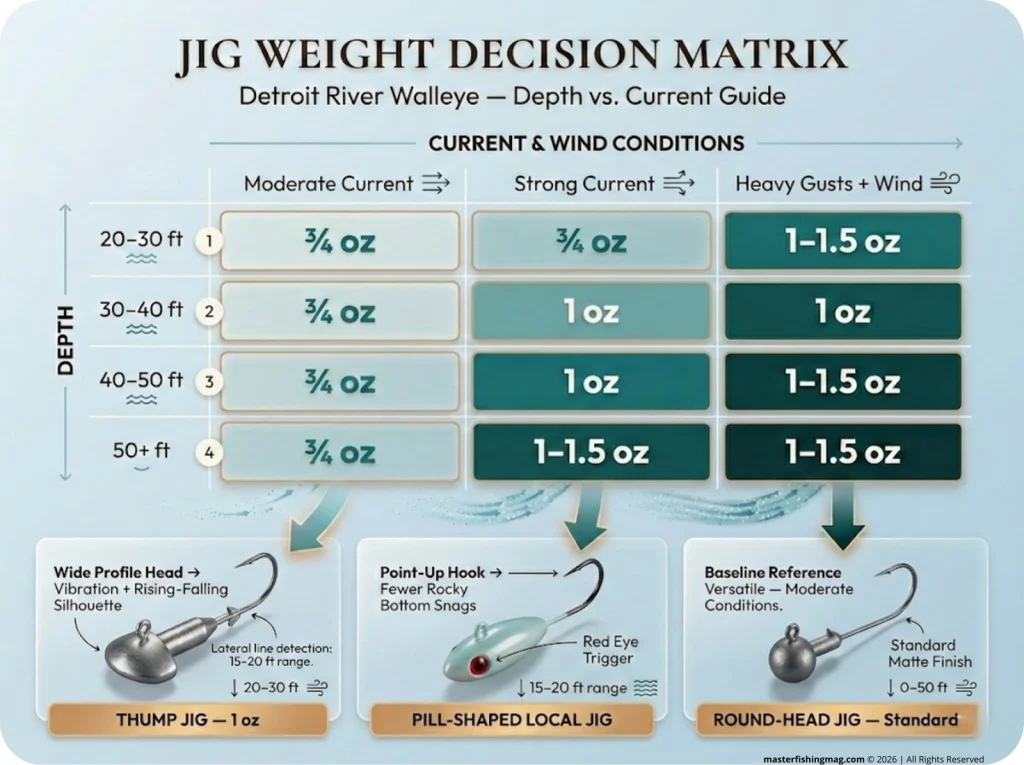
Start with ¾ oz in 20–30 feet of moderate current. Move up to 1 oz in 30–40 feet or anytime wind picks up. In 40–50 feet with heavy gusts, you’ll need 1–1.5 oz just to maintain bottom contact.
The Thump jig (1 oz, wide profile head) is the workhorse of the upper river. It creates vibration and a rising-falling silhouette that walleye sense through their lateral line from 15–20 feet away. But there’s another option the locals favor — pill-shaped local jigs with a red-painted eye and sickle hooks that ride point-up for fewer snags in rocky bottom. If you can find them at Detroit-area tackle shops, grab a handful.
You can also check how we tested braided lines for sensitivity and abrasion if you want to dial in the exact braid for this fishery.
Boat Control in Fast Current (The Hardest Skill)
Why Wind Overrides Current for Your Boat
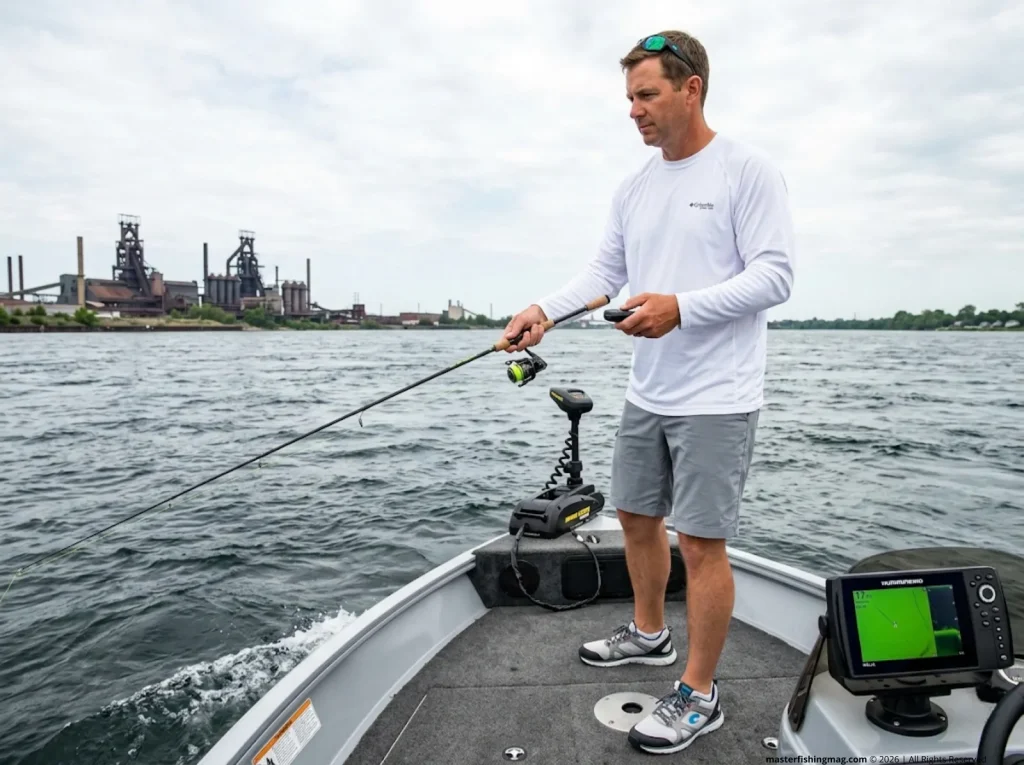
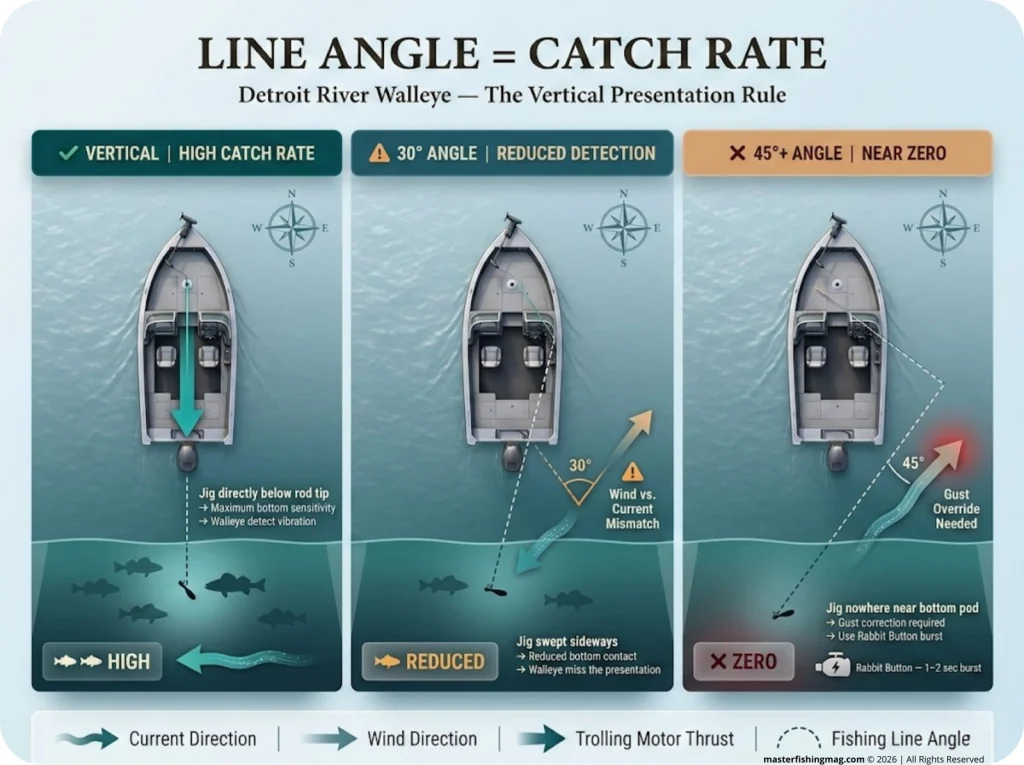
Here’s what nobody explains well enough — the Detroit River surface current runs 5–7 mph, but your boat sits on top where wind dominates drift direction. Your jig, hanging 30–40 feet below, follows the subsurface current. That mismatch between what the boat does and what the jig does is why maintain perfect vertical presentation is the single hardest skill in this fishery.
Without constant motor corrections, your line angle goes from vertical to 45 degrees in seconds. At 45 degrees, you can’t feel bottom. You can’t detect bites. You’re just dragging jigs through rocks and donating tackle to the river.
For a deeper breakdown of wind-driven positioning, check our complete breakdown of wind-driven boat positioning.
Trolling Motor Corrections That Keep You Vertical
A bow-mount Terrova or Ultrex trolling motor with autopilot is standard equipment. The technique is called chase the jig — instead of fighting the current, use the motor to match your drift speed and direction to what the jig is doing below. Think of it as following, not resisting.
This isn’t set-and-forget even with Spot-Lock or heading hold. You’re making constant micro-adjustments, especially when gusts hit. In boats with multiple anglers, the front rod controls drift while the back anglers compensate by adjusting jig weight — going heavier to reach bottom at a wider angle.
The Rabbit-Button Gust Correction
When a gust hits at 40 feet, you have about three seconds before you blow off the pod. The fix is the rabbit button — a momentary full-power trolling motor burst (1–2 seconds) that overrides autopilot without reprogramming your heading. Quick burst, back to preset speed, vertical restored.
This one technique is the difference between catching 15 fish and catching 3 on the same day, on the same spot. Most guides learn it through frustration. Now you don’t have to.
Jigging Motions That Trigger Strikes
The “Thump” (Aggressive Bottom-Hit Cadence)
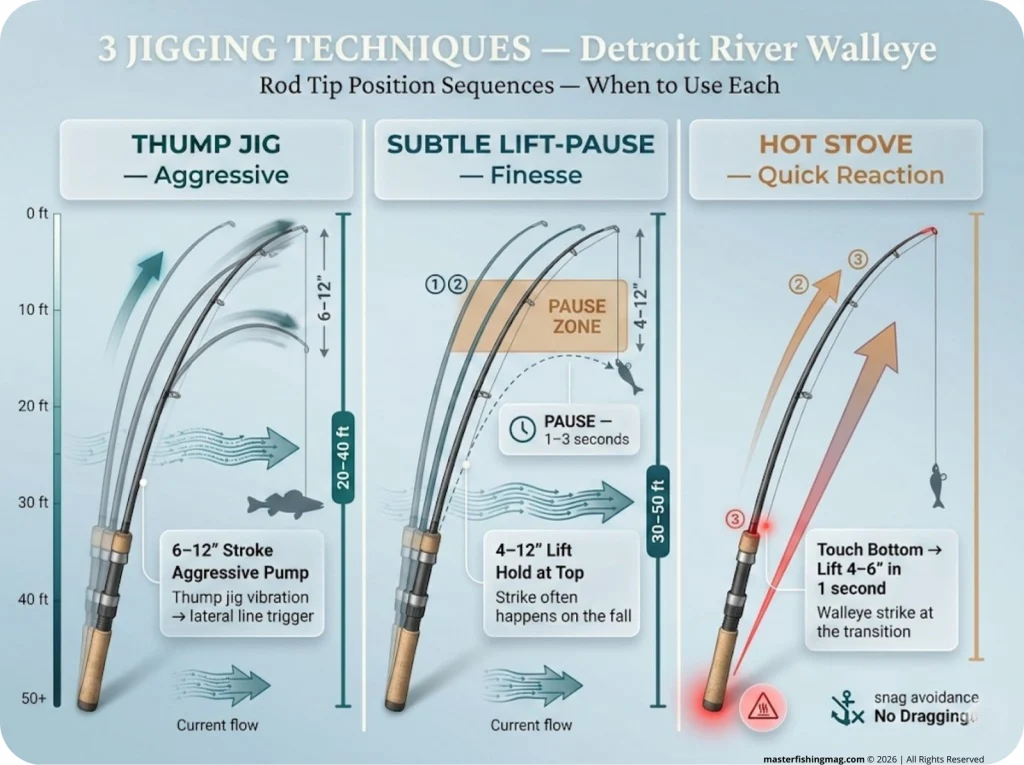
Drop the jig to bottom. Lift your rod tip 6–12 inches. Let the jig fall back. Feel the jig hit bottom. Repeat. That’s the thump motion — a rhythmic bottom-hit cadence that creates vibration and profile underwater. Walleyes sense it through their lateral line from distance, even in stained water.
Use it when fish are active, first thing in the morning at daybreak, or when you’re prospecting a new drift line. Think of it as knocking on doors — you’re announcing yourself to every fish below the boat.
If you want foundational technique before getting river-specific, our beginner jigging guide covers the fundamentals of rod recoil and drop rhythm.
The Subtle Lift-Pause (Cold or Pressured Water)
When water temp drops below 45°F or a pod has been hammered by multiple boats all morning, switch to the subtle jigging motion. Lift 4–12 inches, then hold dead still for 2–5 seconds. During that pause, the current gives your plastics a slight wiggle motion — and that’s when 70% of strikes happen.
Most bites feel like a slight heaviness or mushy rod tip during the pause. Not a sharp tap. If you’re waiting for a dramatic slam, you’re missing fish.
The Bottom Contact Rule (“Hot Stove” Technique)
Treat the bottom like a hot stove — touch it, lift off immediately. Walleye tend to hit the jig right at that transition moment, just before it settles or right as it lifts. Dragging on bottom means snags, lost jigs, and missed bites.
If you feel the jig settle, lift 4–6 inches within one second and hold. This is how experienced Detroit River anglers lose fewer jigs per trip and catch more fish per drift. NOAA’s Detroit River habitat restoration work that rebuilt walleye spawning grounds is part of why these runs are so productive now — healthy bottom structure means more fish, but also more snag avoidance challenges if you drag.
Pro tip: Budget 10–15 jigs for a full day on the Detroit River. Keep 3–4 pre-rigged rods on deck so you don’t waste a drift re-tying leader knots in current.
Plastics, Minnows, and Color Selection by Season
Plastics That Own the Detroit River
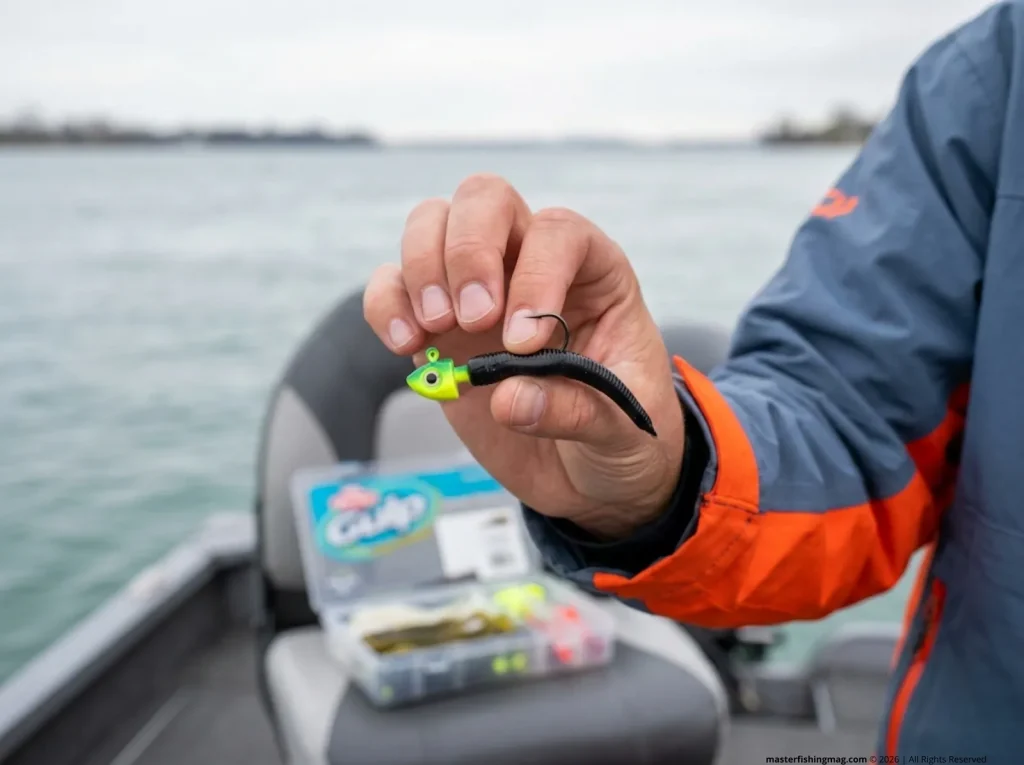
Worm plastics and fluke plastics in the 3–5 inch range are the default baits year-round on this river. Black, brown, and green/pumpkin dominate in stained water (6–18 inch visibility). When clarity opens up past 18 inches, switch to blue-ice, chartreuse-ice, or silver flake for a subtler profile.
Stinger hooks are mandatory on any plastic rig. Short-striking walleyes will nip the tail of a 4-inch worm without touching the main hook. A small trailing treble solves that problem.
When to Switch to Live Minnows
Below 50°F water temp, live minnows with a stinger hook consistently outproduce plastics. River shiners or dead shiners hooked through the lips, with the stinger trailing toward the tail, give you both scent and natural movement that sluggish cold-water walleye respond to. These baitfish trigger strikes even from the most reluctant fish holding tight to bottom.
Above 55°F, plastics catch up fast. They hold up through multiple fish without re-baiting, and you spend more time jigging instead of hooking minnows. For rigging details, check our minnow rigging guide for walleye and crappie.
The Color-Clarity Decision
Water clarity on the Detroit River changes daily. Check it before every trip. In 6–12 inch visibility, go dark — black, brown, firetiger. In 12–18 inches, green/pumpkin and orange/chartreuse combos work. In 18–24 inches of clear water, finesse it with pearl, silver flake, or blue-ice.
If you’re not sure what to throw, start with a black worm on a 1-oz Thump jig. It’s the “can’t go wrong” setup that produces in almost any condition. The Michigan DNR walleye regulations for the Detroit River allow a 6-fish daily walleye limit with a 15-inch minimum, three rods per angler, open all year.
Where the Fish Hold (Location Breakdown by Season)
Upper River Hotspots (Lake St. Clair to Ambassador Bridge)
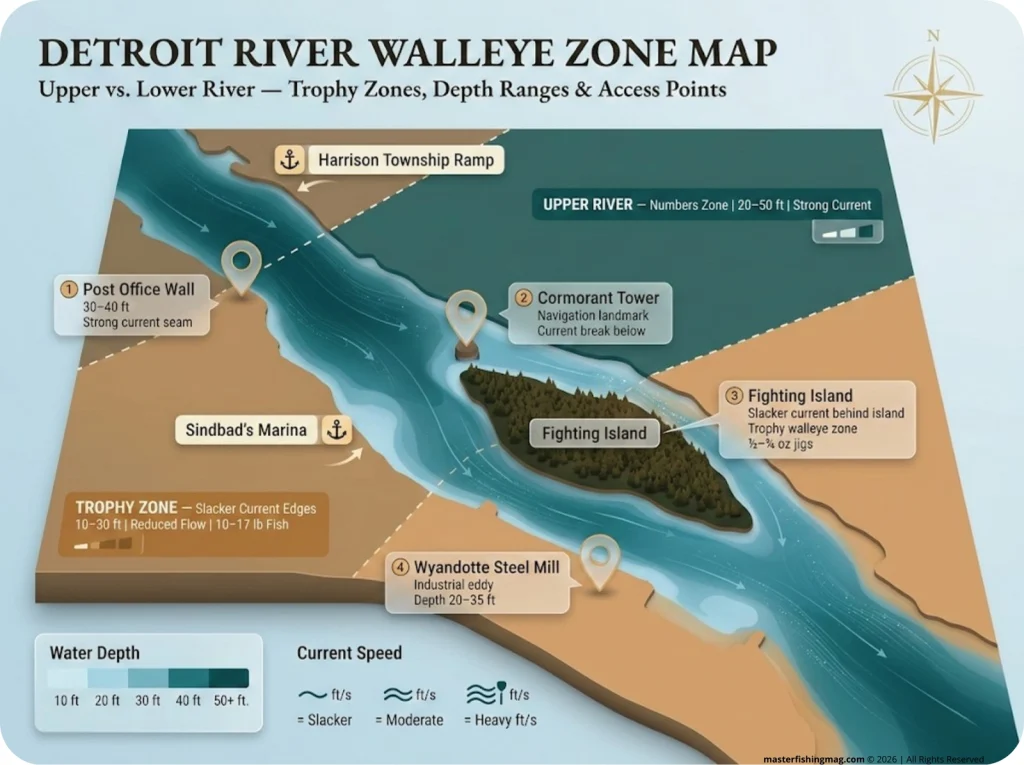
The upper river runs faster and shallower, making it one of Michigan’s top fishing destinations for spring walleye. Post Office wall, Cormorant tower, and the UAW building near Chene Park are the named waypoints among regulars. Spring walleye stage here first as they push from Lake St. Clair toward spawning grounds on the spring walleye run.
Fish tend to hold in small pods — not spread-out schools. Catch a few, then motor upriver and re-drift the same line in a controlled drift downriver. The Harrison Township ramp puts you closest to upper river structure and the best boat ramp access.
Lower River Structure (Ambassador Bridge to Lake Erie)
Fighting Island, the Wyandotte steel mill, and the Sindbad’s Marina zone make up the lower river fishery. You’re working deeper water here — 30–50 feet — which demands 1–1.5 oz heavy jigs and a more patient approach. The fall walleye run concentrates fish here as they return from Lake Erie.
The steel mill area produces walleye numbers consistently because the industrial shoreline creates current breaks. Your Humminbird or Lowrance electronics setup with bottom scan will show you exactly where pods are stacking against structure. For reading those marks, check reading bottom hardness and structure marks on your fish finder.
The Trophy Shallow Blueprint (Slacker Current)
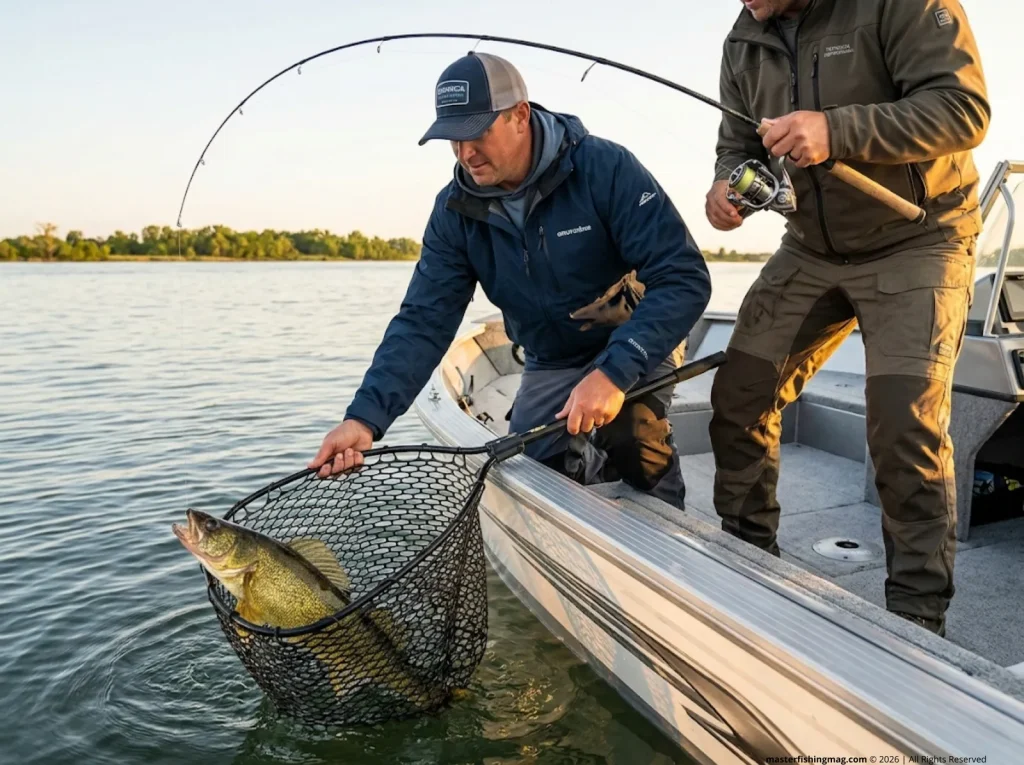
Here’s where the big fish live. Larger female walleye — 10-17 lb fish — hold in areas under 30 feet with reduced current flow. These slacker current shallows are behind islands, on flats, or in breaks where the flow eases up. Slightly stained water (6–18 inch visibility) seems to make trophy fish more comfortable staying shallow.
Most boats stack up over the deep packs chasing numbers. The trophy hunters work the quiet, shallow edges alone with lighter jigs (½–¾ oz) and slower drifts. Fewer bites, bigger fish. Understanding how walleye light sensitivity and lateral line biology drive their location choices helps explain why trophies prefer these low-traffic, low-light zones.
The USGS confirmation of walleye spawning in the Detroit River proves this corridor isn’t just a walleye migration highway — fish are reproducing here, which means resident populations hold in these same shallow zones longer than most anglers realize.
Pro tip: For big fish, skip the packs. Find 10–20 feet of stained slacker current away from other boats. Your catch rate drops, but your average fish size goes up by five pounds.
Troubleshooting and Advanced Adjustments
When Vertical Fails (The Horizontal Fallback)
Some days the walleye just won’t cooperate with vertical presentations. When current drops or fish scatter wide, switch to a horizontal approach — crawler harnesses with #4 Colorado blades on bottom bouncers. Pulse trolling motor to create “S” turns that change the bait’s direction and trigger reaction strikes from otherwise uninterested fish.
This is a warmer-water summer and early fall technique, not your spring run go-to. But it saves slow days when vertical jigging flat-out stops producing.
Snag Management in Rocky Bottom
The Detroit River bottom is rocky, uneven, and it will eat your jigs if you drag. The hot stove technique — touch bottom, lift immediately — cuts snag losses dramatically. Hover just above bottom in known snaggy sections instead of thumping.
Keep 3–4 pre-rigged rods on deck. Re-tying fluorocarbon leader and uni-to-uni knot connections in 7 mph current wastes the entire drift. Budget for jig attrition and treat lost tackle as the cost of fishing this river.
Reading Electronics for Walleye Pods
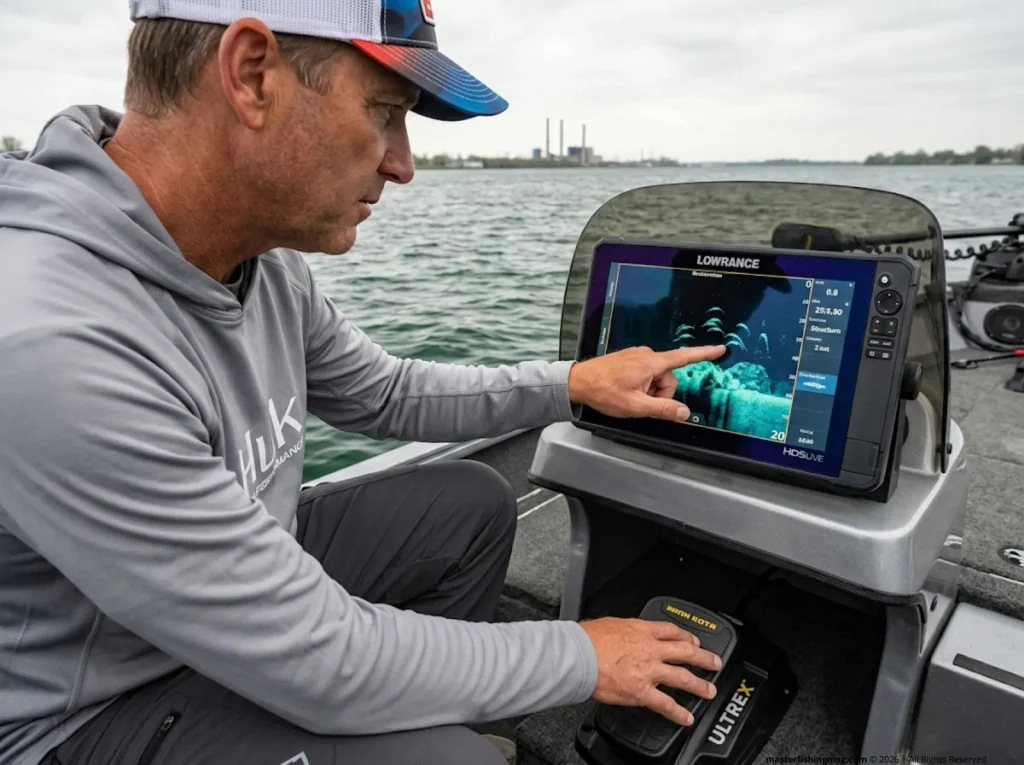
Walleye hold in tight pods on the Detroit River, not spread-out schools. Your Humminbird or Lowrance side-imaging will mark individual fish suspended 1–3 feet off bottom. If your sonar shows a blank bottom stretch for 50-plus yards, reel up and reposition — don’t waste the drift.
Mark productive pods with GPS waypoints and re-drift them on the next pass. Bottom scan is more valuable than traditional 2D sonar here because the pods are small. The Great Lakes Fishery Commission’s 2025 walleye population assessment confirms healthy walleye migration numbers through the Detroit River corridor, which means those pods are restocking throughout each run.
Conclusion
Three things separate the anglers who limit out on the Detroit River from everyone else.
Stay vertical or go home. Jig weight, hi-vis braid, and constant trolling motor corrections are a system. Remove any piece and your catch rate craters. Match the motion to the mood. Thump when prospecting, lift-pause when pressured, and treat bottom like a hot stove in snag zones. Numbers live deep; trophies live shallow. The 12-lb females are in 10–20 feet of slacker current with nobody around.
Next trip, focus on one thing only — keeping that hi-vis braid perfectly straight under your rod tip for an entire drift. Not bait. Not location. Just line angle. When that clicks, everything else falls into place.
FAQ
What is the best jig weight for Detroit River walleye?
Start with 1 oz as your all-around weight. Drop to ¾ oz in under 30 feet with light wind, and go up to 1.5 oz in 40-plus feet or heavy gusts. The goal is always maintaining bottom contact while staying vertical.
Can you fish walleye from shore on the Detroit River?
Shore access is extremely limited for walleye jigging. Vertical jigging requires a boat to drift with current and maintain line angle. Some anglers cast from piers near Fighting Island, but results are inconsistent compared to boat-based jigging.
What time of day is best for Detroit River walleye?
First light produces the largest daybreak big females, especially in slacker current shallows. But the Detroit River is one of the few fisheries where all-day action is possible — pods continue feeding through midday when conditions hold.
How do I know if my line is truly vertical?
Use hi-vis braid (yellow or lime) and watch where it enters the water. If the line enters at any angle away from straight below your rod tip, you’ve lost vertical. Adjust trolling motor heading or speed until the line goes straight down.
What is the walleye limit on the Detroit River?
Michigan regulations allow 6 walleye per day with a 15-inch minimum length, open all year, with 3 rods per angler. Always check the Michigan DNR website before each trip since regulations update annually.
Risk Disclaimer: Fishing, boating, and all related outdoor activities involve inherent risks that
can lead to injury. The information provided on Master Fishing Mag is for educational and informational purposes
only. While we strive for accuracy, the information, techniques, and advice on gear and safety are not a substitute
for your own best judgment, local knowledge, and adherence to official regulations. Fishing regulations, including
seasons, size limits, and species restrictions, change frequently and vary by location. Always consult the latest
official regulations from your local fish and wildlife agency before heading out. Proper handling of hooks, knives,
and other sharp equipment is essential for safety. Furthermore, be aware of local fish consumption advisories. By
using this website, you agree that you are solely responsible for your own safety and for complying with all
applicable laws. Any reliance you place on our content is strictly at your own risk. Master Fishing Mag and its
authors will not be held liable for any injury, damage, or loss sustained in connection with the use of the
information herein.
Affiliate Disclosure: We are a participant in the Amazon Services LLC Associates Program, an
affiliate advertising program designed to provide a means for us to earn advertising fees by advertising and linking
to Amazon.com. As an Amazon Associate, we earn from qualifying purchases. We also participate in other affiliate
programs and may receive a commission on products purchased through our links, at no extra cost to you. Additional
terms are found in the terms of service.