
In this article
My daughter’s rod was still in the holder. She was twenty feet down the bank, chucking flat rocks into the pond I’d spent forty minutes trying to keep quiet. Trip three, and I was zero for three on “creating lasting family memories.” The frustration wasn’t that she wasn’t fishing. It was that I kept planning adult fishing trips and dragging a six-year-old along for the ride.
That was four years ago. Today, she rigs her own push-button reel, picks the spot, and reminds me to wet my hands before touching the fish. What changed wasn’t her patience. It was mine.
After a decade of taking kids to the water — mine, nephews, friends’ kids — I’ve boiled down what actually works into seven tactics. They’re grounded in child development data, real failures, and the kind of advice you only get from someone who has cleaned worm slime off a crying toddler at a boat ramp.
⚡ Quick Answer: Kids don’t lack patience — they lack the brain development for it. A 5-year-old’s attention span maxes at about 15 minutes. The fix: pick high-action stocked ponds, use simplified gear like spincast reels, keep trips under 90 minutes, and have 10+ backup activities ready. Leave while they’re still smiling. That one rule changes everything.
Why Kids Lose Patience Faster Than You Think
The Attention Span Formula Most Parents Ignore
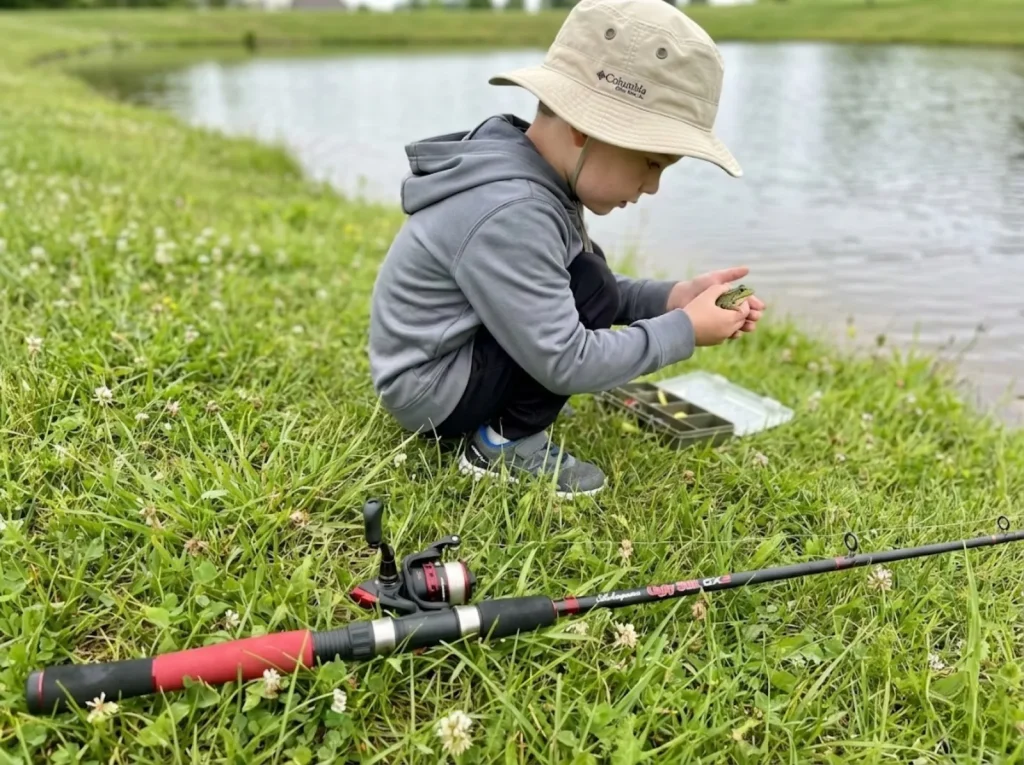
Here’s the number that changed how I plan every trip: a child’s focused attention span is roughly 2-3 minutes per year of age. A five-year-old tops out around 10-15 minutes on a single task. A seven-year-old maxes at maybe 21. That’s not a behavior problem — it’s normal attention span expectations by age, driven by prefrontal cortex development that doesn’t fully mature until the mid-twenties.
Executive function — working memory, flexible thinking, self-control — develops fastest between ages 3 and 5. A four-year-old literally cannot coordinate the cast-wait-detect-hookset sequence that feels automatic to you. The mistake most parents make is projecting their own attention capacity onto their kid, then reading boredom as “not liking fishing.”
Pro tip: Don’t hold them hostage. If you planned a four-hour trip and they’re done at 45 minutes, that’s not failure. That’s biology. Pack up and call it a win.
Why “Be Patient” Is the Worst Advice You Can Give
Telling a child to “be patient” puts them in a passive state. Passive waiting triggers boredom faster than active waiting, every time. The reframe that works: swap “patience” for persistence. “Let’s figure out what’s going on down there” beats “just wait for a bite.”
There’s a neurological reason this works. Outdoor exposure can shift brain activity from higher-stress Beta waves toward calmer Alpha/Theta states — the same patterns linked to restorative focus and mindfulness. Fishing isn’t a patience test. Done right, it’s a focus reset. The language you choose determines which one your kid experiences.
Location Engineering — Stack the Deck Before You Leave the House
The “One Bite Every 15 Minutes” Rule
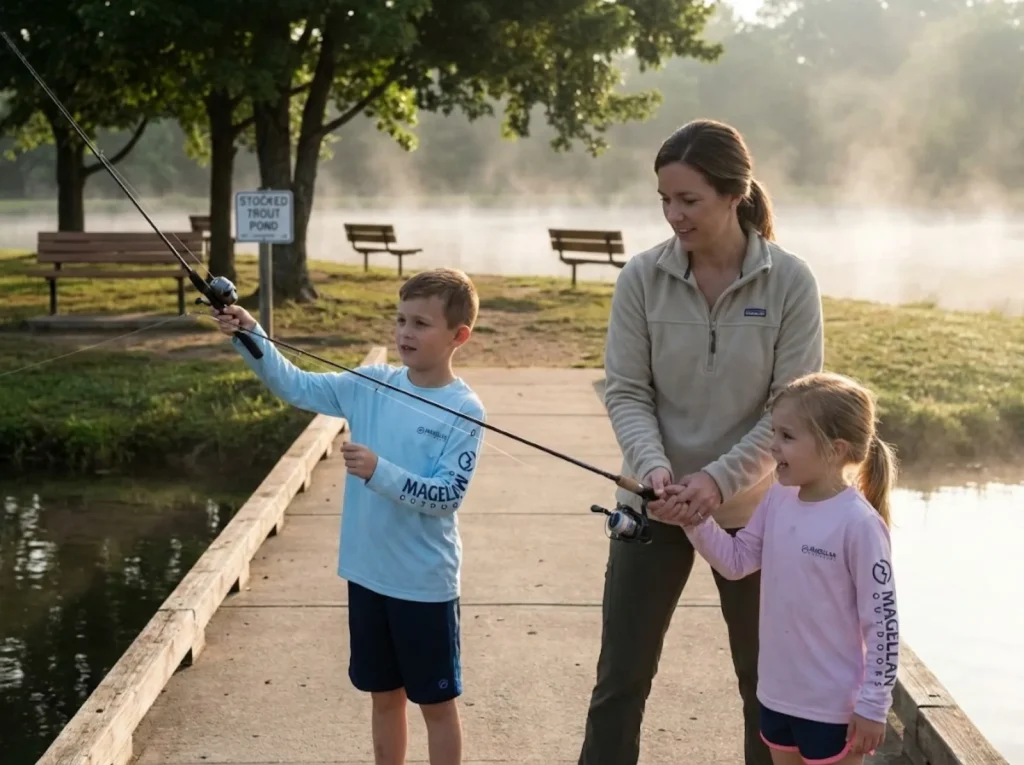
The single biggest factor in a successful kid’s trip isn’t your bait, your technique, or your fishing rod. It’s how many fish are in front of them. Target at least one bite every 15 minutes. That keeps engagement inside the attention window of a typical 6-8 year old and stops the spiral into “I’m bored, when are we going home?”
Stocked ponds are not the lazy option. They’re the tactical one. Eighty-five percent of current adult anglers were introduced to the sport before age 12, according to the Recreational Boating & Fishing Foundation. Blow that window with a bad first experience, and the data says they don’t come back. Species priority: bluegill, crappie, sunfish — the bread and butter species that hit fast, fight on light gear, and are small enough for kids to handle.
Scout the location without your kids first. Some parents toss hot dog pieces or bread near the bank to test activity levels before committing. That ten minutes of recon saves a two-hour disaster.
Docks, Piers, and Stocked Ponds — Why They Win
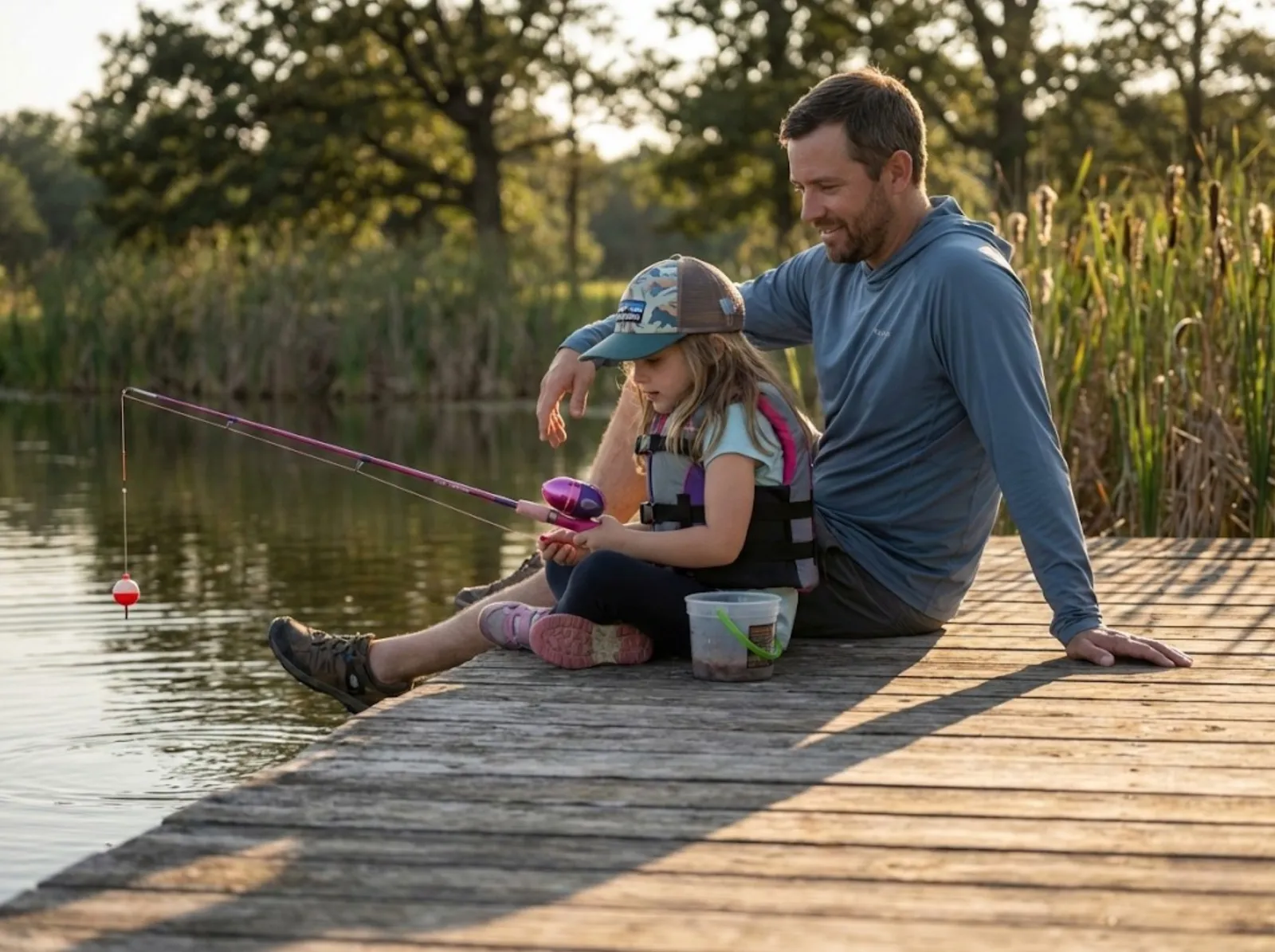
Docks and piers solve three problems at once: they give kids a physical boundary (no wandering into deep water), provide shade, and create a home base that reduces anxiety for both parent and child. Stocked ponds compress the learning curve with high fish density, meaning higher reward frequency.
Calm beaches and park ponds reduce safety stress, which means less hovering and more actual teaching. Skip the deep water, heavy current, and boat-only access spots for first-time anglers. The logistics of loading a boat, motoring out, and getting everyone settled will drain everyone’s patience before a line ever hits water. When thinking about reading pond water and selecting the right bank position, remember that for kids, the best bank is the one closest to the parking lot.
When NOT to Go — The Conditions Nobody Mentions
High wind, extreme heat, and post-cold-front skies kill bite rates. For adults, that means a challenging day. For kids, it means total shutdown. Overcast mornings with light wind are the sweet spot — panfish stay active, the sun isn’t cooking anyone, and the conditions often align with optimal fishing times for new anglers.
Sometimes the best patience tactic is staying home. Protecting the positive association with family fishing matters more than logging another trip.
Gear That Prevents Frustration (Not Causes It)
Push-Button Reels and Light Rods — Why Complexity Kills Fun
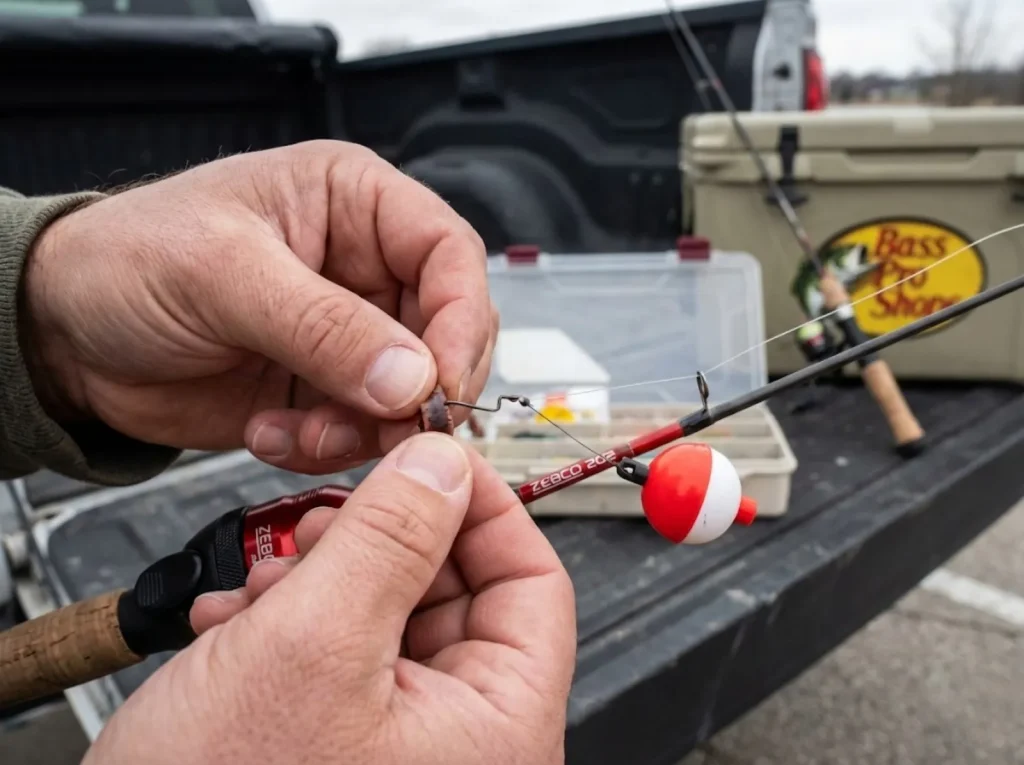
Technical frustration kills patience faster than slow fishing. A single backlash on a baitcaster ends the trip. A push-button reel — Zebco makes the standard — keeps it going. One button, one cast, zero tangles.
Rod length: 4-5 feet max. A heavy rod kills the fun of a 6-inch bluegill. The physics of a light-action short dock rod make small fish feel like a real fight, and that’s the experience you want. Pair it with 4-8 lb Berkley Trilene monofilament — low memory, forgiving on clumsy hooksets, and easy to manage for small hands.
Always teach underhand casting, not overhead. It cuts hook injuries and line tangles dramatically, especially when you have multiple children around a dock. For gear that eliminates the headache, we’ve done extensive testing on tangle-free kids fishing poles we’ve field tested.
The “Backup Rod” Strategy and Bait Prep
Always have a second rod rigged and ready. When a kid tangles the first, swap immediately. They keep fishing while you untangle the mess in the background. Zero downtime means zero frustration windows.
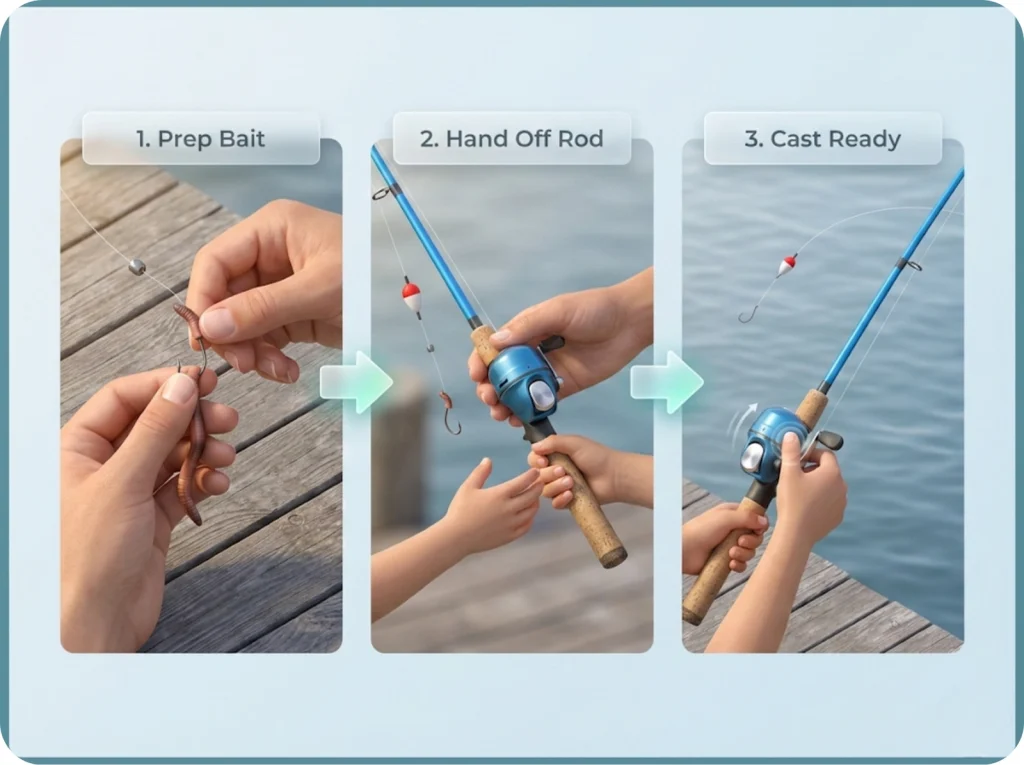
Pre-rig everything at home: hooks, bobbers, split shot. On-water rigging with kids nearby is asking for a hook in someone’s finger. For bait, use the “Poor Country Boy” worm trick: cut nightcrawlers into quarter-inch pieces. Tiny bait forces panfish to swallow the hook instead of stealing the worm — and bait theft is the number one frustration source for young fishermen.
Consider barbless hooks for everyone under 10. Easier removal, safer around small fingers, and it reinforces catch-and-release ethics from the start. Keep a dehooker and hemostats in your pocket, not in a tackle box the kids can access.
What to Leave at Home
Tackle boxes with loose hooks, heavy sinkers, and sharp pliers stay in the truck. Your kid kit is simple: 3-4 pre-tied rigs, extra bobbers, a pack of worms, a dehooker, and wet wipes. The “worm-slime hands” problem is real — wet wipes aren’t optional. They’re the bridge between snack time and bait time.
The 7 On-Water Patience Tactics
Tactics 1-3: The Activity Menu and Snack Intervals
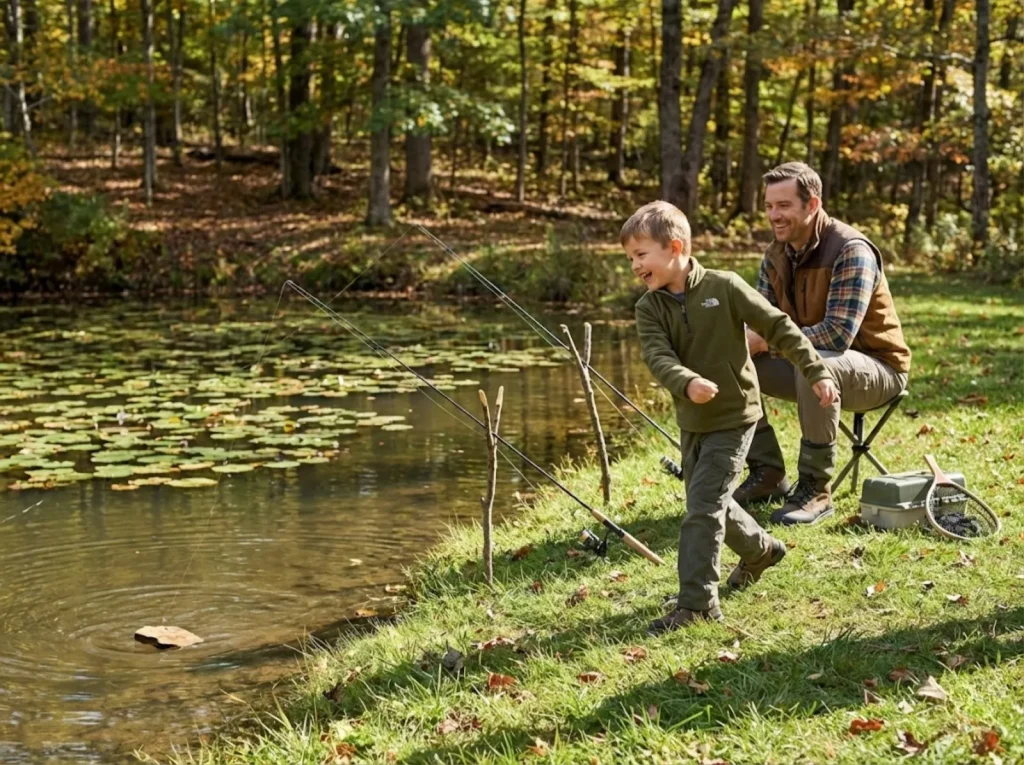
Tactic 1: The 30/10 Rule. Thirty minutes of fishing followed by ten minutes of rock skipping, wildlife observation, or snacking. This resets the attention clock and kills the “hostage” feeling of stationary angling. Structure the break before the meltdown starts.
Tactic 2: The Activity Menu. Prepare 10+ backup activities before you leave home: I Spy, frog hunting, bird identification, crab catching, casting accuracy contests, nature journaling, skipping stones. If the fish aren’t biting, pivot the trip to “creek exploration.” The rod stays propped in a forked stick while the fun continues. Keep them busy between bites and you keep them fishing.
Tactic 3: The Snack Strategy. Hunger and thirst shred attention spans instantly. Pack hidden surprise treats — popsicles, a candy bar they never get, a special juice box. Pull one out during the first whine. This isn’t bribery. It’s a mood reset, and it works better than any speech about patience.
Pro tip: The sensory memory matters more than the catch count. “Eating a pumpkin muffin on a rock while watching a turtle” is the moment they’ll remember at age 20. Build those moments on purpose.
Tactics 4-5: Success Engineering and the Magic Pole
Tactic 4: The “Magic Pole” Maneuver. Hook a fish on your line, then hand the rod to your kid. Let them feel the bite and reel it in. It sounds like cheating. It’s not — it’s behavioral intervention. The dopamine hit from that first fish overrides fifteen minutes of frustration. You’re engineering the pride of capture, and no kid has ever complained about a fish that “came too easy.”
Tactic 5: The Livewell Classroom. A five-dollar bucket becomes a tactile classroom. Let kids touch, observe, and count the catch between bites. This shifts their focus from “waiting” to “interacting” and extends engagement during slow stretches. Target quantity over quality — six 4-inch bluegill in an hour creates a lifelong fishing buddy. Zero fish while dad waits for bass creates a kid who never wants to go again.
Tactics 6-7: Conservation Games and Quitting While Ahead
Tactic 6: The “Field Biologist” Game. Teach wet-hand handling and barbless hook protocols as “expert tools.” Your kid becomes a wildlife biologist responsible for the fish’s safe return to the water. This reframes the release from a loss into the mission’s climax. Understanding the science behind catch-and-release survival gives the game real weight — trout survival in ethical catch-and-release exceeds 99% when you follow NOAA’s catch-and-release best practices. That stat turns “letting it go” into “saving its life.”
Tactic 7: The “Quit While Ahead” Doctrine. This is the hardest one, and the most important. Leave when they’re still having fun. Recency bias means the final ten minutes define how they remember the entire fishing trip. If you stay until the meltdown, you’ve burned all the goodwill you built. If they say “Can we stay longer?” — you won. Say “Let’s save some fun for next time” and go.
Age-by-Age Patience Expectations (The Honest Version)
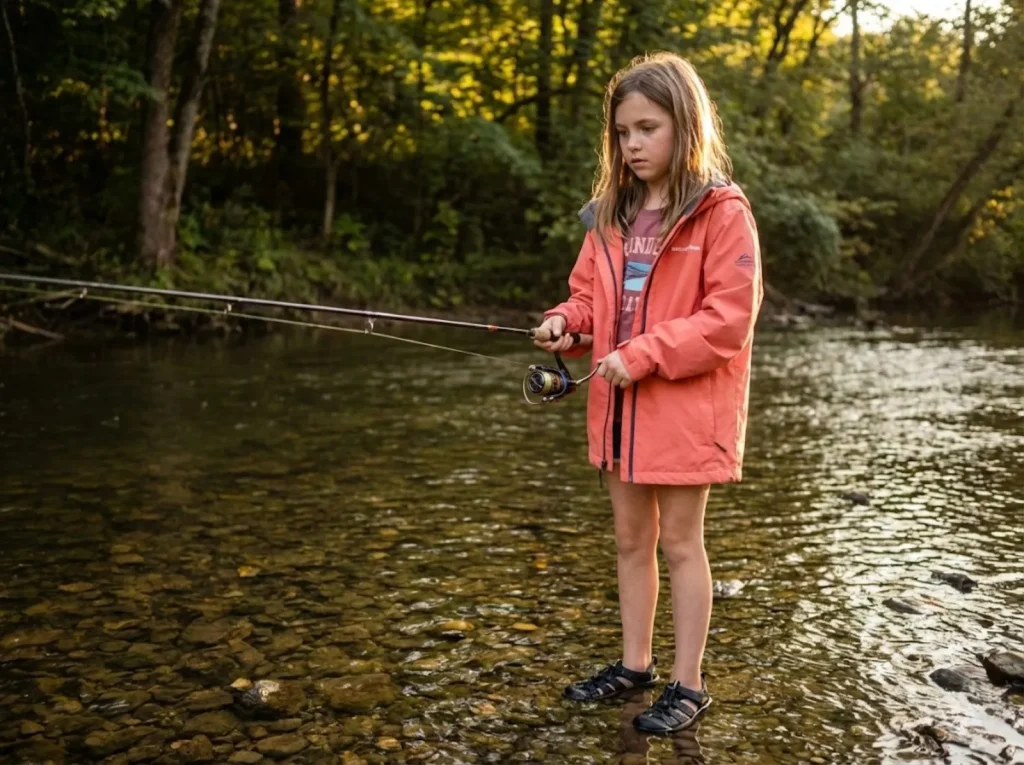
Ages 3-5: The “Exploration” Phase
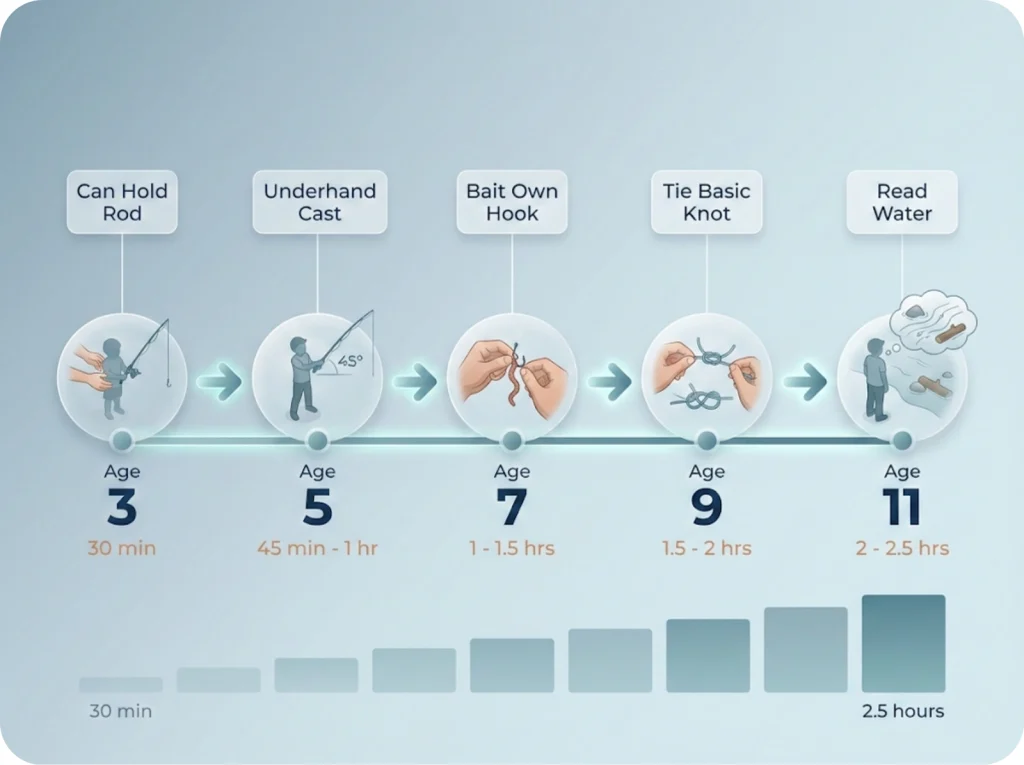
Realistic attention span: 10-15 minutes per task. Trip length: 30-45 minutes max. Maybe 60 if you’re lucky and the sunnies are biting hot.
Don’t expect them to cast. Hold the fishing rod together, hand-over-hand. The Magic Pole trick is your best friend at this age. Best activities: watching minnows in the bait bucket, throwing rocks, picking up sticks, “fishing” in a puddle with a branch. If they’re scared of touching the fish or the worm, don’t force it. Forced contact creates lasting negative associations that take years to undo.
Ages 6-8: The “Engagement” Phase
Attention span jumps to 20-30 minutes with active engagement. Trip length: 1 to 1.5 hours, building toward 2 hours over multiple successful outings.
This is the golden window. Research on outdoor play and brain development in children confirms that positive experiences during this phase shape long-term habits. They can learn underhand casting, basic knot awareness, and simple species identification. The “Bridge Hopping” strategy works here — hit three spots in ninety minutes instead of one spot for three hours. Satisfies their need for movement without sacrificing actual fishing time.
Ages 9-12: The “Independence” Phase
Attention span: 45-60 minutes with genuine interest. Trip length: 1.5-2.5 hours. They might ask to stay longer. Let them.
This is where mentorship shifts from “doing” to “teaching.” Let them re-bait their own hooks, choose their own spots, make their own mistakes. Introduce casting accuracy, lure selection, and basic water reading. Conservation education hits hardest at this age — barotrauma awareness, slime coat biology, and the logic behind barbless hooks stick when kids are old enough to understand consequences.
Pro tip: Go fishing without your kids first to practice knots and scout your casting spots. It’s way easier to teach when you’re not learning alongside them.
When Everything Goes Wrong — The Trip Rescue Protocol
Reading the Warning Signs Before the Meltdown
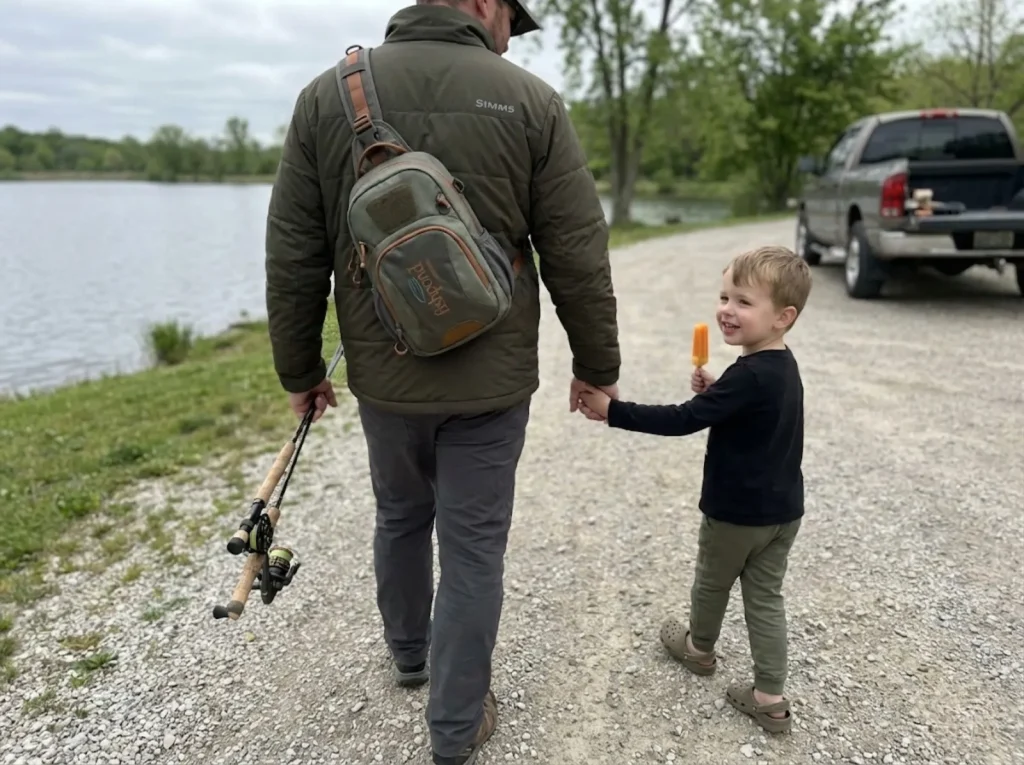
Watch for: repeated sighing, picking at gear, wandering away from the water, complaints about heat, hunger, or boredom. These are pre-meltdown signals. You’ve got about 10-15 minutes to intervene before total shutdown.
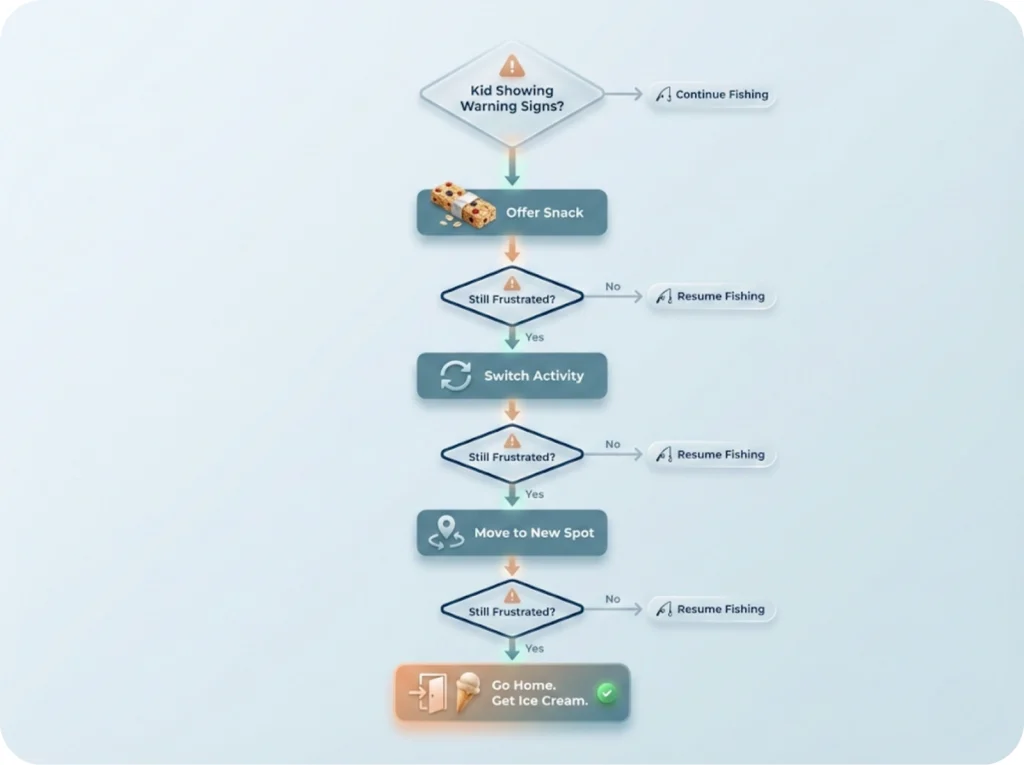
Intervention order: offer snack → switch to backup activity → move to a new spot → call it a day. Don’t try to negotiate patience with a kid who’s already past threshold. It doesn’t work, and it cements a negative memory.
The Nuclear Option — How to End the Trip Positive
If the meltdown hits, the trip is over. Accept it. Fighting through guarantees they won’t want to come back. Your job now is manufacturing a positive last memory.
End with a controllable win: stop for ice cream on the way home. Let them pick out a new lure at the bait shop. Let them tell the story at dinner, even if the “biggest fish” was the size of your thumb. Plan the next family fishing trip during the car ride while they’re still in a good mood. “When should we go again?” is the question that cements the loop. For the mechanics of handling their first real catch, walk them through what to do in the first 60 seconds after the catch.
Multi-Child Logistics — The Scenario Nobody Covers
The 1:1 adult-to-child ratio is ideal but rarely realistic. Most parents I know take 2-3 kids alone. The “Safety and Rigging Stagger” strategy keeps things manageable: one kid works the bait bucket or runs the activity menu while you help the other cast.
Pre-rig all fishing poles at home. On-water rigging with multiple children nearby is a hook injury waiting to happen. For ages 6 and up, try a buddy system — the older kid helps the younger one hold the rod. It creates responsibility, bonding, and buys you two extra hands. Always make sure everyone is wearing life jackets near the water, no exceptions.
Conclusion
Three things I wish someone had told me before trip one. First: stop planning adult fishing trips and inviting kids. Plan kid trips and tag along. Second: engineer success through location, gear, and the 30/10 rule — patience is a byproduct of engagement, not a prerequisite. Third: leave while they’re still smiling. The trip they remember is the one that ended too soon, not the one that ended in tears.
Pick one tactic from this list — just one — and try it on your next family fishing outing. The kid who threw rocks instead of fishing might surprise you when she asks to hold the rod.
FAQ
At what age can a child start fishing?
Most children can hold a rod with assistance by age 3-4. The real question isn’t age — it’s matching your expectations to their developmental stage. A three-year-old’s fishing trip is 30 minutes of playing at the water’s edge with a rod nearby. That counts.
How long should a kid’s first fishing trip last?
30-60 minutes maximum. The biggest mistake is staying too long because you drove an hour to get there. If the first trip lasts 45 minutes and ends with a smile, you succeeded. Stretch it to two hours and you’re teaching them to hate it.
What is the easiest fish for a child to catch?
Bluegill and sunfish. They’re aggressive, abundant in most stocked ponds, bite small bait fast, and are small enough for kids to handle safely. Stocked trout ponds are a strong second due to predictable activity.
How do you keep a kid entertained when the fish aren’t biting?
Switch to backup activities immediately. Rock skipping, frog hunting, nature scavenger hunts, or casting practice contests. The worst move is sitting quietly and waiting — that’s an adult strategy that fails with children under 12.
Is catch-and-release too complicated to teach young kids?
Not if you frame it as a game. The Field Biologist approach gives kids a job: wet hands, gentle handling, safe release. Most kids love having that responsibility. Ethical handling with barbless hooks and wet hands puts fish survival above 99%.
Risk Disclaimer: Fishing, boating, and all related outdoor activities involve inherent risks that
can lead to injury. The information provided on Master Fishing Mag is for educational and informational purposes
only. While we strive for accuracy, the information, techniques, and advice on gear and safety are not a substitute
for your own best judgment, local knowledge, and adherence to official regulations. Fishing regulations, including
seasons, size limits, and species restrictions, change frequently and vary by location. Always consult the latest
official regulations from your local fish and wildlife agency before heading out. Proper handling of hooks, knives,
and other sharp equipment is essential for safety. Furthermore, be aware of local fish consumption advisories. By
using this website, you agree that you are solely responsible for your own safety and for complying with all
applicable laws. Any reliance you place on our content is strictly at your own risk. Master Fishing Mag and its
authors will not be held liable for any injury, damage, or loss sustained in connection with the use of the
information herein.
Affiliate Disclosure: We are a participant in the Amazon Services LLC Associates Program, an
affiliate advertising program designed to provide a means for us to earn advertising fees by advertising and linking
to Amazon.com. As an Amazon Associate, we earn from qualifying purchases. We also participate in other affiliate
programs and may receive a commission on products purchased through our links, at no extra cost to you. Additional
terms are found in the terms of service.