
In this article
The sonar lit up with a dense cluster of arches hugging the inside of a crumbled revetment cavity — 68°F on the thermometer, and every habit in my body said these channel catfish weren’t feeding. They were staging. I’d been watching this same stretch of river transition from deadwater to a spawning migration highway for three consecutive springs, and this was the exact 48-hour window where the biggest fish in the system became the most predictable and the most vulnerable.
After fifteen years of chasing catfish through their seasonal patterns on rivers from the Mississippi to the Buffalo River in Arkansas, I’ve learned one thing that separates anglers who catch spring cats from those who don’t. It isn’t the bait. It isn’t the rig. It’s knowing where the fish are headed before they get there — and your thermometer tells you everything.
Here’s exactly how to track spring catfish from their wintering holes to their spawning grounds, intercept them during the aggressive pre-spawn feeding window, and still put fish in the boat when the tight-lipped bite kicks in.
⚡ Quick Answer: Spring catfish move from deep wintering holes to shallow cavity nesting sites when water reaches 50°F, with peak pre-spawn aggression between 55–72°F. Channel catfish spawn at 70–85°F, blue catfish at 70–77°F, and flathead catfish at 66–75°F. Males guard nests for 5–10 days. Target tributary confluences, riprap revetments, and undercut banks with fresh cut shad bait during pre-spawn, and switch to scored bloody bait on red hooks for guarding males.
| ⚡ Spring Catfish Temperature Playbook | ||
|---|---|---|
| Water Temperature | Catfish Behavior | Tactics & Bait |
| 50–55°F | Leave deep holes, begin staging | Slow drift, fresh cut bait |
| 55–65°F | Aggressive feeding, upstream migration | Drifting cut shad, Carolina rig |
| 65–72°F | Peak pre-spawn aggression | Vertical punch, bloody cut bait |
| 70–85°F | Cavity nesting, male guarding | Red hooks + scored bait near structure |
| 75°F+ stable | Females disperse, males linger | Transition to summer patterns |
The Temperature Playbook That Drives Every Spring Move
50°F to 55°F — The Winter Exit Signal
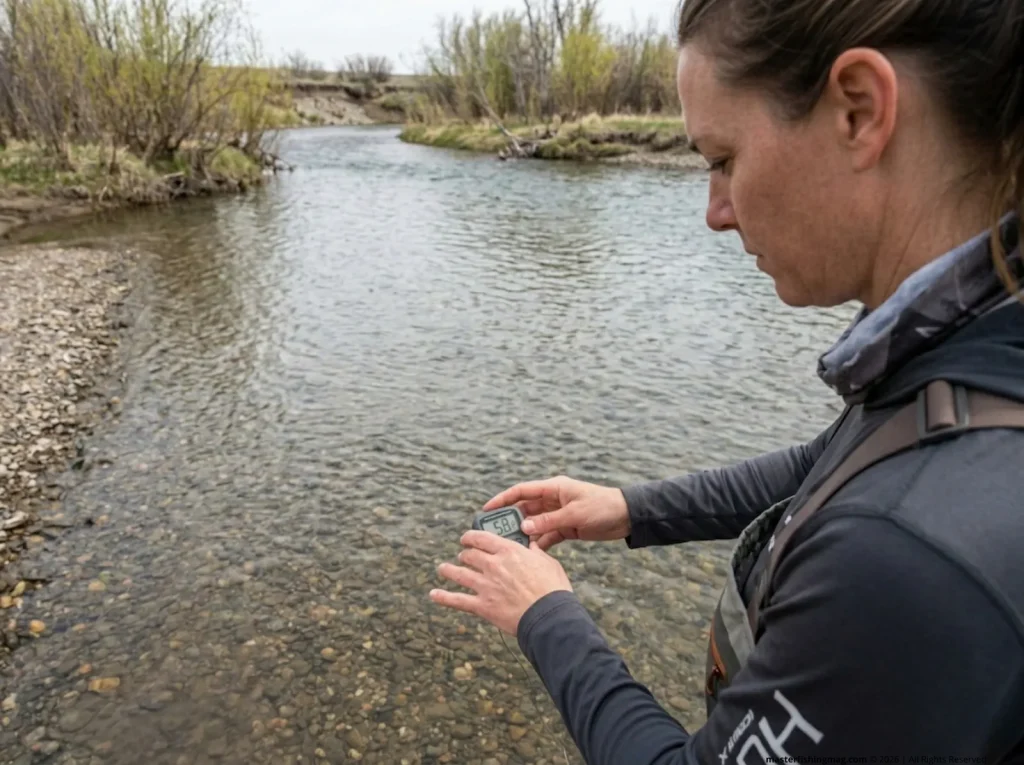
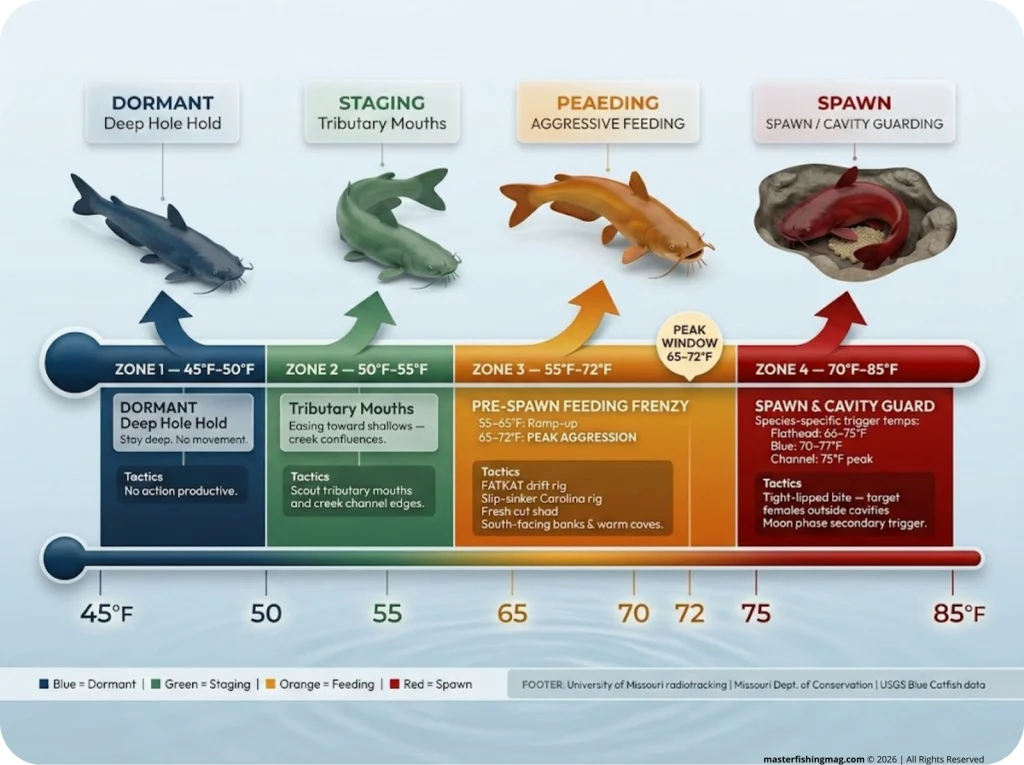
At 50°F, something clicks. Catfish metabolism wakes up just enough to pull fish off the deep winter holes they’ve been sitting in for months. They don’t bolt — they ease toward shallower water, staging near tributary confluences and creek mouths where warmer feeder water mixes with the main channel.
University of Missouri radiotracking studies confirmed this with hard numbers. Flathead catfish in the Cuivre and Grand Rivers initiated upstream spawning migration at roughly 50°F, covering between 12 and 33 miles from their wintering areas to nesting habitat. That’s not a casual drift. That’s a committed move.
This is the first transition you can scout. Forget the calendar — your thermometer is the trigger. When you see 50°F on the water temperature readout, start checking shallow flats near tributary mouths.
55°F to 72°F — The Aggression Window
Between 55 and 65°F, pre-spawn feeding ramps up hard. Catfish need calories before the energy-intensive spawn, and they’re actively hunting. Fresh cut shad bait drifted on a FATKAT drift rig or slip-sinker Carolina rig covers water efficiently during this phase.
The real money window is 65–72°F. This is when pre-spawn catfish hit their peak aggression — the biggest fish in the system are feeding hard and haven’t committed to cavities yet. I’ve had my best days on the Mississippi River during exactly this window, drifting gizzard shad along current seams next to riprap banks.
Pro tip: Fish the warmest water you can find in the system during this window. South-facing banks, wind-protected coves, and discharge areas hit 65°F days before the main channel. That’s where the active catfish stack first.
Daily temperature swings matter more than most anglers realize. A sunny afternoon can push shallow water up several degrees, pulling fish onto flats. Cold mornings send them deeper. Understanding how water temperature controls fish metabolism and feeding cadence makes these shallow-deep shifts predictable instead of frustrating.
70°F to 85°F — Species-Specific Spawn Triggers
Here’s where it gets species-specific. Channel catfish initiate spawning at 70–85°F, with peak activity around 75°F according to the Missouri Department of Conservation’s channel catfish spawning data. Blue catfish follow at 70–77°F based on USGS data. Flathead catfish are the earliest movers, triggering at 66–75°F.
Phil King, a Tennessee River guide, adds a variable most anglers miss. Spawning peaks often align with full moons in April through June during warm years. Water temperature is the master variable, but moon-phase correlations are the secondary trigger worth tracking.
Once males enter cavities and start guarding, the tight-lipped bite kicks in. Male nest guarding lasts 5–10 days until eggs hatch and fry disperse. Females leave after depositing eggs. The fish aren’t gone — they’re just not eating the same way.
Where Catfish Build Their Nests — Habitat by Waterbody Type
River Revetments and Riprap Dams
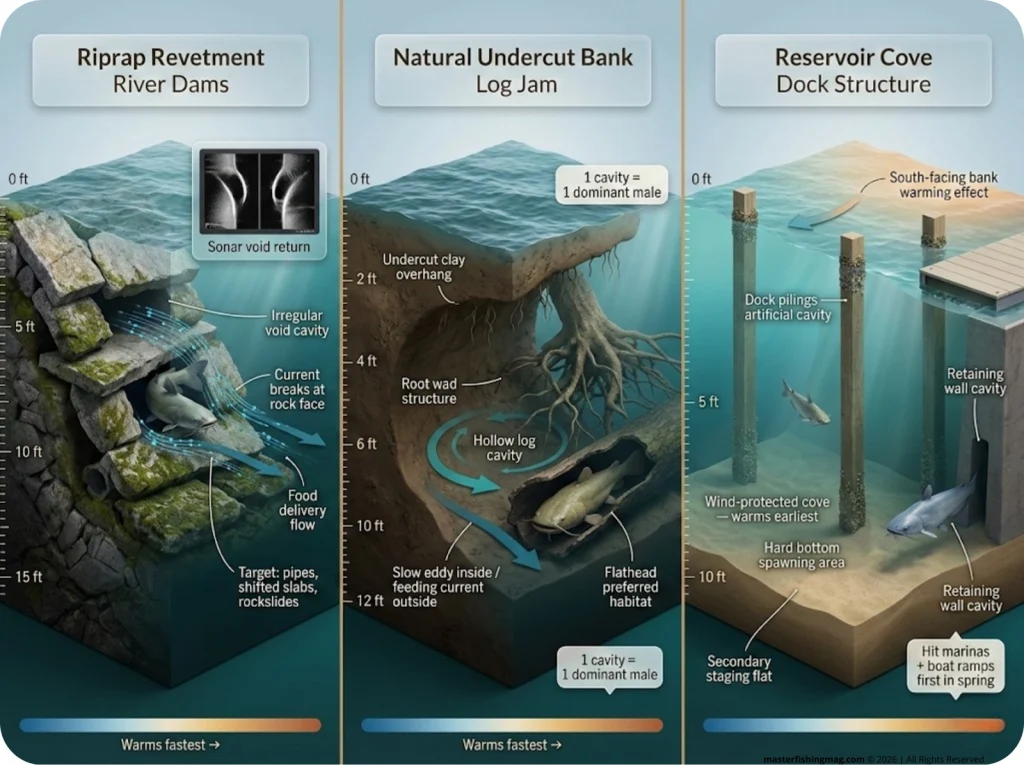
U.S. Army Corps of Engineers revetment structures and riprap banks erode over time, and the cavities they create are premium catfish spawning real estate. Where concrete slabs have shifted or rock has settled, dark protected recesses form with minimal current inside but food-delivering flow outside. That’s exactly what cavity spawners need.
Keith Sutton, author of Catfishing: Beyond the Basics, points out that bridge pilings, dam faces, and eroded riprap concentrate spawning catfish into targetable zones. Males aggressively defend these revetment cavities, attacking anything perceived as a nest threat — including your bait.
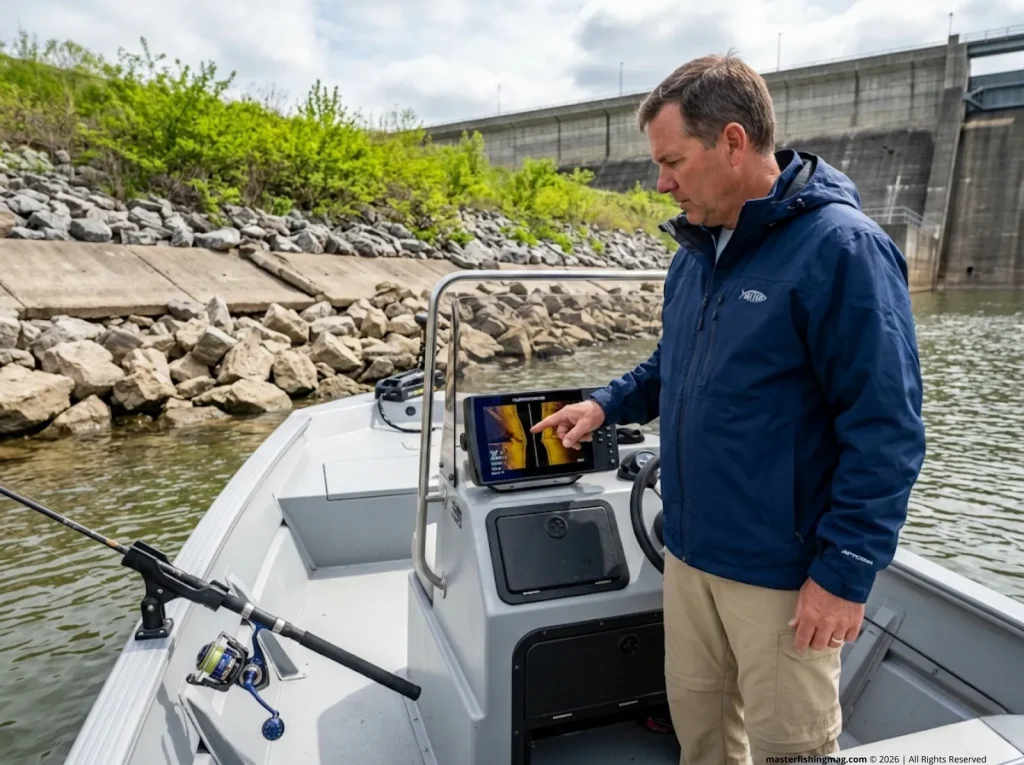
Sonar is your best friend here. Look for irregular voids in otherwise uniform rock structure. Target distinguishing features — pipes, rockslides, fallen logs pressed against the rock face. Drop vertical and hold.
Natural Bank Cavities and Log Jams
Undercut clay banks, root wads, hollow logs, and submerged timber all serve as natural spawning cavities. Flathead catfish in particular favor hollow logs and undercut banks in mid-to-upper river reaches, which is exactly why cracking the river flathead code requires understanding their preferred structure.
These spots are harder to locate than riprap. Polarized glasses and slow bank-scanning with side imaging sonar are your best approach. Natural cavities typically hold fewer but larger fish — one cavity often means one dominant male.
Reservoir Coves and Shallow Structure
In lakes and reservoirs, catfish don’t migrate as far. Abundant riprap near dams provides nesting habitat within short distances of wintering areas. Wind-protected coves with hard bottom warm faster and attract catfish earlier in the season.
Look for shallow marinas, boat ramp retaining walls, and dock pilings — all artificial cavity sources that get overlooked. Secondary points and flats adjacent to the main channel serve as staging areas two to three weeks before fish commit to cavities.
Reading the Pre-Spawn Migration — From Winter Holes to Staging Areas
Tributary Confluences and Creek Mouths
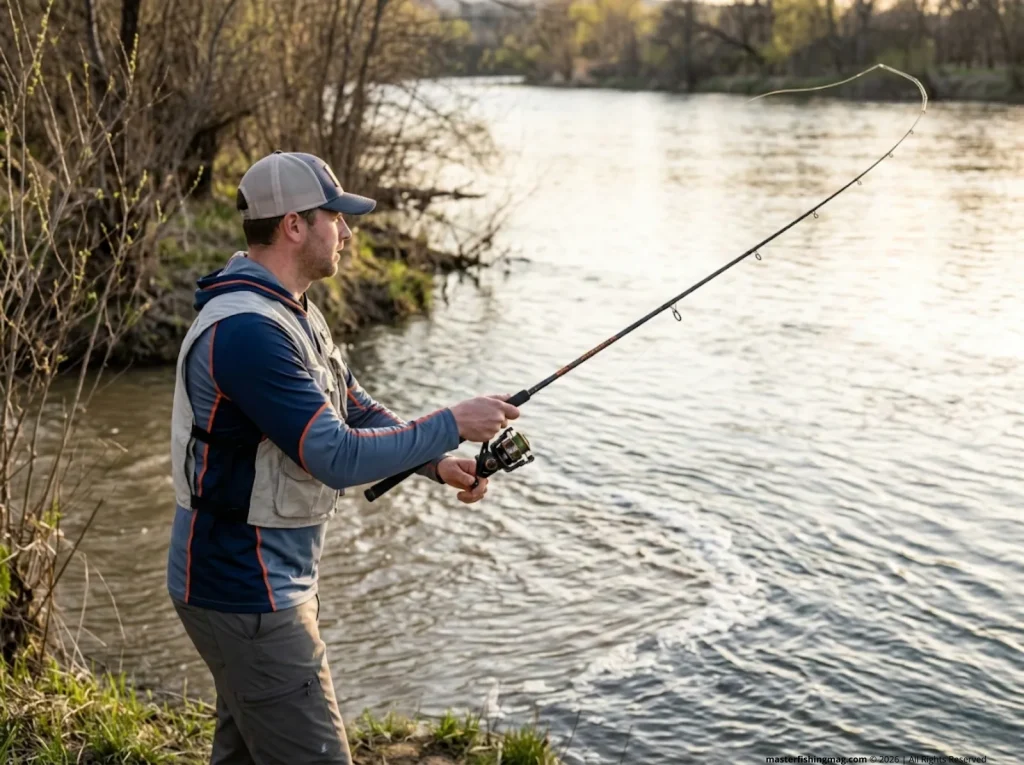
Tributary confluences are the first concentration points on any system. Warmer feeder creek water mixing with cooler main-channel flow creates a temperature gradient that catfish follow like a highway on-ramp. Fish stack at these confluences before committing to upstream runs.
This is the easiest interception point on any river. Target the eddy where tributary current meets main current — fish hold in the slack water, facing the warmer inflow. I’ve watched catfish stage in these spots for days, feeding aggressively while waiting for main-channel temps to catch up.
Dam Tailraces and Blocked Migration Points
Where dams block upstream movement, catfish populations concentrate in tailrace areas and adjacent riprap. Blue catfish in particular stack below dams during spawn runs. Some telemetry documented movements of hundreds of miles — a Red River study recorded a maximum of 436 miles.
Current breaks behind wing dams, concrete abutments, and discharge pipes are primary staging positions. Fish these areas with heavier tackle. The current is strong and the fish are large.
Pro tip: When fishing dam tailraces, use your side imaging versus down imaging setup strategically. Side imaging reveals cavity structure in the riprap; down imaging shows exactly where fish sit relative to those cavities.
Sonar Scouting Protocol for Daily Movements
Daily water temperature fluctuations cause catfish to shift between shallow staging flats during warm afternoons and slightly deeper positions on cooler mornings. Use your sonar to scan riprap edges and transition zones systematically. Look for clusters of arches at varying depths through the day.
Mark waypoints when you find concentrations and return at different times to map their movement pattern. This isn’t guesswork — it’s search-based fishing with electronics, and it turns a random outing into a repeatable system.
Rigs and Baits That Match Each Spawn Phase
Pre-Spawn Power Presentations (55–72°F)
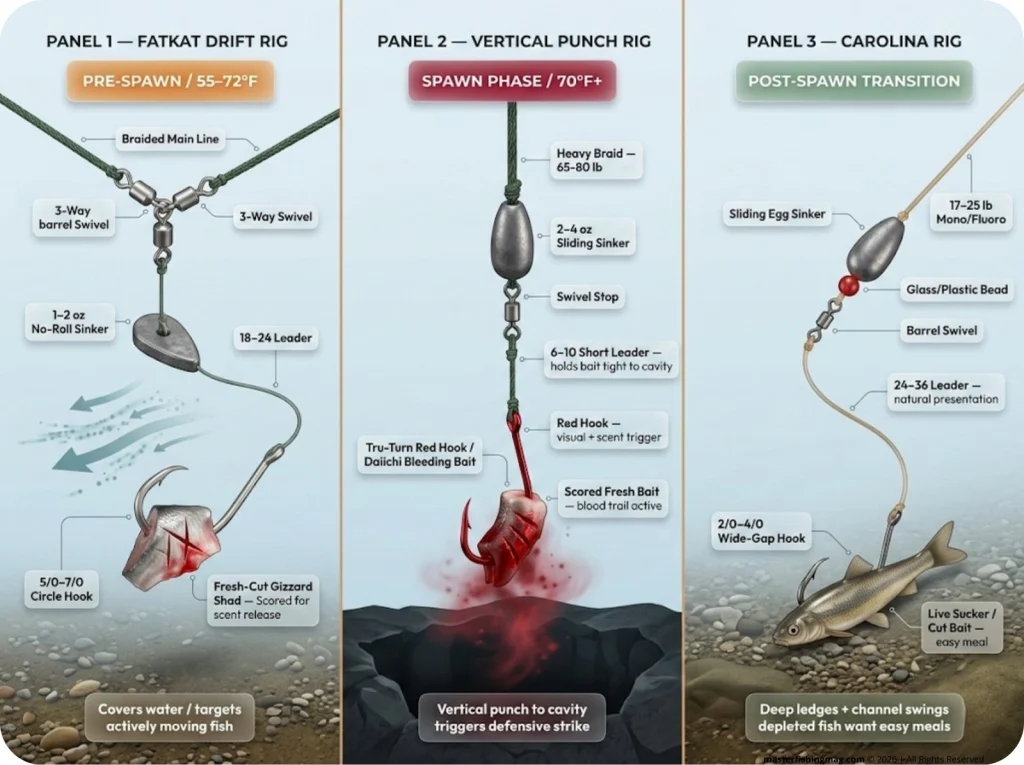
When catfish are actively feeding and moving, cover water. Drifting bait on a FATKAT drift rig or slip-sinker Carolina rig keeps your presentation moving through the strike zone without constantly snagging on structure.
Fresh cut bait is non-negotiable during this phase. Old bait loses the chemical signature that catfish rely on through chemoreception. The difference between fresh-cut gizzard shad and yesterday’s leftovers is the difference between a bite and a blank. Match the hatch with your region — gizzard shad on Gulf Coast and mid-South waters, skipjack herring on big rivers, live suckers on northern systems.
Understanding blue catfish biology and the chemoreception that drives bait selection explains why fresh cut bait outperforms everything else during this window.
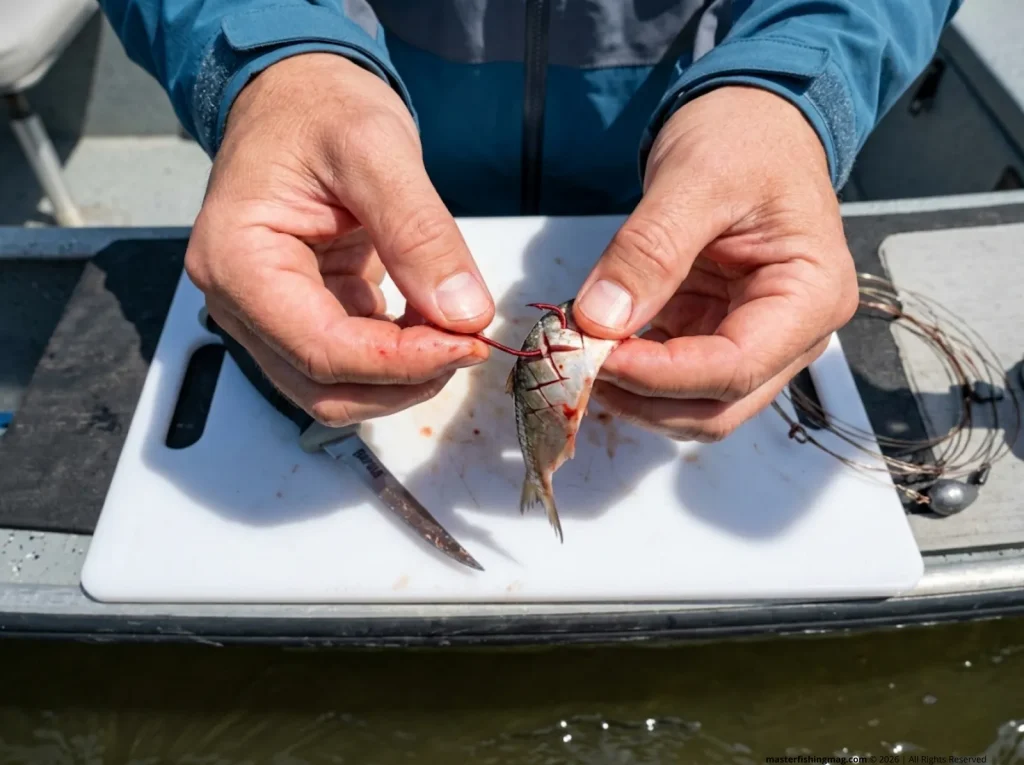
Pro tip: If your bait doesn’t leave a blood trail when you drop it in, it’s not fresh enough for pre-spawn cats. Score the flesh with a knife before hooking — the extra scent release can be the difference on tough days.
Spawn-Phase Precision Tactics (70°F+)
Once males are guarding, standard drift presentations fail. Fish are stationary and territorial, not feeding. Switch to vertical punch baiting — drop bait directly into or immediately adjacent to identified cavities.
Score fresh cut bait to create blood release, and run red hooks like Tru-Turn Red Catfish or Daiichi Bleeding Bait. The combination of bloody bait scent and visual trigger fires defensive strikes from nest-guarding males. Reduce leader length and use heavier weight to hold position in current near structure.
Keith Sutton also recommends crankbait trolling along riprap banks during this phase — bouncing the bait past multiple cavities triggers reactionary strikes from guarders who can’t resist slapping something swimming past their nest.
Post-Spawn Transition Tactics
After eggs hatch and fry disperse, males abandon nests and resume feeding, but they’re depleted and respond to easy meals. Post-spawn females recover faster and disperse to deeper summer structure first. Transition to good summer fishing patterns — deeper ledges, channel swings, and current breaks with fresh live bait or cut bait.
This is the least-documented phase in catfishing. Most content skips straight from spawn to summer without covering the gap.
The Ethics of Fishing the Spawn — Why Restraint Makes Better Anglers
Why Guarding Males Are the Bottleneck
Here’s the part nobody talks about. Nest-guarding males invest 5–10 days protecting eggs without feeding. Remove a guarding male from an active nest, and that entire clutch dies. No backup parent. No second chance. The eggs are abandoned.
Catfish reproductive success depends heavily on cavity availability AND active male protection. Targeting known nesting cavities during peak guarding is legal in most states, but it directly reduces year-class recruitment. The big male you keep today was protecting hundreds of eggs that would have become the fish you wanted to catch in five years.
I’ve changed my approach on this over the years. Early on, I’d fish every cavity I could find. Now I leave active nests alone and target pre-spawn fish or fish holding on adjacent staging structure. The fishing is just as good, and the population stays healthy.
Selective Harvest and Catch-and-Release During Spawn
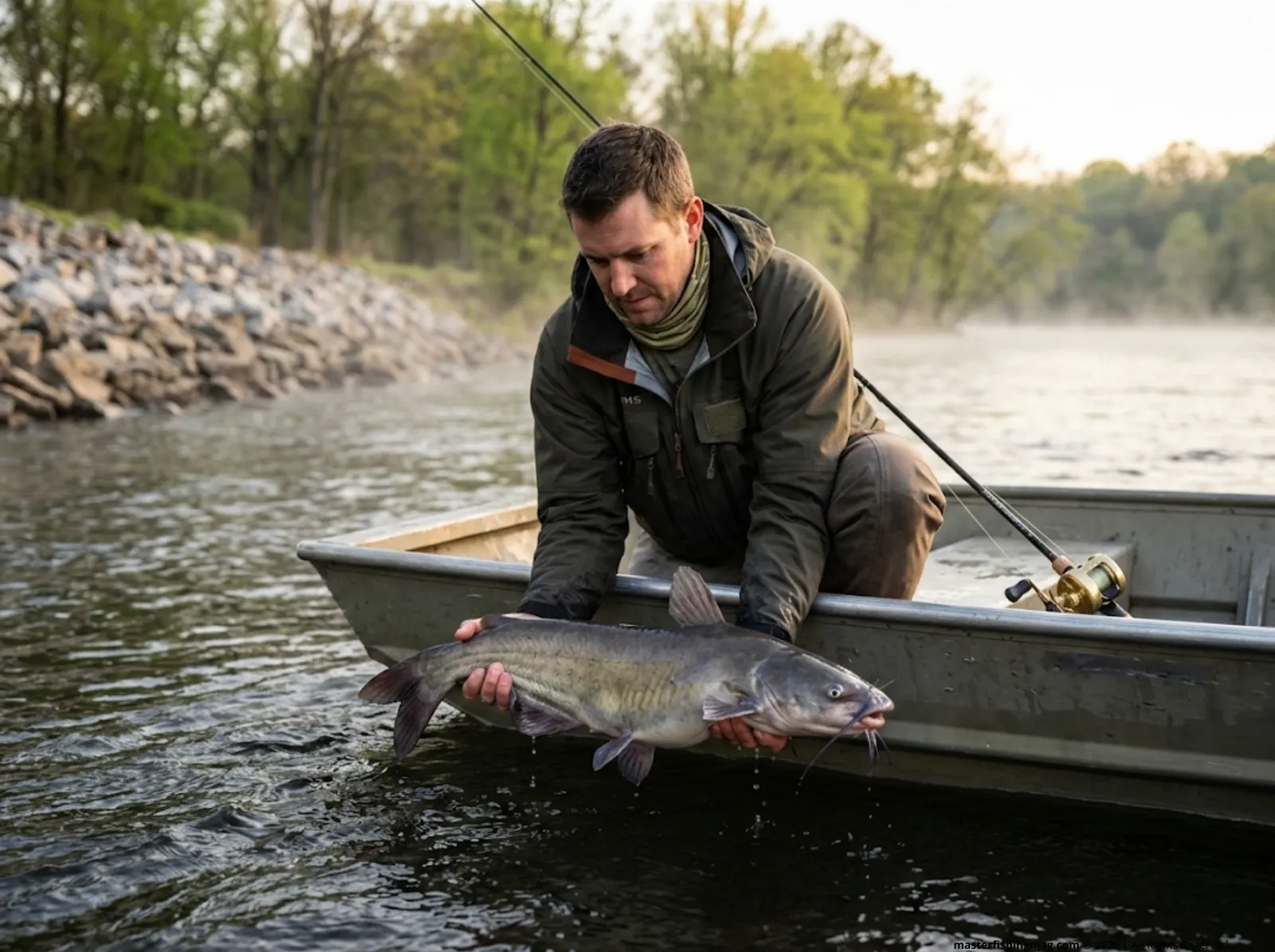
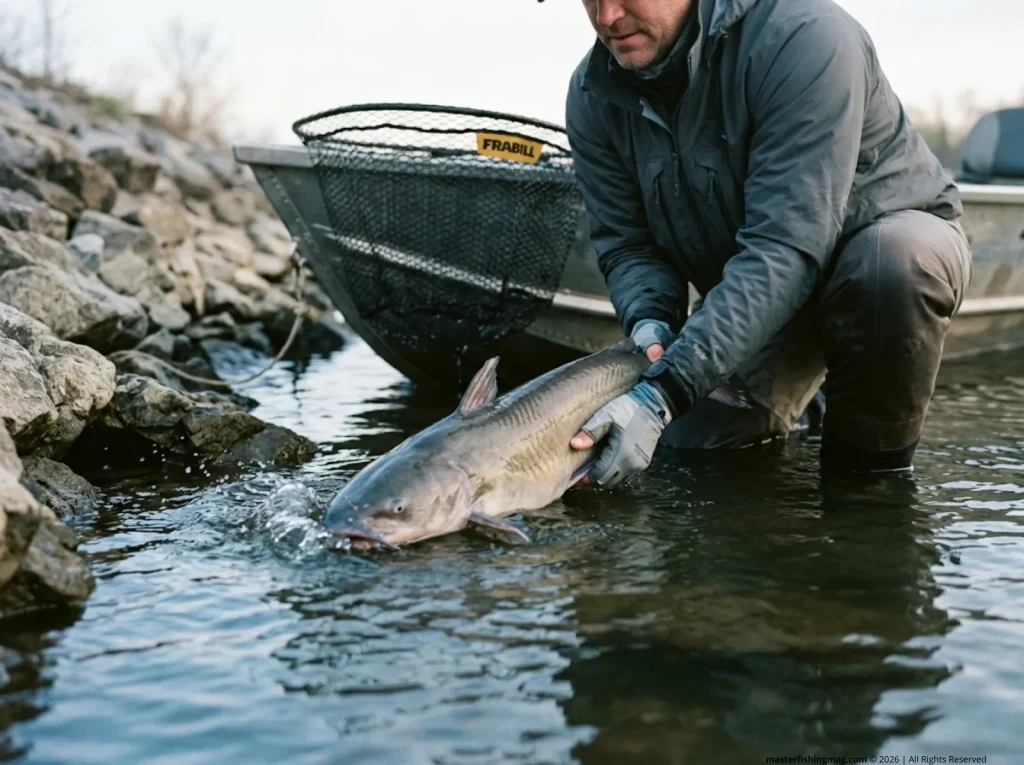
Practice quick release of large guarding males. If you catch one from a known nest cavity, release immediately at the same spot — males will often return if released nearby. Handle catfish with wet hands, use dehooking tools for deep-set hooks, and follow science-based catch and release techniques that maximize survival.
Target smaller, non-guarding fish for harvest. There are plenty of active catfish on staging structure and tributary confluences that aren’t committed to nests yet. Sustainable fishing ethics isn’t about stopping you from fishing the spawn — it’s about fishing it smarter so the system keeps producing.
Pro tip: Carry long-nose pliers and a dehooking tool specifically for spawn-phase fishing. Deep-hooked guarding males need fast, clean releases. Fumbling with hooks while a fish is out of water kills the nest even if you release the fish.
Species-by-Species Breakdown — Channels, Blues, and Flatheads
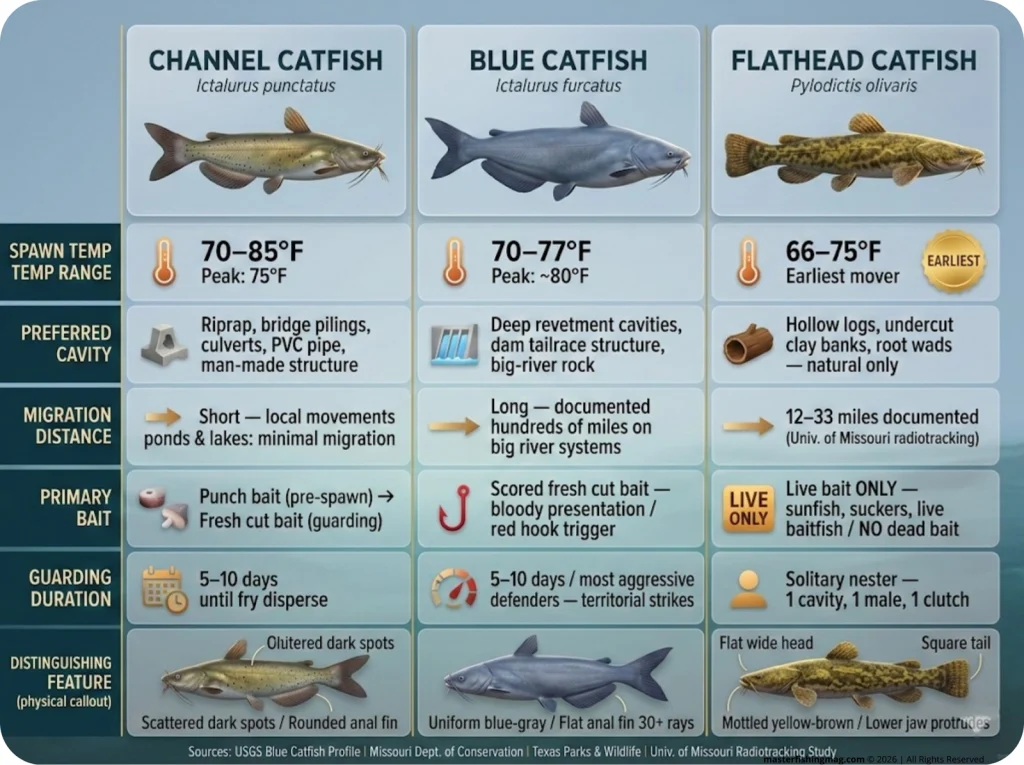
Channel Catfish (Ictalurus punctatus)
Channel catfish are the most accessible spring target. Spawning temperature range sits at 70–85°F with a peak around 75°F. They prefer riprap, bridge pilings, and man-made structure — culverts, PVC pipes, anything that creates a dark cavity. Punch bait and prepared baits work during pre-spawn; switch to fresh cut bait for guarding males.
Mature channel catfish in ponds and lakes have shorter migrations and use shallower cavities compared to their river cousins. For the full biological profile, the complete guide to channel catfish covers sensory systems, bait selection, and migration patterns beyond the spawn.
Blue Catfish
Blue catfish are the heavyweights. Spawning range sits at 70–77°F according to the USGS species profile on blue catfish nest-guarding behavior. Their larger body size drives longer migrations — some documented at hundreds of miles on big river systems.
They prefer deeper, more protected cavities in big-river revetment and dam tailrace structure. James “Big Cat” Patterson, a Mississippi River guide, puts it plainly: “Spawning ritual for channels and blues begins at about 70°F… blues don’t really begin until the water reaches 80°F.” The red hooks and scored bloody bait tactic works best on this species — guarding male blues are the most aggressive defenders of the three.
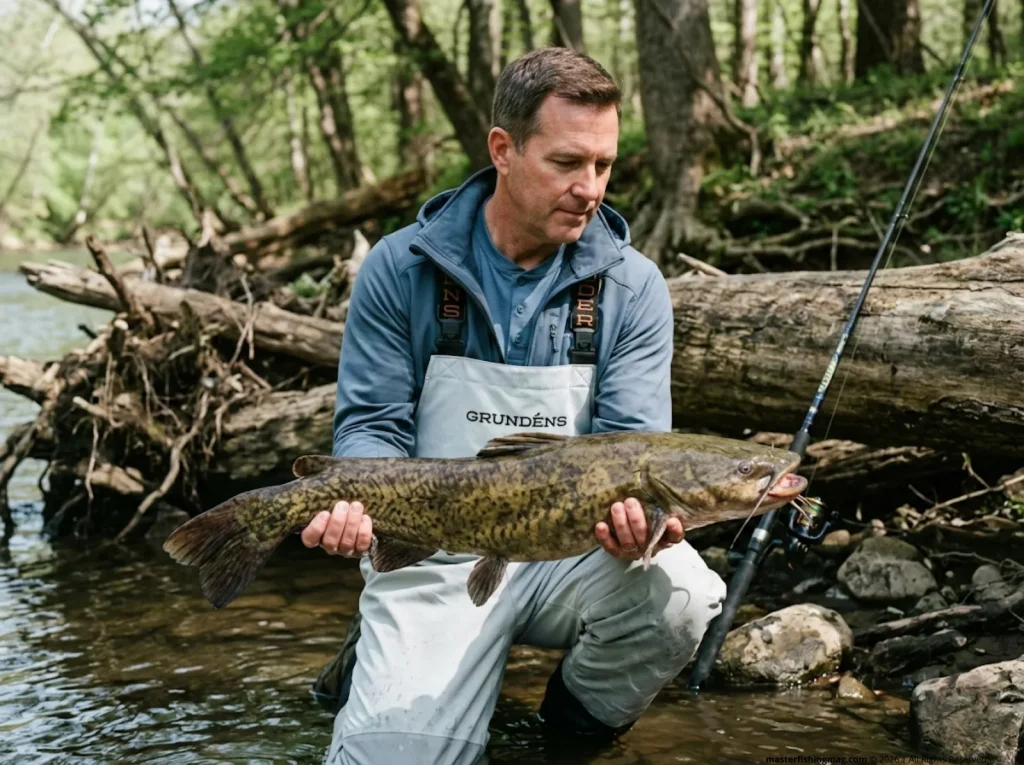
Flathead Catfish
Flatheads spawn earliest at 66–75°F per Texas Parks & Wildlife flathead catfish spawning data. They have the strongest preference for natural cavities — hollow logs, undercut clay banks, root wads in mid-to-upper river reaches.
This is a live bait species exclusively. Live sunfish, suckers, or baitfish are required during all phases. They also undertake the longest documented pre-spawn migrations — those 12 to 33 miles per the University of Missouri radiotracking data are all flatheads. More solitary nesters, too. One cavity typically holds one dominant male and produces one clutch.
Conclusion
Three things separate anglers who find spring catfish from those who wonder where they went.
First, your thermometer is your most valuable tool. The 50°F-to-72°F window is where pre-spawn catfish are at their most predictable and aggressive. Fish the water temperature, not the date on your phone.
Second, learn your water’s cavity structure. Whether it’s riprap revetments, undercut banks, or dock pilings, the angler who knows where the cavities are will find spawning catfish every single spring.
Third, protect the nest-guarding males. Quick-releasing large males from active nests isn’t just ethical — it’s an investment in next year’s fishing. The catfish you release today guards the eggs that become the trophy you catch in five years.
Next spring, before you make your first cast, spend a session doing nothing but running your thermometer and sonar along known structure. Map the cavities. Mark the confluences. Watch where the water hits 55°F first. The fish will be there — and this time, you’ll be waiting for them.
FAQ
What temperature do catfish start spawning?
Channel catfish and blue catfish begin spawning at approximately 70°F, with peak activity at 75–80°F. Flathead catfish start earlier, at 66–75°F. All three species are cavity spawners — males select and guard protected nesting sites once temperatures reach these thresholds.
Do catfish bite during the spawn?
Nest-guarding males become tight-lipped and dramatically reduce feeding, but they will strike baits presented as threats to their nest. Scored fresh cut bait on red hooks dropped into nesting cavities triggers defensive aggression — a different type of bite than pre-spawn feeding.
Where do catfish spawn in rivers versus lakes?
In rivers, catfish spawn in riprap revetment cavities, undercut banks, hollow logs, and dam tailrace structure — often after migrating 12–33 miles upstream. In lakes and reservoirs, they use dam riprap, dock pilings, retaining walls, and shallow rocky coves. Reservoirs require shorter migrations because structure is more concentrated.
How long does the catfish spawning period last?
Males guard individual nests for 5–10 days from egg deposition through fry dispersal. The overall spawning season for a given waterbody spans 4–8 weeks because not all fish spawn simultaneously — water temperature variation and cavity availability stagger timing across the population.
What is the best bait for spring catfish before the spawn?
Fresh cut bait — specifically gizzard shad or threadfin depending on your region — is the top pre-spawn bait for channel and blue catfish. Freshness matters because the chemical signal degrades quickly in old bait. For flatheads, live bait like sunfish, suckers, or live shad is required year-round.
Risk Disclaimer: Fishing, boating, and all related outdoor activities involve inherent risks that
can lead to injury. The information provided on Master Fishing Mag is for educational and informational purposes
only. While we strive for accuracy, the information, techniques, and advice on gear and safety are not a substitute
for your own best judgment, local knowledge, and adherence to official regulations. Fishing regulations, including
seasons, size limits, and species restrictions, change frequently and vary by location. Always consult the latest
official regulations from your local fish and wildlife agency before heading out. Proper handling of hooks, knives,
and other sharp equipment is essential for safety. Furthermore, be aware of local fish consumption advisories. By
using this website, you agree that you are solely responsible for your own safety and for complying with all
applicable laws. Any reliance you place on our content is strictly at your own risk. Master Fishing Mag and its
authors will not be held liable for any injury, damage, or loss sustained in connection with the use of the
information herein.
Affiliate Disclosure: We are a participant in the Amazon Services LLC Associates Program, an
affiliate advertising program designed to provide a means for us to earn advertising fees by advertising and linking
to Amazon.com. As an Amazon Associate, we earn from qualifying purchases. We also participate in other affiliate
programs and may receive a commission on products purchased through our links, at no extra cost to you. Additional
terms are found in the terms of service.