In this article
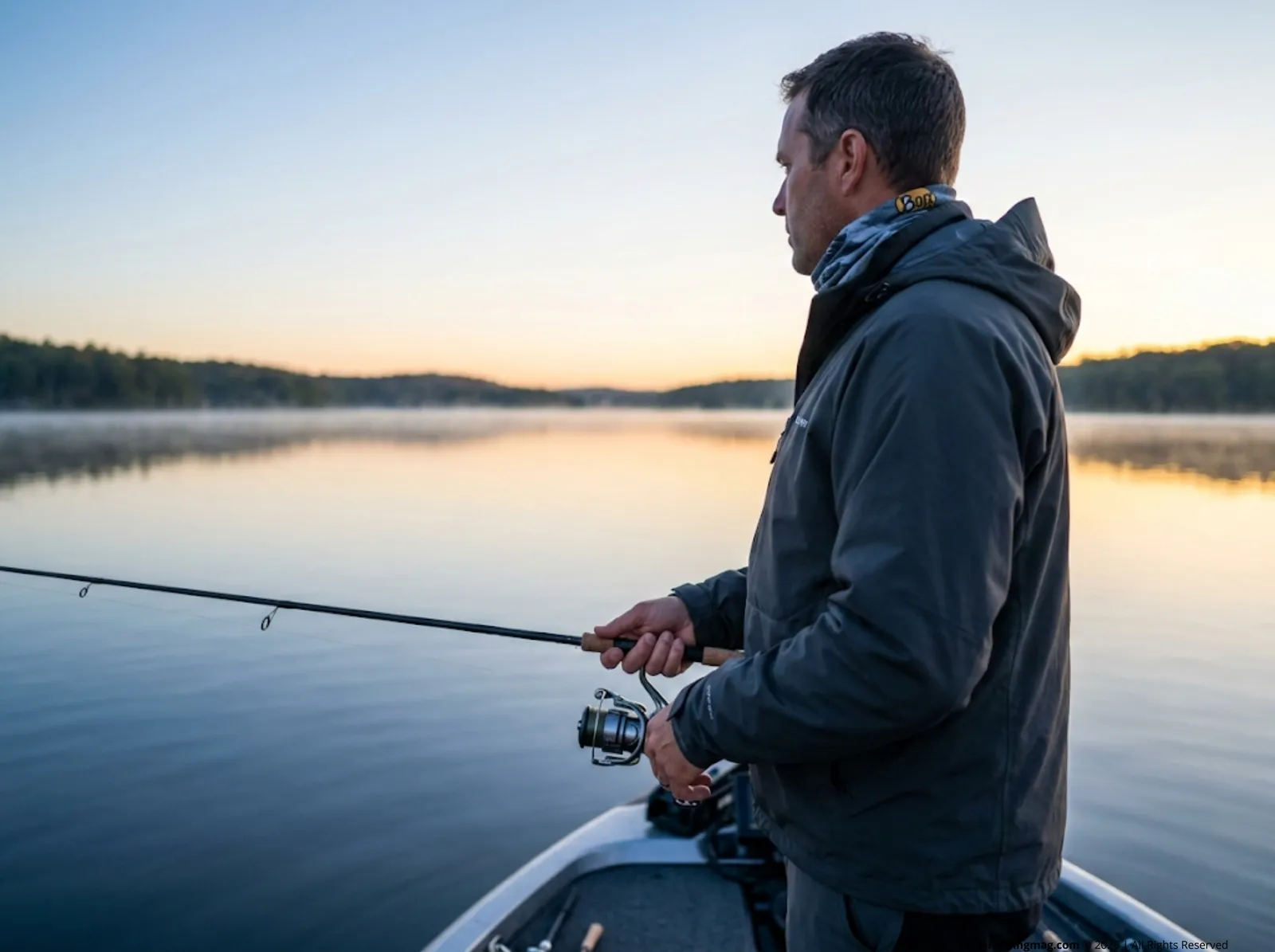
Third cast into a dead-flat cove at 6:30 a.m. Perfect light. Perfect water temperature. Live shiners twitching under a slip bobber — and nothing. Not a bump, not a swirl. An hour passes, then two. I check my phone and other anglers on the same lake are posting stringers. The water just stares back.
I’ve been that angler. Not once or twice — 47 documented trips where I showed up confident and drove home skunked. But those blank days taught me more about fish behavior than any magazine article ever could. Every failed trip became a controlled experiment, and the patterns I found are backed by fisheries research, not campfire folklore.
This article breaks down the most common and most overlooked reasons fish aren’t biting, using a diagnostic framework built from real failures. By the end, you’ll know exactly how to troubleshoot a dead bite in real time on the water.
⚡ Quick Answer: Fish stop biting for five main reasons — you’re fishing the wrong spot, your bait presentation doesn’t match current conditions, environmental factors like barometric pressure and water temperature are working against you, fish can detect your presence through their lateral line system, or you skipped the pre-trip preparation that puts you on productive water. The fix isn’t luck. It’s a systematic troubleshooting process you can run through in 20 minutes on the water.
You’re Fishing the Wrong 10% of the Water
The 90/10 Rule and Why Most Anglers Ignore It
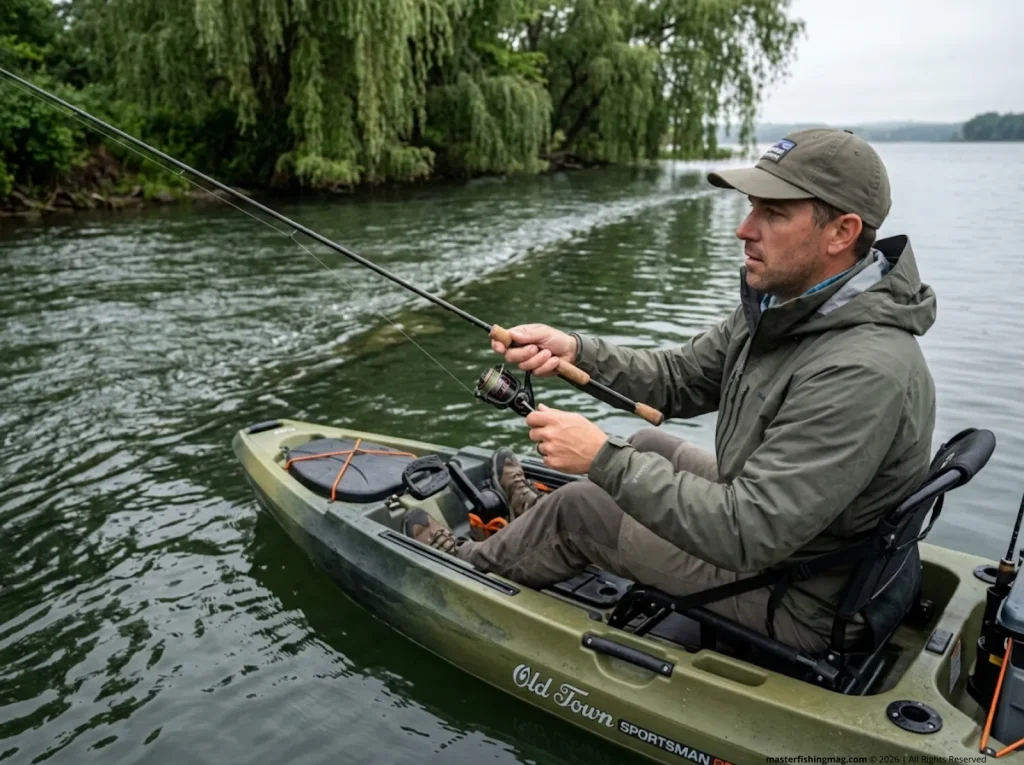
Here’s the stat that changed how I fish forever: 90% of feeding fish concentrate in roughly 10% of the water. That means every time you park on a random bank or anchor over featureless bottom, you’re fishing dead water.
The productive 10% shifts daily based on wind, light levels, and where baitfish are moving. Creek mouths, current seams, structure edges, and depth transitions where shallow meets deep — that’s where fish stack up. Not out in the middle of nowhere because “the view is nice.”

The 20-Minute Rule for Spot Rotation
Field consensus across multiple professional guides converges around the same advice: move after 20-45 minutes with no bites. Most weekend anglers sit in one spot for three hours hoping something will change. Nothing changes. The fish aren’t there.
If your sonar shows fish marks but you’re getting zero bites, the problem probably isn’t location — it’s presentation. But if the screen is empty or you’re not marking anything, pull the trolling motor and go. Track your rotations in a fishing log and after 10 trips, patterns in productive spot selection will jump off the page.
Pro tip: Have 3-5 backup spots planned before you even launch. When the first two don’t produce, you can rotate immediately instead of wasting time staring at your phone trying to figure out where to go next.
Reading Structure Without Electronics
You don’t need a $3,000 fish finder to find productive water. Visible clues are everywhere if you know what to look for. Foam lines on the surface mark current breaks. Bank irregularities — points, pockets, downed trees — concentrate bait. Wind-blown shorelines push forage against structure.
Polarized sunglasses reveal water depth transitions, weed lines, and bottom changes that are invisible to the naked eye. And free contour maps on apps like Navionics show you humps, channel swings, and drop-offs before you ever leave the house. If you’re serious about the 3-phase protocol for choosing a fishing spot, start with the map, not the boat ramp.
Your Presentation Doesn’t Match What Fish Want Right Now
Retrieve Speed Is a Temperature Equation
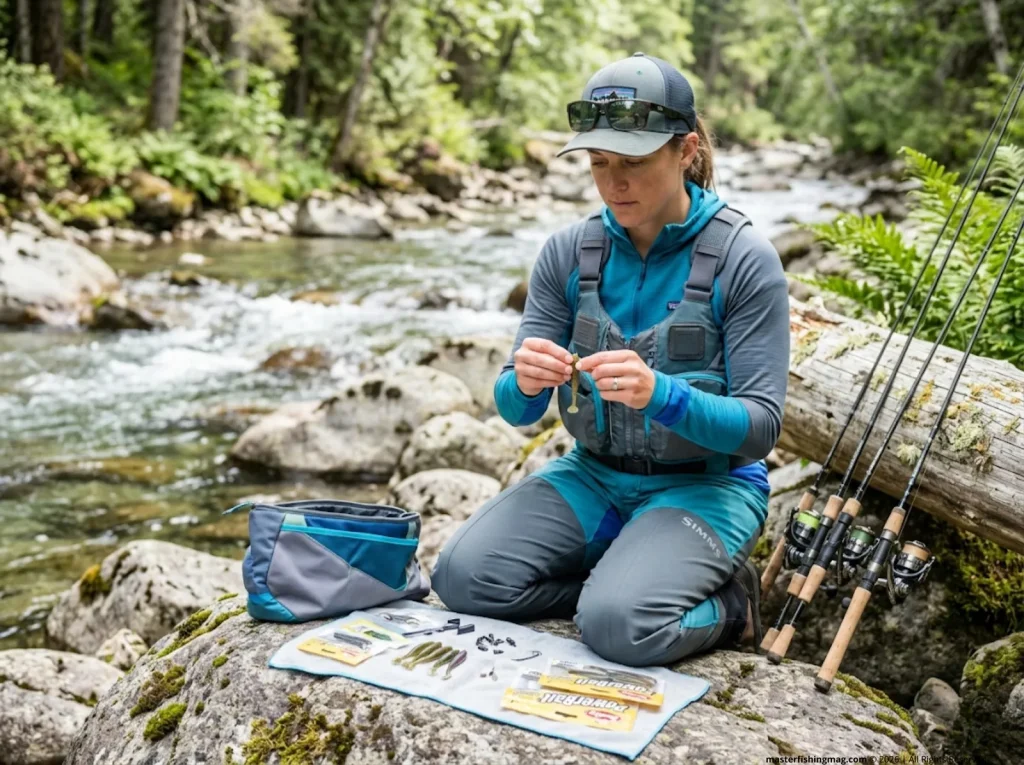
Fish are cold-blooded. Their body temperature mirrors the water around them, and that directly dictates how fast they can chase prey. This is the single most overlooked variable in bite-rate troubleshooting.
In cold water below 55°F, fish activity slows to a crawl. Slow presentation dominates — 2-3 second pauses, dragging soft plastics along bottom, dead-sticking a suspending jerkbait. In warm water between 65-80°F, metabolism ramps up and fish actively chase. Burn crankbaits, rip jerkbaits, throw reaction baits that fire up the bite.
Michigan State University Extension confirms that cold water affects fish feeding dramatically. Fish literally can’t process food fast enough to justify chasing a fast-moving lure. Adjust retrieve speed before you adjust anything else.
Color Visibility Changes With Depth
Lure color visibility isn’t constant — it shifts with depth and water clarity. Red and orange disappear first, absorbed within the top 15-20 feet depending on conditions. Green and blue penetrate deepest. In stained water, chartreuse and white create the highest contrast against the murky background.
The instinct to match the hatch on color only works in the top 10 feet of clear water. Below that, fish rely increasingly on vibrations and silhouette rather than color detail. Carry three color families — natural, bright, and dark silhouette — and switch colors in 15-minute blocks until something connects.
Size and Profile Mismatches
When the fish bite turns tough, downsize your lure size by 25-30%. This alone triggers more bites from pressured or sluggish fish species than any other single adjustment. Oversize lures sort for big fish but filter out the majority of the population that might otherwise eat.
Profile shape matters as much as color. A round-bodied jig in a crawfish-focused lake outperforms a minnow-profile swimbait every time. Finesse rigs — drop shot, Ned rig, wacky rig — exist specifically for this scenario. If you haven’t explored what 200 trips taught me about light line finesse, start there. The difference between catching and watching is often just a lighter leader and a smaller bait.
The Environment Is Working Against You
Water Temperature Thresholds by Species
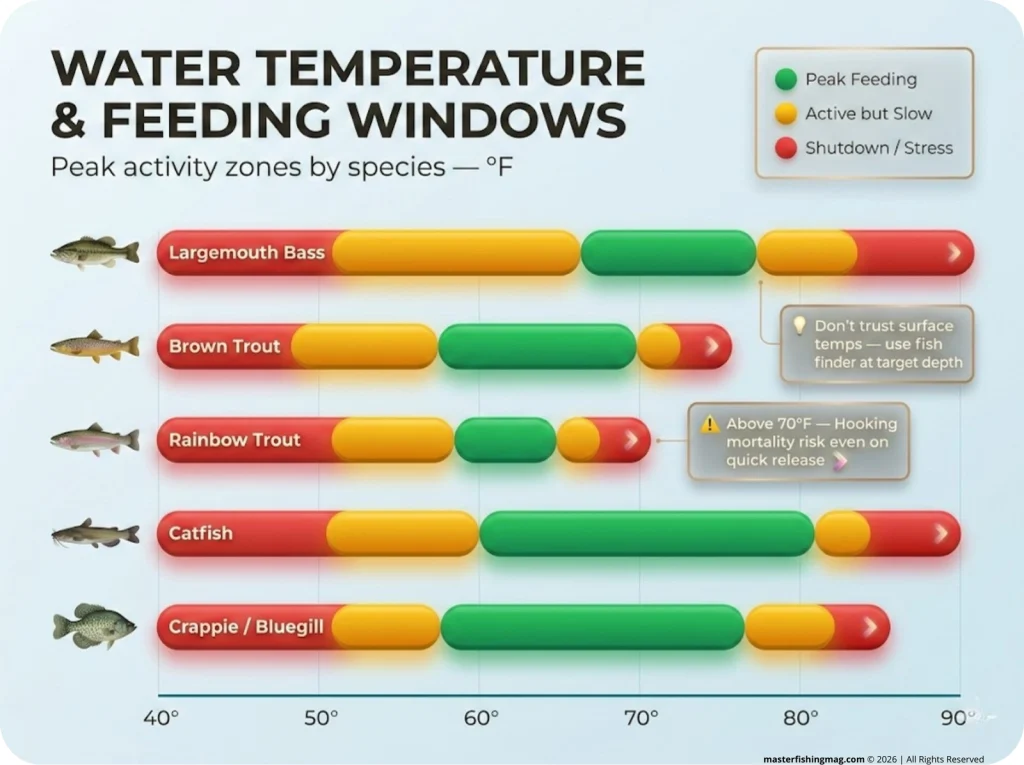
Every fish species has a seasonal temperature range where feeding peaks. Outside that window, fish either can’t process food fast enough to bother chasing it, or they’re stressed and conserving energy.
Largemouth bass feed hardest between 65-75°F. Below 50°F they get sluggish. Above 85°F they’re stressed and seeking cooler pockets, not your plastic worm. Trout — both brown and rainbow — operate in a tighter band, roughly 55-66°F for browns and 55-61°F for rainbows. Push above 70°F and you risk hooking mortality even with a quick release.
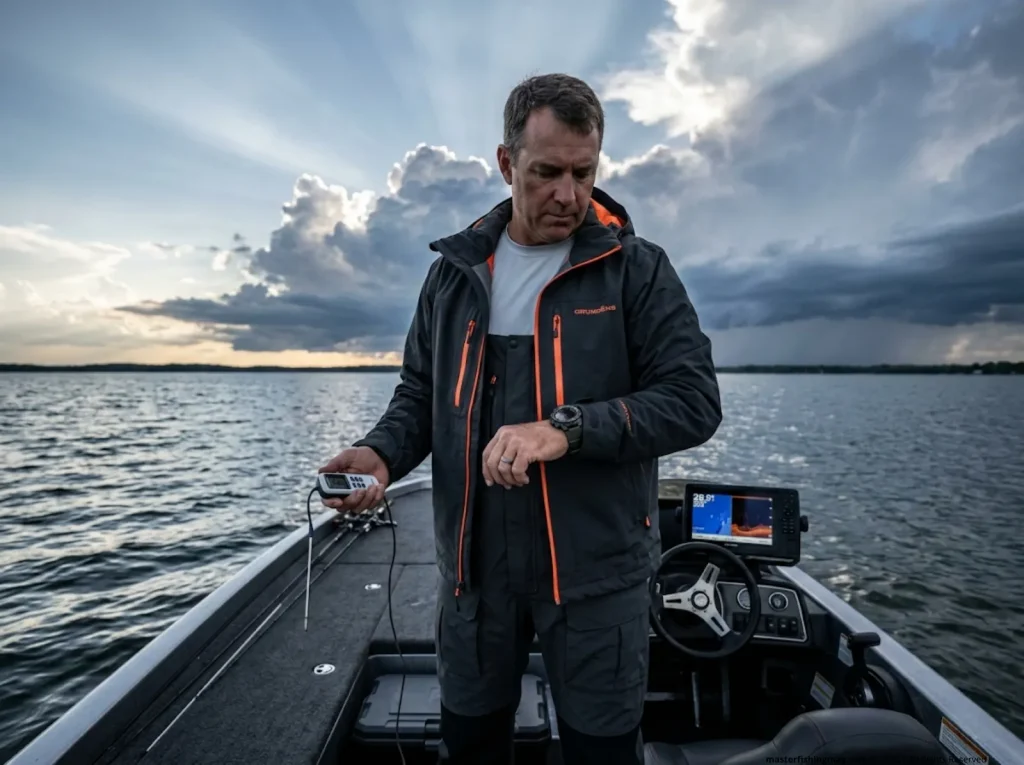
Don’t trust surface temps. In stratified lakes, surface readings can differ by 15°F from the depth where fish actually hold. Use your fish finder’s temperature readout at target depth, or drop a handheld digital thermometer on a cord.
Barometric Pressure and the Lockjaw Effect
Barometric pressure is the invisible variable most anglers either ignore or misunderstand. Falling pressure before a weather front often triggers feeding frenzies — baitfish become disoriented, and predators take advantage of the chaos. Stable pressure across several days creates predictable feeding routines and reliable bites.
The tough window is post-front. Rising, high-pressure conditions push fish tight to cover where they feed minimally and spook easily. The swim bladder connection explains why: rapid pressure changes cause physical discomfort, altering behavior the same way a sinus headache changes yours. A Bemidji State University study on yellow perch confirmed these effects on feeding activity.
Don’t skip post-front days though. Downsize your lure, slow way down, and fish tight to heavy cover where fish shelter from the pressure discomfort. The bites come harder, but they come. For the full breakdown on the science behind barometric pressure and fishing, including specific lure strategies for each pressure phase, we’ve covered it in depth.
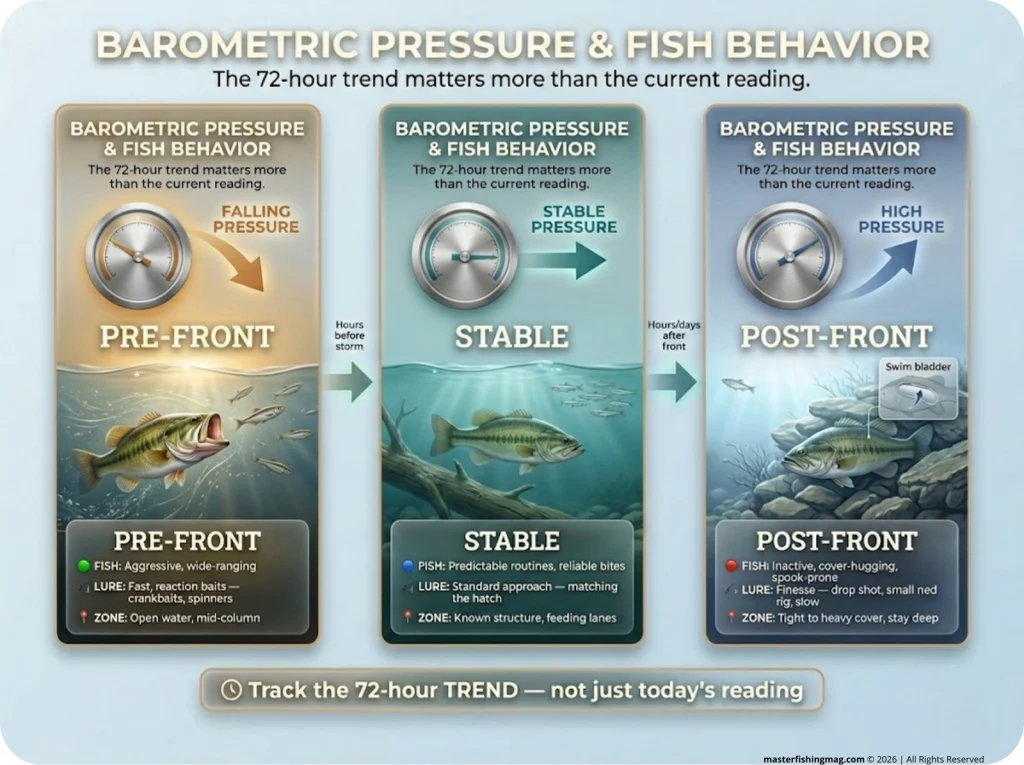
Pro tip: Track barometric pressure on a fishing watch or weather app for the 72 hours before your trip, not just the morning of. The trend matters more than the current reading. A slowly falling barometer over two days is prime time.
Weather Fronts, Wind, and Moon Phase
Pre-front windows — 24-48 hours before storm arrival — are gold. Post-front conditions with clear skies and high pressure are the toughest. Wind conditions push baitfish against windward banks, and predators follow the groceries.
Moon phases matter more than most anglers think. Full moon periods push fish into heavy nocturnal feeding, which often reduces daytime bite windows. If you’ve experienced lockjaw on a beautiful bluebird day, check the lunar calendar — the fish probably ate all night.
Fish Can Hear You Coming
How the Lateral Line Actually Works
The lateral line system is the reason fish seem to have a sixth sense. It’s a row of sensory organs called neuromasts running along the body and head of every fish. These cells detect water displacement, vibrations, and pressure changes — letting fish “feel” everything around them.
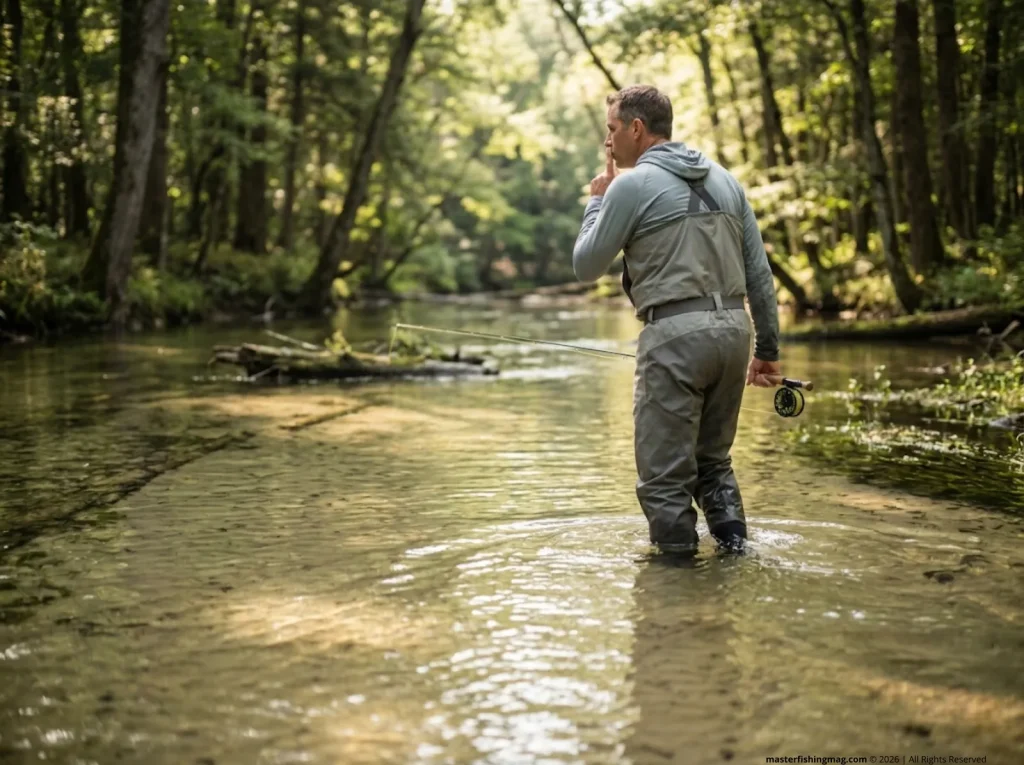
University of Florida researchers explain that fish can detect angler footsteps on the bank, boat hull vibrations, tackle box drops, and aggressive wading before you ever see the fish. This isn’t folklore. It’s documented sensory biology, and it directly explains why cautious fish vanish from spots where anglers are careless. For a deep look at how the lateral line system gives fish a sensory advantage, we’ve broken down the full biology.
Stealth Protocols That Reduce Detection
Bank anglers — approach low, step softly, keep your silhouette below the tree line. Boat anglers — coast in on the trolling motor or drift the last 50 feet. Avoid hull slaps, anchor drops, and slamming hatches within casting range of pressured water fish.
Wade fishers should use the shuffle-step. It’s quieter than lifting feet and has the bonus of preventing stingray injuries. Kill the live well pump, fish finder pings, and bilge motor when you’re working a fishing spot where fish have learned that engine noise means danger.
Pro tip: If your LiveScope shows fish following but not committing, you’re probably too loud. Reel up, drift 50 yards downwind, and re-approach from a different angle with the trolling motor on its lowest setting.
Line Visibility in Pressured Water
In clear, pressured water, fish learn to associate line visibility with danger. Fluorocarbon is harder for fish to see underwater than monofilament because it bends light more like the water itself does. That’s why guides switch to fluoro leaders when the bite gets picky.
Downsizing leader diameter by 2 lb test often triggers bites from fish that follow but won’t commit. In stained water this matters less — vibrations and lure action become the primary triggers rather than what they can see.
You Skipped the Preparation That Separates Catching From Fishing
Pre-Trip Intel That Changes Everything
Check local fishing reports before every trip. State wildlife agency websites, local bait shop conversations, and online forums reveal recent patterns that save you hours of blind casting. Monitor water temperature and flow data on USGS gauges — they’re free and update in real time.
Study weather trends for barometric pressure direction over the last 72 hours, not just today’s forecast. And look at how wind direction reveals where fish are positioned — even a moderate breeze concentrates bait on windward banks, which stacks predators in predictable positions.
A Tackle Box Built for Troubleshooting
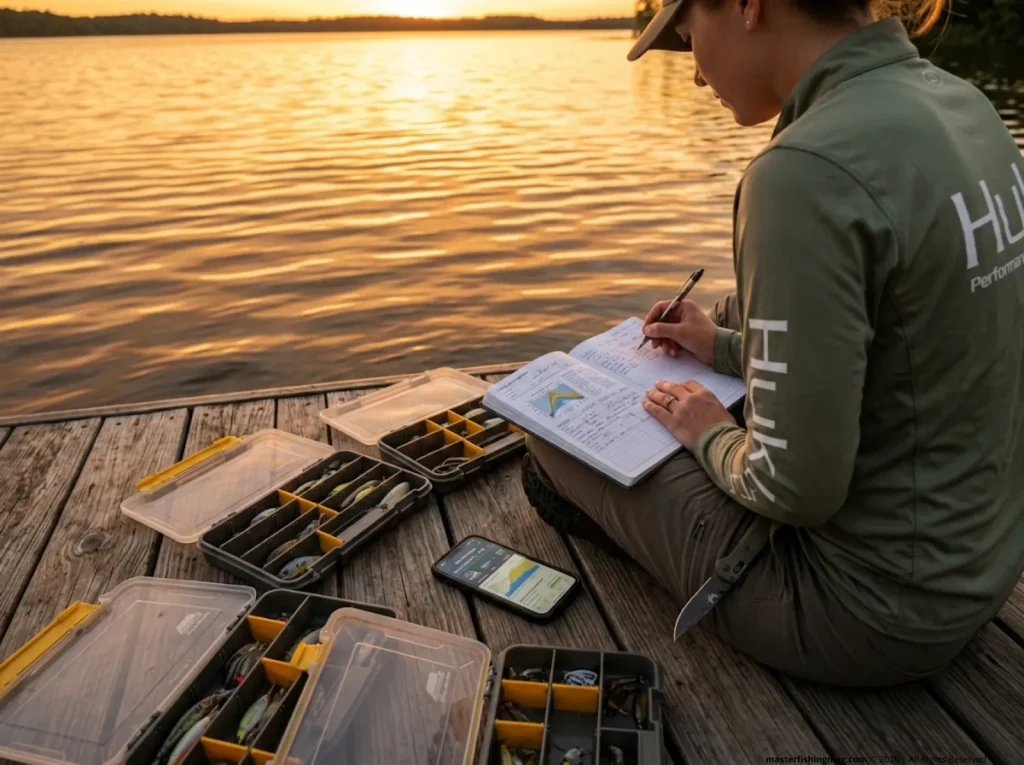
Carry 3-4 rod setups pre-rigged with different presentations so you can change bait instantly during rotation. The essential spread: one reaction bait, one finesse rig, one bottom contact, and one topwater option. That covers every fish activity level from lock-jawed to aggressive.
The most common mistake I see on the water is anglers using the same rig that worked last week. Conditions change daily. Your tackle box shouldn’t be a time capsule. Label trays by condition — clear/cold, stained/warm — instead of by lure type. That way you’re grabbing the right bait types for what the water is telling you, not what you remember from Saturday.
Keeping a Fishing Log That Reveals Patterns
Record the date, time, water temperature, barometric pressure, wind, lure used, fishing location scouting notes, and result for every fishing trip. After 10-15 outings, patterns emerge that no forum post can replicate because the data is specific to your water, your timing, and your methods.
A simple spreadsheet or any of the fishing apps with log functions gets the job done. The format doesn’t matter. The consistency does. A fishing log with 20 entries from one lake is worth more than 200 hours of YouTube videos about lakes you’ve never fished.
Advanced Recovery Tactics When Nothing Works
Using Electronics to Find Uncooperative Fish
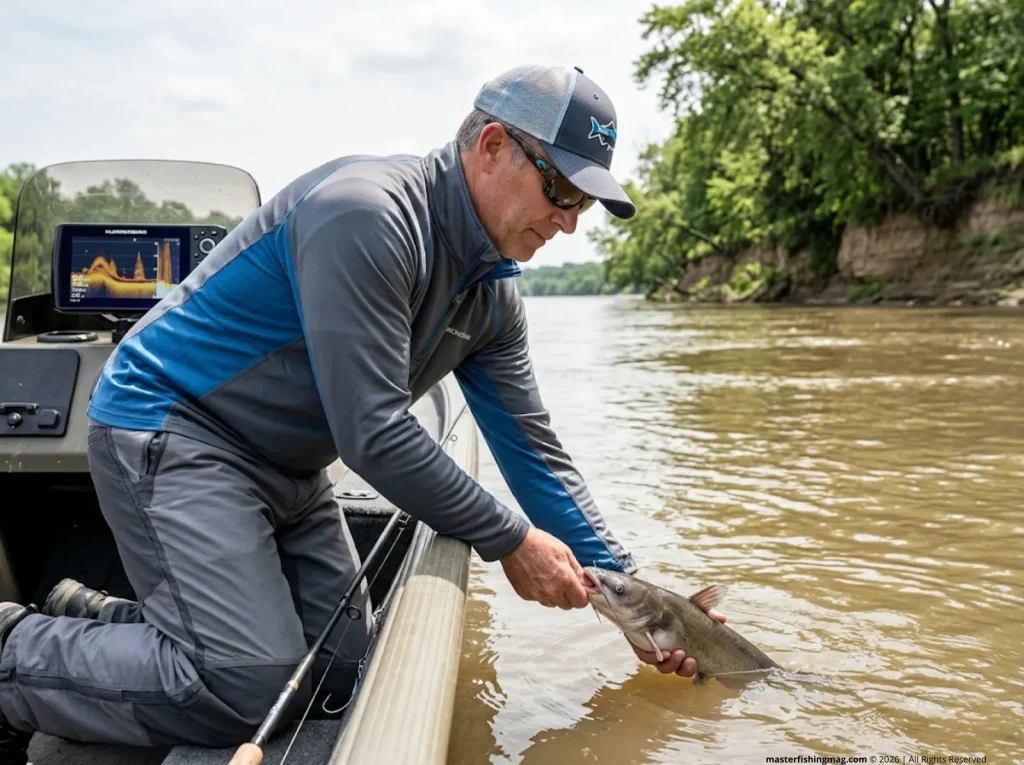
Forward-facing sonar reveals the difference between lockjaw and empty water. If your screen shows fish following but not eating, the problem is presentation — shrink your lure, slow your retrieve speed, and add scent. If the screen is blank, you’re in the wrong 90%.
For bank anglers without a boat console, a quality portable fish finder still shows fish marks and bottom structure. Sometimes fish are holding 30 yards from where you’re casting, and side imaging reveals the structure you didn’t know existed. If full moon lockjaw is the issue, why full moon lockjaw is real and how to beat it covers the exact lure adjustments for those stubborn conditions.
Targeting Alternative Species
If bass won’t bite, bluegill or crappie often will — they have different temperature and pressure thresholds. Switching to catfish rigs with cut bait on bottom during tough largemouth bass days often salvages a fishing trip and teaches you about the water column. If panfish are suspended at 12 feet, your bass presentation probably needs to be at 15.
Sustainable Spot Rotation and Ethical Pressure Management
The 10% productive zones are finite ecosystems. Hammering the same creek mouth every trip teaches target fish to avoid it. Fish pressure is real — the more a fishing spot gets hit, the more cautious fish become. Rotate between 4-5 primary spots across fishing trips, not just within a single session. Let productive spots rest for 2-3 trips before revisiting.
This isn’t just conservation ethics — it’s self-interest. Pressured water produces exponentially harder fishing. Sustainable spot-rotation directly improves your catch rate over a full season because the fish at each location stay naive instead of conditioned.
Conclusion
Location is 90% of the problem. If you haven’t caught anything in 20 minutes, move. The 90/10 rule is real and it trumps every other variable on this list.
Match your presentation to the water, not your confidence bait. Cold water demands slow. Warm water rewards speed. What worked last week doesn’t matter — what the fish’s metabolism dictates today does.
Stealth is the most underrated troubleshooting variable. If fish are on your screen but not on your hook, you’re probably too loud, too heavy, or too visible. The lateral line doesn’t lie.
Pick one variable from this framework — just one — and obsess over it during your next three trips. Track it in your log. After those three outings, you’ll see a pattern that no YouTube video can give you, because the data belongs to your water and your hands.
FAQ
Why do fish suddenly stop biting in the middle of a trip?
The most common cause is a barometric pressure shift from an approaching weather front. Fish sense pressure changes through their swim bladder, which triggers temporary lockjaw. Slow your presentation, downsize your lure, and fish tight to heavy cover until the front passes.
What bait works best when fish aren’t biting?
Live bait almost always outperforms artificials during tough bites because it provides scent, vibration, and natural movement simultaneously. If that’s not an option, downsize your soft plastic by 25% and add a scent attractant. The combination of smaller profile plus scent often triggers reluctant strikes.
Do fish bite better before or after rain?
Before. The falling barometric pressure that precedes rain typically triggers active feeding windows. After rain, pressure rises and fish become sluggish. The exception is warm summer rain on previously hot water, which can cool surface temps enough to spark a shallow-water feed.
How does water temperature affect fish biting?
Fish are ectothermic — their metabolism mirrors the water temperature. Each species has an optimal range where feeding peaks (bass 65-75°F, trout 55-65°F). Outside that window, fish either can’t process food fast enough to chase it, or they’re heat-stressed and conserving energy.
Is it worth fishing during a full moon?
Fish feed heavily at night during full moons, which reduces daytime activity. Focus on the first and last hours of daylight, when nocturnal feeding overlaps with dawn and dusk. Reaction baits that provoke territorial strikes rather than feeding responses can also beat full-moon lockjaw.
Risk Disclaimer: Fishing, boating, and all related outdoor activities involve inherent risks that
can lead to injury. The information provided on Master Fishing Mag is for educational and informational purposes
only. While we strive for accuracy, the information, techniques, and advice on gear and safety are not a substitute
for your own best judgment, local knowledge, and adherence to official regulations. Fishing regulations, including
seasons, size limits, and species restrictions, change frequently and vary by location. Always consult the latest
official regulations from your local fish and wildlife agency before heading out. Proper handling of hooks, knives,
and other sharp equipment is essential for safety. Furthermore, be aware of local fish consumption advisories. By
using this website, you agree that you are solely responsible for your own safety and for complying with all
applicable laws. Any reliance you place on our content is strictly at your own risk. Master Fishing Mag and its
authors will not be held liable for any injury, damage, or loss sustained in connection with the use of the
information herein.
Affiliate Disclosure: We are a participant in the Amazon Services LLC Associates Program, an
affiliate advertising program designed to provide a means for us to earn advertising fees by advertising and linking
to Amazon.com. As an Amazon Associate, we earn from qualifying purchases. We also participate in other affiliate
programs and may receive a commission on products purchased through our links, at no extra cost to you. Additional
terms are found in the terms of service.