

In this article
The musky’s jaw clamped on my chartreuse bucktail, and for the next three seconds, everything went wrong. I grabbed the leader, she rolled, and four treble hooks found new homes—two in her gill plate, two in my palm. Blood mixed with slime on the gunwale while my partner scrambled for pliers that weren’t where they should have been.
That fish swam off eventually. But after twenty years of guiding on northern waters, I’ve watched too many trophies die from the invisible damage we inflict during those chaotic boatside moments. The fight ends when that fish hits the net—but your real work starts right then.
Here’s the complete system for handling pike musky safely, protecting both the fish and your fingers from those razor-lined jaws.
⚡ Quick Answer: Always grip pike and musky horizontally with one hand on the gill plate exterior and the other supporting the belly. Keep the fish in water during hook removal whenever possible. Limit air exposure to under 30 seconds—research shows mortality rate triples beyond that threshold. Never hold large esocidae vertically by the jaw, as this causes documented spinal damage.
The Biology of Why Safe Handling Matters
Understanding the biology behind handling rules transforms them from arbitrary instructions into common sense. When you know what’s at stake inside that fish, you’ll never shortcut the process again.
The Slime Coat: Your Fish’s First Defense
That slimy coating on every northern pike and muskie isn’t just gross—it’s their immune system working on the outside. This mucous layer contains enzymes and antibodies that fight off bacterial infections, fungal attacks, and parasites. Without it, the fish becomes vulnerable to every pathogen in the water.
Touch a fish with dry hands, lay it on boat carpet, or handle it without thinking, and you strip that protection away. The damage compounds fast. Stress from the fight breaks down the slime coat even faster, and once it’s gone, infections set in within days.
Pro tip: Use wet hands BEFORE touching any fish. A wet cotton glove gives tooth protection while preserving the slime coat far better than leather gloves.
This is why serious anglers obsess over proper catch and release techniques—the small details add up to massive survival differences.
Delayed Mortality: The Invisible Killer
Here’s the truth that haunts every conservation-minded angler: a fish can swim off strong and still die three days later from injuries you caused. This phenomenon—delayed mortality—kills more released fish than most anglers realize.
Studies published in the research on air exposure and fish mortality rates tell a stark story. Fish held out of water for just 30 seconds showed 38% mortality. Fish that never left the water? Only 12% died. That’s a three-times increase from half a minute of air exposure.
Lactic acid buildup from the fight stresses the fish’s system. The fish needs oxygenated water moving over its gills to recover—every second you keep it in the air extends the damage.
Temperature Thresholds That Decide Survival
Water temperature changes everything about pike and musky survival after release. The West Virginia University musky mortality study tracked 187 radio-tagged muskies and found devastating results.
When water temperature exceeded 77°F, mortality hit 43.3%. Below that threshold? Only 10% died. That’s more than a four-times difference based purely on temperature.
The study also uncovered something counterintuitive: temperatures two days before AND after the catch affected outcomes. Hot weather doesn’t just stress the fish during the fight—it compromises revival time for days.
Pro tip: Check water temperature before you start casting. Above 75°F, consider leaving the toothy predators alone until conditions improve.
Anatomy of Injury: What Goes Wrong and Why
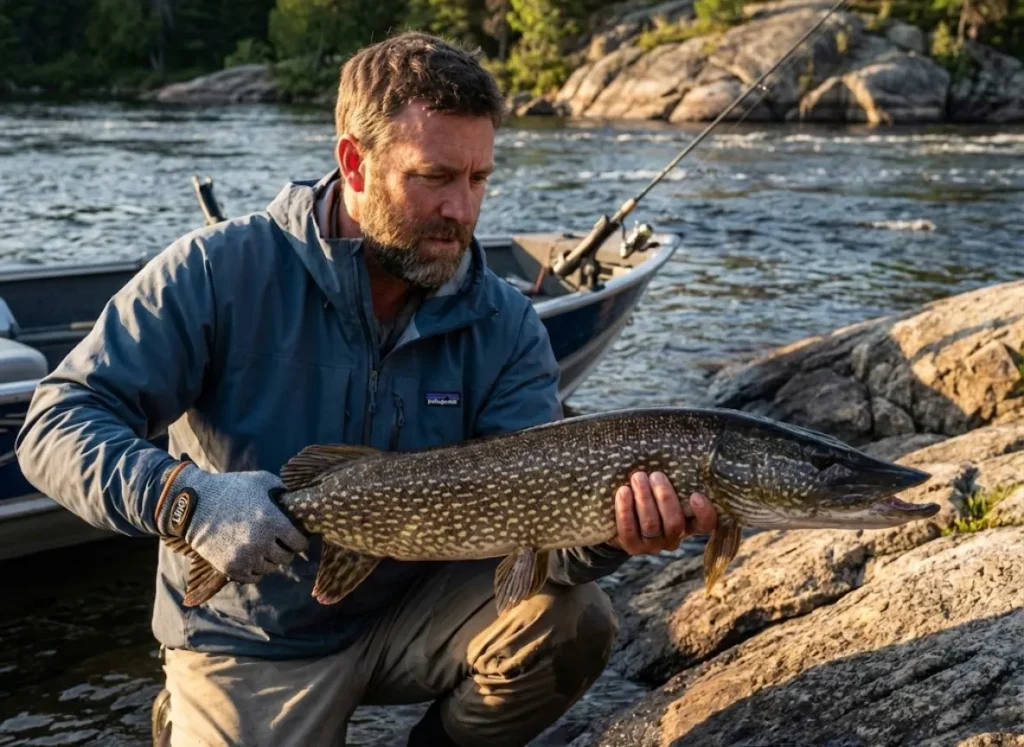
Every handling rule exists because someone—or many someones—screwed it up first. Knowing the mechanical damage you can cause drives home why the rules matter.
The Vertical Hold Problem: Spine and Organ Damage
Here’s a number that should haunt you: researchers documented a 935mm fish that measured 35mm LONGER after being held vertically. That extra length came from vertebrae literally separating at the occipital region—where the skull meets the spine. This skeletal failure point is invisible but often fatal.
According to Michael Butler’s research on esox handling biomechanics, all consulted experts unanimously agree: vertical holds of 25+ lb fish present major injury risk to gill structures, jaw symphysis, internal organs, and cartilage.
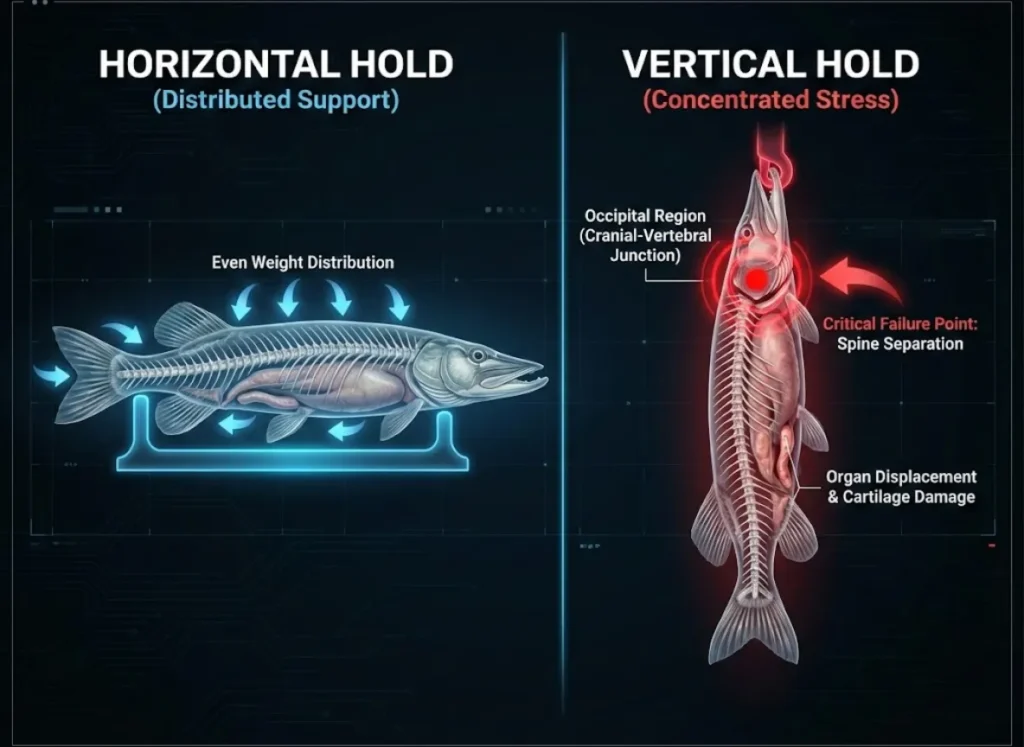
When you lift a 30-pound musky by the jaw, that entire weight hangs from tissues designed to clamp horizontally on prey—not support vertical suspension. The anatomical injury is invisible, but often fatal.
Understanding proper fish holding techniques for different species starts with recognizing that every fish’s anatomy has limits.
Jaw Stress and Deformation
Large muskies face permanent jaw strength damage from vertical suspension. The jaw’s cartilage and bone evolved to clamp prey horizontally—not support 20+ pounds of body weight hanging from it.
The Virginia Department of Wildlife Resources handling guidelines state it clearly: “Muskies should not be held vertically by the jaw. Not good on their jaw, neck or guts. ALWAYS SUPPORT THE FISHES WEIGHT.”
Jaw spreaders can cause similar damage if forced open too aggressively. The tool should apply gradual pressure, letting jaw muscles relax naturally rather than forcing immediate full extension.
Gill Raker Vulnerability and the Operculum
The operculum—that bony gill cover—protects delicate structures that the fish literally breathes through. Improper handling, especially vertical holds, stresses the operculum attachment points. Gill raker damage often goes unseen but proves fatal when oxygen exchange fails.
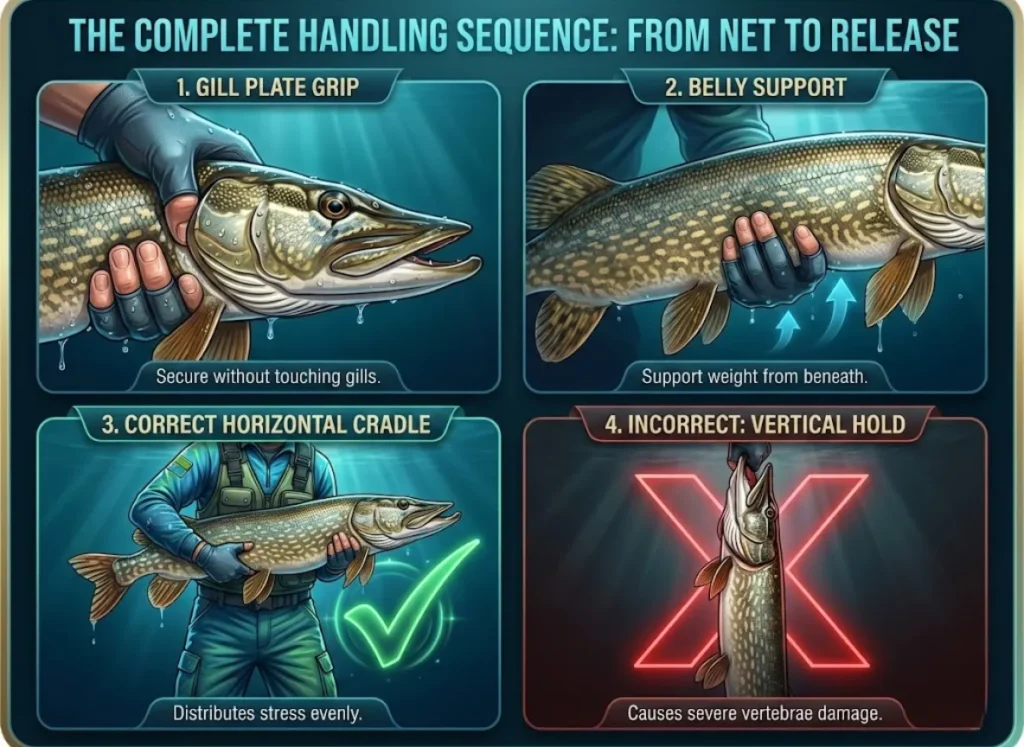
Never insert fingers into the gill rakers. Use the “four fingers inside gill plate, thumb outside” technique for control without gill damage. You’re gripping the exterior bone, not the delicate filaments inside.
Essential Handling Tools and Their Proper Use
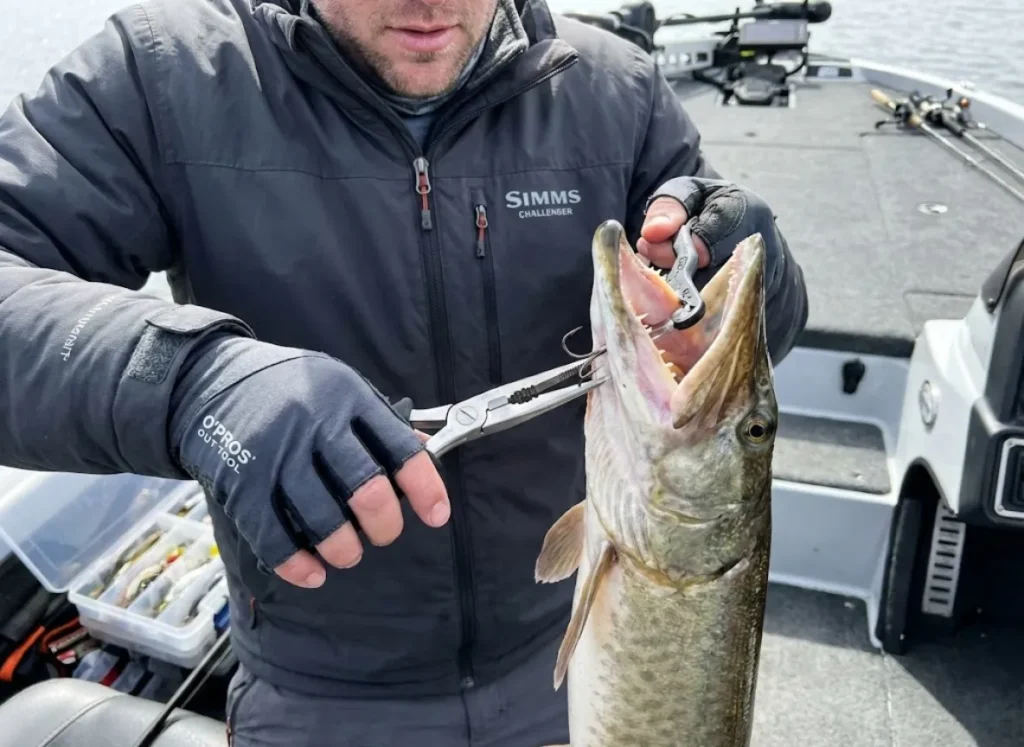
The right tools make safe handling possible. The wrong ones—or no tools at all—guarantee problems.
Long-Nose Pliers and Hook Cutters
Standard hemostats that work fine for bass won’t cut it here. You need long-nose pliers with at least 11 inches of reach to access hooks buried deep in those toothy jaws. Rapala Long Reach Pliers set the standard.
Hook cutters become essential when extraction risks tissue damage. Knipex pliers slice through hook shanks when you need to leave points in place rather than tearing them out. Every second counts, and cutting beats wrestling.
Keep your pliers in a belt sheath—not buried in a tackle box across the boat. When that 45-inch musky is thrashing, you don’t have time to hunt for tools.
Choosing the right pliers matters. Understanding selecting the right fishing pliers for toothy fish saves both fish and fingers.
Jaw Spreaders and When to Use Them
Jaw spreaders gently pry open the fish’s mouth to access deeply embedded hooks. They reduce your injury risk from teeth sharpness while giving clear access to the throat.
The O’Pros Out Tool’s ratcheting design lets you apply gradual pressure rather than forcing the jaw open all at once. Use them gently—forcing jaws wider than their natural range damages the same cartilage you’re trying to protect.
For more options, check out dehooking tools for ethical catch and release.
Rubberized Nets and Protective Gloves
Rubberized nets preserve the slime coat in ways that standard landing nets never will. The smooth coating prevents abrasion damage, and the material doesn’t tangle treble hooks like mesh bags do.
For solo anglers, large hoop nets (42″+ diameter) beat cradles every time. You can manage them one-handed. Frabill cradles need two people to work efficiently—when you’re alone, that extra pair of hands doesn’t exist.
Wet cotton gloves protect your hands from teeth while still preserving fish slime better than dry leather. Soak them before you start fishing, not after you’ve hooked up.
See the complete rundown on rubberized nets designed for fish-safe handling.
The Complete Handling Sequence: From Net to Release
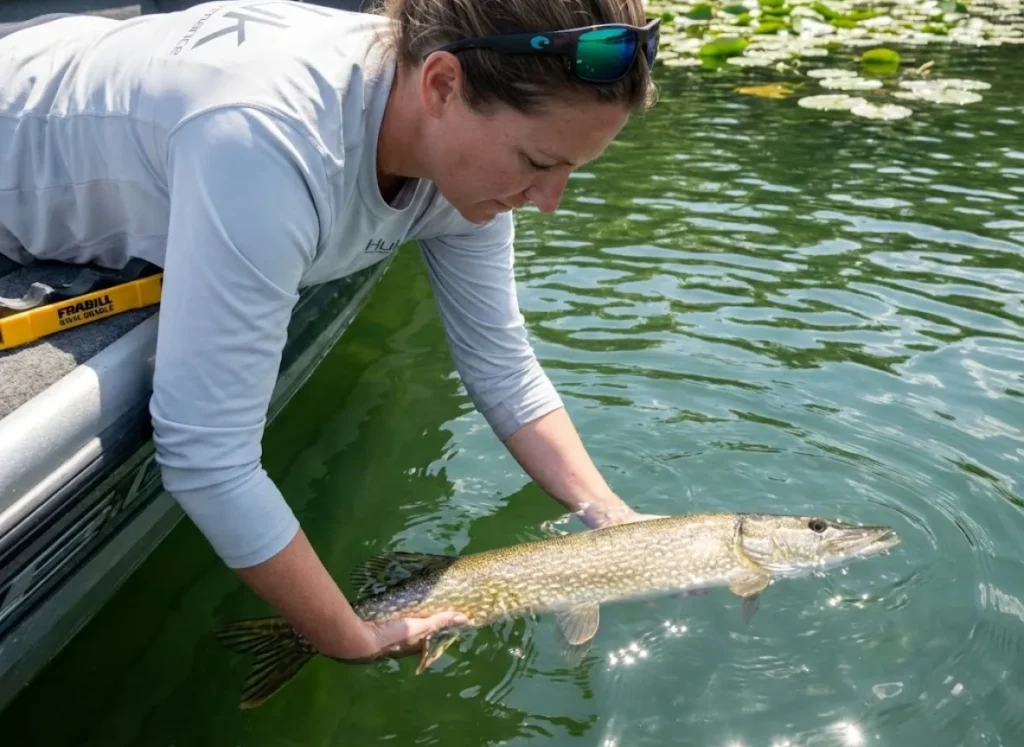
Theory matters, but execution saves fish. Here’s the step-by-step process that maximizes survival for every pike and musky you land.
Step 1: Landing Head-First and Securing in Water
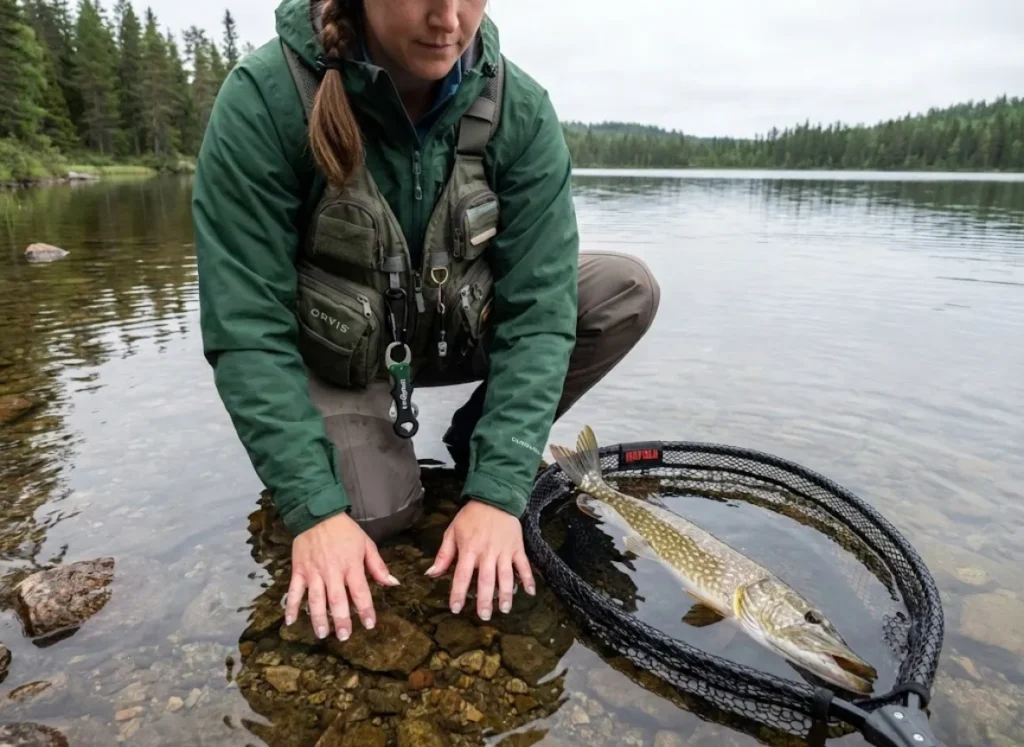
Guide the fish head-first into the net—tail-first creates tangling and extends fight time. Once netted, immediately choke up on the net rim to prevent thrashing. Keep the fish IN the water during initial recovery.
If you can see the hooks clearly, start removing them while the fish is still submerged in the net. Every second of water time reduces stress.
Step 2: The Horizontal Grip with Belly Support
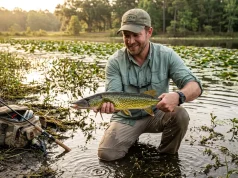
Place one hand on the gill plate exterior—four fingers inside the plate’s edge, thumb outside. Your other hand goes under the belly, using the support the belly technique. This horizontal hold distributes stress across the entire fish rather than concentrating it at the jaw.
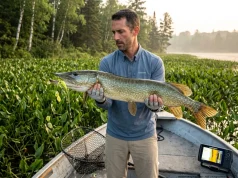
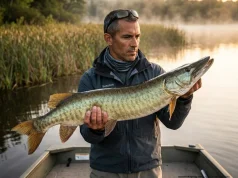
For photos, cradle like a football: forearm under belly, hand controlling the tail. Never exceed a 45-degree angle from horizontal—anything steeper begins the vertebrae stress that causes invisible damage.
Step 3: Hook Removal Protocol (Standard vs. Deep Hooks)
For standard hooks visible in the jaw, use those 11″ long-nose pliers to work the hook backward along its entry path. Twist and back out—don’t yank and tear.
Deep hooks require a different decision entirely. If the hook is past visible tissue—down in the throat or stomach acid—cut the line. The deep hooking protocol is simple: cut, don’t extract.
Why? Hooks dissolve in stomach acid faster than tissue heals from extraction wounds. Research on deep hooking survival rates shows fish survive swallowed hooks that dissolve naturally over time. Extraction attempts almost always create fatal internal injuries.
Use single hooks and barbless hooks whenever possible. They dramatically reduce deep hooking risk and make removal faster when it happens. For understanding hook anatomy, see the science of fishing hook sizes.
Step 4: The Figure-8 Revival and Release Confirmation
After unhooking, hold the fish horizontally in the water and move it gently in a figure-8 revival pattern. This forces oxygenate water over the gills, helping the fish metabolize the lactic acid buildup from the fight.
Revival time varies with water temperature—colder water speeds metabolic recovery. Wait for the fish to kick strongly and actively resist your grip before letting go. A passive fish that drifts belly-up when released hasn’t recovered enough.
Pro tip: Mark your net rim against your thigh before the trip so you know hand landing positions without looking away from the fish.
Special Situations Most Guides Ignore
Standard advice assumes two people, moderate temperatures, and plenty of time. Reality rarely cooperates.
Solo Angler Techniques
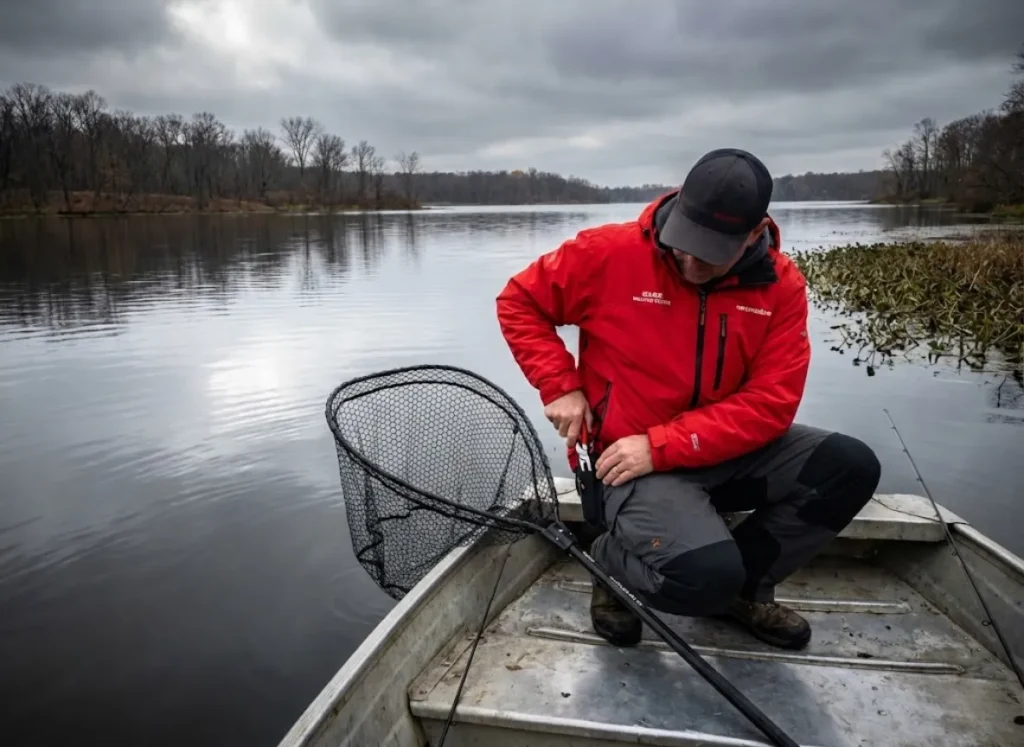
When you’re alone, everything changes. Standard cradles require two hands to deploy—impossible when you’re also controlling the rod. Solo handling demands preparation and adjusted gear.
Use oversized hoop nets you can manage one-handed. Pre-position ALL tools at boatside BEFORE starting to fish. Pliers on your belt. Net within arm’s reach. Jaw spreader in the same spot every time—muscle memory matters when chaos erupts.
Barbless hooks become non-negotiable for solo anglers. Getting hooked to a fish while alone means genuine trouble. Pete Maina, one of the most respected musky anglers alive, says it directly: “Use barbless hooks when fishing alone—getting hooked to a bait still in a fish while solo creates serious trouble.”
Accept that some self-handling scenarios require skipping measurements and photos. Fish welfare comes first.
For complete solo strategies, see solo musky fishing tactics and gear setup.
Cold Weather Handling: The Frozen Gill Risk
Late-season anglers face a unique challenge: cold weather handling in sub-freezing temperatures. Exposed gills and eyes can freeze in seconds of air exposure—frozen gills mean death.
Keep fish in water even more rigorously when it’s cold. What qualifies as safe air exposure in summer becomes dangerous in winter. Wet your gloves BEFORE handling (thermal shock from frozen gloves kills), and account for numbed hands reducing your grip precision.
In what serious cold-weather anglers call “the misery zone”—air temps between 20-25°F—even brief lifting risks ice crystal formation on gill membranes.
The Boga Grip Controversy: When Lip Grippers Are Safe
Lip grips like the Boga Grip generate endless arguments in forums. Here’s the straight answer: they’re tools, and like all tools, they’re only as safe as how you use them.
SAFE: Using a lip grip for jaw control while holding fish horizontally. The grip provides security and lets you manipulate the fish without fingers near teeth.
DANGEROUS: Suspending the fish vertically by the grip for weighing—the lip lock technique gone wrong. All body weight hangs from the jaw—exactly the stress that causes injury.
If you want to weigh fish, do it with the fish horizontal in the net, then subtract net weight. The Boga’s built-in scale encourages bad habits. Resist the temptation.
Conclusion
Safe handling of pike and musky comes down to three non-negotiable principles from angling safety and ichthyology: keep them wet, keep them horizontal, and keep it fast.
The science is clear—30 seconds of air exposure triples mortality rate. Water temperature above 77°F quadruples it. Vertical holds cause invisible internal damage. Every one of these factors sits within your control.
Master the horizontal hold. Pre-stage your tools. Learn to cut the line on deep hooks instead of extracting them. And when you’re fishing alone or in extreme temperatures, adapt your techniques rather than gambling with survival.
The next time a musky explodes on your bucktail, you’ll know exactly what to do in those critical boatside moments. That fish deserves to breed another decade of trophy genetics—and you deserve the satisfaction of knowing you used zero-mortality techniques and released her right.
FAQ
Do lip grips hurt muskies?
Lip grips cause injury when used to vertically suspend fish; they’re safe when the fish is supported horizontally and the grip provides jaw control only. The danger comes from weight-bearing stress on the jaw, not the grip contact itself.
How long can you safely keep a musky out of water?
Research shows 30 seconds of air exposure increases mortality rate from 12% to 38%. Aim for under 30 seconds total air time, and return the fish to water between unhooking attempts if needed.
Should I cut the line or remove a deep hook?
Cut the line. Deep hooks dissolve in stomach acid faster than internal wounds heal from extraction. Removing hooks lodged past visible tissue almost always creates fatal injuries—leaving them causes less long-term damage.
How long does it take to revive a muskie before release?
Revival time varies with water temperature and fight duration. Continue the figure-8 revival motion until the fish kicks strongly and actively resists your grip. This takes anywhere from 30 seconds to 5+ minutes depending on conditions.
What should I do if a muskie swallows the hook completely?
Cut the line as close to the hook as possible using hook-out tools or forceps. Studies show muskies can survive swallowed hooks that dissolve naturally over time inside the stomach. Extraction attempts using long-nose pliers in these situations almost always create fatal internal injuries.
Risk Disclaimer: Fishing, boating, and all related outdoor activities involve inherent risks that
can lead to injury. The information provided on Master Fishing Mag is for educational and informational purposes
only. While we strive for accuracy, the information, techniques, and advice on gear and safety are not a substitute
for your own best judgment, local knowledge, and adherence to official regulations. Fishing regulations, including
seasons, size limits, and species restrictions, change frequently and vary by location. Always consult the latest
official regulations from your local fish and wildlife agency before heading out. Proper handling of hooks, knives,
and other sharp equipment is essential for safety. Furthermore, be aware of local fish consumption advisories. By
using this website, you agree that you are solely responsible for your own safety and for complying with all
applicable laws. Any reliance you place on our content is strictly at your own risk. Master Fishing Mag and its
authors will not be held liable for any injury, damage, or loss sustained in connection with the use of the
information herein.
Affiliate Disclosure: We are a participant in the Amazon Services LLC Associates Program, an
affiliate advertising program designed to provide a means for us to earn advertising fees by advertising and linking
to Amazon.com. As an Amazon Associate, we earn from qualifying purchases. We also participate in other affiliate
programs and may receive a commission on products purchased through our links, at no extra cost to you. Additional
terms are found in the terms of service.