
In this article
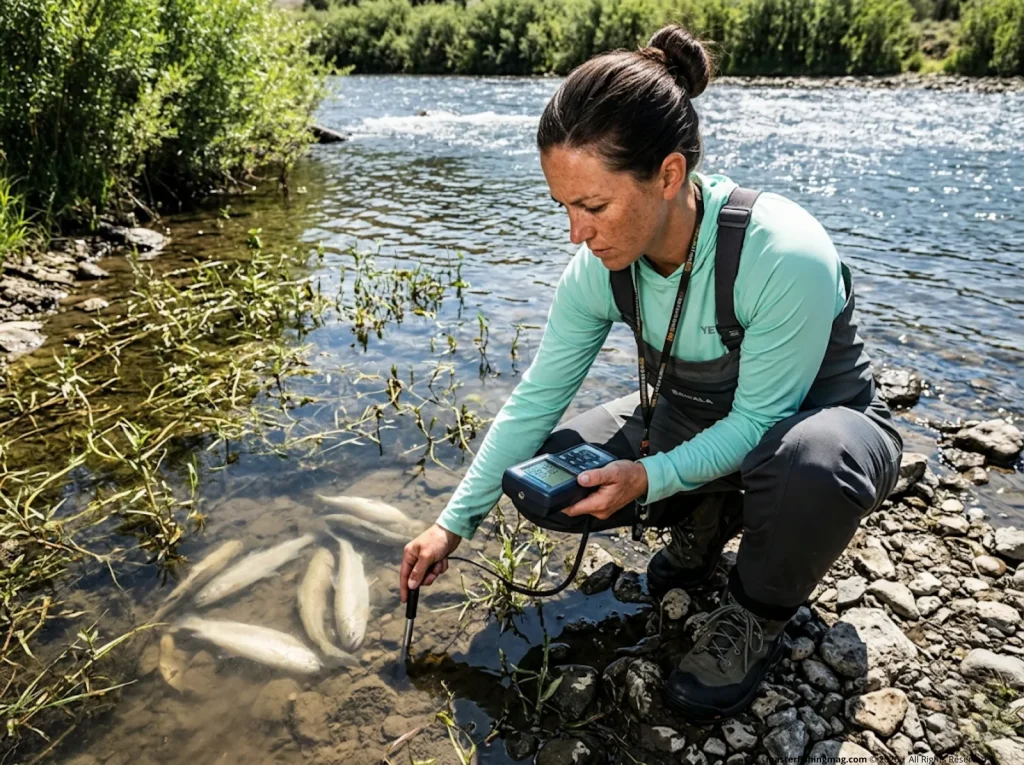
The truck backed down to the ramp at first light, its tank churning with 2,000 rainbow trout. By midday, most of them were gone — not from hooks, but from the water itself. The temperature differential between the hatchery tank and the reservoir was 9°F. The pH had shifted 0.6 units. The fish’s cortisol levels were already spiking before the first one ever touched the surface. The anglers crowding the bank had no idea they were watching a quiet catastrophe unfold in slow motion.
I’ve stood at enough of those releases — guide hat on, clients excited, cameras rolling — to know that what looks like a good day for fishing can be the worst day in the water for those fish. After decades on the water and too many seasons watching hatchery cohorts disappear without a trace, the uncomfortable truth is this: the majority of fish stocking programs are not supplementing fisheries. They’re funding an illusion.
This article breaks down exactly why — through metabolic physiology, population genetics, hydraulic conditions, and economic analysis. Not to condemn every stocking truck on the road, but to give you the tools to tell the difference between a program that works and one that’s burning your tax dollars and quietly harming the wild fish you actually care about.
⚡ Quick Answer: Most fish stocking programs fail because hatchery fish are physically and genetically unequipped for wild environments. Their metabolic cost of translocation is severe — their standard metabolic rate runs 30–76% below wild fish, cortisol stays chronically elevated after transport, and their bodies burn critical energy just maintaining salt balance instead of feeding or fleeing predators. Compound that with size-selective predation that wipes out fry before they can establish, wrong-channel hydraulics that sweep fish downstream before they find cover, and genetic dilution from hatchery-to-wild interbreeding — and you get the quiet failure the release numbers never show.
The Physiology of a Failed Release — What Happens in the First 72 Hours
Here’s where everyone gets it wrong: they assume the fish that swim away from the truck are fine. They’re not fine. They are already in serious trouble.
Hatchery fish are metabolically sedentary by design. Concrete raceways, scheduled pellet feeding, stable temperatures, near-zero predation pressure — these conditions select for one thing: growth. The fish that thrive in a hatchery grow fast and have no particular reason to develop the metabolic machinery required for wild survival. Their standard metabolic rate runs 30% to 76% below that of wild-origin fish the same size. That’s not a slight edge — it’s the difference between a conditioned athlete and someone who hasn’t run in three years, suddenly asked to sprint a mile in cold water with something trying to eat them.
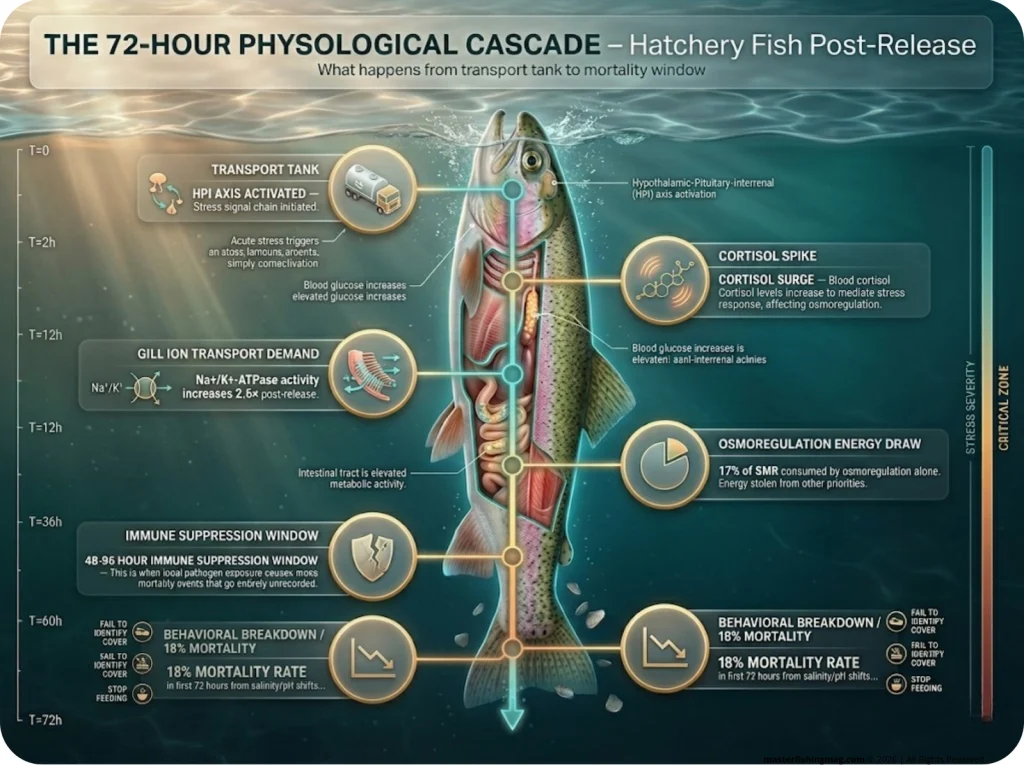
The moment those fish hit natural water, their bodies face an immediate hatchery-to-wild transition that costs energy they don’t have. Osmoregulation alone — the constant work of maintaining internal salt and water balance against a chemically different environment — can consume 7 to 17% of their already-reduced standard metabolic rate. The gill enzyme that regulates ion transport has to increase its activity 2.6-fold post-release. That’s a physiological emergency. And the gut works even harder: the esophagus and intestine show metabolic rates 2.1 to 3.2 times higher than the whole-animal rate during that acclimation period.
A fish burning 17% of its energy budget on salt regulation has 17% less available for predator avoidance, territorial competition, and active foraging. On day one in the wild, those are existential priorities. The physiological stress compounds: research on certain teleost fish species shows an 18% mortality rate in the first 72 hours from salinity or pH shifts — even within the species’ tolerance range. Even freshwater-to-freshwater transfers carry osmotic risk if mineral hardness or alkalinity differs significantly between water bodies.
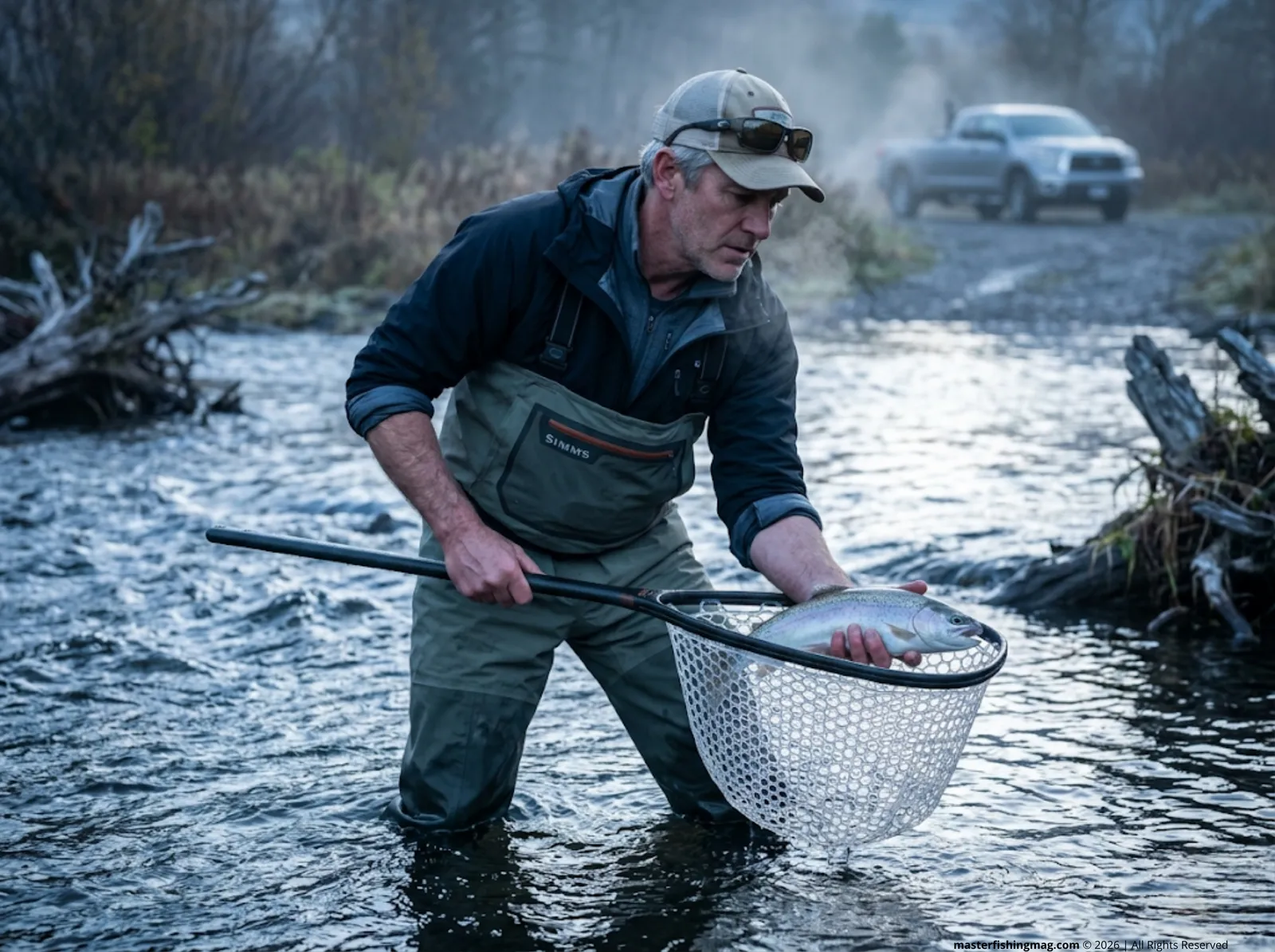
Pro tip: When fishing just-stocked water, target the slowest, weediest, most structurally chaotic back-channel areas — not the main current. Newly stocked fish don’t pick those spots because they’re feeding. They’re there because their reduced swimming capacity won’t let them go anywhere else. That’s thermal and energetic triage, not feeding behavior.
The Cortisol Clock — Transport Stress That Doesn’t Reset
The transport truck is the first enemy. High-density confinement triggers the cortisol cascade that follows any acute stress event regardless of how well the water is oxygenated or how carefully the handlers work. The stress hormone system fires from the vibration, the pressure changes, the darkness, and the density. Blood glucose spikes alongside cortisol — that combination impairs gill function independently of any osmotic challenge still to come.
Studies comparing hard-release to soft-release Atlantic Salmon found that while glucose and lactate eventually normalized in soft-release fish, cortisol remained elevated in both groups past the acclimation window. The transport event itself is the primary trigger. No amount of gentle handling at the tailgate changes what happened on the road.
The behavioral breakdown from chronic biological stress is the part anglers actually see, though they rarely recognize it for what it is. Under sustained cortisol: fish fail to identify cover, lose school cohesion, and transition from active predation to passive drifting — or stop feeding entirely. That 48-to-96-hour immune suppression window is also when local exposure to pathogens causes mass mortality events that go entirely unrecorded. The fish just disappear.
Dissolved Oxygen and the Metabolic Ceiling
Hatchery raceways run at high aeration levels. Natural water bodies do not — dissolved oxygen fluctuates seasonally, daily, and spatially. A fish already running 30–76% below wild metabolic levels has a proportionally compressed aerobic scope. When dissolved oxygen drops below the species-specific threshold — roughly 5 mg/L for trout — a hatchery fish hits distress before a wild fish even begins to feel the constraint.
Summer thermal stratification makes this worse. Stocked fish seeking thermal refuge in cooler, deeper water can get trapped in low-oxygen zones near the bottom. For understanding the dissolved oxygen thresholds that determine where fish can functionally survive, this layering dynamic is one of the most underappreciated factors in stocked fisheries. High cortisol, reduced aerobic scope, and fluctuating oxygen form a mortality triangle. None of those factors alone is lethal to a conditioned wild fish. All three together routinely remove hatchery cohorts within their first week.
Genetic Erosion — When Stocking Poisons the Well
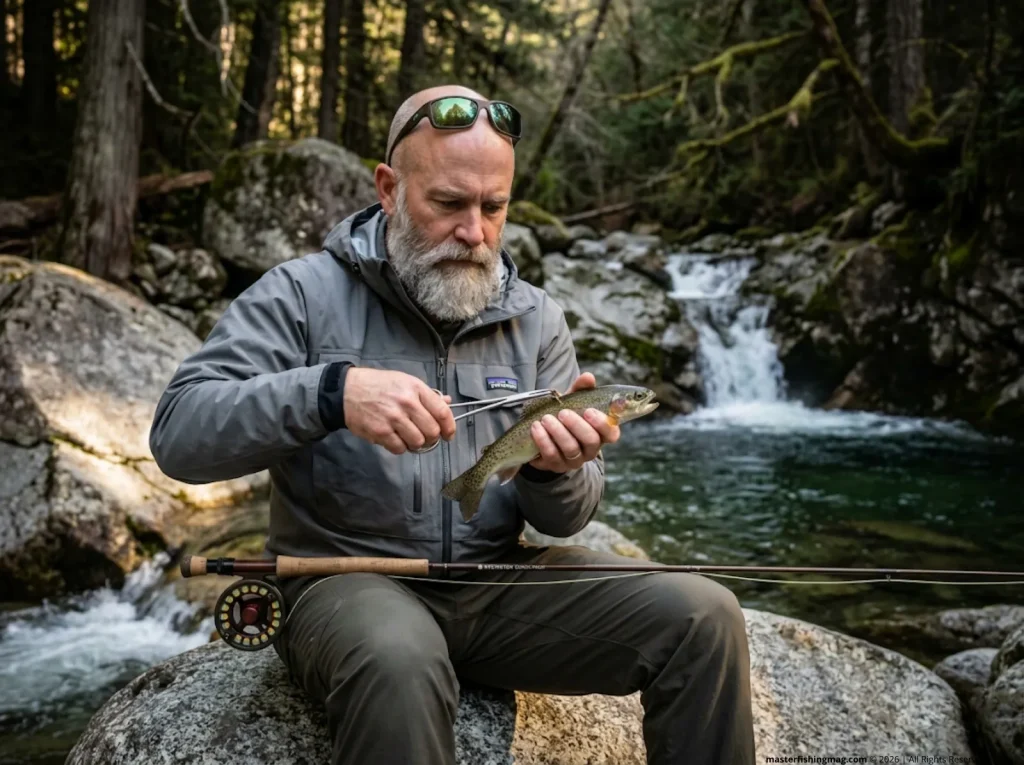
The physiological failure is visible within days. The genetic failure takes decades and is invisible until the damage is irreversible.
Domestication selection is not something hatchery managers choose; it’s the inevitable consequence of selecting for survival in an artificial environment. The traits that keep a fish alive in a concrete raceway — boldness, low fear response to humans, rapid growth, tolerance of crowding — are either neutral or actively lethal in a river. Hatchery fish show measurably higher boldness scores in standardized predator exposure tests. In the wild, bold fish get eaten first. That is domestication selection measured in a single behavioral metric.
The genomic change happens fast. In steelhead (Oncorhynchus mykiss), offspring of wild fish and first-generation hatchery fish showed differences in the activity of more than 700 genes within a single generation — concentrated in pathways governing wound healing, disease immunity, and metabolism. These aren’t random genetic accidents. They’re logical adaptations to the hatchery environment that become liabilities the moment the fish touches real water. For anglers profiling the behavioral and physiological differences between stocked and wild rainbow trout, this genetic divergence explains everything that happens at the tactical level.
The long-term mechanism of harm is introgression — hatchery-origin genetic material drifting into wild gene pools through interbreeding. When hatchery fish spawn with wild fish, the maladapted hatchery genetics enter the wild population. The Relative Reproductive Success (RRS) of hatchery fish averages only 0.45–0.64 across studied Pacific salmon species, as fish stocking programs managed by the U.S. Fish & Wildlife Service continue to grapple with. Hatchery fish leave roughly half as many viable offspring per spawning event, and that reduction in fitness is partially heritable. The offspring of hatchery-origin parents show reduced fitness even when spawning naturally. Every stocking event is a net reproductive tax on the wild population’s gene pool, even when individual fish survive and physically spawn.
Introgression also reduces variation in adult return timing by up to 20%, weakening what fisheries scientists call the ecological portfolio effect — the natural hedge that allows wild populations to buffer against environmental variability through diverse life history strategies. The clearest field signal that a formerly wild fishery has been worn down by decades of supplemental stocking? A collapse in phenotypic diversity. Fish that all run the same week, at the same size, in the same condition. The river that once had multiple discrete run segments now has one undifferentiated mass — and it’s fragile.
The “Class A” Paradox — Stocking Where It Hurts Most
Pennsylvania’s “Class A” designation identifies streams with demonstrated natural reproduction sufficient to support a fishery without stocking. These are the best wild trout streams in the state. And some of them are still being stocked.
That’s not a management oversight. It’s a regulatory contradiction that harms exactly the populations the designation was created to protect. The mechanisms: hatchery fish are bold and aggressive, forcing wild fish off prime feeding lies and burning their energy reserves through territorial competition. Hatchery pathogen loads can devastate immunologically unprepared wild populations — how brook trout lost 80% of their native range partly through competitive displacement by introduced fish echoes exactly this dynamic at landscape scale. And stocking draws higher angler density targeting stockers, but once the stockers are depleted, that harvest pressure falls on wild fish.
The program designed to help the fishery becomes its primary threat. That pattern repeats in any self-sustaining wild fishery receiving supplemental stocking.
The Size-Class Equation — Why Stocking Volume Is the Wrong Metric
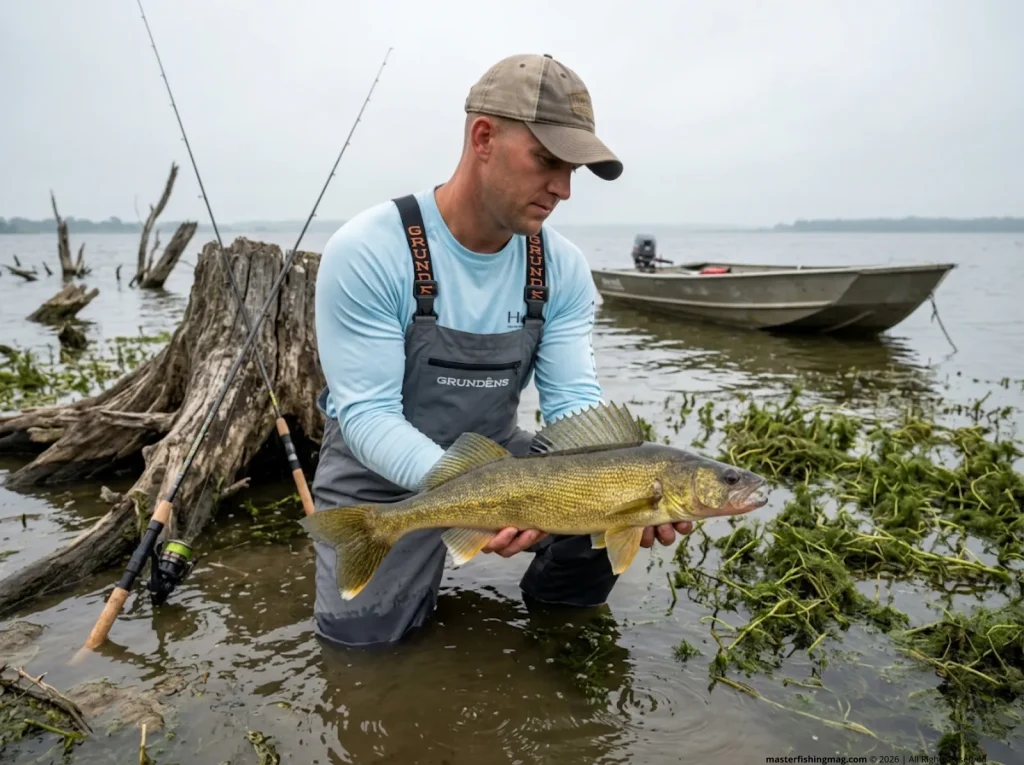
The standard performance metric for stocking programs is total fish stocked. That’s a production metric, not a biological one. The number that matters is fish that survive to catchable size — and the relationship between stocking size and that outcome is so dramatic that it’s hard to believe agencies still default to fry releases.
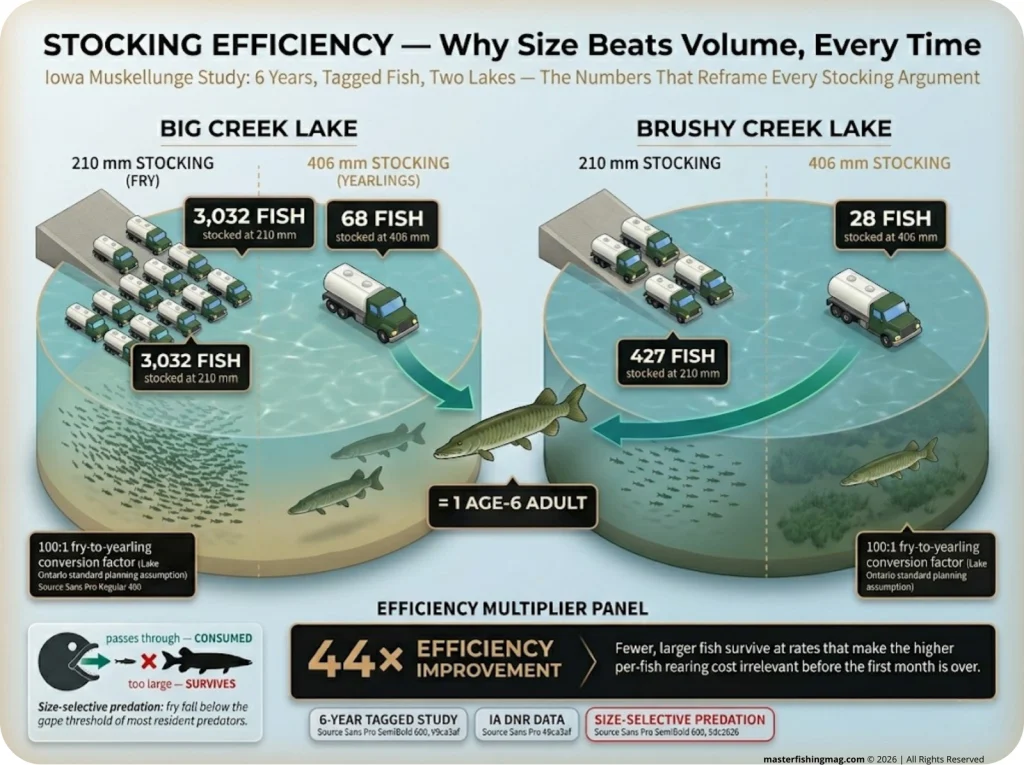
The Iowa Muskellunge study is the definitive case. Six years, tagged fish, two lakes. To add one age-6 adult to the population at Big Creek Lake: 3,032 fish if stocked at 210 mm, or 68 fish if stocked at 406 mm. At Brushy Creek Lake: 427 fish at 210 mm vs. 28 fish at 406 mm. That’s a 44× efficiency improvement. For Muskellunge biology and why this species demands precision stocking management, those numbers reframe every argument about per-unit production costs. The higher cost of raising a larger fish is wiped out in the survival math before the first month is over.
The mechanism is size-selective predation. Fry fall below the gape threshold of most resident predators and get consumed at mass-mortality rates in the first days post-stocking. Illinois reservoir walleye data confirmed fingerlings surviving at 15.9 to 62.1 times the rate of fry in the same water bodies. Lake Ontario management uses a 100:1 fry-to-yearling conversion factor as a standard planning assumption — meaning you need 100 stocked fry to produce one fish equivalent to a stocked yearling. The FAO stocking strategy research on survival rates by life stage makes this arithmetic unavoidable.
Fry stocking is the lowest-cost option per fish produced and the highest-cost option per adult recruited. It doesn’t appear that way because most programs measure the wrong output. Stocking densities reported as “fish released” are almost always fry or small fingerling counts that vanish before any creel survey detects them.
Pro tip: When evaluating a state agency’s stocking program, request the creel-survey return data, not just the stocking numbers. A program releasing 500,000 fry with a 0.2% creel return is outperformed by one releasing 5,000 hatchery-raised yearlings with a 12% creel return — and usually costs more per fish actually caught. Most state programs don’t publish return data. The absence of that number is its own answer.
For walleye sensory biology and why this species responds poorly to disrupted habitat conditions, the fingerling-vs-fry distinction is particularly consequential: walleye fingerling cohorts typically show detectable creel returns within 18–24 months; fry cohorts often show no statistically separable signal at all.
Hydraulic Reality — When the Physics of Water Beats the Fish
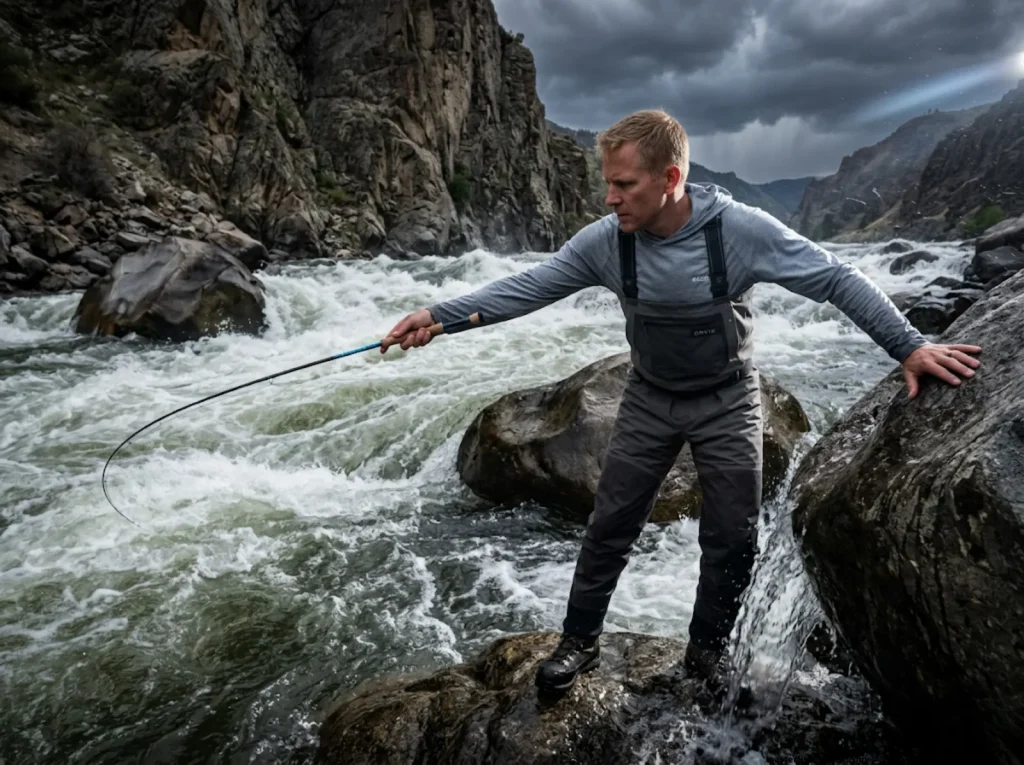
Stocking failure isn’t only biological. It’s architectural. Fish released into hydraulic environments that exceed their swimming capacity will be swept downstream, exhausted, and unable to recover before predation becomes a factor. This is the thing most programs never measure.
Manning’s n is the roughness coefficient that governs channel flow velocity. High n means high flow resistance — more structural complexity in the channel — which means lower velocity for the same channel geometry. It’s the difference between a clean-bottomed gravel run and a weedy, boulder-strewn back channel. Hatchery fish, with critical swimming speeds already 20–30% below wild controls of the same size and temperature class, cannot hold position in the same current a conditioned wild fish treats as casual water.
A clean, straight channel with no rifts or pools carries a Manning’s n of 0.025–0.033. Fast water. Suitable for wild fish with full aerobic capacity; hostile to newly stocked fish. Sluggish reaches with weedy, deep pools carry n = 0.050–0.080 — significantly slower velocity for the same channel geometry. These are survivable microhabitats for post-stocking fish in the first 72 hours. The hydrodynamics of current seams and how flow resistance shapes fish positioning maps this concept directly to where you’ll find recently stocked fish on any given stream.
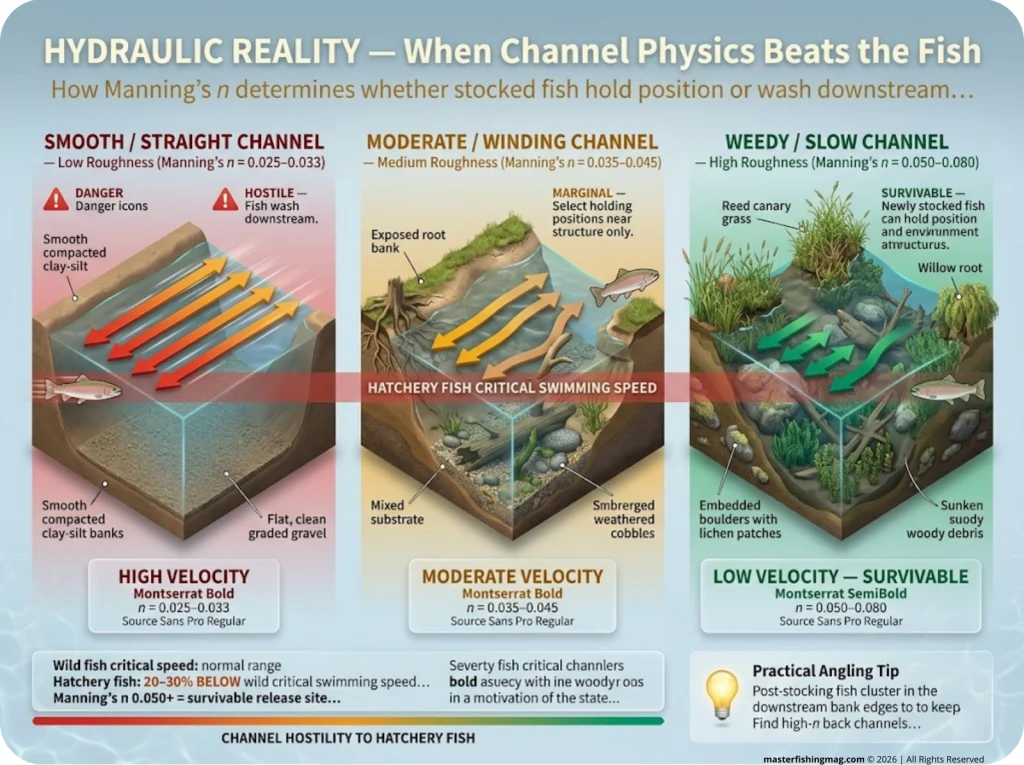
Historical fishway design used n=15 (M=15); real-world field data from the USFWS fish passage and hydraulic engineering standards for fishway design indicates n values closer to 10 for low-flow conditions. Managers using the outdated value over-estimate the hydraulic resistance of release sites, stocking fish into faster water than their swimming capacity can handle. The fish don’t disperse into the river. They wash down it.
Here’s what that looks like from the bank: you release fish into a clean-looking riffle. They’re gone by afternoon. Not hidden, not dispersed into ideal lies. They’re a half-mile downstream, pinned against a snag in flat water, running on empty. When a newly released hatchery trout in 2.5 ft/s current exceeds its critical swimming speed, it goes into anaerobic burst-swimming mode. It can sustain that for seconds to minutes before fatigue stops it cold. Find those fish at tributary mouths and downstream bank edges — the lowest-velocity zones the current delivered them to, not locations they chose.
Pro tip: In stocked trout streams, immediately post-stocking fish cluster in the downstream bank edges and tributary mouths — the lowest-velocity zones the current delivered them to. Cast parallel to the bank, not across the current. Give the fish something it doesn’t have to fight the current to take.
The Economics of Stocking — CPUE, Discount Rates, and the Budget Illusion

Catch-Per-Unit-Effort (CPUE) is the standard performance indicator for most stocking programs. It’s also one of the most easily misread numbers in fisheries management.
CPUE measures angler efficiency, not fish abundance. “Hyperstability” occurs when CPUE holds constant or increases even as the actual population declines — because experienced anglers concentrate on the remaining dense patches, maintaining their catch rate while the overall stock collapses. The slot limits and bag limits — the harvest-control tools that only work when population data is reliable become regulatory theater when the population signal they depend on is being masked by hyperstability.
The Net Present Value problem makes this worse. If a program costs $100,000 today but the catchable return doesn’t materialize for five years, the U.S. OMB’s 7% discount rate renders that future value at roughly $71,000 in today’s dollars — per the OMB guidelines for cost-benefit discount rates in natural resource programs. The program is already $29,000 economically underwater before a single survival-rate loss is applied. Habitat restoration projects, by contrast, generate self-sustaining returns that compound annually for decades. A restored riffle produces wild recruitment rates every season. A stocking truck produces a one-time event.
The $9.2 billion economic impact figure cited by state agencies is real. But it measures angler participation, not program biological success. Economic vitality can be maintained with stocked fish even as wild population dynamics fail. That metric disconnect is how programs that don’t work continue to receive funding for decades.
The long-term angler should ask not “how many fish did the agency stock?” but “where is the creel-return data, standardized for effort?” That question usually ends the conversation, because most programs don’t collect it systematically.
When Stocking Does Work — The Legitimate Use Cases
Not every stocking truck is wasted. The programs that work share two attributes: a clearly defined biological objective before fish hit the water, and a post-stocking monitoring protocol that can detect success or failure within 24 months.
Put-and-take stocking is the only model that fully aligns biological outcome with management intention. Fish are stocked, anglers catch them, the program serves its purpose. No wild genetic interaction, no introgression risk, no CPUE distortion — the fish arrive and are harvested. For put-and-take to stay ecologically neutral, it must be isolated from any self-sustaining wild population of the target species. Co-location with wild populations reintroduces every problem this article covers.
Mitigation stocking is the primary defensible rationale according to the FAO stocking strategy frameworks distinguishing enhancement from mitigation programs: replacing fish populations eliminated by habitat change — dam construction, major pollution events, invasive species crashes — as a bridge technology while habitat remediation progresses. The critical accountability metric is this: the program should be shrinking over time. A mitigation program that never decreases stocking intensity over 20 years has either failed at habitat restoration or has been captured by institutional inertia. June Sucker recovery in Utah Lake is the example worth studying — USFWS-managed mitigation stocking combined with invasive species removal and habitat restoration produced measurable wild recruitment improvement over 15 years.
Enhancement stocking in waters with genuine carrying-capacity surplus — verified by habitat assessment, not angler opinion — can add economic yield without harming wild populations. The key phrase is “carrying-capacity surplus, verified by data.” Not a guess. Not angler complaints about low catch rates.
The stocked urban pond with near-100% harvest of stocked trout within 10 days is a put-and-take program performing exactly as designed. The mountain river program claiming to “restore wild trout populations” while showing zero natural recruitment in 20 years of monitoring is not. Knowing which program you’re fishing under changes what questions you should be asking your state agency.
Pro tip: When a fishery you care about is declining, ask your state agency for the habitat assessment data, not more stocking. If they don’t have habitat data, that’s your answer about why the stocking program isn’t working. How anglers can actively participate in the habitat restoration work that actually fixes declining fisheries is where the real conservation leverage lives.
What the Data Actually Says About Stocking Success
Programs that aspire to manage why some waters are managed as catch-and-release only — and the fisheries biology that supports that policy deserve the monitoring infrastructure to prove it. The accountability framework for a credible program includes: mark-recapture or genetic tagging of stocked cohorts, annual electrofishing surveys stratified by habitat type, independent creel surveys standardized for effort and spatial density, and wild recruitment indices measured separately from stocked cohort contributions.
Most programs don’t do this — not from secrecy, but from absence. The FAO’s critique is direct: stocking programs driven by angler complaints rather than biological assessments produce indiscriminate stocking in waters that are either at habitat carrying capacity or fundamentally unsuitable for the target species. Success is not “number of fish stocked.” It’s “number of adults recruited to the harvestable population per dollar invested.” Those are different programs with different outcomes, and currently only one of them is being measured.
Three Things Every Angler Should Know
The biology is unambiguous. Hatchery fish are metabolically, behaviorally, and genetically built for a factory. Releasing them into a dynamic natural system without matching hydraulic conditions and habitat quality to their reduced capabilities is not supplementation — it’s organized sacrifice.
The metrics are broken. CPUE hyperstability, “fish stocked” totals, and economic impact figures measure the wrong outputs. The only metric that matters is wild recruitment trend over a multi-year baseline — and most programs don’t collect it.
Size beats volume, every time. Whether you’re evaluating a state program or trying to locate recently stocked fish, apply the size-class rule: fewer large fish at a high-roughness release site outperform mass-releases of fry or small fingerlings by a factor of 10 to 44×, with compounding benefits to genetic health and economic efficiency.
Before your state’s next public comment period on fisheries management funding, request the stocking program’s published creel-return data, wild recruitment index, and post-stocking survival estimates. If those numbers don’t exist, you now know exactly what to ask for — and why it matters.
FAQ
Why do fish stocking programs fail so often?
Most stocking programs fail because hatchery fish are physiologically unequipped for wild environments. Their metabolic cost of translocation is severe — standard metabolic rate runs 30–76% below wild fish, cortisol stays elevated after transport, and their bodies burn critical energy on osmoregulation instead of feeding or escaping predators. The failure compounds when programs use fry rather than yearlings, inappropriate release sites with high current velocity, or operate without clear biological objectives and post-stocking monitoring.
Does stocking fish hurt wild fish populations?
Yes — in self-sustaining wild populations, supplemental stocking applies measurable harm through three mechanisms: genetic dilution through introgression of maladapted hatchery genetics, competitive displacement of wild fish from prime feeding territory, and introduction of hatchery pathogen loads that can challenge immunologically unprepared wild populations. The safest stocking is put-and-take in waters with no existing wild population of the target species.
What is the difference between a hatchery and stocking, and how does hatchery biology create the failure?
A hatchery is the production facility; stocking is the release event. The hatchery is where failure begins. The controlled environment — concrete raceways, scheduled pellet feeding, stable pH and temperature, high density — selects for traits advantageous inside concrete walls and lethal in the wild. The domestication selection that occurs in a single hatchery generation — differences in 700+ genes governing metabolism, immunity, and wound healing in steelhead — is the biological source code of stocking failure.
How long after stocking can you successfully fish stocked waters?
For practical angling, the first 3–7 days after stocking show the highest catch-per-unit-effort for stocked fish — but not because they are feeding well. Newly stocked fish cluster in the lowest-velocity, highest-roughness microhabitats because reduced swimming capacity forces them there. They also still carry hatchery conditioning: responding to movement above the water and accepting presentations with minimal scrutiny. By 2–3 weeks post-stocking, a significant portion of the cohort is gone, and survivors have either begun wild behavioral adaptation — becoming much harder to catch — or dispersed beyond fishable concentration.
Is CPUE a reliable way to tell if a stocking program is working?
No — and this misunderstanding is one of the most dangerous in recreational fisheries management. CPUE measures angler efficiency, not fish abundance. Hyperstability causes CPUE to hold constant or increase even as population abundance declines, because skilled anglers concentrate on remaining fish patches. A stocking program should be evaluated against wild recruitment indices — how many wild-origin juveniles are being produced per year, measured independently of stocked cohorts — alongside age-structure electrofishing surveys and standardized creel data corrected for effort and spatial density. Raw catch rates by themselves tell you almost nothing useful about whether the program is actually working.
Risk Disclaimer: Fishing, boating, and all related outdoor activities involve inherent risks that
can lead to injury. The information provided on Master Fishing Mag is for educational and informational purposes
only. While we strive for accuracy, the information, techniques, and advice on gear and safety are not a substitute
for your own best judgment, local knowledge, and adherence to official regulations. Fishing regulations, including
seasons, size limits, and species restrictions, change frequently and vary by location. Always consult the latest
official regulations from your local fish and wildlife agency before heading out. Proper handling of hooks, knives,
and other sharp equipment is essential for safety. Furthermore, be aware of local fish consumption advisories. By
using this website, you agree that you are solely responsible for your own safety and for complying with all
applicable laws. Any reliance you place on our content is strictly at your own risk. Master Fishing Mag and its
authors will not be held liable for any injury, damage, or loss sustained in connection with the use of the
information herein.
Affiliate Disclosure: We are a participant in the Amazon Services LLC Associates Program, an
affiliate advertising program designed to provide a means for us to earn advertising fees by advertising and linking
to Amazon.com. As an Amazon Associate, we earn from qualifying purchases. We also participate in other affiliate
programs and may receive a commission on products purchased through our links, at no extra cost to you. Additional
terms are found in the terms of service.