
In this article
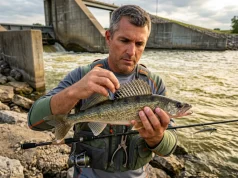
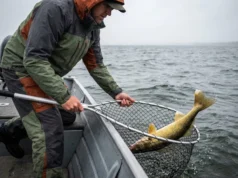
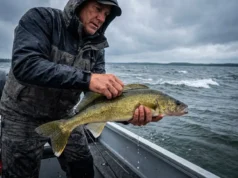
Half a dozen casts with a walleye crankbait. Nothing. Same jig-and-minnow presentation that crushed it on Lake Erie last month. Still nothing. The Mississippi River below the dam looked fishy — foam lines, current breaks, seams stacking up like textbook walleye water. But the fish holding in that chocolate-colored flow weren’t walleye. They were sauger. And they wanted something entirely different.
After years of chasing both species across Midwest rivers and Great Lakes tributaries, I’ve watched this exact scenario play out dozens of times. Walleye anglers who can catch fish in their sleep go blank on sauger because they never adjust. The biology is different. The habitat is different. The tactics that produce are different.
This guide breaks down the specific differences between these two Percidae family cousins — from the 60-second ID check that keeps you legal, to the exact lure and retrieve adjustments that turn sauger water from a skunk into a limit.
⚡ Quick Answer: Sauger and walleye look similar but hunt in fundamentally different ways. Sauger prefer turbid river water with sandy or muddy bottoms and respond best to vibration lures worked slow on the bottom. Walleye favor clearer, cooler lakes with rocky structure and respond to sight-based presentations. The key ID markers are the dorsal fin (sauger have rows of dark spots; walleye don’t) and the white tail tip (walleye have it; sauger don’t). Adjusting your retrieve speed, lure type, and positioning for sauger — rather than defaulting to walleye approaches — is the single biggest factor separating blank trips from full livewells.
The 60-Second ID Check That Keeps You Legal
Dorsal Fin and Tail Tip — The Two Markers That Matter Most
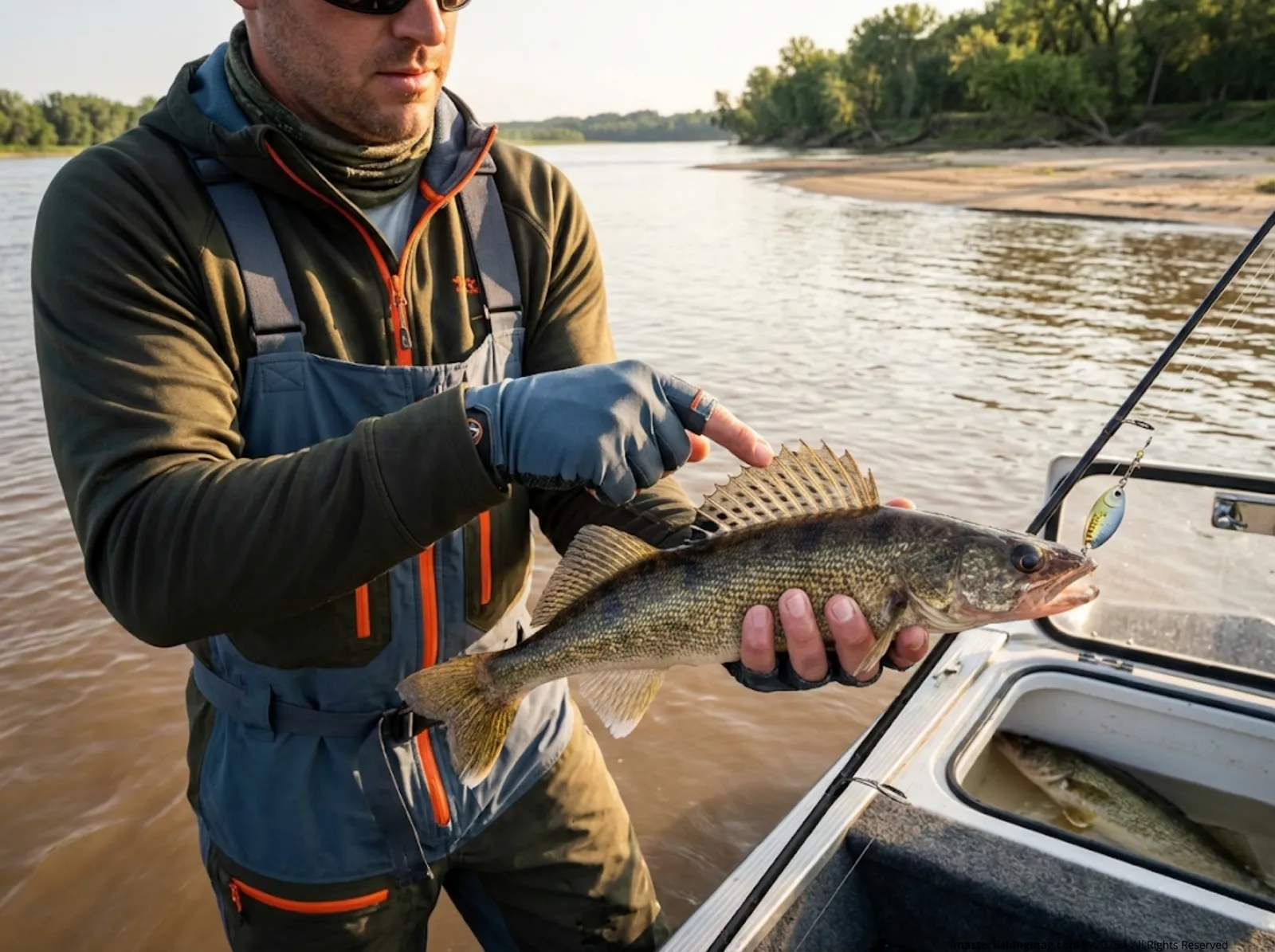
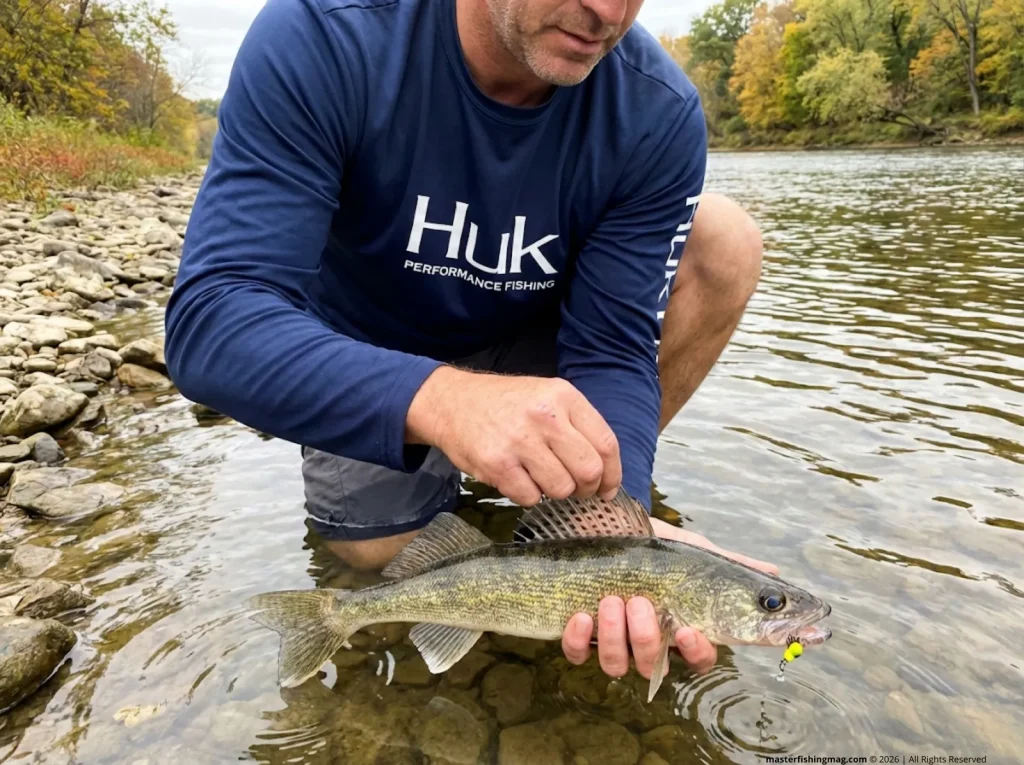
Spread the spiny dorsal fin against a headlamp or the sky. On a sauger, you’ll see distinct rows of dark circular spots across the entire membrane — they’re unmistakable once you know what to look for. A walleye‘s spiny dorsal is clean. No spots. Instead, there’s a prominent black patch on the membrane between the last two or three spines.
Now flip the fish and check the tail. Walleye carry a white tip on the lower caudal fin lobe — a bright, obvious flag. Sauger tails are uniform, sometimes with a thin white margin along the entire edge, but nothing like that bold walleye beacon.
In low light on the boat, the dorsal check is actually more reliable than the tail. Those spots have enough pigment density that you can almost feel them. When you’re unsure, spread the fin fully and hold it under any light source — the answer is immediate.
Pro tip: On your first trip to mixed sauger-walleye water, photograph every fish with the dorsal fin fully extended before releasing it. By the end of the day, you’ll ID them by instinct.
Cheek Scales and Body Color — Confirming What the Fin Told You
Run your thumb across the gill plate. Sauger cheek scales are rough — ctenoid scales covering the entire cheek and gill cover. Walleye cheeks are smooth, with few or no scales. The texture difference is instant.
The body tells a story too. Sauger show irregular dark blotches over a brassy-brown body — like smudged camouflage. Walleye display a more uniform golden body with fewer markings. Size reinforces the call: sauger average 12 to 18 inches and rarely break 4 pounds, while walleye are larger than sauger — commonly running 20 to 28 inches and pushing well past 6. The world-record sauger was 8 pounds 12 ounces from Lake Sakakawea in 1971 — a trophy sauger is still modest by walleye standards.
These checks matter because fish identification mistakes that cost anglers fines are more common than most people admit. Misidentifying a sauger as a walleye — or vice versa — when slot limits differ by fish species and waterbody can mean a citation on the spot.
The Saugeye Problem — When Hybrid Traits Muddy Your ID
Saugeye — the walleye-sauger hybrid — throw a wrench into everything above. They show partial dorsal fin spots, ambiguous tail markings, and cheek texture somewhere in between. In stocked reservoirs where state agencies have introduced saugeye for their faster growth, these hybrids are common enough to create genuine confusion.
If the traits don’t clearly match either species, photograph the fish with dorsal fully extended and check your state DNR’s guide before keeping it. Spontaneous hybridization is also reducing pure native sauger genetics in some river systems — a conservation reality that most fishing guides never mention.
According to the Kansas Department of Wildlife and Parks perch identification guide, the dorsal fin spot pattern remains the single most reliable diagnostic feature across all three fish.
Why Sauger Live Where Walleye Won’t (And What That Means for Your Spot Selection)
Turbid Rivers vs. Clear Lakes — The Habitat Split
This is where most walleye anglers make their first mistake. They expect sauger to hold in the same habitat — and they don’t.
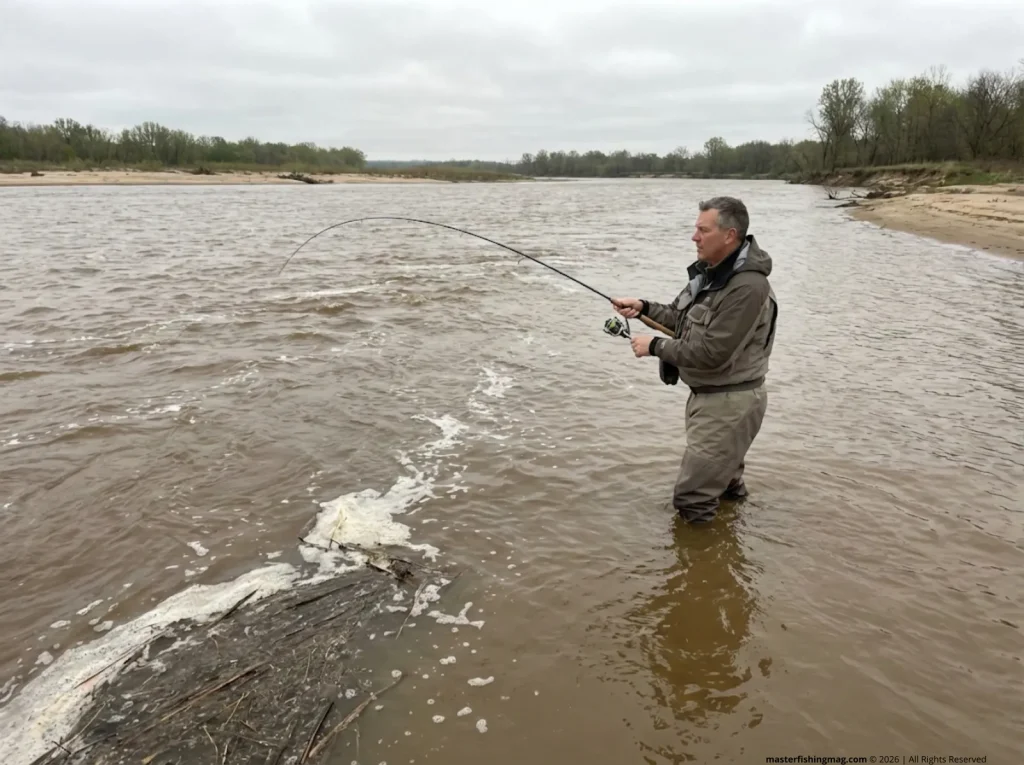
Sauger thrive in turbid rivers with sandy bottoms and muddy bottoms. Think Mississippi River pools, the Missouri River, Red River systems. Water that looks like chocolate milk. Walleye pick the opposite: clearer lakes with cooler water and rocky bottoms — the Great Lakes, Lake of the Woods, deep reservoirs with good visibility.
Sauger also tolerate warmer water than walleye, which extends their range into river stretches that walleye abandon when summer heat peaks. Some old-timers still call them “sand pike” — a nickname that tells you exactly where to find them. If you’re standing in a river system and the water is too dirty to see your boots, stop thinking walleye. You’ve crossed into sauger territory.
Pro tip: Fish seams at dawn, dusk, or on cloudy days. Sauger light sensitivity pushes them shallower in low-light conditions than walleye, making them more accessible to wade and bank anglers during those windows.
Current Seams — Where Sauger Stack Up
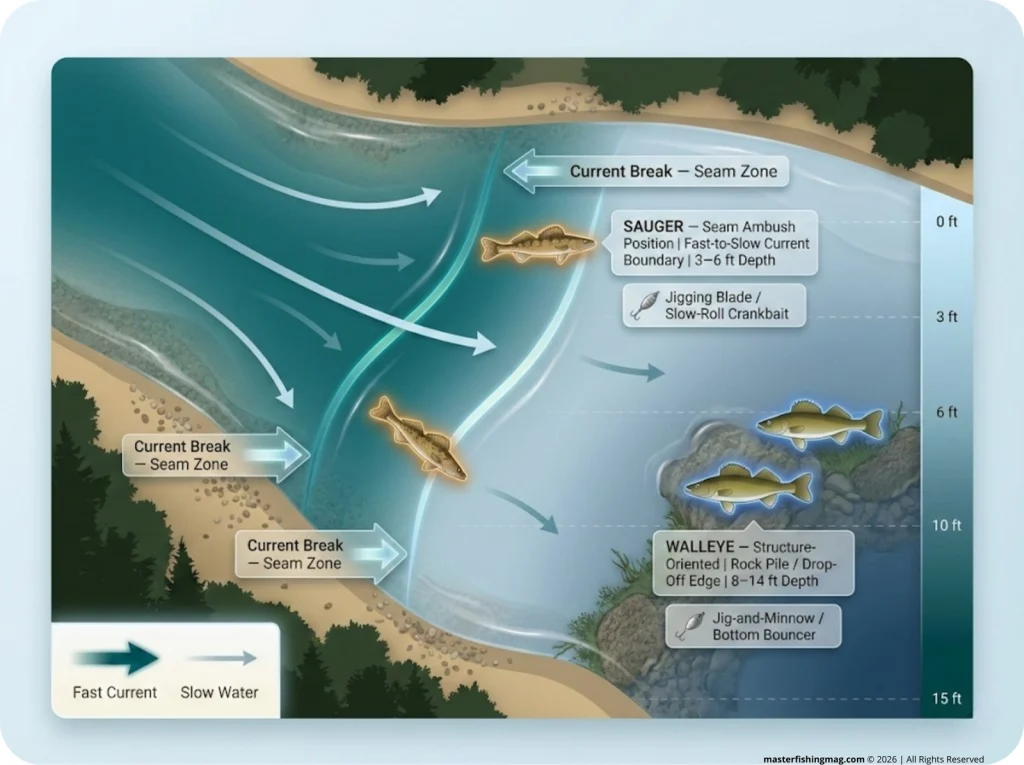
Sauger are river current seam specialists. They position themselves at the boundary where fast currents meet slower water and ambush prey funneled through the break. Walleye are more structure-oriented in stiller water — lake drop-offs, rock piles, weed edges.
Radio-tagged sauger in Wyoming recovery rivers traveled over 33 miles upstream following these seam networks, according to the Wyoming Game and Fish Department sauger recovery report. Understanding seam positioning lets you predict the specific three-foot slot where sauger hold — no more random casts. For a deeper breakdown of the flow dynamics, see how current seams create feeding lanes.
The Eye Advantage That Changes Everything About Lure Selection
Tapetum Lucidum — Why Sauger See What Walleye Can’t
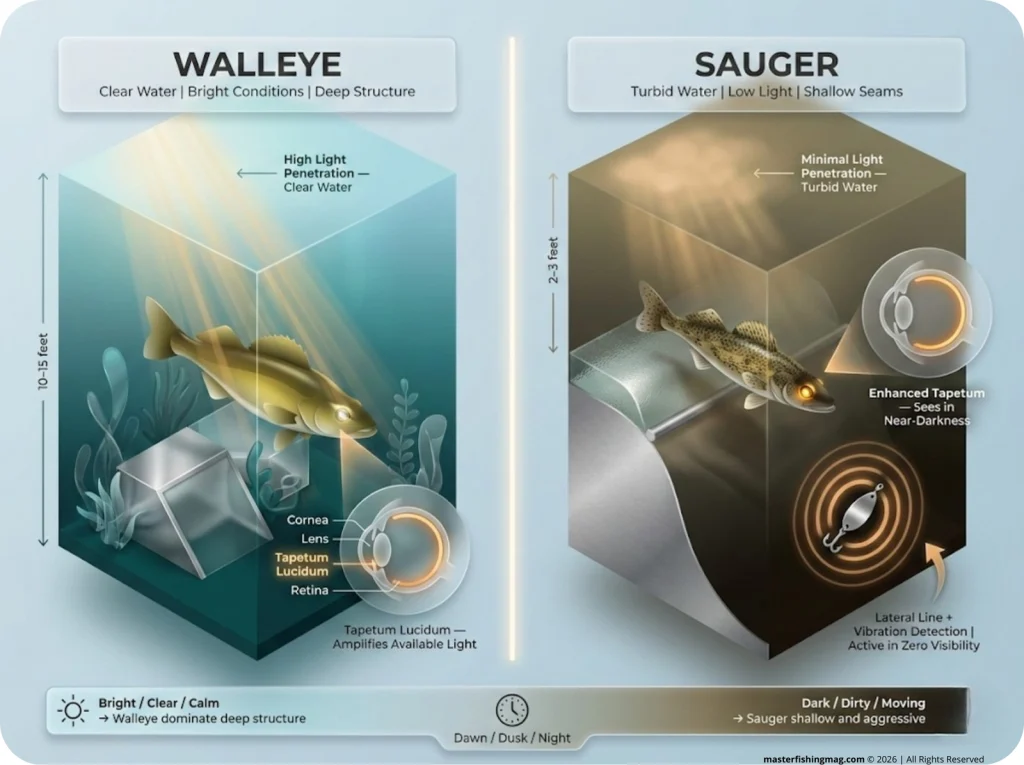
Both species have a tapetum lucidum — a reflective layer behind the retina that gathers light for low-light hunting. It’s the same structure that makes their eyes glow when you shine a headlamp across the water at night. But sauger’s version is more encompassing, adapted for extreme turbidity where visibility drops to inches.
This matters on the water because sauger hunt effectively in conditions where walleye start relying on their lateral line instead of sight. Field & Stream’s M.D. Johnson called sauger the “bluegill of the Family Percidae” — and it’s an accurate label. Where walleye are often fickle, refusing presentations that aren’t precisely right, sauger are aggressive feeders that commit hard once they detect prey. These are fantastic game fish that punch well above their weight class.
Vibration vs. Sight — Matching Your Lures to the Species
Here’s the practical takeaway: in turbid water, blade baits and vibrating jigs transmit low-frequency vibrations that sauger detect through their lateral line at distances where visual lures are completely invisible. Walleye in clear water respond to crankbait lip action, flash patterns, and color contrast — visual triggers that fail when visibility drops.
Bright, bold colors like chartreuse and white on jig heads outperform subtle natural patterns for sauger. That’s the opposite of many walleye presentations where matching the hatch matters. Understanding how water turbidity changes what fish actually see explains why the same lure produces in one system and blanks in another.
Dawn, Dusk, and Cloud Cover — Timing the Bite by Species
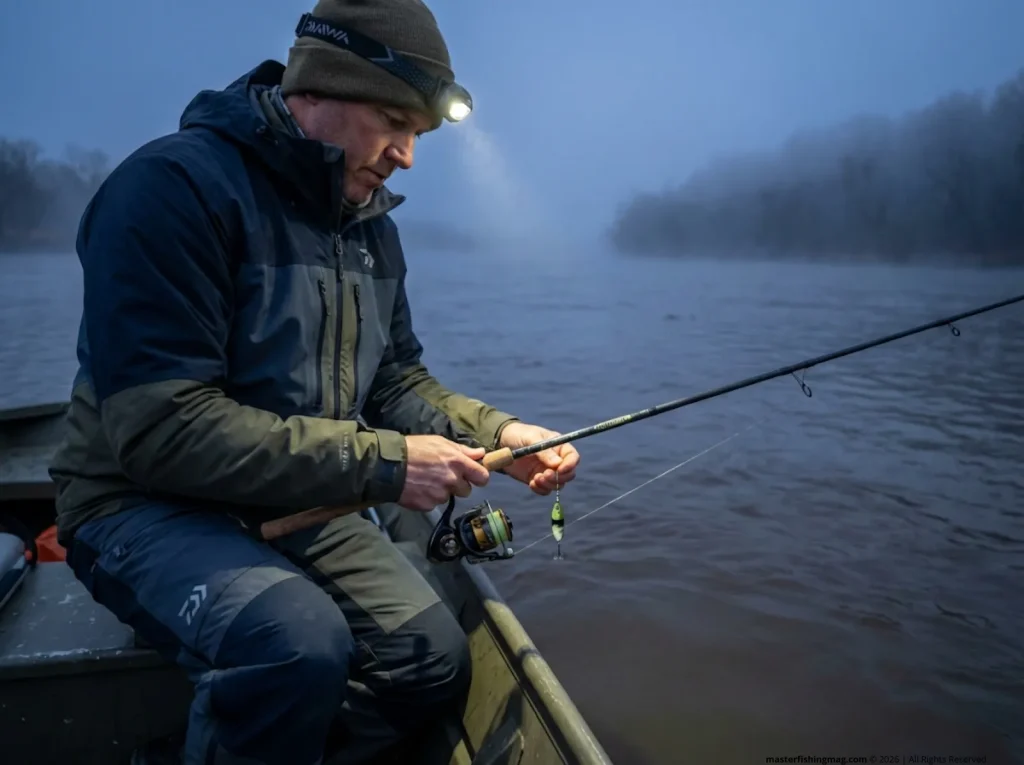
Sauger’s enhanced light sensitivity pushes them into shallow water during low-light periods — dawn, dusk, heavy overcast. That makes them more accessible than their deeper, more structure-bound walleye cousins during those windows. Night fishing can be exceptionally productive for sauger in river systems. Their turbidity tolerance means they feed actively when other predators shut down.
The depth-and-time dynamic is one of the biggest gaps in competitor content out there. No one spells out exactly when to go shallow for sauger versus when to probe deep water for walleye. The short answer: if it’s dark, dirty, and moving — sauger are shallow and aggressive. If it’s clear, calm, and bright — walleye own the deeper structure.
Sauger Tactics That Walleye Anglers Get Wrong
Slow Down and Stay Down — The Retrieve Rule
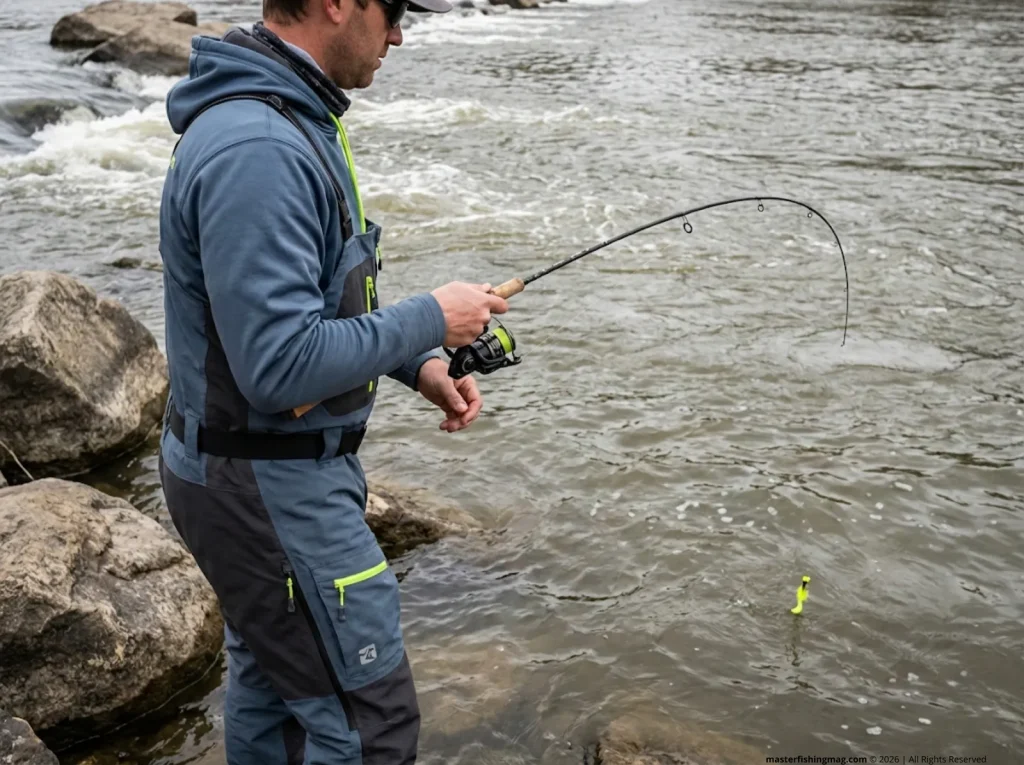
The single most common mistake walleye anglers make when targeting sauger: retrieving too fast. Sauger want the bait crawling on the bottom — not swimming six inches above it like a typical walleye presentation.
Drop your walleye cadence by 50 to 70 percent. Maintain strict bottom contact the entire retrieve. A Lindy rig works for both species, but sauger presentations need heavier weight to hold the riverbed in fast currents. If your jig isn’t occasionally bumping rock and sand, you’re too high.
The phrase that stuck with me: “Keep the bait close to the riverbed.” It sounds simple, but after watching dozens of walleye anglers lift their jigs two feet off bottom out of habit, I can tell you it’s the adjustment most people never make.
Blade Baits and Bottom Thumpers — The Sauger Arsenal
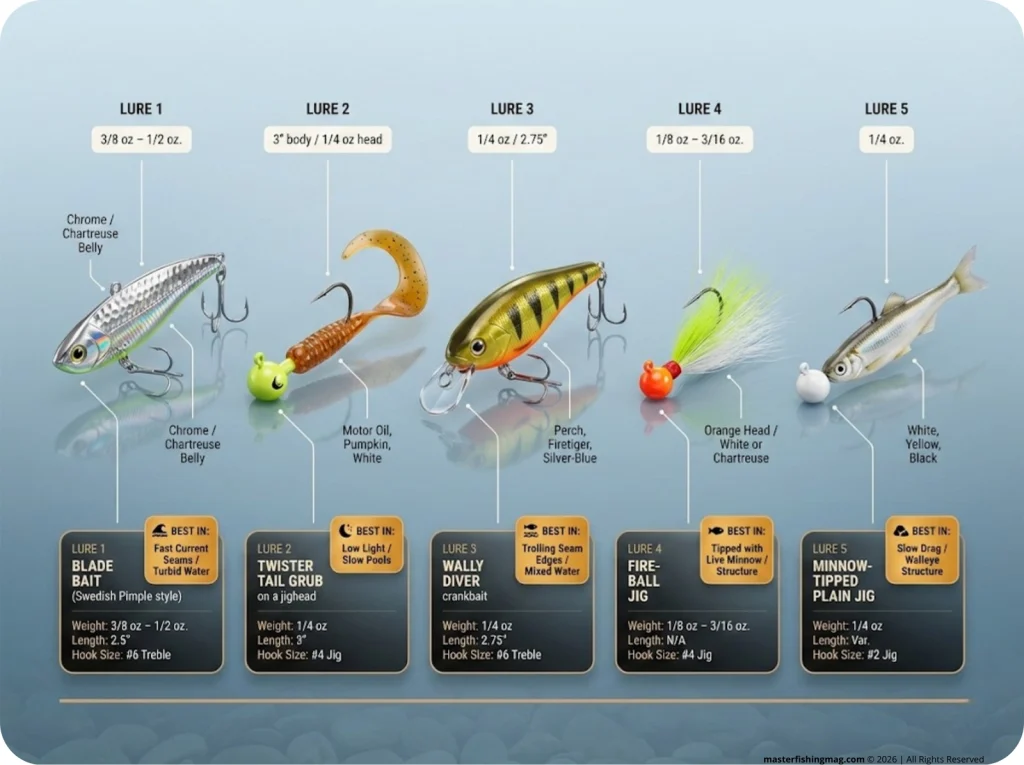
Blade baits vertically jigged or ripped through current seams are sauger’s number-one reaction lure. The B-Fish-N B3 in silver or gold gets it done in most river systems. The vibration these metal lures produce in turbid river conditions is exactly what sauger are built to detect.
Twister tail grubs in chartreuse or white on 1/4 to 3/8 ounce jig heads are the bread-and-butter presentation for river sauger fishing. For transition zones between current and slack water, a Cotton Cordell Wally Diver or Bomber Long A cranked slow and deep covers ground efficiently.
In cold-water winter patterns, a Northland Fire-Ball jig tipped with a minnow is deadly. Sauger hold deeper and slower in winter but stay aggressive — which is more than you can say for walleye in the same conditions.
For foundational jigging technique, the rhythm and gear fundamentals of jigging covers the mechanics that apply to both species.
Pro tip: Bright, bold colors and bigger jigs in stronger flows — short, subtle jigs in slack. Match the jig profile to the current intensity, not just the water color.
The Walleye Presentations That Still Work (With Adjustments)
Jigging with live minnows produces both species in shared water. The difference is that sauger hit more aggressively and hold in faster-current positions. Trolling crankbaits can catch sauger incidentally, but it’s not an efficient primary tactic — vertical jigging outproduces trolling roughly three to one in most river settings.
When targeting mixed sauger and walleye water, start with vibration — a blade bait ripped through the seam — to find sauger first. Then switch to a minnow-tipped jig worked over structure for walleye. You’ll cover more water and catch more of both.
Regulations, Conservation, and Why Sauger Need Smarter Anglers
Why Slot Limits Aren’t the Same — And What Happens if You Guess Wrong
Sauger and walleye have different length limits, slot limits, and bag limits in most states — and they change by waterbody. Iowa, Wisconsin, Minnesota, and North Dakota all run different rules for each species. Misidentifying your catch when slot limits differ can mean a citation even if the fish legally meets the other species’ regulation.
This is exactly why the 60-second ID check matters before every harvest decision. Understand how slot limits and bag limits actually work before you fish mixed waters, and always verify the current regulations for the specific body of water you’re on.
Selective Harvest and Catch-and-Release in Recovery Waters
Pure sauger populations are declining in some river systems due to habitat changes, dam construction, and genetic dilution from hybridization with stocked walleye. Wyoming’s North Platte sauger recovery program is actively restoring populations with radio-tagged fish as documented by the Montana Field Guide sauger conservation status.
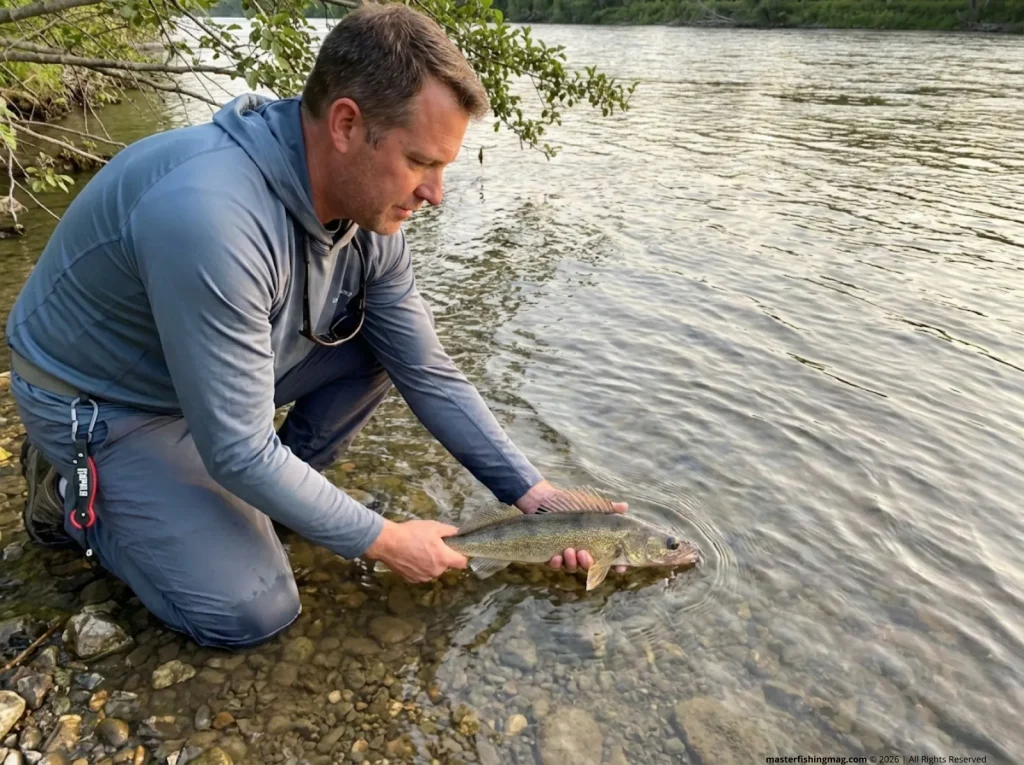
Practice catch-and-release in waters with recovering sauger populations. Both species produce firm, white flaky table fare with nearly identical flavor — so harvesting either is a quality-of-meat decision, not a species preference. Both are considered excellent freshwater fish for the table. When you do keep fish, selective harvest of abundant year classes helps the fishery more than blanket limits ever will.
Putting It Together — A River Day for Both Species
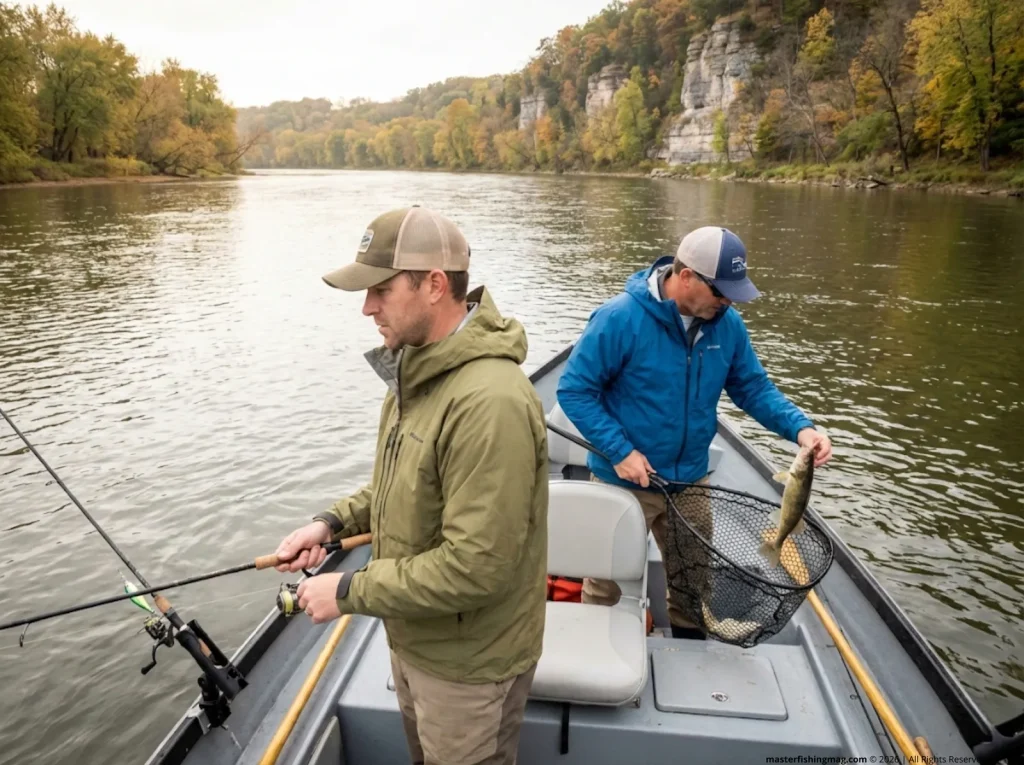
Morning (Low Light) — Start with Sauger in the Seams
Dawn on the river. Target current seams with a blade bait or vibrating jig. Sauger will be aggressive and holding shallow in the low light. Cast quartering upstream, let the blade tumble down through the seam, and work a rip-and-pause retrieve that keeps you bouncing bottom.
Work upstream through seams systematically. When bites slow at mid-morning — and they will, because sauger push deeper as light increases — transition to vertical jigging with a minnow-tipped Twister Tail grub on a heavier jig head.
Midday (Clear Conditions) — Shift to Walleye on Structure
Move to deeper, structure-oriented spots: rock piles, drop-offs, weed edges. Switch to a crankbait like the Bomber Long A or Wally Diver trolled or cast along break lines. Walleye finesse presentations — a Lindy rig with nightcrawlers — produce well midday when sight fishing in clear water becomes their primary mode.
If you’re catching sauger on walleye structure, you’re probably fishing a transition zone. Adjust depth downward and increase retrieve speed slightly to shift the bite toward walleye. For a full breakdown of the biological traits driving this behavior, see the biological traits that drive walleye behavior.
The beauty of learning both species is that your fishing day gets longer. Sauger own the dirty, fast, low-light windows. Walleye own the clear, deep, structured midday. Fish both correctly and you’ll catch more total fish than targeting either alone.
Conclusion
The dorsal fin check takes five seconds and prevents both regulatory violations and tactic confusion — make it automatic every time you lip a percid. Sauger reward vibration, bottom-contact rigs, and slower retrieves in turbid current — the exact opposite of many walleye presentations in clear, still water. And understanding why these fish hunt differently — eye adaptation, habitat preference, aggression level — makes the tactic adjustments feel intuitive instead of memorized.
Next time you’re on a river system and the water turns muddy, resist the urge to fish it like a walleye lake. Tie on a blade bait, find a current seam, and give sauger the respect of their own playbook. The bites will tell you the difference.
FAQ
How do you tell the difference between a sauger and a walleye?
Check the spiny dorsal fin first. Sauger have distinct rows of dark circular spots across the entire fin; walleye have no spots but a black patch between the last two or three spines. Confirm with the tail — walleye show a prominent white tip on the lower lobe that sauger lack. Running your thumb across the cheek settles any doubt: sauger feel rough and scaly, walleye feel smooth.
Do sauger taste like walleye?
Yes. Both produce firm, white, flaky fillets with nearly identical flavor and texture. Most anglers can’t tell them apart in a blind taste test. The main practical difference is portion size — sauger fillets are smaller because the fish average 12 to 18 inches versus walleye’s 20 to 28 inches.
What is the best bait for sauger?
Blade baits vertically jigged through current seams are the single most productive sauger presentation, especially in turbid water. Twister tail grubs in chartreuse or white on 1/4 to 3/8 ounce jig heads tipped with a minnow are the bread-and-butter follow-up. The key difference from walleye fishing is strict bottom contact and a slower retrieve.
Can you catch sauger and walleye in the same spot?
Yes, particularly in rivers where both species are present. They share current seam areas but occupy different positions. Sauger hold tighter to the fast-water edge in turbid sections, while walleye sit on structure in clearer, slower pools. Transition zones between current and slack water are your best bet for catching both in one session.
Where do sauger live compared to walleye?
Sauger prefer turbid rivers with sandy and muddy bottoms and tolerate warmer water — think Mississippi, Missouri, and Red River systems. Walleye select clearer, cooler water with rocky or gravel substrates like the Great Lakes, Lake of the Woods, and deep reservoirs. When both exist in the same system, sauger dominate the muddiest, fastest sections while walleye claim the clearer, deeper structure.
Risk Disclaimer: Fishing, boating, and all related outdoor activities involve inherent risks that
can lead to injury. The information provided on Master Fishing Mag is for educational and informational purposes
only. While we strive for accuracy, the information, techniques, and advice on gear and safety are not a substitute
for your own best judgment, local knowledge, and adherence to official regulations. Fishing regulations, including
seasons, size limits, and species restrictions, change frequently and vary by location. Always consult the latest
official regulations from your local fish and wildlife agency before heading out. Proper handling of hooks, knives,
and other sharp equipment is essential for safety. Furthermore, be aware of local fish consumption advisories. By
using this website, you agree that you are solely responsible for your own safety and for complying with all
applicable laws. Any reliance you place on our content is strictly at your own risk. Master Fishing Mag and its
authors will not be held liable for any injury, damage, or loss sustained in connection with the use of the
information herein.
Affiliate Disclosure: We are a participant in the Amazon Services LLC Associates Program, an
affiliate advertising program designed to provide a means for us to earn advertising fees by advertising and linking
to Amazon.com. As an Amazon Associate, we earn from qualifying purchases. We also participate in other affiliate
programs and may receive a commission on products purchased through our links, at no extra cost to you. Additional
terms are found in the terms of service.