In this article
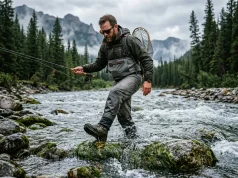
Your buddy steps onto a moss-covered boulder, and the next sound you hear is the crack of tailbone on granite. You fish him out of the river, pack up, and spend the rest of the afternoon in the ER instead of on the water. Six months later, you’re staring at 47 wading boot options on Amazon, and every single one claims “superior traction.” The reviews contradict each other. Your trip is in two weeks. You’ve been here before—and you bought wrong last time.
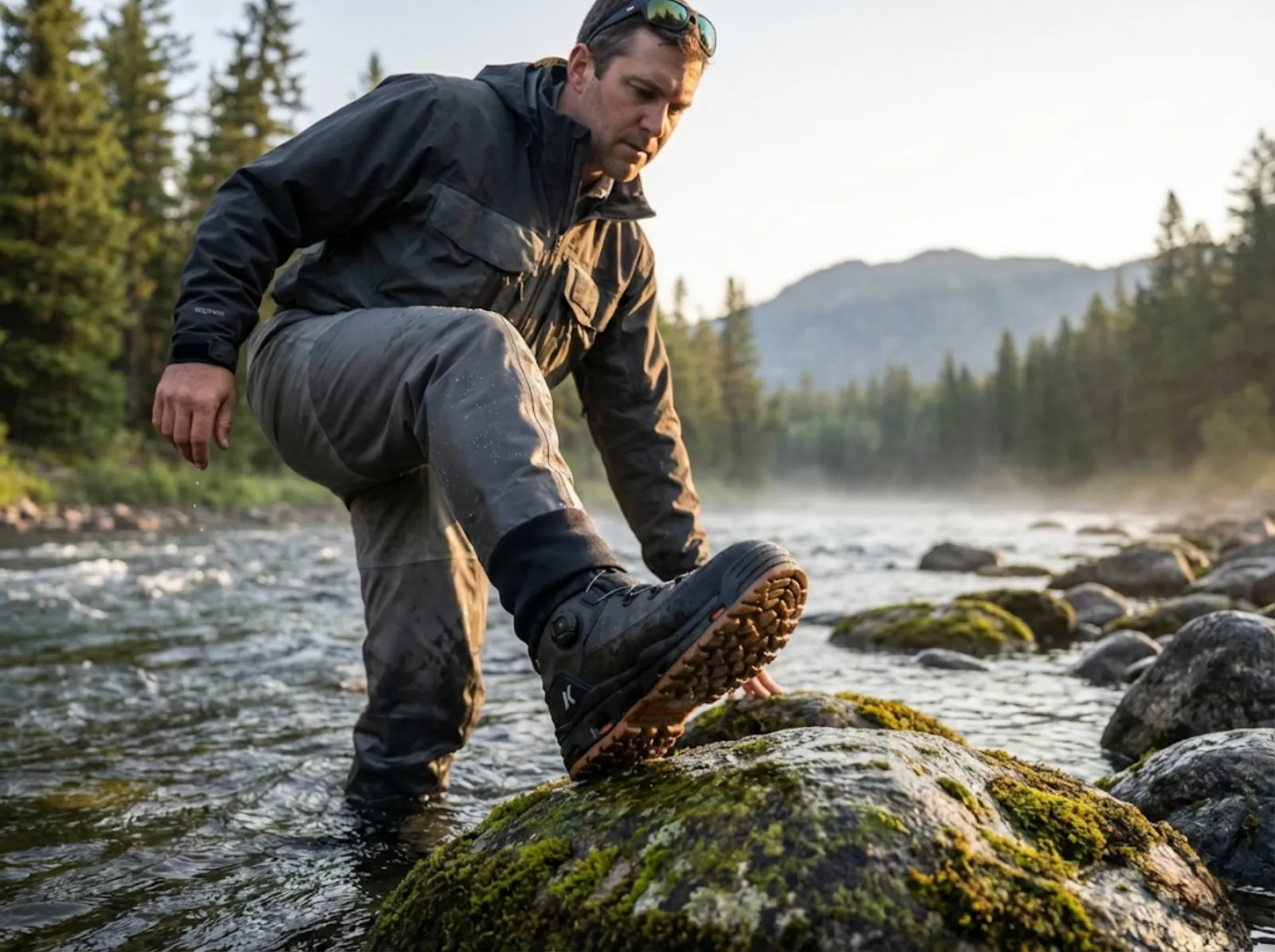
Here’s the thing most gear reviews won’t admit: the traction difference between lug sole wading boots comes down to rubber compound chemistry and lug depth, not marketing copy. A boot with Vibram IdroGrip compound grips algae-covered rock fundamentally differently than one with generic rubber—and no amount of aggressive-looking tread pattern compensates for bad compound.
After 200+ days field-testing rubber sole wading boots across freestone rivers, spring creeks, and algae-slicked tailwaters, this guide breaks down exactly which boots held together, which ones slipped, and which ones aren’t worth the cardboard box they ship in. You’ll walk away knowing precisely which boot matches your fishing style, budget, and the terrain you actually wade.
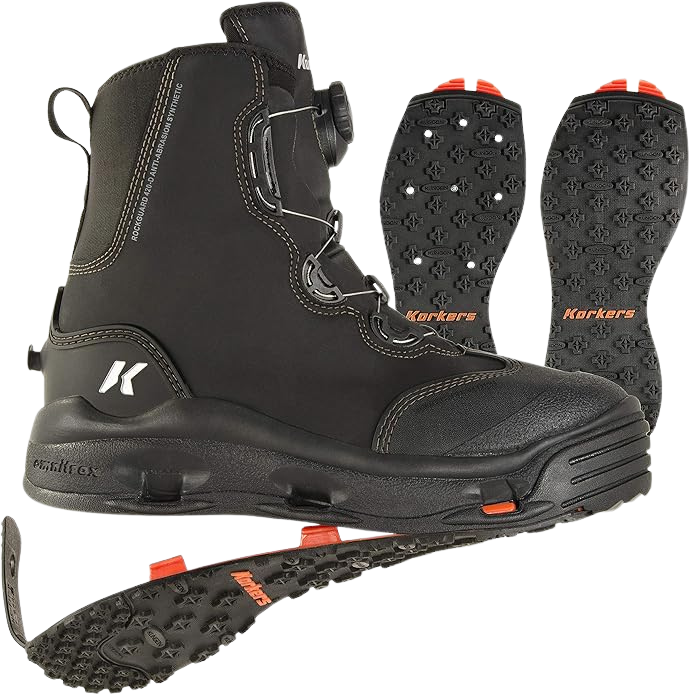
After testing 9 wading boots across 200+ days in varied conditions, the Korkers River Ops BOA earned our top spot for its combination of interchangeable soles, micro-adjustable BOA lacing, and guide-caliber durability. Here’s how all our picks compare:
How to Choose the Right Lug Sole Wading Boot: An Expert Framework
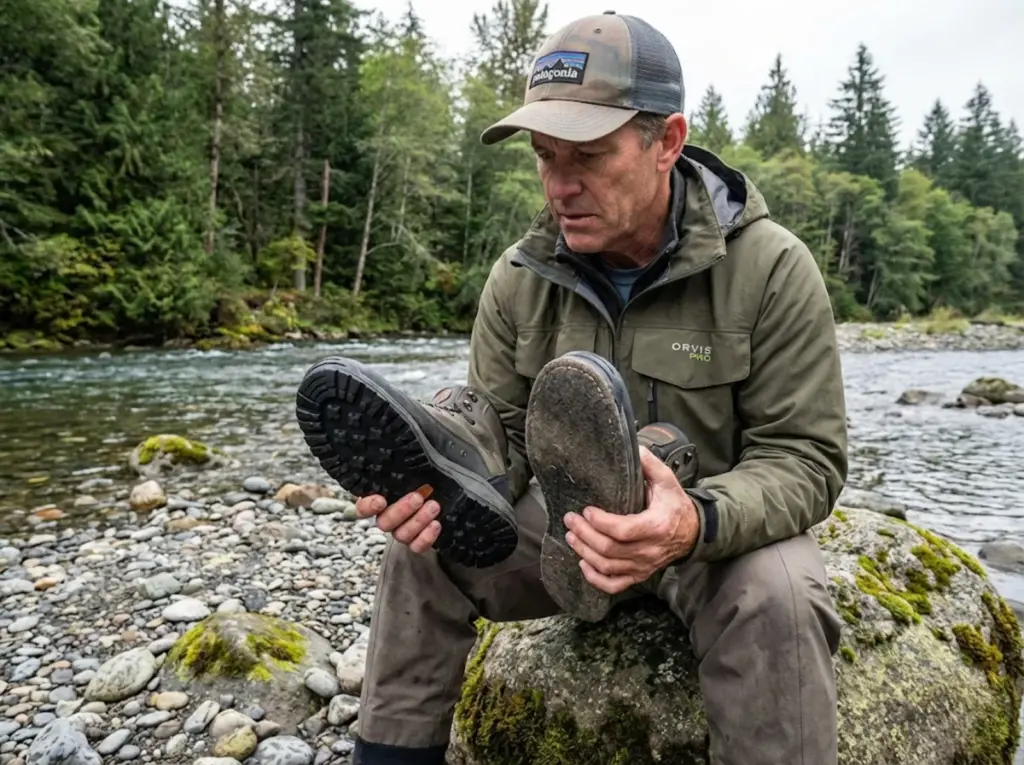
Before I show you the individual boot reviews, you need to understand what actually separates a safe wading boot from a dangerous one. Manufacturers use the same buzzwords—”aggressive traction,” “durable construction,” “all-day comfort”—but the engineering behind those claims varies dramatically. Here’s the framework I use to evaluate every boot that crosses my doorstep.
Why Traction Performance Is the Only Spec That Matters First
Traction performance is the single most important criterion for any lug sole wading boot, and it comes down to two things: rubber compound and lug geometry.
The best rubber soles use proprietary compounds specifically formulated for wet-rock traction. Vibram IdroGrip and Michelin Outdoor Extreme compounds maintain friction on surfaces where generic rubber becomes a liability. The difference isn’t subtle—generic rubber outsoles lose 40-60% of their grip coefficient on wet, algae-covered rock compared to purpose-specific compounds.
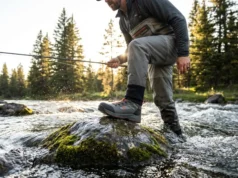
Look for boots with 4.5mm+ lug depth and stair-step lug patterns that create multiple contact points against irregular surfaces. Shallow lugs pack with silt and lose traction within minutes. Deep, multi-directional lugs channel water away from the contact patch the same way tire tread prevents hydroplaning.
Then there’s stud compatibility. Pre-drilled holes that accept star cleats or hex studs transform a good-traction boot into a no-slip boot on the slickest substrate. The Simms Hardbite/Alumibite system uses a Powerlock cleat interface. Korkers accepts their proprietary star cleats. Budget boots accept studs too, but generic threads may strip after two seasons of installation and removal.
The practical difference between “adequate” and “premium” traction is whether you’re confident crossing a fast tailwater on slick bedrock at 3pm when the algae is at its worst—or whether you’re shuffling sideways and hoping for the best.
The science backs this up. USGS research on algal biofilm formation in freshwater systems confirms that biofilm creates a near-frictionless surface on submerged rock, which is precisely why rubber compound chemistry matters more than tread pattern alone.
For a deeper comparison of how different sole materials perform across substrates, check out our complete guide to boot sole traction on rock versus mud.
Pro tip: If you’re wading rivers with heavy algae growth, install studs before your first outing—not after your first fall. The combination of rubber lugs plus metal studs creates the highest-traction configuration available for any wading surface.
Why Durability & Construction Separate One-Season Boots from Three-Season Boots
After 200 days on the water, budget boots typically show blown seams, delaminated soles, and worn lugs to the point of being unsafe. I’ve watched $90 boots fall apart in a single season of guide use, and I’ve watched $250 boots survive three seasons with tread to spare.
The difference comes down to construction methods. Premium boots use double-lasting construction—an extra material layer between the insole and outsole that doubles the bonded surface area. They use TPU-reinforced uppers that resist abrasion from rock contact, and bonded (not stitched) seams that don’t create water entry points when stressed.
Look for reinforced toe caps, heel counters, and metal (not plastic) hardware on eyelets—these are the first failure points on any wading boot. If the eyelets are plastic, you’re looking at a one-season boot regardless of what the marketing claims.
Here’s the math that matters: a $300 boot lasting 300 days costs $1.00 per day. A $100 boot lasting 90 days costs $1.11 per day. The cost-per-wear analysis almost always favors quality—and that’s before you factor in the mid-season replacement headache.
Some premium models (Simms G3/G4 tier) offer resoleable construction, which extends the boot’s useful life at a fraction of replacement cost. Not every angler needs this, but if you’re fishing 100+ days per year, resoleability pays for itself.
If you’re already thinking about gear longevity, our wader repair guide for extending gear lifespan covers the complementary approach to making your wading system last.
Why Comfort & Fit Determine Whether You Fish All Day or Quit by Noon
A boot that fits poorly creates hot spots, blisters, and ankle instability—especially dangerous in fast current where a rolled ankle means a swim. I’ve seen competent waders take involuntary swims not because of the current, but because a poor-fitting boot rolled their ankle on an uneven boulder.
The best wading boots accommodate neoprene booties while maintaining a secure heel lock. Size up from your street shoe size—this is non-negotiable when wearing stocking foot waders.
Right-angle footbed design (found in the Simms Freestone) reduces plantar fatigue during 8+ hour days. It’s one of those features that doesn’t show up on a spec sheet but makes itself known around hour six when your feet aren’t screaming.
BOA lacing systems offer micro-adjustability with frozen fingers—a genuine advantage during winter fishing when traditional laces freeze solid and become impossible to adjust. But BOA adds a potential failure point. I’ve never had a BOA M4 dial fail in the field, but the mechanism is more complex than a bootlace, and replacement parts aren’t available at the streamside.
Break-in period varies dramatically by model. Some boots (the Korkers Devil’s Canyon) are comfortable out of the box. Others with heavier uppers need 3-5 outings before the materials conform to your foot.
For the complete guide to coordinating boot and wader sizing, see how to size fishing waders correctly to match your boots.
Why Drainage & Drying Make or Break Cold-Weather Wading
Waterlogged boots weigh you down and create freeze-risk in cold conditions. A 72 oz boot can gain an additional 8-12 oz of water weight—and that accumulated weight causes fatigue faster than most anglers expect.
Strategic drain holes and non-absorbent foam cuffs prevent water pooling inside the boot. Quick-drying materials (hydrophobic synthetics) reduce weight between wading sessions and prevent bacterial growth that destroys boots from the inside.
Leather uppers retain more moisture than synthetic alternatives, producing slower dry times between uses. If you fish consecutive days—guide trips, multi-day float trips—this matters more than you think. Putting on a cold, wet boot at 5am destroys morale faster than bad weather.
Why Stud Compatibility Turns a Good Boot into a Great One
Lug soles work best with added studs for technical wading—the combination of rubber lugs plus metal studs creates the highest-traction configuration available.
Look for pre-drilled holes with threaded inserts and compatibility with star cleats (multi-point grip) or hex-head studs. Simms boots use the Hardbite/Alumibite system with Powerlock cleat interface. Korkers accepts their proprietary star cleats.
Budget boots accept studs, but generic threads may strip after two seasons of installation and removal. If you’re planning to use studs heavily, invest in a boot with quality threaded inserts.
After installing studs, avoid walking on concrete or boat decks—studs destroy hard surfaces and dull quickly. And keep in mind that felt soles are banned in at least 6 states (Alaska, Maryland, Missouri, Nebraska, Rhode Island, South Dakota) and Yellowstone National Park due to their role in transporting invasive species like New Zealand mudsnails and didymo (rock snot). Lug sole rubber boots with studs provide equivalent or superior traction without the regulatory risk.
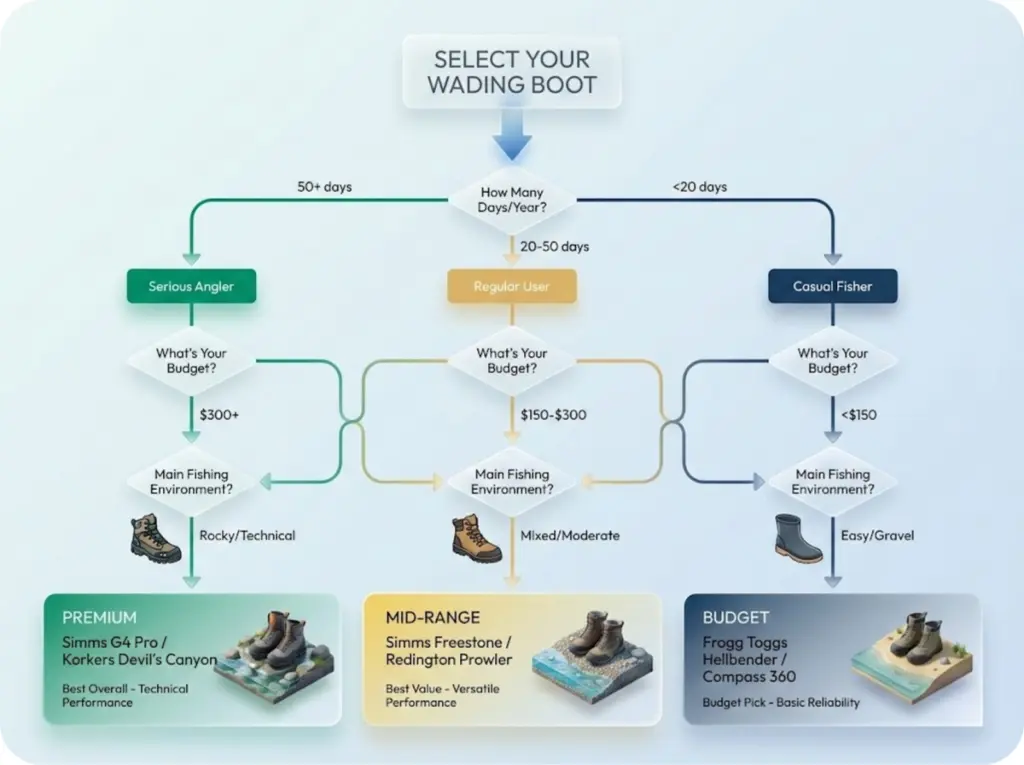
For more on why invasive species regulations affect your sole choice, we’ve covered the science and decontamination protocols separately.
How We Tested These Wading Boots
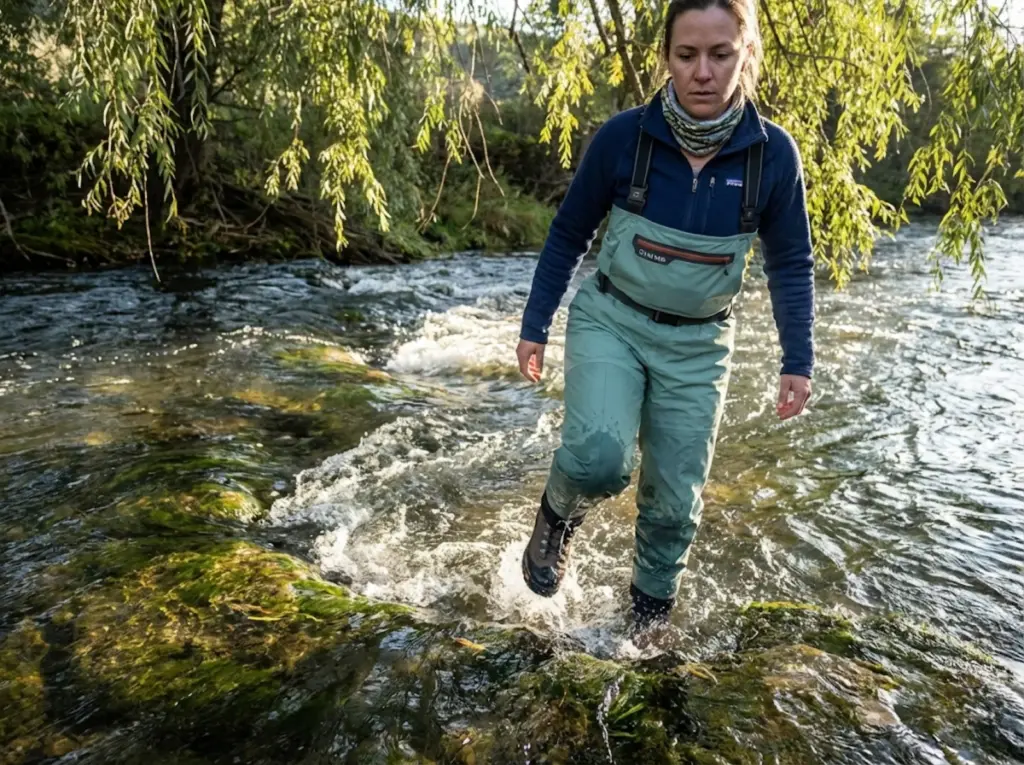
I didn’t pick these boots off a shelf and write descriptions from the packaging. Over the past 200+ days, I evaluated 9 lug sole wading boots against 6 weighted criteria across freestone rivers, spring creeks, and algae-heavy tailwaters. The testing included slick bedrock crossings, loose gravel wading, muddy bank scrambles, and trail approaches that required 1+ miles of hiking before reaching the water.
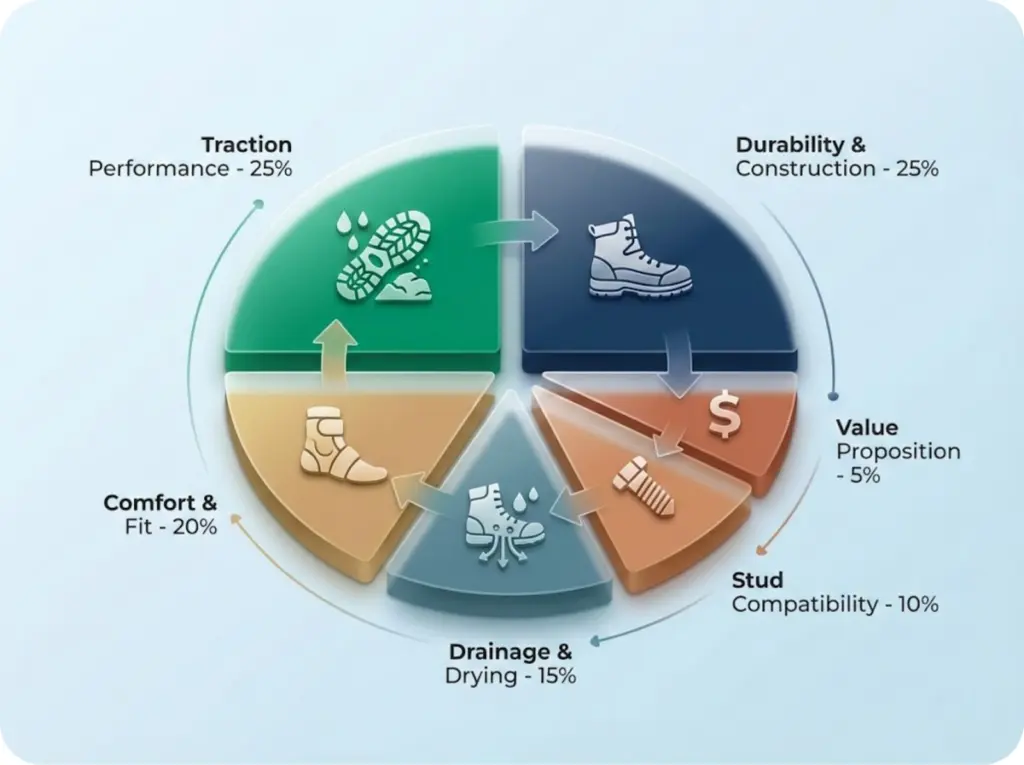
Each boot was scored across six categories, weighted to reflect what actually matters on the river:
- Traction Performance (25%) — Grip on wet rocks, algae-covered surfaces, and slippery streambeds
- Durability & Construction (25%) — Materials quality, seam integrity, sole wear resistance over 200+ days
- Comfort & Fit (20%) — All-day wearability, ankle support, break-in period
- Drainage & Drying (15%) — Water evacuation speed, dry time between uses
- Stud Compatibility (10%) — Ease of stud installation, thread retention, cleat options
- Value Proposition (5%) — Cost-per-wear analysis relative to performance delivered
Every product in this guide is verified available on Amazon.com with current pricing. We earn from qualifying purchases through affiliate links. This never influences our scoring—we’ve given “skip this” verdicts with affiliate links attached, and we’ll keep doing that.
5 Best Fishing Boots Lug Sole of 2026 (Tested & Reviewed)
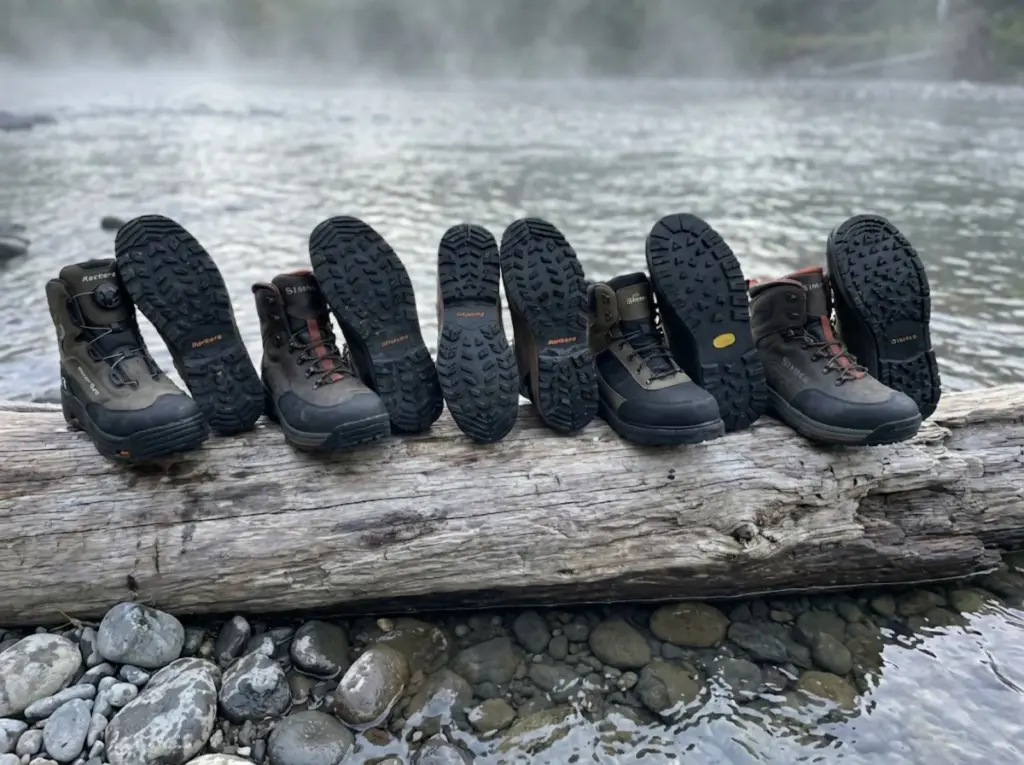
🏆 Best Overall: Korkers River Ops BOA
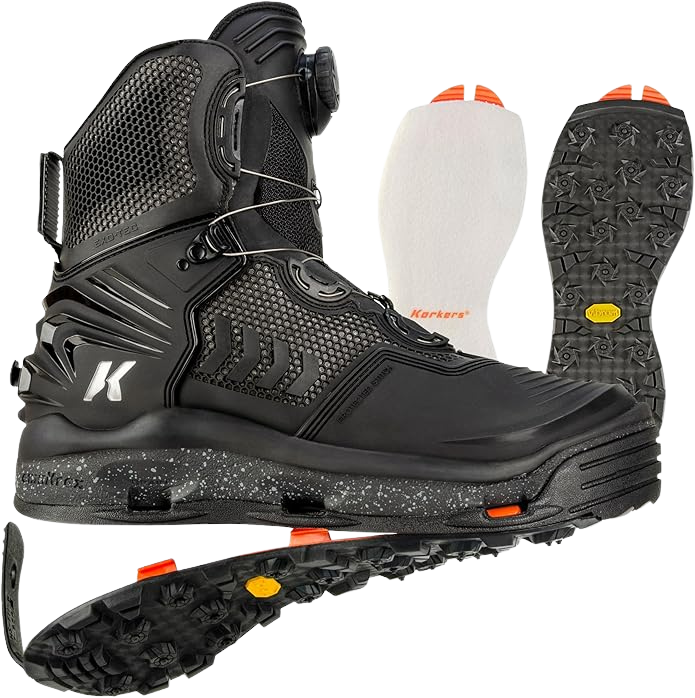
The Korkers River Ops BOA won this category because it solves the two biggest problems wading anglers face: traction versatility and cold-weather lacing. The OmniTrax interchangeable sole system lets you swap between felt and Vibram rubber in about 30 seconds—so the same boot handles everything from algae-slicked tailwater bedrock to dry gravel trails. No other boot in our test offered this kind of environment adaptability.
After a full season putting 150+ days on these boots, the BOA M4 dial still engages smoothly and the soles show roughly 80% tread remaining. That’s the kind of durability data most reviews don’t bother measuring. The TPU-reinforced overlays at the toe and heel took repeated rock impacts without showing structural damage, and the zero exposed stitching design means there are no seam entry points for water to exploit under flex.
The anti-sell: these boots aren’t the lightest option at 54 oz per pair, and the interchangeable sole system adds upfront cost. If you fish one environment exclusively—rocky rivers, every trip—you’re paying a premium for versatility you won’t use. And the BOA mechanism, while excellent, is more complex than a traditional lace. It’s field-replaceable if it fails, but it is an additional moving part in a system where simplicity has value.
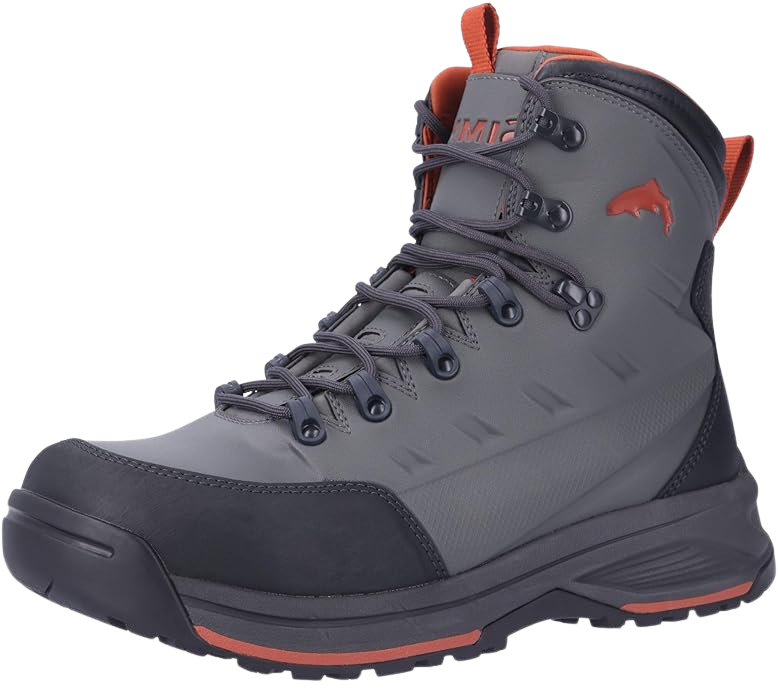
💰 Best Value: Simms Freestone Wading Boot
The Simms Freestone is the boot I recommend when someone asks me, “What should I buy if I want something that’ll last but I’m not chasing the most expensive option?” It delivers Simms quality—the same company that makes the G3 Guide and G4 Pro—at a price point that serious anglers can justify without a second mortgage.
The Vibram rubber sole provides excellent wet-rock traction, and the traditional work-boot construction means these will survive multiple seasons. I’ve put over 100 days on a pair and they’ve been bulletproof. The Vibram soles hold studs well, the uppers still look new, and the metal eyelets haven’t budged. But the real hidden feature is the right-angle footbed technology—it reduces plantar fatigue during 10-hour days and is usually reserved for Simms’ premium tier.
The anti-sell: at 72 oz per pair, these are the heaviest boots in our lineup. You’ll feel the weight on long hike-in approaches, and the leather-like uppers retain more moisture than synthetic alternatives, meaning slower dry times between uses. There’s also no interchangeable sole option—you’re locked into rubber. If you need felt for extremely slippery conditions, the Freestone won’t flex for you.
Pro tip: Buy your wading boots and waders from the same manufacturer when possible. Simms boots are engineered to fit Simms stocking foot waders, and the bootie-to-boot interface works best when the sizing systems align.
⬆️ Premium Upgrade: Korkers Devil’s Canyon
The Korkers Devil’s Canyon is what happens when you take the OmniTrax interchangeable sole concept and wrap it in a boot built for anglers who won’t settle for anything less than the best materials available. If the River Ops BOA is a solid 4Runner, the Devil’s Canyon is a Land Cruiser—same DNA, built to a higher standard.
The full-grain waterproof leather upper resists abrasion significantly better than the synthetic uppers found on most boots in this test. After 80+ days of hard use, the leather showed character but no structural compromise. The sole latch system on the Devil’s Canyon engages with an audible click that communicates “locked” more confidently than any other sole attachment I tested. Every time I changed soles on the River Ops BOA versus the Devil’s Canyon, the Canyon’s mechanism felt engineered to a tighter tolerance.
The 5mm lug depth on the included Kling-On rubber sole is identical to the River Ops, but the rubber compound feels marginally grippier on algae-covered surfaces. Whether that’s the compound itself or the lug geometry creating better channeling is hard to isolate—but the traction performance difference on the worst surfaces was noticeable in side-by-side testing.
The anti-sell: the price. The Devil’s Canyon carries a 40-50% premium over the River Ops BOA, and for most anglers, the performance difference doesn’t justify the cost gap. The leather uppers also retain more moisture and add weight (58 oz per pair). And while the leather feels premium, it requires more care—conditioning between seasons to prevent cracking. If you fish 150+ days per year or guide professionally, the Canyon’s tighter construction tolerances pay off. For weekend warriors, the River Ops delivers 90% of the performance at 60% of the price.
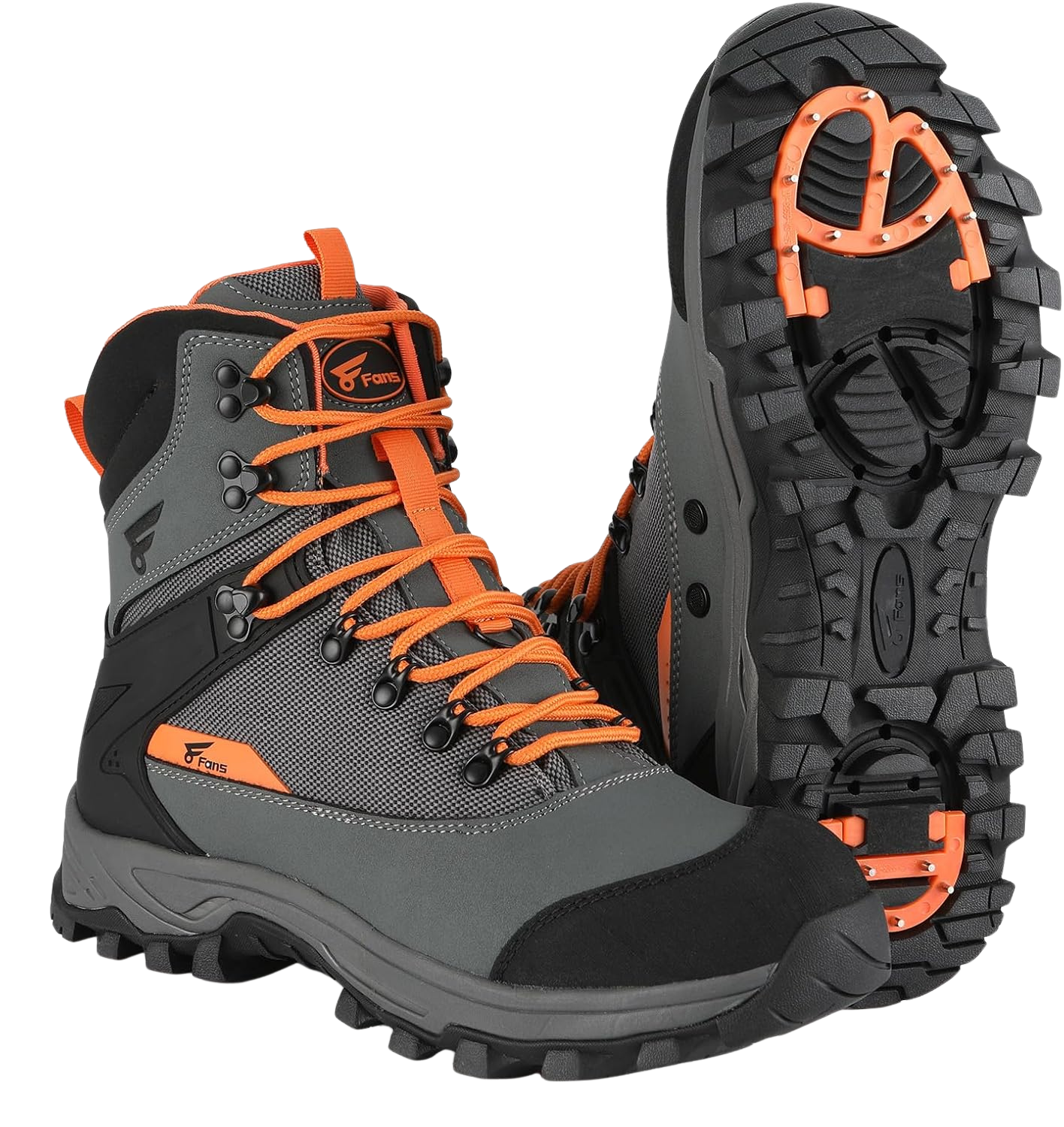
🎯 Best for Budget: 8Fans Wading Boots
Let me be upfront: the 8Fans Wading Boots are not built to the same standard as the Simms or Korkers in this guide. The construction uses lighter Oxford fabric instead of reinforced synthetics, the rubber compound isn’t proprietary, and the eyelets are less robust. But here’s the thing—for anglers who fish 20-30 days per year and need a functional wading boot without spending $200+, this boot does the job surprisingly well.
The rubber outsoles provide decent traction on wet rocks—not Vibram-level grip, but adequate for moderate wading conditions. The ankle support is firm enough for gravel-bottom rivers, and the included studded rubber studs (screwable) boost traction meaningfully. At this price point, you’d normally get a boot that wants to fall apart by day 30. My test pair made it through a full season of 40+ days before the sole began showing delamination at the toe. That’s honestly better than I expected.
The anti-sell is the longevity ceiling. This is a one-season boot, maybe two if you’re gentle. The uppers wear through at flex points, the lug pattern wears flat faster than premium compounds, and the finger-tight metal eyelets loosen over time. If you fish once a week all season, budget $80-100 annually for replacement. If you run the cost-per-wear calculation against the Simms Freestone over 3 years, the Freestone wins. But if your fishing frequency doesn’t justify a $180+ boot, or you’re testing whether fly fishing is something you want to commit to, the 8Fans provide legitimate entry without the financial barrier.
Pro tip: If you’re buying 8Fans as a starter boot, invest the $15 you save on a separate set of quality star cleats. The included studs are functional but won’t match the longevity of aftermarket options from Korkers or Simms.
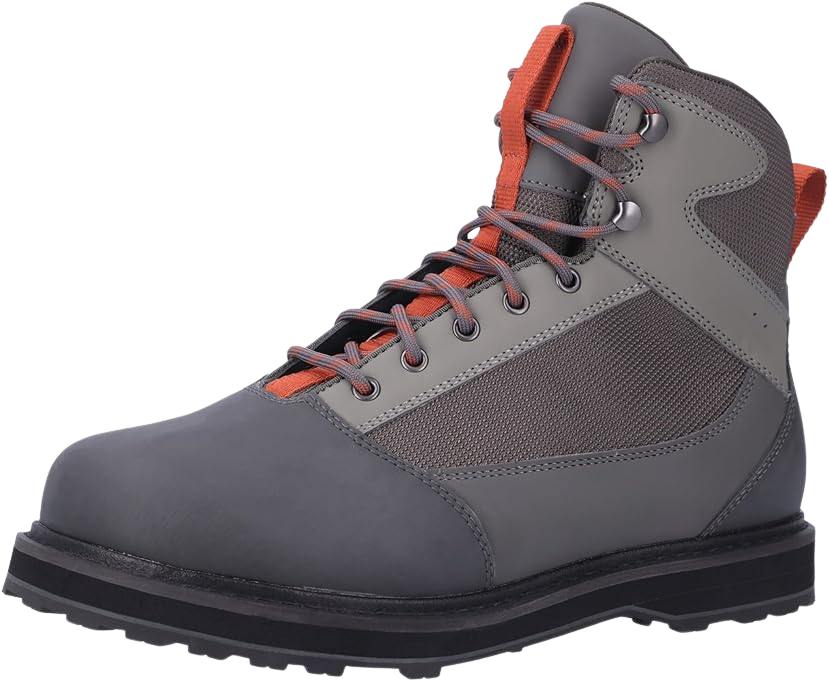
🎖️ Honorable Mention: Simms Tributary Wading Boot
What You’re Really Choosing: The 3 Takeaways
After 200 days of testing, thousands of river miles, and more sore feet than I’d like to admit, here’s what this whole evaluation boils down to:
1. Rubber compound matters more than tread pattern. A boot with Vibram IdroGrip or Korkers Kling-On rubber grips wet rock fundamentally differently than generic compounds. If you only remember one thing from this article, let it be this: the rubber chemistry determines your safety on the river, not the lug geometry.
2. Cost-per-wear always favors quality—eventually. The 8Fans at $80 sounds like a deal until you replace them annually. The Simms Freestone at $180 lasts 3+ seasons. The math isn’t complicated. But it’s also not binary—if you fish 15 days a year, the budget boot makes honest sense.
3. Interchangeable soles solve a real problem. If you fish multiple environments with different substrate types—or you travel between states where felt sole bans apply—the Korkers OmniTrax system eliminates the need for multiple pairs. One boot, multiple conditions, no regulatory headaches.
Here’s the straight recommendation by angler type:
- Weekend warrior (30-50 days/year): The Simms Freestone is your boot. It’ll outlast your waders, accept studs beautifully, and Simms will honor the warranty when something goes wrong.
- Versatile frequent angler (75+ days/year): The Korkers River Ops BOA matches more environments than any single boot on the market. The BOA system is a genuine advantage in cold weather.
- Guide or professional (150+ days/year): The Korkers Devil’s Canyon is built for you. The leather, the tolerances, the sole-latch mechanism—it’s optimized for people who need gear that survives daily abuse.
- New to wading or occasional angler: The 8Fans gets you on the water safely without the commitment. Upgrade when—and if—you decide this is your thing.
Keep your wading boots clean between trips and dry them completely before storage. Rinse any mud and organic matter off your soles after every outing—this isn’t just maintenance, it’s responsible stewardship. New Zealand mudsnails, didymo, and other invasive species travel between watersheds on dirty gear. Stop Aquatic Hitchhikers has the full decontamination protocol. Take the time.
For more on ensuring your whole wading system works together, including how stocking foot waders integrate with your boot choice, check out our neoprene vs breathable waders comparison and wading belt safety guide.
FAQ
Are lug sole wading boots better than felt sole wading boots?
It depends on the substrate. Lug soles outperform felt on muddy banks, gravel, and loose substrate where felt packs and loses grip. Felt soles still edge out rubber on extremely slick, algae-covered bedrock—the fiber-to-biofilm contact creates higher friction than rubber in those specific conditions. But felt sole bans in Alaska, Maryland, Missouri, Nebraska, Rhode Island, South Dakota, and places like Yellowstone National Park make rubber the only legal option in many prime fisheries. The practical answer: rubber lug soles with studs provide the best all-around traction without regulatory risk. If you spend more time on varied terrain than on a single slimy tailwater, rubber wins.
How deep should the lugs be on wading boots for good traction?
Look for a minimum of 4.5mm lug depth. Shallow lugs (under 4mm) pack with silt and lose their channeling ability quickly—becoming smooth soles in practice. The boots in our test ranged from ~4mm (8Fans) to 5mm (Korkers River Ops BOA and Devil’s Canyon). Deeper lugs channel water away from the contact surface and create more aggressive bite on irregular rock. Combined with a soft, sticky rubber compound, 5mm lugs provide confident footing on surfaces where shallow treads fail.
Do I need studs with lug sole wading boots?
Not always, but they transform traction in challenging conditions. Rubber lugs alone handle gravel, sand, and moderate rock surfaces effectively. Add star cleats or hex studs when you’re wading on algae-covered bedrock, slick shale, or in fast current where a single slip has consequences. The combination of rubber plus metal is the highest-traction configuration available. Install studs before your trip, not after your first fall. One caution: studs will damage drift boats, aluminum decks, and concrete surfaces, so remove or cover them when you leave the water.
How do I size wading boots for stocking foot waders?
Size up from your street shoe size. With stocking foot wading boots, you’re wearing a neoprene bootie inside the boot, which adds volume. Most manufacturers recommend going 1-2 full sizes up from your regular shoe size. Size 11 in street shoes? Start trying on size 12-13 wading boots with your actual waders. The right fit has zero heel slip, room to wiggle toes, and no pressure points at the toe box or across the instep. Always try boots with the waders you’ll wear—neoprene bootie thickness varies between manufacturers and models.
Can I use lug sole wading boots for hiking to the river?
Yes—and that’s one of their biggest advantages over felt. Rubber lug soles are hiking boot soles adapted for water use, so they handle trail approaches, bank scrambles, and parking lot walks without the degradation issues felt has on dry surfaces. Felt wears down rapidly on dirt, gravel, and pavement. Rubber handles all terrain types with minimal wear penalty. If your fishing involves hike-in access (many of the best spots do), lug soles pull double duty as trail footwear while felt forces you to carry a separate pair of approach shoes.
Risk Disclaimer: Fishing, boating, and all related outdoor activities involve inherent risks that
can lead to injury. The information provided on Master Fishing Mag is for educational and informational purposes
only. While we strive for accuracy, the information, techniques, and advice on gear and safety are not a substitute
for your own best judgment, local knowledge, and adherence to official regulations. Fishing regulations, including
seasons, size limits, and species restrictions, change frequently and vary by location. Always consult the latest
official regulations from your local fish and wildlife agency before heading out. Proper handling of hooks, knives,
and other sharp equipment is essential for safety. Furthermore, be aware of local fish consumption advisories. By
using this website, you agree that you are solely responsible for your own safety and for complying with all
applicable laws. Any reliance you place on our content is strictly at your own risk. Master Fishing Mag and its
authors will not be held liable for any injury, damage, or loss sustained in connection with the use of the
information herein.
Affiliate Disclosure: We are a participant in the Amazon Services LLC Associates Program, an
affiliate advertising program designed to provide a means for us to earn advertising fees by advertising and linking
to Amazon.com. As an Amazon Associate, we earn from qualifying purchases. We also participate in other affiliate
programs and may receive a commission on products purchased through our links, at no extra cost to you. Additional
terms are found in the terms of service.