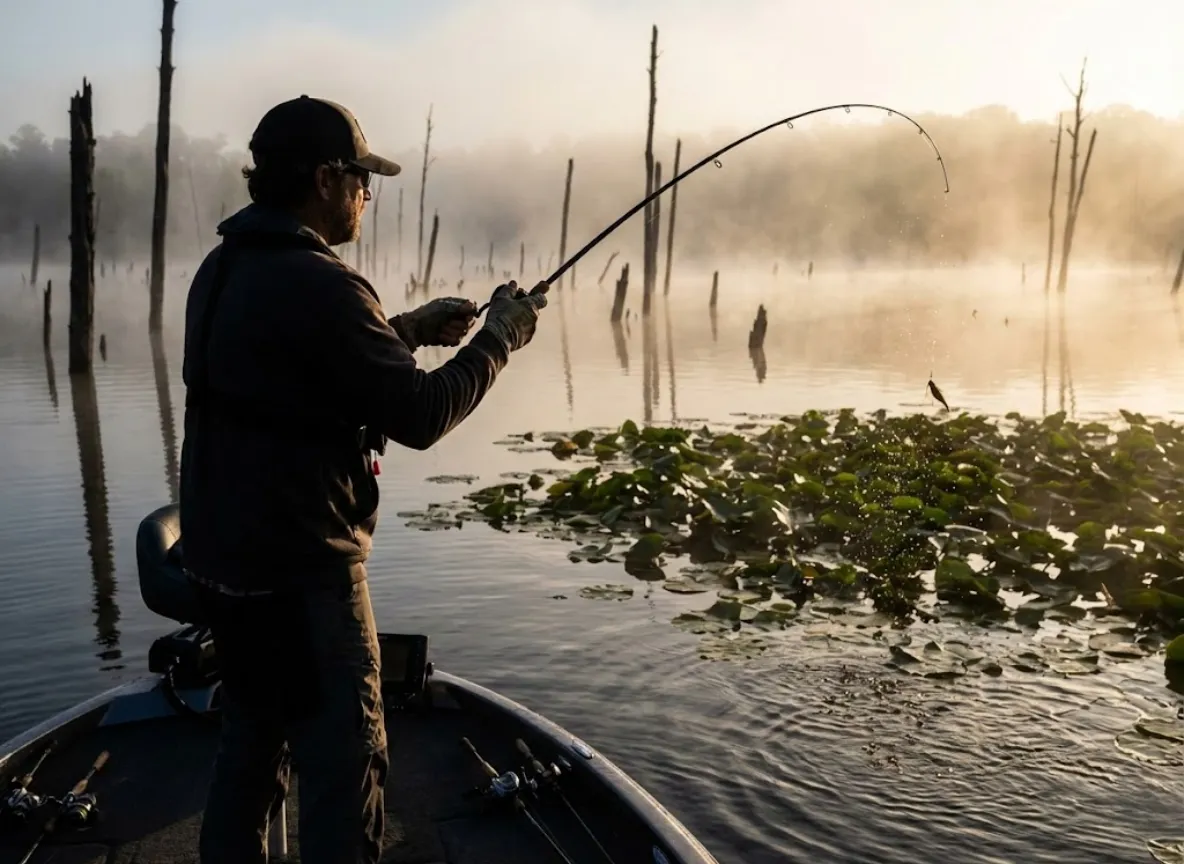
You stare at the thick mat of hydrilla or the maze of submerged timber, and your confidence wavers. The water is stained, the pressure is high, and the bass are buried deep in places where standard tackle goes to die.
Success isn’t about buying the lure with the flashiest packaging. It’s about understanding the physics of displacement and the biology of the ambush. The difference between a snagged lure and a livewell limit is strictly mechanical.
We are moving away from “fishing with hope.” We are moving toward fishing with calculated physics. We replace brand loyalty with data on cover deflection and hydraulic signature. This guide takes you from the overwhelming wall of lures at the tackle shop to a curated toolkit where every item has a specific job.
How to Choose the Right Lure: Physics Over Marketing
You need the objective knowledge to make a smart choice based on water conditions and fish behavior. Marketing sells lures to fishermen; physics catches fish.
Why Does “Cover Deflection” Matter More Than Color?
Deflection matters because bass are ambush predators that strike out of reflex rather than hunger. When a lure crashes into a stump and kicks sideways, it triggers a biological reaction that visual cues like color simply cannot replicate.
Bass prefer “heavy cover”—wood, rock, and weeds—that is mechanically hostile to hooks. This creates the Ambush Paradox: the fish are exactly where you are most likely to fail. The solution is deflection. It isn’t just about not getting stuck. The erratic motion generated when a lure collides with an obstacle is the primary trigger for a reaction strike.
Square bills, fiber weed guards, and recessed hook eyes are not just features; they are engineering solutions for “contact fishing.” Once you understand that hitting obstacles is the goal, not the mistake, you need to understand the ecosystem you are crashing into.
For a deeper look into the biology of these predatory instincts, the Virginia Department of Wildlife Resources offers excellent data on bass behavior in structured environments. Mastering the system for fishing heavy cover requires you to accept that your lure must physically interact with the environment to be effective.
The Situational Versatility Index (SVI): Maximizing Water Time
Every minute spent re-rigging is a minute the lure isn’t in the strike zone. This brings us to the Situational Versatility Index (SVI).
High SVI lures, like stick baits, work top-to-bottom. Low SVI lures, like deep crankbaits, are specialists. High SVI reduces the volume of tackle required to face diverse environmental conditions. It is about economic efficiency on the water.
Pro-Tip: If you have limited deck space on a kayak or small boat, prioritize High SVI lures to minimize clutter and maximize casts.
Versatility saves time, but maximizing that efficiency requires pairing the right lure with the correct line type. According to Michigan State University Extension, understanding aquatic environments is key to resource management, and this applies to your gear as well. You must understand the data-driven showdown of braid vs fluorocarbon vs monofilament to ensure your versatile lure can actually reach the depth you intend.
Our Selection Process: How We Built This Guide
We stripped away brand sentiment to focus strictly on mechanical function and biological triggers.
Every product was judged against six specific criteria, including Cover Deflection, Biomimetic Fidelity, and the Hookup-to-Landing Ratio. We analyzed search intent to isolate three distinct angler personas, matching specific tools to their unique behavioral needs.
A Note on Affiliate Links: We may earn a commission if you purchase through our links, but this never influences our scoring; functionality is the only currency we respect.
The Best Bass Lures of 2026: Our Top Recommendations for Every Need
Our Top Picks for The “Structure Siege” Specialist (Trophy Hunter)
Strike King Hack Attack Heavy Cover Jig
$$$$
This is the battering ram of your tackle box. Engineered specifically for the vertical ‘punching’ and ‘flipping’ technique, it is designed to extract bass from the densest mats where standard jigs fail. The cone-shaped head penetrates vegetation with minimal resistance, and the recessed line tie significantly reduces snagging on grass stems. However, be aware that the fiber weedguard is exceptionally stiff. If you are using light gear or have a weak hookset, you will miss fish because the guard requires significant force to collapse.
Overall
Situational Versatility (SVI)
Cover Deflection
Biomimetic Fidelity
Trigger Mechanism
Structural Durability
Weight Options3/8 oz to 1-1/4 oz
Terminal RiggingMin. 50lb Braid / Heavy Power Rod
EnvironmentHeavy Cover, Mats, Thick Brush
HookHeavy-wire Gamakatsu Siwash
You Should Buy This If…
You are targeting fish buried in thick hydrilla or wood.
You possess heavy-power gear (Rod + Braid).
You need a lure that is virtually indestructible.
You Should Reconsider If…
You are fishing open water with spinning gear.
You are using monofilament line (hook will not penetrate).
This legacy bait remains unrivaled for navigating ‘Slop and Pads.’ The Silver Minnow features a metal spoon body that rocks back and forth, creating a flash similar to a baitfish while the welded weed guard makes it mechanically weedless. It is often the only tool that can effectively be retrieved over lily pads and then flutter down into the pockets. The trade-off is the hook point; out of the package, the plating often dulls the tip, requiring you to sharpen it immediately before use to ensure a solid connection.
Overall
Situational Versatility (SVI)
Cover Deflection
Biomimetic Fidelity
Trigger Mechanism
Structural Durability
Weight Options1/2 oz, 3/4 oz
Terminal RiggingBall Bearing Swivel (Mandatory)
EnvironmentLily Pads, Hydrilla, Slop
MaterialSolid Metal Plating
You Should Buy This If…
You are fishing vast fields of lily pads or scum.
You need a search bait for heavy grass.
You want a lure that lasts a lifetime.
You Should Reconsider If…
You do not have a high-quality swivel (line twist is severe).
Designed for the thickest scum and duckweed, the hollow body collapses upon a strike to expose heavy, upward-facing hooks. The mouse variant includes a ‘fur’ texture that increases drag and provides a realistic mouthfeel, encouraging the bass to hold on longer. It triggers violent surface strikes that few other lures can match. However, the hollow body is prone to taking on water after several casts or a fish catch, forcing you to squeeze the lure constantly to restore its buoyancy.
Overall
Situational Versatility (SVI)
Cover Deflection
Biomimetic Fidelity
Trigger Mechanism
Hookup-to-Landing Ratio
Weight1/2 oz, 3/4 oz
Terminal Rigging50-65lb Braid (Direct Tie)
EnvironmentSurface Mats, Duckweed, Overhanging Trees
ActionTopwater / Collapsible Body
You Should Buy This If…
You are fishing warm water (>60°F) with surface vegetation.
You want high visual excitement (violent strikes).
You are skipping baits under docks.
You Should Reconsider If…
You cannot tolerate squeezing water out of a lure (water ingress).
You struggle with timing hooksets (bass often miss topwater).
Our Top Picks for The “Pattern Matcher” (Tournament/Versatile Angler)
Strike King KVD Squarebill Crankbait
$$$$
The KVD Squarebill is the archetype of ‘power fishing.’ Its square lip acts as a bumper; when the lure collides with a stump or rock, it deflects wildly, mimicking a panicked baitfish and triggering a reaction strike. This ‘hunting action’ where the lure wanders left and right is distinct and deadly. The primary downside is that on some older production batches, the stock treble hooks were known to be slightly weak, sometimes requiring an upgrade if you are targeting trophy-class fish.
Overall
Situational Versatility (SVI)
Cover Deflection
Trigger Mechanism
Hookup-to-Landing Ratio
Structural Durability
Depth Control3-5 feet (Shallow)
Terminal Rigging12-15lb Fluorocarbon
EnvironmentRip Rap, Stumps, Shallow Flats
ActionErratic ‘Hunting’ Wander
You Should Buy This If…
You need to cover shallow water quickly to find active fish.
You are fishing around hard cover (rocks/wood).
You want a lure that requires no tuning out of the package.
You Should Reconsider If…
You are fishing in heavy grass (trebles will foul).
Think of this as the ‘4-Wheel Drive’ of search baits. The War Eagle uses a light piano-wire frame to maximize vibration, allowing fish to track the lure via their lateral line in windy or murky conditions where visual contact is limited. It excels in adverse weather. The cost of this high-vibration wire frame is durability; because the wire is thin and flexible, it often bends out of shape after a rigorous fight, requiring you to tune it back into alignment manually.
This is the definitive tool for cold water (40-55°F). Designed to suspend neutrally, the ‘Twitch-Twitch-Pause’ cadence triggers strikes from lethargic bass that view the suspended item as a dying, vulnerable minnow requiring zero energy to capture. The strike almost always comes on the pause. However, the plastic bill is quite thin to achieve this specific action. If you slap the water to clear weeds or accidentally hit a bridge piling, the bill can snap, rendering the lure useless.
Overall
Situational Versatility (SVI)
Cover Deflection
Biomimetic Fidelity
Trigger Mechanism
Structural Durability
Depth Control3-6 feet (Suspends)
Terminal Rigging8-10lb Fluorocarbon (Light line essential)
EnvironmentClear Water, Cold Water, Points
ActionErratic Dart and Freeze
You Should Buy This If…
You are fishing in Winter or Pre-Spawn (Cold Water).
The water is clear and visibility is high.
You are targeting suspended fish not relating to bottom.
You Should Reconsider If…
You are fishing in heavy wood/brush (exposed trebles).
You tend to slap lures against bridges (fragile bills).
Our Top Picks for The “Finesse & Flow” Recreationalist (Weekend Warrior)
Gary Yamamoto Senko
$$$$
Widely regarded as the most effective bass lure in history due to its simplicity. The heavy salt impregnation causes it to sink horizontally with a subtle, tantalizing quiver on the fall that works even when the lure is sitting still. It requires zero skill to use—just cast and wait. The downside is simple economics: the soft plastic that gives it such great action is incredibly fragile. You will likely lose one bait for every single fish you catch, making it a recurring expense.
Overall
Situational Versatility (SVI)
Biomimetic Fidelity
Trigger Mechanism
Hookup-to-Landing Ratio
Structural Durability
Size5 inch standard
Terminal RiggingWeightless Texas Rig or Wacky Rig
EnvironmentDocks, Open Water, Bank Fishing
MaterialHigh Salt Content Soft Plastic
You Should Buy This If…
You need a ‘guaranteed’ bite in tough conditions.
You are fishing from the bank or a kayak.
You want a lure that works in all seasons.
You Should Reconsider If…
You are on a strict budget (high cost-per-fish due to fragility).
This soft plastic minnow imitator glides and darts erratically when twitched, mimicking a dying shad. Because it is rigged with a hidden hook (Texas Rig), it can be worked aggressively through grass and cover where a hard jerkbait would snag. It is a weedless assassin. However, rigging is critical. If the hook is not perfectly centered, the bait will spin like a propeller during the retrieve, causing severe line twist that can ruin your spool of line.
We have covered the physics of the bite and the tools required to generate it.
Versatility wins. The “Senko” and “Spinnerbait” offer the highest utility per dollar because they work in multiple depth ranges. Deflection is key. In power fishing, if you aren’t hitting the cover, you aren’t triggering the reaction strike.
Match the mechanics. Use heavy braid for frogs and jigs to penetrate thick jaws. Use stretchy mono for crankbaits to prevent ripping hooks out of the fish’s mouth.
Don’t just buy a lure; buy a solution for a specific layer of the water column. Check your tackle box today. If you don’t have a “Surface Mat” tool or a “Cold Water” suspension tool, fill that gap before your next trip.
FAQ – Frequently Asked Questions
How do I choose the right color lure for bass?
Focus on water clarity rather than preference. In clear water (>4ft visibility), use natural Ghost or Green Pumpkin patterns. In muddy water (<1ft), use Black or Blue or Chartreuse to create a distinct silhouette and contrast against the gloom.
What is the best lure for a beginner to start with?
The Gary Yamamoto Senko (rigged weightless Texas style) is the statistically safest starting point. It requires no complex retrieval technique. Simply cast it out, let it sink on a slack line, and watch the line move.
Can I use topwater frogs all year round?
No, topwater effectiveness is heavily temperature-dependent. Frogs are most effective when water temperatures exceed 60°F (late Spring through early Fall). In winter, bass are generally too lethargic to chase surface baits.
Why do I keep losing fish on my crankbait?
You are likely using a rod that is too stiff or line that doesn’t stretch. Switch to a Medium power rod (fiberglass is best) or monofilament line. This absorbs the shock of the fish’s fight without tearing the treble hooks out.
Risk Disclaimer: Fishing, boating, and all related outdoor activities involve inherent risks that can lead to injury. The information provided on Master Fishing Mag is for educational and informational purposes only. While we strive for accuracy, the information, techniques, and advice on gear and safety are not a substitute for your own best judgment, local knowledge, and adherence to official regulations. Fishing regulations, including seasons, size limits, and species restrictions, change frequently and vary by location. Always consult the latest official regulations from your local fish and wildlife agency before heading out. Proper handling of hooks, knives, and other sharp equipment is essential for safety. Furthermore, be aware of local fish consumption advisories. By using this website, you agree that you are solely responsible for your own safety and for complying with all applicable laws. Any reliance you place on our content is strictly at your own risk. Master Fishing Mag and its authors will not be held liable for any injury, damage, or loss sustained in connection with the use of the information herein.
Affiliate Disclosure: We are a participant in the Amazon Services LLC Associates Program, an affiliate advertising program designed to provide a means for us to earn advertising fees by advertising and linking to Amazon.com. As an Amazon Associate, we earn from qualifying purchases. We also participate in other affiliate programs and may receive a commission on products purchased through our links, at no extra cost to you. Additional terms are found in the terms of service.