
In this article
You stand knee-deep in a riffle, the water pressing against your waders, watching a brown trout refuse your fly for the tenth time. It is not bad luck, and it is likely not your cast; it is a failure of translation. The river is speaking a biological language—a specific dialect of emergence, drift, and vulnerability—and successful angling requires you to become fluent in it.
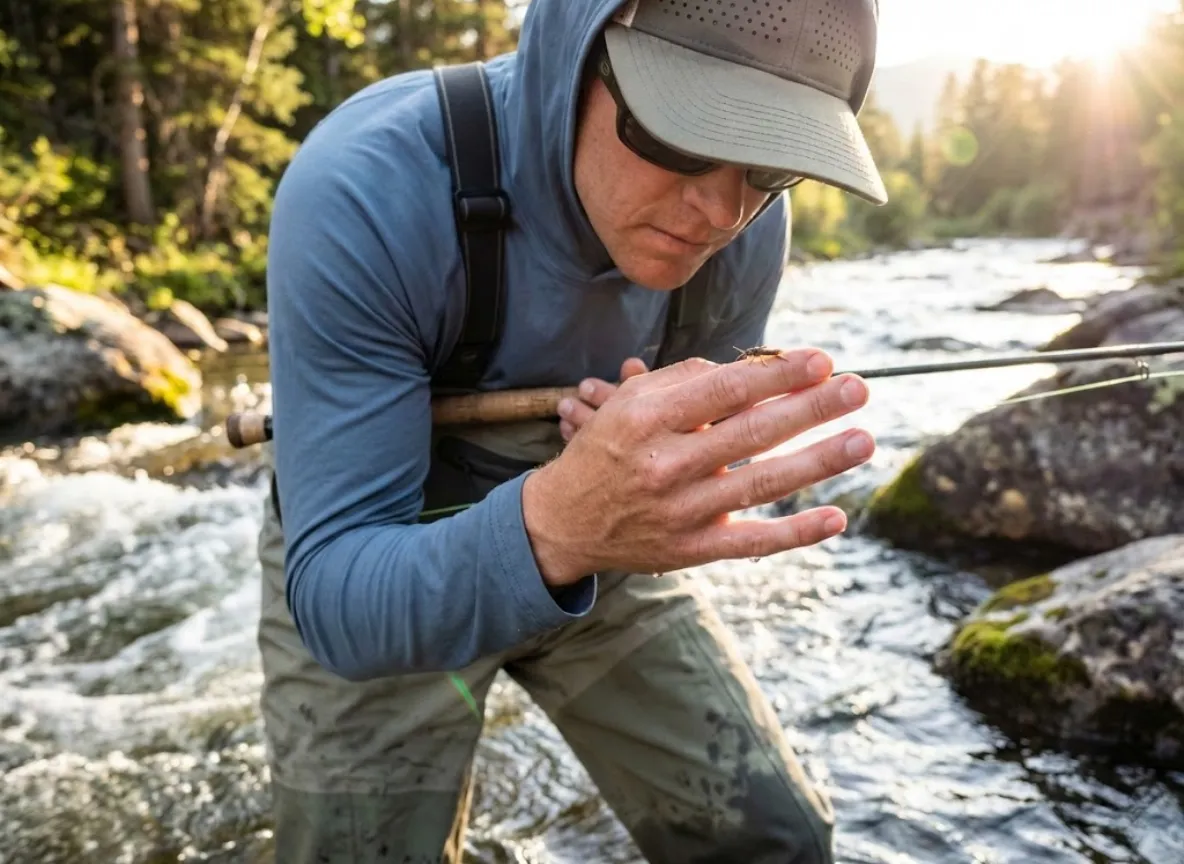
I have spent decades on the water, both as a guide and a student of the stream, and I have learned that “matching the hatch” is rarely about having the perfect Latin name memorized. It is about recognizing morphology, size, and behavior.
By the end of this guide, you will move from guessing at fly patterns to observing the water, identifying the “Big 4” aquatic insect orders, and selecting your fly with instinctual confidence. We will strip away the scientific jargon and focus on the biological triggers that actually make a hungry fish open its mouth.
Why Does Aquatic Entomology Matter for Anglers?
We often overcomplicate fly fishing strategy, but at its core, it is a game of calories. Trout are energy-efficient predators that operate on a strict bioenergetic calculation: the energy gained from eating must exceed the energy expended to capture the food. If your fly doesn’t look like an easy, high-calorie meal, the fish simply won’t move.
How does the “90% Rule” change your fishing strategy?
The single most important statistic in fisheries science is that trout do approximately 90% of their feeding underwater. While we all love the visual thrill of a dry fly fishing take, it represents a tiny fraction of a trout’s diet.
Scientific analysis of trout diet in montane streams consistently reveals that subsurface trout food sources—nymphs, aquatic larvae, and pupae drifting in the current—dominate the menu. These immature insects are helpless drifters, providing a steady conveyor belt of food that requires very little energy for the gamefish to intercept.
Accepting this ratio forces a strategic pivot in your approach. To increase your catch rate, you must prioritize nymph fishing rigs and subsurface presentations. This biological reality explains why a proficient nymph angler will often out-fish a dry fly purist by a significant margin. You are simply putting the fishing flies where the fish spend the majority of their time feeding.
However, knowing they are eating underwater is only step one. You need a systematic, beginner-friendly blueprint for freshwater success that teaches you how to rig and present these subsurface flies effectively. Once you accept that most of the game is played beneath the surface, the next challenge is understanding exactly what is drifting past the trout’s nose.
How Do You Identify the “Big 4” Aquatic Insects?
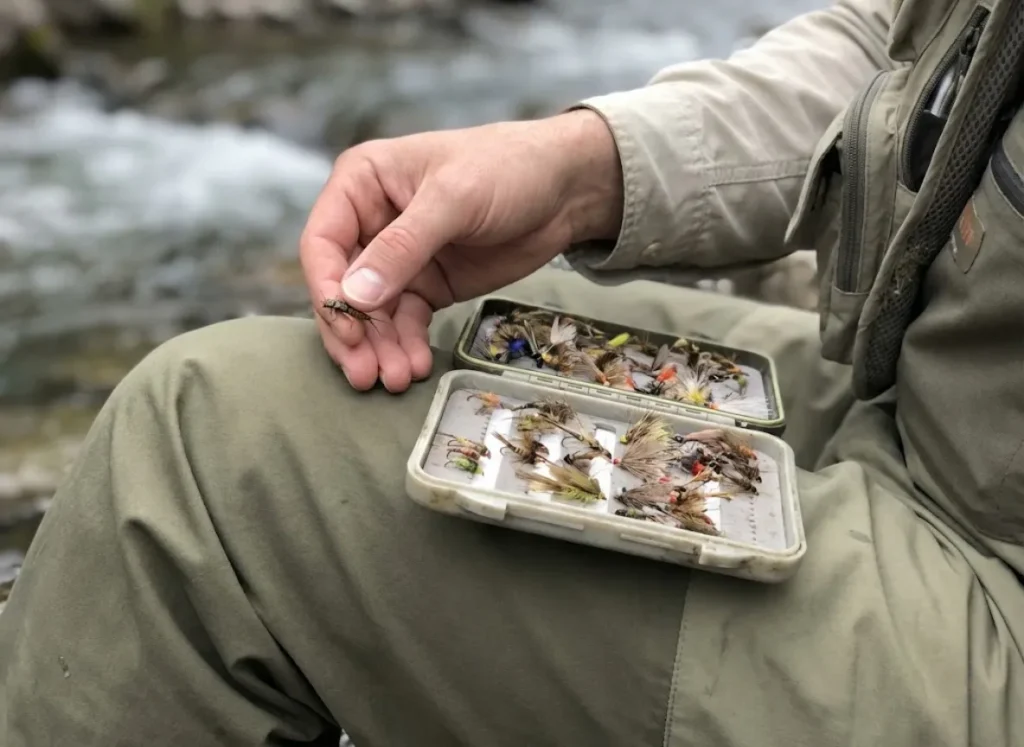
Freshwater ecology is complex, but for the angler, we can simplify the vast majority of trout stream insects into four main groups: Mayflies, Caddisflies, Stoneflies, and Midges. You do not need a microscope on the river; you only need to look for identification features—specifically wing shape and tails.
What distinguishes a Mayfly from a Caddis, Stonefly, or Midge?
The “Big 4” can be quickly identified by a simple visual triage. Mayflies (Ephemeroptera) are the “little sailboats” of the river. They are recognized by upright wings that cannot fold flat against their bodies and distinct tails (usually three, sometimes two) extending from the segmentation of the abdomen. If it looks elegant and fragile, it is likely a mayfly.
Caddisflies (Trichoptera) resemble moths (which belong to the order Lepidoptera). They are characterized by “tent-shaped” wings that fold roof-like over the body. Crucially, they lack tail filaments entirely and often sport long antennae.
Stoneflies (Plecoptera) present a different profile. They are flat and rectangular, with flat wings that fold parallel to the body. They have strictly two tails and are often found crawling on streamside rocks rather than flying gracefully.
Finally, Midges (Diptera) are the smallest of the group. They look like mosquitoes without the bite. They have only two wings (Diptera means “two wings”) and often appear as undefined “clusters” on the water’s surface rather than individual insects.
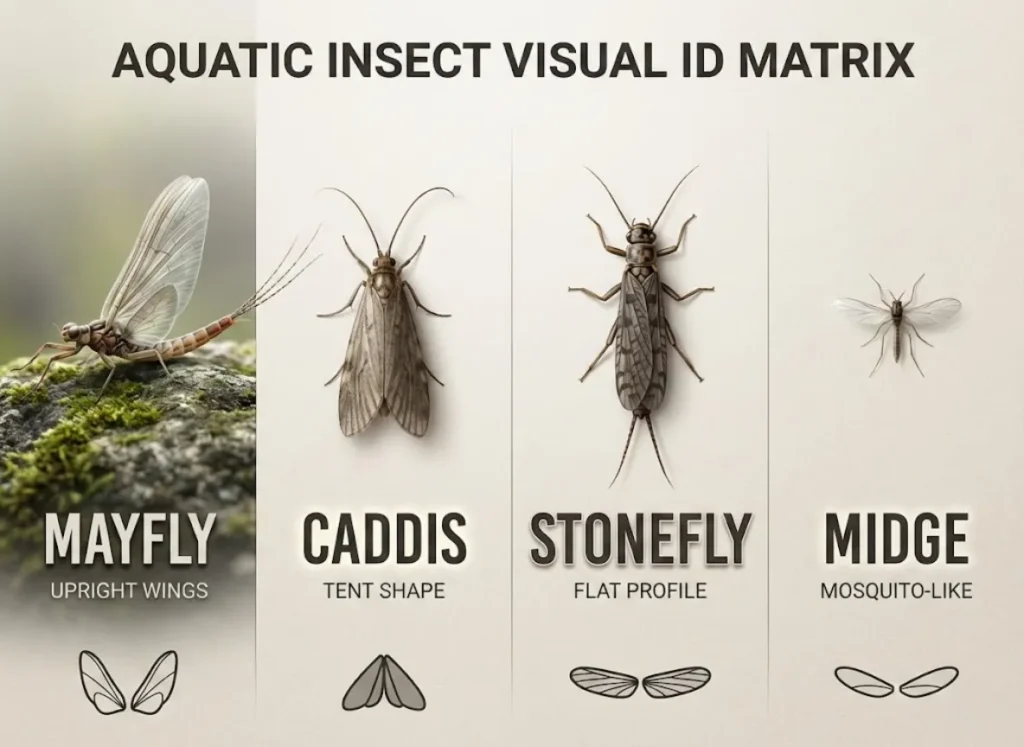
Mastering this quick visual identification allows you to open your fly box and eliminate 75% of your patterns, focusing only on the insect orders currently present on the water.
Reliable identification keys for aquatic insect orders confirm these visual distinctions, providing the scientific basis for what we see on the water. Once you can identify the bug, you can consult a skill-based plan that demystifies beginner fly fishing gear to ensure you have the right rod and fishing line weight to deliver the appropriate imitation.
Order 1: Ephemeroptera (Mayflies) – The Drifters
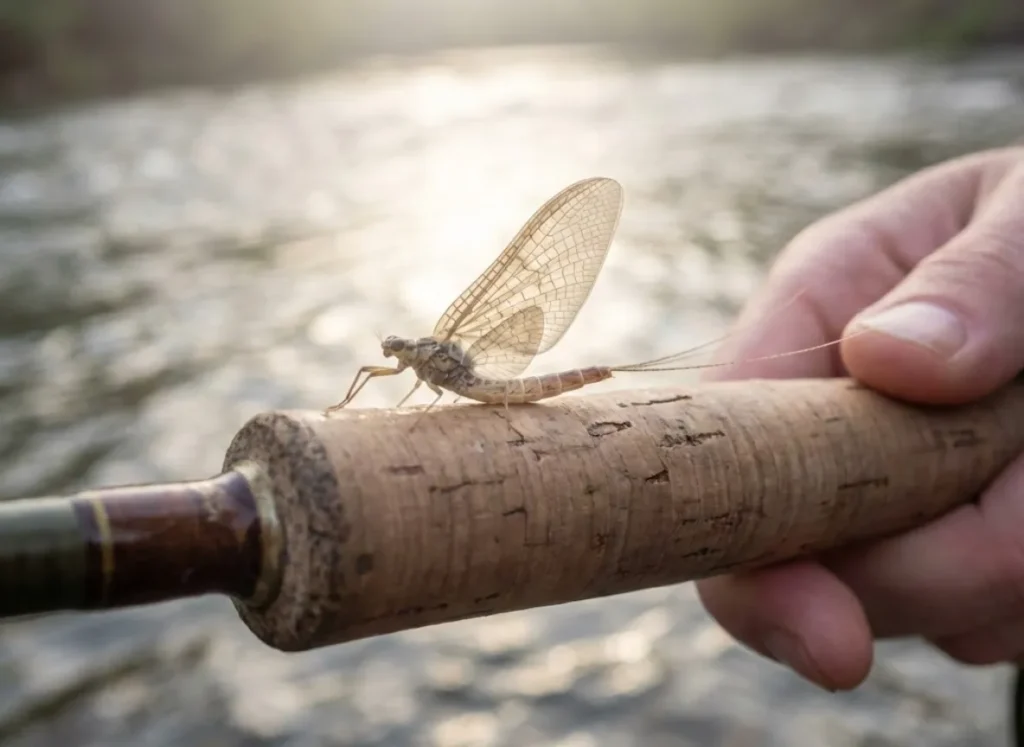
Mayflies are perhaps the most iconic aquatic insect, known for their graceful, upright posture on the water. For the angler, their life cycle is defined by one word: drift.
How does the Mayfly life cycle dictate fly selection?
Ephemeroptera undergo incomplete metamorphosis. They transition directly from egg to nymph to adult (dun) without a pupal stage. This simplifies our fly matching matrix. The Nymph stage is the longest and most available phase. These insects are poor swimmers and are typically swept along the river bottom. Patterns like the Pheasant Tail Nymph or Hare’s Ear Nymph drifted near the substrate are deadly because they mimic this helpless drift behavior.
The Dun (Subimago) is the newly emerged adult. It rides the surface current like a sailboat while drying its wings. This is the phase perfectly matched by the Parachute Adams or Sparkle Dun. Specific hatches like the Blue Winged Olive (BWO), Pale Morning Dun (PMD), Green Drake, March Brown, or Hendrickson dictate the size and color profile you should choose.
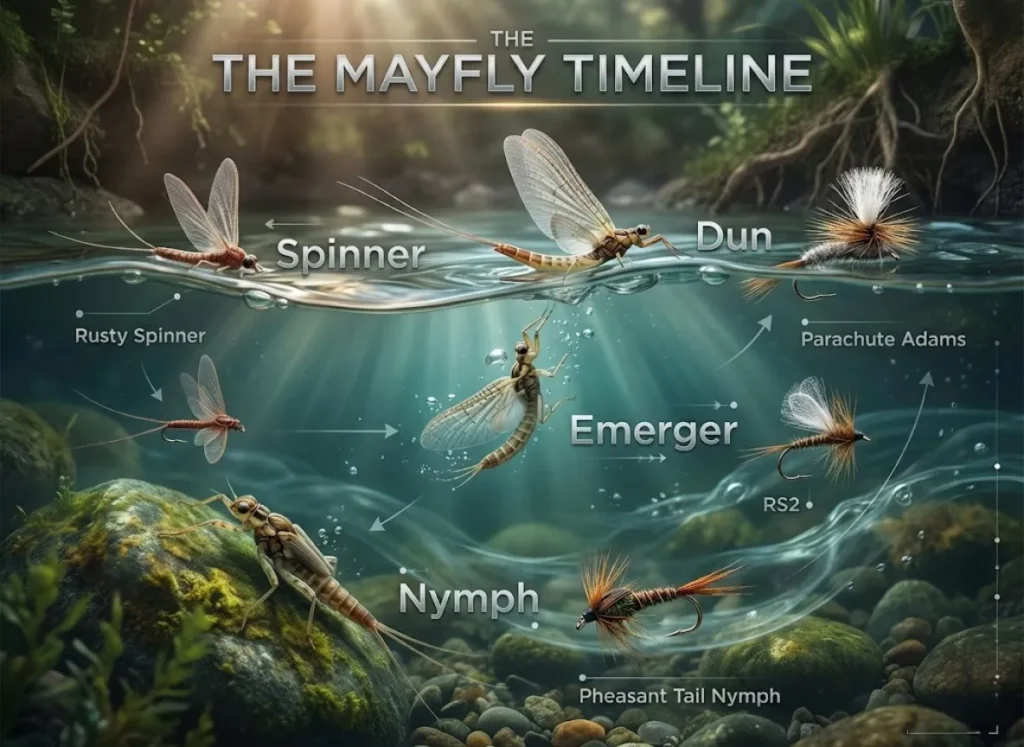
The final stage is the Spinner (Imago). This occurs after mating when the adults fall spent to the water surface, their wings splayed flat. A “spinner fall” often happens in the evening and requires flush-floating patterns, particularly for species like the Trico (Tricorythrodes) or the massive burrowing mayflies like the Hexagenia.
Pro-Tip: Watch the rise form. If the splash is aggressive, the trout is likely chasing an emerging nymph just below the surface (try an RS2). If the rise is a gentle, rhythmic sip that barely breaks the water, the trout is likely eating spent spinners trapped in the surface film.
Studies on sedimentation impacts on mayfly habitat highlight that these nymphs require specific substrates to thrive. Understanding where they live connects directly to your Field Guide to Reading a River, helping you identify the specific current seams where dead-drifting a nymph will be most effective.
Order 2: Trichoptera (Caddisflies) – The Architects
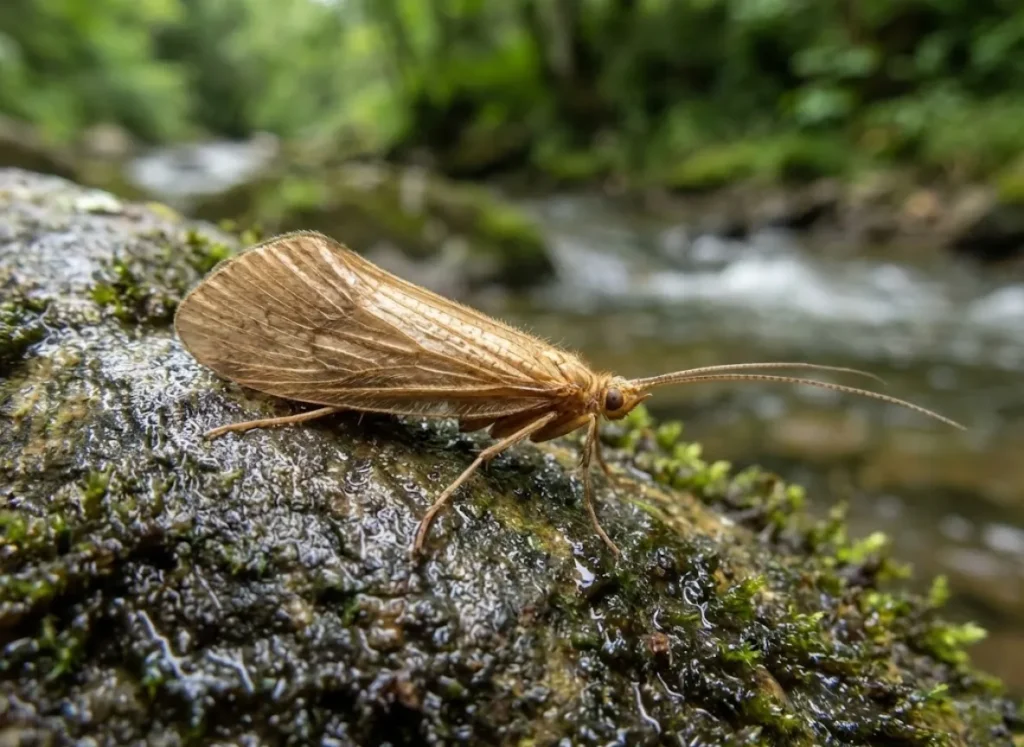
While mayflies are passive drifters, caddisflies (Trichoptera) are active. Their life cycle is different, and their behavior during emergence can trigger some of the most aggressive strikes you will experience from rainbow trout and brown trout alike.
How does the “Gas Bubble” phenomenon affect presentation?
Unlike mayflies, caddisflies undergo complete metamorphosis, which includes a critical Pupal stage. The insect transforms inside a cocoon or protective case (often mimicked by green rock worms) on the river bottom before ascending to the surface. To make this journey quickly, the pupa generates or traps gases inside its shuck.
This creates a layer of air that sparkles and reflects light underwater. This “Gas Bubble” is a primary trigger for trout, making the ascending pupa highly visible and distinguishing it from other debris in the water column.
Anglers mimic this using patterns like the LaFontaine Sparkle Pupa, which utilizes trilobal Antron yarn to trap air bubbles and replicate that natural sparkle. Because caddis pupae use their fringed legs to swim fast toward the surface, a static dead-drift is often less effective.
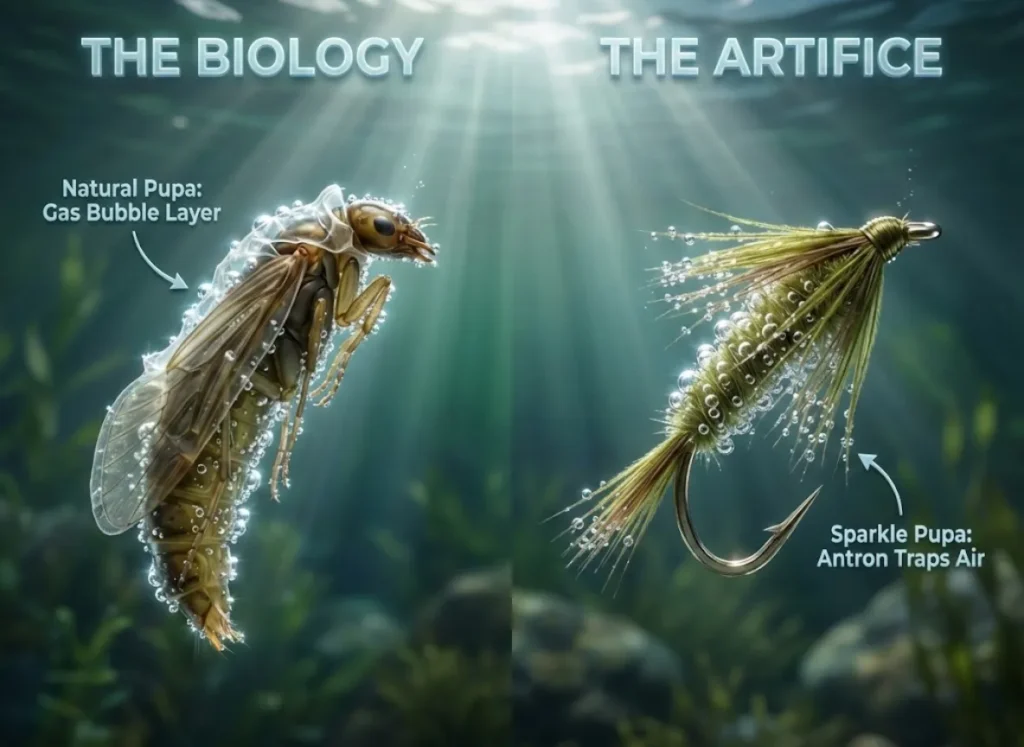
Instead, apply a “swing” or “lift” to the fly. The “Leisenring Lift”—stopping the rod tip to let the current lift the fly vertically—perfectly imitates the fast, gas-aided ascent of the natural insect. When adults are present, such as during the famous Mother’s Day Caddis hatch, an Elk Hair Caddis skittered across the surface can induce explosive takes.
Detailed aquatic critters identification booklet resources reinforce the unique morphology of caddis larvae, including their case-building behavior. To effectively fish these swimming pupae, you need the definitive guide for river anglers on managing line tension in complex currents.
Order 3: Plecoptera (Stoneflies) – The Indicators
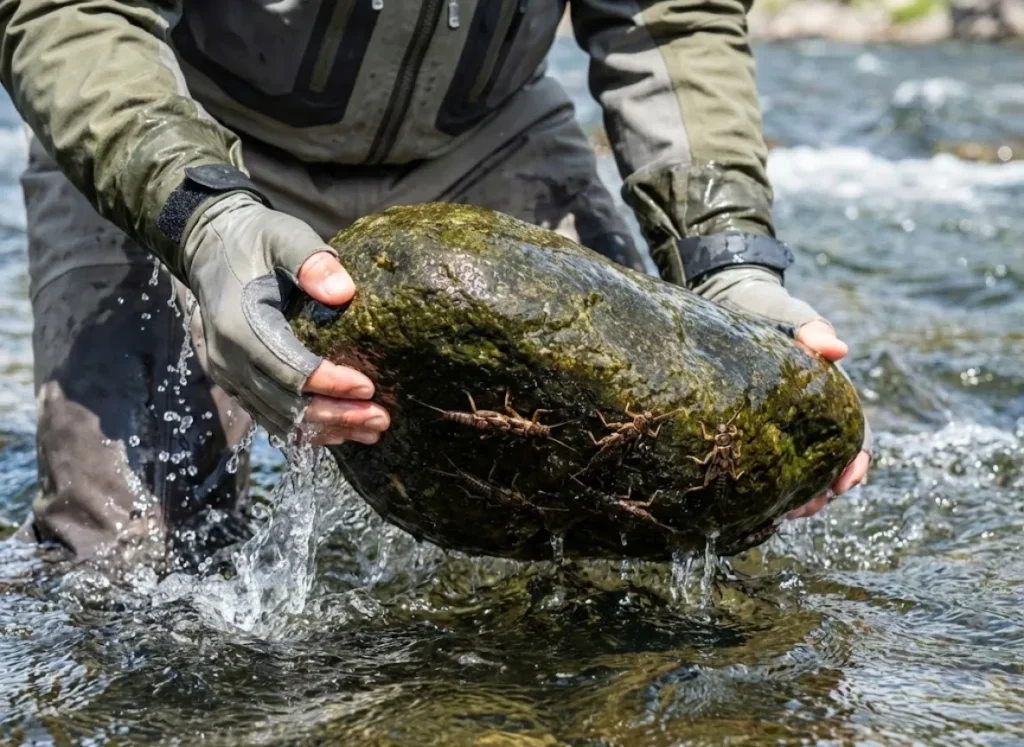
Stoneflies (Plecoptera) are the giants of the river. They require pristine, cold, oxygen-rich water. If you see stoneflies—whether giant Salmonflies or bright Yellow Sally species—you know the river is healthy.
How does the “Great Migration” crawl affect your fishing tactics?
Stoneflies are poor swimmers. To survive, they act as clingers on rocks in fast riffles and tumbling pocket water. Their emergence behavior is unique: unlike mayflies or caddis that swim to the surface, stonefly nymphs crawl along the river bottom to the shoreline to hatch on dry land.
This mass movement is known as the “Great Migration.” It occurs in the days leading up to a hatch and concentrates massive numbers of large nymphs in the shallow water along the banks. This is prime time for patterns like the Golden Stone.
Anglers can capitalize on this by fishing large, heavy nymph patterns like Pat’s Rubber Legs, Copper John, or Girdle Bugs. Fish them on a short leash right against the bank structure. Because these nymphs are easily dislodged by the current during their clumsy migration, dead-drifting them through heavy, turbulent runs is a high-probability tactic. Even winter stoneflies provide action in the coldest months.
Recognizing Plecoptera as key bio-monitoring using benthic macroinvertebrates indicators reminds us of the fragility of these ecosystems. This connection underscores the importance of fish conservation for anglers, ensuring these clean-water indicators continue to thrive.
Order 4: Diptera & The Supporting Cast – The Year-Round Biomass
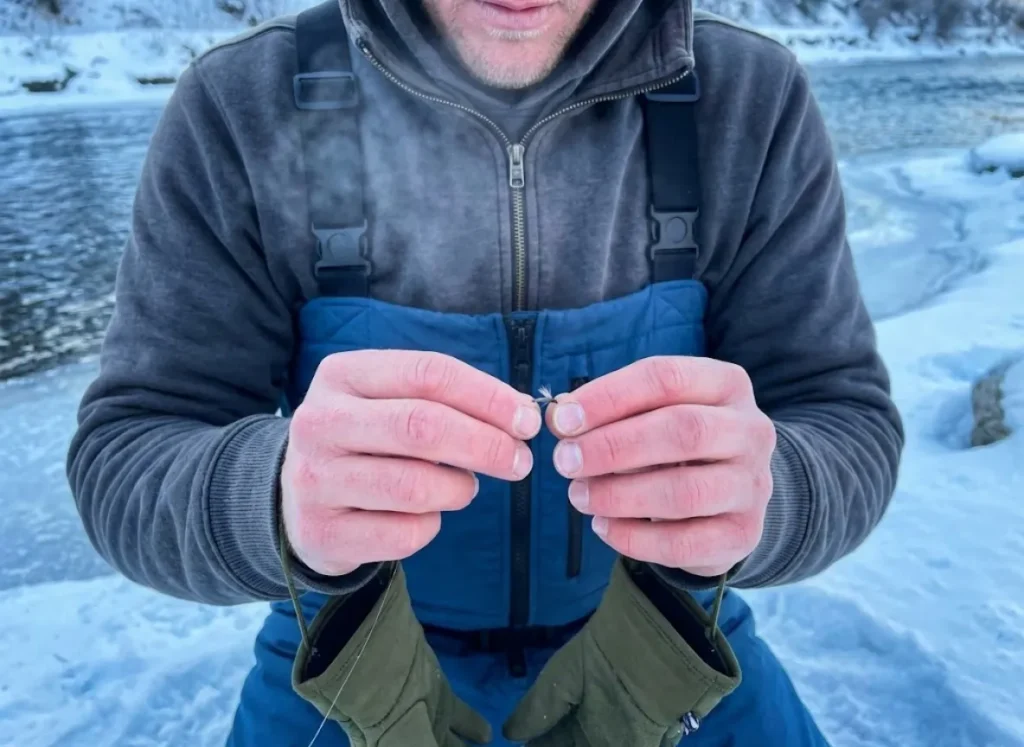
When the major hatches end and winter sets in, the river does not go dormant. The smallest insects and other invertebrates become the most important trout food sources.
Why are Midges and Crustaceans the most consistent food source?
Midges (Chironomids) are the most ubiquitous aquatic insect, found in virtually every body of freshwater. They remain active year-round. In winter months or on nutrient-rich tailwaters, midges—often supplemented by high-protein crustaceans like freshwater shrimp (scuds) and sowbugs—can comprise over 50% of the total biomass.
Because individual midges are tiny (sizes #20–#26), trout often sip them gently in the surface film. These subtle rise forms are easily mistaken for refusals. Patterns like the Zebra Midge (larva/pupa) and Griffith’s Gnat (mimicking a cluster of mating adults) are essential tools for selective feeding fish.
Success requires light tippets and precise dead drifts. The sheer abundance of naturals allows trout to be incredibly selective about drag and presentation. Additionally, large predatory larvae like craneflies (Tipulidae) and leeches (often imitated by a Woolly Bugger) provide substantial meals for big fish.
Pro-Tip: If you are fishing a midge larva pattern and getting refusals, try dropping a size smaller or changing the color from red to cream. In the microscopic world, small changes make big differences.
Understanding scud ecology and seasonal availability helps you identify when to switch from midges to high-protein crustaceans. This knowledge is a cornerstone of our definitive blueprint, revealing how water temperature governs trout metabolism during the colder months.
Beyond the Big 4: Terrestrials and Others
While aquatic insects dominate, don’t ignore what falls in from above. Terrestrials such as ants, beetles, and grasshoppers become critical in late summer. Even damselflies and dragonflies are key food sources in stillwaters and slow pools.
Putting Theory into Practice
To become a complete angler, you must look below the surface. Remember the core principles we have covered:
- The Subsurface Mandate: 90% of a trout’s diet is underwater; prioritize nymphing techniques.
- The ID Matrix: Use wing shape and tails to instantly categorize insects into the “Big 4.”
- Locomotion Dictates Presentation: Drift the Mayfly, swing the Caddis, and dredge the Stonefly.
- Context is King: Adjust your strategy based on the season, from winter Midges to summer Salmonflies.
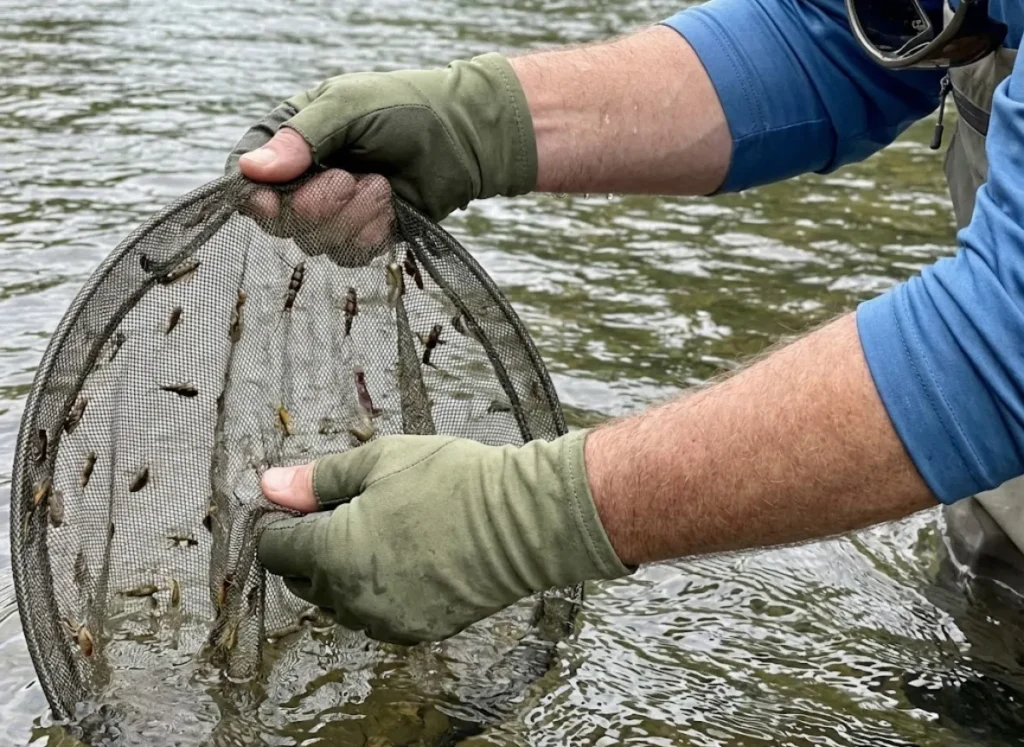
Next time you are on the water, take five minutes to turn over a rock before you make your first cast. Look at what is crawling there. Share your “seine sample” findings in the comments below to help other anglers track the hatches in your region.
FAQ – Frequently Asked Questions
What is the difference between a nymph and a larva?
A nymph is the immature stage of an insect undergoing incomplete metamorphosis (like Mayflies and Stoneflies) and resembles the adult. A larva is the immature stage of an insect undergoing complete metamorphosis (like Caddisflies, Midges, alderflies, or fishflies) and typically looks worm-like or distinctly different from the adult.
How do I match the hatch if I don’t have the exact fly?
Focus on Size, Shape, and Color in that order of priority. If you can match the silhouette and insect size of the natural insect, trout will often forgive a slight mismatch in color or specific pattern.
When is the best time of day to fish dry flies?
Dry fly fishing generally peaks during morning and evening low-light periods when insects are hatching (emerging) or mating (spinner falls). Mid-day fishing is typically slower unless there is heavy cloud cover or a specific hatch like PMDs.
Do trout eat terrestrial insects?
Yes, especially in late summer and early fall. Ants, beetles, and grasshoppers (terrestrials) become a critical food source when aquatic hatches dwindle, often triggering aggressive strikes near grassy banks.
Risk Disclaimer: Fishing, boating, and all related outdoor activities involve inherent risks that
can lead to injury. The information provided on Master Fishing Mag is for educational and informational purposes
only. While we strive for accuracy, the information, techniques, and advice on gear and safety are not a substitute
for your own best judgment, local knowledge, and adherence to official regulations. Fishing regulations, including
seasons, size limits, and species restrictions, change frequently and vary by location. Always consult the latest
official regulations from your local fish and wildlife agency before heading out. Proper handling of hooks, knives,
and other sharp equipment is essential for safety. Furthermore, be aware of local fish consumption advisories. By
using this website, you agree that you are solely responsible for your own safety and for complying with all
applicable laws. Any reliance you place on our content is strictly at your own risk. Master Fishing Mag and its
authors will not be held liable for any injury, damage, or loss sustained in connection with the use of the
information herein.
Affiliate Disclosure: We are a participant in the Amazon Services LLC Associates Program, an
affiliate advertising program designed to provide a means for us to earn advertising fees by advertising and linking
to Amazon.com. As an Amazon Associate, we earn from qualifying purchases. We also participate in other affiliate
programs and may receive a commission on products purchased through our links, at no extra cost to you. Additional
terms are found in the terms of service.