
In this article
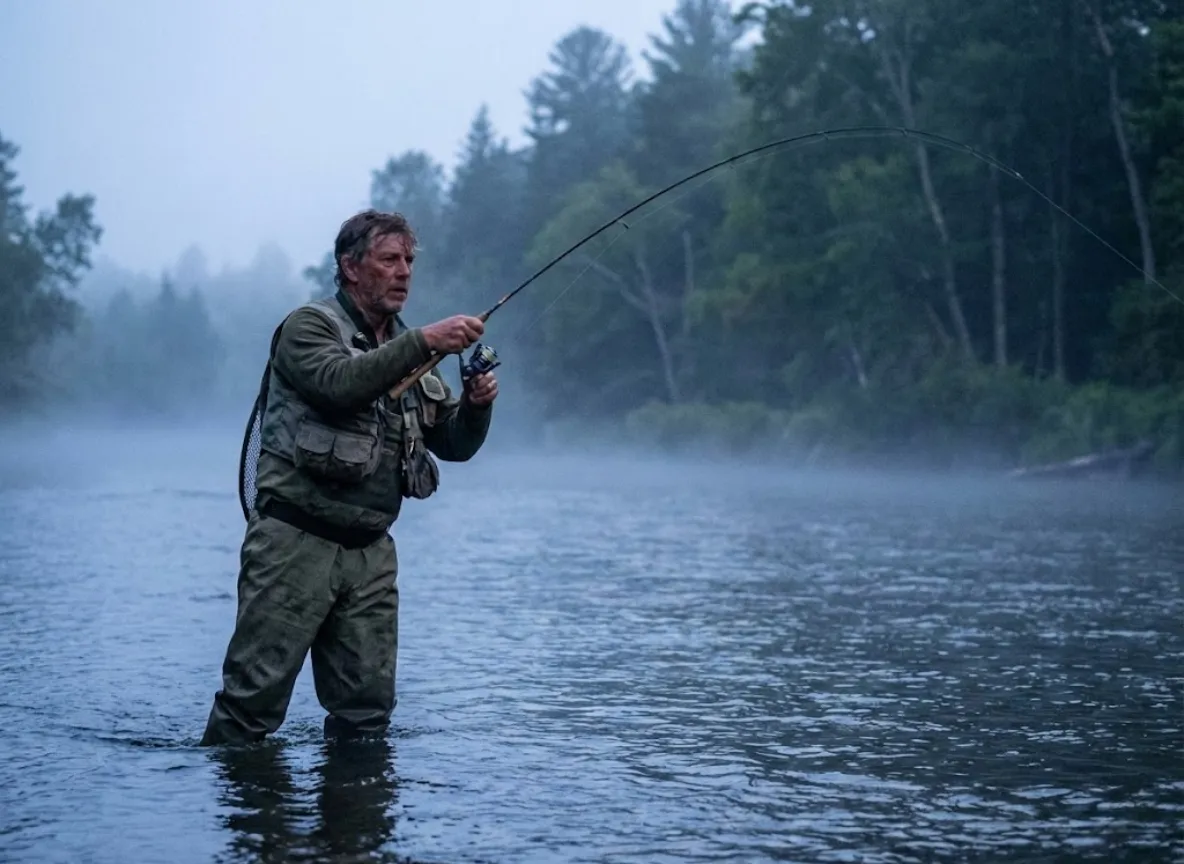
The water at your local stocked ponds or small lakes is likely still, opaque, and forgiving. Standing on the bank with a tub of neon dough bait offers a comforting sense of certainty. You cast out, wait, and eventually, something pulls back. But the river is different. It is a chaotic system of hydraulic energy, invisible currents, and wary predators like brown trout and brook trout.
The river demands more than just patience; it demands technical competence. Transitioning from the comfort of the pond to the complexity of the stream is the defining moment in your growth as a freshwater fishing enthusiast. It requires you to stop hoping to “catch something” and start understanding the biological and physical forces at play.
To make this transition, we move past luck. We look at the specific biology of the fish, the physics of your spinning rod and line, and the hydrodynamics of the water itself. This is how you turn theoretical knowledge into the confident ability to hunt trout in moving water.
What Distinguishes a Stocked Trout from a Wild Trout?
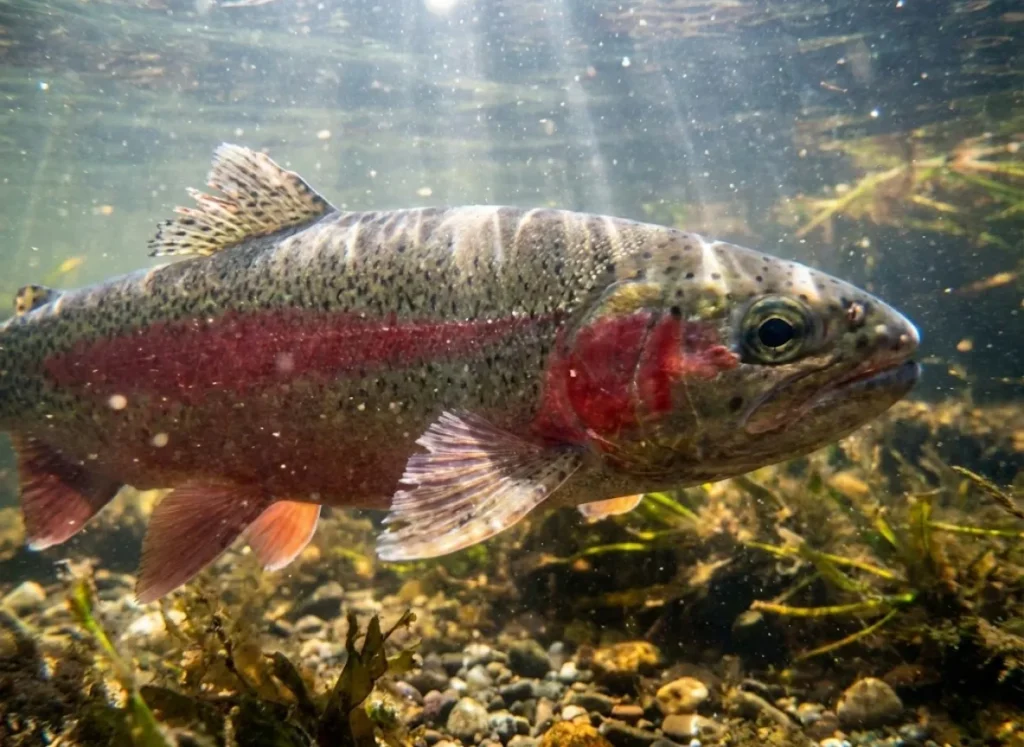
To catch a trout, you must first understand the origin of the fish you are targeting. There is a fundamental biological difference between a hatchery clone and a wild fish. This difference dictates your entire angling strategy, whether you are chasing rainbow trout in a city park or cutthroat trout in a mountain creek.
Why do hatchery fish behave differently than wild fish?
Hatchery fish—often called “stockers”—are conditioned products of industrial aquaculture. Raised in concrete raceways, they spend their early lives in high-density schools, competing for overhead pellet feeding. This environment creates a behavioral signature characterized by hyper-aggression and elevated metabolic rates. They often attack movement out of curiosity or a competitive reflex. This makes them susceptible to “reaction strikes” on high-visibility artificial baits, even if the presentation looks nothing like natural food.
In contrast, wild trout (and native trout populations) operate strictly under the “Optimal Foraging Theory.” They will not expend more calories fighting the current than they stand to gain from a food source. While a stocked rainbow trout might chase a lure halfway across a pool, a wild brown trout requires precise delivery. You can learn more about these specific behaviors in our guide to strategic rainbow trout facts, which profiles the species’ instincts in depth.
Pro-Tip: Time is your enemy with stocked fish. USGS telemetry studies indicate that stocked populations often experience high mortality within 90 days due to predation and starvation. Don’t wait for “better conditions.” The best time to fish for stockers is immediately after the truck leaves.
Switching your mindset is crucial. When targeting fresh stockers in lakes or ponds, you are using “Interception” strategies based on agitation. When targeting wild fish in streams, you must switch to “Presentation” strategies based on stealth, water clarity, and energy efficiency.
What Gear Do You Actually Need to Start?

Marketing will tell you that you need expensive gear to look the part. Physics tells a different story. The “Value-for-Money” ratio in entry-level trout angling comes down to material science. This is specifically true regarding how your rod transfers energy and how your line cuts through water.
How does rod “modulus” affect your ability to feel a bite?
Rod performance is largely defined by the modulus of the graphite. Low modulus materials, like the fiberglass composites found in many durability-focused rods (such as the classic Ugly Stik), are parabolic. They bend deeply and are incredibly tough. However, that flexibility dampens vibration. High modulus graphite is stiffer and lighter, transmitting vibrations from the tip to your hand almost instantly.
For a beginner using a standard 6-7ft rod length, the trade-off is between survivability and sensitivity. In moving water, a wild trout’s bite is often just a subtle interruption of the lure’s drift. To detect this, you generally need the sensitivity of a graphite ultralight rod. But be warned: graphite is brittle. It will fracture if impacted against a tree branch or “high-sticked” past 90 degrees. You can explore the mechanics of rod power vs action decoded to help you decide if you need a rugged composite for bushwhacking or a sensitive graphite tool for technical drifts.
Why is line diameter the most critical variable in your setup?
In a river current, your fishing line acts as a sail. Thicker line has more surface area, creating “hydrodynamic drag.” This force pushes your lure up toward the surface and away from the strike zone. By using 4-6lb test monofilament line (approx. 0.20mm) instead of 8lb test, you allow the lure to cut through the current and maintain a natural depth.
Members of the Salmonidae family possess acute vision. Thick, opaque lines cast shadows and refract light, triggering an avoidance response in clear water. While research in the Transactions of the American Fisheries Society highlights visual acuity in feeding hierarchies, the practical application is simple: go thinner.
Monofilament is excellent for learning because it stretches, acting as a shock absorber. However, as you advance to more technical waters, you may want to look at fluorocarbon line. Our comparison of braid vs fluorocarbon vs monofilament explains how fluorocarbon’s refractive index makes it nearly invisible underwater, a distinct advantage in pressured streams.
How Do You “Read” a River to Locate Fish?
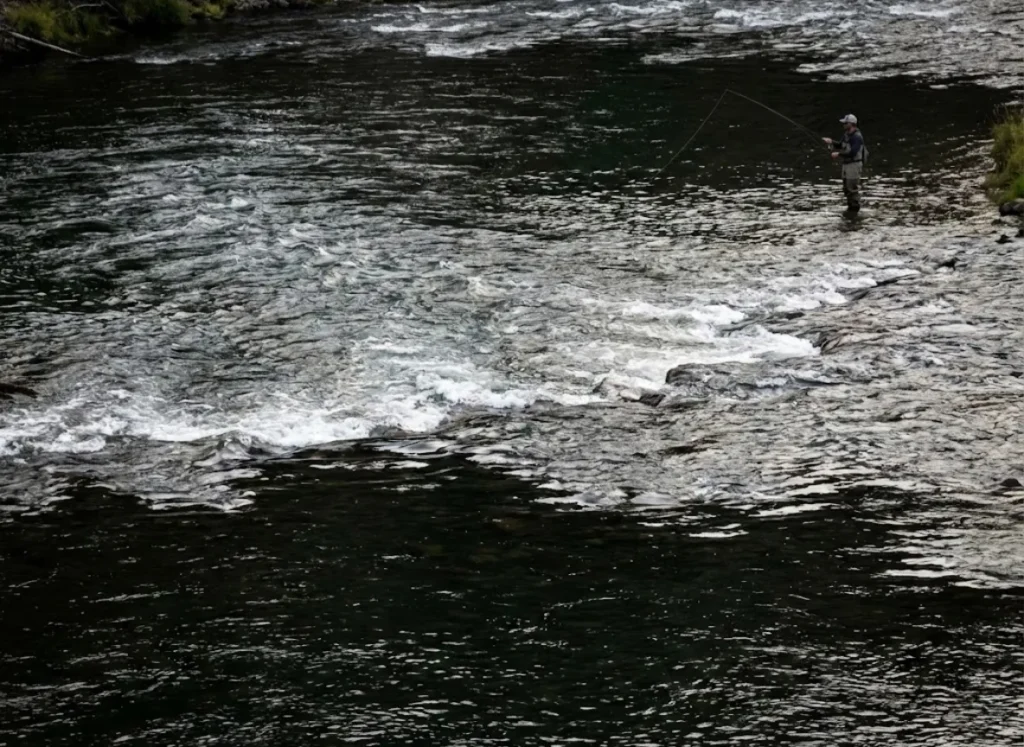
You cannot catch what you cannot find. Success in a river environment isn’t about covering water randomly with a spoon or spinner. It is about mapping the subsurface structure by analyzing surface turbulence.
Where do trout position themselves in a current?
Trout adhere to bioenergetics. They seek “velocity breaks”—areas where friction from the riverbed slows the water. This allows them to hold position behind rocks or logs with minimal effort while fast water delivers food right to their face. The most prominent feature to look for is the “Seam.”
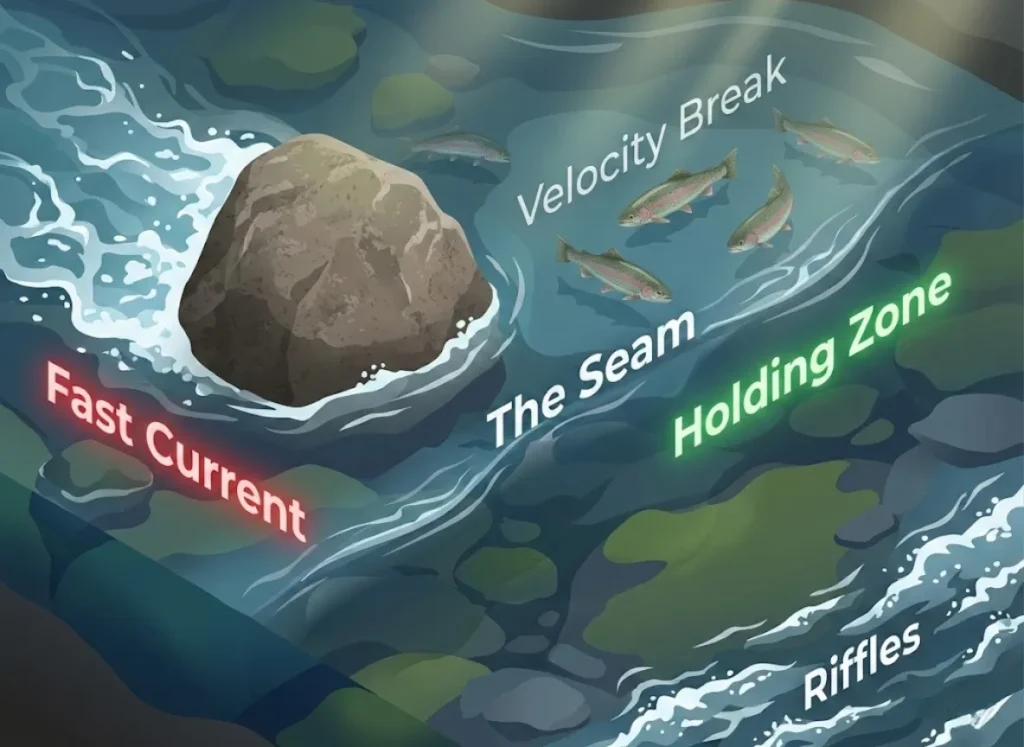
Riffles are another key feature. These choppy, shallow sections act as oxygenators and food factories. The broken surface provides overhead cover, making fish feel secure enough to feed aggressively, even in shallow water. The Ausable River Association notes that these features are often the most productive parts of a stream, yet beginners often walk past them to find deep pools.
Deep pools offer security, but they often contain complex, recirculating currents called eddies. Fish in an eddy often face downstream—into the recirculating current—which reverses the logic of your approach. To truly master this, you need a field guide to reading a river, which breaks down the hydrology of tailouts, runs, and drop-offs in detail.
Which Rigging Strategies Work Best for Each Environment?
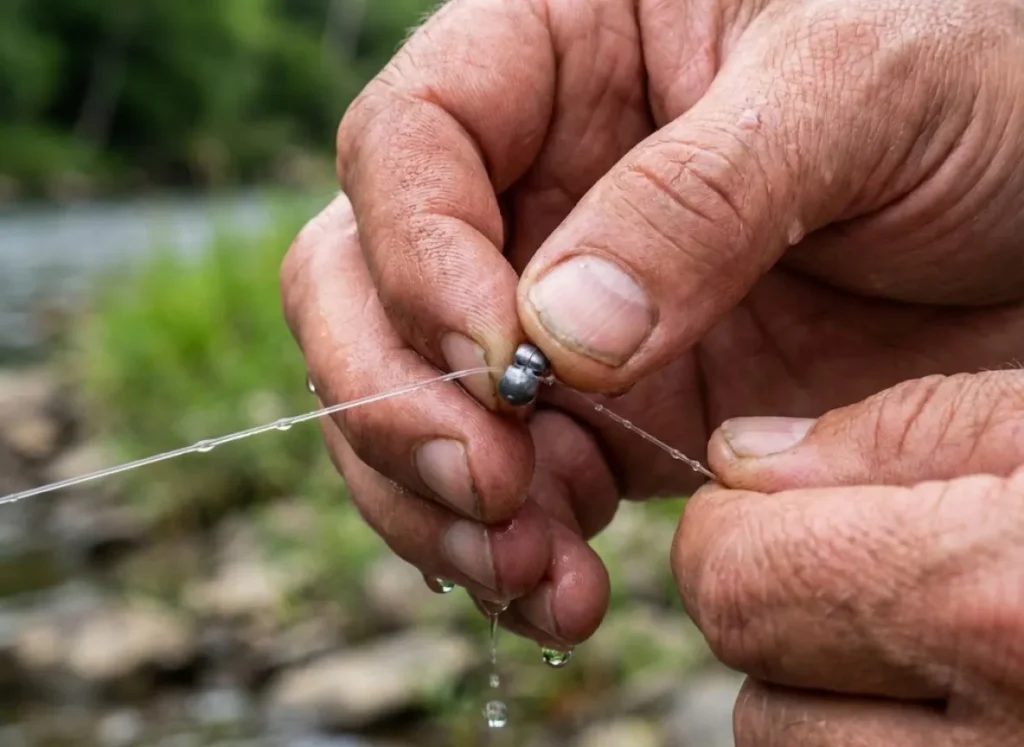
A rig that works for stocked ponds will often fail in a river, and vice versa. The physics of static water versus moving water requires two completely different approaches to weight distribution and bait selection.
How should you rig for static water (stocked ponds)?
Stocked ponds usually have silt or weed bottoms. If you cast a heavy lure effectively, it will bury itself in the muck, disappearing from view. The solution is a “Suspension Rig” or a floating bait setup.
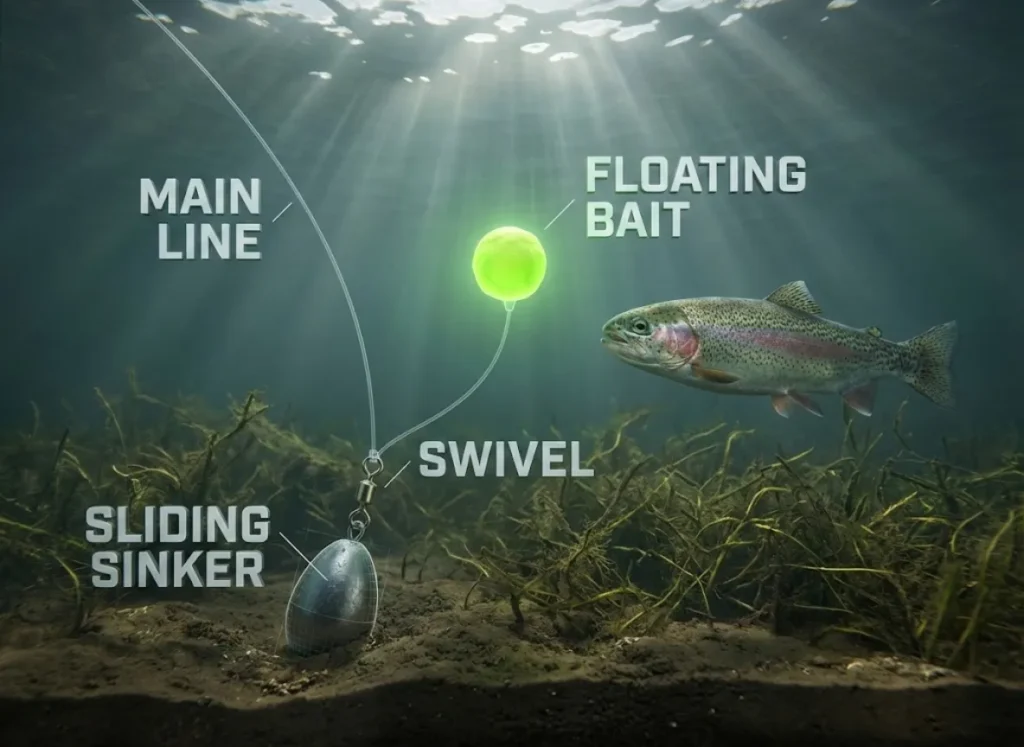
Commercial dough baits, like Berkley PowerBait or Power Eggs, are formulated to float. Using a sliding sinker rig (often called a Carolina Rig) allows the weight to anchor on the bottom while the bait floats up. Common alternatives include trout marshmallows or inflated nightcrawlers. When a fish takes the bait, the line slips through the weight, so the fish feels no resistance. This pond fishing system relies on scent and high-contrast colors (Chartreuse or Rainbow) to stimulate the hatchery fish’s conditioning. Patience is the tactic here; you are setting an ambush and waiting for the fish to cruise by.
How do you adjust your presentation for moving water?
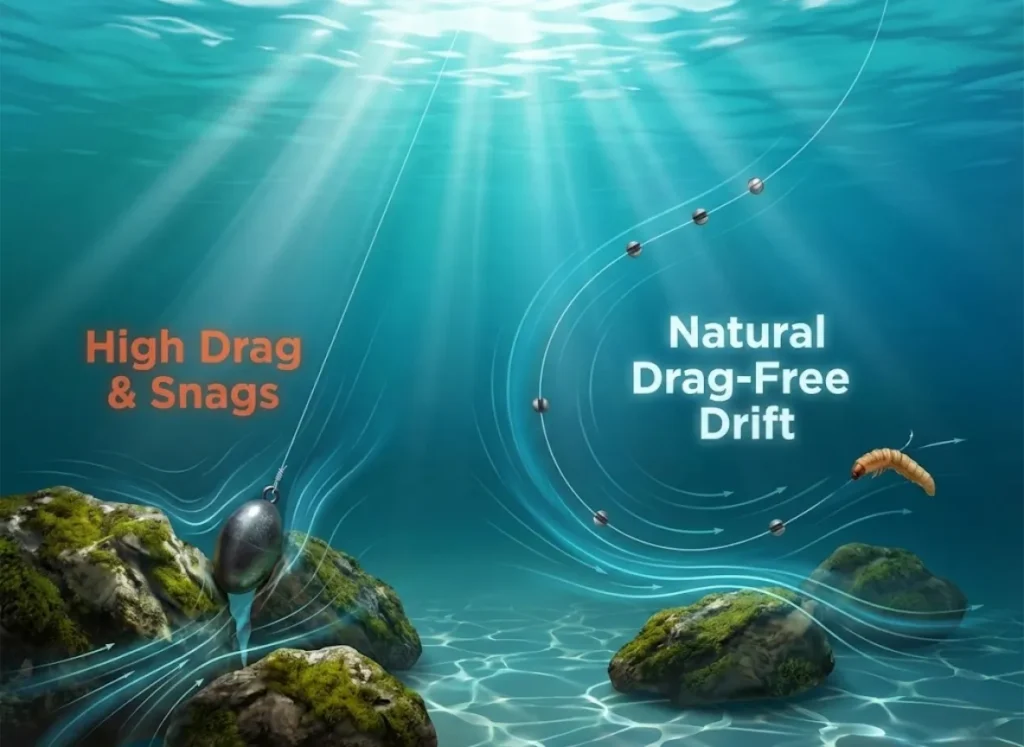
When you step into the river, the water moves the bait for you. However, current creates “Micro-Drag.” If you use a surface bobber, the fast surface water will drag your bait along the bottom at an unnatural speed.
Pro-Tip: Abandon the single large split shot. Use the “Shirt Button” pattern. Space several small split shots (size #6 or #8) evenly along the line. This creates a flexible arc that drifts naturally over rocks, whereas a single heavy weight acts as a hinge that snags constantly.
Your goal is a “Drag-Free Drift,” where the bait (often mealworms, wax worms, or salmon eggs) tumbles along the bottom at the exact speed of the current. To achieve this, you must “mend” your line—lifting the belly of the line off the water to prevent the current from catching it. This is the core of fishing in current. Strike detection becomes visual; you aren’t waiting for a tug, but watching for your line to hesitate or straighten for a fraction of a second.
If you prefer lures, moving water is ideal for spinners like the Rooster Tail or Mepps, as well as spoons like the Kastmaster.
What Are the Rules of Ethical Catch and Release?
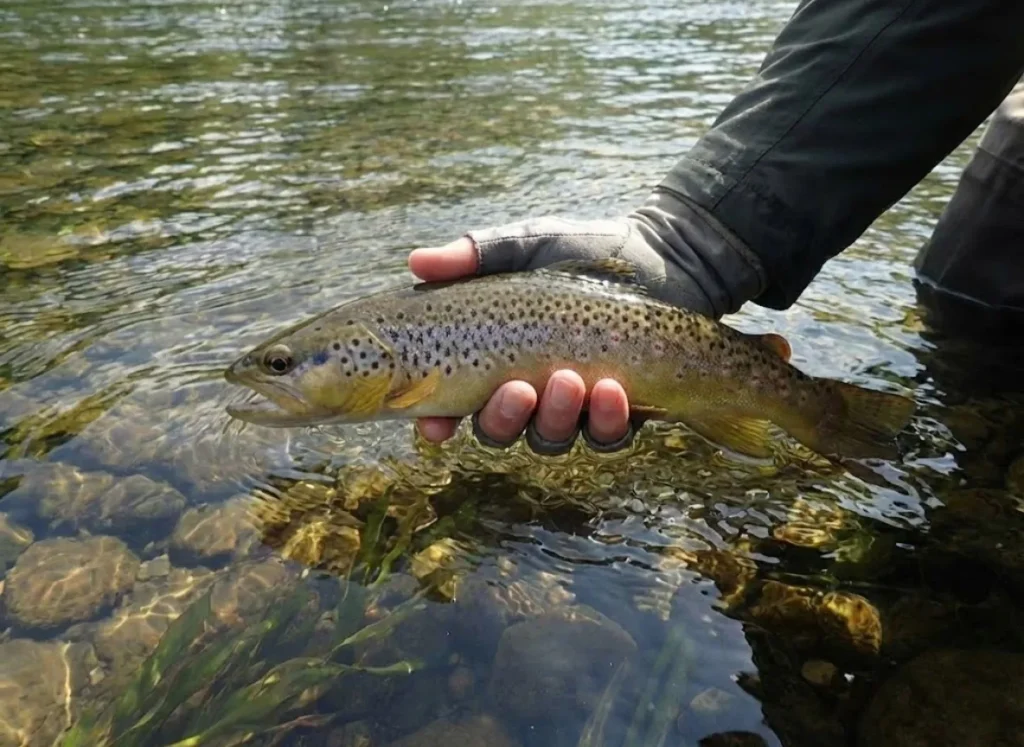
Your legacy as a sustainable angler is defined not by what you catch, but by what you release to swim another day. We must move beyond simple politeness and understand the physiological boundaries of safe fish handling.
Why is the “30-Second Rule” critical for trout survival?
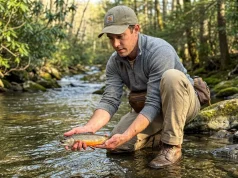
Trout physiology is highly sensitive to air exposure. Their gill lamellae collapse out of water, halting gas exchange immediately. Scientific studies support a strict “30-Second Rule.” Handling times under this threshold show minimal impairment, while exposure exceeding 60 seconds often leads to a loss of equilibrium and eventual death.
The “Slime Coat” (Mucin) is the fish’s immune system. Dry hands or cotton gloves strip this layer, leading to fungal infections like Saprolegnia days after the fish swims away. The Virginia Department of Wildlife Resources emphasizes that wetting your hands is not optional—it is a physiological imperative.
“Keep Em Wet” protocols ensure the fish survives the encounter. Use rubber nets rather than knotted nylon, which acts like sandpaper on the fish’s skin. If a size 8 hook is deep, cut the line. The hook will rust out, but extended surgery out of water will kill the fish. For a comprehensive breakdown of sustainable practices, review our guide on data-backed catch and release techniques.
Defining the Angler’s Evolution
The journey from the stocked pond to the wild river is a shift in competence. You are moving from a world where fish are aggressive and plentiful to an environment where they are efficient and wary.
- Biology: You now understand that hatchery trout respond to aggression, while wild trout respond to energy efficiency.
- Physics: You know that 4-6lb test line and sensitive rods are tools of precision, essential for defeating drag.
- Hydrodynamics: You can read the “Seams” and “Riffles” to predict where fish hold.
- Ethics: You accept the responsibility of the 30-second rule to prevent delayed mortality.
True outdoor competence comes from turning this theoretical knowledge into practical, confident action.
FAQ – Frequently Asked Questions
What is the best bait for stocked trout?
Berkley PowerBait (Dough or Eggs) is generally the most effective choice. It uses strong scent and color to trigger hatchery-conditioned fish. It works best when fished on a sliding sinker rig to float above bottom weeds.
Do I really need 4lb test line for trout?
Yes. Thicker line creates drag in the current that makes your lure move unnaturally. Additionally, trout have excellent eyesight and will often shy away from visible, heavy lines.
How do I tell where the fish are in a river?
Look for the Seam, which is the visible line where fast current meets slow water. Trout hold in the slow water to save energy while watching the fast water for passing food.
Can I use a regular spinning rod for trout?
You can, but a Light or Ultralight power rod is significantly better. It allows you to cast lightweight lures further and acts as a shock absorber to prevent the small hooks from tearing out of the trout’s soft mouth.
Risk Disclaimer: Fishing, boating, and all related outdoor activities involve inherent risks that
can lead to injury. The information provided on Master Fishing Mag is for educational and informational purposes
only. While we strive for accuracy, the information, techniques, and advice on gear and safety are not a substitute
for your own best judgment, local knowledge, and adherence to official regulations. Fishing regulations, including
seasons, size limits, and species restrictions, change frequently and vary by location. Always consult the latest
official regulations from your local fish and wildlife agency before heading out. Proper handling of hooks, knives,
and other sharp equipment is essential for safety. Furthermore, be aware of local fish consumption advisories. By
using this website, you agree that you are solely responsible for your own safety and for complying with all
applicable laws. Any reliance you place on our content is strictly at your own risk. Master Fishing Mag and its
authors will not be held liable for any injury, damage, or loss sustained in connection with the use of the
information herein.
Affiliate Disclosure: We are a participant in the Amazon Services LLC Associates Program, an
affiliate advertising program designed to provide a means for us to earn advertising fees by advertising and linking
to Amazon.com. As an Amazon Associate, we earn from qualifying purchases. We also participate in other affiliate
programs and may receive a commission on products purchased through our links, at no extra cost to you. Additional
terms are found in the terms of service.