

In this article
The wind on the divide screams at 40mph, stripping the heat from your layers, but your mind drifts to the gear sitting in your unheated garage. A seized drag washer or a warped rod blank on the first warm Saturday of spring is not an accident; it is the calculated result of neglect. The specific failure of equipment—whether it is phase-separated fuel destroying an injector on your outboard motors or a cracked transducer element—begins the moment the gear is tossed into the corner.
In my years guiding fishing tours, targeting everything from Arctic Grayling in high-alpine reservoirs to Rainbow Trout on technical tailwaters, I have learned that winterizing is not just cleaning. It is a strategic asset preservation protocol for fishing & outdoor recreation. True outdoor competence is demonstrated not just in the catch, but in the stewardship of the tools that make the catch possible. This technical winterization masterguide replaces anecdotal habits with a scientifically grounded protocol to preserve the mechanical and digital integrity of your arsenal.
Here is how we move from anxiety about improper storage to a confident “Total Lifecycle Management” approach. We will cover structural integrity for fishing rods, tribology for fishing reels, power management for lithium batteries, and the chemical security needed to prevent fuel disasters before the next fishing season.
Why Does Winter Dormancy Destroy Fishing Equipment?
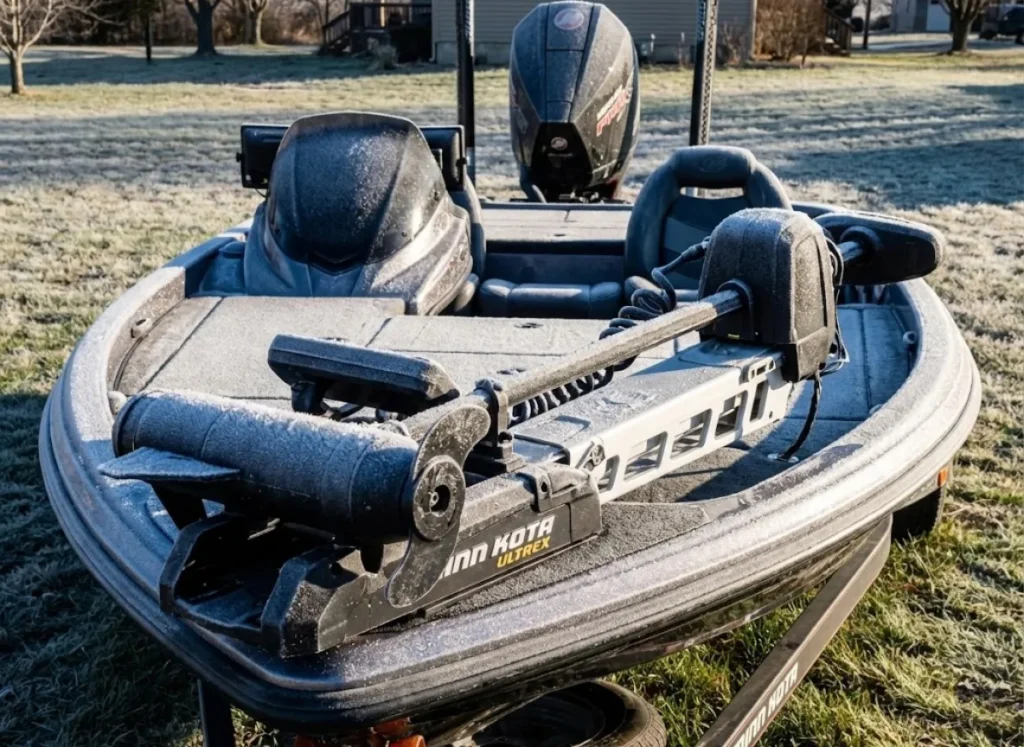
Environmental degradation operates through physics and chemistry—specifically creep, oxidation, and thermal cycling—creating invisible threats that manifest only when you try to use your gear months later.
How Do Temperature Fluctuations and Static Loads Impact Materials?
The cold itself is rarely the issue; the problem lies in the fluctuation. Repeated freezing and thawing in a standard storage unit or shed causes expansion and contraction in composite materials. When you consider the science of graphite vs glass rods, you realize that different materials react differently to these shifts. Aluminum housings and graphite blanks expand at different rates, potentially loosening tolerances or cracking epoxy finishes.
Warm days following cold nights create “humidity chambers” inside tackle boxes and reel housings. This accelerates rust and corrosion on metal parts that look pristine on the outside. To avoid storing your gear in areas with extreme temperatures or high humidity, seek out climate-controlled storage if possible, keeping the humidity level between 30–50%.
Beyond temperature, gravity is a silent destroyer. Static load creep occurs when gravity acts on unsupported rod blanks stored horizontally. Over months, this leads to permanent warping. Research on steel storage racks corroborates how static loads induce warping, a principle that applies directly to the resin and fiber matrix of your fishing rods.
Inside your fishing reel, a similar phenomenon called “compression set” occurs. If you leave your drag setting tightened, the washers lose their elastic memory. They flatten out, resulting in a drag that stutters or fails under load during spring re-entry.
Chemical and electronic threats are equally aggressive. Ethanol fuel is hygroscopic, meaning it attracts atmospheric moisture, leading to phase separation. Meanwhile, rapid temperature drops can cause piezoelectric stress, potentially delaminating the epoxy potting in high-tech sonar transducers. And for the modern angler using lithium power banks or boat batteries, lithium plating is a real danger; charging a lithium battery below freezing can permanently destroy it.
How Should Anglers Preserve Rods and Reels for Long-Term Storage?
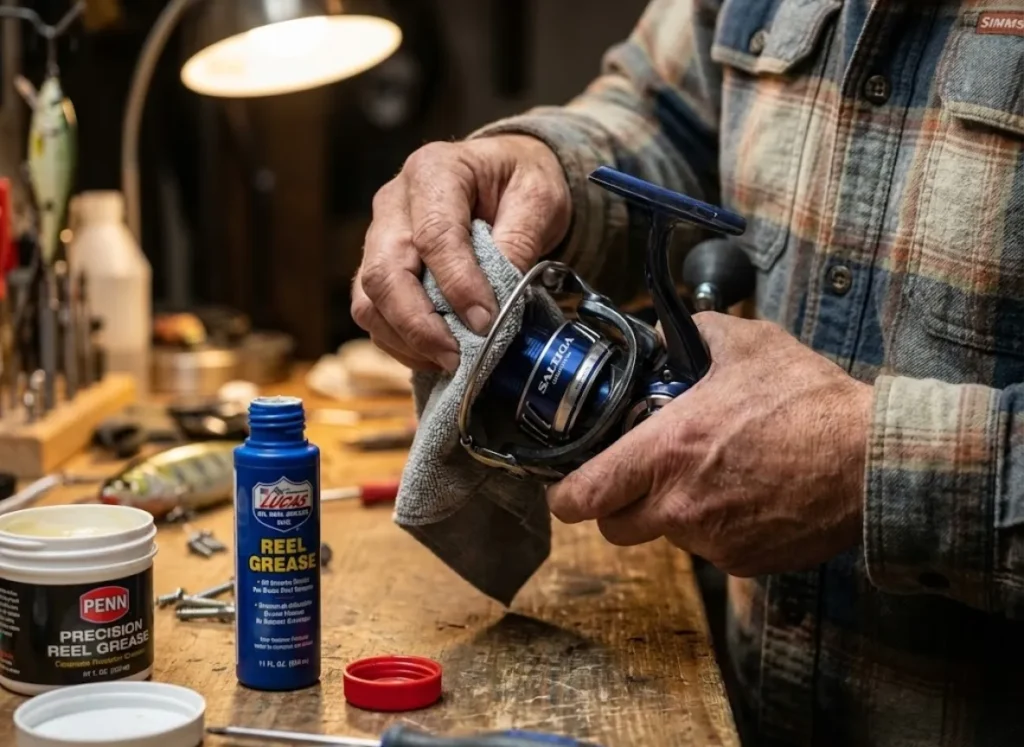
Seasonal equipment maintenance requires a hands-on, mechanical workflow that prioritizes removing contaminants and relieving structural stress on your primary tools.
What is the Correct Protocol for Cleaning and Inspecting Rod Guides?
The first step is salt and grit removal. Wash all rods and reels with a mild detergent and freshwater rinse. You are removing hygroscopic salt crystals that attract moisture to the rod guides and ferrules, which fuels corrosion. Once clean, you must verify the integrity of the ceramic inserts.
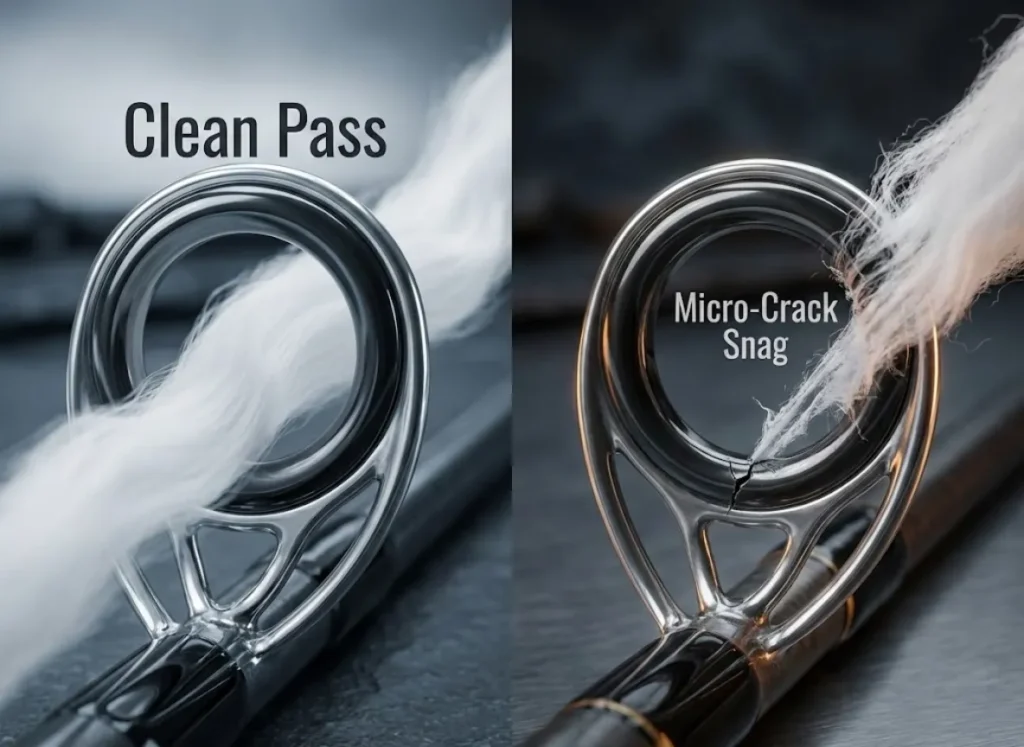
I rely on the Cotton Ball Test. Pass a wisp of cotton through each guide. If the ceramic insert has a microscopic crack, it will snag the fibers. This inspection method is critical because studies highlight the environmental impact of lost fishing gear due to line breakage, often caused by damaged guides causing nicks and frays on the line during a fight.
For offshore freshwater gear or saltwater setups with roller guides, disassembly and greasing are required to prevent the bearings from seizing. On the handle end, clean cork handles with mild soapy water and fill pits with wood putty. For EVA foam, inspect closely for mold, which loves the porous surface.
Storage orientation is the final, critical step. A vertical rod rack is the gold standard to eliminate gravitational bending moments. If you must use horizontal storage, support the blank every 18-24 inches to prevent sag. Never “lean” rods in a corner; this causes the tip to take a set.
Pro-Tip: If you lack space, consider constructing a custom DIY rod rack. A weekend project building a vertical rack is cheaper than replacing a warped high-modulus rod.
Finally, release all line tension. Unhook baits and lures from the guides. A bend in the tip section under tension for three months becomes a permanent curve.
How Do You Winterize Fishing Reels to Prevent Corrosion and Seizure?
Winterizing fishing gear storage for reels centers on decontamination and drag relaxation. Do not blast your reels with a hose. Use a “Mist Protocol”—a low-pressure freshwater mist to dissolve surface salts without forcing water into the internal reel components.
Once the reel is clean and undergoes complete drying (air dry for 24 hours to remove trapped water), you must address the drag. Back off the drag star or knob completely. This prevents the compression set mentioned earlier. Understanding reel drag systems helps you appreciate that these washers are designed to work under dynamic friction, not static compression.
Pro-Tip: If you fish Daiwa reels with Magseal, do not disassemble the Magsealed components or use degreasers. You will destroy the magnetic oil barrier. Wipe down the exterior only.
Lubrication science matters here. Petroleum-based waxes can harden in cold weather, causing “start-up torque” failure. Synthetic greases with a stable Viscosity Index (VI) are preferred.
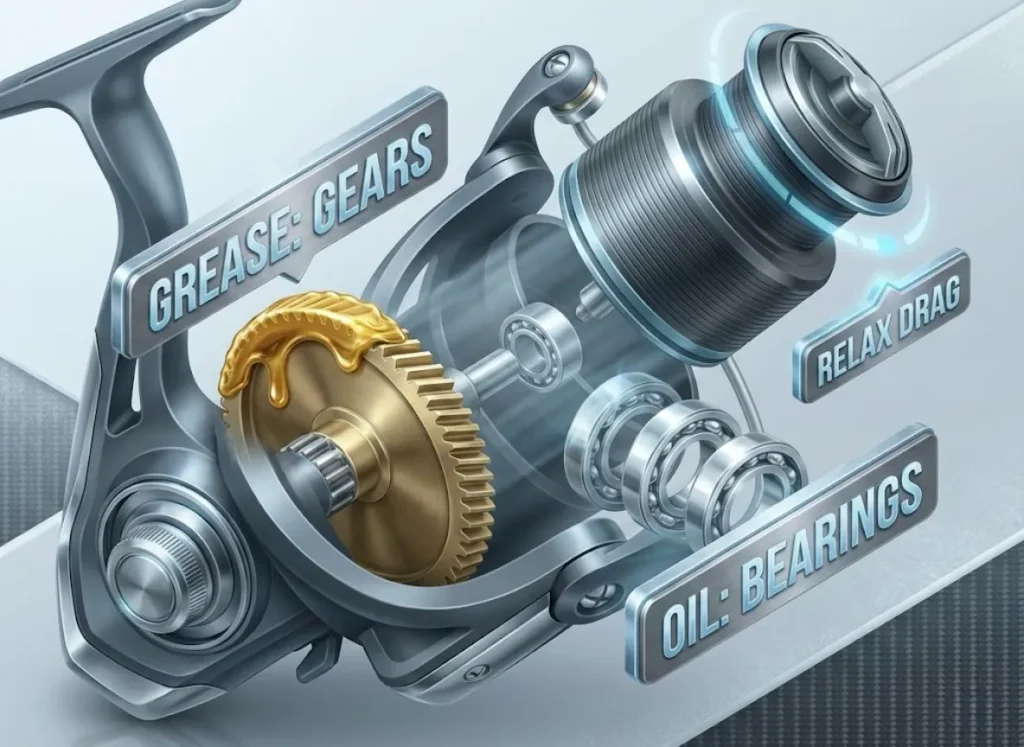
Follow the mechanic’s rule: Grease for gears (load-bearing), Oil for bearings (speed). If your drag uses carbon drag washers (like Carbontex), apply a specific drag grease like Cal’s. If they are felt washers, they need oil to stay pliable. Do not ignore the line roller; it is a high-corrosion zone and needs a drop of corrosion-inhibiting oil.
How Do You Protect Modern Electronics and Battery Systems?
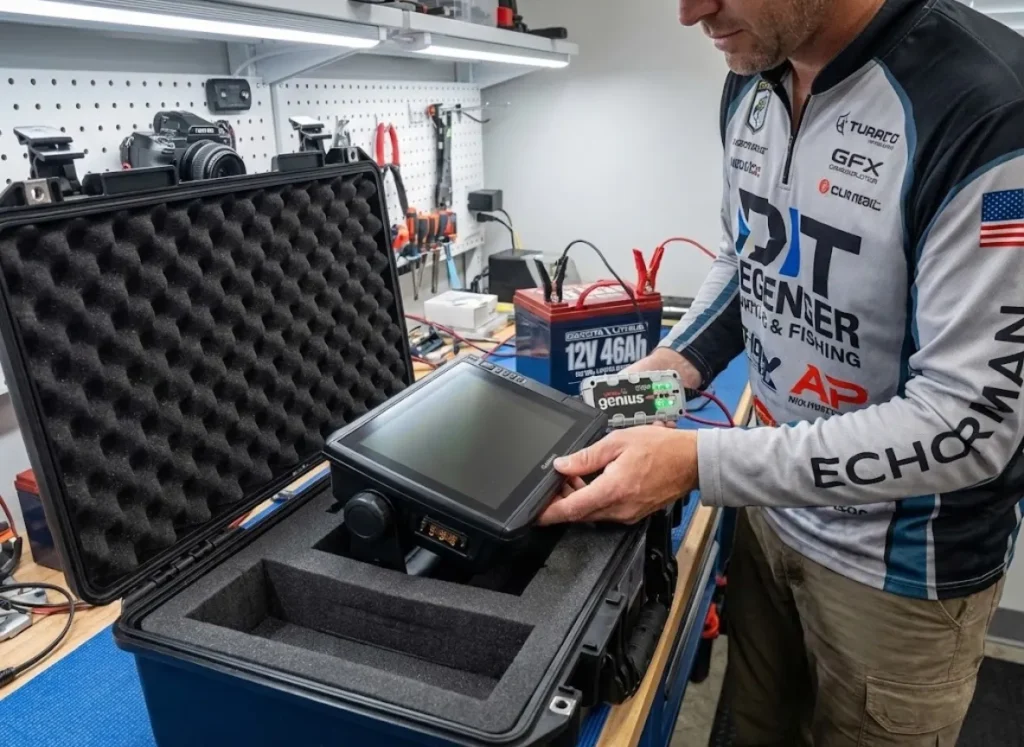
Modern angling relies on digital and hybrid systems. Protecting these requires a shift from mechanical maintenance to electrical and chemical management.
What are the Storage Rules for Lithium (LiFePO4) vs. Lead-Acid Batteries?
Lithium and lead-acid batteries have opposing storage needs. For modern LiFePO4 lithium batteries, the danger is parasitic draw. Even a tiny current draw from an onboard computer or trolling motors can drain a battery to zero over winter, potentially waking up the Battery Management System (BMS) in a “sleep mode” from which it cannot recover.
Ideally, store lithium batteries at 40-60% State of Charge (SOC) for chemical stability. However, if the battery is unmonitored in a boat for months, charge it to 80-100% (the 80% SOC protocol) and physically disconnect the negative cable. This eliminates parasitic draw. Remember: you can store lithium in the cold, but never charge it below freezing. This causes lithium plating, which permanently degrades capacity.

Lead-acid and AGM batteries behave differently. They self-discharge and suffer from sulfation if not kept at 100%. You must keep them on a smart maintenance charger (trickle charger) all winter. Check fluid levels in wet cells and top off with distilled water. Clean any terminal protection points with a baking soda and water paste to neutralize acid buildup. Beware of hydrogen gas buildup if charging in a non-ventilated area.
How Should Sonar Units and Transducers Be Managed in Winter?
The transducer is the eye of your boat, and it is uniquely vulnerable to freezing. Water trapped in the housing or inside a nicked cable jacket can expand and crack the ceramic element or the delicate CHIRP sonar frequencies generating crystals.
Inspect cables carefully for transducer cable care. Store them coiled in loose coils (using the over-under method) to prevent kinking the internal shielding. Treat connector pins with contact cleaner or dielectric grease to prevent the “Green Death”—pin corrosion that ruins signal clarity on your GPS units and fish finders.
Head units (MFDs) should always be removed and stored indoors in storage bins. This prevents screen delamination caused by extreme cold and deters theft.
Before you pack them away, back up your data. Export your waypoints, tracks, and routes to an SD card. Hardware can be replaced; years of fishing data cannot. Run firmware updates now if you want to be tournament ready for spring, or wait until the new season to see if bugs are reported in the latest version.
What Are the Critical Chemical and Biological Protocols?
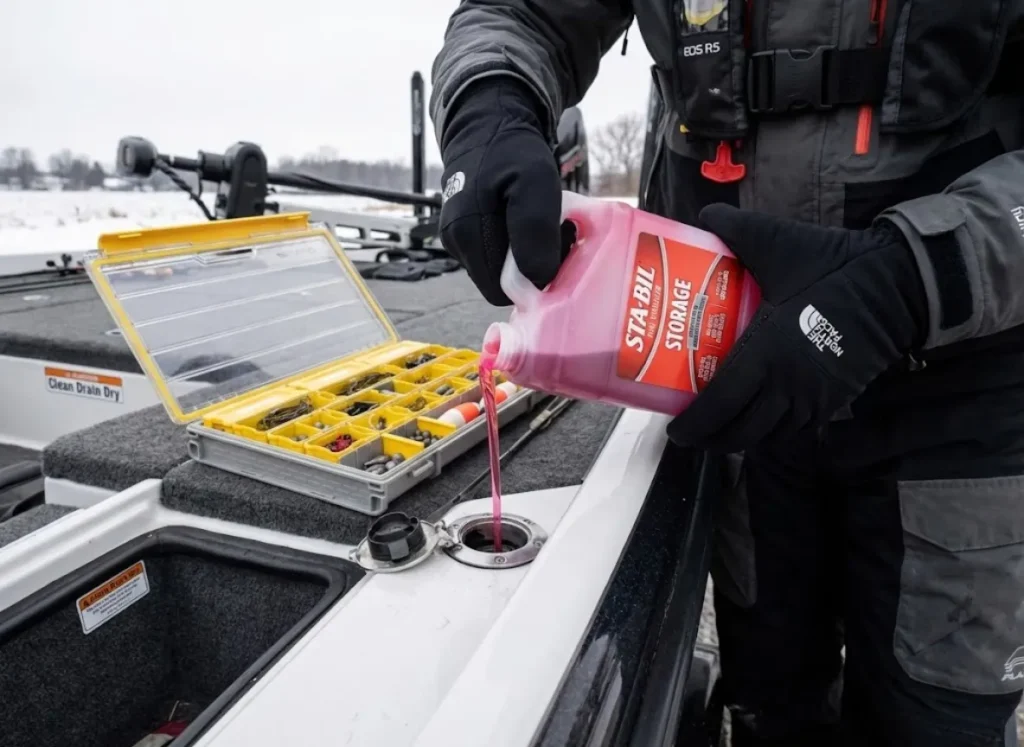
We must also manage the “soft” threats: unstable fuel chemistry, reacting polymers, and the biological responsibility of invasive species attached to your waders and PFDs.
How Do You Prevent Fuel System Failure and Tackle Box Meltdowns?
Ethanol (E10) is the enemy of off-season storage. Over time, it absorbs water and separates into a corrosive layer at the bottom of the tank—phase separation. To combat this, store your tank 95% full. This minimizes the headspace where condensation can form. Use a high-quality fuel stabilizer like Sta-Bil with antioxidants, not just a simple solvent, and run the engine for 10 minutes to ensure the treated fuel circulates through the injectors or carburetors.
For 2-stroke engines, “fogging” constitutes a mandatory step. Even modern engines like Evinrude E-TEC motors have specific winterization cycles that distribute oil to internal components. For standard outboards, spray fogging oil into the air intake while running until the engine chokes out, or remove spark plugs and spray directly into cylinders.
Inside your tackle box, beware of the “TPE Melt.” Soft plastics made from TPE (like ElaZtech) react violently with standard PVC plastics, turning into a fused, gooey mess that destroys tackle trays.
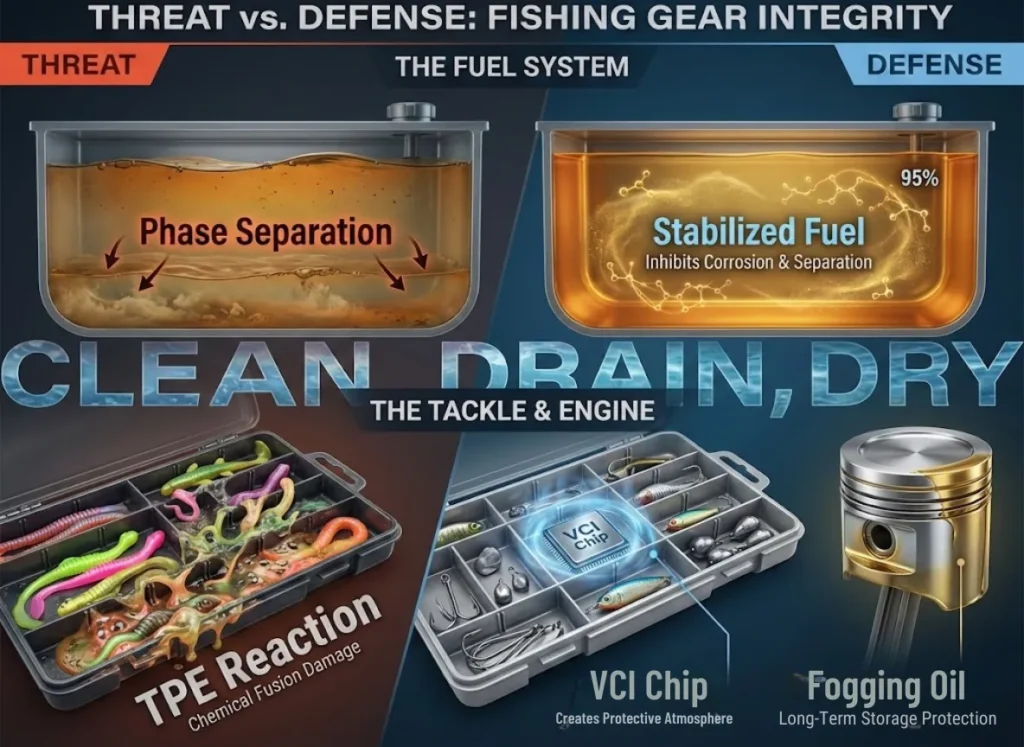
Segregate your plastics strictly using a tackle inventory system. When selecting the best fishing tackle box, look for chemical-resistant options. Use Vapor Corrosion Inhibitor (VCI) chips in your trays. Unlike silica gel packs, which eventually saturate, VCI chips release a vapor that coats metal hooks, split rings, and swivels to prevent rust. Inspect hook points now; if a hook is rusting, throw it out before it “infects” the pristine tackle around it.
Finally, we have an ethical obligation. Adhere to the New York Department of Environmental Conservation ‘Clean, Drain, Dry’ standards. Invasive species can survive winter dormancy in bilge water or live wells. Ensure your boat/trailer, life jackets, and waders are bone dry to prevent transporting biological threats to your first open water fishing spot next spring.
The Season Ahead
Winterizing is not a chore; it is the first step of your next fishing season.
- Mechanical: Loosen drags and use vertical storage for rods to prevent permanent material creep.
- Electrical: Disconnect lithium batteries to stop parasitic draw; keep lead-acid units on a trickle charger.
- Chemical: Stabilize fuel to prevent phase separation and strictly segregate TPE plastics.
- Biological: Execute “Clean, Drain, Dry” to protect the water we love.
Take the time this weekend to audit your gear. A few hours of maintenance now guarantees that your first cast of spring is focused on the fish, not on fighting your equipment.
FAQ – Frequently Asked Questions about Winterizing Fishing Gear
Should I remove the fishing line from my reels for winter storage?
Generally, no, unless the line is old and needs replacement. However, monofilament line should be stored in the dark to avoid UV exposure. Fluorocarbon benefits from a spray of line conditioner to prevent heavy line memory (coiling) that sets in during the cold. Braid requires less maintenance but should be checked for fraying.
Is it safe to store fishing rods and tackle in an unheated garage?
Yes, provided the gear is dry and clean. While cold temperatures won’t damage rods or reels, humidity and condensation are the real enemies. Ensure rods are dry and use VCI rust inhibitors in tackle boxes to combat the moisture swings.
How do I stop my hooks from rusting inside the tackle box over winter?
Ensure all tackle is completely dry before closing the lid. Add Vapor Corrosion Inhibitor (VCI) chips or dividers. These are superior to silica gel packs because they actively release a vapor that coats the metal to prevent oxidation, rather than just absorbing moisture which can eventually saturate.
Do I need to charge my boat batteries during the winter?
Yes, but the method depends on the chemistry. Lead-acid or AGM batteries must be kept on a maintenance charger to prevent sulfation. Lithium (LiFePO4) batteries should be disconnected to prevent parasitic draw and checked periodically. They are best stored at a partial state of charge, but if you cannot monitor them, a full charge with a disconnect is safer than letting them drain to zero.
Risk Disclaimer: Fishing, boating, and all related outdoor activities involve inherent risks that
can lead to injury. The information provided on Master Fishing Mag is for educational and informational purposes
only. While we strive for accuracy, the information, techniques, and advice on gear and safety are not a substitute
for your own best judgment, local knowledge, and adherence to official regulations. Fishing regulations, including
seasons, size limits, and species restrictions, change frequently and vary by location. Always consult the latest
official regulations from your local fish and wildlife agency before heading out. Proper handling of hooks, knives,
and other sharp equipment is essential for safety. Furthermore, be aware of local fish consumption advisories. By
using this website, you agree that you are solely responsible for your own safety and for complying with all
applicable laws. Any reliance you place on our content is strictly at your own risk. Master Fishing Mag and its
authors will not be held liable for any injury, damage, or loss sustained in connection with the use of the
information herein.
Affiliate Disclosure: We are a participant in the Amazon Services LLC Associates Program, an
affiliate advertising program designed to provide a means for us to earn advertising fees by advertising and linking
to Amazon.com. As an Amazon Associate, we earn from qualifying purchases. We also participate in other affiliate
programs and may receive a commission on products purchased through our links, at no extra cost to you. Additional
terms are found in the terms of service.