In this article
A thrashing Cobia on the deck creates a chaotic radius of danger. Treble hooks swing inches from your femoral artery, and the fish’s gills gasp in the open air, burning precious seconds of survival time. In this moment, the difference between a zero-mortality release and a bloody disaster isn’t your intention; it is your tool.
Ethical angling is a mechanical challenge that requires more than just needle-nose pliers—it demands leverage, reach, and surgical precision. As someone who has spent decades testing gear from the abrasive salt of the flats to the freezing currents of alpine streams, I can tell you that the best dehooking tools for safe release aren’t just accessories. They are life-support instruments.
This guide moves beyond simple lists of essential gear to the metallurgy and biology of survival. We will cover the “Hypoxia Index” to save seconds, the “Hazard Radius” to save your hands, and why investing in the right titanium or corrosion-resistant steel is an investment in the future of the fishery.
How to Choose the Right Dehooking Tool

To make a smart, confident choice, we need to strip away the marketing jargon and look at the biological and metallurgical performance of the gear. Hand feel is important, but it doesn’t stop rust or prevent gut damage in deep hooked scenarios.
Why Does “Tissue Trauma Mitigation” Matter?
Tissue trauma mitigation matters because preserving the sensitive isthmus and minimizing bleeding are the primary determinants of post-release survival. The “Surgical Score” of a tool defines its ability to safely invert a hook—using the hook inversion technique or “flip method”—rather than tearing it out through brute force.
This distinction is critical when dealing with the isthmus, the sensitive connection under the jaw. Damaging this area is a death sentence for suction-feeding fish. Understanding the anatomy of the fish’s mouth reveals why the geometry of your tool dictates survival rates. Precision instruments like a spiral ARC dehooker guide the hook out, whereas locking pliers can crush delicate tissue if used aggressively.
Researchers at the Pacific Salmon Ecology Conservation Laboratory emphasize that minimizing air exposure and tissue damage are the single biggest factors in post-release survival. However, the tool is only as good as the hand holding it. Truly mastering the science of catch and release requires connecting this mechanical precision with a broader understanding of fish physiology.
Pro-Tip: Never use a dry rag to handle fish. It strips the mucus layer. Always use wet hands or release gloves to protect the slime coat, and utilize a knotless landing net or rubberized-mesh net to prevent fin splitting and scale loss.
What is the “Hazard Radius” and Why is Reach Critical?
The “Hazard Radius” is the immediate danger zone surrounding a thrashing fish’s teeth or spines, making tool reach critical for angler safety. A sufficient “Safety Standoff”—calculated as the linear distance between your knuckles and the danger zone—prevents the reactionary drop reflex that often causes severe internal injury to the fish and puncture wounds to the angler.
Specialized tools must be matched to the target. Large toothy fish like Wahoo, Pike, or Muskie require 12-inch reach tools to clear the danger zone, while trout require the precision of hemostats. The Florida Fish and Wildlife Conservation Commission highlights that proper hook remover tools reduce stress for both the angler and the catch.
While protecting the fish is ethical, protecting your own hands ensures you can fish another day. This requires specific protocols, similar to the discipline needed when holding fish correctly for photographs or measurements. For massive species, consider a tail rope or fish sling for safe weighing rather than vertical grips like a BogaGrip, which can dislocate its jaw.
Metallurgy: Why Do “Stainless” Tools Still Rust?
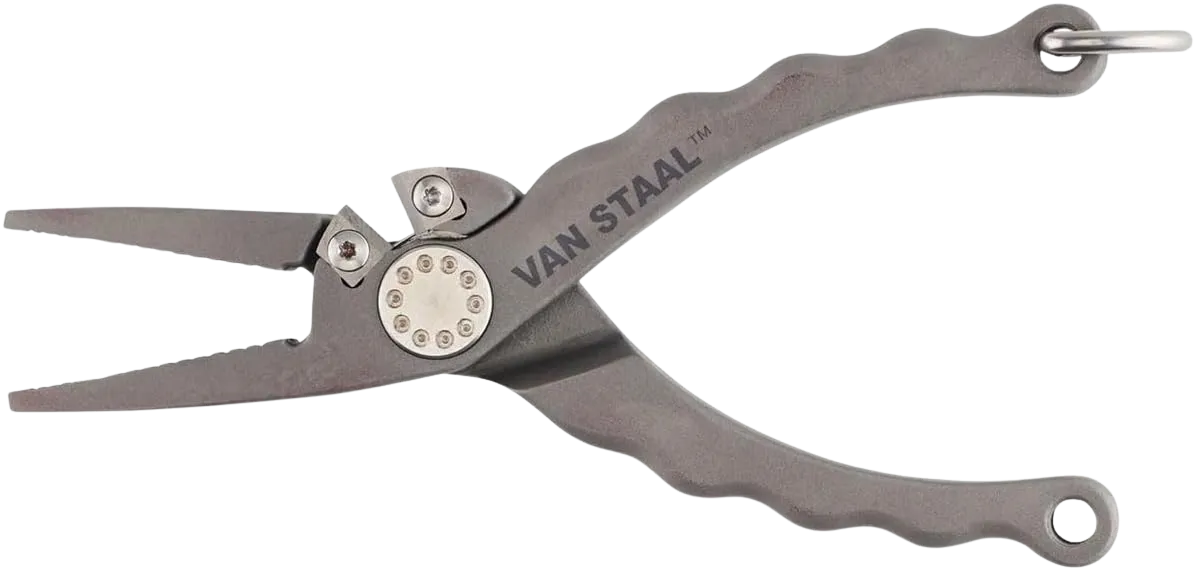
Stainless steel tools still rust because most are made from 304 grade or 400-series steel, which contains enough iron to oxidize when exposed to saltwater electrolytes. True saltwater safe performance requires 6AL-4V Titanium or highly specific marine-grade alloys that lack the ferrous content that triggers rust.
The difference between a tool that lasts a lifetime and one that jams is often the choice between 316 Marine Grade Steel or Titanium. A rusted hinge isn’t just an annoyance; it is a liability when you need to act fast. NOAA Fisheries recommends using corrosion-resistant gear to ensure efficient release times.
However, even the best metals require care. Implementing sustainable fishing gear maintenance is the only way to guarantee your tools perform when the pressure is on.
Pro-Tip: If your pliers seize up mid-trip, a quick soak in Coca-Cola (mild phosphoric acid) can sometimes break the rust bond enough to get them working for the day. Rinse thoroughly afterwards.
Our Selection Process: How We Built This Guide
We are committed to objectivity in evaluating these catch-and-release tools. We look beyond marketing claims to the materials science and biological impact of the gear. Every tool below was scored against specific criteria: the “Hypoxia Index” (speed of use), “Surgical Score” (tissue damage mitigation), and “Hazard Radius” (safety reach).
We analyzed metallurgical data—specifically the performance of Titanium versus Steel in saline environments—and cross-referenced it with field reports on mechanism failure rates from offshore and freshwater experts. While we may earn a commission from links, our primary currency is your trust. We highlight critical flaws (the “Anti-Sell”) for every product because no tool is perfect.
The Best Dehooking Tools of 2026: Our Top Recommendations for Every Need
Our Top Picks for “The Saltwater Apex Specialist”

Our Top Picks for “The Ethical Generalist”
Our Top Picks for “The Finesse Purist”
Final Thoughts
We have established three non-negotiable truths for the conservationist’s toolkit. First, distance is safety; for predatory fish, your reach—ideally 12 inches or more—dictates your safety radius. Second, technique trumps force; for deep set hooks, an inversion tool like the ARC dehooker saves lives, while pliers often end them. Finally, materials are an investment.
Titanium costs more upfront, but it costs significantly less than replacing rusted steel pliers every single season. Don’t wait for a gut-hooked fish or a rusty pair of pliers to realize you’re under-equipped. Upgrade your toolkit today to ensure your next catch swims away strong.
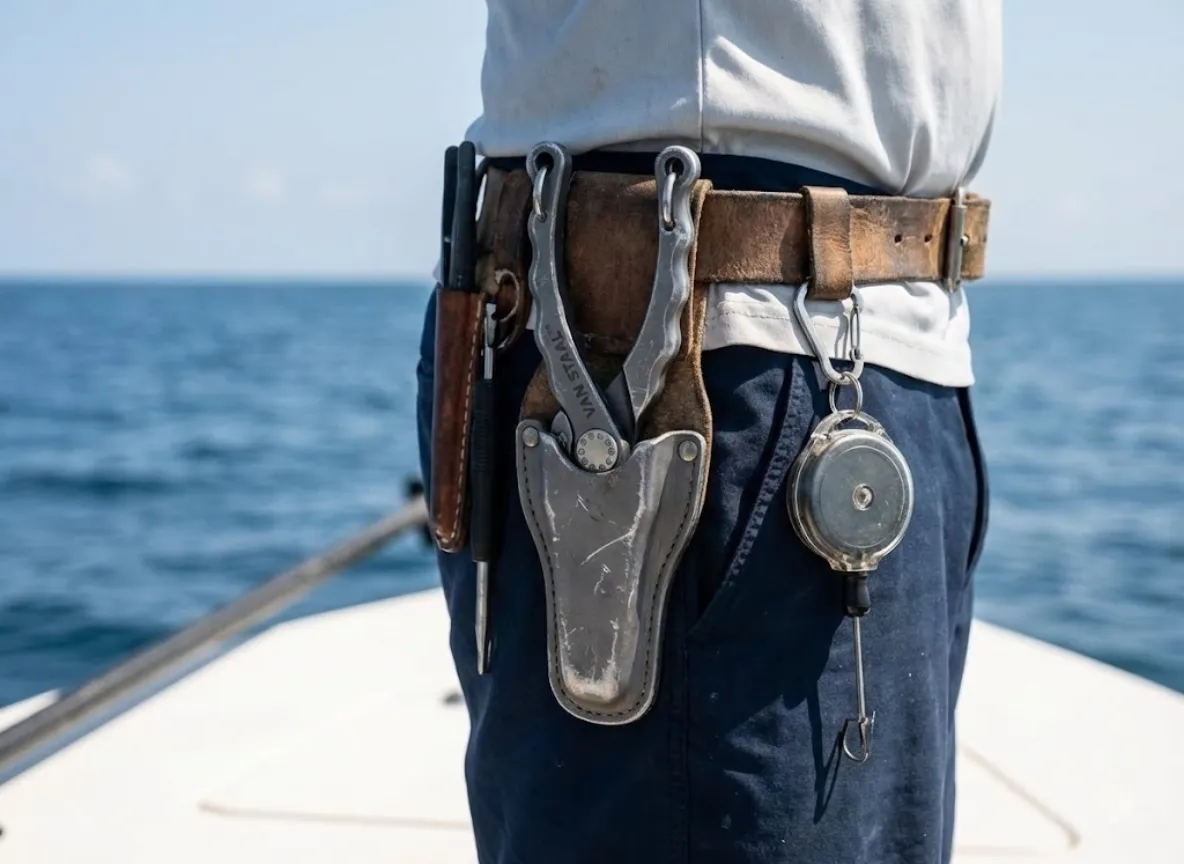
Pro-Tip: Always secure your gear with a lanyard or tether. A $400 pair of titanium pliers is useless if it’s sitting at the bottom of the ocean. Use a high-quality coiled cable attached to your belt or boat console.
FAQ – Frequently Asked Questions about Dehooking & Release
How do I remove a hook that is deep in the fish’s throat (gut hooked)?
Do not pull. Use a spiral dehooker (like the ARC) or long forceps to rotate the hook 180 degrees (inversion), disengaging the barb before removal. If extraction is impossible without severe damage, cut the line as close to the hook as possible.
Why do my stainless steel pliers keep rusting?
Most fishing pliers use 400-series stainless steel, which contains iron and will oxidize in saltwater. For total immunity to rust, you must upgrade to 6AL-4V Titanium or rigorously rinse and oil your tools after every trip.
Is it better to use a dehooker or pliers?
It depends on the hook location. Pliers are best for lip hooks where you need grip; mechanical dehookers (spiral or pistol grip) are superior for deep throat hooks where visibility is poor and leverage is needed.
How can I clean rust off my old fishing pliers?
Soak them in white vinegar for 12-24 hours to loosen the oxidation, then scrub with a wire brush. After cleaning, lubricate the hinge immediately with a marine-grade oil to prevent seizing.
What about barotrauma in deep water fish?
For fish caught in deep water showing signs of barotrauma (bulging eyes, stomach protruding), you must use a descending device or venting tool to re-pressurize the fish before release, ensuring it can swim back down to safety.
Risk Disclaimer: Fishing, boating, and all related outdoor activities involve inherent risks that can lead to injury. The information provided on Master Fishing Mag is for educational and informational purposes only. While we strive for accuracy, the information, techniques, and advice on gear and safety are not a substitute for your own best judgment, local knowledge, and adherence to official regulations. Fishing regulations, including seasons, size limits, and species restrictions, change frequently and vary by location. Always consult the latest official regulations from your local fish and wildlife agency before heading out. Proper handling of hooks, knives, and other sharp equipment is essential for safety. Furthermore, be aware of local fish consumption advisories. By using this website, you agree that you are solely responsible for your own safety and for complying with all applicable laws. Any reliance you place on our content is strictly at your own risk. Master Fishing Mag and its authors will not be held liable for any injury, damage, or loss sustained in connection with the use of the information herein.
Affiliate Disclosure: We are a participant in the Amazon Services LLC Associates Program, an affiliate advertising program designed to provide a means for us to earn advertising fees by advertising and linking to Amazon.com. As an Amazon Associate, we earn from qualifying purchases. We also participate in other affiliate programs and may receive a commission on products purchased through our links, at no extra cost to you. Additional terms are found in the terms of service.