
In this article
The wind on Lake Okeechobee builds over a twenty-mile fetch, turning a safe morning run into a dangerous white-knuckle ride in minutes. If you respect the water, you might make it back to the ramp; if you don’t, you break equipment. Success in freshwater sport fishing across Florida’s trophy waters is not just a matter of luck or casting ability; it is a calculation of hydrography, thermal dynamics, and logistical survival.
I have spent decades navigating these waters, from the tannic flows of the north to the grass flats of the south. This dossier moves beyond the standard travel brochure to provide a tactical framework for Florida bass fishing on the state’s top ten fisheries. We are analyzing the specific biological triggers and navigational hazards that separate a wasted trip from a Hall of Fame catch.
What defines the “Florida Bass Paradigm”?
This section establishes the foundational biological and environmental rules that dictate fish behavior across all Florida waterways, shifting your mindset from “fishing” to “hunting.”
How does thermal dynamics dictate bass behavior?
Florida-strain bass (Micropterus salmoides floridanus) possess a higher thermal tolerance but are far more susceptible to “cold shock” than northern strains. Monitoring water temperature is the first step in tactical planning. The “Winter Stasis” window (55°F – 65°F) is critical; here, fish hold on deep grass edges and become lethargic, requiring slow presentations with heavy tackle and flipping gear.
As the water warms, we enter the “Spawning Peak” (62°F – 75°F). This is the primary window for trophy hunting, as territorial females move into protected shallows and sandy flats. For precise timing on these movements, I recommend consulting our spring bass fishing guide for spawn timing specifics.
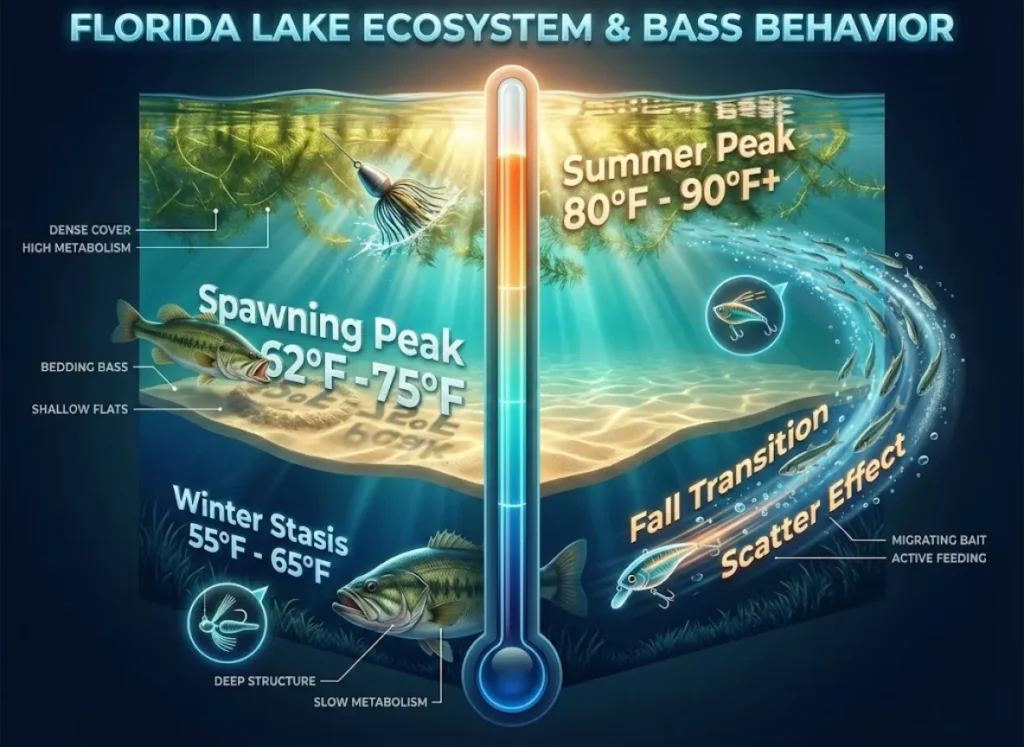
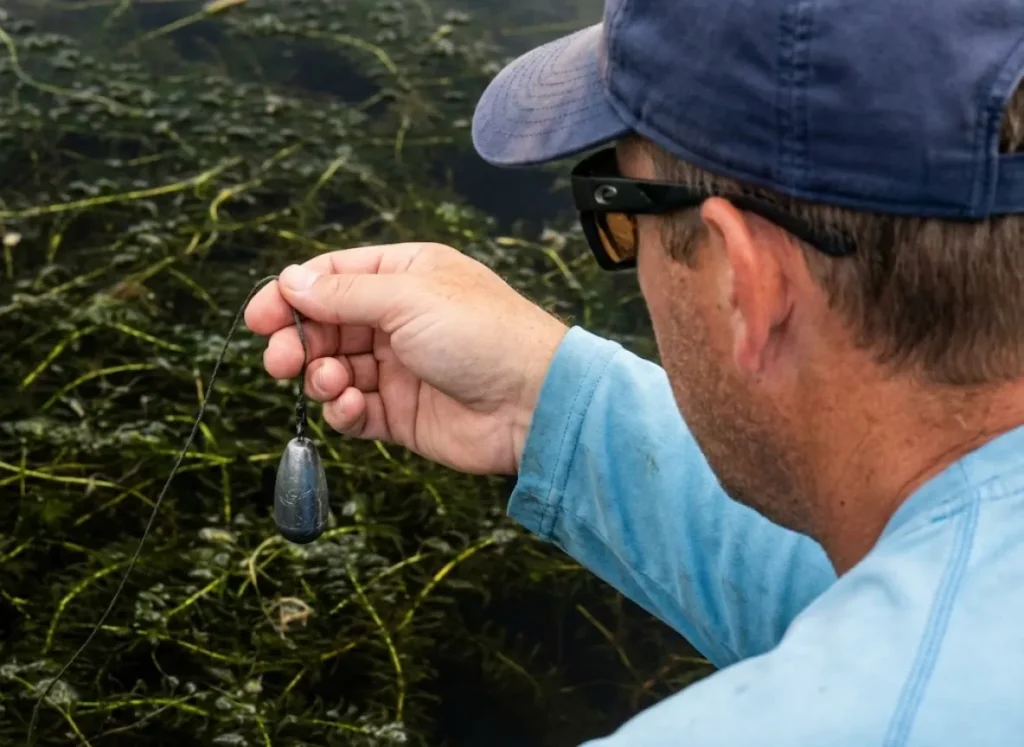
Once the heat sets in, the dynamic shifts again. During the “Summer Peak” (80°F – 90°F+), low oxygen levels force fish into deep hydrilla mats or flowing water. “Punching” with heavy tungsten weights becomes mandatory for access. Conversely, the “Fall Transition” triggers a scatter effect. Cooling water (75°F – 65°F) disperses bass to chase a baitfish school, necessitating fast-moving reaction baits like lipless cranks to cover water efficiently.
You must also watch the pressure. A falling barometer pre-front triggers aggression, while post-front “bluebird skies” require downsizing baits significantly. For more biological context, you can review FWC biological profiles regarding Florida bass temperature sensitivity.
Why is aquatic vegetation the primary structure?
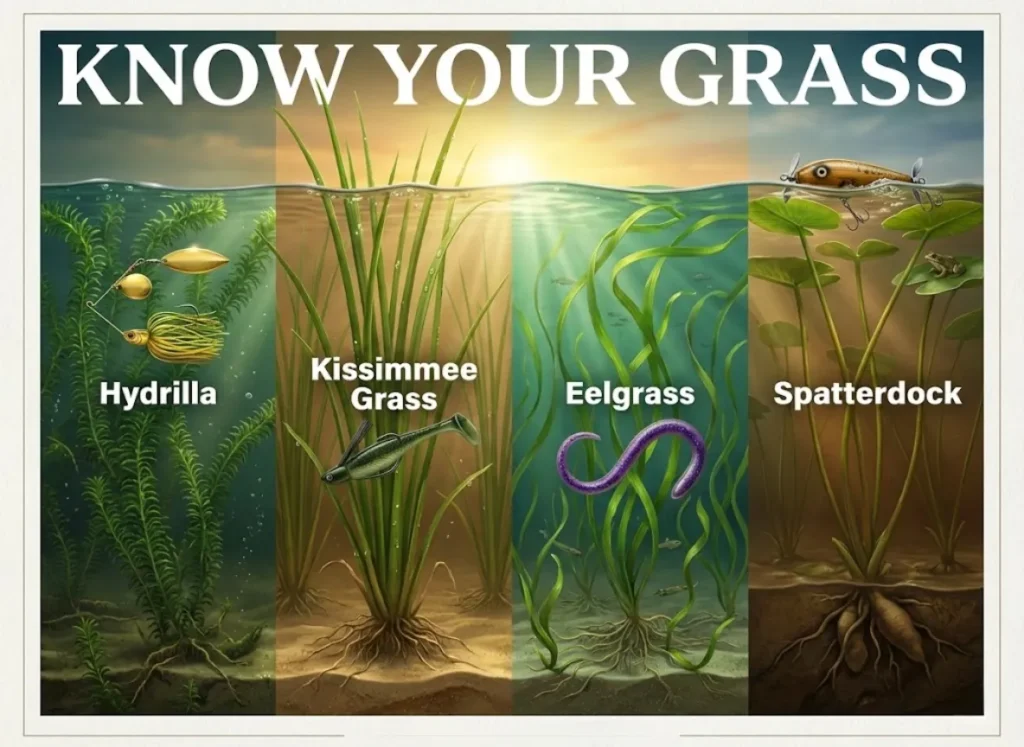
Unlike northern reservoirs dominated by rock and ledges, Florida lakes are shallow bowls where aquatic vegetation is the structure. “Hydrilla” (Hydrilla verticillata) is the premier habitat; it filters water and creates “tunnels” for ambush, making it the primary target for specific techniques. Mastering fishing heavy cover is essential here, as you will often be ripping weedless lures and lipless crankbaits through these grass tops.
Pro-Tip: Learn to identify “Kissimmee Grass” (Paspalidium geminatum). It grows in 2-5 feet of water and has a hard root system that bass prefer for spawning beds, distinct from the softer mud bottoms found near cattails and peppergrass.
Underwater eel grass (Vallisneria americana) is critical in flowing systems like the St. Johns River. You must read how the current “folds” the grass to reveal the ambush points where bass sit. In other areas, “Spatterdock” (lily pads) offers shade and permanence. Extensive fields in lakes like Orange Lake require topwater frogs or heavy flipping creature baits to penetrate the canopy. Finally, look for “Bulrush” (Buggy Whips). These act as hard-bottom indicators offshore, often signaling the staging areas for pre-spawn females before they move to the flats. For detailed identification, refer to plant management strategies for aquatic habitats.
Which fisheries dominate the Southern Tier?

We now turn our attention to the massive, often dangerous lakes of South Florida. These “inland seas” require safe navigation strategies and specific tactics to manage their immense surface areas.
How do you navigate Lake Okeechobee’s vastness safely?
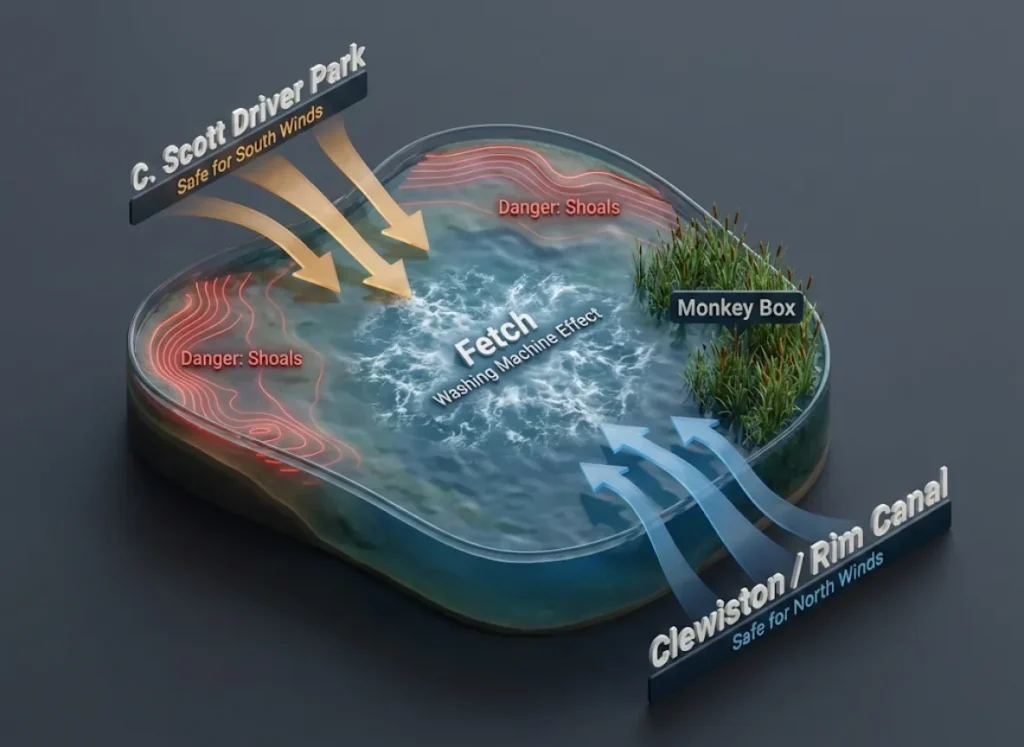
Lake Okeechobee (“The Big O“) is a 730-square-mile shallow basin. Its primary hazard is the “fetch,” where wind speeds of 15+ knots create a dangerous, muddy “washing machine” effect. Strategic launching is vital. Use C. Scott Driver Park (North) for south winds, but switch to Clewiston or the marina at Okeechobee City during north winds to access the protected rim canal. Check the US Army Corps of Engineers boat ramp status for Lake Okeechobee before towing your boat.
Areas like the “Monkey Box” and Harney Pond are premier spawning grounds, but accessing them requires navigating complex shoals. Always respect marker poles to avoid destroying a lower unit. Winter tactics revolve around flipping cattails and pitching black/blue jigs into reed heads near the “Shoal” and “North Shore.”
When summer heat hits, fish bury themselves in hyacinth shade for thermal relief. This is when utilizing specific punching mats techniques with 1.5 to 2-ounce tungsten weights becomes the only way to reach them. If you need to cover water on the vast flats, the “Speed Worm”—buzzing a paddle-tail worm over submerged hydrilla—is the quintessential search method.
Why is Headwaters Lake considered the new “Bass Factory”?
Headwaters Lake (Fellsmere Reservoir) is a 10,000-acre man-made reservoir. Located near the legendary Stick Marsh/Farm 13, it was engineered with dredged channels and underwater structure specifically to create a world-class fishery. The lake operates under strict catch-and-release rules, which has allowed the stocked population of 1 million Florida bass to reach trophy proportions rapidly. You can verify the regulations on the FWC site forecast and regulations for Fellsmere Reservoir.
Navigation is strictly regulated here. A 25 MPH speed limit applies everywhere, with no-wake rules mandatory in canals. Utilizing GPS mapping for “safe lanes” is non-negotiable to avoid submerged timber. The “Fish Enhancement Area” in the north provides dense features, while deep dredged canals offer thermal refuge for bass during cold fronts, allowing for year-round consistency.
Topwater fishing is dominant here. Walking baits (Spooks) and popping frogs over hydrilla holes draw explosive strikes. Be prepared to follow up with soft plastics like stick baits (Senkos) for missed fish. Because of the conservation focus, applying science-backed catch and release techniques is mandatory; this includes using circle hooks when fishing with natural bait (shiners) over 3 inches to prevent gut-hooking mortality.
What makes Lake Istokpoga a “Shallow Giant”?
Ranking as Florida’s fifth-largest lake, Istokpoga is located near Lake Placid and averages only 4-8 feet in depth. Like Okeechobee, it is exceptionally dangerous during high wind events due to rapid chop development. Navigational safety dictates staying in perimeter canals or the leeward side of Big Island during winds exceeding 15 mph. A protective slot limit (15-24 inches must be released) maintains a high quality of fish. Consult Lake Istokpoga management plans and reports for hydrographic details.
Anglers generally target the north end near Arbuckle and Josephine Creeks for spawning activity. This is a premier “frog lake.” Working hollow-body frogs over spatterdock pads and Kissimmee grass is the high-percentage pattern for spring giants.
When switching to subsurface presentations, selecting the best lures for largemouth bass suited for tannic water is key. Junebug for Istokpoga is the universal standard here, specifically tailored to the lake’s stained water clarity. Summer tactics usually shift to the south end near the canal intake, where current flow concentrates baitfish and schooling bass.
Where are the best spots in the Central Corridor?
This section covers the “Tournament Grounds” south of Orlando. While the Harris Chain of Lakes draws crowds, these highly pressured waters produce immense weights but require refined techniques and an understanding of water flow.
Why is Lake Tohopekaliga (Toho) the heavyweight champion?
Big Lake Toho is the anchor of the upper Kissimmee Chain. It is famous for producing record-breaking tournament limits due to intensive habitat management and frequent drawdowns detailed in FWC habitat management projects on Lake Toho. The Southport Lock outflow is a critical structural element. Current generated here attracts baitfish and active bass, particularly in summer when oxygen is lower elsewhere.
Launch at Toho Marina for developed amenities, but utilize Whaley’s Landing on the east side to avoid crossing the open lake during strong north winds. Winter pre-spawn patterns (as early as December) focus on ripping gold/black or chrome/blue lipless crankbaits or vibrating jigs (like Jack Hammer ChatterBaits) through submerged hydrilla at the mouth of Shingle Creek.
The lake’s substrate is sandy due to muck removal, making it ideal for flipping creature baits (Sweet Beavers) or plastic crawfish into dense bulrush patches during the spawn. Offshore shell beds provide a secondary pattern. Dragging Carolina rigs or deep-diving crankbaits offers an alternative to the heavy pressure on the bank. You can often find huge schools of bass here capitalizing on the shad spawn fishing frenzy early in the morning.
How does Lake Kissimmee offer a wilderness experience?
More remote than Toho, Lake Kissimmee is a 34,948-acre lake bordered by state parks, resulting in lower fishing pressure and a “wilderness” feel. Lake Kissimmee State Park on the west side offers the safest launch during prevailing winds, avoiding the exposed run from the popular but vulnerable Joe Overstreet Landing. Check Florida State Parks amenities for Lake Kissimmee for access hours.
Brahma Island creates a unique geography of protected cuts and shorelines. This allows anglers to find fishable water even in adverse weather. Trophy bass here are shiner-eaters. Slow-rolling a spinnerbait with large gold willow leaf blades along the hydrilla lines mimics the gold shiners forage perfectly.
Pro-Tip: The “Devil’s Horse” prop bait is a legendary tool here. Work it slowly with long pauses over holes in the maidencane and lily pads during the post-spawn.
For more on working these surface baits, consider deploying a data-backed topwater fishing guide. Summer flow at the north and south ends of the lake dictates fish location; targeting the current cuts with 10-inch ribbon tail worms is a staple tactic.
What treasures hide in the Northern Tier?
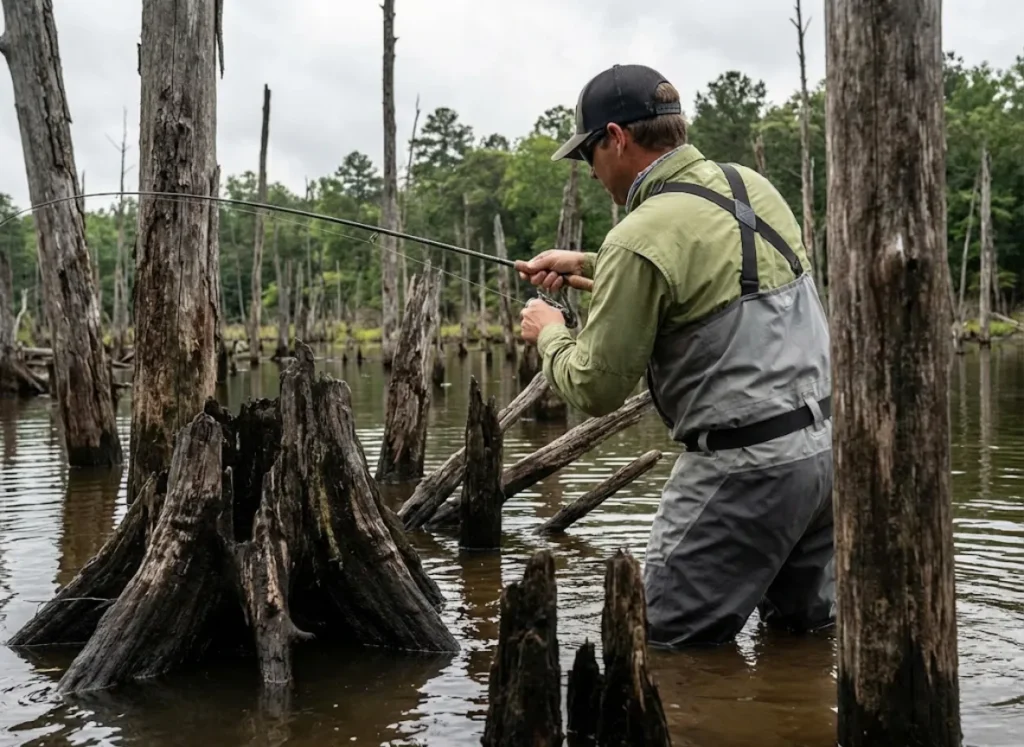
Moving north, we encounter a different ecosystem entirely. Here, submerged timber and “Flooded Forests” dominate the region, requiring specialized tactics like drawdown fishing.
How do you fish the “Flooded Forest” of Rodman Reservoir?
Rodman Reservoir is a drowned forest created by the Ocklawaha River impoundment, part of the halted Cross Florida Barge Canal project. Navigation outside the marked river fisheries channel is treacherous due to thousands of submerged stumps. The “Drawdown” phase (occurring every 3-4 years) concentrates fish into the river channel, creating the absolute best trophy opportunity in the state. Always check the Rodman Reservoir drawdown schedule and maps before planning a trip.
Anglers must prioritize heavy tackle. Spooling up with the best braided fishing line for abrasion resistance—specifically 65lb test—is non-negotiable to winch fish out of timber before they wrap around roots.
During normal pool levels, flipping jigs into the “stump fields” and floating hyacinth mats is the primary method for extracting entrenched fish. Deep diving crankbaits that deflect off timber trigger reaction strikes in the river channel bends (“Channel Swings”). However, live shiner fishing drifted along the channel edges during the drawdown is statistically the highest probability method for catching a double-digit bass.
Why is Orange Lake currently surging?
Orange Lake, located in North Central Florida, is a dynamic “boom and bust” fishery that is currently in a “boom” phase. It is producing a high volume of trophy bass entries, confirmed by TrophyCatch data reports for Orange Lake. The lake is characterized by “floating tussocks”—migratory islands of mud and roots that can block access points and shift navigation channels daily.
Heagy-Burry is the primary public ramp, but users must be vigilant about tussocks blocking the canal. Tactical success requires “punching the tussocks.” You must drop heavy jigs through holes in the floating islands and physically pull fish up through the root mat.
This requires relying on the best baitcasting reels for bass with high max drag to handle the abuse. Unlike the clear springs, Orange Lake is a vegetation jungle. It favors close-quarters combat fishing over finesse techniques, with spatterdock and hydrilla maintaining a strong topwater bite early and late in the day.
How can you ensure the future of Florida fishing?
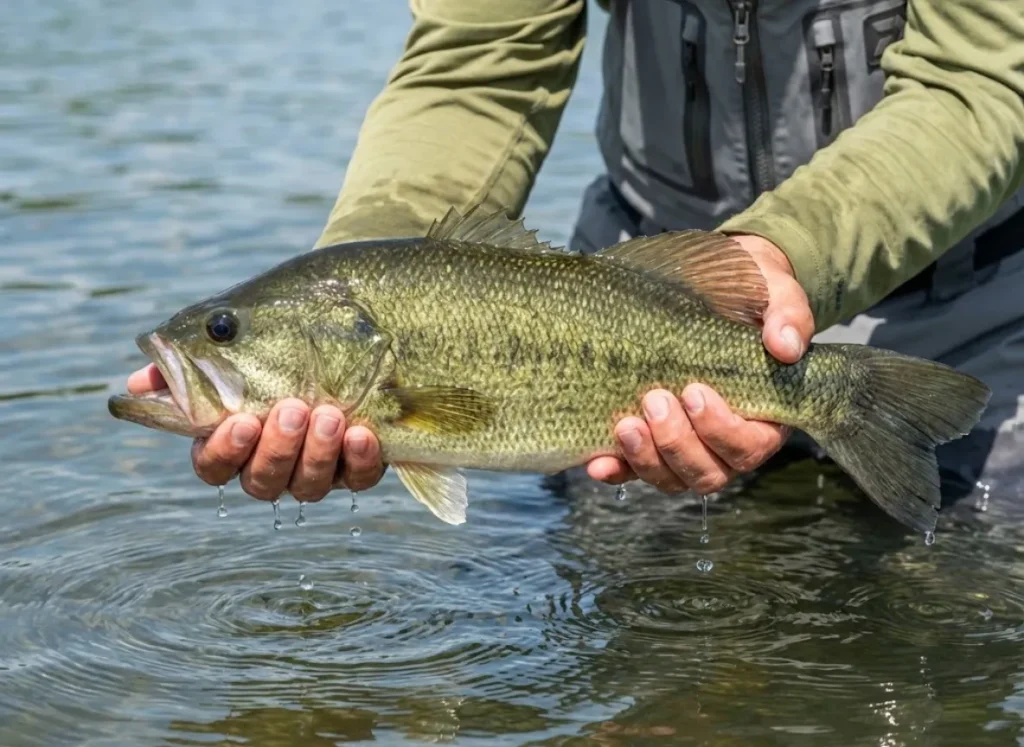
The data is clear: the future of the sport is in your hands, quite literally, every time you release a trophy.
What is the TrophyCatch program and why does it matter?
The Florida Fish and Wildlife Conservation Commission (FWC) TrophyCatch program is a citizen-science initiative. It incentivizes the documentation and release of bass over 8 pounds (Lunker Club), 10 pounds (Trophy), and 13 pounds (Hall of Fame). Participation provides FWC fisheries biologists with critical data on fish growth rates and lake health, directly influencing management decisions like slot limits and habitat restoration. Review the Official TrophyCatch program rules and rewards to participate.
Anglers must follow strict documentation protocols: a photo of the entire fish on a scale with the weight visible, and a video of the release are often required for verification. Data confirms that “catch and release” works; lakes with strict regulations like Headwaters and Stick Marsh consistently lead in trophy entries.
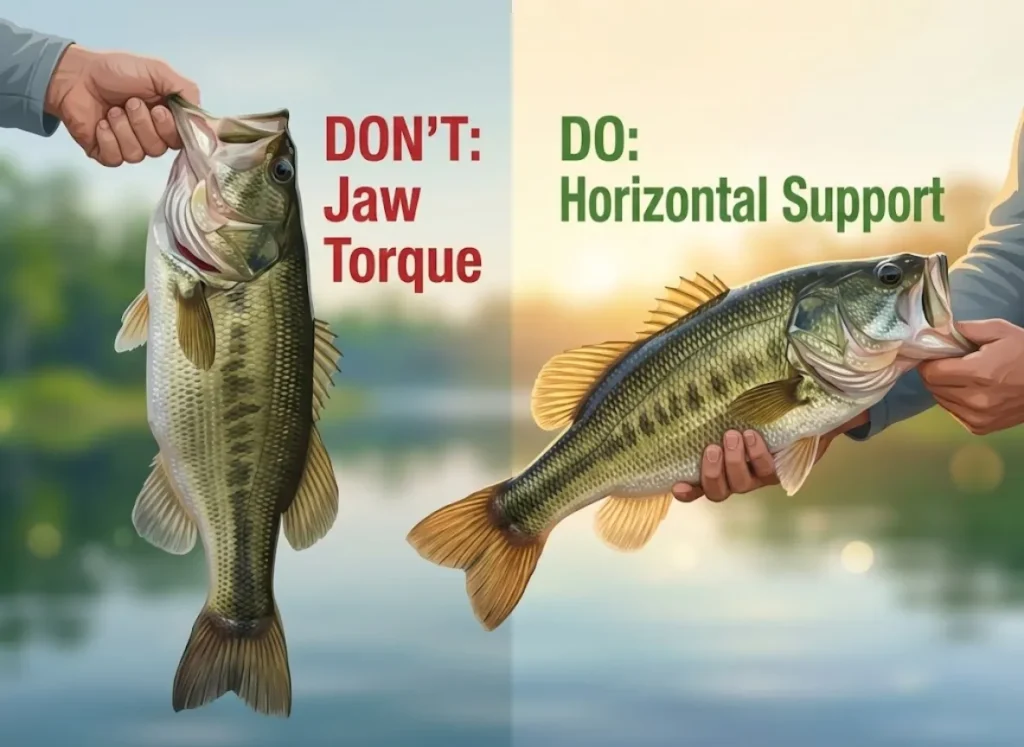
Proper handling is a tactical skill. You must support the fish’s weight with two hands (never torque the jaw), minimize air exposure, and ensure the fish is fully revived before release. Learning how to hold a fish to prevent jaw damage is a prerequisite for any serious trophy hunter. By participating, you earn rewards while ensuring the genetics of the floridanus subspecies are preserved.
Final Tactical Assessment
Success in Florida requires adapting to the “Thermal Metabolic Constraints” of the Florida-strain bass, targeting specific temperature windows (62°F – 75°F) for peak activity. Navigation is a survival skill; matching boat ramp choice to wind direction on lakes like Okeechobee and Toho is critical for safety. Aquatic vegetation is the primary structure; mastering the distinction between Hydrilla, Kissimmee Grass, and Eelgrass dictates lure selection. Finally, conservation through TrophyCatch stats and strict adherence to Catch-and-Release regulations in managed fisheries ensures the continuity of trophy stocks.
Explore our full library of Florida Bass guides to master the specific knots and rigs mentioned in this dossier, or share your own “Hall of Fame” catch story in the comments below.
FAQ – Frequently Asked Questions
What is the number one bass fishing lake in Florida?
Headwaters Lake (Fellsmere Reservoir) currently holds the title for consistency and numbers due to its intensive management and catch-and-release design. However, for a single giant fish during a drawdown year, Rodman Reservoir remains a top contender.
What is the best month for bass fishing in Florida?
January through March is the undisputed peak season, as pre-spawn and spawning fish move into the shallows. This is the window where the heaviest females are most accessible to anglers.
Do I need a special license to fish for bass in Florida?
A standard Florida Freshwater Fishing License is required for residents and non-residents between ages 16 and 65. Specific lakes like Headwaters do not require extra permits, but always check for temporary management area rules.
What is the best color lure for Florida bass?
Junebug (purple or green flake) is the universal standard for Florida’s tannic, stained waters. In clearer water (like Toho or Headwaters), Green Pumpkin or Watermelon Red are effective, while Black or Blue dominates in muddy conditions.
Risk Disclaimer: Fishing, boating, and all related outdoor activities involve inherent risks that
can lead to injury. The information provided on Master Fishing Mag is for educational and informational purposes
only. While we strive for accuracy, the information, techniques, and advice on gear and safety are not a substitute
for your own best judgment, local knowledge, and adherence to official regulations. Fishing regulations, including
seasons, size limits, and species restrictions, change frequently and vary by location. Always consult the latest
official regulations from your local fish and wildlife agency before heading out. Proper handling of hooks, knives,
and other sharp equipment is essential for safety. Furthermore, be aware of local fish consumption advisories. By
using this website, you agree that you are solely responsible for your own safety and for complying with all
applicable laws. Any reliance you place on our content is strictly at your own risk. Master Fishing Mag and its
authors will not be held liable for any injury, damage, or loss sustained in connection with the use of the
information herein.
Affiliate Disclosure: We are a participant in the Amazon Services LLC Associates Program, an
affiliate advertising program designed to provide a means for us to earn advertising fees by advertising and linking
to Amazon.com. As an Amazon Associate, we earn from qualifying purchases. We also participate in other affiliate
programs and may receive a commission on products purchased through our links, at no extra cost to you. Additional
terms are found in the terms of service.