In this article
The thermal front off Cabo San Lucas is often visible to the naked eye—a jagged line where the heavy, cobalt Pacific water physically collides with the warmer, nutrient-dense Sea of Cortez. Frigate birds don’t dive into this seam by chance; they are there because physics dictates the biology.
Baja California Sur is not just a vacation destination for adventure travel. It is a complex marine engine powered by the California Current and the North American Monsoon. To fish here successfully requires more than a charter booking. It demands an understanding of the convergence that drives one of the planet’s most aggressive predatory ecosystems.
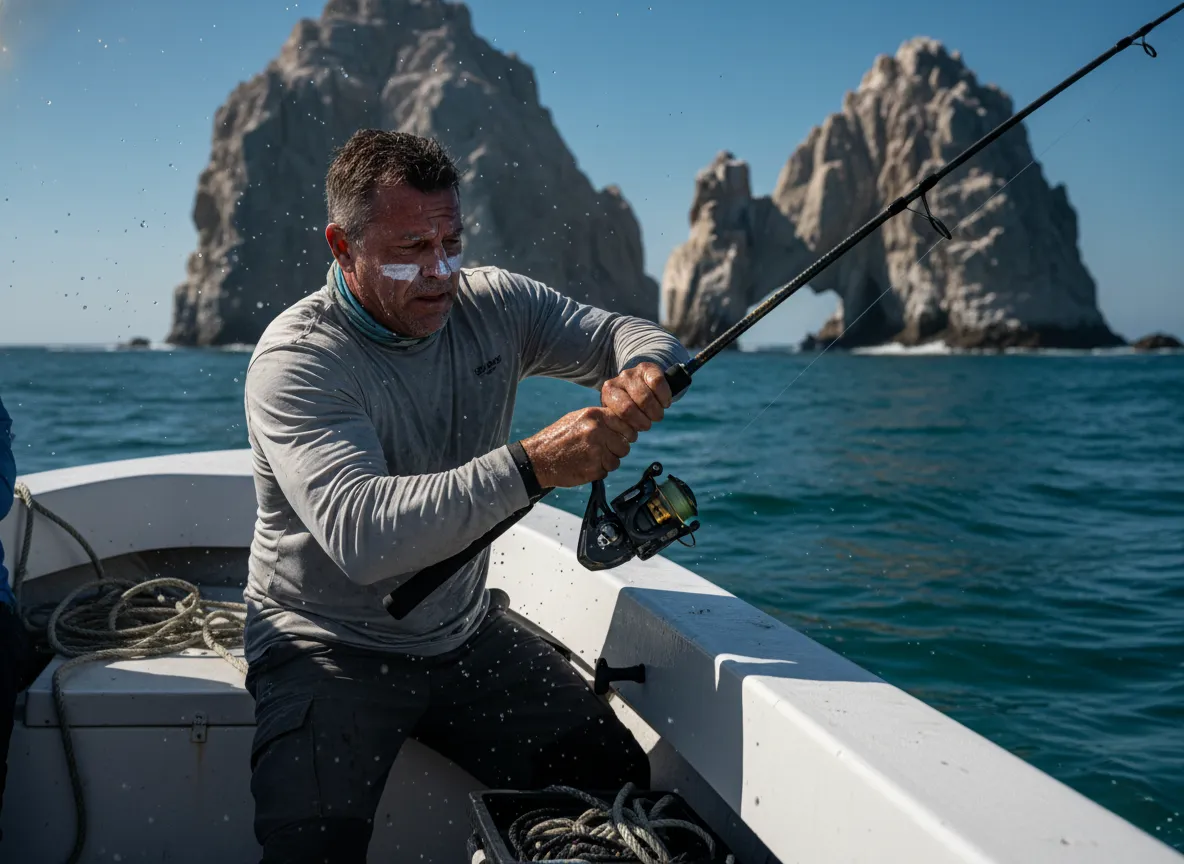
I have spent years navigating these coastal waters, from the super pangas of San José del Cabo to the remote camps of Magdalena Bay. I’ve learned that true outdoor competence in this fishery comes from turning theoretical knowledge—of currents, thermal fronts, and gear physics—into confident action.
In this guide, we will move beyond the general fishing report. We will examine the biological “highways” that bring pelagic species to the surface, the specific metrics for selecting travel rods that won’t fail under load, and the advanced tactics—like pitch baiting—that separate the tourists from the practitioners.
What Makes the Baja Peninsula a Global Fishing Epicenter?
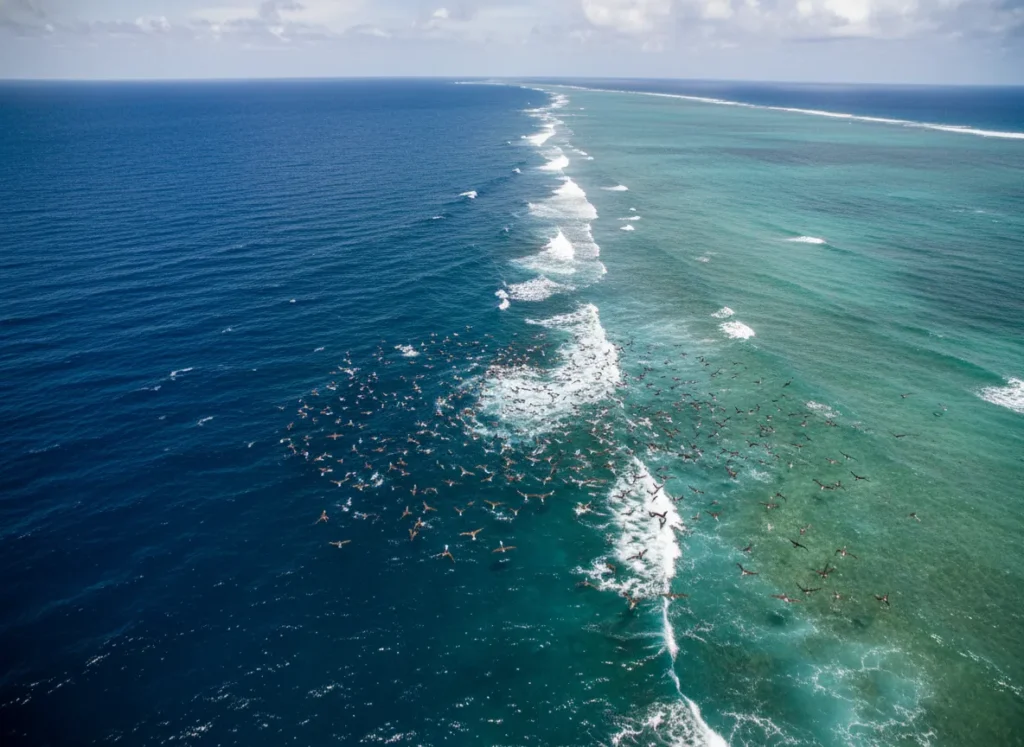
You cannot predict where the fish will be until you understand why they are there. The Baja California peninsula is defined by a singular oceanographic convergence: the collision of the cold, southward-flowing California Current with the warm, evaporative waters of the Gulf of California.
This interaction creates a distinct “thermal front,” particularly dynamic at the East Cape and the southern tip (Land’s End), which shifts seasonally. The California Current drives significant upwelling events along the Pacific banks, forcing cold, nutrient-rich water from the deep ocean into the photic zone.
These upwellings fuel massive phytoplankton blooms. In turn, these blooms sustain high-density populations of baitfish like Pacific sardines, mackerel, and red pelagic crabs (Pleuroncodes planipes). Predatory species like Striped Marlin, Yellowfin Tuna, and Wahoo utilize these thermal boundaries to herd bait balls, a behavior that reaches its apex during the Magdalena Bay sardine run.
Scientific telemetry investigating behavior and population dynamics of Striped Marlin indicates that these true offshore titans spend over 90% of their time in the mixed surface layer above the thermocline. This makes them accessible to surface-oriented angling tactics, including fly fishing and conventional fishing. However, locating these zones requires mastering the four pillars of fish habitat, specifically understanding how current breaks create feeding opportunities.
How Does Seasonality Dictate Target Species and Locations?
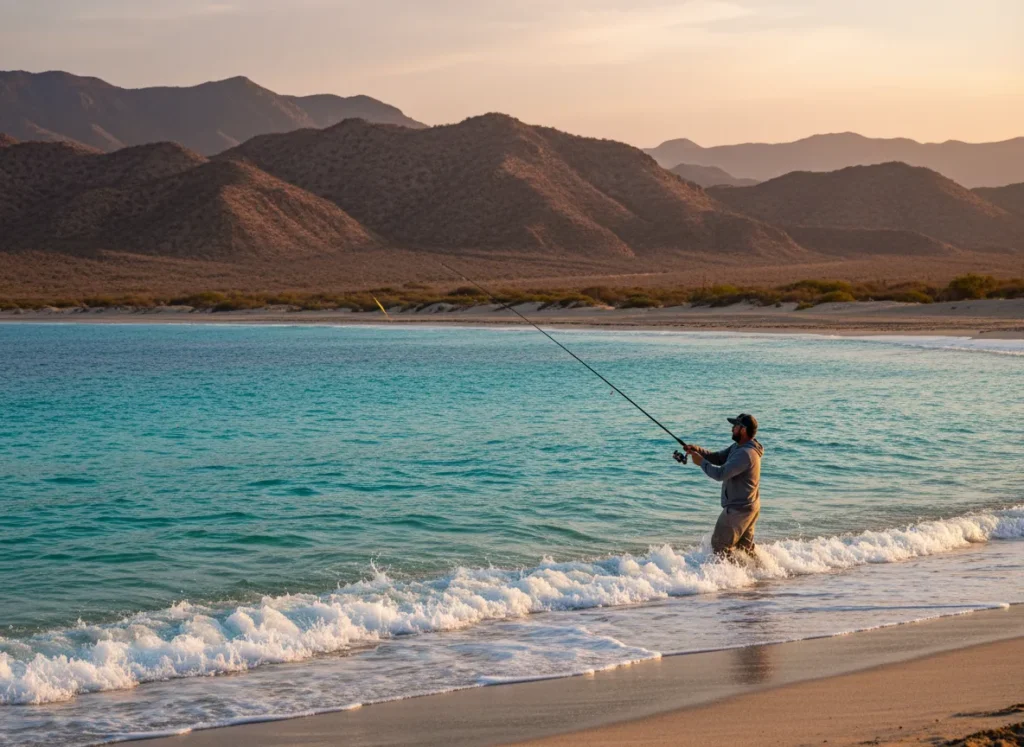
Baja is effectively two different oceans separated by a strip of desert. Understanding the distinction between the Pacific coastline and the Sea of Cortez is the first step in planning your fishing calendar.
What Distinguishes the Pacific Coast from the Sea of Cortez?
The Pacific side—stretching from Cabo San Lucas west past the “95 Spot” up to Magdalena Bay (Mag Bay), and further north to San Quintín and Ensenada—is characterized by cooler water temperatures, steeper bottom contours, and massive bait concentrations. Key structures like the Golden Gate Bank, Finger Bank, and Jaime Bank act as aggregation devices for Billfish royalty like Striped Marlin, Blue Marlin, and Black Marlin. This is particularly true during neutral or La Niña conditions, which favor strong upwelling.
The Pacific banks are the primary theater for the winter and spring marlin fishery. This creates a scenario that often requires heavier tackle to manage fish in deeper, rougher water.
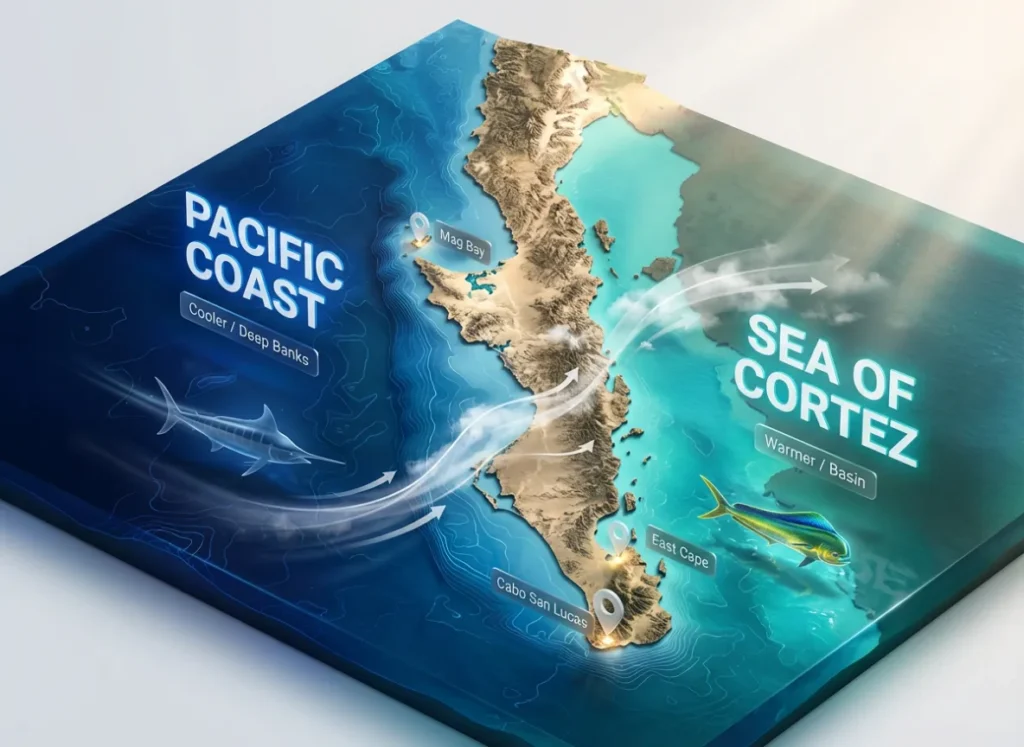
Conversely, the Sea of Cortez side—encompassing San Felipe, Bahía de los Ángeles, Loreto, La Paz, and the East Cape (Los Barriles)—functions as a warm-water evaporation basin. It attracts tropical species like Dorado (Mahi-Mahi), Roosterfish (Pez Gallo), and Amberjack. This region is defined by the “Coromuel” winds—southerly breezes that blow from the Pacific across the lowlands. These can create dangerous afternoon chop contrary to typical sea breezes.
Anglers must plan distinct strategies based on this geography. You might be deep trolling Rapalas or drifting live bait on the Pacific banks one day, then sight casting along the Cortez beaches for Sierra Mackerel or Broomtail Grouper the next. Research regarding the depth distribution and temperature preferences of wahoo validates that specific temperature breaks (often 22°C+) dictate their presence near structures like Cerralvo Island and Espiritu Santo Island.
Pro-Tip: Spotting the subtle color changes along a thermal front is impossible with the naked eye in harsh sunlight. Understanding how the right pair of polarized fishing sunglasses cuts glare to reveal these “bluewater highways” is a critical technical advantage.
What Specialized Gear is Required for the Baja Environment?
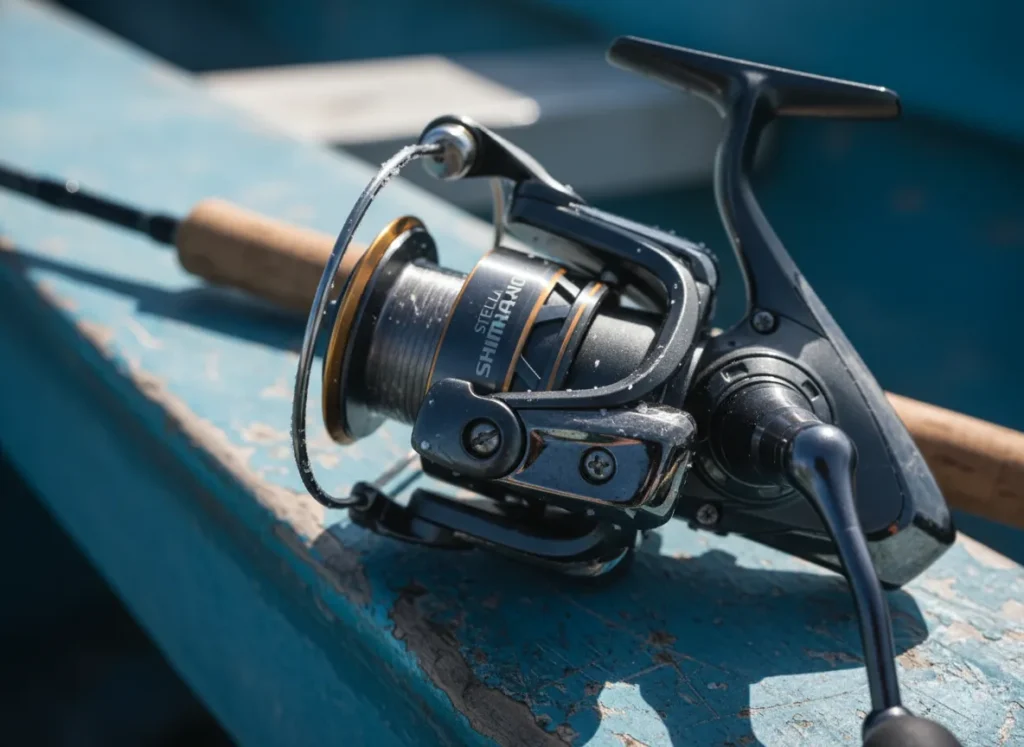
If you bring freshwater gear to Baja Mexico, the ocean will destroy it. This isn’t marketing hyperbole; it is a mechanical reality driven by salt intrusion and torque.
Why are Travel Rods and Sealed Reels Non-Negotiable?
Modern airline restrictions necessitate multi-piece travel rods, but quality varies significantly in the ferrule (joint) construction. You should prioritize rods utilizing “V-Joint” or bias construction technology. This minimizes flat spots in the rod’s curve and maintains power transfer during a fight with heavy Yellowtail or Cubera Snapper.
For the reel, the “panga environment”—whether you are on a 24-26ft boat or a larger cruiser—involves constant saltwater spray, sand exposure during beach launches, and occasional submersion. A truly field-tested saltwater spinning reel with an IPX8 (submersible) or IPX6 (heavy spray) rating is critical. This prevents saltwater intrusion into the gearbox and drag system.
Drag systems must possess high thermal dissipation properties, such as carbon fiber stacks. They must handle the blistering, long-distance runs of Wahoo and Skipjack without seizing or fading.
The durability of the reel body—specifically rigid aluminum—against torque is essential. It prevents gear misalignment when winching heavy fish from deep structure like the Iman Bank or Cabrilla Seamount. Studies on the genetic divergence at species boundaries of the dolphinfish reinforce that the Eastern Tropical Pacific holds distinct, powerful stocks of fish. Your gear faces a brutal ‘dual-threat’ assault in saltwater, meaning material selection is the difference between a landed fish and a seized bearing.
Which Lures Are Essential for the “Surface Iron” and Trolling Game?
The “Surface Iron” (light metal jig) is the primary tool for Yellowtail and Wahoo fishing. It is designed to be cast long distances and retrieved in the top five feet of the water column. Its effectiveness relies on asymmetry in the molding. This creates an irregular, “searching” kick that mimics a panicked baitfish—a trigger that straight-tracking lures fail to replicate.
Key patterns include “Mint” or “Scrambled Egg.” These create a specific visual silhouette against the bright sky for predators attacking from below.
For high-speed trolling, particularly for Wahoo using Marauders or similar trolling lures, equipment must feature “Auto-Tune” line ties or heavy internal ballasting. This prevents them from “blowing out” or surfacing at speeds of 12-18 knots. Roosterfish require high-speed surface poppers retrieved with a “burn” technique. This incites a competitive reaction strike before the fish can inspect the lure.
Which Advanced Techniques Separate the Pro from the Tourist?
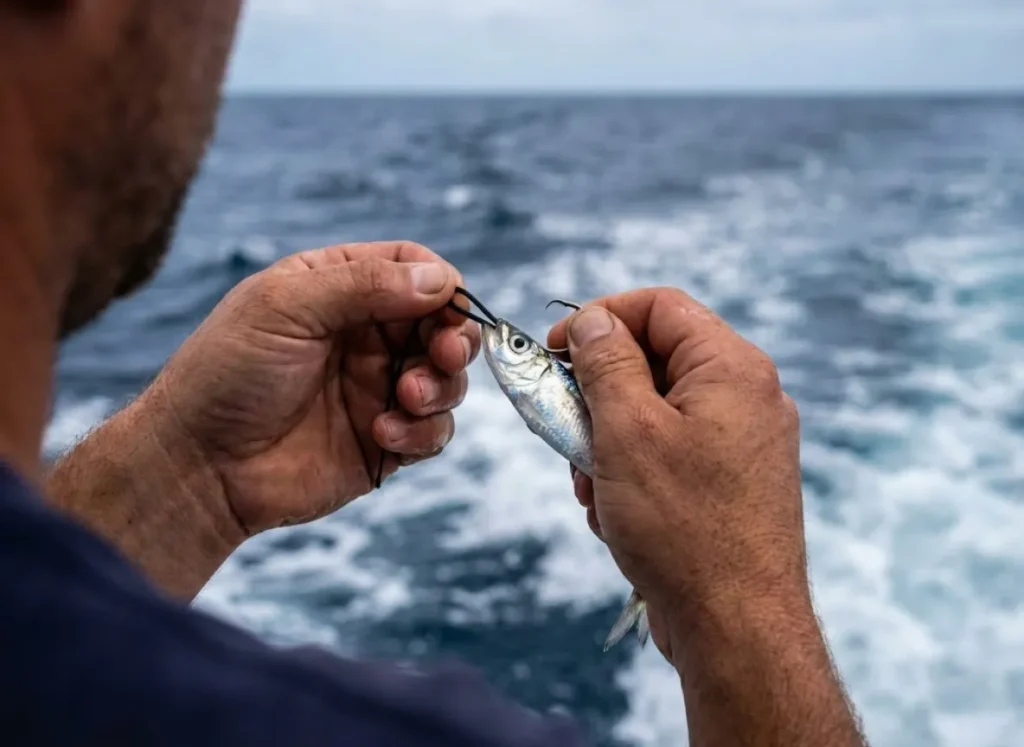
While lures are effective, the pinnacle of Baja sportfishing involves the precision presentation of live bait and the mastery of specialized rigging.
How is the “Pitch Bait” Technique Executed for Striped Marlin?
The “Pitch Bait” is a dynamic “bait and switch” tactic where the boat trolls hookless teasers to raise a marlin into the spread. Once the fish is “lit up” and tracking the teaser, the crew clears the teaser while the angler casts (pitches) a live bait directly into the marlin’s line of sight.
This method requires a pre-rigged “pitch rod” ready in the holder and split-second timing. You must present the bait before the marlin loses interest. Crucially, the live bait (Caballito, Mackerel, or Sardinas) is rigged using a Bridle—a loop of Dacron or rubber band passed through the bait’s eye sockets.
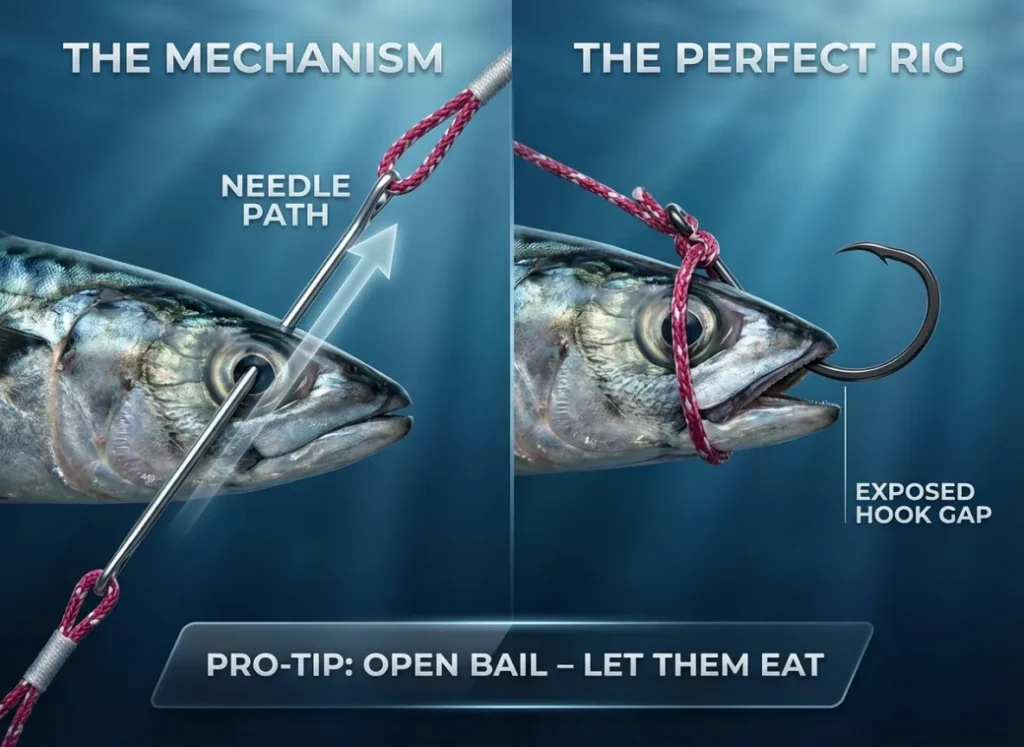
Bridling leaves the hook point fully exposed for a superior hook-up ratio. This is essential when using mandatory circle hooks. It also allows the bait to swim naturally and survive longer, unlike baits hooked directly through the nose or back which sustain tissue damage.
Because of the violence of the strike, knowing how to calibrate exact drag settings is vital to ensure the hook sets in the corner of the jaw without snapping the fluorocarbon leader on the initial run.
Pro-Tip: When pitch baiting, never engage the reel immediately after the cast. Keep the bail open and finger the line. Let the marlin eat the bait and turn away before you close the bail and come tight.
Scientific literature regarding post-release survival and movement patterns of roosterfish supports the use of techniques that minimize handling time and deep hooking, reinforcing the importance of bridle rigging and circle hooks.
How Can Anglers Navigate Logistics and Conservation Regulations?
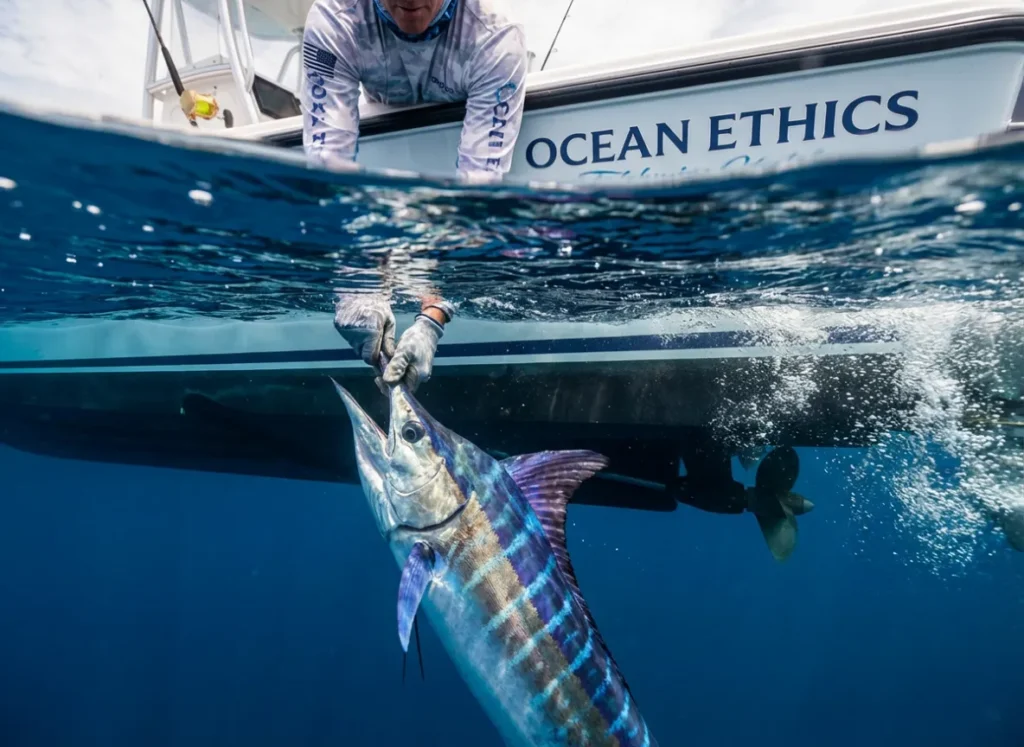
Fishing in Mexico involves navigating a specific set of laws. Compliance is the baseline, but the true mark of a skilled angler is the conservation of the resource.
What are the Legal Requirements for Licensing and Bag Limits?
Every individual on a vessel with fishing gear must possess a valid Mexican sportfishing license (CONAPESCA), regardless of age or whether they are actively fishing. Funds from these licenses often support the Fondo para la Protección de los Recursos Marinos. Daily bag limits are strict. The general limit is 10 fish per person, but a single Billfish counts as 5 points toward this total. This effectively caps the limit at one marlin.
Species like Dorado and Roosterfish have a limit of 2 per day (counting as 5 points toward the total). This emphasizes the sport over commercial harvest. Underwater fishing (spearfishing) is restricted to 5 fish per day and must be conducted via breath-hold (freediving) only; scuba tanks are strictly prohibited.
When returning home, anglers must process their catch professionally. It must be vacuum sealed and frozen solid to comply with US Customs and airline policies regarding perishables. Most marinas, from Puerto Peñasco to Cabo, offer professional filleting services. Hard-sided coolers with no wet ice (dry ice or frozen solid fish only) are the only reliable method for checking seafood as luggage.
While current California ocean recreational fishing regulations apply north of the border, US authorities enforce conservation laws on fish imported from Mexico. Understanding how to slash post-release mortality by up to 50% ensures that the fish you don’t keep survive to fight another day.
Final Thoughts on Baja Mastery
Baja California offers a masterclass in marine biology and physics for those willing to pay attention. The California Current dictates the presence of Sailfish and Tuna; ignore the water temperatures at your peril. Success here requires gear specificity—sealed drags and V-joint travel rods are investments in preventing mechanical failure.
The difference between a high catch rate and a quiet day often lies in tactical depth, such as the ability to bridle-rig live bait or properly work a surface iron. Finally, ethical angling through adherence to CONAPESCA bag limits and the use of circle hooks ensures the sustainability of this world-class fishery.
FAQ – Frequently Asked Questions
What is the best month to fish in Baja for a Grand Slam?
October and November are considered peak months for a Grand Slam (Marlin, Dorado, Tuna) in Cabo San Lucas and the Gordo Banks. This period sees cooling water temps that concentrate bait, keeping summer species active while winter species begin to arrive.
Do I need a fishing license if I am just watching on the boat?
Yes, Mexican law requires every person on board a vessel with fishing gear to have a valid fishing license, regardless of activity. Inspections by the Mexican Navy are common, and failure to produce a license can result in heavy fines or vessel confiscation.
Can I bring my own frozen fish back to the United States?
Yes, provided the fish is for personal use, completely frozen solid, and packed in a leak-proof container (cooler). Wet ice is prohibited in checked luggage; professional vacuum sealing and freezing is highly recommended to pass inspection.
Is fly fishing effective for Marlin in Baja?
Yes, particularly during the striped marlin sardine run in Magdalena Bay (Oct-Dec) or when pitch baiting in Cabo. This requires heavy 12-14wt rods, sinking lines, and compliance with IGFA leader rules to handle the size and power of the fish.
Risk Disclaimer: Fishing, boating, and all related outdoor activities involve inherent risks that
can lead to injury. The information provided on Master Fishing Mag is for educational and informational purposes
only. While we strive for accuracy, the information, techniques, and advice on gear and safety are not a substitute
for your own best judgment, local knowledge, and adherence to official regulations. Fishing regulations, including
seasons, size limits, and species restrictions, change frequently and vary by location. Always consult the latest
official regulations from your local fish and wildlife agency before heading out. Proper handling of hooks, knives,
and other sharp equipment is essential for safety. Furthermore, be aware of local fish consumption advisories. By
using this website, you agree that you are solely responsible for your own safety and for complying with all
applicable laws. Any reliance you place on our content is strictly at your own risk. Master Fishing Mag and its
authors will not be held liable for any injury, damage, or loss sustained in connection with the use of the
information herein.
Affiliate Disclosure: We are a participant in the Amazon Services LLC Associates Program, an
affiliate advertising program designed to provide a means for us to earn advertising fees by advertising and linking
to Amazon.com. As an Amazon Associate, we earn from qualifying purchases. We also participate in other affiliate
programs and may receive a commission on products purchased through our links, at no extra cost to you. Additional
terms are found in the terms of service.