

In this article
The transitional zone where freshwater rivers collide with the relentless push of the ocean is not a passive mixing bowl. It is a chemical battlefield. For the game fish living here—from largemouth bass to bull sharks—survival is a constant metabolic tax. For your gear, the water itself is a slow-motion fire waiting to corrode metal.
I have seen countless anglers treat this environment as just another bass pond, only to return with seized bearings and empty livewells. Navigating this volatile brackish water environment requires more than just a lucky cast; it demands the ability to read invisible salinity lines and understand the physiological limits of your target. You must stop thinking in binary terms of freshwater fishing versus saltwater fishing, and start thinking in gradients.
This guide moves you from a hesitant visitor to a calculated predator who understands the invisible chemical lines that dictate the behavior of your quarry in these tidal rivers and marshes.
What defines the brackish water environment?
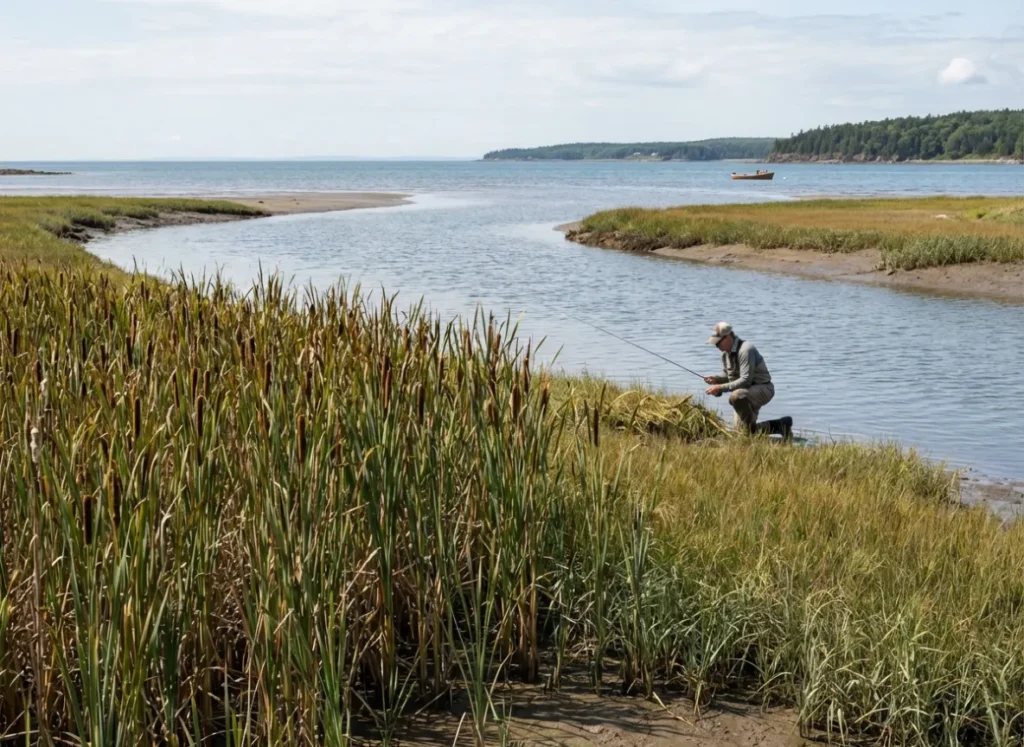
To the untrained eye, water is water. But the successful brackish water fishing expert knows how to “read” the invisible chemical composition of the estuary through visible environmental cues.
How do salinity gradients dictate fish location?
Water salinity is not uniform; it exists in distinct zones that determine which species can survive in a specific sector. Ecologists define these estuarine environments as Oligohaline (0.5–5.0 ppt, mostly fresh), Mesohaline (5.0–18.0 ppt, the true mix), and Polyhaline (18.0–30.0 ppt, mostly salt). However, fish do not swim in horizontal lines alone.
In deeper tidal rivers, a phenomenon known as the “Salt Wedge” occurs. Because denser saltwater slides underneath the river outflow, it creates vertical stratification. You might be casting a shallow crankbait into freshwater at 3 feet, while a jig dropped to 15 feet enters a completely different saltwater environment. According to NOAA data on estuarine stratification, this density difference drives water column separation, creating a specific “halocline” or boundary layer.
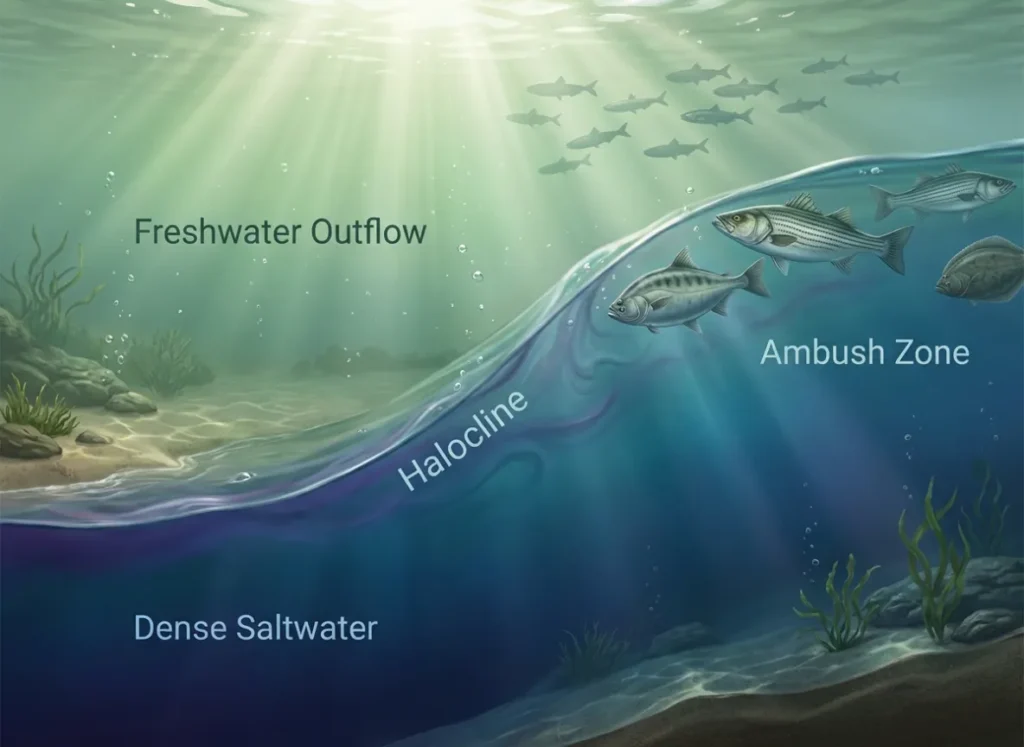
Ambush predation often occurs directly on this halocline. Predators suspend here to strike baitfish that become disoriented when transitioning between the layers. These zones are dynamic, shifting miles upstream or downstream depending on tides and droughts. Understanding this helps you when reading salt-marsh edges and oyster reefs, as you can predict where the salt wedge—and the predators—will be positioned.
How do I identify salinity zones without a meter?
You rarely have a mass spectrometer on the boat, but you don’t need one. You can use the “Biological Sensor” method by observing specific biological markers—flora and fauna that act as proxies for salinity range.
Start by identifying the “Green Zone” (Fresh/Oligohaline). If you see cattails (Typha), Arrowhead plants, or Alligators, the water is generally safe for largemouth bass and standard gear. As you move downstream, you enter the “Transition Zone” (Mesohaline). The appearance of Phragmites (Common Reed) and Rangia Clams signals the crossover point where redfish and creek bass overlap.
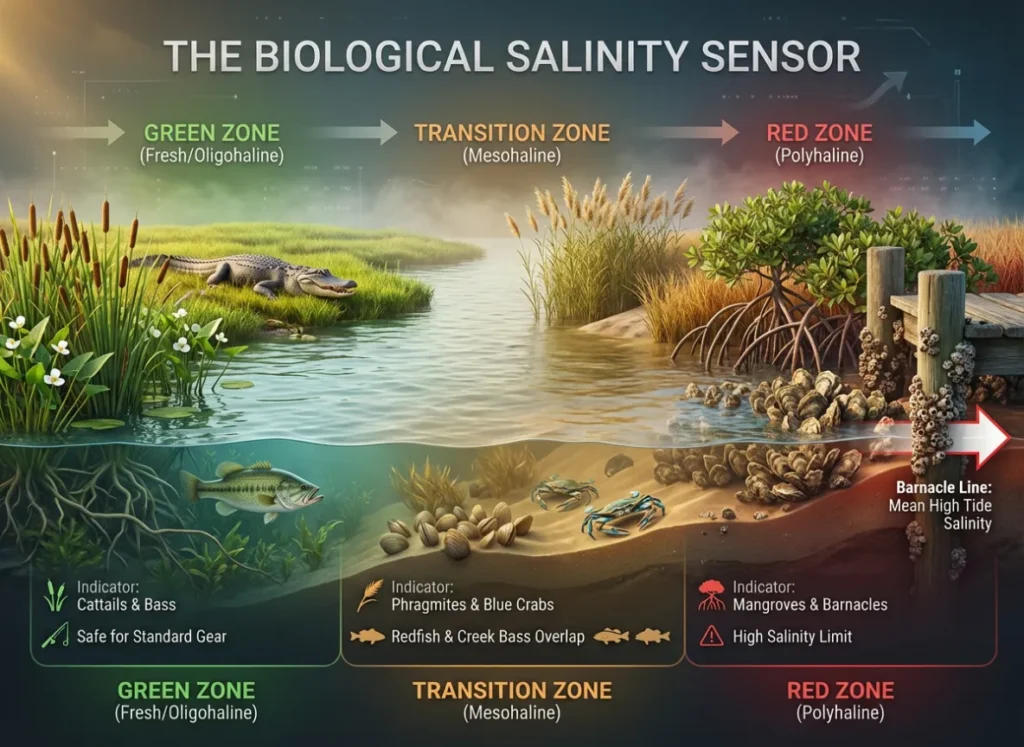
Finally, look for the “Red Zone” (Polyhaline). The presence of mangroves, Saltmarsh Cordgrass, and oyster bars indicates high salinity where bass cannot survive long-term. A useful NSW Government guide to salinity indicator plants details how specific vegetation thrives only within strict chemical limits.
Pro-Tip: Check the pilings on docks or bridges. The “Barnacle Line” indicates the mean high tide salinity. Heavy, clustered barnacle growth usually means consistent salt intrusion, whereas clean wood suggests the water stays fresh enough to kill the larvae.
Additionally, pay attention to blue crabs. Their abundance usually marks the upper limit of the “productive” brackish areas for mixed catches. By using this data-backed method for choosing fishing spots, you can map the arena before you even make a cast.
How does biology drive predation in the estuary?
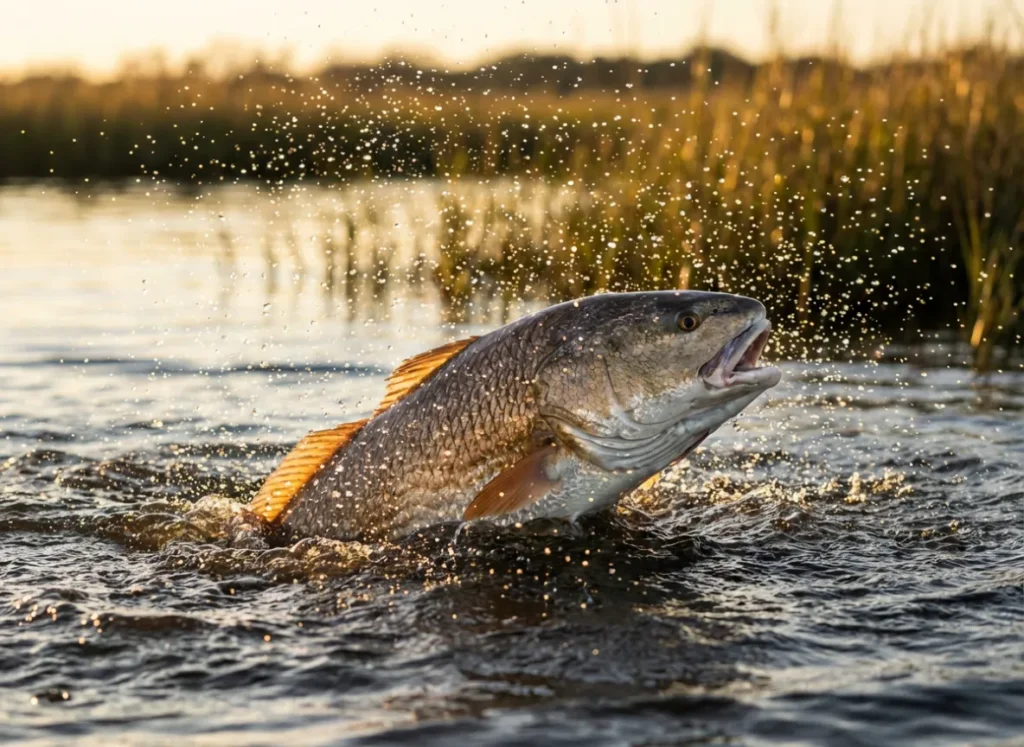
Finding the fish is step one; understanding why they are eating—or why they aren’t—requires a look at their internal biology.
Why do freshwater bass hit a “hard deck” in brackish water?
Fish manage the balance of salt and water in their bodies through a process called osmoregulation. For freshwater fish like largemouth bass, this is an energy-intensive process in brackish water. Research identifies a specific “Hard Deck” for bass: the 14.28 ppt salinity limit is approximately the lethal concentration (LC50).
Below this lethal limit, specifically around 10-12 ppt, bass can survive, but they often stop feeding aggressively due to metabolic stress. Their energy is diverted from hunting to cellular survival. Studies on physiological responses of largemouth bass to salinity validate that prolonged exposure to these levels induces necrosis and metabolic failure.
Contrast this with euryhaline brackish species like red drum, snook, tarpon, spotted seatrout, flounder, and even channel catfish. These species can traverse 0–35 ppt with minimal cost. However, snook face a “Cold-Salt” paradox: while they tolerate fresh water, they lose their cold tolerance in it. During winter freezes, they must flee to salty inlets to survive. If the water tastes salty to you (approx. 1 ppt), bass are comfortable. If it stings your eyes (approx. 10 ppt), you should shift your focus to largemouth bass biology and seasonal movements to understand why they have retreated upstream.
How do tides and wind alter the playing field?
The water in an estuary is a conveyor belt of food. Rising tides generally push predators deep into the grass, mangroves, and marsh to feed on fiddler crabs and shrimp hiding in the root systems. Conversely, falling tides flush this bait out into the “drains,” tidal creeks, and river mouths.
The “Golden Hour” typically occurs during the last two hours of the outgoing tide. This tidal flow concentrates prey at choke points like weirs, culverts, and feeder creeks, creating a feeding frenzy. However, in shallow estuaries, the wind often overrides astronomical tide charts. A strong sustained northeast wind can blow water out of a bay, creating a “negative tide,” or stack water against the coast, preventing the flush required for a good bite.
Anglers should utilize USGS water level and salinity analysis tools to visualize real-time wind effects. Furthermore, runoff often creates a “Tannic Stain,” darkening the water to the color of tea. This stained water requires high-vibration lures rather than visual ones. For a deeper understanding of these dynamics, refer to our guide to fishing in current.
What gear survives the transition?
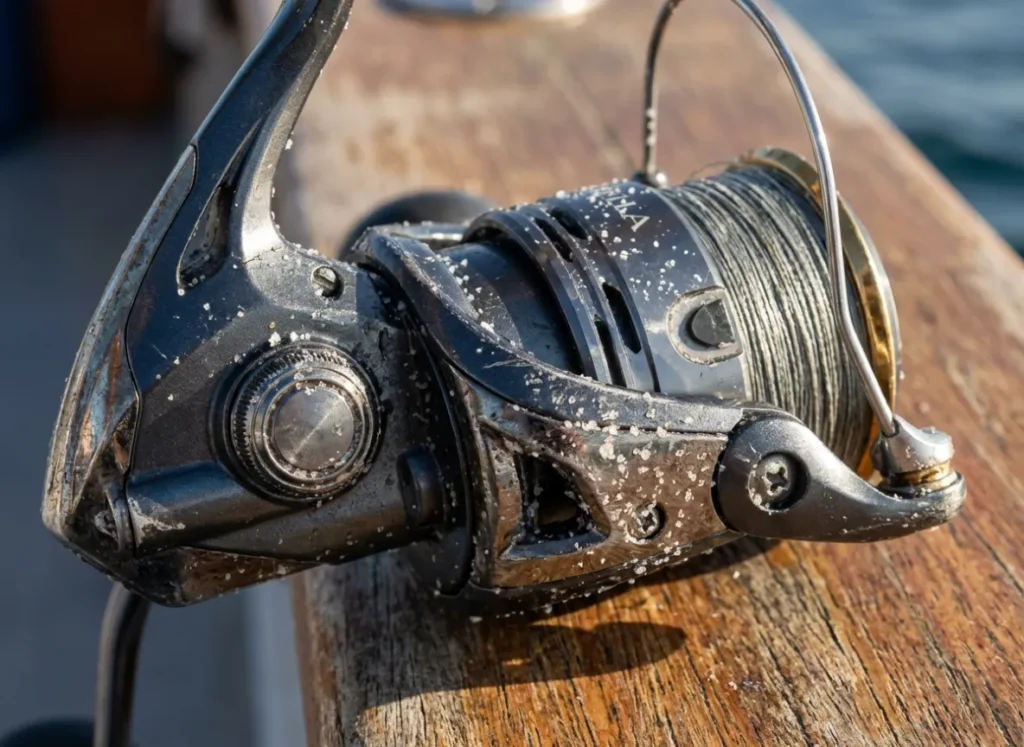
The brackish water environment is positively lethal to equipment if you arrive unprepared. You must distinguish between “freshwater tough” and “saltwater proof” to protect your investment.
Will my freshwater gear survive the salt?
Brackish water acts as an electrolyte that connects dissimilar metals in your reel, accelerating corrosion through the Galvanic Series. A critical warning for bass fishing enthusiasts: Do not use high-end magnesium reels in brackish water. Magnesium is highly reactive (-2.37V); once the protective coating is breached, it corrodes catastrophically.
For crossover fishing, stick to Carbon Composite (inert) or anodized aluminum reels. Modern reels also utilize specific sealing technology. MagSealed bearings use magnetic oil, while physical labyrinth seals (like X-Protect) and shielded stainless steel bearings physically block brine from entering the anti-reverse clutch. The City of Kodiak guide on marine electrolysis provides a clear technical explanation of how this galvanic corrosion destroys metals.
While graphite rod blanks are safe, the steel frames of the guides are vulnerable. Braided fishing line is superior in salt because it does not absorb water like monofilament, but you must use fluorocarbon leader for abrasion resistance against barnacles. For a full breakdown, compare saltwater vs freshwater gear durability.
What is the definitive post-trip maintenance protocol?
Selecting corrosion resistant gear is the first step, but without a rigorous post-trip gear rescue ritual, even the best equipment will seize.
Adhere to the “Locked Drag” Rule: tighten your drag completely before washing your reel. This compresses the sealed drag systems, preventing water from intruding into the drag stack. Once you are finished drying the reel, loosen the drag completely to prevent the washers from compressing and sticking.
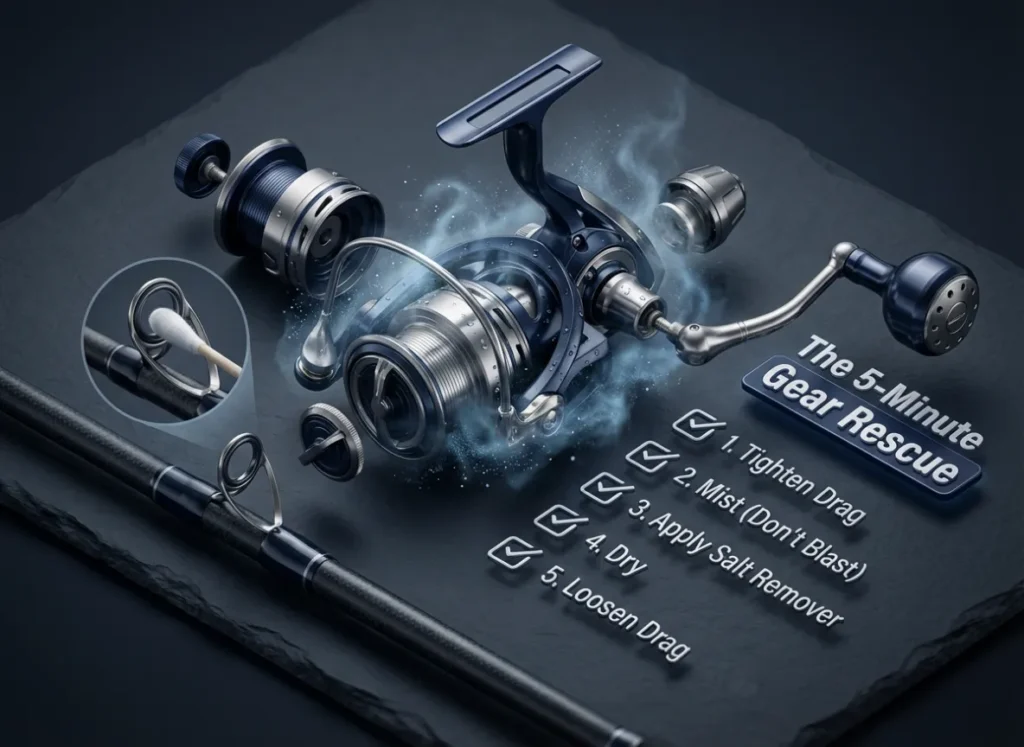
When washing, use a gentle mist. High-pressure sprays drive salt crystals deep into the bearings. For chemistry, avoid pure vinegar as it can be acidic enough to damage rubber seals. Instead, use a chelating agent like Salt-Away, which chemically lifts salt without harming the reel. The NPS Conserve O Gram on removing salts outlines safe methods for cleaning delicate materials.
Pro-Tip: Perform the “Guide Q-Tip Test” after every trip. Run a cotton swab around the inside of your rod guides. If cotton fibers snag, you have a microscopic crack in the ceramic insert. This crack will slice your braided line under load, costing you the fish of a lifetime.
See our sustainable fishing gear maintenance protocols for a broader guide on keeping your equipment field-ready.
Which tactics trigger the “mixed bag” bite?
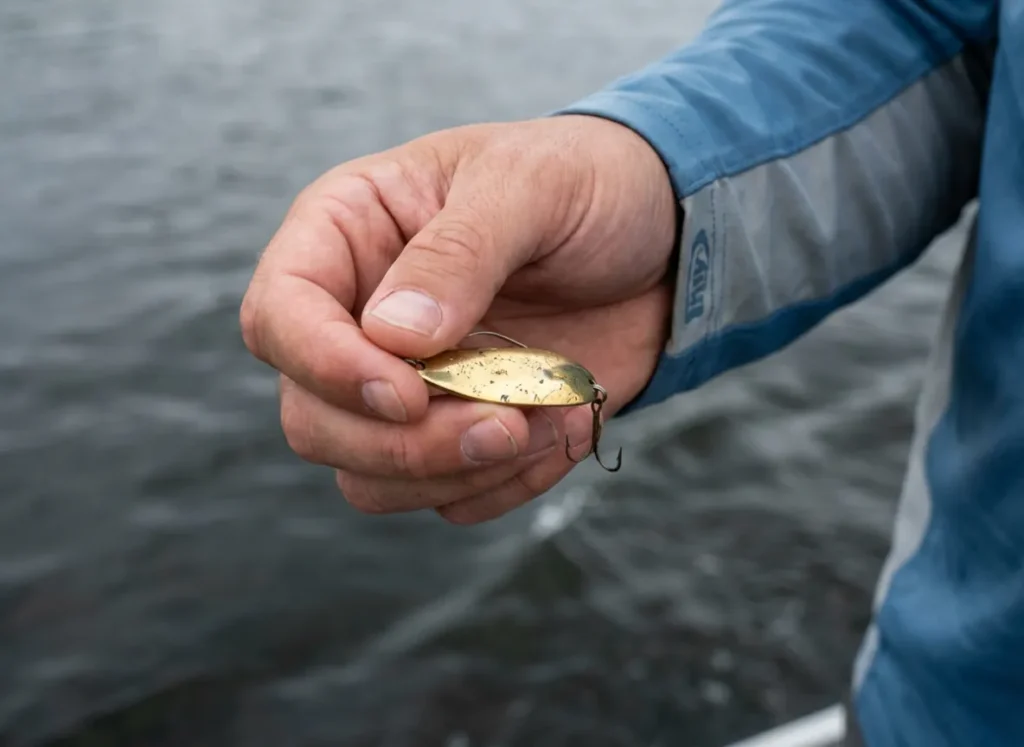
Success in the brackish zone isn’t about having the most tackle; it’s about having the right crossover arsenal. You need a streamlined selection of salt-safe lures that appeal to the entire spectrum of predators.
What is the “Crossover Arsenal” for bass and redfish?
The “Universal Prey” theory states that in the estuary, everything eats shrimp, finger mullet, and small blue crabs. Therefore, your presentation should mimic these shared forage bases.
The gold spoon is the MVP of brackish water fishing. Its weedless capability allows it to work through freshwater hydrilla and saltwater turtle grass alike, and the gold flash mimics the sheen of a small crab or drum. Pair this with a paddletail swimbait. A 3-4″ soft plastic swimbait on a 1/4oz jighead perfectly mimics the profile of a finger mullet.
The Chatterbait (Bladed Jig), originally a bass lure, is now deadly for redfish. The fish-attracting thumping vibration is critical in the tannin-stained, low-visibility water common in estuaries. A popular variation is the Redfish Magic spinnerbait. Regarding color, “Match the Hatch” often means “Match the Stain”—utilize Gold, Rootbeer, and New Penny colors rather than Silver or Ghost patterns. Live shrimp or artificial shrimp imitating a back-swimming crustacean are also staples. South Carolina DNR species tolerance cards confirm the overlapping diet of these species.
Always retrieve “with the tide” (natural drift) rather than against it. And remember, because you are targeting strong saltwater jaws—including sheepshead and tarpon—you must know how to tie a leader for snook and reds that can withstand the abrasion.
Final Thoughts
To master the brackish water environment, you must respect the science behind the scenery. Respect the 14.28 ppt salinity limit for largemouth bass; pushing past it is biologically futile. Use the living landscape—cattails, Phragmites, and mangroves—as your visual diagnostics. Protect your wallet by keeping Magnesium reels at home and adopting a disciplined maintenance routine.
By simplifying your approach to mimic the Universal Prey with a gold spoon or paddletail, you maximize your chances of a “Grand Slam” including spotted seatrout and flounder. Next time you approach the river mouth, don’t turn back at the first taste of salt. Apply these tactics and claim the water that others are too afraid to fish.
FAQ – Frequently Asked Questions
Can I use my freshwater bass boat in brackish water?
Yes, but you must meticulously wash the trailer and hull immediately after use. Galvanized trailers withstand salt better than painted steel, and you should flush the outboard engine with fresh water to prevent internal corrosion.
Is it safe to eat fish caught in brackish water?
Generally yes, but consult local advisories regarding pollutants. Estuaries are runoff sinks, so check for specific do not eat warnings related to heavy metals or PCBs in your specific tidal river system.
Do I need a freshwater or saltwater fishing license?
This depends on state fishing regulations; some draw the line geographically (e.g., south of a specific bridge), while others base it on the fish species caught. Always carry both a freshwater and saltwater fishing license if you are fishing the transition zone to be safe.
How does rain affect brackish water fishing?
Heavy rain flushes freshwater downstream, pushing the salt wedge further out to sea. This allows freshwater species like largemouth bass to push further downriver, while saltwater species may retreat to the ocean to find stable salinity.
Risk Disclaimer: Fishing, boating, and all related outdoor activities involve inherent risks that
can lead to injury. The information provided on Master Fishing Mag is for educational and informational purposes
only. While we strive for accuracy, the information, techniques, and advice on gear and safety are not a substitute
for your own best judgment, local knowledge, and adherence to official regulations. Fishing regulations, including
seasons, size limits, and species restrictions, change frequently and vary by location. Always consult the latest
official regulations from your local fish and wildlife agency before heading out. Proper handling of hooks, knives,
and other sharp equipment is essential for safety. Furthermore, be aware of local fish consumption advisories. By
using this website, you agree that you are solely responsible for your own safety and for complying with all
applicable laws. Any reliance you place on our content is strictly at your own risk. Master Fishing Mag and its
authors will not be held liable for any injury, damage, or loss sustained in connection with the use of the
information herein.
Affiliate Disclosure: We are a participant in the Amazon Services LLC Associates Program, an
affiliate advertising program designed to provide a means for us to earn advertising fees by advertising and linking
to Amazon.com. As an Amazon Associate, we earn from qualifying purchases. We also participate in other affiliate
programs and may receive a commission on products purchased through our links, at no extra cost to you. Additional
terms are found in the terms of service.