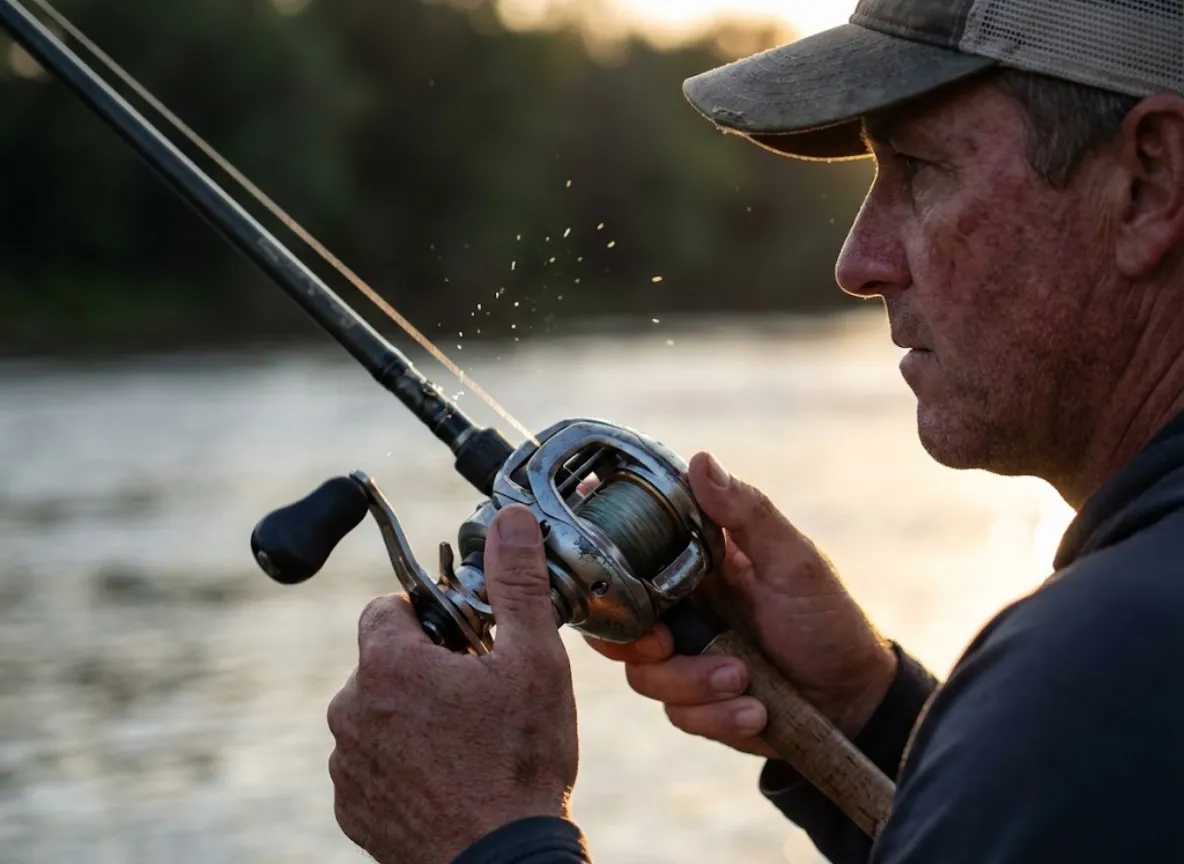
A spool spinning at 30,000 RPMs creates a kinetic energy bomb in your hand. When that energy meets air resistance or a sudden wind shift, the result isn’t just a bird’s nest; it’s lost time, wasted line, and a missed opportunity at a tournament check or a personal best. In 2026, the difference between a frustrating day on the water and a flawless one isn’t luck—it is precision engineering.
I have spent decades guiding on pressured waters, dismantling reels on truck tailgates, and watching marketing departments invent buzzwords to sell plastic parts. This commercial investigation is different. We analyze the market not by the shiny sticker price, but by the raw physics of braking tech and frame rigidity. We are decoding the engineering behind the marketing to help you find the best baitcasting reels for bass that match your specific mechanical needs.
We will strip away the jargon to understand why magnetic induction (Lenz’s Law) beats friction for distance, why Digital Control is an efficiency tool rather than a crutch, and how the chassis material dictates the lifespan of your gears.
How to Choose the Right Baitcasting Reel
You are often sold “smoothness,” but smoothness in a tackle shop means nothing when you are three years into a reel’s life and the gears are grinding. To make a confident choice in tactical fishing gear, you must look at the mechanical reality of the tool, specifically performance specs like gear ratio, max drag, and IPT (inches per turn).
The Physics of Braking: Why “Control” Matters More Than Bearings
The most critical factor in a baitcaster isn’t the bearing count; it is how the reel manages the spool inertia. Lighter spools, measured in grams, require significantly less force to start spinning. This “inertial start-up” is the deciding factor when throwing light lures or engaging in bait finesse fishing.
Once the lure is airborne, two forces fight for control. Centrifugal braking uses friction blocks that push outward at high RPMs, excelling at the violent start of a cast. Magnetic braking relies on Lenz’s Law, creating resistance through magnetic fields without physical contact, providing consistent management throughout the flight to prevent backlashes.
Then there is Digital Control braking (DC). This isn’t magic; it is a micro-computer that monitors RPM 1,000 times per second to apply braking force the micro-second a spool spins faster than the lure is traveling. However, no amount of engineering replaces skill. Even the most advanced braking systems require proper setup and mastering the ‘educated thumb’ technique to truly maximize castability.
Frame Rigidity: The Foundation of Torque
If you are fishing high-resistance lures like deep cranking plugs or spinnerbaits, the frame is your foundation. When you turn the handle against a heavy load, a weak frame will flex. This “winch factor” is critical for executing solid hooksets.
When a frame twists, the gears inside misalign. This causes the teeth to mesh imperfectly, leading to that “gritty” feeling and rapid gear failure. An aluminum frame is the gold standard here—it is heavy but rigid. A magnesium frame offers similar rigidity at a fraction of the weight but requires care regarding corrosion resistance. A graphite frame is light and affordable but can suffer from flex under extreme torque, which is why we generally avoid them for power fishing reels.
Choosing the right material is about the environment you fish. If your primary goal is extracting bass from heavy cover, a rigid aluminum frame is non-negotiable to prevent gear failure during the fight.
Our Selection Process: How We Built This Guide
Trust is earned through transparency. We didn’t just read the box; we looked at the metallurgy. Our commitment to objectivity means stripping away the “Anti-Reverse” marketing fluff to look at the drive train’s actual durability.
Every reel below—whether an entry-level workhorse or a high-end baitcaster—is judged on a hex-axial scoring system: Casting Efficiency, Structural Rigidity, Inertial Start-Up, Ergonomics, Durability, and Price-to-Performance. We cross-referenced our field notes with long-term durability reports from user communities and direct feedback regarding common failure points, such as drag clickers and anti-reverse bearings. While we may earn a commission, our “Critical Flaws” sections ensure you know exactly what you are buying—warts and all.
The Best Baitcasting Reels of 2026: Our Top Recommendations for Every Need
Our Top Picks for The Technical Finesse Specialist (BFS)
Selected for anglers targeting pressured waters with lures 1/16 oz to 1/4 oz.
Shimano Curado BFS
$$$$
The Curado BFS single-handedly democratized the Bait Finesse System for the US market. Its genius lies in the Finesse Tune Brake (FTB) system, which eliminates the braking unit from the spool entirely to reduce mass. During the cast, the magnets physically move closer to the spool, providing dynamic braking that allows you to cast 3-gram lures with startling consistency. It palms beautifully and feels refined. However, it is not flawless; the audible drag clicker uses a delicate spring mechanism that is notorious for failing or going silent after a season of hard use.
Overall
Casting Efficiency
Structural Rigidity
Inertial Start-Up
Ergonomics
Value
Gear Ratio8.2:1 (XG)
Weight6.2 oz
Max Drag8 lbs
Line Capacity8lb / 45 yds (Fluorocarbon)
You Should Buy This If…
You are new to BFS and want a forgiving braking system (FTB) that minimizes backlash.
You need a reliable reel for Ned rigs and small shad plugs (1/10 oz – 1/4 oz).
You want widely available parts and serviceability.
You Should Reconsider If…
You demand an audible drag clicker that lasts (the spring mechanism is prone to failure/silence).
You are targeting extreme micro-finesse (<2g), where the stock spool hits its performance floor.
Pro-Tip: When spooling a BFS reel like the Curado, do not fill it to the brim. Fill it only about 40-50 yards. Less line equals less spool weight, which drastically improves the casting of ultralight lures.
Daiwa Tatula BF70
$$$$
Think of the Tatula BF70 as the “Power BFS” option. While many finesse reels feel fragile, the BF70 utilizes an aluminum frame that provides a sense of structural confidence when fishing around docks or light brush. It uses the Magforce Z braking system tailored for light weights, bridging the gap between ultralight finesse and compact power fishing. It is sturdy and fits small hands perfectly. The downside? The Magforce inductor can be slightly aggressive, making it struggle with true micro-lures under 2 grams compared to the Curado, and the braking system can emit a distinct whine during hard casts.
Overall
Casting Efficiency
Structural Rigidity
Inertial Start-Up
Ergonomics
Value
Gear Ratio8.1:1
Weight6.5 oz
Max Drag9.9 lbs
Line Capacity8lb / 50 yds
You Should Buy This If…
You need a “Power BFS” reel for light cover or docks.
You prefer a compact 70-size frame that fits smaller hands perfectly.
You want a sturdier aluminum frame feel over composite/graphite.
You Should Reconsider If…
You are sensitive to reel noise; the braking system can emit a “screech” or whine during hard casts.
You primarily throw true micro-lures (<2g), as the Magforce Z is slightly aggressive for the lightest weights.
Selected for anglers needing structural rigidity, winching torque, and deep spools for heavy line.
Shimano Bantam MGL A
$$$$
The Bantam MGL A is a tank. Its defining feature is the CoreSolid Body, which integrates the frame and side plate into a single piece of aluminum. This eliminates flex entirely, giving you a “bank vault” solidity that transfers every ounce of input into winching power. It is exceptionally smooth and sensitive because the rigid metal transmits vibration better than composite. The trade-off for this durability is weight. At nearly 8 ounces, it is heavy for a modern low-profile reel, and you will feel that mass in your wrist after a long day of grinding deep crankbaits.
Overall
Casting Efficiency
Structural Rigidity
Inertial Start-Up
Ergonomics
Durability
Gear Ratio6.2:1 / 7.1:1 / 8.1:1
Weight7.6 – 7.9 oz
Max Drag11 – 12 lbs
Line Capacity12lb / 110 yds
You Should Buy This If…
You need absolute zero flex for high-torque applications like deep cranking.
You value sensitivity; the solid metal frame transmits vibration better than any composite.
You want a reel that is practically indestructible in freshwater environments.
You Should Reconsider If…
You are sensitive to weight; at nearly 8 oz, it is heavy for a low-profile reel.
You need massive line capacity for giant swimbaits (the 150 spool is limited for 20lb+ line).
The Zillion SV TW is widely considered the masterpiece of modern versatility. It pairs the heavy-duty Hyper Drive Design (brass gears) with the SV Boost spool, which offers a two-stage braking profile. This allows you to skip a jig deep under a dock with zero backlash and then extract the fish with authority. It is lighter than the Bantam and handles wind exceptionally well. However, heavy users of abrasive 65lb braid should be cautious; over years of hard use, the T-Wing line guide can develop grooves that may eventually damage your line.
Overall
Casting Efficiency
Structural Rigidity
Inertial Start-Up
Ergonomics
Durability
Gear Ratio6.3 / 7.1 / 8.5
Weight6.7 oz
Max Drag11 lbs
Line Capacity14lb / 100 yds
You Should Buy This If…
You need a reel that can skip jigs and pitch with elite precision (SV Boost system).
You want a rigid aluminum frame that doesn’t feel like a brick (lighter than the Bantam).
You want the best mechanical braking system on the market for wind management.
You Should Reconsider If…
You use abrasive heavy braid exclusively (T-Wing system grooving is a long-term risk).
You dislike performing maintenance; the Magforce inductor can squeak if not oiled regularly.
If the Bantam is a luxury SUV, the Tranx is a tractor. It bridges the gap between freshwater bass and inshore saltwater durability. With CoreProtect water sealing and a rigid Hagane body, it is built for abuse—specifically for punching heavy mats with 65lb braid or throwing Alabama rigs. It is not refined. It does not feel “buttery” smooth like the Zillion or Bantam, and the retrieve can feel somewhat agricultural or gritty. But when you need a tool that can be dunked in brackish water and still winch a bass out of hydrilla, this is the choice.
Overall
Casting Efficiency
Structural Rigidity
Inertial Start-Up
Ergonomics
Durability
Gear Ratio6.3:1 / 7.2:1 / 8.2:1
Weight6.7 – 6.9 oz
Max Drag13 lbs
Line Capacity12lb / 110 yds (150 size)
You Should Buy This If…
You prioritize durability and waterproofing above all else.
You fish heavy cover with 65lb braid (Punching/Frogging).
You want a “winch” with oversized handle knobs for leverage.
You Should Reconsider If…
You want “buttery” smoothness; it feels agricultural compared to the Bantam.
You intend to cast light lures (under 3/8 oz); the heavy spool is not built for finesse.
Selected for efficiency, adaptability, and reduced mental overhead during long days on the water.
Shimano Metanium DC A
$$$$
The Metanium DC A represents the technological apex of bass fishing. It combines a featherlight Magnesium CoreSolid body with the I-DC5 Digital Control system. The computer chip reads spool speed instantly, allowing you to switch between aerodynamics—like a spinnerbait to a jerkbait—without re-tuning your brakes. It virtually eliminates backlashes and buys the tournament angler precious time. However, high performance requires maintenance. The MicroModule gears are incredibly smooth but very sensitive to grit and debris. If you fish in dirty environments and don’t clean your gear, this reel will feel rough quickly.
Overall
Casting Efficiency
Structural Rigidity
Inertial Start-Up
Ergonomics
Value
Gear Ratio7.1:1 / 8.1:1
Weight6.2 oz
Max Drag11 lbs
Line Capacity12lb / 100 yds
You Should Buy This If…
You are a tournament angler who values time management and backlash-free efficiency.
You want the lightest possible reel that still maintains a rigid metal feel (Magnesium).
You want to skip lures and cast into the wind without constant manual thumbing.
You Should Reconsider If…
You are on a budget; the price-to-performance ratio diminishes past the $300 mark.
You fish in gritty environments without cleaning; the MicroModule gears are sensitive to debris.
The SLX DC is the “People’s Champion” of digital braking. It brings the I-DC4 computer chip to a price point that makes sense for the weekend warrior. It offers a massive safety net against wind and poor casting form, allowing you to focus on fishing rather than picking out bird’s nests. The frame is rigid aluminum, giving it a solid feel. Be aware, though: the “DC Whine” is loud and prominent on this model, which some find annoying. Also, the heavy spool has high inertia, meaning it is strictly for standard bass lures and will struggle with anything lightweight.
Overall
Casting Efficiency
Structural Rigidity
Inertial Start-Up
Ergonomics
Value
Gear Ratio6.3 / 7.2 / 8.2
Weight7.6 oz
Max Drag11 – 12 lbs
Line Capacity12lb / 110 yds
You Should Buy This If…
You struggle with backlashes and want a “safety net” technology.
You want the benefits of DC braking without the flagship price tag.
You need a reliable, set-it-and-forget-it reel for general purpose bass fishing.
You Should Reconsider If…
You are irritated by high-pitched electronic noises (the DC whine is prominent).
You want to pitch or cast light lures; the heavy spool inertia limits it to standard weight baits.
For those outfitting a six-rod deck on a budget, the Lew’s Speed Spool LFS is the undeniable winner. It provides pro-level features like a one-piece aluminum frame and P2 Super Pinion bearing support for around $100. It is a reliable workhorse that covers 90% of bass techniques comfortably. The paddle knobs are famously ergonomic. Its Achilles’ heel is cold weather; the anti-reverse bearing is known to slip and fail in sub-freezing temperatures, so keep this reel for the warmer months.
Overall
Casting Efficiency
Structural Rigidity
Inertial Start-Up
Ergonomics
Value
Gear Ratio5.6 / 6.8 / 7.5 / 8.3
Weight7.0 oz
Max Drag15 lbs
Line Capacity12lb / 120 yds
You Should Buy This If…
You want the absolute best value-for-money reel on the market.
You prefer the ergonomic comfort of Lew’s paddle knobs.
You need to outfit multiple rods without breaking the bank.
You Should Reconsider If…
You fish in sub-freezing temperatures (Anti-Reverse bearing slip is a known issue).
You need advanced braking for skipping or heavy wind; the magnetic system is basic.
Pro-Tip: Don’t throw away the box. If you ever need to ship your reel for warranty service or professional cleaning, shipping it in the original formed packaging prevents bail arm and handle damage during transit.
Final Thoughts
The market wants you to believe that more bearings equal more fish. The physics disagree.
For finesse applications, inertia is king—you need a light spool, not just smooth gears. For power fishing, rigidity equals power; an aluminum frame like the Bantam or Tranx is the only way to ensure your gears survive the season against strong pulling fish. And for the tournament grade angler, technology buys efficiency—Digital Control isn’t a gimmick, it is a tool that purchases mental energy.
Stop fighting your equipment and start fighting the fish. Choose the fishing reel engineered for your specific technique.
FAQ – Frequently Asked Questions
What is the real difference between Magnetic and Centrifugal brakes?
Centrifugal brakes apply force based on speed (friction), making them superior for managing the high-RPM start of a cast. Magnetic brakes apply force based on Lenz’s Law, offering better control at the end of a cast as the lure slows down. The Daiwa Zillion SV TW uses a hybrid system that attempts to maximize both.
Why do my gears feel gritty under load?
This is often caused by frame flex. If the reel frame (chassis) twists under the torque of a heavy fish or snag, the gears misalign and grind against each other. We recommend the Shimano Bantam MGL A for its rigid CoreSolid aluminum body to prevent this twisting.
Can I use a standard baitcaster for light lures (under 1/4 oz)?
Generally, no. Standard spools are too heavy to spin up effectively with light weights, leading to immediate backlashes. You need a BFS-specific reel like the Shimano Curado BFS which features a lighter, shallower spool designed to reduce start-up inertia.
Is the DC Whine on Shimano reels annoying?
It is a distinct high-pitched electronic sound that occurs during the cast. Some anglers love the sound of technology and associate it with a good cast, while others find it distracting in nature. If you want silence, stick to mechanical braking systems like those found on the Lew’s HyperMag.
Risk Disclaimer: Fishing, boating, and all related outdoor activities involve inherent risks that can lead to injury. The information provided on Master Fishing Mag is for educational and informational purposes only. While we strive for accuracy, the information, techniques, and advice on gear and safety are not a substitute for your own best judgment, local knowledge, and adherence to official regulations. Fishing regulations, including seasons, size limits, and species restrictions, change frequently and vary by location. Always consult the latest official regulations from your local fish and wildlife agency before heading out. Proper handling of hooks, knives, and other sharp equipment is essential for safety. Furthermore, be aware of local fish consumption advisories. By using this website, you agree that you are solely responsible for your own safety and for complying with all applicable laws. Any reliance you place on our content is strictly at your own risk. Master Fishing Mag and its authors will not be held liable for any injury, damage, or loss sustained in connection with the use of the information herein.
Affiliate Disclosure: We are a participant in the Amazon Services LLC Associates Program, an affiliate advertising program designed to provide a means for us to earn advertising fees by advertising and linking to Amazon.com. As an Amazon Associate, we earn from qualifying purchases. We also participate in other affiliate programs and may receive a commission on products purchased through our links, at no extra cost to you. Additional terms are found in the terms of service.