Home Apparel & Accessories Best Fishing Gloves: Sun, Cold & Handling

Best Fishing Gloves: Sun, Cold & Handling

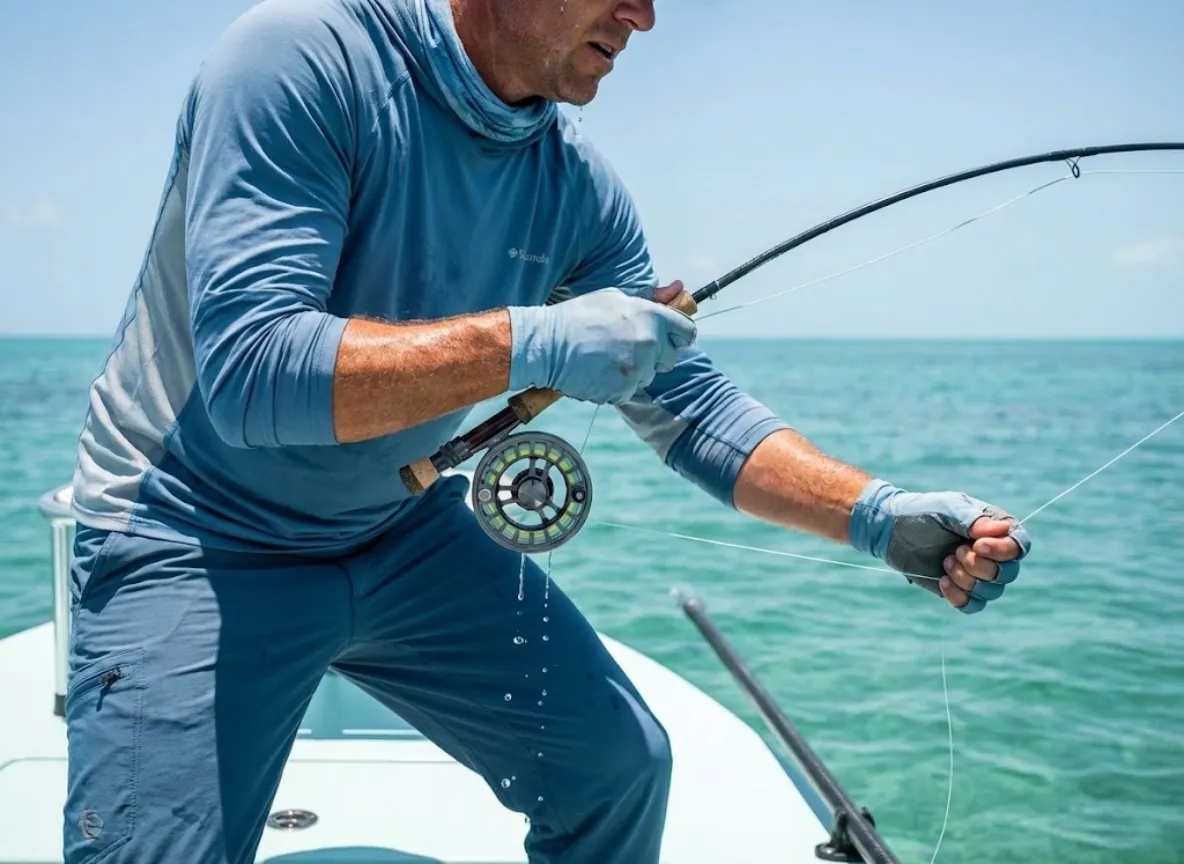
Close-up of an angler's gloved hands gripping a fishing rod tightly under bright sun.

Cold steals feeling first, strength next. In the equatorial heat, the sun strikes twice—once from the sky and again reflected off the water—doubling the radiation load on your hands. Most anglers compromise, accepting numb fingers or sunburned skin just to maintain the ability to tie a knot. This is a false choice.

After testing gear across frozen Midwestern lakes and baking salt flats, I’ve seen the 2026 market evolve into specialized material sciences. We now have distinct categories separating high-output performance handwear from static insulation barriers. Whether you are stripping streamers in sub-zero flows or polling a skiff in July, the “universal glove” is a myth that leaves you exposed. This guide dismantles the insulation paradox and photobiology to help you build a sun defense and frost armor system that actually works, serving as your definitive resource for the best fishing gloves for sun and cold.

How to Choose the Right Fishing Glove System

A heavy winter fishing glove and a lightweight sun glove displayed on a truck tailgate at dawn.

This isn’t just about buying a glove; it’s about thermodynamics and biology. To make a smart, confident choice, you need to understand how your body loses heat and how UV radiation bypasses cheap fabrics.

Photobiological Protection: Why UPF 50+ Isn’t Enough

Standard brimmed hats are insufficient because of the “Double Exposure” effect. Water, sand, and even ice reflect up to 80% of UV rays, blasting your hands from below. While many fabrics claim sun protection, the weave tells the real story. If you size down for a “tight fit,” you stretch the fabric weave, opening microscopic gaps that allow UV radiation to penetrate, significantly lowering the effective rating.

A split-screen microscopic illustration showing a side-by-side comparison of fabric weaves. The left side shows a "Relaxed Weave" blocking UV rays, while the right side shows a "Stretched Weave" with gaps allowing UV radiation to penetrate to the skin.

Chemical sunscreens are the common alternative, but oxybenzone acts as a potent fish repellent on baits and lures. A physical textile barrier is the only way to protect your skin without contaminating your presentation. While gloves handle the tactile defense, overall hand protection requires shielding your arms and eyes. You should be pairing these gloves with high-contrast polarized sunglasses and long-sleeved fishing shirts to complete your UV safety system. For a deeper dive on fabric ratings, the Skin Cancer Foundation offers excellent data on UPF standards.

Thermodynamics: The Insulation-Dexterity Trade-Off

The biggest mistake anglers make is prioritizing static warmth for active fishing. High-loft insulation (300g+) is critical for sedentary ice fishing, but it destroys the dexterity needed for active casting. Conversely, low-bulk (40g) options offer the tactile feel needed to detect a bite but won’t sustain you if you stop moving.

A two-axis chart titled "Warmth vs. Dexterity Trade-Off in Fishing Gloves." The vertical axis ranges from "High Warmth" to "Low Warmth," and the horizontal axis from "Low Dexterity" to "High Dexterity." A bulky "Fish Monkey Yeti" glove is in the top-left quadrant with the label "STATIC ICE FISHING (High Loft 300g+)." A sleek "AFTCO Solago" glove is in the bottom-right with the label "ACTIVE CASTING (Low Bulk 40g)." Annotations warn about "Snug Fit Restricts Circulation" and "Sweat Freezes Inside Vapor Barriers."

Circulation mechanics also play a vital role. A “snug” fit in winter fishing gloves is dangerous because it restricts capillary blood flow, accelerating cooling rather than preventing it. You must also distinguish between breathable membranes and vapor barriers. Neoprene material is a barrier—great for dunking hands in water, but if your hands sweat inside while the air temp is freezing, that moisture will cool rapidly.

Understanding these thermal properties is a critical component of your first ice fishing safety checklist. Always check the NWS Wind Chill Chart to match your gear to the real-feel temperature and icy spray.

Our Selection Process: How We Built This Guide

Macro photography showing the wear and tear on the leather palm of a tested fishing glove.

We built this guide on a foundation of absolute trust and transparency. We moved beyond marketing claims to analyze the 2026 technical specifications, evaluating material density and membrane composition directly. We scrutinized heavy hitters like Simms, Orvis, Glacier Glove, Fish Monkey, and KastKing, alongside contenders like Huk, Gill, and IceArmor.

  • Our Commitment to Objectivity: We filtered for “Mission Specificity.” No generalist “all-rounder” gloves were selected; only tools engineered for specific environments (Sun, Ice, or Active Cold).
  • The Evaluation Framework: Products were judged on specific “failure modes” identified in long-term guide tested reports. We looked for seam delamination, membrane wet-out, and abrasion resistance against braided lines.
  • A Note on Affiliate Links: We may earn a commission if you purchase through our links, but our analysis of failure points—like the peeling overlays in some top brands—remains unbiased.

The Best Fishing Gloves of 2026: Our Top Recommendations for Every Need

An ice fisherman using heavy insulated gloves to pull a fish from a frozen lake hole.

Our Top Picks for The Technical Sun Angler (Flats, Bass, Kayak)

These anglers face high UV exposure and require maximum tactile feedback for finesse fishing or flats fishing. The priority here is preventing line burn and sun damage without losing the feel of the rod blank.

Simms SolarFlex Guide Glove

$ $ $ $
Simms SolarFlex Guide Glove

The SolarFlex Guide is the professional standard for a reason. By integrating water-resistant goat leather into the palm, Simms solves the durability issue that plagues synthetic gloves, which often shred under the friction of braided line. The stripping guards are robust, protecting your fingers during long days of casting on the flats. However, organic material comes with a maintenance cost. If you fail to rinse the salt off these leather palms after every trip, they will stiffen and crack, turning a premium tool into a rigid hindrance.

Overall
UV Protection
Durability
Dexterity
Breathability
Drying Speed
UPF Rating 50+
Palm Material Water-resistant Goat Leather
Key Feature Extended cuff for wrist coverage
Fabric SolarFlex stretch fabric

You Should Buy This If…

  • You handle abrasive fly lines or braided leaders frequently.
  • You need a glove that ‘molds’ to your hand over time.
  • You want to eliminate the ‘sunburn gap’ at the wrist.

You Should Reconsider If…

  • You are unwilling to rinse salt off leather after every trip.
  • You prioritize the fastest possible drying time over durability.

AFTCO Solago Sun Gloves

$ $ $ $
AFTCO Solago Sun Gloves

For finesse anglers, the AFTCO Solago is the undisputed sensitivity king. The ‘Sensi-Tech’ open-palm architecture removes the fabric barrier between your skin and the rod blank, allowing for maximum vibration transmission when detecting subtle bites. It feels almost weightless, disappearing on your hand while providing critical UPF 50 protection. The trade-off is structural integrity. The lightweight mesh seams are prone to splitting if you snag them on hooks or brambles, making this a poor choice for bushwhacking or handling spiny fish.

Overall
UV Protection
Durability
Dexterity
Breathability
Grip
UPF Rating 50
Palm Design Open Palm / Sensi-Tech
Material Ultra-lightweight stretch mesh
Target Use Freshwater finesse / Inshore artificials

You Should Buy This If…

  • Rod sensitivity and bite detection are your top priorities.
  • You want direct skin-to-cork contact.
  • You prefer a glove that feels almost weightless.

You Should Reconsider If…

  • You need physical protection from spiny fish or wire leaders.
  • You are rough on gear (mesh seams can split).

Buff Eclipse Sun Gloves

$ $ $ $
Buff Eclipse Sun Gloves

The Buff Eclipse is the water manager’s glove, engineered for environments where your hands are constantly wet. Thanks to a synthetic chassis and a silicone dot grip matrix, it dries approximately 30% faster than traditional suede options. The grip is exceptionally tacky on wet paddle shafts and reel handles, making it ideal for kayakers chasing redfish. However, the ‘synthetic’ feel is undeniable; it lacks the natural suppleness of leather and offers virtually no protection against heavy braided line cuts, so big game anglers fish elsewhere.

Overall
UV Protection
Durability
Dexterity
Breathability
Drying Speed
UPF Rating 50+
Palm Grip Silicone Dot Matrix
Material Recycled Polyester/Spandex
Durability Feature Double-layer synthetic reinforcement

You Should Buy This If…

  • You are a kayak angler or constantly wet your hands.
  • You dislike the feeling of soggy, heavy leather.
  • You need a high-grip surface for wet equipment.

You Should Reconsider If…

  • You prefer the natural feel of leather.
  • You need protection against heavy braided line cuts.

Our Top Picks for The Active Cold-Water Angler (Steelhead, Boat Handling)

These cold water anglers need to cast, row, and handle wet gear in freezing temps. Bulk is the enemy here; you need just enough warmth to function without losing the ability to manipulate triggers and bails in colder weather.

Fish Monkey Stealth Dry-Tec

$ $ $ $
Fish Monkey Stealth Dry-Tec

Designed for the active caster, the Stealth Dry-Tec cuts the bulk found in traditional winter gear. By using a lighter 40g Thinsulate layer paired with a HIPORA waterproof membrane, it allows for the manipulation of spinning reel bails and triggers while blocking cold wind. It sits in that ‘Goldilocks’ zone for active winter fishing. The Achilles heel, however, is the liner construction. If your hands are damp when you pull the glove off, the inner liner can separate and pull out with your fingers, making it a nightmare to put back on in the field.

Overall
Waterproofing
Thermal Insulation
Dexterity
Grip
Value
Insulation 40g Thinsulate
Waterproofing HIPORA Membrane
Palm Non-slip silicone grip
Fit Pre-curved fingers

You Should Buy This If…

  • You need to cast actively with spinning or casting gear.
  • You want waterproof protection without ‘puffy’ bulk.
  • You need high grip on wet rod handles.

You Should Reconsider If…

  • You are sitting stationary in sub-zero temperatures.
  • You need deep water submersibility (cuffs are shorter).

Orvis Softshell Convertible Mitts

$ $ $ $
Orvis Softshell Convertible Mitts

Orvis solves the primary frustration of cold-weather fly fishing: line snagging. By utilizing a magnetic retention system instead of Velcro to hold the flap back, they ensure smooth line management while offering a wind-resistant softshell chassis. Being able to switch instantly from a warm mitt to bare fingers is invaluable for knot tying. Just remember, these are ‘water resistant,’ not waterproof. If you dunk your hand while releasing a fish, the softshell will eventually soak through, leaving you with cold, wet insulation.

Overall
Wind Resistance
Dexterity
Line Management
Warmth
Durability
Material Windproof Softshell / Grid Fleece Interior
Mechanism Magnetic fold-over retention
Palm Ax Suede synthetic leather
Style Convertible Glomitt

You Should Buy This If…

  • You are a fly angler tired of fly line catching on Velcro.
  • You need 100% dexterity for knot tying intermittently.
  • You fish in windy conditions but not extreme sub-zero cold.

You Should Reconsider If…

  • You plan on dunking your hands in the water (not waterproof).
  • You need heavy static insulation.

Our Top Picks for The Hard Water Specialist (Ice Fishing & Extreme Static Cold)

For sedentary ice fishing anglers where heat retention is the only metric that matters. Dexterity is secondary to preventing frostbite when sitting on a bucket for hours.

Fish Monkey Yeti Premium Ice Fishing Glove

$ $ $ $
Fish Monkey Yeti Premium Ice Fishing Glove

The Yeti is the ‘nuclear option’ for thermal engineering. It utilizes a massive 350g Thinsulate layer on the back of the hand to combat conductive heat loss, while the palm uses a reduced 150g layer to allow for basic grip. The thermo-conductive fleece lining is exceptional at redistributing body heat. But be warned: this glove is an oven mitt. You will not be tying knots or feeling subtle nibbles with these on. They are strictly for monitoring tip-ups, driving snowmobiles, or surviving the brutal static cold.

Overall
Thermal Insulation
Wind Protection
Dexterity
Waterproofing
Comfort
Insulation 350g (Back) / 150g (Palm) Thinsulate
Lining Thermo-conductive fleece
Outer Waterproof/Windproof fabrics
Use Case Stationary Ice Fishing / Tip-Up Monitoring

You Should Buy This If…

  • You are sitting on a bucket in sub-zero temperatures.
  • You have a history of cold hands or circulation issues.
  • You prioritize maximum warmth over the ability to tie knots.

You Should Reconsider If…

  • You need to operate triggers or cast actively.
  • You want a lightweight glove.

Glacier Glove Ice Bay

$ $ $ $
Glacier Glove Ice Bay

The Ice Bay is a classic utility workhorse, using 2mm fleece-lined neoprene to create a complete vapor and chemical barrier. It is 100% waterproof, making it the ideal choice for ‘wet work’ like clearing ice holes or landing slimy fish where breathable membranes fail. The downside is that neoprene breathes about as well as a plastic bag. If your hands sweat during a hike to your spot, that moisture will trap and freeze inside, turning your gloves into ice blocks. Use them for the messy work, then switch them out.

Overall
Waterproofing
Durability
Grip
Breathability
Warmth
Material 2mm Neoprene
Lining Fleece
Design Sharkskin textured palm
Type Full immersion barrier

You Should Buy This If…

  • You frequently dunk your hands to land fish or clear ice.
  • You need protection from fish slime and chemical odors.
  • You want a durable, bombproof glove.

You Should Reconsider If…

  • Your hands sweat heavily (sweat can freeze inside).
  • You need to feel subtle bites (neoprene dampens sensation).

KastKing PolarBlast Mittens

$ $ $ $
KastKing PolarBlast Mittens

For anglers on a budget, the PolarBlast offers high-value functionality. It mimics the convertible design of top-tier brands, using magnetic retention for the flaps and heavy fleece insulation to keep costs down. It’s a versatile system that allows you to expose fingers for baiting and cover up for warmth. However, you pay for the price drop in bulk. These mittens feel significantly clumsier than the Orvis equivalents, and the sizing can be inconsistent, often running small, which risks restricting that all-important circulation.

Overall
Value
Warmth
Versatility
Dexterity
Bulk
Style Convertible Mitten
Insulation Heavy Fleece / Thinsulate blend
Retention Magnetic
Outer Water-resistant shell

You Should Buy This If…

  • You want a versatile winter system without spending over $50.
  • You like the option to expose fingers for baiting.
  • You need reasonable warmth for general winter conditions.

You Should Reconsider If…

  • You are sensitive to bulky gear interfering with reel handles.
  • You need a fully waterproof glove.

Conclusion

The idea of an “all-season” fishing glove is dangerous marketing. Safety and performance require a variable day strategy and a “quiver” approach: specialized tools for specific missions. Specialization is safety.

Fit is thermal; sizing up creates warm air pockets, while tight gloves restrict blood flow and invite frostbite. And remember that maintenance matters—rinsing the salt from your leather palms prevents crystallization, extending the life of your gear.

Pro-Tip: If you are losing fish because you can’t feel the line, upgrade to a Sensi-Tech sun glove immediately. If you are cutting trips short due to cold, invest in the 350g Yeti. The cost of the glove is always less than the cost of a ruined trip.

FAQ – Frequently Asked Questions

Do fishing gloves really help with sun protection if they get wet?

Yes, provided they are rated UPF 50+ protection and fit correctly. However, stretching the fabric (wearing a size too small) significantly reduces UV blocking capabilities, so prioritize a proper fit over a tight compression feel.

Which fishing gloves are best for handling fish?

Gloves with a rubberized or Grotech synthetic suede palm offer the best grip on fish slime without requiring excessive pressure that harms the fish. For best practices on minimizing harm to the fish’s slime coat, see our guide on how to hold a fish.

How do I wash my leather-palmed fishing gloves?

Rinse with fresh cold water after every saltwater use and let them air dry away from direct heat sources (sun or radiators). Making this a habit is a key part of your sustainable fishing gear maintenance routine to prevent the leather from stiffening.

What is the difference between Waterproof and Water Resistant gloves?

Waterproof fishing gloves (like the Glacier Glove Ice Bay) use a membrane or neoprene barrier that prevents water entry even when submerged. Water resistant gloves (DWR coated) will shed light rain but will eventually wet out and soak through during sustained exposure or submersion.

Risk Disclaimer: Fishing, boating, and all related outdoor activities involve inherent risks that can lead to injury. The information provided on Master Fishing Mag is for educational and informational purposes only. While we strive for accuracy, the information, techniques, and advice on gear and safety are not a substitute for your own best judgment, local knowledge, and adherence to official regulations. Fishing regulations, including seasons, size limits, and species restrictions, change frequently and vary by location. Always consult the latest official regulations from your local fish and wildlife agency before heading out. Proper handling of hooks, knives, and other sharp equipment is essential for safety. Furthermore, be aware of local fish consumption advisories. By using this website, you agree that you are solely responsible for your own safety and for complying with all applicable laws. Any reliance you place on our content is strictly at your own risk. Master Fishing Mag and its authors will not be held liable for any injury, damage, or loss sustained in connection with the use of the information herein.

Affiliate Disclosure: We are a participant in the Amazon Services LLC Associates Program, an affiliate advertising program designed to provide a means for us to earn advertising fees by advertising and linking to Amazon.com. As an Amazon Associate, we earn from qualifying purchases. We also participate in other affiliate programs and may receive a commission on products purchased through our links, at no extra cost to you. Additional terms are found in the terms of service.