Home Boats, Kayaks & Electronics Best Marine GPS Units: Navigation & Charts

Best Marine GPS Units: Navigation & Charts

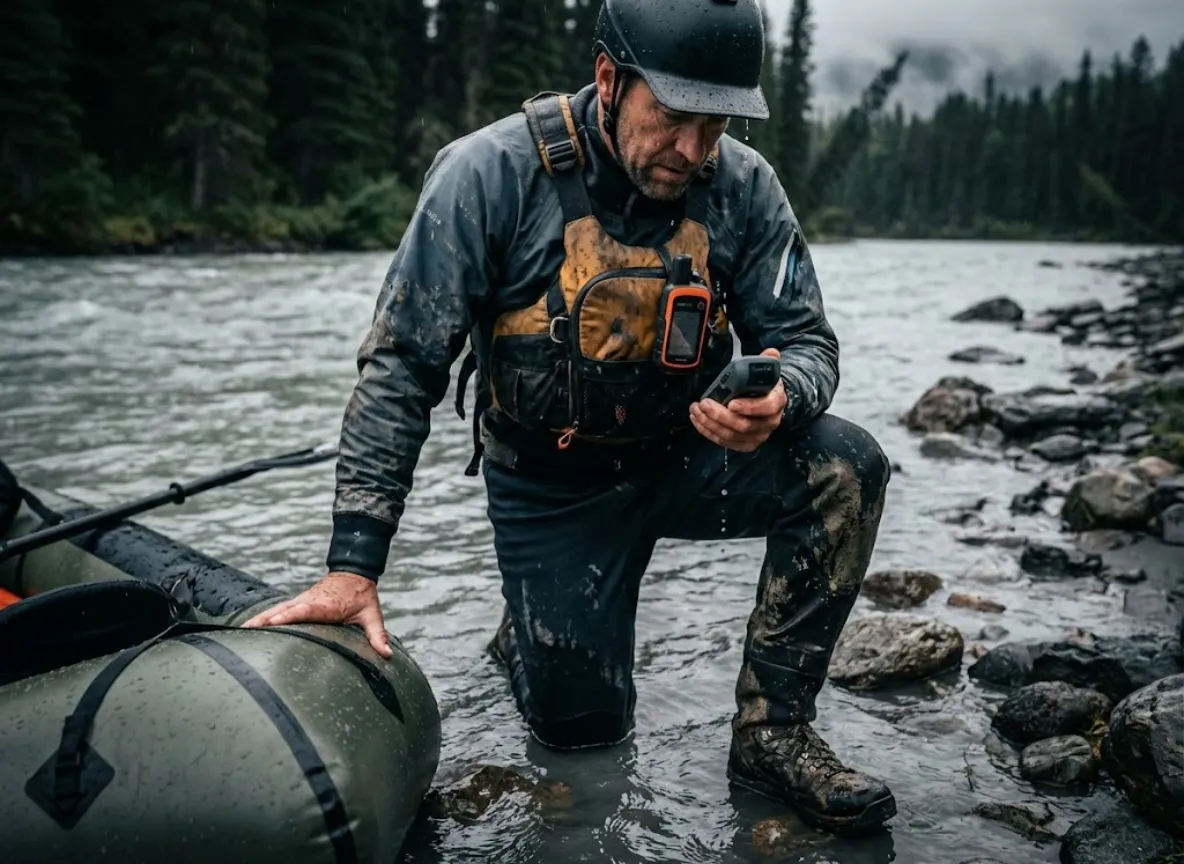
A packrafter standing in knee-deep water checking a handheld GPS unit before hiking inland.

A “waterproof” rating of IPX7 is a laboratory certification, not a field guarantee. I learned this the hard way when a packraft flipped in a glacial river; my hiking GPS, theoretically waterproof, sank like a stone into the turbidity. When a kayak rolls in a breaking swell or you slip during a river crossing, the difference between a minor inconvenience and a survival situation is often the density of your electronics. If your device is denser than water, it is gone.

This guide dismantles the marketing jargon surrounding marine electronics to identify the few handheld marine GPS units capable of serving two masters: the Hydrographic Office and the Topographic Survey. We are looking for gear that bridges the gap between the trail and the tide—selecting outdoor navigation tools that excel in the “amphibious” reality where terrestrial hiking meets aquatic exploration.

How to Choose the Right Crossover GPS

Close-up of a hiker's hands holding a wet GPS unit with a river and mountain trail in the background.

Picking gear for mixed environments requires moving beyond basic spec sheets to understand “survival physics.” You need a GPS navigator that can handle the dynamic pressures of whitewater and the corrosive nature of salt, all while guiding you through a dense forest with precise tracking.

Why “Amphibious Reliability” Outweighs IP Ratings

Standard hiking GPS units, such as the popular Garmin 66i, are engineering marvels on land, but they are liabilities on the water because they lack positive buoyancy. An IPX7 rating ensures a device can withstand static submersion at one meter for 30 minutes, but it does not account for the dynamic pressure of hitting water at speed or the difficulty of recovering a sinking black object in deep, murky water. Rugged construction and moulded rubber side grips are standard on marine GPS units, ensuring they stay in your hand when wet.

A split-view underwater cross-section illustration comparing GPS units. On the left, a hiking GPS sinks into deep water labeled "HIKING: SINKS" with an anchor icon. On the right, a marine GPS floats on the surface labeled "MARINE: FLOATS" with a buoy icon.

Ingress physics also play a role; gasket integrity is critical. Saltwater is particularly insidious, attacking charging ports even when covered by rubber caps. For this reason, we prioritize units with sealed battery compartments or robust marine-grade connectors. The US Coast Guard and RAND Corporation have analyzed resilient PNT capability, emphasizing that reliability often comes down to physical survivability in the operating environment.

Pro-Tip: If you absolutely must use a non-floating hiking GPS on the water, attach a high-visibility foam key float to the lanyard loop. It looks clumsy, but it saves gear.

For those of you broadening your horizons and selecting the best fishing kayaks under $1,000, understanding this distinction between “waterproof” and “floating” is the first step in outfitting your vessel for safety & precision navigation. Unlike fixed GPS chartplotters found on larger fishing boats—like the Simrad GO9 XSE or Humminbird HELIX 5—a handheld unit must be your lifeline when you are separated from your craft.

Cartographic Ecosystem Flexibility (The Dual-Map Standard)

A true crossover adventurer needs a single device that displays depth contours and intertidal zones for paddling, yet switches seamlessly to elevation contours and trail networks for the hike out. This requires a processor capable of handling heavy vector files without lagging. We look for units that support the dual-map ecosystem: running BlueChart g3, LakeVü g3, or Navionics data for the water, and TopoActive maps for the land simultaneously.

A close-up photograph of a handheld Garmin GPSMAP 86sci device with a split screen. The left half displays a detailed blue marine chart with depth contours, and the right half displays a green topographic map with elevation lines. Below the screen, glowing text reads "ONE DEVICE, TWO WORLDS."

Cost is also a factor. The ability to load free maps via a microSD slot is a significant advantage. The OpenStreetMap Wiki details how savvy users can load open-source maps onto marine units, saving hundreds of dollars on proprietary software like C-MAP or NOAA Raster Charts. This hybrid approach is similar to supplementing hardware with the best fishing apps for GPS and tides, where you leverage digital flexibility to back up your hard-use electronics.

Our Selection Process: How We Built This Guide

Multiple handheld GPS units laid out on a mossy rock for field testing comparison.

We recognize that a “best of” list for a hiker is dangerous for a kayaker. We rejected standard hiking metrics in favor of “amphibious” utility. While a Lowrance Hook Reveal or Garmin Striker 4 might be excellent for a bass boat with CHIRP sonar, they are useless to a packrafter hauling gear over a portage. Our commercial investigation focused strictly on portable units.

We scored every product against six specific criteria, heavily weighting Amphibious Reliability (Buoyancy) and The “Lifeline” Factor (Connectivity). We analyzed market sentiment from the current cycle, filtering for devices that solve specific problems for three distinct user personas: The Packrafter, The Angler-Hiker, and the Safety Minimalist. While we may earn a commission if you buy through our links, our recommendations are driven by safety and field utility, not profit margins.

The Best Marine GPS Units of 2026: Our Top Recommendations for Every Need

An angler in a kayak at sunset using a marine GPS unit for navigation.

Our Top Picks for The Amphibious Packrafter

Garmin GPSMAP 86sci

$ $ $ $
Garmin GPSMAP 86sci

The Garmin GPSMAP 86sci is the definitive tool for the amphibious professional, effectively transplanting the advanced hiking brain of the 66i into the floating, marine-hardened chassis of the 78 series. Its unique selling proposition is the integration of inReach satellite technology directly into a floating handheld, ensuring you can trigger an SOS even if the device is dropped in a rapid. While it offers premium dual-world capability, be aware that the screen resolution feels dated compared to modern smartphones, and the interface for typing custom messages is painstakingly slow without a touchscreen.

Overall
Amphibious Reliability
Cartographic Ecosystem
Power Architecture
Interface Usability
Connectivity
Display 3-inch Transflective Color TFT, 240 x 400 pixels
Waterproofing IPX7, Floating Design
Battery Life 35 Hours (10-min tracking), Internal Li-ion
Weight 9.59 oz (272 g)

You Should Buy This If…

  • You need a single device that handles SOS, marine charts, and hiking maps.
  • Positive buoyancy (floating) is a non-negotiable safety feature for your trips.
  • You require wireless connectivity to phone apps or boat networks.

You Should Reconsider If…

  • You rely exclusively on AA batteries for field power restoration.
  • You are operating in a highly saline environment where charging port corrosion is a major concern.

Garmin GPSMAP 79sc

$ $ $ $
Garmin GPSMAP 79sc

As the successor to the legendary 78sc, the Garmin GPSMAP 79sc targets users who demand classic AA battery utility but require updated screen technology. With a new ‘optically bonded’ display designed to eliminate fogging and improve contrast, this unit is the gold standard for expedition logistics where swapping batteries is preferred over USB charging. It is a workhorse, but potential buyers should know it lacks the satellite communication features of the 86 series, meaning you will still need a separate PLB or inReach for SOS capabilities.

Overall
Amphibious Reliability
Cartographic Ecosystem
Power Architecture
Interface Usability
Signal Precision
Display 3-inch Transflective Color TFT (Bonded)
Waterproofing IPX7, Floating Design
Battery Life Up to 19 Hours (2 AA Batteries)
Weight 9.95 oz (282 g)

You Should Buy This If…

  • You prefer the reliability of user-replaceable AA batteries for long expeditions.
  • You need a floating unit with a high-contrast screen that resists fogging.
  • You want a significant upgrade in screen resolution over the older 78 series.

You Should Reconsider If…

  • You need integrated satellite messaging (inReach) in your GPS unit.
  • You require wireless data transfer (Wi-Fi/Bluetooth) for easy syncing.

Our Top Picks for The Coastal Angler-Hiker

Garmin eTrex 32x

$ $ $ $
Garmin eTrex 32x

While marketed primarily for hiking, the Garmin eTrex 32x is a compact powerhouse frequently used for kayak and inland waterway navigation due to its versatile map support. Preloaded with TopoActive maps and IPX7 waterproof, it offers excellent value for the hiker who occasionally paddles. However, it is critical to note that this unit does not float; if dropped overboard without a tether, it will sink immediately. Additionally, the joystick interface can be finicky to operate with cold, wet hands or thick neoprene gloves.

Overall
Amphibious Reliability
Cartographic Ecosystem
Power Architecture
Interface Usability
Signal Precision
Display 2.2-inch Color, 240 x 320 pixels
Waterproofing IPX7 (Sinks)
Battery Life 25 Hours (2 AA Batteries)
Weight 5 oz (141 g)

You Should Buy This If…

  • You prioritize compact size and high battery efficiency (25 hours).
  • You want a device that comes preloaded with routable TopoActive maps.
  • You need a barometric altimeter and compass at an entry-level price.

You Should Reconsider If…

  • You require a device that floats (this unit sinks like a stone).
  • You have large hands or wear thick gloves (the joystick can be finicky).

Garmin GPS 73

$ $ $ $
Garmin GPS 73

The Garmin GPS 73 is a non-mapping, grayscale data logger designed strictly for marine utility. It floats, runs on AA batteries, and features a high-contrast screen that cuts through the brightest glare, making it ideal for the angler who simply needs to mark a fishing spot or trailhead and know the direction home. The trade-off is significant: there are no maps, meaning you are navigating blindly in relation to hazards like reefs or cliffs unless you have pre-marked them. It is a tool for coordinate logging, not exploration.

Overall
Amphibious Reliability
Cartographic Ecosystem
Power Architecture
Interface Usability
Signal Precision
Display 2.6-inch LCD (Monochrome)
Waterproofing IPX7, Floating Design
Battery Life 18 Hours (2 AA Batteries)
Weight 7.2 oz (203 g)

You Should Buy This If…

  • You only need to mark waypoints and track your path, not see a map.
  • You need a screen that is perfectly readable in direct, harsh sunlight.
  • You are looking for the most affordable floating GPS option.

You Should Reconsider If…

  • You need to see hazards (reefs, cliffs) or terrain features on a screen.
  • You want color displays or modern connectivity features.

Garmin GPSMAP 67i

$ $ $ $
Garmin GPSMAP 67i

The GPSMAP 67i is arguably the best hiking GPS ever made, featuring Multi-Band GNSS and massive battery life, but it earns a spot here for the crossover user who is 90% hiker and 10% boater. While it can load marine charts, its primary flaw in this context is density: it does not float. Its superior terrestrial performance is unmatched, but if you take it on the water, you are essentially gambling with a $600 brick unless you secure it with a robust tether or aftermarket floatation collar.

Overall
Amphibious Reliability
Cartographic Ecosystem
Power Architecture
Signal Precision
Connectivity
Display 3-inch Transflective Color TFT
Waterproofing IPX7 (Sinks)
Battery Life 180 Hours (Standard Mode)
Weight 8.1 oz (230 g)

You Should Buy This If…

  • You need the absolute best signal accuracy (Multi-Band) for deep canyons.
  • Extreme battery life (180 hours) is your top priority.
  • You want integrated inReach safety without the bulk of the marine-specific 86sci.

You Should Reconsider If…

  • You will be on the water frequently without a secure tether (it sinks).
  • You prefer user-replaceable AA batteries over a built-in rechargeable one.

Our Top Picks for The Sea-to-Summit Minimalist

Standard Horizon HX890

$ $ $ $
Standard Horizon HX890

The Standard Horizon HX890 is a unique ‘Fusion’ device that prioritizes safety above all else, combining a floating Class H DSC VHF radio with a built-in GPS receiver. While it won’t show you a map, it is superior for coastal safety because it allows you to communicate directly with rescuers and includes ‘Navigate to Waypoint’ features in a floating package. The downside is that it is purely a vector for communication and basic orientation; without visual charts, you cannot use it to navigate complex channels or trails.

Overall
Amphibious Reliability
Cartographic Ecosystem
Power Architecture
Interface Usability
Connectivity
Display 1.7″ x 1.7″ Dot Matrix
Waterproofing IPX8, Floating Design
Battery Life ~11 Hours (Radio Use)
Weight 10.9 oz (310 g)

You Should Buy This If…

  • Your primary safety concern is being able to talk to a rescue boat or helicopter.
  • You want a device that floats and has a water-activated strobe light.
  • You need FM radio reception and DSC distress signaling capabilities.

You Should Reconsider If…

  • You need visual maps for navigation (this is a data-only display).
  • You need multi-day battery life without recharging.

Garmin inReach Mini 2

$ $ $ $
Garmin inReach Mini 2

The Garmin inReach Mini 2 is the ultimate ‘pocket’ safety device, ideal for the weight-conscious hiker or kayaker who wants maximum safety with minimum bulk. It pairs with your smartphone for detailed mapping but provides standalone breadcrumb navigation and global SOS capabilities via the Iridium satellite network. However, relying on it as a primary navigation tool is frustrating due to the tiny monochrome screen; it is best viewed as a communication modem that keeps you found, rather than a map that shows you where to go.

Overall
Amphibious Reliability
Cartographic Ecosystem
Power Architecture
Connectivity
Portability
Display 0.9-inch Monochrome (176 x 176)
Waterproofing IPX7 (Sinks)
Battery Life 14 Days (10-min tracking)
Weight 3.5 oz (100 g)

You Should Buy This If…

  • You prioritize ultra-lightweight gear and pack space.
  • You want the ability to send and receive text messages globally from anywhere.
  • You are comfortable using your smartphone as your primary map interface.

You Should Reconsider If…

  • You want a standalone device with a large screen for navigation.
  • You need a device that floats (requires a separate buoyant case).

Garmin Quatix 7

$ $ $ $
Garmin Quatix 7

The Garmin Quatix 7 is the marine-focused sibling of the Fenix 7 flagship, offering hands-free navigation and full-color topographic mapping right on your wrist. It is an excellent choice for paddleboarders or kayakers who need to keep their hands on the paddle while maintaining situational awareness. However, the convenience comes at a high price and with a power penalty; using the always-on AMOLED display (on select models) and GPS heavily can drain the battery much faster than a dedicated handheld unit.

Overall
Amphibious Reliability
Cartographic Ecosystem
Power Architecture
Connectivity
Wearability
Display 1.3-inch AMOLED or MIP (Model dependent)
Waterproofing 10 ATM (100 Meters)
Battery Life ~57 Hours (GPS Mode)
Weight ~2.8 oz (79 g)

You Should Buy This If…

  • You need hands-free operation while paddling or handling gear.
  • You want a device that integrates with onboard marine networks (autopilot, wind).
  • You want full topographic and marine charts on a wearable device.

You Should Reconsider If…

  • You dislike charging proprietary ports frequently (corrosion risk).
  • You find small screens difficult to read for complex navigation.

The Final Verdict

The physics of water are unforgiving. If your activity involves deep or moving water, density is destiny—prioritize a unit that floats, like the GPSMAP 86sci or 79sc, over one that only resists water ingress. Redundancy saves lives, so no electronic device should ever be your sole method of navigation; always carry a 3-axis compass and paper charts.

For the true amphibious hikers and kayak-campers out there, the “Map Match” is crucial. Ensure your chosen device possesses the processing power to switch between the heavy data loads of BlueChart g3 marine maps and TopoActive land maps. Assess your “Swim Risk” honestly. If a capsize is even a remote possibility, invest in a floating chassis to ensure your safety net doesn’t end up at the bottom of the river.

Frequently Asked Questions about Marine & Crossover GPS

Can I use a standard hiking GPS (like the Garmin 66i) for marine navigation?

Technically yes, but it is risky because standard hiking units are denser than water. If dropped, they will sink immediately. If you choose to use one, you must use a secure tether or attach a high-buoyancy foam float collar to ensure recovery.

What is the difference between BlueChart g3 and TopoActive maps?

BlueChart g3 is specifically designed for water, displaying depth reading, navigational aids like buoys and lights, and intertidal zones. TopoActive maps are designed for land, highlighting elevation contours, vegetation, trails, and roads. A crossover unit should ideally run both for true one device two maps utility.

Why do marine GPS units still use AA batteries?

AA batteries offer instant power restoration in the field. Unlike a sealed lithium-ion battery that requires a charging source and time, AAs can be swapped in seconds. This is critical for multi-day expeditions where solar charging may be unreliable due to persistent cloud cover or canopy.

Does Waterproof IPX7 mean the device floats?

No. IPX7 rating only indicates that the device can withstand submersion at a depth of one meter for 30 minutes without leaking. It says absolutely nothing about buoyancy; most handheld marine GPS units rated IPX7 will sink to the bottom if dropped unless they explicitly advertise floating capability.

Risk Disclaimer: Fishing, boating, and all related outdoor activities involve inherent risks that can lead to injury. The information provided on Master Fishing Mag is for educational and informational purposes only. While we strive for accuracy, the information, techniques, and advice on gear and safety are not a substitute for your own best judgment, local knowledge, and adherence to official regulations. Fishing regulations, including seasons, size limits, and species restrictions, change frequently and vary by location. Always consult the latest official regulations from your local fish and wildlife agency before heading out. Proper handling of hooks, knives, and other sharp equipment is essential for safety. Furthermore, be aware of local fish consumption advisories. By using this website, you agree that you are solely responsible for your own safety and for complying with all applicable laws. Any reliance you place on our content is strictly at your own risk. Master Fishing Mag and its authors will not be held liable for any injury, damage, or loss sustained in connection with the use of the information herein.

Affiliate Disclosure: We are a participant in the Amazon Services LLC Associates Program, an affiliate advertising program designed to provide a means for us to earn advertising fees by advertising and linking to Amazon.com. As an Amazon Associate, we earn from qualifying purchases. We also participate in other affiliate programs and may receive a commission on products purchased through our links, at no extra cost to you. Additional terms are found in the terms of service.