In this article
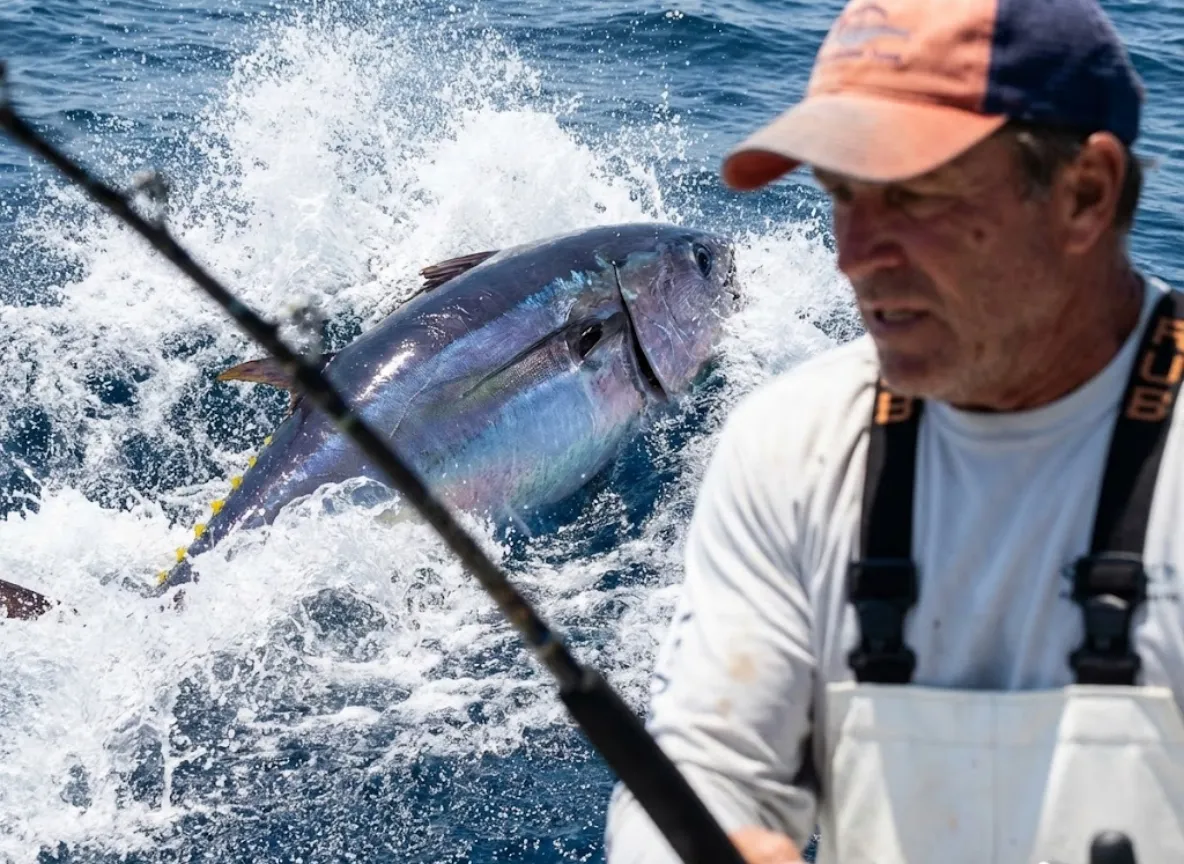
The strike of a giant Bluefin Tuna is not a bite; it is a collision with a biological locomotive. One moment you are trolling a calm slick, watching the high-speed trolling lures pulse in the wash. The next, a 600-pound endotherm moving at over 40 miles per hour dumps half your spool, turning the drag grease into liquid smoke.
This is not fishing for the lucky; it is a pursuit for the prepared. Many anglers treat these fish like larger versions of striped bass, but that is a mistake that ends in broken gear and heartbreak. To consistently engage the Atlantic Bluefin (Thunnus thynnus), its Pacific Bluefin cousin, or the Southern Bluefin, you must stop viewing them as just fish. You must start deconstructing them as highly tuned machines with specific operating parameters, thermal limits, and optical vulnerabilities.
We aren’t just looking for a spot on the chart off Cape Cod or the Outer Banks. We are looking for the intersection of marine biology and physics in the pursuit of this apex predator.
What physiological traits make the Bluefin Tuna an apex biological machine?

The Bluefin Tuna is an engineering marvel designed for speed and endurance, capable of regulating its internal temperature to hunt in waters that would freeze other pelagics. This physiology directly dictates where they swim, when they feed, and how violent the fight will be.
How does regional endothermy (warm-bloodedness) dictate their hunting grounds?
Most fish are poikilothermic, meaning their body temperature matches the surrounding water. The Bluefin, however, utilizes a specialized vascular network called the rete mirabile (“wonderful net”). Located near the spinal column and liver blood vessels, this system acts as a counter-current heat exchanger. It captures metabolic heat generated by red muscle activity and transfers it to the incoming arterial blood.
This allows the tuna to maintain muscle temperatures up to 21°C (38°F) higher than the ambient water. According to NOAA Fisheries analysis of Atlantic tuna physiology, this thermal autonomy is what separates the Bluefin from almost every other predator in the ocean, including Yellowfin and Bigeye Tuna.
The tactical implication here is burst speed. Warmer muscles contract faster. While a cold-blooded Blue Marlin might be sluggish in 50-degree water, a Bluefin is metabolically primed for maximum exertion instantly. This explains why the initial run is so violent regardless of water temperature.
It also explains their range; they can hunt nutrient-rich, frigid waters off Nova Scotia, Newfoundland, or Iceland that are inaccessible to tropical predators. While the tactics used in Baja offshore fishing for Pacific Bluefin often differ due to warmer surface temps, the biological engine driving the fish remains exactly the same.
Pro-Tip: Because their muscles are pre-heated, Bluefin do not need a “warm-up” period. Never touch the drag lever immediately after the strike. The fish is at peak power the second it hits the hook.
Why does the “Cold Heart Paradox” force Bluefin to surface feed?
While the rete mirabile heats the swimming muscles, the Bluefin’s heart receives blood directly from the gills at ambient water temperature. This creates a critical physiological conflict known as the “Cold Heart Paradox.”
The body demands high oxygen for high-speed swimming, but the heart’s ability to pump that oxygen slows down significantly in deep, cold water. Research on thermal plasticity in tuna hearts indicates that calcium cycling in cardiac cells becomes inefficient at depth. To survive, the tuna performs “Yo-Yo” dives—oscillating between deep foraging and surface intervals to re-warm the heart.
This is your location strategy. In stratified waters where there is a distinct difference between surface and deep temperatures, identifying the thermocline on your fish finder is essential. If you mark large arcs deep in the cold layer that won’t eat, do not leave. They are biologically mandated to return to the warmer surface layer to “recharge.” That is when they are most likely to hit surface lures or kite baits.
How does their visual spectrum sensitivity influence leader selection?
If you have ever had a giant Bluefin inspect your bait and turn away at the last second, you have been defeated by their optics. A genomic study on Pacific Bluefin eyesight revealed they possess five distinct copies of the opsin gene specifically for detecting the green spectrum. They are evolved to spot contrast against the blue-green monochromatic background of the open ocean.
This makes understanding the science of fish vision critical for your terminal tackle. The debate between pink and clear fluorocarbon leaders is often based on myth, but the physics is clear. In green coastal waters, a pink leader (which absorbs red light and turns grey/black) can actually create a high-contrast silhouette against the algae-rich background.
The goal is to match the refractive index of the water. Fluorocarbon (1.42 index) is closer to water (1.33 index) than monofilament, but it is not invisible. You must match the tint to the water. In the deep, clear blue water of the canyons, clear or blue-tinted fluoro is superior. In turbid green waters, a green-tinted leader breaks up the silhouette, defeating that specialized opsin array.
How do oceanographic conditions and forage shifts dictate tactical choices?
You can have the best boat and the best electronics, but if your lure does not mimic the specific prey the tuna are hunting that day, you will go home empty-handed.
How has the dietary shift from Herring to Menhaden changed lure profiles?
Historically, the Atlantic Bluefin fishery relied heavily on high-fat Atlantic Herring and Mackerel. However, ecological shifts have caused a massive transition toward Atlantic Menhaden (Pogies) and Sand Eels in the Northeast. A dietary analysis of Atlantic Bluefin in the Gulf of St. Lawrence confirms that the stomach contents of these giants fluctuate wildly based on local abundance.
This requires a change in your tackle box. If the tuna are keyed in on Menhaden, they are looking for a wide, oval silhouette. A long, slender “sand eel” style jig—like a standard RonZ—will often be ignored because it doesn’t match the geometry of the target forage.
When Pogie schools are present, switch to wide-profile soft plastics or large poppers that displace significant water. Conversely, on Stellwagen Bank where sand eels dominate, that slender profile is exactly what you need. Success comes from pairing these lures with the best saltwater spinning reels capable of casting heavy, wind-resistant lures while still holding enough line to survive the run.
Other prey items like anchovies, sardines, squid, and even crustaceans or crabs can dictate feeding behavior in different regions. Recognizing these shifts is key to cracking the code.
What mechanical engineering is required to survive the fight?
Hooking the fish is biology; landing the fish is physics. The forces generated by a giant Bluefin will expose the slightest weakness in your mechanical systems.
Why is thermodynamic management critical in reel drag systems?
When a fish runs at 40mph against 40 pounds of drag, the friction generates immense heat. This is a kinetic energy equation. Lower-quality drag washers will glaze over as the grease liquefies and burns, leading to jerky drag release and snapped lines.
Top-tier reels like the Shimano Tiagra or Penn International are designed with massive aluminum frames that act as heat sinks, conducting thermal energy away from the core. However, the angler must also manage the “Effective Drag.”
As the line leaves the spool, the diameter of the remaining line shrinks. Physics dictates that as the diameter decreases, the leverage required to pull line increases. If you set 30lbs of drag at the dock with a full spool, that drag pressure might jump to 50lbs or more when half the line is gone. You must be prepared to back off the lever during a long run. This is a core part of learning how to set fishing drag for big game; you are managing heat and geometry simultaneously.
How does the “Rail Rod” technique alter the physics of the fight?
In the past, fighting a giant meant strapping into a stand-up harness. Today, the “Rail Rod” technique has revolutionized the sport by changing the fulcrum point. By resting the foregrip of the rod on the boat’s gunwale, the boat becomes the lever.
This offers a massive mechanical advantage. Instead of lifting with your back, you push down on the rod butt to lift the tip. This allows anglers to apply 50 to 60 pounds of drag pressure—force that would pull a harnessed angler overboard.
This technique requires specialized rods discussed by the American Fisheries Society on rod dynamics. These rods use a composite blend of graphite for lifting power and E-glass for durability. They are designed to bend parabolically into the foregrip without shattering. Understanding the difference between rod action vs power is vital here; you need a rod with a moderate-fast action that transitions quickly into immense backbone power to break the fish’s will in the “death circle.”
Pro-Tip: When the fish is circling deep under the boat, do not use long, slow pumps. Use short, heavy “choppy” pumps with the rail rod. This disrupts the tuna’s hydrodynamic equilibrium, preventing it from getting a rhythm and planing its body against the water.
Conclusion
Catching a giant Bluefin Tuna is rarely an accident. It is the result of applying specific knowledge to a chaotic environment.
- Thermal Tactics: We exploit the “Cold Heart Paradox” by targeting surface waters when the thermocline forces them up.
- Visual Engineering: We use the tuna’s green-spectrum sensitivity to select leaders based on light refraction physics.
- Mechanical Mastery: We utilize gear engineered to dissipate kinetic heat and leverage the boat’s mass against the fish.
When you finally bring one of these giants to the rail, remember the journey it took to get there. Respect the animal. Whether you are dealing with Western stocks in the Gulf of Mexico or Eastern stocks in the Mediterranean Sea, sustainability is vital. If you are not harvesting, master the ethical handling required by exploring our dedicated guide on catch and release techniques to ensure the future of this incredible fishery.
FAQ – Frequently Asked Questions about Bluefin Tuna
How fast can a Bluefin Tuna swim?
Bluefin Tuna can reach burst speeds of up to 43 mph (70 km/h). This incredible velocity is powered by their warm muscles, retractable fins, and specialized finlets which reduce drag during acceleration.
Why is Bluefin Tuna meat red?
The meat is deep red due to high levels of myoglobin, an oxygen-binding protein found in their specialized slow-twitch muscles. This allows for sustained aerobic activity and heat generation via the rete mirabile. This quality makes the fatty belly (O-toro) highly prized as sushi grade and sashimi grade seafood.
What is the best bait for Bluefin Tuna?
The best bait mimics their current regional forage. This is typically Atlantic Mackerel, Herring, Menhaden, or Squid. Matching the hatch is critical; use wide baits for Menhaden feeders and slender baits for Herring feeders.
Are Bluefin Tuna endangered?
While historically overfished due to high market prices at the Tokyo Fish Market, stocks are recovering. Organizations like ICCAT and NOAA have managed quotas for 2026-2028 effectively. However, strict adherence to catch-and-release protocols and circle hook mandates remains essential for removing them from the IUCN Red List considerations.
What is the largest Bluefin Tuna ever caught?
The standing IGFA world record belongs to Ken Fraser, who caught a massive 1,496 lbs Atlantic Bluefin off Nova Scotia. These fish can live up to a 35-year lifespan and reach lengths over 10 feet.
Risk Disclaimer: Fishing, boating, and all related outdoor activities involve inherent risks that can lead to injury. The information provided on Master Fishing Mag is for educational and informational purposes only. While we strive for accuracy, the information, techniques, and advice on gear and safety are not a substitute for your own best judgment, local knowledge, and adherence to official regulations. Fishing regulations, including seasons, size limits, and species restrictions, change frequently and vary by location. Always consult the latest official regulations from your local fish and wildlife agency before heading out. Proper handling of hooks, knives, and other sharp equipment is essential for safety. Furthermore, be aware of local fish consumption advisories. By using this website, you agree that you are solely responsible for your own safety and for complying with all applicable laws. Any reliance you place on our content is strictly at your own risk. Master Fishing Mag and its authors will not be held liable for any injury, damage, or loss sustained in connection with the use of the information herein.
Affiliate Disclosure: We are a participant in the Amazon Services LLC Associates Program, an affiliate advertising program designed to provide a means for us to earn advertising fees by advertising and linking to Amazon.com. As an Amazon Associate, we earn from qualifying purchases. We also participate in other affiliate programs and may receive a commission on products purchased through our links, at no extra cost to you. Additional terms are found in the terms of service.