In this article
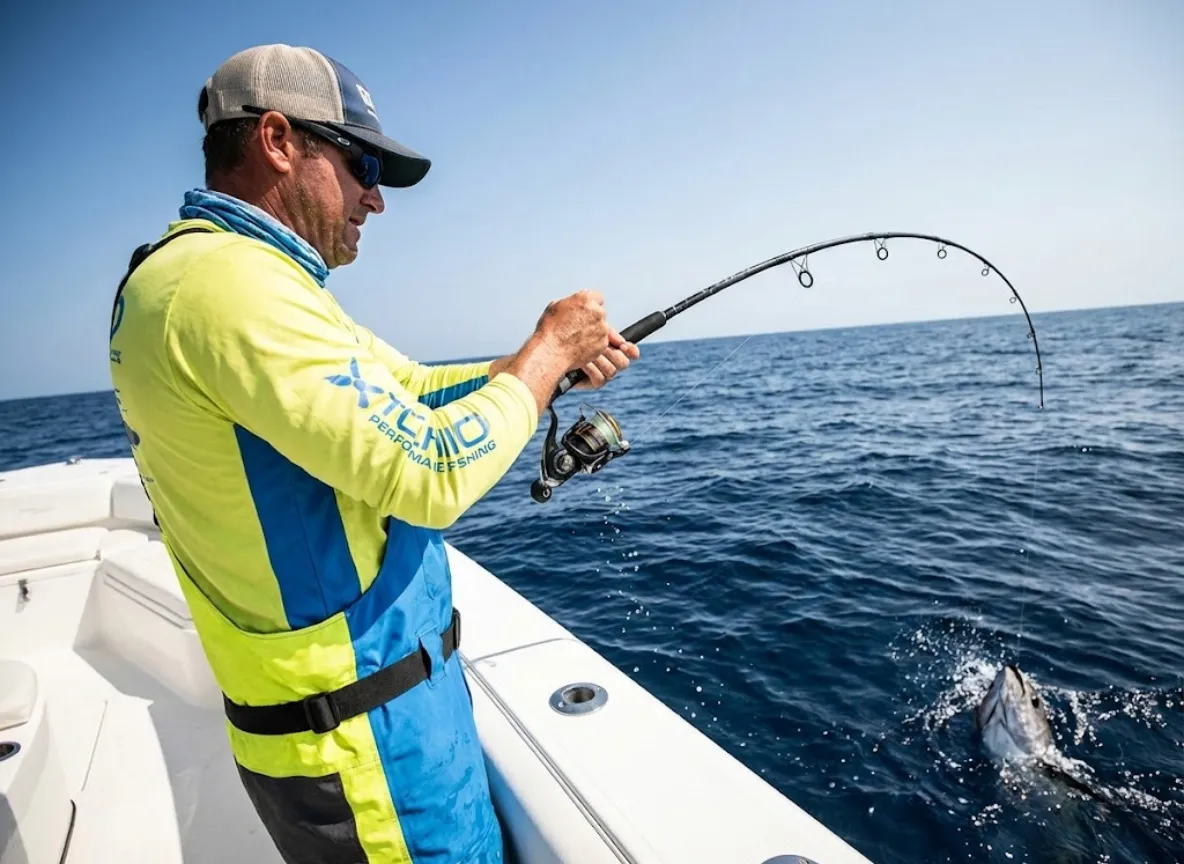
The line screams, the rod and reel load deep into the backbone, and then—pop. The sickening slack in the line isn’t just a lost fish; it is a mechanical failure born of a misunderstanding. I have seen bass fishermen throw hats and snap rods over this exact moment. Your fishing reel’s drag mechanism is not just a friction brake or a drag knob to be tightened until it feels “right.” It is a sophisticated energy management system designed to mediate the violence between a hard pulling fish and a static angler.
As a guide, I teach that mastering this mechanism transforms the drag from a passive safety feature into an active tactical tool. When the strike comes, the machinery must serve your intent rather than undermining it. In this guide, we will break down the physics of friction, establish the mathematical baseline for different fishing techniques, and walk through the precise methods—both scientific and heuristic—to ensure your line holds when battling big fish in open water or pulling a grouper from heavy structure.
What is the Physics Behind Fishing Drag?

The drag mechanism functions as a variable clutch that uses friction to release line at a specific tension threshold, preventing the line from exceeding its breaking strength.
To move beyond the vague concept of “tight drag vs. loose drag,” we have to look at the mechanical forces that actually dictate line breakage. At its core, whether using spinning reels, baitcasters, or conventional reels, the system utilizes a stack of drag washers or friction plates—often made of carbon fiber, felt, or steel—to create resistance against the spool’s rotation.
The most critical force to understand is the difference between static and kinetic energy. Physics dictates that the force required to initiate movement (static friction) is almost always higher than the force required to keep an object moving. This is known as “startup inertia.” The principles of static versus kinetic friction explain why lines often snap at the exact moment a hot fish surges. A high-quality drag system minimizes the gap between these two coefficients, preventing the “stuttering” release that shocks knots to the breaking point.
Once the spool is spinning, the system enters the regime of kinetic friction, where the primary byproduct is friction heat. As a fish strips line during a hard run, the washers generate significant thermal energy. This can physically alter the properties of the drag materials, leading to “drag fade” (loss of pressure) or thermal lockup. This is why a field-tested saltwater spinning reel stands between glory and heartbreak; these reels utilize carbon fiber washers specifically to dissipate this heat away from the reel body and hub.
What is the “Golden Ratio” for Drag Settings?
The universal baseline for setting drag is the “25% Rule,” which states the drag should slip at one-quarter of the line’s rated breaking strength, though this varies by line material.
This safety margin accounts for the inevitable weakening of the line at the knot—which rarely retains 100% breaking strain—and minor abrasions sustained during a heavy fishing session. Calculations must always be based on the weakest link in the system. If you are fishing 50 lb braided fishing line with a 20 lb fluorocarbon leader, your math applies strictly to the 20 lb leader. For monofilament, which acts as a shock absorber due to its inherent line stretch, you can safely push this setting toward the 20-30% rule often cited by freshwater fishing pros.
| Fishing Line Drag Settings Guide | ||
|---|---|---|
| Line Strength (Test) | Monofilament Setting (25-30%) | Braid Setting (15-20%) |
| 10 lb | 2.5 – 3.0 lbs | 1.5 – 2.0 lbs |
| 20 lb | 5.0 – 6.0 lbs | 3.0 – 4.0 lbs |
| 50 lb | 12.5 – 15.0 lbs | 7.5 – 10.0 lbs |
| 80 lb | 20.0 – 24.0 lbs | 12.0 – 16.0 lbs |
However, modern materials complicate the math. Braided line requires a paradoxically lighter drag setting, typically 15% to 20% of the line breaking strength. Because braid possesses near-zero stretch, it transmits the kinetic energy of a fish’s head shake instantaneously to the rod and reel.
A looser drag provides the necessary “give” that the line lacks. This paradox is essential to understand when choosing braid vs fluorocarbon vs monofilament, as the lack of stretch in braid can cause hooks to tear out of soft tissue—commonly called a “pulled hook”—if the drag is too stiff. Adhering to these ratios ensures compliance with international angling rules and equipment standards regarding line class records.
How to Set Drag Using a Scale (The Scientific Method)
To set drag with precision, attach a scale to your line and pull while the rod is bent at a 45-degree angle, adjusting the tension until the scale reads your target weight while the line is moving.
Many anglers make the mistake of pulling line directly off the reel face. This ignores the friction of the line passing through the line guides. To get an accurate reading using the scientific method, rig the rod completely, threading the line through all the guides and the rod tip. Attach the hook of your digital scale, luggage scale, or brass spring scale to the mainline via a loop knot or swivel. You may need fishing pliers to ensure the knot is secure.
Pro-Tip: Never hold the rod straight at the scale. Hold the rod at a 45-degree angle to simulate a real fight. The friction of the line bending over the ceramic guides creates the “Capstan Effect,” adding significant resistance. A reel set to 5 lbs on the bench may exert 7 lbs of force at the tip.
Apply a steady, progressive pull on the fishing scale. Watch the readout carefully for the “spike” before the line begins to peel smoothly; this is the startup inertia mentioned earlier. Adjust the drag knob or star drag in small increments until the scale reads your pounds of pressure consistently while the line is moving.
The physics of the Capstan equation for belt friction dictate that the rod arc significantly increases the load, so this method is the only way to replicate true drag pressure. Knowing the parts of a fishing rod helps you understand how the guides and the blank work together to distribute this load during a powerful hookset.
How to Set Drag Without a Scale (The Field Method)
If a scale is unavailable, calibrate your “hand feel” by lifting a known weight with the rod, then replicate that tension sensation when adjusting the drag in the field.
The “hand pull method” is notoriously inaccurate because human muscle memory struggles to distinguish between 3 lbs and 5 lbs of force without a reference point. To build this instinct, perform a calibration drill at home. Lift a known weight—like a gallon of water, which weighs approximately 8.3 lbs—using the fishing rod. Memorize the sensation of the line cutting into your hand and the visual bend in the rod tip required to lift that specific weight.
When you are on the water, whether bass fishing or casting lures for snook, aim for the reel to slip just as that familiar tension is reached. Be careful where you pull from. Many anglers incorrectly set drag by pulling line straight off the reel, bypassing the rod entirely. If you must check by hand, pull the line after the last guide.
Pro-Tip: When checking drag by hand with braided line, always wrap the line around a sleeve, glove, or towel. Braid under tension acts like a serrated knife and can slice through skin instantly if the drag sticks.
Correct drag settings are not just about landed fish; they are about ethics. The physiological stress response in fish increases dramatically the longer a fight lasts. A drag set too loose exhausts the fish to the point of mortality, violating the science of catch & release.
How Does Spool Physics Affect Drag During the Fight?
As line is stripped from the reel and the spool diameter decreases, the effective drag pressure increases, often doubling the force on the line.
The spool on your baitcasting reel or spinner acts as a lever arm. As line is stripped and the spool’s diameter decreases, the leverage (radius) available to pull against the drag mechanism shrinks. To overcome the same constant internal friction with a smaller radius, the force on the line must increase proportionally.
This is the “Torque Multiplier” effect, leading to a drastic effective drag increase. If a trophy-sized fish takes enough line to reduce the spool diameter by half, the effective drag pressure on the line doubles. This is why heavy lines snap mysteriously deep into a fight. The relationship between torque and radius is unforgiving.
Anglers must be prepared to actively manage this by backing off the drag (reducing pressure) as the spool empties during a long run. On lever drag reels used for big offshore reels, this involves slowly moving the lever back from “Strike setting” toward “Free Spool.” This is critical when targeting species like bluefin tuna, where runs can strip hundreds of yards of line deep into the backing.
Conclusion
Setting your drag is the first line of defense against mechanical failure and lost fish. By adhering to the 25% Rule for monofilament and the 15-20% guideline for braided line, you establish a safe operating zone. Remember the geometry: always set your drag with the rod bent to account for guide friction. Finally, respect the spool physics—be ready to back off the pressure if a tarpon or bonefish takes you deep into the spool.
Next time you rig up your surf setups or freshwater fishing gear, don’t just guess. Take five minutes to calibrate your hand with a known weight. It is the difference between a story about “the one that got away” and a photo of the catch of a lifetime.
FAQ – Frequently Asked Questions
How much drag should I use for 20lb braided line?
Set your drag to approximately 3 to 4 lbs (15-20% of breaking strength). Because braid has no stretch, this lower setting prevents pulled hooks and protects the rod tip from sudden shock loads during a solid hookset.
Which way do you turn the drag knob to tighten it?
On almost all spinning reels and baitcaster reels, turn the drag knob or star clockwise (turn right to tighten) to increase tension, and counter-clockwise (turn left to loosen) to decrease it. Think Righty-Tighty, Lefty-Loosey. Some reels have an audible drag or click wheel to help you count increments.
Should I tighten my drag to set the hook?
No, relying on a locked drag for hooksets is risky; it often leads to broken lines on the strike. Instead, use your thumb to thumb bar or cup the spool (on a spinning reel) to create momentary lock-up for a good hookset, then release to let the drag fight the fish.
Why is my drag jerky or sticking?
A jerky drag or irregular drag is usually caused by dirty, dry, or compressed drag washers, or line dig-in where braid has buried itself on the spool. Disassemble the drag stack, clean the washers, and apply a specialized drag grease (like Cal’s) to restore smoothness and ensure consistent drag.
Risk Disclaimer: Fishing, boating, and all related outdoor activities involve inherent risks that can lead to injury. The information provided on Master Fishing Mag is for educational and informational purposes only. While we strive for accuracy, the information, techniques, and advice on gear and safety are not a substitute for your own best judgment, local knowledge, and adherence to official regulations. Fishing regulations, including seasons, size limits, and species restrictions, change frequently and vary by location. Always consult the latest official regulations from your local fish and wildlife agency before heading out. Proper handling of hooks, knives, and other sharp equipment is essential for safety. Furthermore, be aware of local fish consumption advisories. By using this website, you agree that you are solely responsible for your own safety and for complying with all applicable laws. Any reliance you place on our content is strictly at your own risk. Master Fishing Mag and its authors will not be held liable for any injury, damage, or loss sustained in connection with the use of the information herein.
Affiliate Disclosure: We are a participant in the Amazon Services LLC Associates Program, an affiliate advertising program designed to provide a means for us to earn advertising fees by advertising and linking to Amazon.com. As an Amazon Associate, we earn from qualifying purchases. We also participate in other affiliate programs and may receive a commission on products purchased through our links, at no extra cost to you. Additional terms are found in the terms of service.