In this article
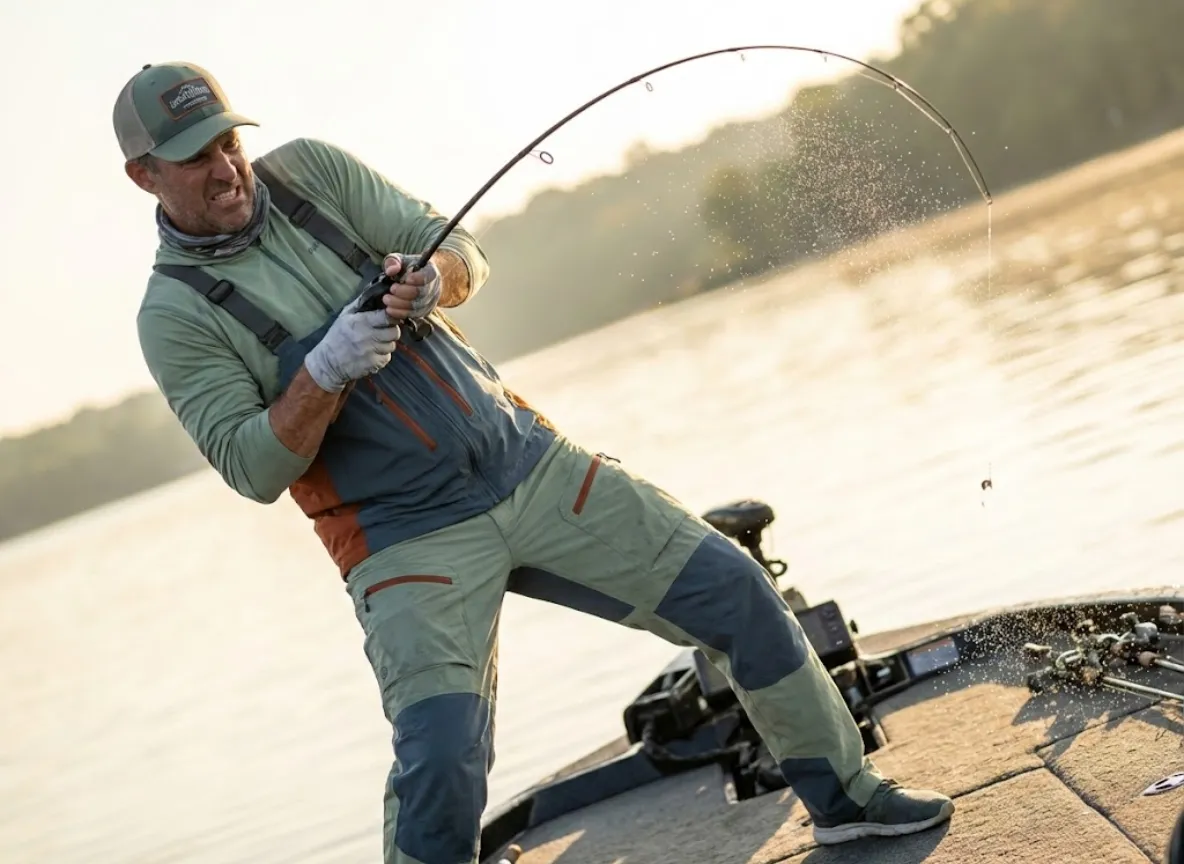
You feel the distinct “tick” on the line. You swing hard. The rod bows deeply, the drag screams, and three seconds later, the hook pulls free, leaving you with nothing but adrenaline and a slack line.
This isn’t bad luck. It is a failure of rod mechanics.
In my years on the water, both competing in sport fishing events and teaching angling basics, I’ve seen this scenario play out countless times. Most anglers treat a fishing rod as a simple lever, but it is actually a complex machine with two distinct jobs: storing energy and absorbing shock. When you force a rod designed for “muscle” to perform a job requiring “reflex,” you lose the fish before the hook ever sets.
This guide will move you past the vague marketing terms on the sticker and help you understand the mechanical harmony required to keep fish pinned. We aren’t just buying sticks; we are engineering a system for effective fishing tackle selection.
What is the Actual Difference Between Rod Power and Action? (The Physics Layer)

Walk into any tackle shop, and you are bombarded with rod terminology like “Medium-Heavy,” “Fast,” and “Magnum Taper.” To make the right choice, we have to strip away the jargon and look at the two governing physical properties of the rod blank: Stiffness and Taper.
Think of it this way: Rod Power is how much the rod can lift. Rod Action is how the rod moves.
What does “Rod Power” actually measure?
Rod Power is not a measure of quality or generic “strength” in the abstract. In engineering terms, it is the bending resistance or lifting strength of the blank. It defines the amount of force required to bend the rod.
When you look at ratings ranging from Ultra-Light Power (ideal for brook trout and panfish like bluegill) to Extra-Heavy Power (built for musky or punching mats), you are looking at a guide for loading the spring. This directly correlates to the Lure Weight Rating. If a rod is rated for 1/4 to 3/4 oz, that is the “sweet spot” where the spring loads efficiently for a cast.
Think of Power as the rod muscle. It provides the brute force necessary to move a heavy lure through the air or hoist a largemouth bass out of dense hydrilla.
However, added muscle isn’t always better. Premium rod specifications often feature high graphite modulus, which creates a stiffer, lighter blank. But this material is brittle. It requires specific engineering to prevent shattering under load. According to standard definitions of fishing equipment used in angler education, matching this stiffness to your target species—whether crappie or redfish—is critical for safety and success.
This stiffness also dictates the hookset. Power generates the pressure needed to drive the hook point. If you are punching thick vegetation with a heavy gauge hook, you need high Power to drive that steel through plastic and cartilage. Conversely, if you are fishing open water with a thin wire hook, high Power will tear a hole in the fish’s mouth.
Pro-Tip: Don’t guess the power. Look at the line rating. As a general rule, a rod rated for 10-17lb line is a “Medium,” while 12-20lb is usually “Medium-Heavy,” regardless of what the sticker name says.
If you don’t understand the anatomy of a fishing rod, specifically how the blank wall thickness creates this power, you risk “over-rodding” or being “under-gunned.” Over-rodding means the rod never loads, leading to short casts. Under-gunned means the rod bottoms out, and you lose control of the fish.
How does “Rod Action” dictate performance?
If Power is the muscle, Rod Action is the “Reflex.”
Action defines the flex point or taper. It describes where along the blank the bend occurs when under load. It determines the recovery speed—how fast the rod tip snaps back to straight—and the delay time between the fish biting and you feeling the weight.
- Extra-Fast Action: Bends only in the top 15-20%.
- Fast Action: Bends in the top 25-30%.
- Moderate Action: Bends in the top 40-60% (often called parabolic action).
- Slow Action: Bends all the way to the handle.
The key concept here is the “shut-off” point, or lock-up. An Extra-Fast action rod has a soft tip that quickly hits a stiff wall of backbone. This transfers energy instantly. This is great for sensitivity, but it offers poor shock absorber qualities.
A Moderate action rod acts as a buffer. Resources from wildlife agencies confirm the impact of rod taper on shock absorption, noting that a deeper bend helps maintain tension on a surging fish without tearing the hook free.
This also dictates casting distance. Slow action rods allow the blank to load deeper with lighter lures, launching them further. This is fundamental to the mechanics of casting a baitcaster; if you try to cast a light lure with an Extra-Fast stick, the tip won’t load, and you will likely backlash.
How Do I Pair Rod Specs to My Lure? (The Application Layer)
Now that we understand the physics of rod muscle and rod reflexes, we must apply this to the application matrix that matters most: the hook and the fish.
Why do single-hook lures require Fast Action?
Jigs, Texas Rigs, and Spinnerbaits usually feature a single, heavy-gauge hook. Often, the point is buried in soft plastic to make it weedless.
To catch a fish with this setup, you have to drive a thick piece of wire through plastic, then through the fish’s jaw. Physics dictates that Pressure = Force / Area. Because the hook point is thick, you need high instantaneous force.
Any delay or flex in the rod dissipates this energy.
When you are fishing “contact” baits like plastic worms or football jigs, the line is often semi-slack. When a bite occurs, the rod must take up that slack and drive the hook in one motion.
For these applications, a Fast or Extra-Fast Action is mandatory. The stiff backbone engages early in the hookset sweep. This ensures nearly 100% of your energy reaches the hook point for immediate hook penetration.
In addition, single-hook fishing relies on feeling the bite before the fish spits the lure. Fast action tips transmit vibration (the “tick”) far better than soft, moderate tips. Studies on the physics of hook penetration show that surface area significantly increases resistance, making the “snap” of a fast rod essential for driving heavier gauges.
If you are struggling with losing fish on swim jigs, look at optimizing your hookset mechanics alongside your gear; a vertical hookset combined with a Fast action rod is usually the cure.
Why do treble-hook lures demand Moderate Action?
Treble hooks change the rules entirely.
Hooks on Crankbaits, Jerkbaits, Poppers, and Spooks are small, fine-wire, and have shallow throats. They grab skin and membrane rather than piercing solid jawbone. If you use a stiff, Fast Action rod here, you encounter the “Tear-Out” phenomenon. The fish shakes its head, the stiff rod refuses to bend, and the tension spike rips the small hooks free.
You also have to account for the delay. Fish like smallmouth bass, walleye, and pike often inhale moving baits while swimming. A Moderate action provides “hysteresis”—a slight delay. This allows the fish to turn with the bait before you feel the weight and react.
For deep cranking, a Moderate rod is a stamina saver. It absorbs the constant vibration of the lure so your wrist doesn’t have to. This is why many pros turn to Fiberglass or Composite materials (like E-glass rods). These materials naturally provide the slow, parabolic action required to keep fish “pinned.”
The exception here is the Jerkbait. This technique requires a Fast tip to “snap” the slack line and impart action to the lure, but a Moderate backbone to fight the fish. This requires a specialized “Parabolic Fast” or Moderate-Fast action taper. If you are learning fishing deep diving crankbaits, starting with a Moderate action rod will immediately increase your landing ratio.
How Does Braided Line Change My Rod Selection? (The “Braid Factor”)
There is a third variable that has fundamentally altered these traditional rules: the type of line on your spool. If you switch to zero-stretch braid without adjusting your rod, you are setting yourself up for failure.
Why does zero-stretch line cause rod failure?
Monofilament line has roughly 20% stretch. In a traditional system, the line acts as a shock absorber. Braided line (PE) has less than 4% stretch. That buffer is gone.
When you set the hook with braid, the energy transfer is 1:1. This “Instantaneous Load” can be violent. It can shatter high-modulus graphite rods (high-sticking) or straighten light-wire hooks before the drag can engage.
If you use braid on a crankbait with a Fast Action rod, you create a rigid system. You will rip hooks out of soft-mouthed fish like Crappie or Bass instantly.
Pro-Tip: Follow the “Power Down” Rule. If you switch from Mono to Braid, drop one level in Power or slow down the Action. If the technique calls for a Medium-Heavy Fast rod with Mono, look for a Medium-Heavy Moderate or a Medium Fast when using Braid.
This is why Composite (Glass/Graphite) rods have surged in popularity for ChatterBaits and bladed jigs. The glass tip restores the shock absorption lost by the braid.
For a closer look at the data, check out this data-driven breakdown of braid vs fluorocarbon vs monofilament. Understanding the stretch percentages is the foundational variable necessitating the rod adjustment described here.
How Can I Standardize Ratings Across Different Brands? (The Buying Guide)
One of the most frustrating aspects of buying a rod is the lack of industry standards. A “Medium” from one brand might feel like a “Heavy” from another.
Why is a “Medium” rod different between brands?
There is no ISO standard for Medium Power. It is a subjective marketing term relative to that specific brand’s lineup.
For example, anglers often refer to the “St. Croix Factor.” St. Croix rods are typically underrated, meaning a St. Croix “Medium” often fishes like a Shimano “Medium-Heavy.” Conversely, brands like Dobyns or Temple Fork Outfitters (TFO) are often known for being lighter or “true-to-rating.” Even durable staples like Ugly Stik or high-end options like G. Loomis vary wildly in their feel test.
To navigate this, adopt a Spec-First Approach. Ignore the name (Medium/Heavy) on the sticker. Look strictly at the Lure Weight Rating (e.g., 3/8 – 1 oz) and Line Weight Rating. These numbers are closer to engineering reality.
If you really want to be objective, custom rod building suppliers like MHX use the Common Cents System (CCS), measuring the “Effective Rod Number” (weight in pennies to deflect the rod). But since you can’t bring a bag of pennies to the store, use the Floor Flex Test.
Gently press the rod tip against the carpeted floor. Observe where it bends.
- If it bends only at the top 6 inches, it is Extra-Fast Action.
- If it bends down into the third or fourth guide, it is Moderate Action.
This physical test tells you the truth that the label might hide. Once you have confirmed the specs, you can confidently consult a data-driven buyer’s guide for the best rod and reel combos to find the model that fits your budget.
Conclusion
Mechanics matter. To consistently catch fish, you must view your rod, spinning reel, line, and lure as a unified system.
- Power is Muscle: It dictates the weight of the lure and the cover density you fish.
- Action is Reflex: Fast for single hooks (penetration), Moderate for trebles (cushion).
- Braid Requires Compensation: When using zero-stretch line, the rod must become the primary shock absorber.
- Trust Specs, Not Names: Verify the taper with the flex test.
Next time you are rigging up, don’t just tie on a lure. Flex the rod. Check your line. Ask yourself if the system is balanced. The water rewards the prepared mind.
FAQ – Frequently Asked Questions about Rod Action vs Power
Is Fast or Moderate action better for bass fishing?
It depends entirely on the lure type. Fast action is superior for feel techniques like plastic worms and jigs where you need sensitivity and a hard hookset. Moderate action is superior for moving baits like crankbaits where you need the fish to eat the bait fully. If you can only buy one, a fast-action rod is generally more versatile for modern bass fishing rods.
Does rod action affect casting distance?
Yes, significantly. A Slower (Moderate) action loads deeper into the blank, acting like a catapult to launch lighter lures further. A Fast action rod requires a heavier lure to load effectively; if the lure is too light, a Fast rod will result in short, inaccurate casts.
What is the best all-around rod action and power?
The Swiss Army Knife of bass fishing is a 7’0 Medium-Heavy Power, Fast Action rod. This spec can effectively fish Texas rigs, spinnerbaits, bladed jigs, and topwaters, covering about 70% of standard applications.
Can I use a heavy power rod for light lures?
No, this causes Over-Rodding. The stiff spring of a heavy power rod will not compress (load) under the light weight of the lure. This results in needing to whip the rod to cast, leading to backlash and poor accuracy.
Risk Disclaimer: Fishing, boating, and all related outdoor activities involve inherent risks that can lead to injury. The information provided on Master Fishing Mag is for educational and informational purposes only. While we strive for accuracy, the information, techniques, and advice on gear and safety are not a substitute for your own best judgment, local knowledge, and adherence to official regulations. Fishing regulations, including seasons, size limits, and species restrictions, change frequently and vary by location. Always consult the latest official regulations from your local fish and wildlife agency before heading out. Proper handling of hooks, knives, and other sharp equipment is essential for safety. Furthermore, be aware of local fish consumption advisories. By using this website, you agree that you are solely responsible for your own safety and for complying with all applicable laws. Any reliance you place on our content is strictly at your own risk. Master Fishing Mag and its authors will not be held liable for any injury, damage, or loss sustained in connection with the use of the information herein.
Affiliate Disclosure: We are a participant in the Amazon Services LLC Associates Program, an affiliate advertising program designed to provide a means for us to earn advertising fees by advertising and linking to Amazon.com. As an Amazon Associate, we earn from qualifying purchases. We also participate in other affiliate programs and may receive a commission on products purchased through our links, at no extra cost to you. Additional terms are found in the terms of service.