
In this article
I can still remember the frustration of my early years on the water—casting blindly at a shoreline from a beat-up jon boat, hoping a fish would feel generous. The gap between a “skunked” day and a livewell full of giants is rarely a matter of luck; it is a failure of variable analysis. A largemouth bass (Micropterus salmoides) is not a random creature. It is a biological machine governed strictly by water temperature, metabolic demand, and structural physics.
To master this premier North American sportfish, you must stop fishing for hope and start hunting for high-percentage probabilities based on environmental data and mechanical efficiency. Over decades of guiding clients and studying the ecosystem, I’ve learned that consistent success in freshwater fishing comes from understanding the engine driving the fish.
In this comprehensive how-to guide, we will dismantle the biological rules of the bass, replace the Gregorian calendar with a thermal roadmap, and engineer a gear system based on physics rather than marketing.
The Science: What Drives Largemouth Bass Behavior?
How does water temperature control the bass’s metabolism?
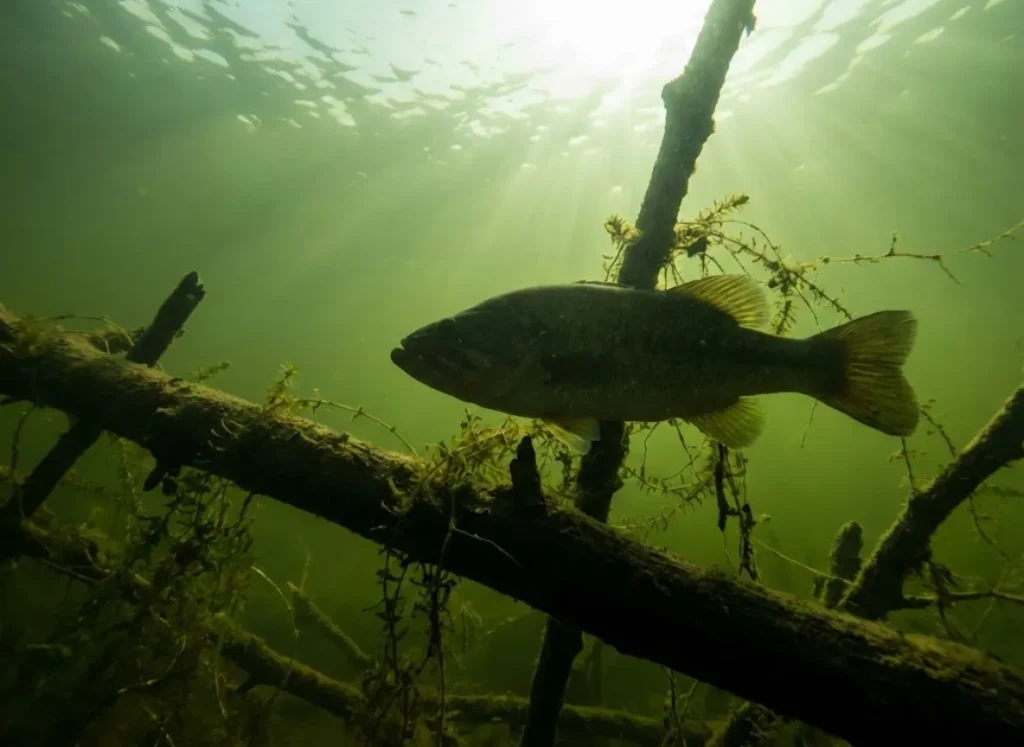
Water temperature is the master switch for bass behavior. Because members of the Centrarchidae family are poikilothermic (cold-blooded), their entire existence is regulated by the surrounding water. Their “Optimum Growth Range” lies between 73°F and 86°F (23°C-30°C). In this window, metabolic enzymes function at peak efficiency.
Within this thermal sweet spot, digestion is rapid. This metabolic behavior forces the fish to feed frequently to sustain energy levels. Conversely, temperatures below 50°F induce metabolic dormancy, drastically reducing the need for caloric intake.
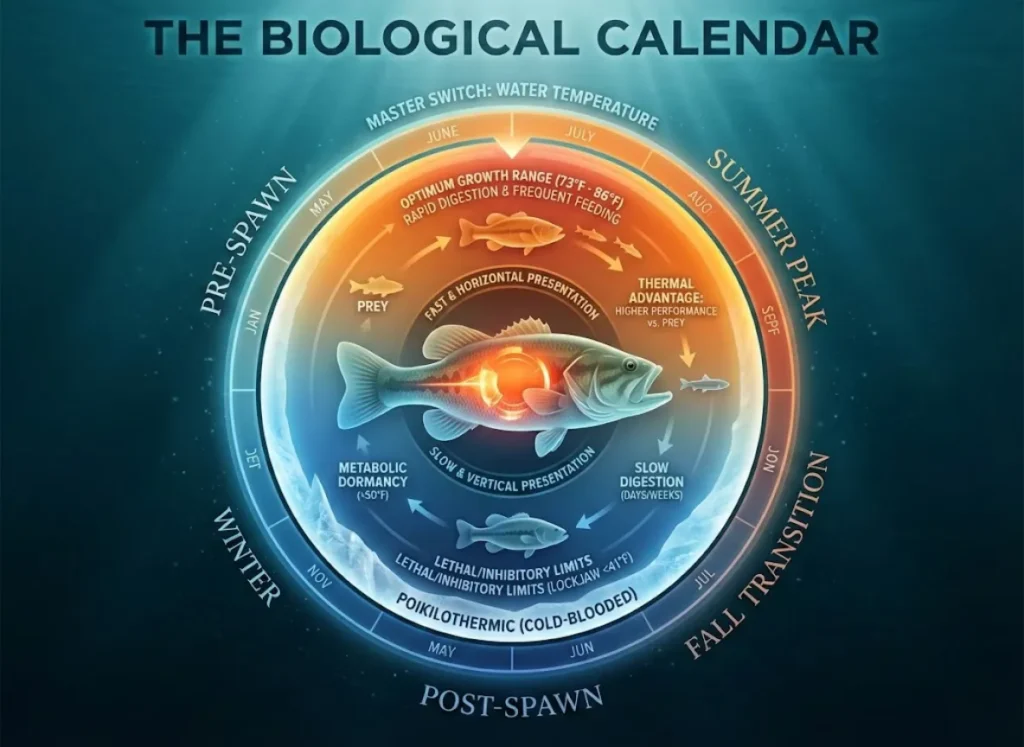
Understanding the “Lethal and Inhibitory Limits” explains the “lockjaw” phenomenon often seen in extreme winter or peak summer heat. In cold water (below 41°F), a single meal may take days or weeks to digest. Fast-moving presentations like burning a spinnerbait are biologically futile here. However, during summer heatwaves, bass possess a “thermal advantage” over prey species. According to thermal tolerance analyses regarding juvenile and adult bass, they retain higher swimming performance in warm water than minnows or shad.
This biological reality dictates that lure presentation must mirror the fish’s metabolic capability: slow and vertical in cold water, fast and horizontal in the optimum range. Once you understand the engine driving the fish, you must learn to read the roadmap they follow throughout the year. For a deeper look at the species profile, you can review these largemouth bass facts.
What roles do photoperiod and moon phase play in migration?
While temperature is the accelerator, photoperiod (day length) acts as the calendar that triggers hormonal changes for reproduction. This biological safeguard ensures bass do not spawn during unseasonably warm winter weeks, waiting instead for sufficient daylight to support fry survival.
The Pre-Spawn movement begins as days lengthen. This draws fish from winter sanctuaries toward staging areas. While solar cues start the migration, moon phases—specifically the full and new moons—act as synchronization triggers for “waves” of spawning fish moving shallow.
Male bass rely on these solar and lunar cues to begin nest construction in protected, hard-bottom areas. In clear water reservoirs, this reproductive activity can occur as deep as 20 feet, though 1 to 4 feet is standard on most flats. Life history and biology of the largemouth bass studies show that understanding this timing allows you to intercept fish at “staging areas”—secondary points and channel swings—before they scatter.
This predictability allows the methodical angler to be waiting at the destination before the fish arrive. Many anglers rely on fishing by the moon to predict these major waves of movement.
The Biological Calendar: Where Are the Bass Right Now?
How do you locate bass during the Pre-Spawn and Spawn?
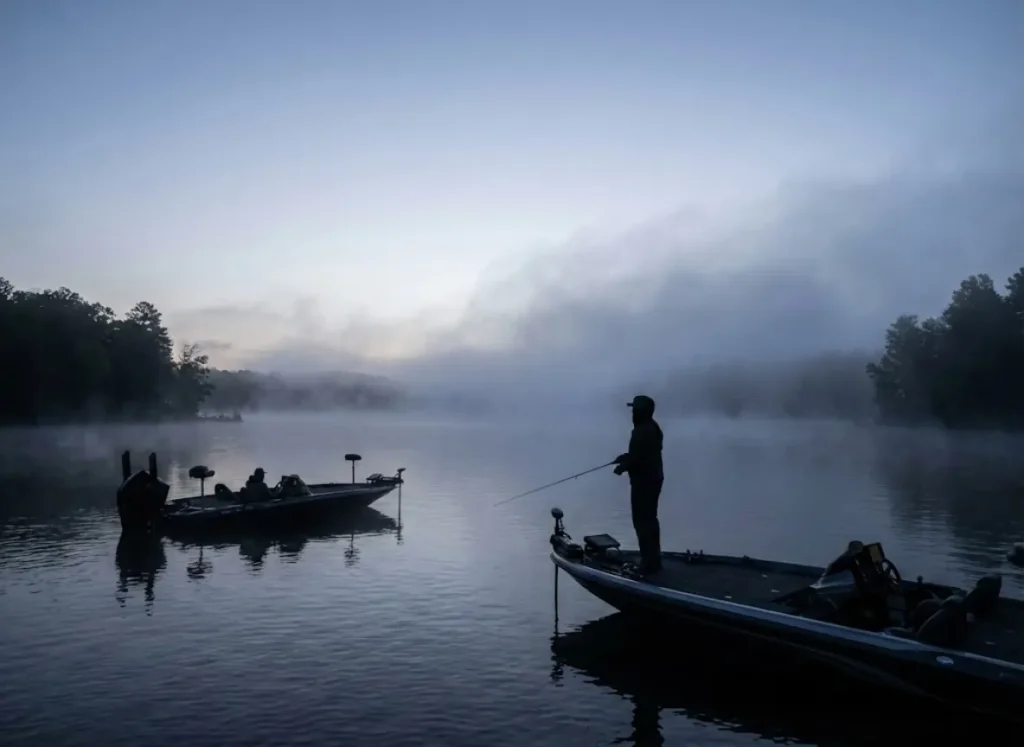
The “Awakening” occurs when water hits 50°F–58°F, triggering movement from deep basins to secondary points. Target the northwest corners of lakes first. These areas receive the most direct solar radiation and warm fastest.
During this window, the Crawfish Molt is a critical nutritional driver. Crawfish emerge and molt, turning red or orange, creating a calcium-rich food source. Red and orange squarebill crankbaits or lipless crankbaits are highly effective here because they mimic this specific biological event—a classic “match the hatch” scenario.
As water stabilizes between 60°F and 75°F, the “Reproductive Imperative” overrides the feeding instinct. Bass move to protected shallows to build spawning beds, and aggression becomes defensive rather than predatory. Official species profile and spawning behaviors indicate that males will fiercely guard these nests.
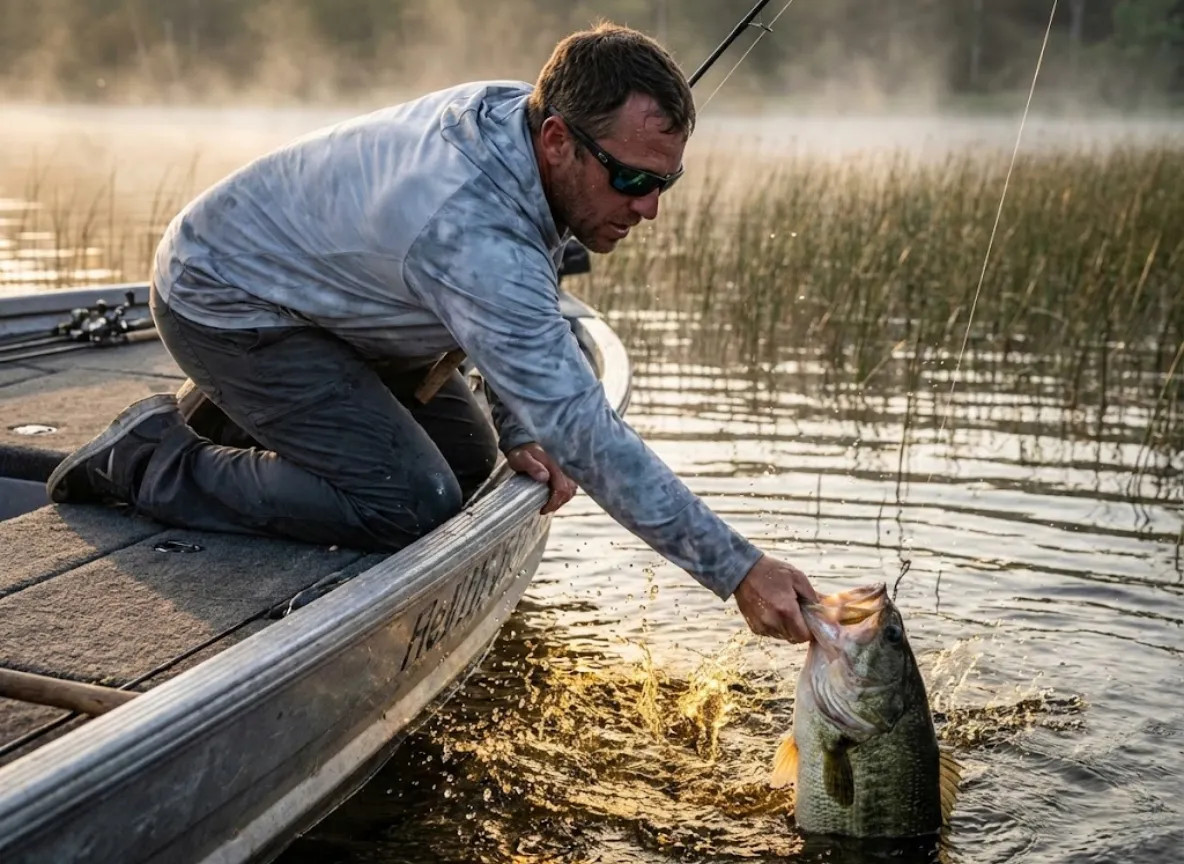
“Creature baits” mimicking nest predators like lizards, salamanders, or bluegill are effective because they trigger a threat response. Ethical handling and catch and release are critical here; returning bedding fish immediately ensures the protection of the next generation. For a detailed breakdown of this season, consult our spring bass fishing guide.
Pro-Tip: During the spawn, wear high-quality polarized sunglasses with amber or copper lenses. These tints block blue light and increase contrast, allowing you to spot bedding fish and submerged cover that grey lenses miss.
Where do bass go during the Summer thermal peak and Winter dormancy?
Summer (Water >80°F) creates a binary scenario: fish either go deep for oxygen or bury themselves in shallow shade. Deep fish relate to main lake structures like ledges, drop-offs, and humps, relying on current to activate feeding. Shallow fish seek “micro-climates” inside thick aquatic vegetation (lily pads, cabbage, slop) or under docks where shade lowers the water temperature.
Dissolved Oxygen (DO) becomes the limiting factor. Thermoclines—stratified water layers—dictate the maximum depth fish can inhabit. Recent studies on the impact of heatwaves on fish physiology highlight how bass manage this stress by seeking these specific refuges.
In Winter (Water <50°F), bass enter winter lethargy and retreat to vertical structures like bluff walls and deep channels. The “Vertical Rule” applies here. Lethargic fish will not chase horizontal baits; lures must be dropped directly onto them using spoons or a vertical jig.
Structure preference shifts to areas allowing depth changes without horizontal travel. A fish can move from 30ft to 15ft simply by floating up a vertical wall. Success requires downsizing lures—think small plastic worms or hair jigs—and slowing presentation to match the suspended, low-energy state of the fish. You can find a complete summer fishing system in our dedicated archive.
The Physics of Gear: Building a “Tactical System”
Why are Rod Power and Action distinct mechanical properties?
Rod Power is the resistance to bending; it dictates the mass the rod can lift and the force required to drive a hook. Rod Action describes the flex pattern—where along the blank the bend occurs.
A “Heavy Power” rod is non-negotiable for driving thick-gauge hooks, such as those on a flipping jig or Texas rig, through plastic baits and into a bony jaw. Conversely, a “Medium Power” rod prevents pulling small treble hooks out of a fish’s mouth by offering less resistance during the fight.

Fast Action (bending in the top 20%) provides sensitivity and rapid power transfer. This is essential for single-hook applications like jigs, senkos, and worms. Moderate Action (bending into the mid-section) acts as a shock absorber. This is critical for moving baits like crankbaits or spinnerbaits where a delay is needed for the fish to inhale the moving lure.
The error most anglers make is using a Fast Action rod for reaction bites. This often results in ripping the lure away before the hookset. Building a “System” means pairing the rod’s flex pattern to the hook type. For a clear breakdown of the mechanics, review the difference between power vs action to avoid common purchasing mistakes. You can also read our specific guide on rod action vs power.
How does Reel Gear Ratio affect torque and speed?
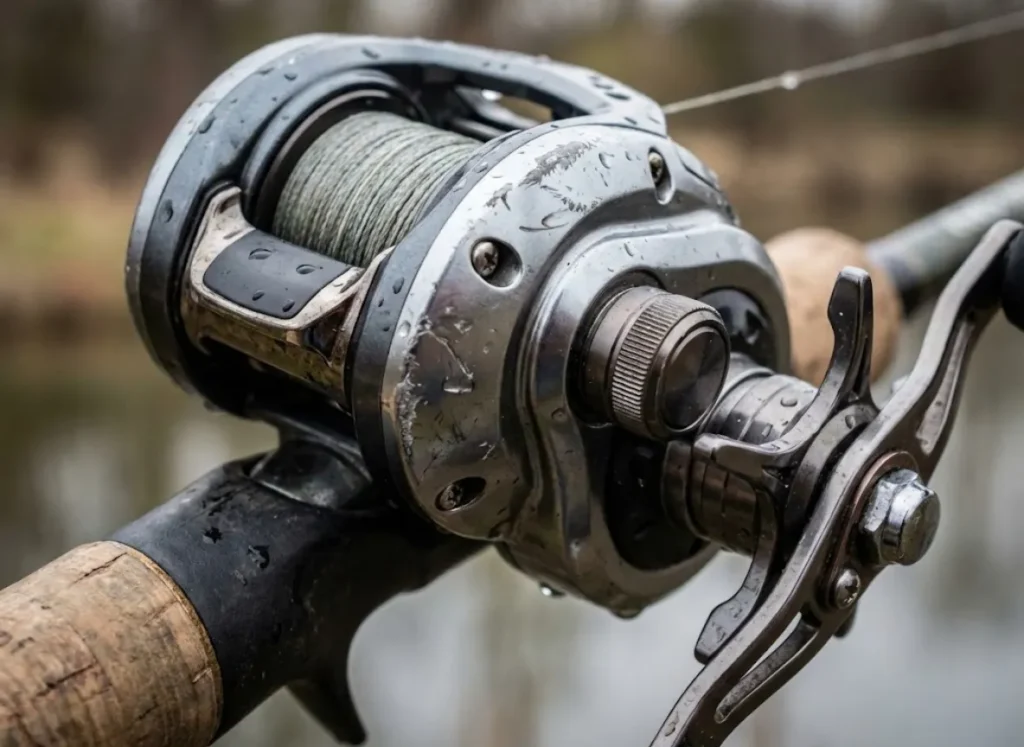
Gear ratio represents the trade-off between retrieval speed (Inches Per Turn) and torque (Mechanical Advantage). Low Speed (5.1:1 – 5.5:1) acts like a winch. It offers maximum torque for pulling high-resistance lures like deep diving crankbaits or slow-rolling a heavy spinnerbait.
High Speed (7.1:1 – 8.5:1) acts like a sports car; it sacrifices torque for rapid line pickup. Using a high-speed baitcasting reel for deep cranking forces the angler to manually fight the lure’s resistance, leading to fatigue.
High-speed reels are mandatory for “slack line” techniques like Flipping, Pitching, or working Topwater lures (like a Zara Spook or hollow body frog). Here, the reel is used to pick up slack quickly after a twitch or drop. When flipping into heavy cover, the millisecond capability to winch a fish out before it buries in weeds is decided by the reel’s speed.
Intermediate ratios (6.4:1) serve as utility players for chatterbaits (bladed jigs), swim jigs, and squarebills, offering a balance of speed and power. The “System” view requires matching the reel to the physics of the retrieve. Minimizing fight time through proper gear is also crucial for fish survival, as noted in studies regarding the effects of handling practices and temperature. For current recommendations, check out our review of the best bass baitcasters tested.
Tactical Dossiers: What are the High-Percentage Rigs?
What is the optimal system for Flipping and Pitching heavy cover?
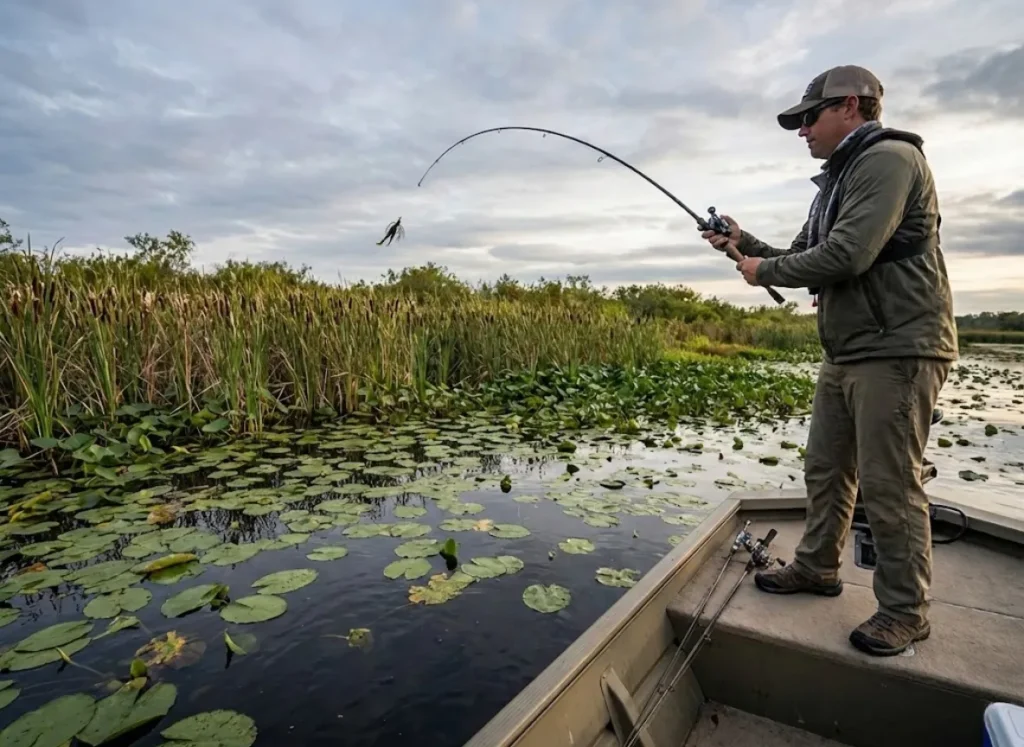
The objective here is precision insertion of heavy baits into dense cover—think laydowns, fallen trees, or matted grass—to trigger reaction strikes. Your rod should be a 7’6″ Heavy Power, but with a Moderate-Fast action. A “broomstick” with zero flex often tears hooks out when paired with braid.
Line choice is simple: 50-65lb Braided Line is mandatory. It offers zero-stretch hook setting power and the ability to cut through vegetation like a saw. Terminal tackle consists of a heavy wire straight shank hook paired with a tungsten weight (often pegged with a bobber stopper).
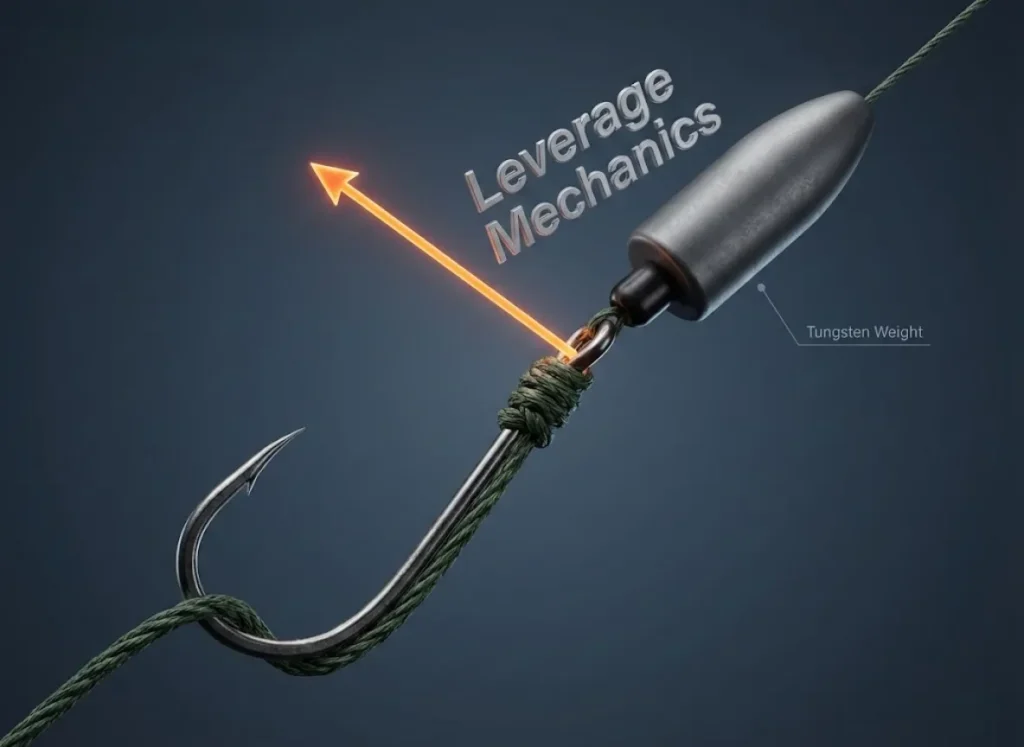
The Snell Knot is the mechanical secret here; it is not just a connection but a lever. When the weight hits the fish’s mouth on the hookset, the Snell knot leverages the hook point upward, dramatically increasing hook-up ratios. While the Palomar knot is strong, the Snell offers superior mechanics for straight shank hooks. Once the fish strikes, the high-speed reel must extract the fish vertically.
Always ensure you are compliant with local freshwater fishing regulations and techniques regarding hook types and limits. For the heaviest cover, you may need to upgrade to punching for bass.
Pro-Tip: When flipping, peg your tungsten weight with a bobber stop. This keeps the weight and bait together as they penetrate the cover. An un-pegged weight will often fall to the bottom while the bait gets hung up on a branch above, ruining the presentation.
How do you systematically target deep structure with Crankbaits?
Deep cranking is about reaching deep structural fish (15-20ft) and triggering strikes through bottom deflection. The rod should be a 7’6″ to 7’11” Medium-Heavy Composite (Glass/Graphite blend). Fiberglass makes the rod slower and more parabolic.
Pair this with a Low gear ratio reel (5.1:1 to 5.4:1) to provide the torque needed to crank high-resistance baits without fatigue. Use 10-12lb Fluorocarbon line. The thin diameter has less friction, allowing the bait to achieve its maximum dive depth. State agencies emphasize choosing the right fishing line based on diameter and sink rates for this exact reason.
A crankbait swimming in open water rarely gets bit; it must collide with the bottom or cover, such as riprap or shell beds. The collision causes the bait to careen erratically (“hunting action”). This mimics a fleeing crawfish or injured shad and triggers a reaction strike.
Use the “Clock System” to dissect the spot: Cast at 12:00, 1:00, and 2:00 to ensure no angle is missed. Using a parabolic rod ensures that when this violent strike happens, the rod loads up deeply, keeping the treble hooks pinned. For a step-by-step walkthrough, read how to fish deep diving crankbaits.
Conclusion
Bass are biological machines. Success comes from monitoring temperature (50°F-86°F range) and photoperiod, not luck. You must adapt your location based on the “Biological Calendar,” moving from vertical winter structures to shallow spawning flats and back to deep summer ledges.
Treat your gear as a physics system. Match Rod Power to hook thickness, Rod Action to hook type, and Reel Ratio to lure resistance. Execute tactics like Flipping and Cranking with precision mechanics to maximize landing percentages.
Stop casting randomly. Start analyzing the water, checking the temperature, and engineering your approach. Explore our full library of species-specific guides to continue building your angling dossier.
FAQ – Frequently Asked Questions
What is the best time of day to fish for largemouth bass?
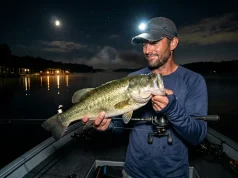
Low light periods (dawn and dusk) are universally productive as bass use the transition to ambush prey. However, in colder months (winter or early spring), the mid-day sun warming the water often triggers the best feeding window. Night fishing with noisy topwaters like a buzzbait can also be effective in summer.
How does water color affect lure selection?
Follow the rule of contrast: In muddy or stained water, use dark colors (Black or Blue) to create a strong silhouette. In clear water, use natural, translucent colors (Ghost Minnow, Green Pumpkin) to prevent the fish from getting a good look at the artificial nature of the bait.
Should I use monofilament or fluorocarbon line?
Use Monofilament for topwater lures (poppers, walking baits) because it floats, keeping the lure action correct. Use Fluorocarbon for subsurface lures (crankbaits, jigs, jerkbaits) because it sinks, is more abrasion-resistant, and is nearly invisible underwater.
What is the Clock System for casting?
The Clock System is a method for thoroughly dissecting structure by visualizing your boat at the center of a clock. Instead of casting randomly, cast systematically at 12:00, 1:00, and 2:00 to ensure you cover every angle of a submerged object, ledge, or brush pile.
Risk Disclaimer: Fishing, boating, and all related outdoor activities involve inherent risks that
can lead to injury. The information provided on Master Fishing Mag is for educational and informational purposes
only. While we strive for accuracy, the information, techniques, and advice on gear and safety are not a substitute
for your own best judgment, local knowledge, and adherence to official regulations. Fishing regulations, including
seasons, size limits, and species restrictions, change frequently and vary by location. Always consult the latest
official regulations from your local fish and wildlife agency before heading out. Proper handling of hooks, knives,
and other sharp equipment is essential for safety. Furthermore, be aware of local fish consumption advisories. By
using this website, you agree that you are solely responsible for your own safety and for complying with all
applicable laws. Any reliance you place on our content is strictly at your own risk. Master Fishing Mag and its
authors will not be held liable for any injury, damage, or loss sustained in connection with the use of the
information herein.
Affiliate Disclosure: We are a participant in the Amazon Services LLC Associates Program, an
affiliate advertising program designed to provide a means for us to earn advertising fees by advertising and linking
to Amazon.com. As an Amazon Associate, we earn from qualifying purchases. We also participate in other affiliate
programs and may receive a commission on products purchased through our links, at no extra cost to you. Additional
terms are found in the terms of service.