
In this article
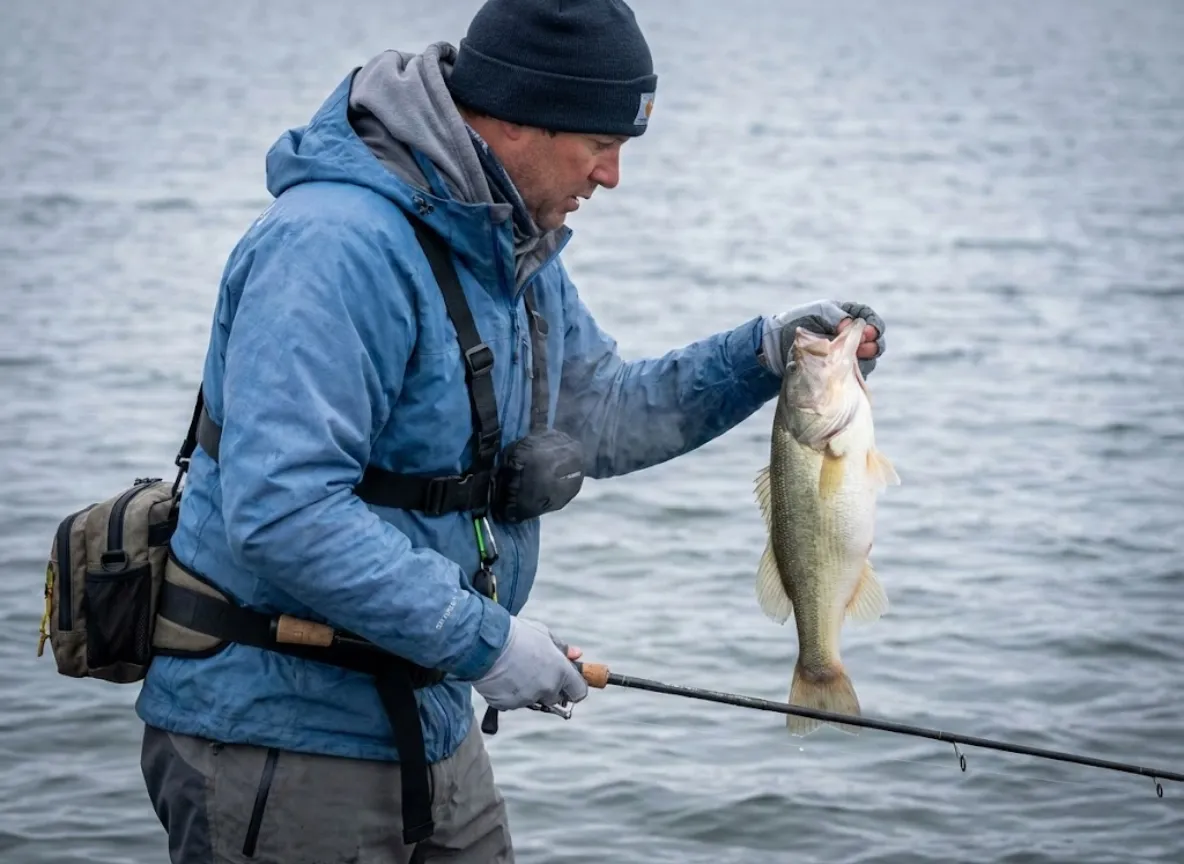
The water temperature gauge reads 48°F. Your hands are numb, and the lake surface is a sheet of steel gray. Beneath that surface, however, a biological switch is flipping. The transition from winter bass fishing torpor to the aggression of the pre-spawn is not random; it is a rigid physiological response to thermodynamics.
Success in this volatile window doesn’t come from luck. In my years on the water, I’ve learned it comes from understanding the precise bass metabolism constraints that dictate whether a largemouth bass will chase a lure or ignore it.
This spring bass fishing guide breaks down the science of the seasonal freshwater bass fishing warm-up. We will analyze how rising temperatures physically force predatory fish to feed, how to use transition mapping to intercept their migration routes, and the specific bass lures required for the three critical thermal windows: The Awakening, The Migration, and The Staging.
Biological & Environmental Drivers: Why Do Bass Move?
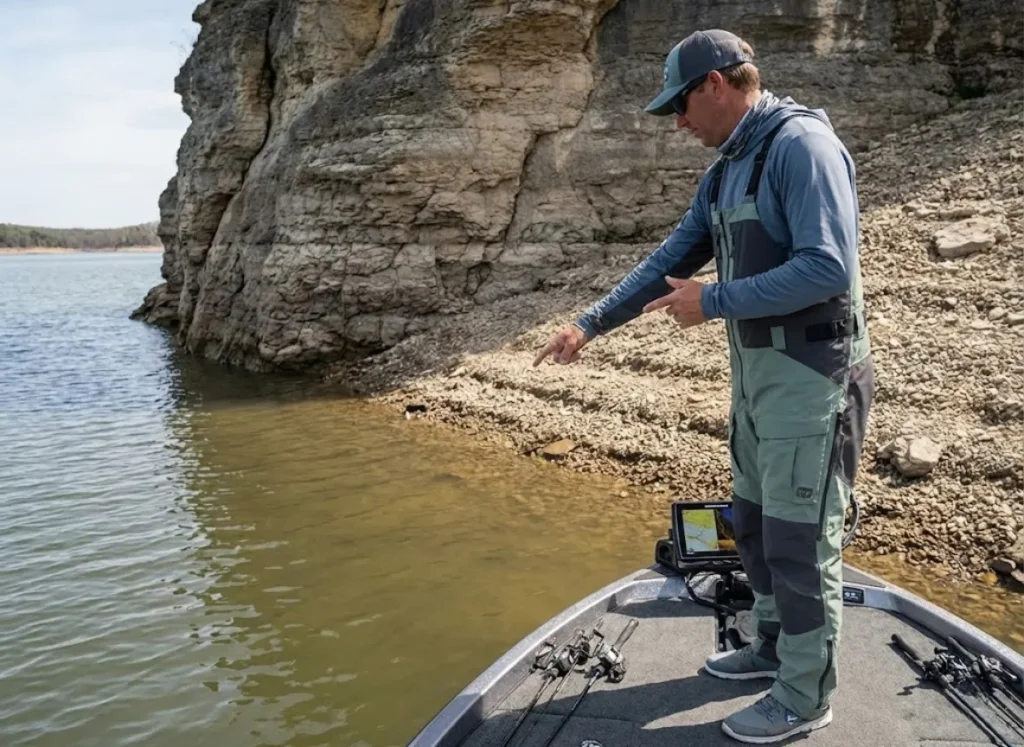
Before we tie on a bait, we must understand the engine driving the fish. The shift from deep wintering holes to spawning flats is driven by a mix of hormonal urges and thermal necessity.
What metabolic changes occur in bass as water hits 48°F?
At 48°F, the bass metabolism begins emerging from winter dormancy, though digestion rates remain agonizingly slow. Movement at this temperature is often vertical rather than horizontal; fish suspend in the water column to absorb solar radiation. Energy conservation is still a priority, meaning the “strike zone” is incredibly small. Often, you must place the lure directly in front of the fish to elicit a reaction.
As temperatures cross the 50°F threshold, the biological need for calories to fuel gametogenesis (egg production) overrides safety instincts. Official reports on how seasonal changes affect fish metabolism confirm that this is a physiological mandate, not a choice.
Scientific telemetry studies indicate that swimming speeds and daily distance traveled nearly double when water warms from 45°F to 55°F. This period marks the shift from “opportunistic feeding”—eating what happens to drift by—to “active foraging.” However, bass anglers must recognize that a cold snap can reverse this behavior instantly. A single 3°F drop can shrink a fish’s willingness to chase a reaction bait from 5 feet down to 6 inches. To capitalize on this, you must understand the bass species‘ biological blueprint, from the light-reflecting tapetum lucidum to their lateral lines, which dictate how they sense prey in these shifting conditions.
What is the “Law of V’s” and how does it predict migration routes?
Largemouth and smallmouth bass do not swim in straight lines across barren flats; they utilize bottom topography for security. Specifically, they follow ditches, drains, and deep creek channels. The “Law of V’s” on a contour map is your best tool here. Contour lines that form a V-shape point upstream, indicating a depression or channel.
Pre-spawn bass swim into the “V,” moving against the theoretical flow of the drain to reach shallow spawning bays. These depressions may only be 1-2 feet deeper than the surrounding flat, but that depth change is sufficient to serve as a migration highway.
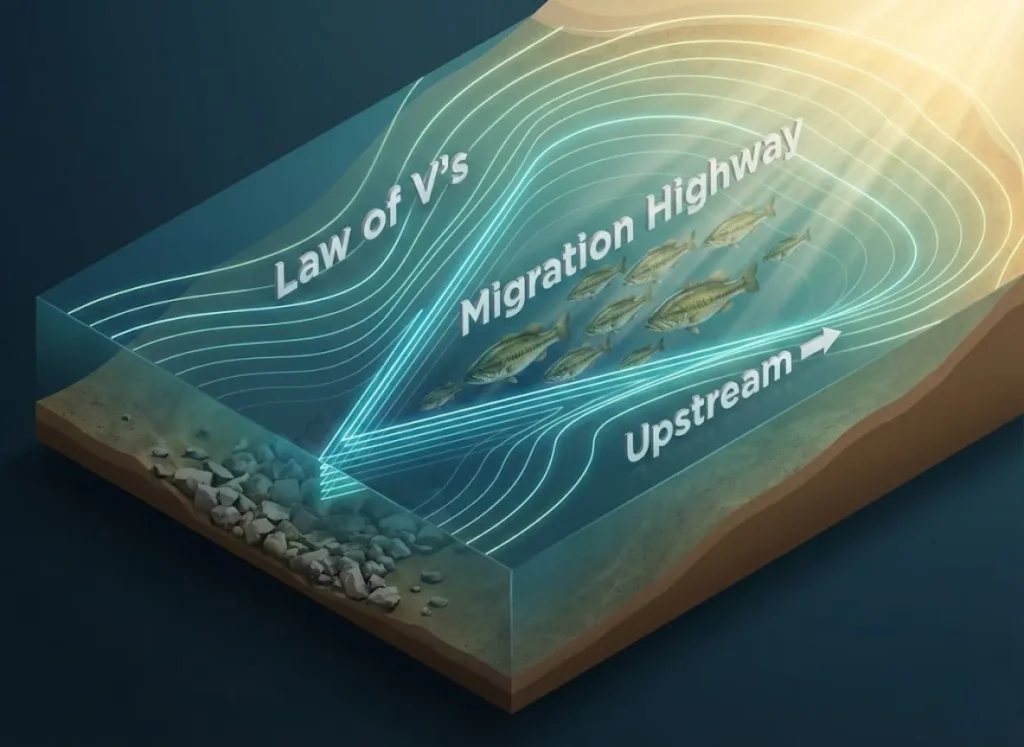
The most productive areas are often where the ditch intersects with a “transition bank,” such as a bluff wall turning into chunk rock. Bass utilize the center of the ditch for travel and the edges for feeding. Properly interpreting contour lines and intervals allows you to intercept fish that return to the same spawning coves annually due to high site fidelity. This is a critical component of mastering the four pillars of fish habitat to predict where the largest female bass will stage.
Why do north-facing banks warm faster in early spring?
In the northern hemisphere, the north-facing banks of a lake receive the most direct southern exposure sunlight. Protected bays and pockets on this side are shielded from cold north winds, preventing the mixing of cold deep water with surface water.
This combination creates “micro-climates” where water can be 3–5°F warmer than the main lake. This thermal gap is often enough to accelerate the spawn in these areas by weeks compared to the southern end of the lake. Hard structure types like rock or riprap on these banks absorb heat during the day and radiate it back at night, stabilizing the temperature.
Pro-Tip: Look for the “dark spots.” Dark-bottomed bays featuring decaying vegetation or mud absorb heat faster than sandy bottoms. A pocket with a dark bottom on the north shore is a solar battery.
Warm spring rain often creates “mudlines” in these bays. The turbid water absorbs more solar radiation warms water bodies faster than clear water. Bass will position themselves just inside the muddy water to ambush prey while utilizing the warmth. Understanding the science behind post-rain transformations helps you identify which muddy pockets are fertile grounds and which are just washed-out dead zones.
Tactical Execution: The Phased Approach
The biology and geography set the stage. Now, we open the bass tackle box. Your equipment must evolve as the water warms from the high 40s to the low 60s.
How do you master the “Ice-Out Grind” (48°F – 52°F)?
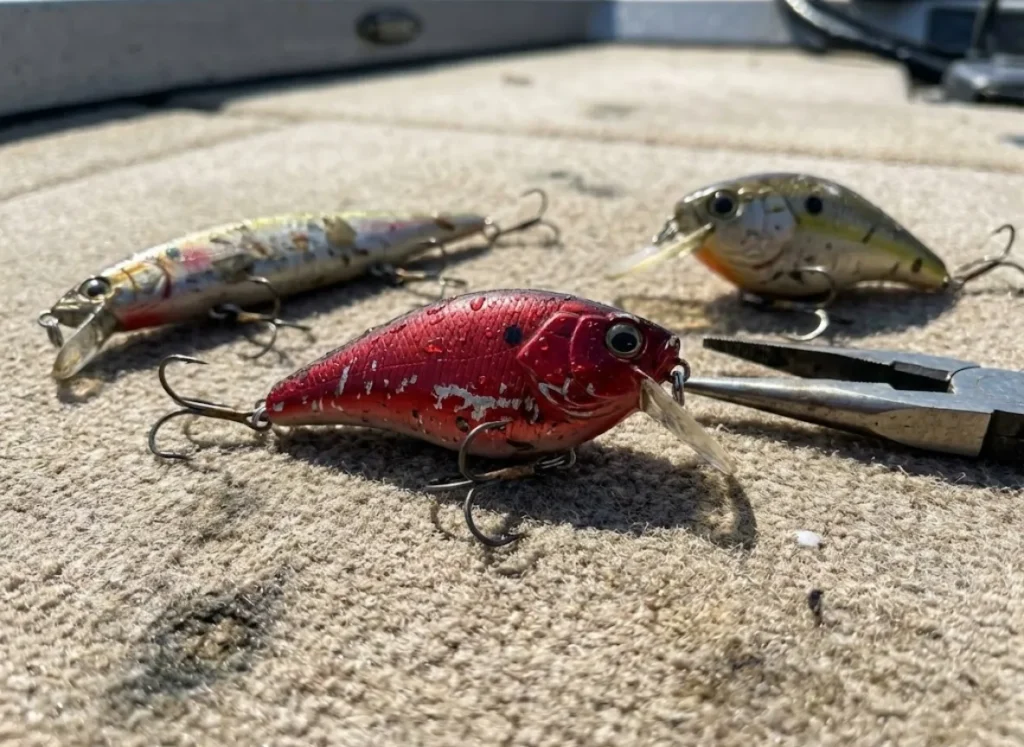
The primary tool for ice-out bass fishing is the suspending jerkbait, such as a Megabass Vision 110. It mimics a dying, motionless minnow, which is exactly what cold-water bass expect to see in frigid water. The retrieve requires a “rip-rip-pause” cadence. The pauses are the most critical part, often lasting 10 to 30 seconds to allow lethargic bass to inspect the bait.
| Thermal Lure Selector | ||
|---|---|---|
| Temp Range | Primary Lure | Key Cadence |
| 48°F – 52°F | Suspending Jerkbait | Long Pause (10-30 sec) |
| 53°F – 56°F | Red Lipless Crankbait | Yo-Yo / Constant Vibration |
| 57°F – 60°F | Squarebill Crankbait | Deflection / Burn |
Neutral buoyancy is non-negotiable. In cold, dense water, you may need to adjust split rings or hooks to ensure the bait suspends perfectly. If the jerk bait fails, flat-sided crankbaits are effective because their tight wiggle displaces less water.
Research into largemouth bass behavior and activity confirms that activity is low, so your rod and reel setup must maximize your odds. Using the right rod is essential; decoding rod power and rod action will teach you why a graphite rod is necessary for jerkbaits (to feel the strike on slack line), while a glass rod is superior for crankbaits (to let the fish inhale the lure).
What lures dominate “The Migration” (53°F – 56°F)?
Known as the “Roaring 50s,” this phase sees bass moving aggressively along ditches toward spawning flats. They are often feeding on emerging crayfish. Red lipless crankbaits or orange patterns are statistically dominant here, matching the coloration of pre-molt crawfish.
The “Yo-Yo” retrieve—lifting the rod and letting the bait fall on a semi-slack line—triggers strikes better than a straight retrieve. This is the best window for covering water quickly to find a feeding frenzy.
In stained water where visibility is under two feet, the vibrating jig (commonly known as a ChatterBait) becomes essential. Its intense vibration calls in fish from a distance. Studies on movements and home ranges of bass suggest fish are traveling further now than at any other time in early spring. To intercept them, you need lures that possess specific five measurable attributes from water displacement to snag-resistant deflection. Crashing the lure into rocks, stumps, or emerging grass is key to triggering reaction strikes from these migrating fish.
How do you target fish in “Pre-Spawn Staging” (57°F – 60°F)?
As water nears 60°F, male bass move into littoral zones (less than 5 feet deep) to prepare spawning beds. Large females stage on adjacent cover like boat docks, riprap, and laydowns. Squarebill crankbaits are the primary tool, designed to deflect violently off shallow wood and rock to trigger territorial aggression.
Bass are highly active but can be wary in clear water. Speed becomes a trigger, forcing the fish to react before they can inspect the lure. Target protected pockets and the hard-bottom flats on the north side of the lake for the highest concentration of fish.
If a cold front hits during this phase, fish will lock tight to cover. You must switch to a rubber-skirted crayfish imitation (jig) or a weightless stick bait (Senko). Deadsticking—letting a soft plastic bait sit motionless—becomes deadly for staging females reluctant to chase.
When looking for beds or cruising bass, largemouth bass spawning season literature emphasizes the importance of visual identification. You must have the right optics to turn blinding glare into crystal-clear intel, allowing you to spot the light-colored patches on the bottom that indicate a cleared nest.
Pro-Tip: If you spot a bass on a bed that won’t bite, back off and wait 20 minutes. Return with a different lure color (White or Bubblegum) to shock the fish into a defensive reaction.
Summary of Tactics
The spring transition is a puzzle solved by temperature and transition mapping. 48°F requires suspension and patience. 55°F demands vibration and reaction. Topography serves as the map, guiding you along the “Law of V’s” where ditches funnel fish toward the shallows.
Adaptability is your greatest asset. The ability to switch from a fast-moving squarebill to a deadsticked Senko when a cold front hits defines the successful spring angler. By focusing on north-shore pockets and tracking the thermal gauge, you can intercept the migration weeks before the rest of the fleet.
Next time you see the water hit 48 degrees, don’t wait for the warm-up. Use these bass fishing tips to intercept the migration early. Share your personal-best bass catch or local adjustments in the comments below.
FAQ – Frequently Asked Questions
What is the best lure color for early spring bass fishing?
Red and orange patterns (like Delta Craw) are statistically dominant in early spring because they mimic pre-molt crawfish, a primary food source. In very clear water, transition to natural baitfish patterns (ghost minnow or translucent) to avoid spooking wary fish.
How fast should I retrieve my bait in 50-degree water?
Slow down significantly. Use a stop-and-go or Yo-Yo retrieve rather than a steady burn. Bass are active but rarely willing to chase prey for long distances at this temperature.
What do I do if the water is muddy and cold (under 50°F)?
Switch to a dark-colored lure with high vibration, such as a black or blue spinnerbait with a large Colorado blade or a vibrating jig. You must make repeated, precise casts to heavy cover, as the strike zone shrinks to only inches in low visibility.
Where do bass go when a cold front hits in spring?
Bass typically do not leave the area but tighten up to the thickest available cover (inside brush piles or under boat docks) and become inactive. Downsize to finesse bait presentations like a Ned Rig or hair jigs and fish extremely slowly in the same areas you found them previously.
Risk Disclaimer: Fishing, boating, and all related outdoor activities involve inherent risks that
can lead to injury. The information provided on Master Fishing Mag is for educational and informational purposes
only. While we strive for accuracy, the information, techniques, and advice on gear and safety are not a substitute
for your own best judgment, local knowledge, and adherence to official regulations. Fishing regulations, including
seasons, size limits, and species restrictions, change frequently and vary by location. Always consult the latest
official regulations from your local fish and wildlife agency before heading out. Proper handling of hooks, knives,
and other sharp equipment is essential for safety. Furthermore, be aware of local fish consumption advisories. By
using this website, you agree that you are solely responsible for your own safety and for complying with all
applicable laws. Any reliance you place on our content is strictly at your own risk. Master Fishing Mag and its
authors will not be held liable for any injury, damage, or loss sustained in connection with the use of the
information herein.
Affiliate Disclosure: We are a participant in the Amazon Services LLC Associates Program, an
affiliate advertising program designed to provide a means for us to earn advertising fees by advertising and linking
to Amazon.com. As an Amazon Associate, we earn from qualifying purchases. We also participate in other affiliate
programs and may receive a commission on products purchased through our links, at no extra cost to you. Additional
terms are found in the terms of service.