
In this article
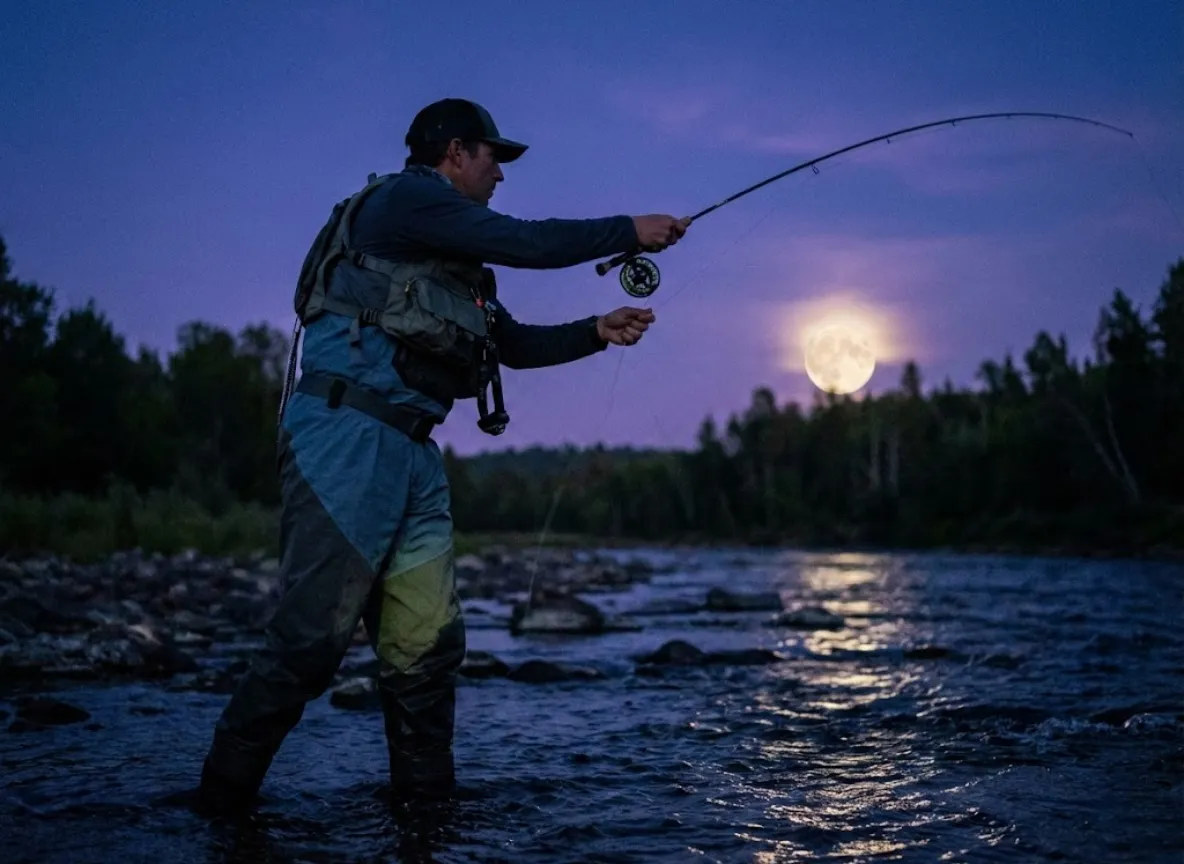
You cast into the same riffle for three hours with nothing but a sore shoulder to show for it. Meanwhile, the angler fifty yards downstream limits out in twenty minutes. It is easy to write this off as luck or a secret bait, but often, it is a failure to synchronize with the invisible rhythm of the environment.
Some dismiss Solunar tables as mere horoscopes for fish, assuming the moon casts a spell on the water. However, the moon exerts measurable physical forces—specifically gravity and light intensity—that drive the biological imperatives of feeding and spawning. I have spent decades tracking these patterns, moving from skepticism to a firm belief that understanding Solunar influence turns these cosmic variables into a predictable “force multiplier” for your angling strategy.
In this guide, we will strip away the folklore and examine the angling science. We will look at how John Alden Knight isolated these constants, the biological evidence of tidal harmonics, and how to use the “Rule of 12ths” to stay safe during the violent water movement of a Spring tide.
What is the Solunar Theory?
To understand why the Solunar calendars work, we have to look back at the historical origins of the theory and define the fundamental astronomical mechanics that underpin the modern charts.
How did John Alden Knight isolate the “Solunar” pattern?
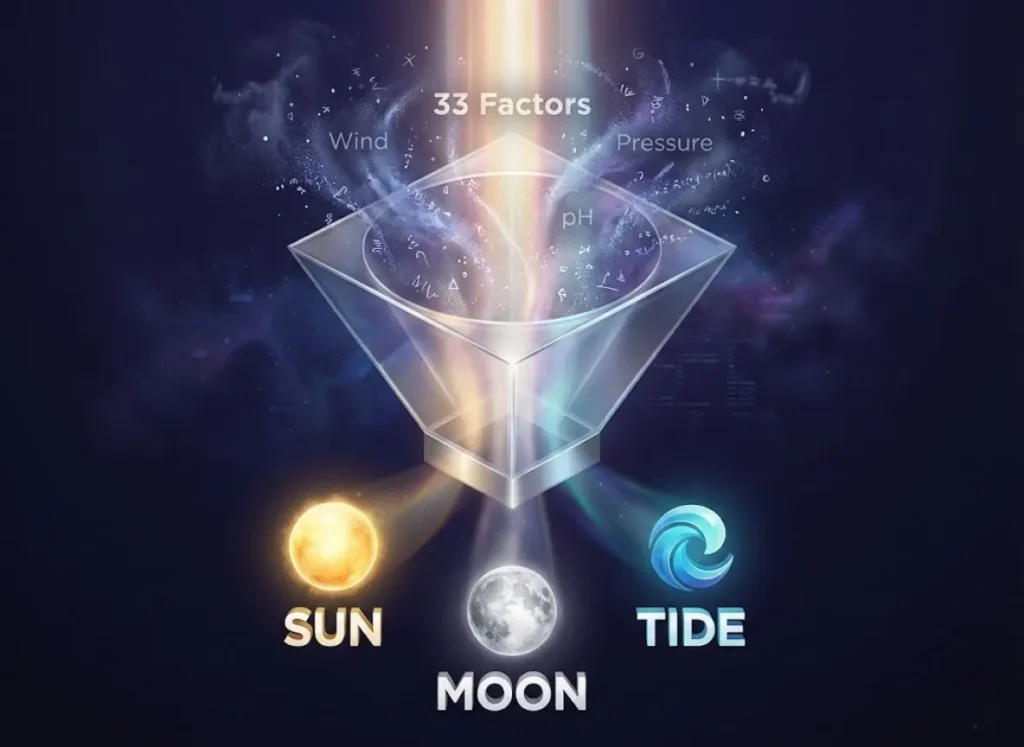
In 1926, an outdoorsman named John Alden Knight began a systematic deduction process that fits right into the strategic history of fishing evolution. He cataloged 33 distinct factors rumored to influence catch rates, ranging from wind direction and water pH to cloud cover.
Knight, often consulting with fellow sportsmen like Porter Hall, cross-referenced these factors against 200 “record catch” days for Muskellunge and other game fish to find consistencies. By ruthlessly eliminating the variable factors—such as high versus low pressure, which changed day to day—he was left with three constants: the Sun, the Moon, and the Tides. He coined the term “Solunar” to describe the combined gravitational influence of the sun and moon, distinct from simple tide charts.
Knight’s critical breakthrough was the “Freshwater Tide” hypothesis. He realized that inland fish sense gravitational pull even without the visible water level changes seen in the ocean.
Most importantly, he identified the daily “lag” differentiating the solar day (24 hours) from the lunar day (approximately 24 hours and 50 minutes). This causes peak activity times to regress by 50 minutes every single day. This verified why standard solar clocks fail to predict activity; the biological clocks run on tidal time, not civil time. The astronomical data regarding lunar transits confirms that 90% of trophy catches occur during the “dark of the moon” (New Moon) or these calculated Solunar periods.
Is There Biological Proof Behind the Folklore?

We must distinguish between credible mechanisms in behavioral ecology and pseudoscience. Does a fish in a landlocked lake actually know where the moon is?
How do tides and gravity influence fish biology?
The primary mechanism is the gravitational alignment known as Syzygy. This occurs during New Moon and Full Moon phases when the sun, moon, and earth align. This alignment creates Spring Tides in the ocean, characterized by maximum water movement and nutrient churn, vastly overpowering the weaker Neap Tides of the quarter phases.
Major Periods coincide with the Lunar Transit (when the moon is overhead) and the Opposing Lunar Transit (directly moon underfoot). These create peak vertical gravitational vectors. Minor Periods align with Moonrise and Moonset, exerting a horizontal gravitational pull. These constitute the 4 lunar periods serious anglers track. Understanding tidal flows in estuaries relies heavily on these vectors, as they dictate the speed of the current.
Pro-Tip: Don’t confuse “Spring Tides” with the season. They happen twice a month, every month, during the New and Full moons. They are named for the water “springing” forth.
Dr. Frank A. Brown conducted a famous experiment in 1954 that supports this. He transported oysters from the Atlantic coast to a laboratory in Illinois. Initially, the oysters opened their shells in time with the Connecticut tides. However, after two weeks, they reset their circadian rhythms to the “theoretical tide” of Illinois—when the moon passed overhead in the Midwest.
This suggests fish possess an exogenous clock capable of sensing gravitational pressure or geomagnetic shifts independent of ocean depth. The “Inverse Square Law” dictates that while the moon is smaller than the sun, its proximity makes its tidal force 2.2 times stronger. The physics of tidal generation suggests that in freshwater, this gravitational pull may subtly affect the swim bladder, triggering movement similar to reading barometers.
What role does moonlight play in feeding behavior?
While gravity sets the rhythm, the visible presence of the moon triggers a chemical change within the fish. Light intensity directly regulates the pineal gland in fish, which controls the production of melatonin.
During the Full Moon, increased nocturnal illumination suppresses melatonin production. This leads to heightened alertness. Conversely, the “dark of the moon” results in higher melatonin levels and different behavioral patterns. This hormonal regulation links the phases of the moon directly to the “urge to feed” or “urge to spawn.”
Peer-reviewed research on the impact of moonlight on plasma melatonin in Golden Rabbitfish confirms that lunar-synchronized melatonin rhythms dictate reproductive timing.
For predators, the Full Moon offers a visual advantage known as Silhouetting. This extends their hunting window into the night. It creates a “biological prime time” where hormonal readiness meets environmental opportunity. Understanding the science of fish vision and light absorption reveals that the “Must-Feed” signal is often stronger during transition periods (dusk/dawn) when combined with these lunar phases.
Does the Data Support the Theory?
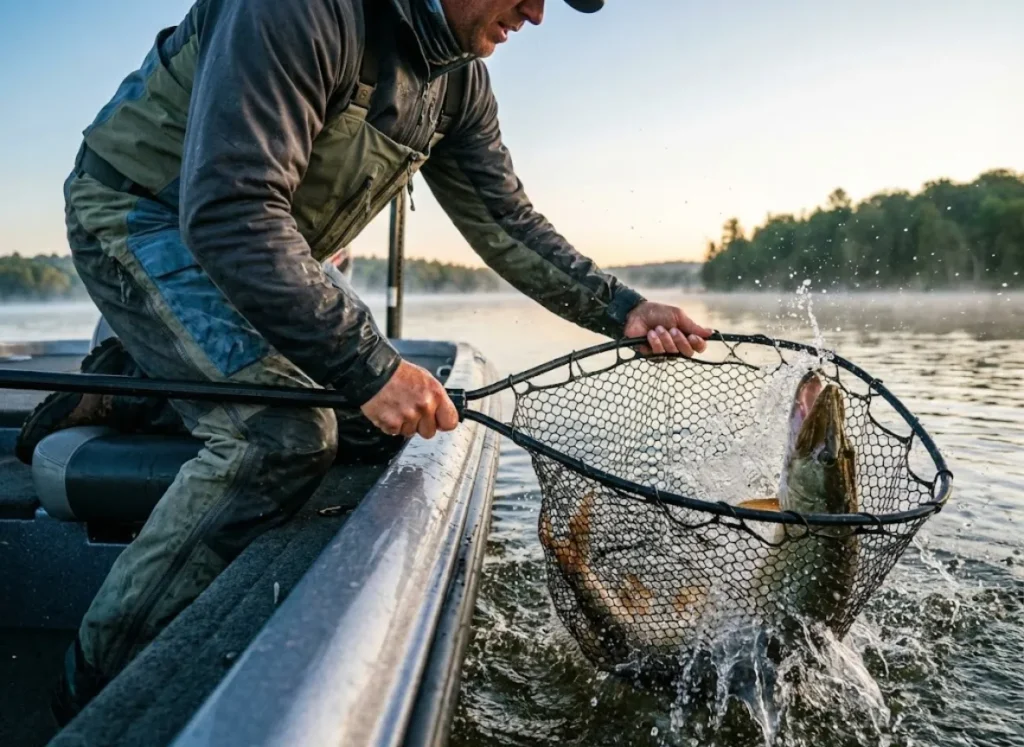
Biology suggests a link exists, but statistical data reveals that this link is not uniform across all species. We need to look at the numbers.
Do all fish species react to the moon equally?
A massive analysis of 340,000 Muskellunge catches (Vinson & Angradi, 2014) showed a statistically significant influence of the lunar cycle on catch rates. The study revealed a 5% increase in catches during Full and New Moons.
This effect was even more pronounced for “trophy” class fish (>102cm) and in higher latitudes. This aligns with the science of catching musky, which emphasizes that apex predators are more attuned to these windows. Marine species, such as Tarpon, Bonefish, and Snapper, also show extremely high correlation due to their reliance on tidal currents for spawning. Pelagic predators like Marlin and Tuna track the moon closely as it dictates the movement of bait balls.
Conversely, research by Mike Allen and colleagues at the University of Florida on Largemouth Bass found zero statistical correlation between moon phase and catch rates for average-sized fish. This suggests that for shallow-water freshwater species, local habitat and cover are dominant over lunar gravity. Similarly, European anglers targeting Carp, Tench, and Pike often report mixed results, relying more on stable conditions than the moon.
Anglers must differentiate their strategy. Prioritize Solunar for “apex” predators and saltwater trips, but treat it as secondary for smaller freshwater game like Trout. The “Muskie Lunacy” effect validates the theory for trophy hunters but cautions against using it as a universal law for bluegills.
How Should Anglers Prioritize Environmental Factors?
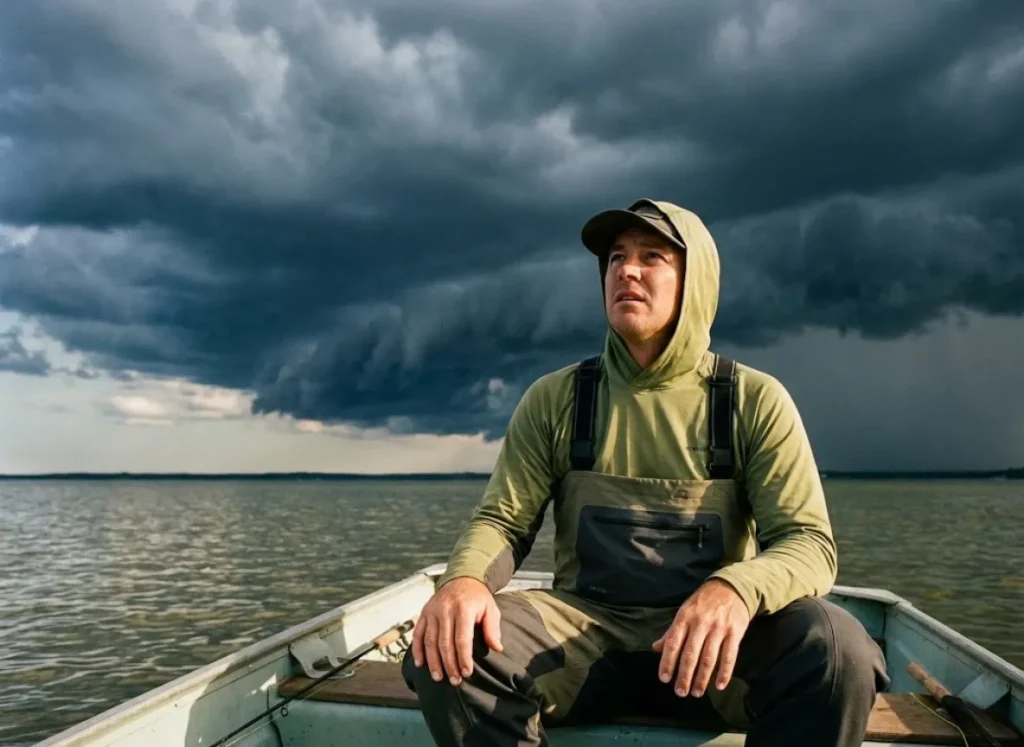
To avoid disappointment, we must establish a “Decision Matrix.” This helps place Solunar theory in its proper context alongside other environmental factors.
Does weather override the Solunar forecast?
The “Hierarchy of Factors” places Weather and Barometric Pressure at Tier 1, well above Solunar Phases. A rapidly falling barometer (approaching storm) triggers the “feed bag” response regardless of the moon phase due to swim bladder expansion. This is how barometric pressure impacts fish behavior, and it is the single most important variable to watch.
Conversely, a “Bluebird” post-frontal sky (High Pressure) will shut down activity even during a “Major” Solunar period. Atmospheric pressure dynamics dictate that high pressure compresses the swim bladder, making fish lethargic.
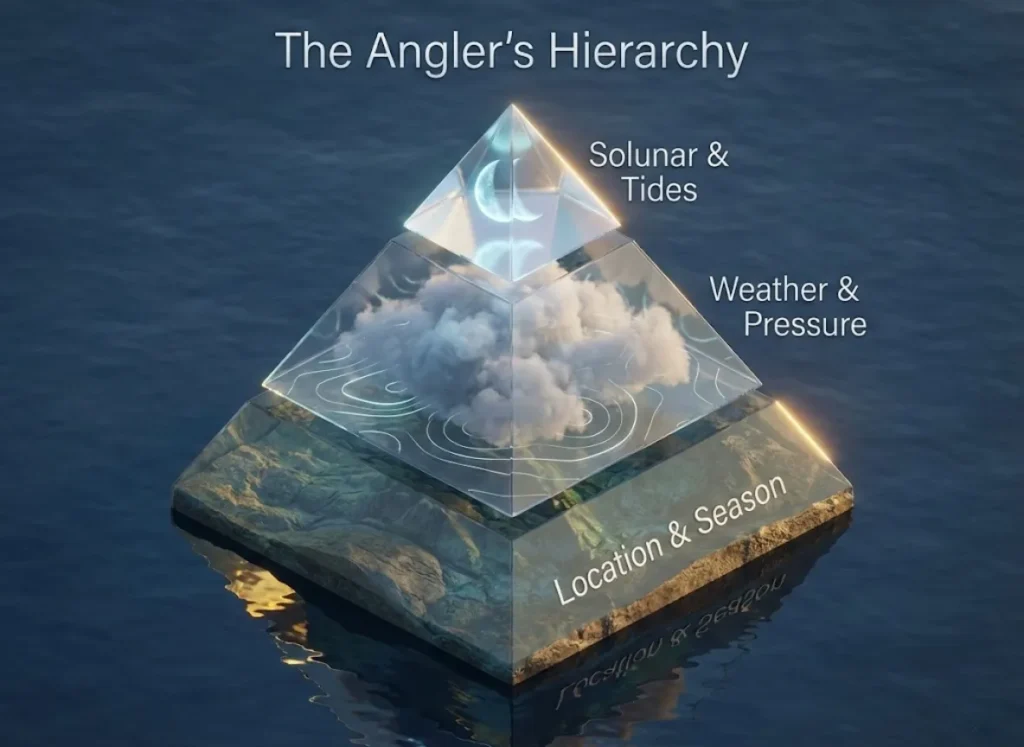
The Solunar influence is best viewed as a “fine-tuner” or “tie-breaker.” Create a mental conditions scorecard:
- Tier 1 (Weather): If wind and barometric pressure are favorable, use Solunar to pick the exact hour.
- Tier 2 (Location): A fish that has migrated due to water temperature cannot be caught, regardless of the moon.
- Tier 3 (Solunar): If the barometer is high and stable, rely on the Solunar Major period to grind out a bite.
How Do You Apply Solunar Strategy on the Water?

Once you have validated the weather, you can apply specific tactics to exploit the feeding windows effectively.
How do you identify the Prime Windows of activity?
The Golden Hours occur when a Major Solunar Period overlaps with a photoperiod event, specifically Sunrise or Sunset. During a Full Moon, the Moon sets near Sunrise. During a New Moon, the Moon rises near Sunrise.

This creates a “Double Trigger.” You get the biological advantage of low light combined with the gravitational peak of the transit. The daily activity cycles of fish are heavily influenced by these crepuscular periods. Anglers should plan their trips to be “spots on, lures wet” 30 minutes before these specific overlap windows. Visual Solunar charts often mark these prime times with sun symbols.
Pro-Tip: Use the “Clock Face” mental model. On a Full Moon, the Moon is overhead (Major) at Midnight and underfoot (Major) at Noon. On a New Moon, the Moon is overhead at Noon and underfoot at Midnight.
For midday fishing, target the “Minor” periods (Moonrise/Moonset) which often occur at convenient hours. Keep in mind the “90-Minute Rule.” While Major periods typically last 2-3 hours, the peak intensity is often a 90-minute window centered on the transit. This timing is a critical component of a step-by-step night fishing blueprint. While the New and Full Moons get the glory, tracking the First Quarter and Last Quarter provides a baseline, while Waxing Gibbous and Waning Gibbous phases indicate changing light levels that can trigger evening insect hatches.
How should you adjust lure selection for moon phases?
The moon phase dictates not just when to fish, but what to throw.
Nocturnal feeding relies on the Silhouette Theory during a bright Full Moon. Surface-feeding predators look up against a lit sky. Counter-intuitively, you should use Black or Dark Purple lures to create the maximum contrast against the brightness. This is a core tenet of topwater fishing strategy. Avoid flash or chrome at night; without direct sun, they simply appear grey and blend into the water column.
Visual capabilities of fish in low light differ from humans. During a New Moon (total darkness), nocturnal vision is limited. Switch to lures with heavy vibration, such as Colorado blades or rattles. Scent becomes a primary trigger during the New Moon; slow down the presentation to allow fish to track via lateral line and smell.
Match the “Mood.” A bright moon often equals an aggressive chase. A dark moon often requires an ambush strategy or positional feeding presentation.
What Are the Hidden Dangers of Fishing the Moon?
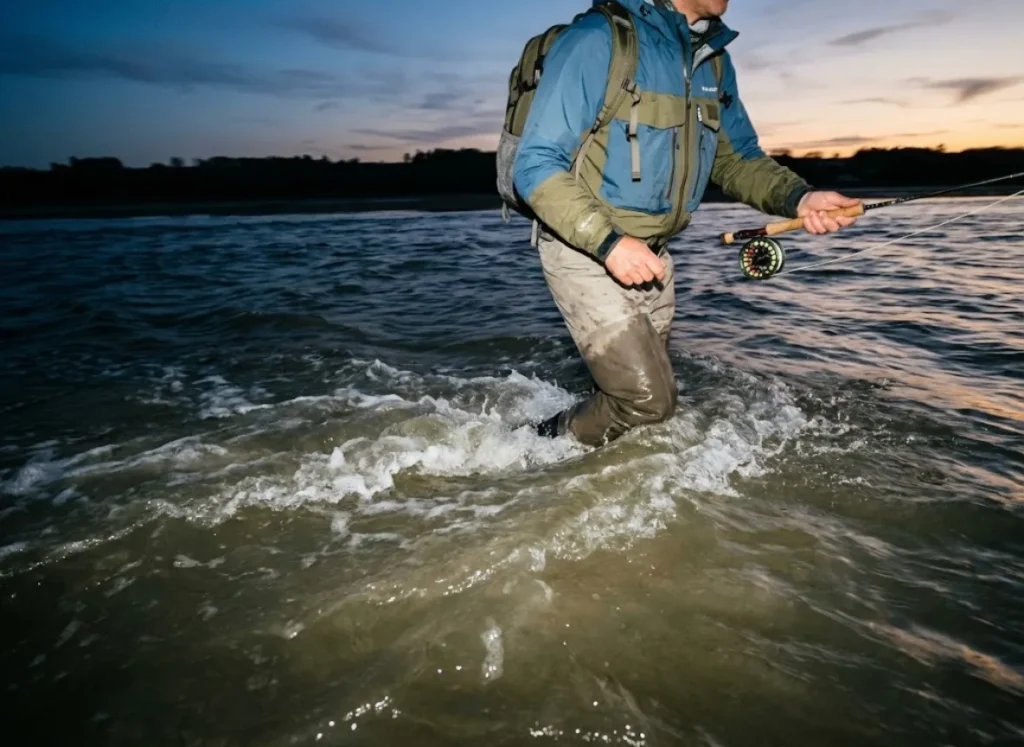
Optimizing your catch is important, but respecting the physical power of the moon is critical for survival.
How does the ‘Rule of 12ths’ predict tidal danger?
Spring Tides (Full/New Moon) create the largest volume of water movement. They flood channels and sandbars rapidly, creating high water levels far faster than Neap tides. To stay safe, you must understand the Rule of 12ths.
This mathematical rule estimates flow:
- Hour 1: 1/12th of the volume moves.
- Hour 2: 2/12ths of the volume moves.
- Hours 3 & 4: 3/12ths of the volume moves per hour.
This means 50% of the total water volume moves during the middle two hours of the tide cycle.
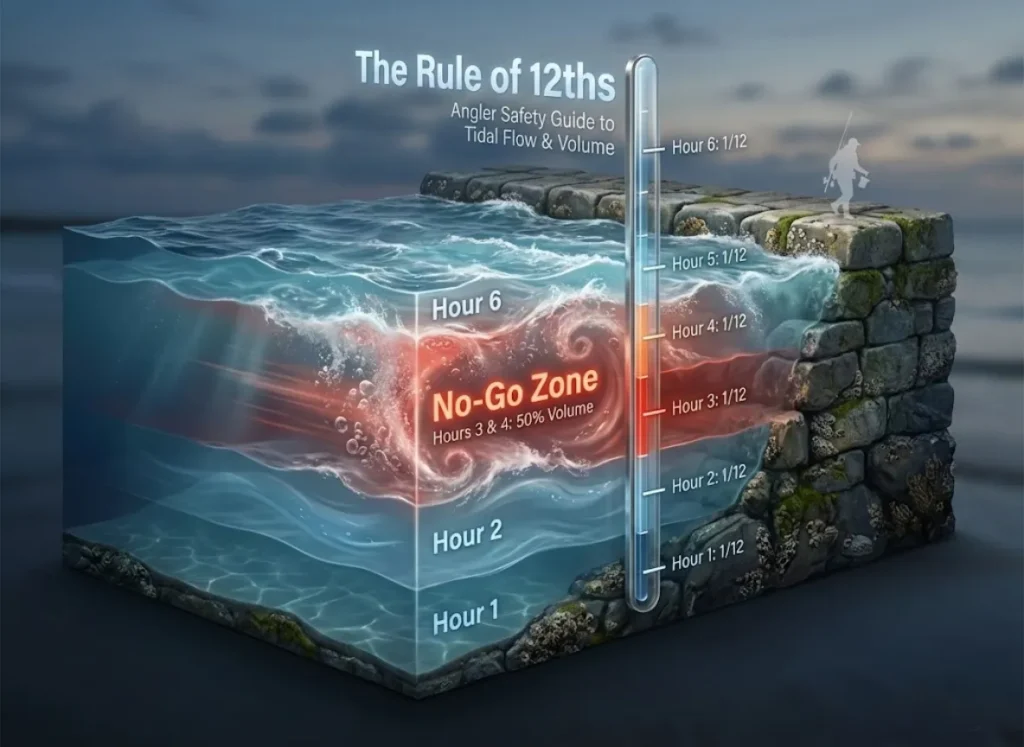
Anglers wading on flats or jetties during a Spring Tide must retreat before the 3rd hour begins. Once the 3rd hour hits, the current velocity peaks. It often becomes too strong to wade against or outrun. Monitoring tidal current velocities via tide graphs is essential.
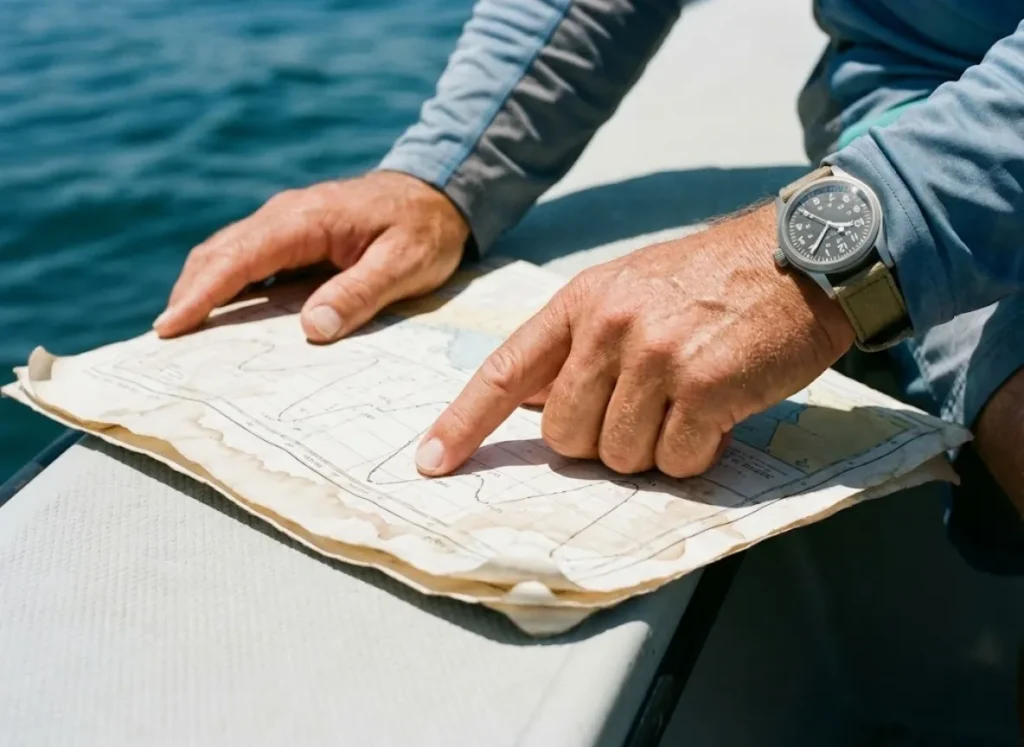
The water may look slow in Hour 1, leading to a false sense of security before the surge of Hour 3. Always carry a tide chart on Full Moon trips and mark the “Turn” times to calculate your safe exit window. This Spring tide safety checklist is part of the definitive guide to fishing safety that every angler should master.
Conclusion
Solunar theory is not magic. It is the strategic application of gravity and light to predict biological windows. While data confirms a significant advantage for Muskies and saltwater species, remember that Bass and smaller freshwater fish are often more driven by local cover and weather.
Always respect the “Hierarchy of Factors.” Barometric Pressure and Location supersede Moon Phase in decision-making. And most importantly, respect the math of the tides. The Rule of 12ths ensures you make it back to the ramp to tell the story.
Next time the forecast calls for a full moon, don’t just rely on luck. Check the barometer, grab your dark lures, and time your trip for the transit. Share your own “Full Moon” experiences in the comments below.
FAQ – Frequently Asked Questions
Is it better to fish on a full moon or new moon?
It depends on the species and time of day. Full Moons are superior for night fishing and large predators due to visibility. New Moons often offer better midday Major periods because the moon is overhead at noon.
Do fish actually bite more during a Solunar Major Period?
Yes, but primarily when other conditions are stable. Solunar periods act as a trigger, but a cold front or bad water quality can override this urge.
How long does a Major Feeding Period last?
A Major Period typically lasts about 2 to 3 hours, centered around the moon’s transit overhead or underfoot.
What is the best app for Solunar fishing times?
Apps like BassForecast are top-tier because they weight weather data alongside lunar data, whereas simple apps like Solunar Time only track astronomy.
Risk Disclaimer: Fishing, boating, and all related outdoor activities involve inherent risks that
can lead to injury. The information provided on Master Fishing Mag is for educational and informational purposes
only. While we strive for accuracy, the information, techniques, and advice on gear and safety are not a substitute
for your own best judgment, local knowledge, and adherence to official regulations. Fishing regulations, including
seasons, size limits, and species restrictions, change frequently and vary by location. Always consult the latest
official regulations from your local fish and wildlife agency before heading out. Proper handling of hooks, knives,
and other sharp equipment is essential for safety. Furthermore, be aware of local fish consumption advisories. By
using this website, you agree that you are solely responsible for your own safety and for complying with all
applicable laws. Any reliance you place on our content is strictly at your own risk. Master Fishing Mag and its
authors will not be held liable for any injury, damage, or loss sustained in connection with the use of the
information herein.
Affiliate Disclosure: We are a participant in the Amazon Services LLC Associates Program, an
affiliate advertising program designed to provide a means for us to earn advertising fees by advertising and linking
to Amazon.com. As an Amazon Associate, we earn from qualifying purchases. We also participate in other affiliate
programs and may receive a commission on products purchased through our links, at no extra cost to you. Additional
terms are found in the terms of service.