In this article
The lead hits the water 140 yards out. You tighten up, finger on the blank, waiting. If the rod is dead, you are fishing blind, guessing between silt and gravel. If the rod is alive, you feel that distinct “donk” reverberate through the carbon into your wrist.
The modern carp fishing rod is no longer just a lever for distance casting; it is a transducer for feature finding and a shock absorber for the fight.
In this guide, we strip away the marketing gloss to look at the physics of feel. We will examine why high modulus carbon transmits vibration while resin dampens it, and how tip oscillation kills your casting potential. We move past the binary choice of “Distance vs. Playing Action” to match specific blank mechanics—Recovery Speed, Tactile Feedback, and Damping—to your actual fishing scenarios.
How to Choose the Right Carp Fishing Rod

Choosing a rod is often reduced to Test Curve and aesthetics, but performance on the bank is dictated by tackle engineering—specifically how the blank manages energy. We need to look deeper than the label to understand how a tool behaves under the physics layer of the cast.
Tactile Transmission Efficiency (The “Donk”)
Think of your fishing tackle as an extension of your nervous system. Its primary job, before you ever hook a common carp, is to map the topography of the lakebed. This is the “Transducer Effect.” When your lead hits the bottom, that energy travels up the line and down the rod.
Material density and carbon grades are the deciding factors here. A “dry” blank, made with high modulus carbon (HMC+) and minimal resin, conducts these vibrations efficiently. Conversely, cheaper blanks are often heavy with resin, which acts as a dampener, absorbing the signal before it reaches your hand. A “dead” rod forces you to switch to a dedicated marker work setup, wasting time and potentially spooking fish with extra casts.
To maximize this vibration transmission, the engineering must be precise. Advanced manufacturing, like the autoclave processes detailed by Century Composites (seen in the Century C2 SP Command & Control), squeezes air and resin out of the carbon matrix to create a denser, more resonant structure. Of course, the blank is only half the equation; choosing a low-stretch braided main line is equally critical to ensuring that the signal from the lead isn’t lost to stretch before it even reaches the rod tip.
Pro-Tip: To test a rod’s sensitivity in a shop, place the tip against the throat of a friend while they speak. A high-transmission blank will let you feel the vibrations of their voice clearly in the handle.
Kinetic Recovery Speed & Blank Mechanics
Recovery speed is simply the velocity at which the rod tip returns to a neutral, straight state after the cast. It is the single biggest mechanical factor in casting accuracy and casting distance.
When you compress a rod during a cast, it releases energy to propel the lead. However, once the lead is gone, the tip often continues to bounce up and down. This oscillation is the enemy. It creates friction as the line slaps against the anti-frap tip ring or the 50mm butt ring, drastically reducing distance.
Manufacturers combat this with bias carbon layups. Technology like Daiwa’s X45 wraps carbon at 45-degree angles to prevent the blank from twisting (torque) and forces it to snap back to straight instantly. Before investing in high-recovery blanks, it is worth understanding the specific parts of a fishing rod, particularly how Fuji guides or lighter Minima 4 guides influence this recovery speed.
Shock Absorption vs. Compressive Potential
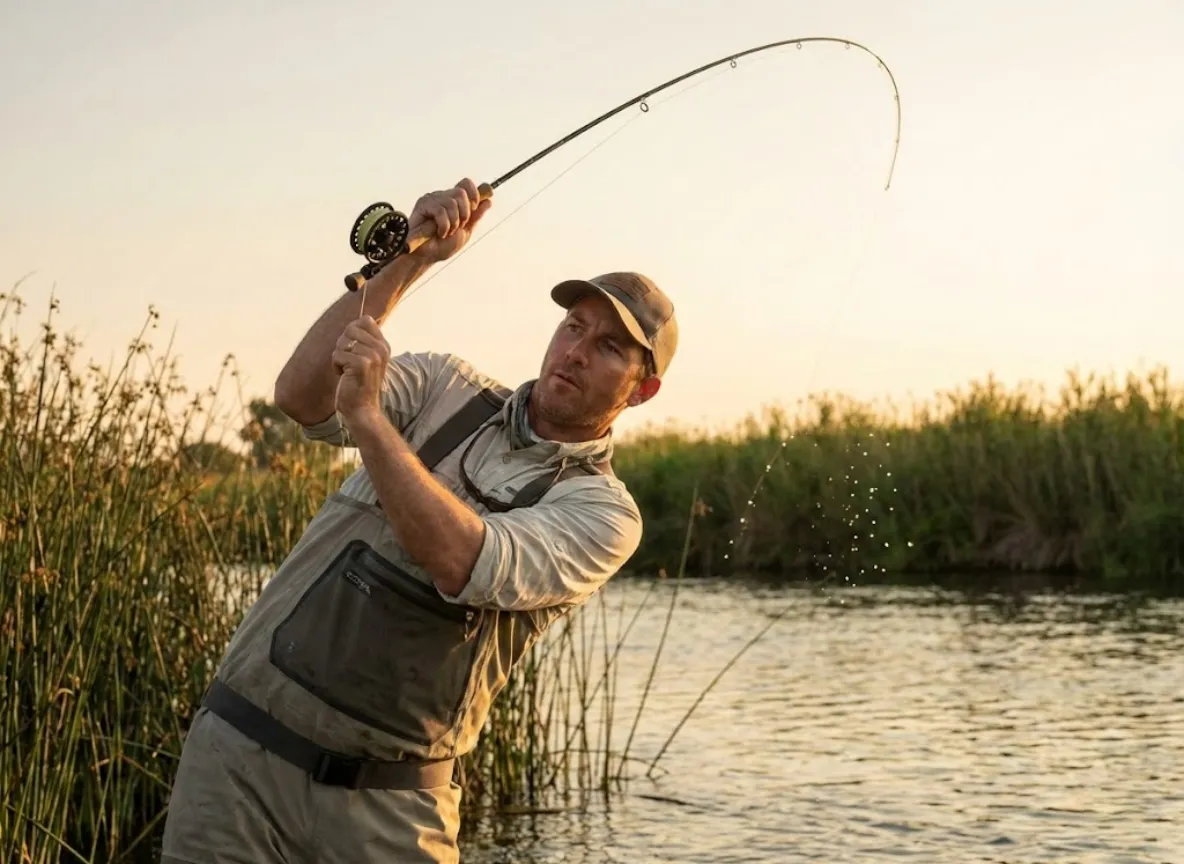
Here lies the fundamental compromise of rod design. Casting requires “Compressive Potential”—stiffness to launch a heavy lead. Fighting a fish requires “Shock Absorption”—a progressive action to cushion lunges.
Many carp anglers fall into the trap of chasing high Test Curves (e.g., a 3.75lb test curve). However, a high rating doesn’t guarantee distance if the action is wrong; it just guarantees a stiff rod. The key is identifying the “Lock-Up” point—the specific section of the blank where flexibility stops and raw casting power begins.
Shimano provides excellent technical data on how their Test Curves relate to playing power (relevant for rods like the Shimano Tribal TX2 or TX4), but the numbers only tell part of the story. You must be adept at decoding rod power vs action to ensure you aren’t buying a broom handle that will cause hook pulls under the rod tip.
Our Selection Process: How We Built This Guide
We treat gear recommendations with the seriousness they deserve because we know how expensive a mistake can be. We move beyond “shelf appeal” to analyze blank behavior under dynamic load.
Our buying guide evaluation framework scores every rod against six specific criteria: Tactile Transmission, Kinetic Recovery, Compressive Potential, Shock Absorption, Torsional Rigidity, and Ergonomics (including components like the DPS reel seat or ALPS reel seat). We synthesized technical field tests, expert meta-reviews, and long-term user feedback to identify potential failure points, such as reel seat threading or ceramic insert durability.
A note on integrity: While we may earn a commission from links in this guide, our recommendations are driven by the physics of the blank, not the payout.
The Best Carp Fishing Rods of 2026: Our Top Recommendations for Every Need
Our Top Picks for The Long-Range Precisionist
For the serious carp angler targeting big carp at range, standard tools won’t cut it. While the Shimano Tribal TX4 and Century C2 SP Command & Control are worthy contenders in the distance rods category, one blank consistently outperforms in recovery tests.

Our Top Picks for The Mobile Tactical Hunter
Mobility is vital for the modern carp angling approach. Whether you are stalking in tight swims or need compact fishing rods for transport, the market has shifted toward high-performance 10ft rods. While Nash Scope Black Ops defined this category with the retractable butt, Korda has entered the arena with a compelling option for the budget carp rod hunter.
The Verdict on Carp Rod Performance
The connection between you and the fish is defined by the quality of your blank.
Transmission is Key: If you can’t feel the lakebed, you can’t find the spots. Prioritize high modulus carbon if feature finding is your primary weakness.
Recovery Equals Distance: A rod that stops wobbling faster allows line to flow freely. Technologies like X45 and Spiral X are not just marketing buzzwords; they are investments in accuracy.
Match the Tool to the Venue: Do not buy a 3.75lb test curve casting cannon for a 3-acre pond. You will pull hooks and lose the joy of the fight.
Invest in the best carp fishing rods sensitivity permits within your budget. It is the only thing absorbing the shock when that fish makes a final lunge for the snag. Check the current prices on our top picks above to upgrade your arsenal for 2025.
FAQ – Frequently Asked Questions
What does Test Curve actually mean?
It indicates the weight to bend the tip 90 degrees relative to the butt. It is a measure of stiffness, not necessarily casting distance capability. A higher test curve means a stiffer rod, but without the right action, it won’t necessarily cast further.
Why do I keep pulling hooks out of fish under the rod tip?
Your rod is likely too stiff (high test curve) or has a fast tapered profile mandrel that doesn’t bend enough to absorb close-range lunges. When fishing at short range with powerful rods, you must loosen your clutch significantly to compensate for the lack of shock absorption.
Do 50mm butt rings really add casting distance?
Yes, but primarily when using stiff mono lines or large Big Pit fishing reels. They reduce the cone of flight, lowering the angle at which the line enters the first guide. This reduces friction during the cast, which can add vital yards to your distance.
Is High Modulus carbon always better?
Not always. While it offers better sensitivity and recovery (casting), it is more brittle and prone to breakage from impact than standard modulus carbon. If you are a rough-and-tumble carp angler who bangs rods around in transport, a slightly lower modulus blank (like those found on the Daiwa Black Widow G50 or Fox Horizon X3) might offer better durability.
Risk Disclaimer: Fishing, boating, and all related outdoor activities involve inherent risks that can lead to injury. The information provided on Master Fishing Mag is for educational and informational purposes only. While we strive for accuracy, the information, techniques, and advice on gear and safety are not a substitute for your own best judgment, local knowledge, and adherence to official regulations. Fishing regulations, including seasons, size limits, and species restrictions, change frequently and vary by location. Always consult the latest official regulations from your local fish and wildlife agency before heading out. Proper handling of hooks, knives, and other sharp equipment is essential for safety. Furthermore, be aware of local fish consumption advisories. By using this website, you agree that you are solely responsible for your own safety and for complying with all applicable laws. Any reliance you place on our content is strictly at your own risk. Master Fishing Mag and its authors will not be held liable for any injury, damage, or loss sustained in connection with the use of the information herein.
Affiliate Disclosure: We are a participant in the Amazon Services LLC Associates Program, an affiliate advertising program designed to provide a means for us to earn advertising fees by advertising and linking to Amazon.com. As an Amazon Associate, we earn from qualifying purchases. We also participate in other affiliate programs and may receive a commission on products purchased through our links, at no extra cost to you. Additional terms are found in the terms of service.