In this article
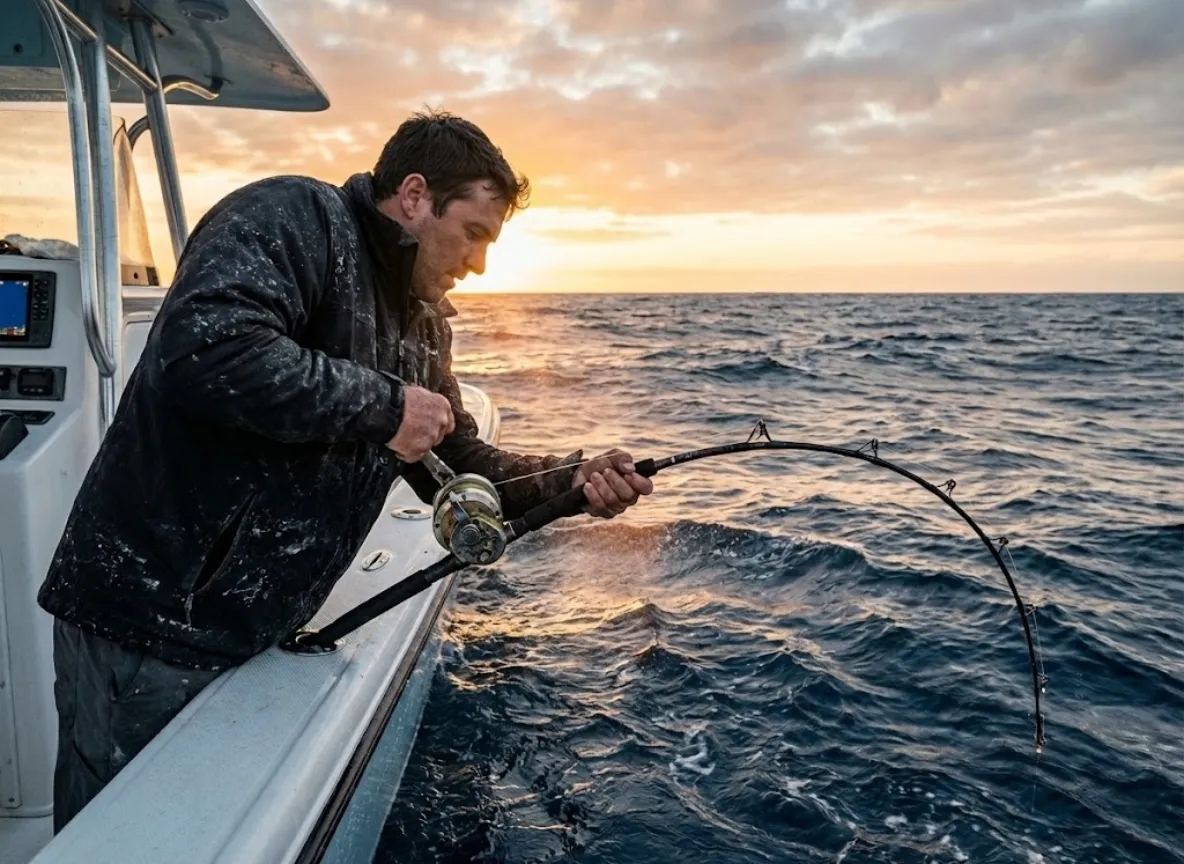
The braided line goes slack sixty feet down. It isn’t a tug, a pull, or a violent shake—it is simply the sudden absence of weight where weight should be. In this split second, the jig hasn’t hit the bottom; it has been inhaled.
This is the paradox of jigging. The most violent strikes often happen when you have the least contact with the lure.
As a guide who has spent countless hours watching novices wait for a distinct “thump” that never comes, I can tell you that mastering this technique requires more than just dropping a weight. It demands a synchronization of biology, physics, and muscle memory to trigger a predatory reflex in a fish that isn’t even hungry.
In this guide to jigging for beginners, we will move past the guesswork of passive bait soaking. We will explore how to manipulate predator biology through active lure presentation, select gear based on physics rather than brand names, and master the visual discipline needed to detect bites you cannot feel.
What is the Biological Mechanism Behind Jigging?

The biological success of jigging relies on exploiting the “dying baitfish” signature: a rapid upward burst followed by a chaotic, helpless fall.
Why do predatory fish strike a falling object?
Predators are biologically programmed efficiency machines. They will often ignore a healthy, swimming baitfish because the energy cost of the chase outweighs the caloric reward. However, they rarely pass up a target that signals vulnerability.
Jigging hacks this instinct through mimicry. The upward motion mimics prey fleeing in panic, while the “Drop” mimics the loss of equilibrium. The most critical moment is that erratic flutter during the free-fall. It signals to the predator that the prey is injured and helpless.
This technique is effective even in low visibility because it targets the lateral line system. Fish use this sensory organ to detect pressure waves and vibration in the water.
Recent studies on the lateral line system reveal how fish detect hydrodynamic wakes, explaining why a jig doesn’t need to be seen clearly to be eaten. The erratic vibration triggers the Mauthner cells in the fish’s brainstem, causing a reaction strike that bypasses the fish’s hunger state entirely.
However, understanding the biology is only the first step. To execute this presentation, you need to understand how fish vision and sensory systems work in conjunction with the specific tools capable of transmitting these signals deep underwater.
How Do I Select the Right Gear System?
To effectively work a jig, you must prioritize rod “recoil” and line diameter over raw lifting power.
Why is rod ‘recoil’ more important than power?
Recoil is the rod’s ability to store energy on the downstroke and release it on the upstroke, springing the jig upward without physical exertion from the angler.
Most traditional fishing rods act as levers designed to pull against a fish. Jigging rods, particularly those for slow jigging or SPJ, act as springs.
For deep water techniques, the rod must be “Parabolic.” This means it bends deep into the blank, storing the energy generated by the reel crank. If the rod is too stiff, often called a fast action rod, it won’t load properly, and the vertical jig will jerk unnaturally rather than dance. If it is too soft, the jig won’t move at all.
Conversely, for freshwater applications like Walleye or Bass fishing, the requirement flips. Here, mastering the mechanics of rod power vs action means looking for an “Extra-Fast” tip to aggressively snap the jig off the bottom structure.
The rod ratings for this style of sport fishing usually refer to “Jig Weight” (e.g., Max 200g) rather than line strength. This gram rating tells you the limit of the rod’s ability to recoil effectively.
Pro-Tip: When testing a slow pitch rod in a shop, do not pull down on the tip. Instead, hold the handle and bounce the tip upward. You are looking for a crisp, instant return to straightness. If it wobbles back and forth before stopping, it’s too “mushy” for technical jigging.
While specific rod physics are often discussed in tackle shops, even NOAA guidelines on sustainable fishing gear reinforce the importance of matching tackle to the target species to reduce exhaustion and ensure ethical catch rates.
How does line diameter dictate depth control?
Line diameter dictates the amount of water drag on your setup; thinner line cuts through current to maintain a vertical presentation, which is essential for lure action.
Jigging requires a “Direct Drive” connection. Monofilament line stretches up to 30%, which absorbs your rod movements and deadens the action of the lure deep underwater. Braided line (or Superbraid) is mandatory due to its zero-stretch properties and sensitivity.
However, strength isn’t the only factor. Thinner PE line prevents “Scope Out.”
Scope out happens when the current pushes against thick line, lifting your jig weights away from the bottom and the strike zone. To combat this, experienced jiggers use the Japanese PE rating system to standardize diameter.
Because the line is thin, your connection to the leader is a weak point if done incorrectly. Bulky knots will damage the small guides on lightweight jigging rods. Learning the FG Knot or PR Knot is non-negotiable for joining your main line to a Fluorocarbon leader.
When selecting the best braided fishing line, prioritize a smooth, round profile that will slice through the water column, keeping you vertically stacked over the fish.
How Do I Master the Rhythms of Jigging?
The rhythm of jigging changes based on the environment: a synchronized mechanical dance for saltwater and an aggressive, sharp snap for freshwater.
What is the ‘One-Pitch-One-Jerk’ cadence?
This cadence is the foundational rhythm of mechanical jigging, synchronizing one full rotation of the reel handle with one explosive lift of the rod.
This is the heartbeat of Slow Pitch Jigging, effective on species like Snapper, Grouper, Amberjack, Kingfish, and Samson Fish.
- The Setup: Point your rod tip toward the water (6 o’clock) with your reel handle at the top (12 o’clock). An overhead reel (conventional) is preferred over a spinning reel here for better torque.
- The Action: Explosively lift the rod handle to horizontal while simultaneously turning the reel handle exactly one full rotation (One Wind, One Jerk).
- The Stop: Abruptly stop the rod at the top.
The magic happens during The Pause. After the pitch, hold the rod still. This allows the rod tip to unload, pitching the knife jig or spoon upward before it stalls and flutters.
Variations like “Half-Pitch” (1/2 reel turn) allow you to target lethargic fish by keeping the lure in a tighter zone. Understanding the durability differences in saltwater vs freshwater gear is vital here, as this repetitive motion puts immense stress on reel gears, requiring high-quality internals.
How does freshwater ‘Snap Jigging’ differ?
Freshwater snap jigging relies on a sharp, aggressive wrist snap to rip the jig 1-2 feet off the bottom, provoking reaction strikes from structure-oriented fish.
Commonly used for Walleye, Smallmouth Bass, Pike, Whitefish, and Lake Trout, this technique is less about rhythm and more about provocation.
Instead of a reel-driven lift, use your wrist. Snap the rod tip upward aggressively, then immediately drop the tip to create slack. This causes the bucktail jig or soft plastic worm to hop violently and then crash back down.
The Bottom Contact is your trigger. The distinct “clack” of the jig hitting rock shelves or ledges often alerts nearby fish.
Pro-Tip: Switch to Tungsten jigs for freshwater snapping. Tungsten is denser than lead, transmitting the “feel” of the bottom composition (mud vs. gravel vs. rock) much more clearly through the rod blank.
This technique creates a pendulum effect when applying these tactics in walleye fishing, allowing you to cover water horizontally while maintaining a vertical trigger. You might switch to a football jig for dragging across deeper drop-offs, or use a swim jig to skirt along weed lines and submerged logs.
How Do I Detect a Bite on the Drop?
Bite detection in jigging is a visual skill, not a tactile one; you must learn to identify irregularities in the line’s fall rather than waiting to feel a tug.
Why is a slack line necessary for a strike?
A slack line is required because it allows a center-balanced jig to flutter laterally; tension acts as a tether that straightens the jig, killing the action.
This leads to the “Slack Line Paradox”: You need slack to get the bite, but slack disconnects you from feeling the bite.
If you maintain a tight line, the jig acts like a pendulum, swinging unnaturally. To solve this, you must transition from a “Tactile Angler” to a “Visual Angler.” Line watching becomes your primary sensor.
The Bow is your indicator. As the rod tip drops, a curve or bow in the line forms above the water. Your eyes must never leave the point where that line enters the water.
This level of focus is impossible if you are blinded by the sun. Using the best polarized sunglasses to cut glare is a functional necessity for reading these subtle movements on the water’s surface.
What visual anomalies indicate a fish has taken the lure?
A fish has likely taken the lure if the line stops falling early (“The Halt”), speeds up unexpectedly (“The Speed Up”), or twitches subtly (“The Tick”).
- The Halt: If you are fishing in 100 feet of water and the line goes slack at 60 feet, a suspending fish has inhaled the jig.
- The Speed Up: If the line suddenly shoots out or the bow straightens rapidly, a fish has grabbed the lure and is swimming away.
- The Tick: A subtle “jump” in the slack line often indicates a suction bite where the fish flared its gills to inhale the jig.
When you see any of these anomalies—a classic strike on the drop—reaction time is everything.
Unlike topwater fishing where the strike is explosive and visible, or bait fishing where the rod loads up, here you must anticipate. You must reel rapidly to pick up the slack and drive the hook home. Perfecting the mechanics of how to set the hook involves a fluid motion of reeling until you feel weight, then striking firmly.
What Are the Ethical & Safety Standards for Jigging?
Deep water jigging requires specific tools to manage barotrauma and material toxicity to ensure the fishery remains sustainable.
How do I manage barotrauma in deep-water catch and release?
Barotrauma is managed by using a descending device to recompress the fish at a safe depth, allowing its swim bladder to re-equilibrate naturally.
Fish brought up from depths greater than 50-60 feet suffer from rapid pressure changes. The gases in their body expand, causing the swim bladder to bulge, often pushing the stomach out of the mouth.
Releasing a fish in this state is a death sentence; they cannot swim down and will float on the surface.
While some anglers attempt “venting” (puncturing the bladder with a needle), this is difficult for beginners and carries a high risk of infection. The ethical solution is a Descending Device (like a SeaQualizer), which clamps the fish and releases it only when it reaches a specific depth.
Additionally, we must consider what we leave behind. The U.S. Geological Survey (USGS) outlines the environmental risks of lead fishing tackle in our waterways.
Switching to Tungsten is not only a performance upgrade but a conservation effort. Tungsten is non-toxic and, because it is denser, allows for smaller profiles that sink faster.
Being a complete angler means understanding the protocols for fixing barotrauma in fish and ensuring that the fish you release has a high probability of survival.
Summary of Tactics
Jigging is a shift in mindset. It moves you away from the passive hope of soaking bait and into the active lure presentation of physics.
- Physics over Luck: You are using drag and gravity to mimic vulnerable prey.
- Gear Synergy: Success requires a rod that “recoils” and PE line that cuts water.
- Trust the Slack: The most critical skill is learning to watch the line for “The Halt” during the drop.
- Responsibility: Deep water access requires barotrauma mitigation tools.
The next time you are on the water, don’t just drop your line. Visualize the flutter, watch the bow, and be ready for the moment the weight disappears.
Ready to build your loadout? Explore our comprehensive Fishing Gear Reviews to find the specific rod and reel pairings that match your local waters.
FAQ – Frequently Asked Questions
What is the 1 gram per foot rule in jigging?
It is a general heuristic for Slow Pitch Jigging suggesting you use 1 gram of jig weight for every 1 foot of water depth (e.g., 100g jig for 100ft). However, you must add weight if there is a strong current or fast drift to maintain vertical contact.
Can I use a regular spinning rod for jigging?
For shallow freshwater snap jigging, yes, a fast action rod is often preferred. However, for deep saltwater or Slow Pitch Jigging, a standard spinning rod lacks the parabolic recoil needed to work the jig properly and will lead to rapid angler fatigue.
Why do I keep losing fish while jigging?
The most common cause is a stiff rod or a drag that is too tight; jig hooks (assist hooks) are often smaller and can tear out if the fight is too aggressive. Alternatively, you may be striking too late on the drop—watch your line closely for the halt.
What is the difference between Slow Pitch and Speed Jigging?
Speed Jigging uses a high speed pump-and-wind motion to mimic fleeing prey, targeting aggressive pelagics like Amberjack. Slow jigging uses the rod’s recoil and the jig’s flutter to target passive or non-feeding fish near the bottom.
Risk Disclaimer: Fishing, boating, and all related outdoor activities involve inherent risks that can lead to injury. The information provided on Master Fishing Mag is for educational and informational purposes only. While we strive for accuracy, the information, techniques, and advice on gear and safety are not a substitute for your own best judgment, local knowledge, and adherence to official regulations. Fishing regulations, including seasons, size limits, and species restrictions, change frequently and vary by location. Always consult the latest official regulations from your local fish and wildlife agency before heading out. Proper handling of hooks, knives, and other sharp equipment is essential for safety. Furthermore, be aware of local fish consumption advisories. By using this website, you agree that you are solely responsible for your own safety and for complying with all applicable laws. Any reliance you place on our content is strictly at your own risk. Master Fishing Mag and its authors will not be held liable for any injury, damage, or loss sustained in connection with the use of the information herein.
Affiliate Disclosure: We are a participant in the Amazon Services LLC Associates Program, an affiliate advertising program designed to provide a means for us to earn advertising fees by advertising and linking to Amazon.com. As an Amazon Associate, we earn from qualifying purchases. We also participate in other affiliate programs and may receive a commission on products purchased through our links, at no extra cost to you. Additional terms are found in the terms of service.