In this article
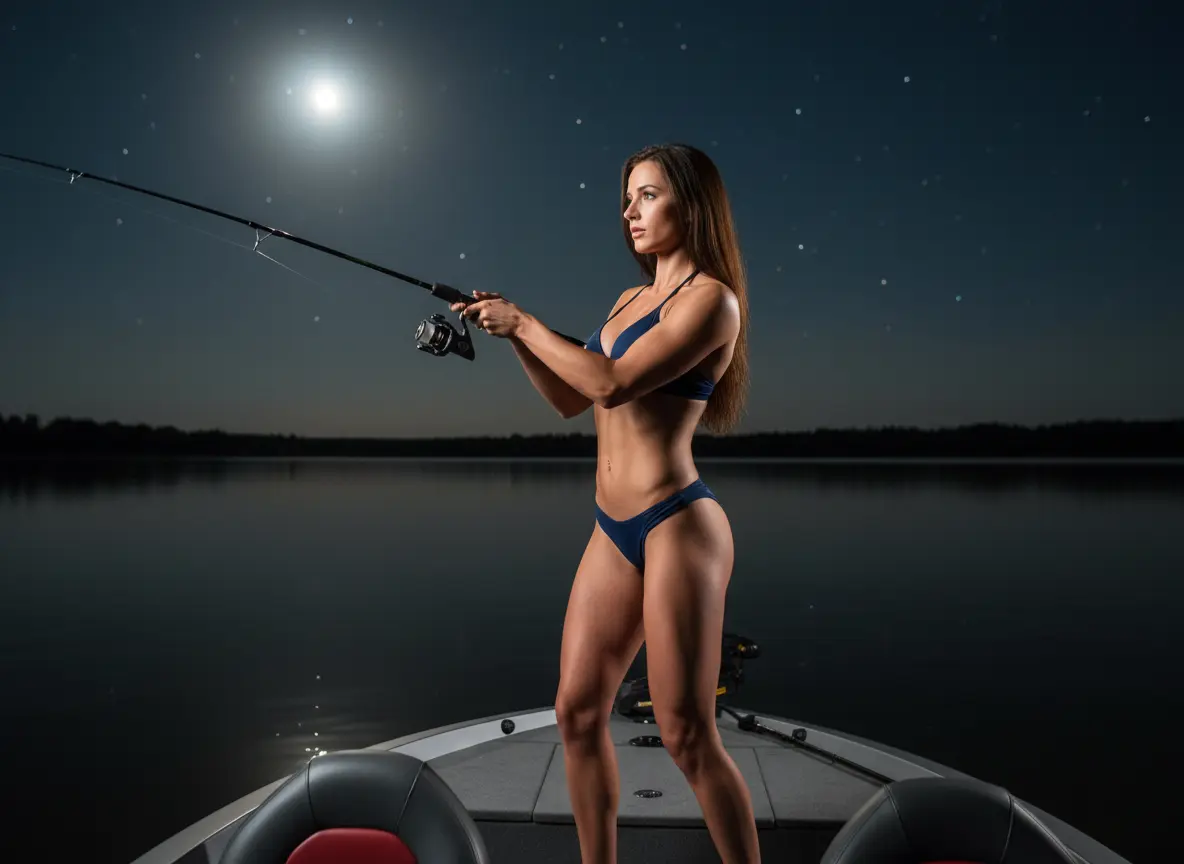
The world gone silent, the daytime chaos replaced by the gentle lap of water against the hull and a sky full of stars. The air is cool, and your senses are electric with anticipation. Suddenly, a violent thump telegraphs up your line—an explosive strike that shatters the quiet. This is the nocturnal advantage, one of the most rewarding fishing experiences an angler can have. This guide is your step-by-step blueprint to move beyond just fishing in the dark and master the science-backed discipline of night fishing, turning theoretical knowledge into the instinct that lands bigger, more aggressive fish.
Our journey tonight will be one of transformation. We’ll start by exploring the incredible science of the night bite, learning how freshwater and saltwater fish alike use their senses to hunt in total darkness. We will then cover the unbreakable rules of safety, mastering the protocols that ensure every trip ends with a story to tell, not a statistic to regret. From there, we’ll assemble the essential night fishing gear, from the right red light headlamps to the perfect lure profile. Finally, we’ll execute proven tactics, like fishing the elusive “shadow line” and mastering knot tying for night conditions. You begin this journey curious, perhaps a little intimidated by the dark. You will finish it a confident, strategic predator of the night.
Why Fish at Night? Unlocking the Science of the Noctual Advantage

To truly master the night, you have to think like the fish that own it. Success after sunset isn’t about luck; it’s about understanding the fundamental biological and environmental shifts that occur when the lights go out. This is the science that turns a hopeful cast into a deliberate, tactical strike, especially during the warmer months from late spring through early fall when many species are most active and you’re beating the heat of daytime fishing.
How Do Fish Hunt Using Senses Beyond Sight?
In the black of night, sight becomes a secondary tool. The true predators are those who have mastered their heightened senses, navigating a world of vibration, pressure, and scent. For them, the darkness isn’t a handicap; it’s a hunting ground perfectly suited to their reliance on scent and vibration. A fish’s primary tool for this is its lateral line system, a remarkable network of sensory organs that function as a form of “distant touch.” These organs detect the faintest low-frequency pressure waves, allowing a fish to perceive the size and speed of your lure. This is why lure selection is so critical. You need vibration-based lures that “move a lot of water,” like a crankbait with a wide wobble, or sound-based lures with rattles on them. These don’t just attract a fish; they announce their presence. Alongside this, the sense of smell is magnified. With fewer visual cues, scent becomes a powerful homing beacon, making live bait or scented artificials exceptionally effective for species from bottom-dwelling Catfish targeting chicken liver to ambush predators like Bass and Crappie.
The lateral line is incredibly sensitive, but its effective range is often just one or two body lengths, underscoring the need for precise presentations and a slow retrieval speed. The system is specifically tuned to the 1-200 Hz frequency range, which is why lures that produce a rhythmic “thump” are often more effective for initial detection. Think of a slow-rolled spinnerbait—it creates a distinct, easy-to-track vibration that a predator can lock onto. Similarly, a bulky jig hopped along the bottom creates a significant pressure wave. Appealing to these non-visual senses first is the key. While many predators like Bass and panfish rely on this sixth sense, some, like Walleye, have a visual superpower that gives them an unparalleled edge. This understanding, supported by studies on nocturnal fish foraging, is what allows an angler to choose the right tools. The vibration of that lure translates directly into bite detection through your line, making a low-stretch braided line a superior choice.
How Does Specialized Vision Give Some Predators an Edge?
Even in the darkest conditions, vision can still play a decisive role, especially for predators who have evolved for low-light dominance. Species like Walleye and speckled trout possess a biological mirror behind their retina called the tapetum lucidum. This structure reflects light back through the eye, essentially doubling its light-gathering ability. This adaptation gives them a profound predatory advantage over prey, making them the undisputed kings of the nocturnal food chain. For the angler, this science shifts our thinking about lure appearance. In low light, contrast is far more important than color. This is why solid dark-colored lures—especially black or purple lures—are so effective. When viewed from below, they create the sharpest, most visible silhouette against the lighter ambient light of the sky.
This is a complete reversal from most daytime fishing, where mimicking prey color is often critical. At night, the goal is simpler: be seen as a solid, edible shape. A tactical example makes this clear: even on a moonless night, the stars provide some light. A black lure, like a pitch black worm, blocks this light completely, creating a distinct negative space that an ambush predator’s eye is evolved to detect. This effect is even more pronounced in stained or muddy water, making a sharp silhouette the only reliable visual cue. Understanding this simple principle is the “why” behind the age-old advice to “use dark lures at night.” But a fish’s willingness to hunt, even with these sensory advantages, is often dictated by powerful cues from the world around them. This is a core tenet of Walleye biology and identification, and understanding it helps connect the dots between the fish’s anatomy and a lure’s profile and water displacement.
Pro-Tip: Before making your first cast into a dark area, take a full minute to let your eyes adjust. Turn off your headlamp and just observe. You’ll be amazed at how much detail you can pick out, from subtle surface disturbances to the faint glow of the sky, giving you a much better feel for the water you’re about to fish.
What Environmental Triggers Ignite the Night Bite?
A fish doesn’t decide to feed in a vacuum. Its world is governed by powerful environmental triggers. The most profound of these are lunar phases and tidal movements. The strong gravitational pull during full moon nights, or even on a dark night with a new moon, creates stronger tides. This moving water, whether an incoming or falling tide, acts as a “conveyor belt for food,” pulling baitfish and crustaceans from hiding and forcing them through channels where predators like Redfish, Snook, and even Tarpon lie in wait. Water temperature monitoring is another critical driver. Cooler night temperatures provide a thermal refuge, stimulating activity in fish that were lethargic during the day. Finally, man-made triggers like the dock lights and bridge lights that illuminate areas from Tampa Bay to the Florida Keys concentrate the entire food chain. Insects draw baitfish, and baitfish draw game fish.
While popular, solunar theory is less certain than the moon’s direct, physical effect on tides. A tactical example is a falling tide flushing live shrimp from a marsh; this is prime time to target redfish waiting at the mouth of a creek. The metabolic reason for temperature’s influence is simple efficiency: as water cools, a fish can operate more comfortably, dedicating more energy to foraging. However, there’s a nuance to artificial light. Recent studies on the behavioral responses of fish to different wavelengths show that prolonged exposure to blue-spectrum light can induce stress. This is why many anglers prefer underwater fish-attracting lights that use a green LED, as green light travels farther underwater without being as harsh. This powerful nocturnal advantage comes with a serious responsibility, as the darkness that empowers fish can pose significant risks to the unprepared angler. Understanding these environmental cues is the key to knowing how the moon’s hidden clock can turn random bites into predictable strikes.
| Nocturnal Lighting: A Guide to Color & Impact | ||
|---|---|---|
| Light Color (Wavelength) | Observed Effect on Fish Behavior | Target Species Attracted |
| Green (approx. 550-560 nm) | Strongly attracts zooplankton and baitfish. Preferred by some species like yellow catfish. | Crappie, Catfish, various baitfish |
| White (Broad Spectrum) | Effective at attracting baitfish but can be overly bright, potentially spooking wary predators. | Crappie, various baitfish |
| Blue (approx. 470-480 nm) | May induce stress and anxiety-like behaviors (thigmotaxis) in fish with prolonged exposure. Use with caution. | Not recommended for prolonged use |
| Red (approx. 620-630 nm) | Minimally visible to most fish species. Preserves angler’s night vision and is least likely to spook fish. | Not used for attraction; used for angler utility |
| Amber/Orange (560+ nm) | Long-wavelength light required by FWC in coastal Florida to prevent sea turtle disorientation. | N/A (Regulatory Compliance) |
What Are the Unbreakable Rules of Night Fishing Safety?
We’ve explored the advantage darkness gives the fish; now we must address the risks it presents to us. This is the most critical part of our journey. Night fishing safety isn’t a suggestion; it’s a discipline. The water is unforgiving of mistakes, and the darkness leaves no room for error. Framing our approach with the utmost seriousness and relying on verifiable data is what builds the habits that ensure we come home every single time.
Why Is Night Boating Inherently More Dangerous?
The stark reality is backed by hard data. According to U.S. Coast Guard Recreational Boating Statistics, the hours between midnight and 2:30 a.m. have a disproportionately high rate of fatal boating accidents. The darkness critically exacerbates the Coast Guard’s “Fatal Five” contributing factors: Operator Inattention, Improper Lookout, Operator Inexperience, Machinery Failure, and Navigation Rules Violations. A submerged log that’s an easy-to-spot nuisance during the day becomes a hull-breaching disaster at night. The most tragic part is that most of these fatalities are preventable. The powerful statistic that a vast majority of drowning victims were not wearing life jackets tells a story we must all learn from.
The impact of darkness on our senses is profound. Reduced visibility eliminates the visual cues we rely on to judge distance, speed, and the orientation of other vessels or hazards. Beyond just what we can’t see, there are real physiological challenges like spatial disorientation and night blindness that can affect even the most experienced operators. This is why reduced speed is not just a recommendation but an absolute necessity; it is the single greatest tool you have to increase your reaction time. A “safety-first” mindset, which includes 100% PFD use after dark, is the absolute foundation of responsible night angling. This philosophy begins long before you leave the dock, starting with the vessel itself, ensuring you match hull design, construction material and layout to the conditions you expect to face.
Pro-Tip: Switch your headlamp to its red-light setting. Red light has a longer wavelength that doesn’t trigger the constriction of your pupils, allowing you to preserve your natural night vision for spotting shoreline contours, other boats, and subtle signs of fish activity.
What Belongs on Every Angler’s Pre-Trip Safety Checklist?
Understanding the data is the first step; turning that understanding into an ironclad routine is what keeps you safe. There are universal, non-negotiable rules for any night angler. First, never go solo; always use the buddy system or file a detailed float plan. Second, carry multiple light sources, including a primary headlamp, a waterproof backup flashlight, and even emergency strobes or glow sticks. Third, stay connected and prepared with a fully charged mobile phone in a waterproof case and a well-stocked, easily accessible first-aid kit. Finally, know your water. Scout your chosen location—familiar water is always best—during daylight to identify potential hazards like steep drop-offs, submerged rocks, or unstable banks that are completely invisible at night. For shore anglers, this also means wearing sturdy footwear and being aware of nocturnal wildlife like gators, and always packing bug spray with DEET.
For those on a boat, the focus on vessel readiness is even more acute. A pre-trip check of all running lights and anchor lights isn’t just a good idea; it’s mandatory. You must confirm that all required safety gear is on board and accessible, including PFDs for every passenger, visual distress signals, and a sound-producing device. In the dark, you cannot rely on visual landmarks. A GPS/nav lights system with pre-plotted routes is an invaluable tool. With safety protocols like these established, based on resources like the Florida Fish and Wildlife Conservation Commission (FWC) boating regulations, you can now turn your attention to the specialized tools that transform a dark, frustrating night into a successful one. This level of preparation is universal, mirroring the situational awareness needed to build a step-by-step first-day plan for any new environment.
How Do You Execute Proven Nocturnal Techniques?
With a deep respect for safety established, we can now translate our knowledge into action. Mastering the night is about learning a few core tactics and skills that apply across nearly all species and environments after dark. These are the techniques that produce consistent, non-stop action.
What Is a “Shadow Line” and How Do You Fish It?
One of the most productive and consistent places to find fish at night is the “shadow line.” This is the distinct light/dark edge between an artificially lit area—like lit docks or bridge lights—and the surrounding darkness. It is the primary ambush zone for nocturnal predators. The dynamic is simple but incredibly effective: positively phototactic organisms like insects and zooplankton are drawn into the light. This, in turn, draws in baitfish to feed on them, creating a highly concentrated “kill zone.” The apex predators, however, often exhibit negative phototropism, preferring to hold just inside the darkness on the outskirts of the light ring, using the structure around docks, bridges, or mangroves for concealment. The correct tactical execution is to position yourself in the darkness and cast past the light, into the unlit water.
Your retrieve path is critical: the lure should be brought back through the shadow line and across the illuminated area. This presentation perfectly mimics a vulnerable baitfish moving from the perceived safety of the dark into the brightly lit danger zone, provoking an aggressive predatory response. Species like Snook and Largemouth Bass are classic ambush predators found on these edges. A common beginner mistake that spooks the very game fish you’re trying to catch is casting directly into the middle of the bright white light. Mastering your location is half the battle; the other half is mastering the final, critical connection to your lure. This tactical approach is a universal best practice, often referenced in educational content from agencies like Texas Parks and Wildlife fishing regulations. The key is knowing not just where to cast, but which bait to tie on and how to work it with tactics like a slow roll retrieve to trigger that instinctual strike.
How Do You Tie Essential Fishing Knots in the Dark?
There is perhaps no greater frustration in night fishing than a snapped line and the fumbling, clumsy process of re-tying tackle in the pitch black. This is where skill-building for anglers on dry land pays huge dividends on the water. The solution is to master a few strong, reliable knots that are simple enough to be tied by feel alone. Three knots will cover the vast majority of your needs: the Palomar Knot, the Improved Clinch Knot, and the Uni Knot. Their applications are straightforward: the Palomar is the go-to for connecting braided line to terminal tackle, the Improved Clinch is a classic for mono/fluoro to a hook, and the versatile Uni can be used for both terminal connections and line-to-line splices, especially when using a heavy tippet of 0x or 1x fluorocarbon line for abrasion resistance against larger fish.
What makes these knots suited for the dark is their construction. The Palomar’s simple, symmetrical process is easy to remember. The Improved Clinch’s repetitive wrapping motion becomes second nature. The Uni’s straightforward loop-and-wrap design is hard to mess up. A few practical tips will make tying in the dark even easier: use your headlamp only when absolutely necessary to preserve your night vision, give yourself a much longer tag end to work with, and always point the hook away from your hands. But the most critical step is practice. Sit at home in the light and tie these knots over and over until the motions are pure muscle memory. Mastering these three knots will cover over 90% of night fishing scenarios, building immense confidence and competence. Just as you must master your physical connection to the lure, you must also master your connection to the rules that govern the resource, like those found in the FWC fishing regulations. This foundational skill is the gateway to more advanced setups found in resources like The Angler’s Knot Matrix.
Conclusion
The secrets of the night are unlocked not by chance, but by understanding. We’ve seen that success is driven by a deep appreciation for how fish adapt to darkness, using their non-visual senses and specialized vision to become apex predators. We’ve established that safety is non-negotiable, a discipline built on redundant systems, careful planning, and adherence to proven protocols. We’ve learned that specialized gear, from red light headlamps to dark, vibrating lures, is a strategic necessity for appealing to these nocturnal hunters. And finally, we’ve seen how the mastery of core techniques, like fishing a shadow line and tying knots by feel, transforms an angler from a passive participant into a confident and effective hunter.
Your nocturnal advantage is waiting. Use this blueprint to scout a familiar local spot during the day, then plan your first expedition after dark. Share your experience and biggest takeaways in the comments below.
Frequently Asked Questions about Night Fishing
What is the best bait for night fishing?
The best bait is species-dependent, but the most effective options appeal to a fish’s non-visual senses of vibration, scent, and silhouette. This includes live bait that produces natural movement and scent, like live shrimp for Redfish or stink baits like chicken liver for Catfish. Dark-colored artificial lures with rattles or a wide, thumping action are also excellent choices.
Is night fishing better than day fishing?
While “better” is subjective, night fishing is often significantly more productive, especially during hot summer months when many game fish are less active and the water is less crowded. It is a different, more strategic approach that rewards anglers who understand the unique biological and environmental conditions after dark.
What gear do I need for night fishing?
The essential equipment includes a reliable headlamp with a red-light mode, a sensitive rod and reel setup, a selection of dark, noisy, or scented lures, and all necessary safety gear. Beyond tackle, critical gear includes redundant light sources like backup batteries, a waterproofed phone, a first-aid kit, and weather-appropriate clothing.
What are safety tips for night fishing?
The core safety principles are to always use the buddy system or file a float plan, wear a PFD, carry multiple light sources, and know your location intimately from daytime scouting. For boaters, the most critical rules are to significantly reduce speed and ensure all required navigation lights are fully operational.
Risk Disclaimer: Fishing, boating, and all related outdoor activities involve inherent risks that can lead to injury. The information provided on Master Fishing Mag is for educational and informational purposes only. While we strive for accuracy, the information, techniques, and advice on gear and safety are not a substitute for your own best judgment, local knowledge, and adherence to official regulations. Fishing regulations, including seasons, size limits, and species restrictions, change frequently and vary by location. Always consult the latest official regulations from your local fish and wildlife agency before heading out. Proper handling of hooks, knives, and other sharp equipment is essential for safety. Furthermore, be aware of local fish consumption advisories. By using this website, you agree that you are solely responsible for your own safety and for complying with all applicable laws. Any reliance you place on our content is strictly at your own risk. Master Fishing Mag and its authors will not be held liable for any injury, damage, or loss sustained in connection with the use of the information herein.
Affiliate Disclosure: We are a participant in the Amazon Services LLC Associates Program, an affiliate advertising program designed to provide a means for us to earn advertising fees by advertising and linking to Amazon.com. As an Amazon Associate, we earn from qualifying purchases. We also participate in other affiliate programs and may receive a commission on products purchased through our links, at no extra cost to you. Additional terms are found in the terms of service.