
In this article
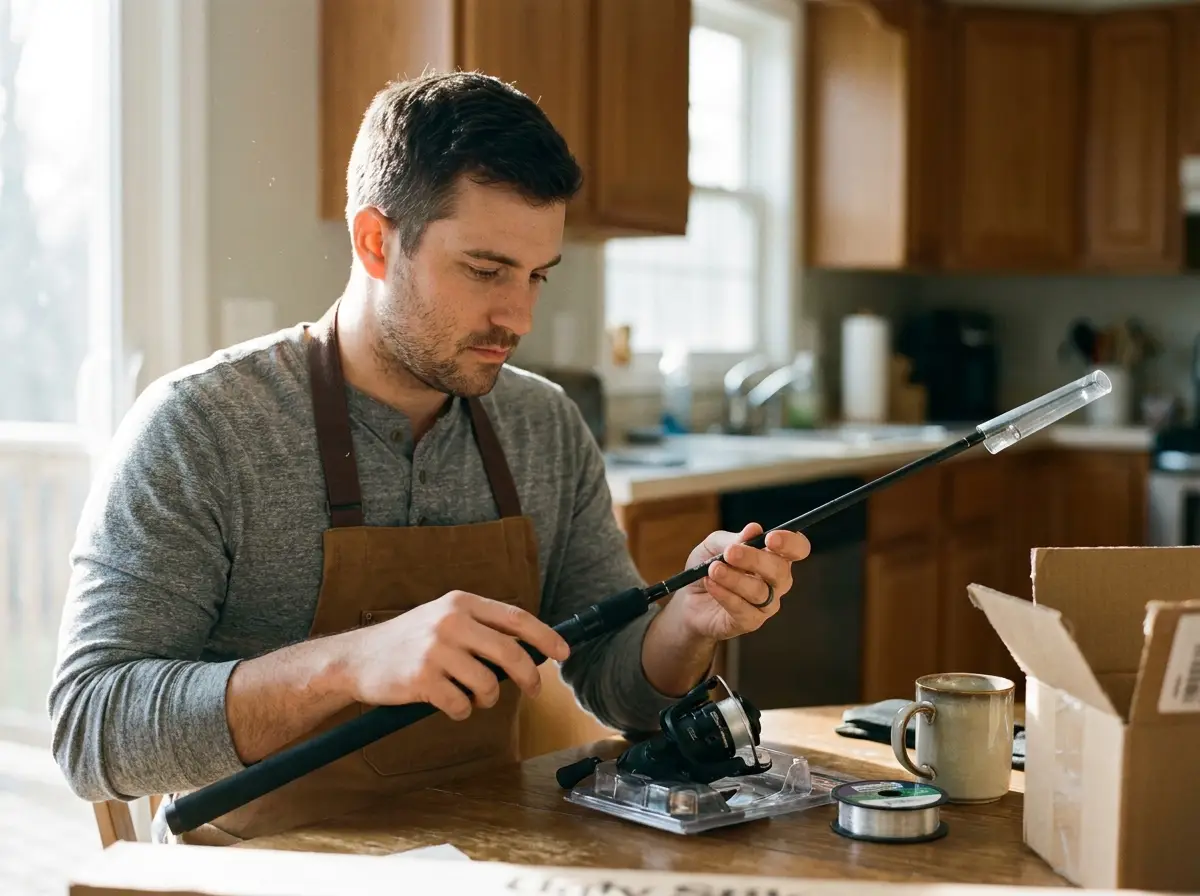
Two rod sections, a reel still sealed in its clamshell, a spool of line, and not the faintest idea what order any of it goes in. That’s where every angler starts, usually at the kitchen table the night before a trip. Here’s the honest part nobody tells you up front: you can skip half this list on day one, and the tangle that blows up on cast three isn’t bad luck, it’s how the line went on. This guide walks the whole setup start to finish, plus the one rotation trick that keeps your line from twisting into a wind knot before you’ve caught a thing.
Know Your Rod and Reel Before You Touch a Thing
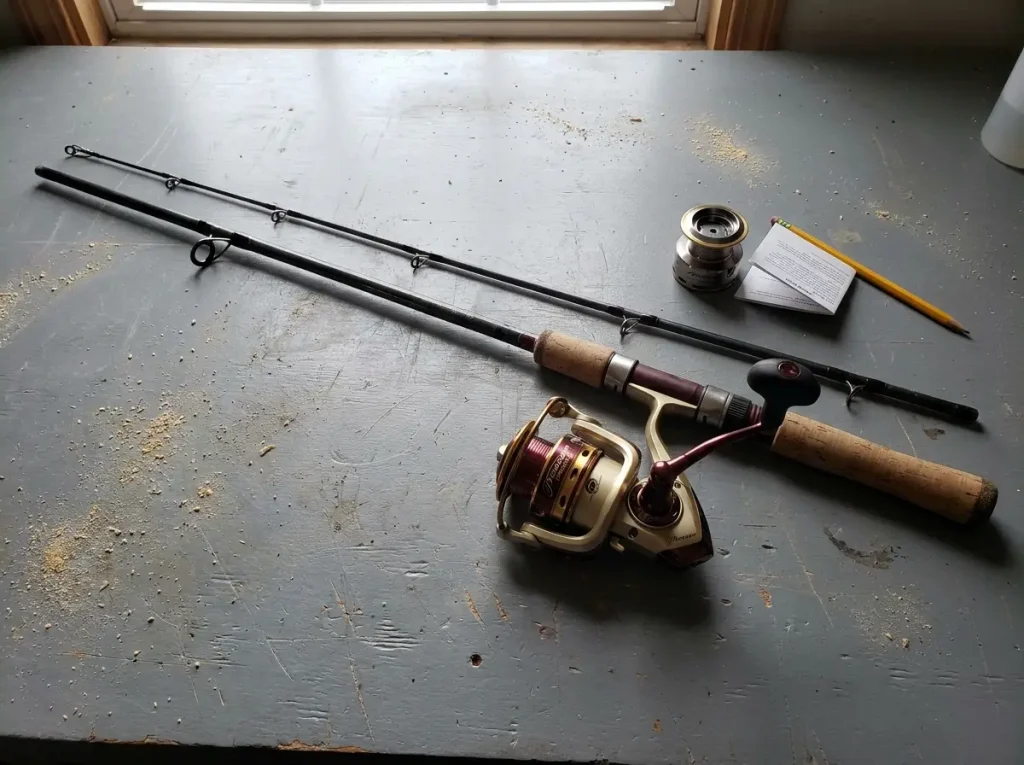
Before you thread a single guide, ask the question almost no fishing guide asks out loud: do you even need to do this yourself? For a lot of beginners the answer on trip one is no, and that’s not a cop-out.
The Honest Shortcut Nobody Sells You
A pre-spooled factory combo ships with the reel already mounted and line already on it. That skips choosing a reel, matching line to the rod, and spooling the line, which is half of everything below. The Ugly Stik GX2 spinning combo is the classic budget version of this, a 6’6″ medium-light rod with the reel bolted on and serviceable mono ready to fish. Want one notch up, still pre-matched, the Pflueger President XT combo is the smoother-drag version of the same idea.
There’s no shame in it. You do not need a two-hundred-dollar setup to catch your first bluegill, and a balanced combo beats a pile of mismatched parts every time. If you want the full case for starting with one combo instead of buying piece by piece, we made it in why your first fishing setup needs just one combo.
What You’re Actually Holding
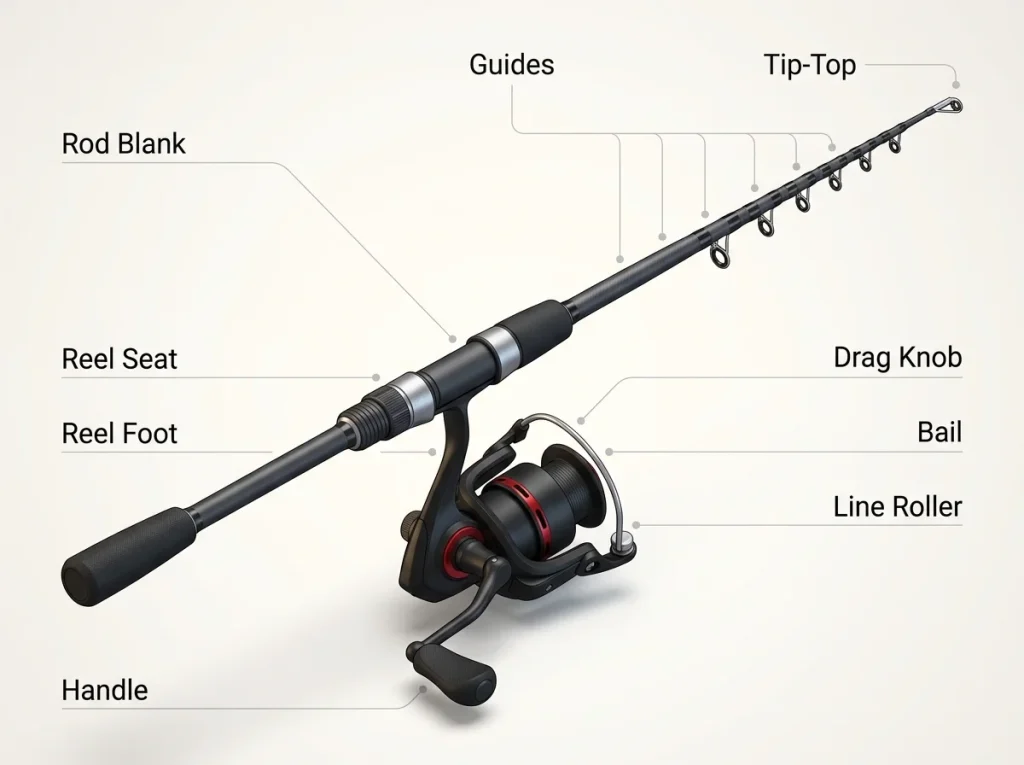
A spinning setup has two pieces. The rod is the long part: the rod blank itself, the rod guides running down it, and the reel seat near the handle where the reel clamps on. The spinning reel is the crank-and-spool part, and it hangs underneath the rod, not on top. If you want the full tour of every part from blank to tip-top, we labeled all nine in 9 parts of a fishing rod and what each one does. Two specs printed on the blank are worth knowing before you buy: rod power is how much force it takes to bend the rod, and rod action is where along the blank it bends. A medium power, fast action rod handles most of what a beginner targets, while a light power rod is built for panfish and finesse.
Buying the Reel Separately
If you’d rather buy a reel on its own, the magic number is reel size 2500. That’s the all-purpose beginner size, and it handles panfish, bass, and trout without thinking about it. The Shimano Sedona FI 2500 is the reference here, the cheapest Shimano that still runs HAGANE gearing, and the Pflueger President reel in a size 30 or 35 is the value pick with a drag smooth enough to actually learn on. Whether a spinning reel is even the right first reel for you is its own question, and we walked through it in why your first reel isn’t always a spinning reel.
Pick the Right Line for Your First Spool
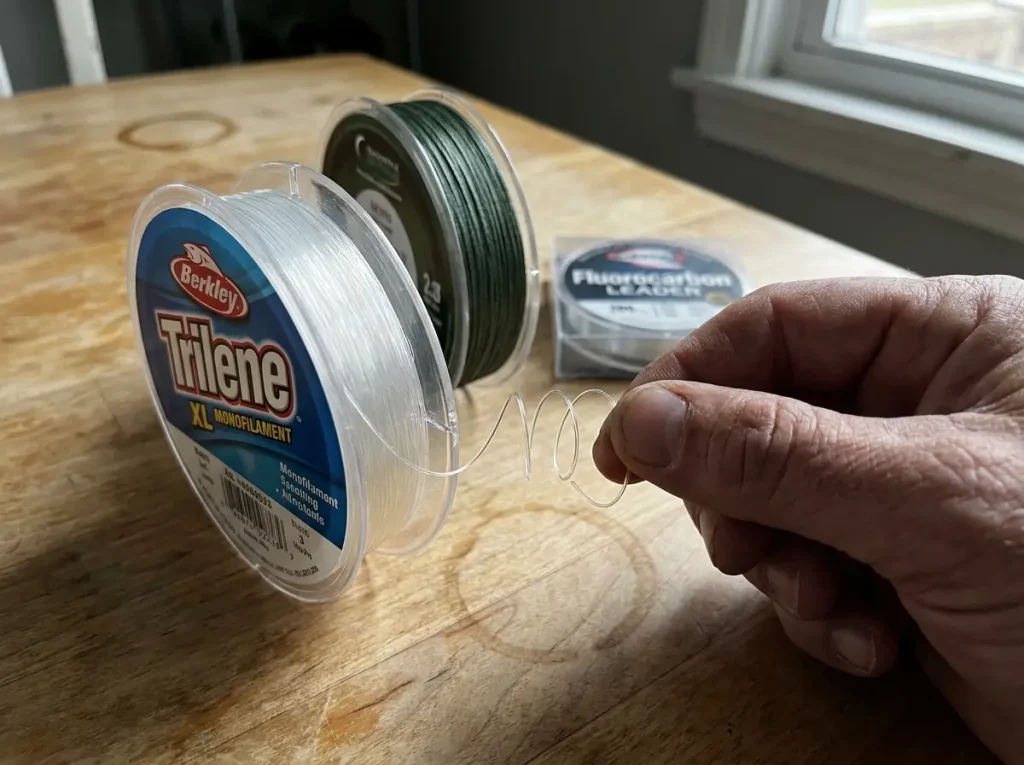
Walk down the line aisle and there are forty choices staring back. You need one.
Start With Monofilament, Full Stop
For your first spool, run 8 to 10 pound monofilament. Mono stretches, which forgives your timing on the hookset, it floats, and it’s the cheapest line to learn on. One spool of Berkley Trilene XL in 8 pound covers panfish, bass, and trout on day one with low memory that won’t fight you off the reel.
Mono vs Fluorocarbon vs Braid in Plain English
Here’s the whole comparison without the marketing. Monofilament is the learner line, period. Fluorocarbon disappears underwater, which makes it a great clear-water leader, but it’s stiff and pricey as a main line for a beginner; a spool of Berkley Vanish fluoro lives in the tackle box for leaders, not on the reel yet. Braided line has zero stretch and casts like a dream once you’re dialed in, but it punishes beginner mistakes and needs a leader tied on. If you’re set on braid, KastKing SuperPower Braid is the budget option, just pair it with a mono or fluoro leader. The honest move for trip one is mono, and we make the full argument in what fishing line for beginners, mono hands down.
Match the Line to the Rod
Every rod prints its line rating, its pound test range, right above the handle, something like “6 to 12 lb.” Stay inside that window. Go heavier and the rod won’t load and cast right; go way lighter and you’ll snap off on the hookset. Eight-pound mono sits comfortably in the middle of most beginner rod ratings, which is part of why it’s the default.
Put the Rod Together Right
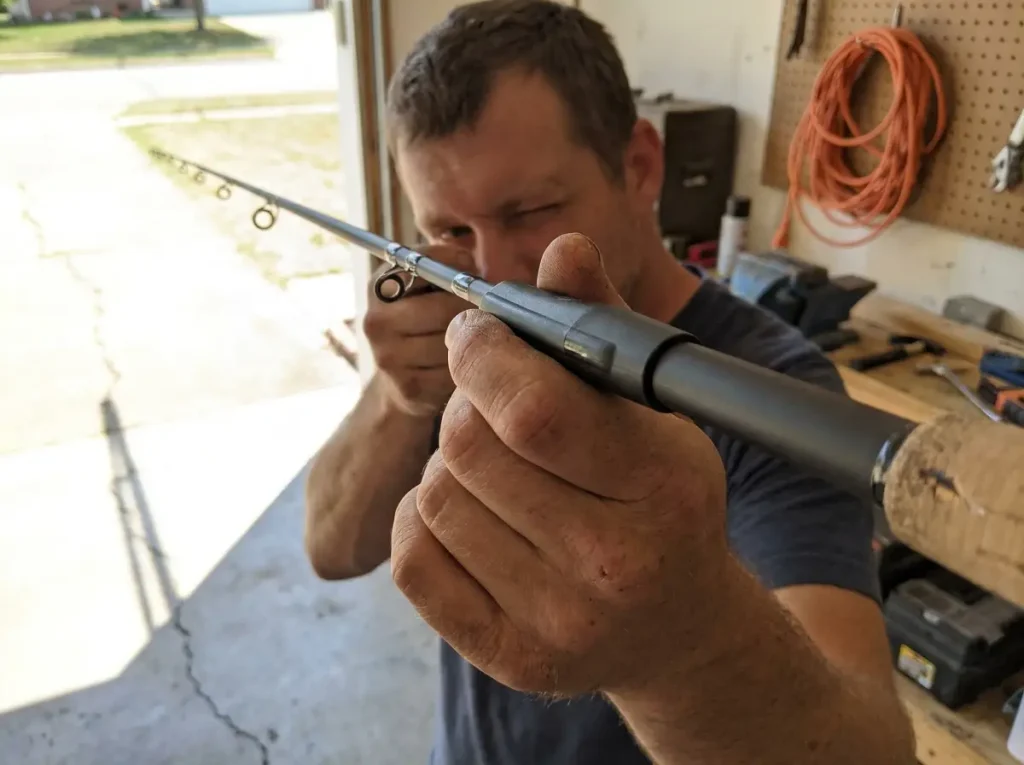
Two pieces, one joint, thirty seconds. Get the alignment wrong, though, and the rod casts like it’s fighting you the whole day.
Seat the Ferrule, Don’t Jam It
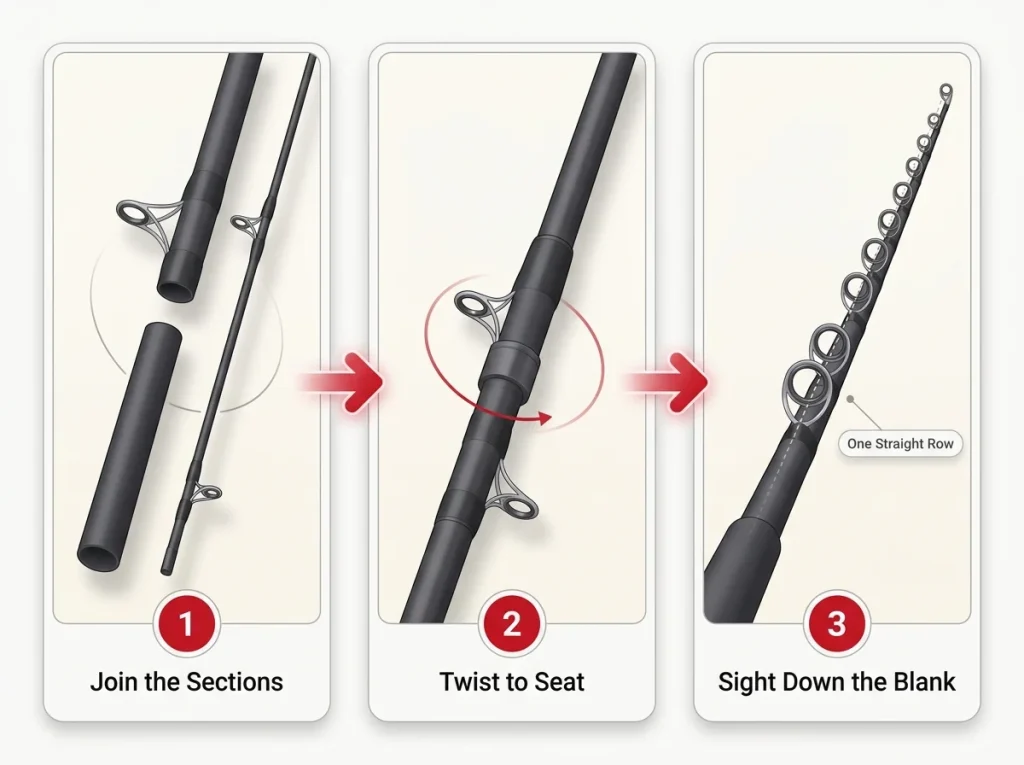
The ferrule is where the two sections of a graphite rod meet. Push the sections together with a slight twist to seat them, snug but not hammered home. You want it tight enough to stay put and loose enough to pull apart for transport. If a ferrule keeps working loose, a thin film of wax (or the official ferrule treatment) fixes it. Never glue it.
Line Up the Guides
This is the part people rush. Before the ferrule fully seats, rotate the tip section so every rod guide lines up in one straight row down the blank. Then hold the rod up and sight down it from the butt, the way you’d check a pool cue. The guides should form a single clean line. On a spinning setup the guides go on the underside, the same side the reel hangs from. A twisted ferrule throws your casting accuracy and saws the line against the blank all day.
Mount the Reel (and Which Hand Cranks)
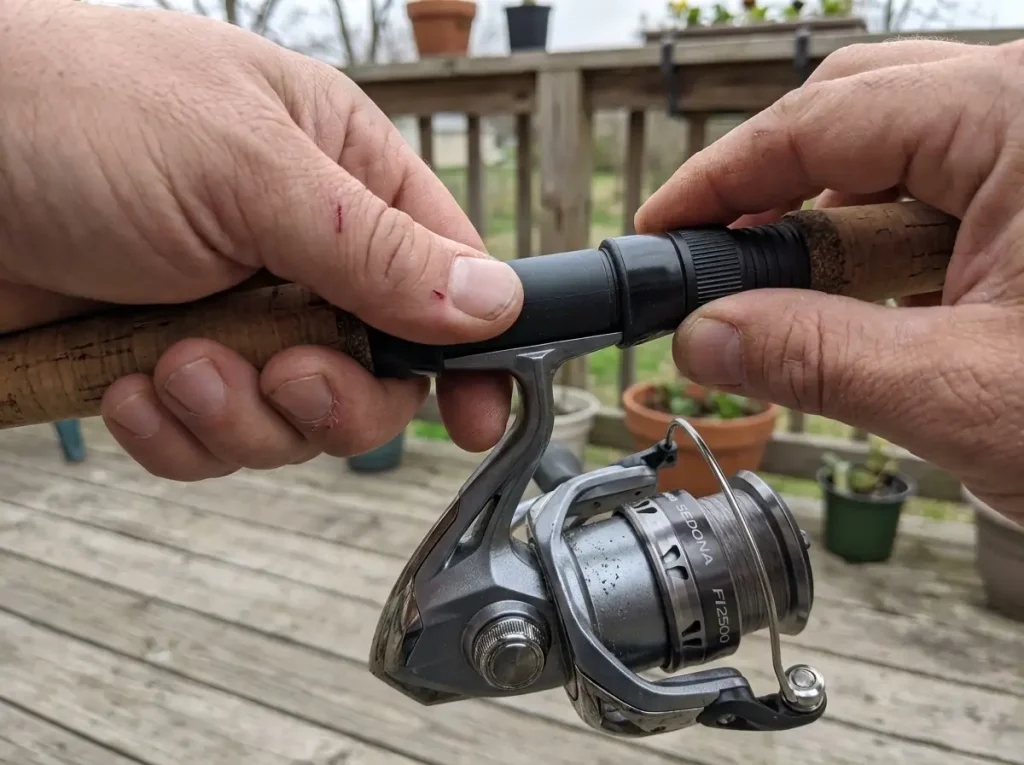
The reel hangs under the rod, never on top. And if the handle ends up on the wrong side for you, relax, that’s a thirty-second fix, not a defect.
Seat It Under the Rod
Slide the reel foot into the reel seat and thread the locking rings down by hand until they’re finger-tight. Snug, not gorilla-tight; crank it down with pliers and you’ll crack the seat. The reel should sit underneath the blank with the bail arm and line roller on the same side as the guides. If the whole thing feels upside down in your hands, it is. Still shopping for the combo to put together? A complete ready-to-fish kit under a hundred bucks lives in the best beginner fishing setup.
Which Hand Cranks (and How to Swap It)
Almost every beginner picks up a spinning reel and panics that they’re “winding backwards.” You’re not. The handle unscrews from one side and reseats on the other, so your retrieve direction, left-hand or right-hand crank, is preference, not a rule. Back the handle out, push it through to the other side, and tighten the cap that pops loose when you do. Thirty seconds, problem gone.
Before you spool anything, flip the bail open and closed a few times and give the handle a slow crank. The bail should snap over cleanly and the line roller should spin freely under your fingernail. A sticky roller is the quiet reason a brand-new reel lays line on crooked, and it’s far easier to catch now than mid-cast.
Spool the Line So It Doesn’t Twist
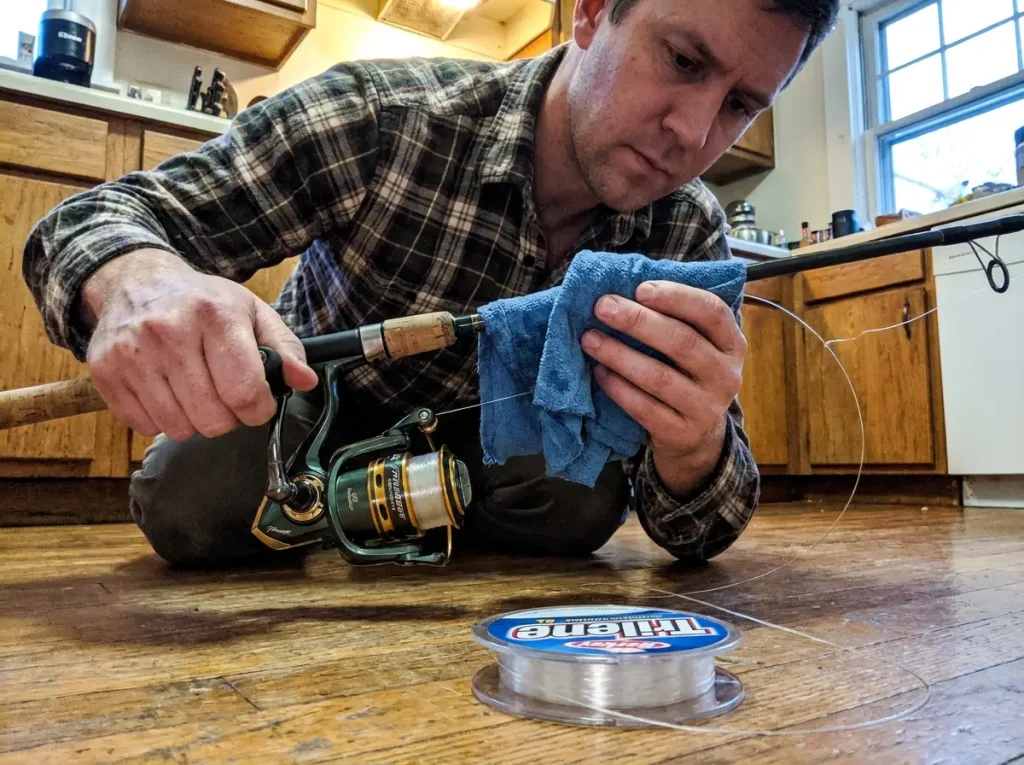
This is the step everyone botches and nobody explains. The tangle that erupts on cast three of the day isn’t bad luck. It’s how the line went on the reel.
Open the Bail and Tie the Arbor Knot
Open the bail arm before you do anything else, then tie the line to the bare spool with an arbor knot (a simple overhand knot around the spool, a second overhand in the tag end, cinched down so it can’t slip). If the bail’s closed when you start, the line never seats under the roller and you’ll feel it bind. Bail open first, always.
The Rotation Rule That Kills the Twist
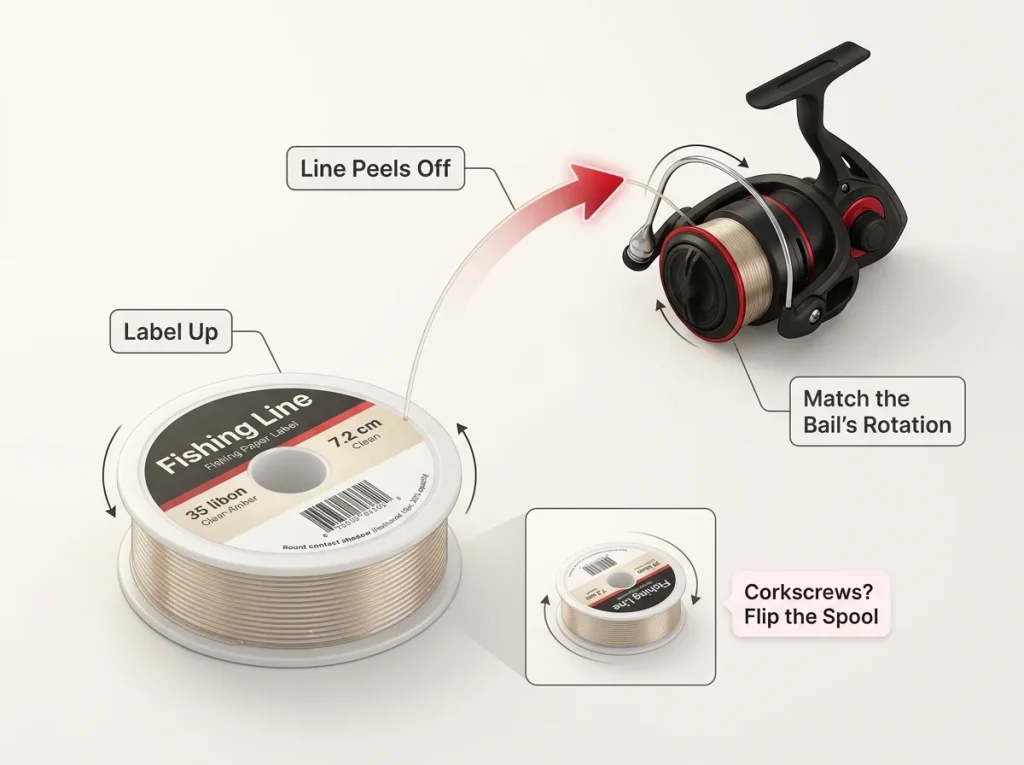
Here’s the part competitors hand-wave as “maintain tension.” Line has to peel off the supply spool in the same direction the bail turns, or you bake twist into every wrap. Lay the filler spool flat on the floor, label facing up as a starting guess. Reel on eight to ten turns, then drop the rod tip to put slack in the line and watch it. If loose corkscrews form, flip the supply spool over and keep going. That one flip kills about 80 percent of line twist complaints, and it costs you twenty seconds. The full six-step walkthrough for spinning, baitcaster, and spincast reels is in put line on any reel without twist.
Tension and Fill Level
Spool under steady tension. Pinch the line through a damp cloth about a foot above the reel so every wrap lays down tight. Slack coils are stored energy that springs off as casting loops two trips later. Fill the spool to roughly an eighth of an inch from the rim. Overfill it and the line balloons off in clumps for an instant birdnest; underfill it and the line drags on the spool lip and robs your casting distance. An eighth of an inch shy of the lip is the sweet spot.
Never close the bail by cranking the handle. Every time you reel it shut instead of flipping it closed with your free hand, the line slaps over the roller and adds a half-twist. Do that a hundred casts a day and you’ve manufactured your own wind knots. Close the bail by hand, then start your retrieve.
Thread the Line Through Every Guide
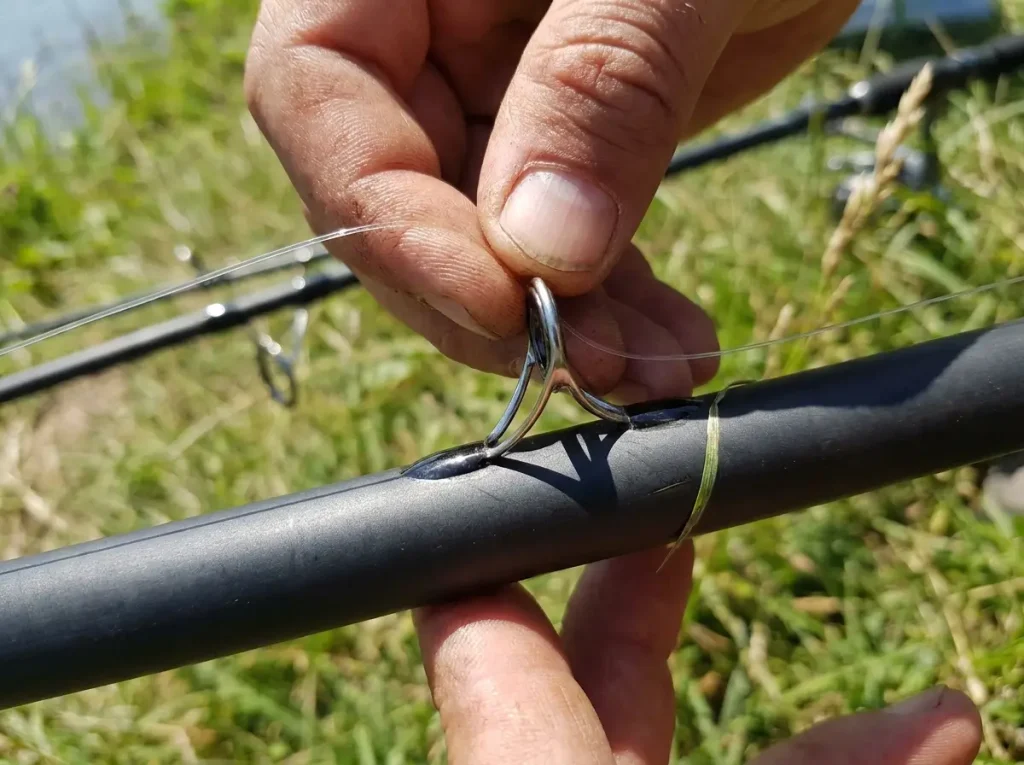
Easy to rush, easy to skip one, and you won’t notice until your rod loads wrong and the line is sawing on the blank.
Start at the Tip, Work Down
With the bail open, pull a few feet of slack and thread the line from the tip-top guide down toward the reel. A trick that saves dropped line halfway down the rod: fold the line into a doubled loop and feed the loop through each guide, so if you lose your grip it can’t slither all the way back out.
Don’t Skip a Guide
Run the line through every single guide in sequence. Miss one and the rod loads unevenly, the line saws across the blank, and your casting distance quietly disappears. When you’re done, hold the rod up and look: the line should run clean through each guide with no skips and no wraps around the blank. Thread before you tie anything on, since a bare line end feeds through far easier than one with a hook swinging off it.
Tie Your First Knot the Right Way
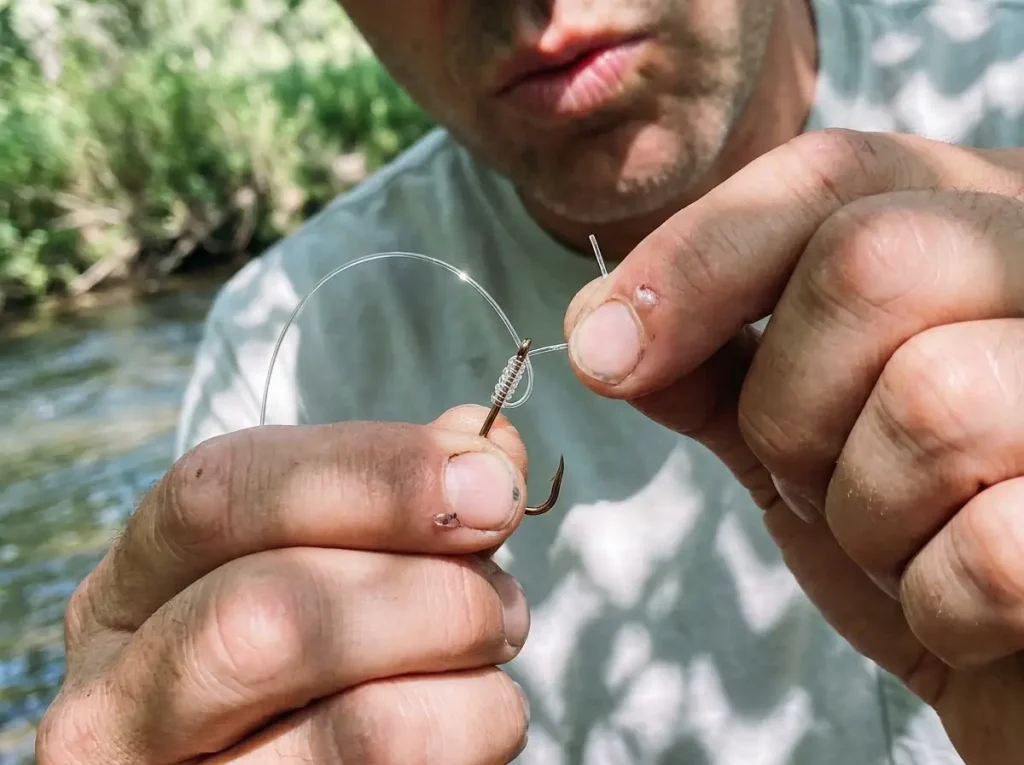
Learn one knot, the improved clinch knot, and you can tie on every hook and lure you’ll touch for a year. But there’s a habit that matters even more than the knot itself.
The Improved Clinch, Step by Step
Pass the line through the hook eye. Wrap the tag end around the standing line five to seven turns (seven for light line, five for heavy). Feed the tag back through the small loop right above the eye, then back through the big loop you just created. Now the habit: moisten it, then pull the standing line to cinch the wraps down tight against the eye. The improved clinch holds about 85 percent of the line’s strength on mono and fluoro up to roughly 20 pounds. The U.S. Fish and Wildlife Service lays out the same improved clinch knot every guide actually uses, five wraps and back through the loop, no surprises.
The Habit That Beats the Knot
Moisten every knot before the final pull. Spit on it or dip it in the water first. The heat from cinching dry line is invisible damage that can shave 20 to 30 percent off your breaking strength, and it’s the real reason a “good” knot pops on a small fish. Skip the spit and even a perfect clinch becomes a weak link.
When to Switch to a Uni Knot
The clinch starts to slip on braid or on heavier line above 20 pounds. That’s your cue to learn the uni knot or the Palomar knot, both of which grip slick braid better and are just as quick once you’ve tied a few. For everything a beginner does on mono, though, the clinch is plenty.
Tie a few practice clinch knots on the couch the night before, with a hook clipped to a thick paperback so you’ve got something to pull against. The motion is awkward the first ten times and second nature by the twentieth. Nobody wants to learn a knot for the first time with cold hands and a fish waiting.
Add Your Hook, Weight, and Bobber
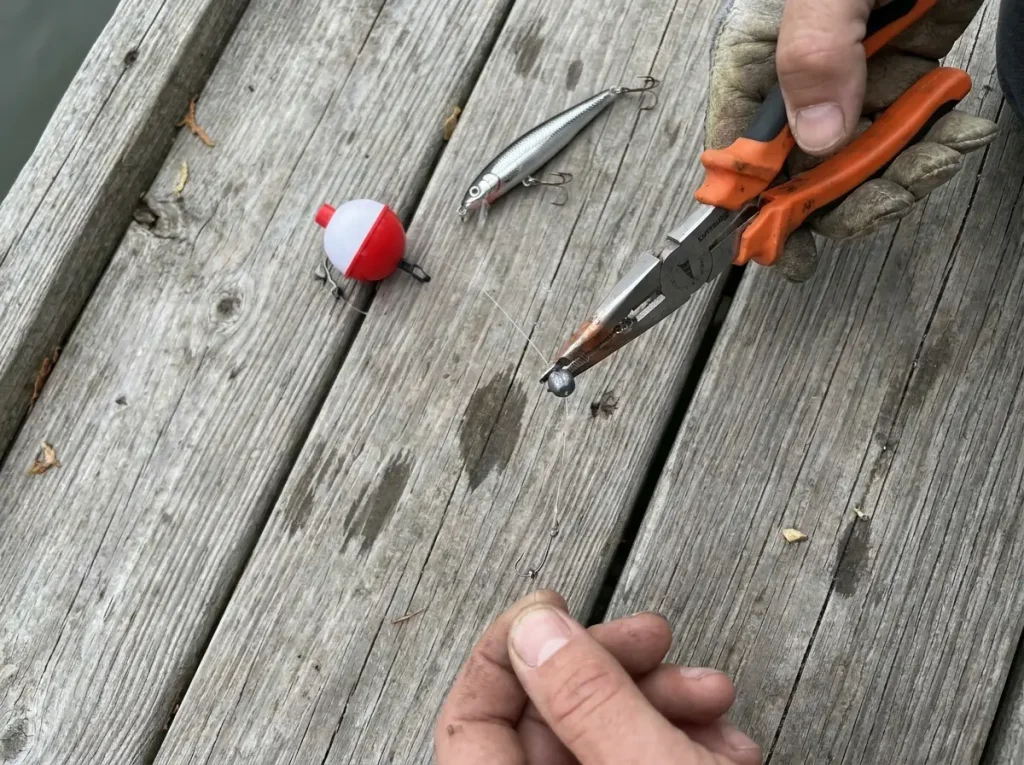
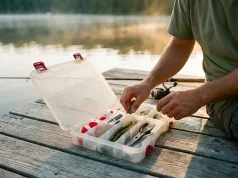
A hook, a little weight, and a bobber. That’s a fish-catching rig, and it’s exactly how most of us caught our first one.
The Basic Bobber Rig
Tie the hook on with your clinch knot. Crimp a small split shot (a clip-on sinker) onto the line about 12 to 18 inches above the hook. Clip a bobber (a float) onto the line above that, set so your bait hangs at the depth the fish are holding. That’s the whole rig. A small floating lure like the Rapala Original Floating Minnow F05 works the same way once you want to graduate from bait to casting and retrieving. A small swivel between your line and a leader stops twist on spinning lures, though this basic bobber rig doesn’t need one.
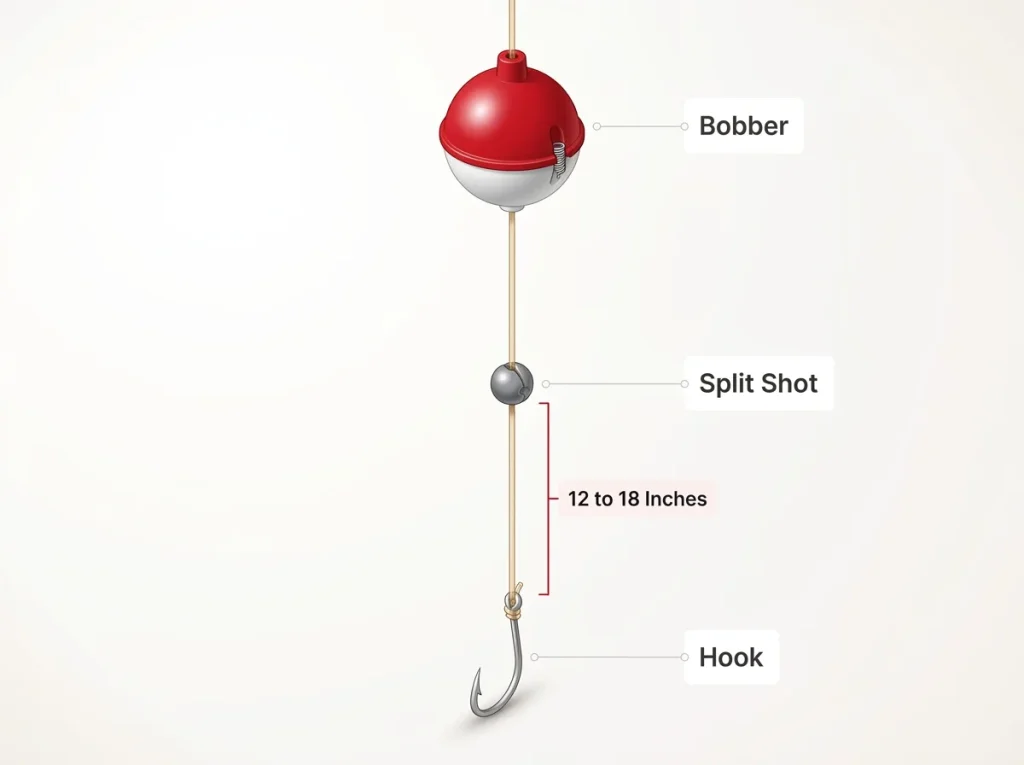
The One Tool Worth Owning
You need exactly one tool to build this rig painlessly: a pair of fishing pliers. They crimp the split shot, trim your tag end flush, and back a hook out of a fish (or a thumb) safely. The KastKing Cutthroat 7-inch pliers do all three and won’t rust shut after a season; the Piscifun fishing pliers are the cheaper version that gets the job done. A short list of the terminal tackle that actually catches your first fish is in what gear you need to start fishing.
Handle the Hook (and Check Your License)
Pinch the barb down with your pliers for easier release and far fewer thumb incidents, and keep the points capped until you’re actually rigging. One more thing before you fish: check your state agency about a fishing license first. In a lot of states kids under 17 can fish without a license, and state parks waive it for everyone, and many run a free fishing day with loaner rods, so trip one can cost nothing at all.
Set the Drag and Run the Pre-Cast Check
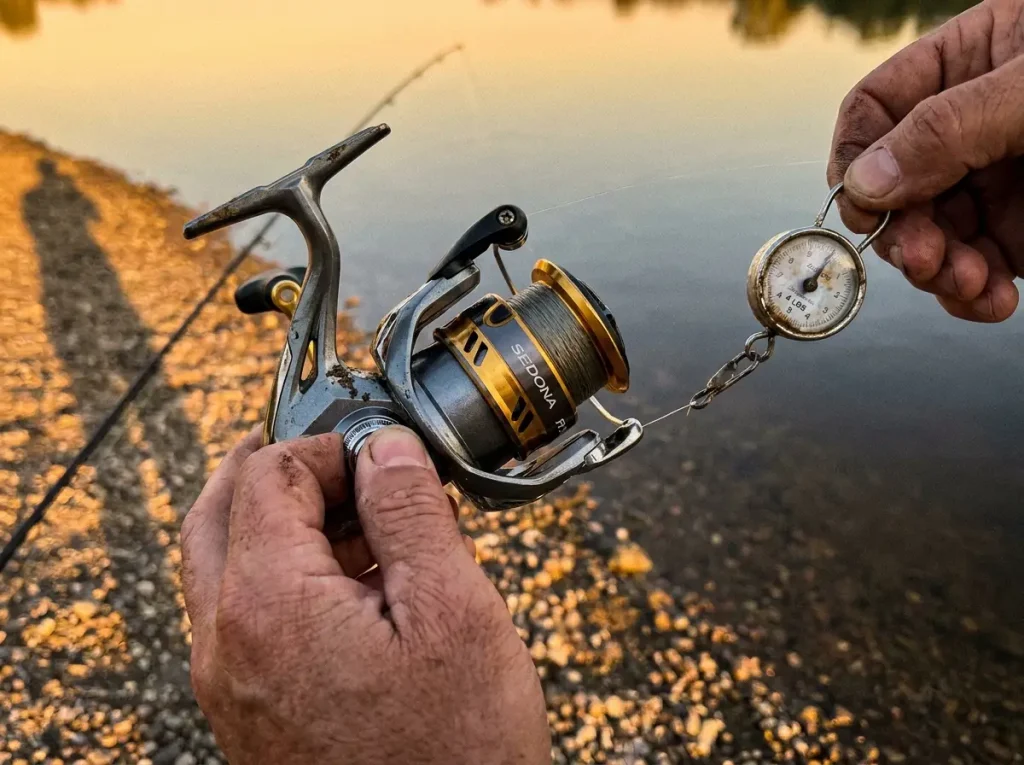
The drag isn’t a lock to stop the fish. It’s a slip clutch that protects your line and your knot. Set it wrong and your first good fish ends with a crack and an empty line.
Set the Drag by Feel, Not Just a Number
The rule of thumb is 25 to 33 percent of the line’s breaking strength. Twenty-pound line wants about four to six pounds of drag. The cleanest way to set it is by feel: clip a small luggage or spring scale to the line, pull it straight off the reel, and turn the drag knob until the line slips at roughly a third of its rating. No scale handy? It should take a firm two-finger pull to start the line sliding, never a dead lock. Err looser, not tighter. Mono can run a touch tighter because it stretches; braid wants it looser because it doesn’t.
What a Right Drag Feels Like on a Run
You’ll know the drag is right the first time a decent fish runs. The line leaves the reel in a steady, almost musical buzz instead of stopping dead. A locked drag does the opposite: the rod loads, there’s a sharp crack, and the lure’s gone. That snap-off is the moment every angler learns what the drag is actually for, usually exactly once. The sealed drag is also the first thing to fail when you take a freshwater reel into the salt, which is worth knowing before you do, and we covered it in saltwater vs freshwater gear, one part fails first.
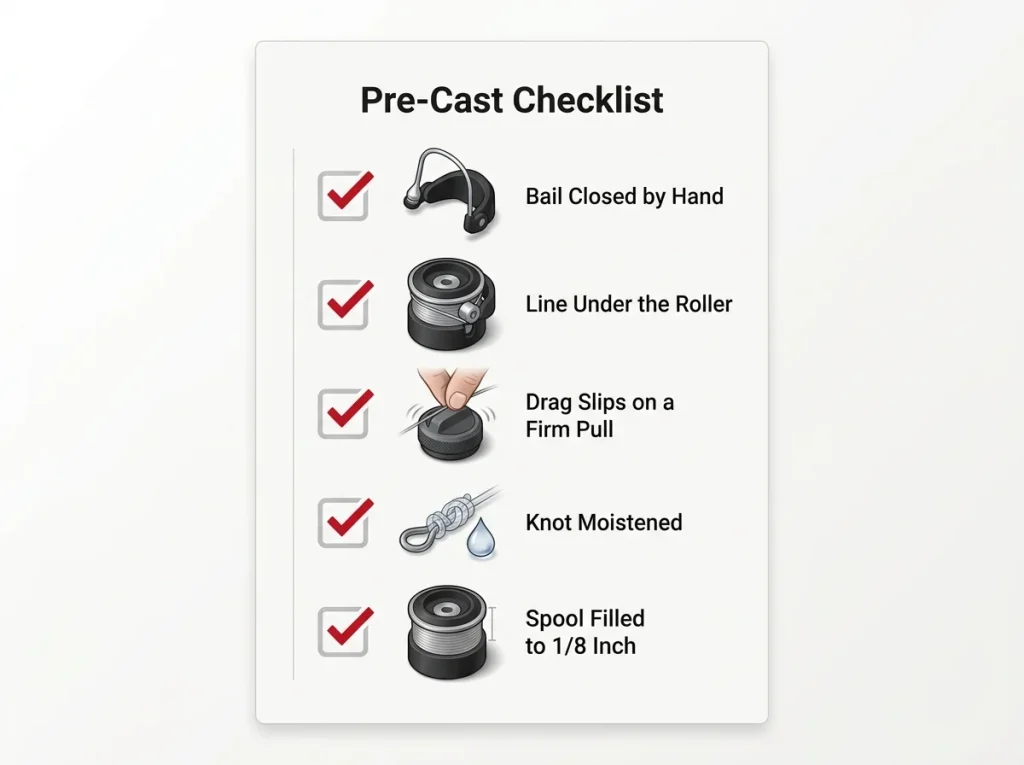
The 30-Second Pre-Cast Checklist
Before you ever wet the line, run this self-check. It’s thirty seconds and it prevents the two classic first-trip disasters, the snap-off and the cast-one birdnest.
- Bail closed by hand, not by cranking?
- Line seated under the roller, not over it?
- Drag slips on a firm pull, not locked down?
- Knot moistened and cinched tight?
- Spool filled to about an eighth of an inch, not overfull?
No luggage scale for the drag? Tie your line to your shoe, set the rod at the angle you’d fight a fish, and walk backward until the line slips with a firm, steady pull. It’s not lab-precise, but it’s miles better than guessing, and it’s close enough to keep your first real fish buttoned.
Putting It All Together
Setting up a rod looks like a wall of steps the first time, and it collapses into muscle memory by the third. Keep three things in your head and the rest follows. A pre-spooled factory combo skips half this list on day one, and there’s no shame in starting there. The twist isn’t luck, it’s rotation, so match the supply spool to the bail and check for corkscrews before you trust it. And the drag is a clutch, not a lock, set loose enough to let a good fish run.
Run that thirty-second pre-cast check before your first cast, then go put a bluegill on the line. The setup is the boring part. The water is where it gets good.
Frequently Asked Questions
01How do you set up a fishing rod for beginners?
Join the rod sections, mount the reel underneath, spool on line, thread it through the guides, tie on a hook with a clinch knot, add tackle, and set the drag. Or buy a pre-spooled factory combo and skip the first three steps entirely.
02How do you rig a hook, weight, and bobber?
Tie the hook to the end of your line, crimp a split shot 12 to 18 inches above it, and clip a bobber on above the weight. Set the bobber so your bait hangs at the depth the fish are holding.
03Which way do you spool a spinning reel so it doesn’t twist?
Lay the filler spool flat with the label up so the line peels off matching the bail’s rotation. Reel on a few turns, slack the line, and watch for corkscrews. If you see them, flip the spool over.
04How tight should the drag be on a spinning reel?
Set it to about a quarter to a third of your line’s breaking strength. A firm two-finger pull should start the line slipping, never lock it solid. When in doubt, run it a little looser so a hard-running fish pulls line instead of snapping off.
05What is the best fishing line setup for a beginner?
Eight to ten pound monofilament on a 2500-size spinning reel covers almost everything a beginner targets. Save fluorocarbon for clear-water leaders and braid for later once your casting is dialed in.
Risk Disclaimer: Fishing, boating, and all related outdoor activities involve inherent risks that
can lead to injury. The information provided on Master Fishing Mag is for educational and informational purposes
only. While we strive for accuracy, the information, techniques, and advice on gear and safety are not a substitute
for your own best judgment, local knowledge, and adherence to official regulations. Fishing regulations, including
seasons, size limits, and species restrictions, change frequently and vary by location. Always consult the latest
official regulations from your local fish and wildlife agency before heading out. Proper handling of hooks, knives,
and other sharp equipment is essential for safety. Furthermore, be aware of local fish consumption advisories. By
using this website, you agree that you are solely responsible for your own safety and for complying with all
applicable laws. Any reliance you place on our content is strictly at your own risk. Master Fishing Mag and its
authors will not be held liable for any injury, damage, or loss sustained in connection with the use of the
information herein.
Affiliate Disclosure: We are a participant in the Amazon Services LLC Associates Program, an
affiliate advertising program designed to provide a means for us to earn advertising fees by advertising and linking
to Amazon.com. As an Amazon Associate, we earn from qualifying purchases. We also participate in other affiliate
programs and may receive a commission on products purchased through our links, at no extra cost to you. Additional
terms are found in the terms of service.