
In this article
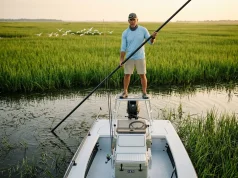
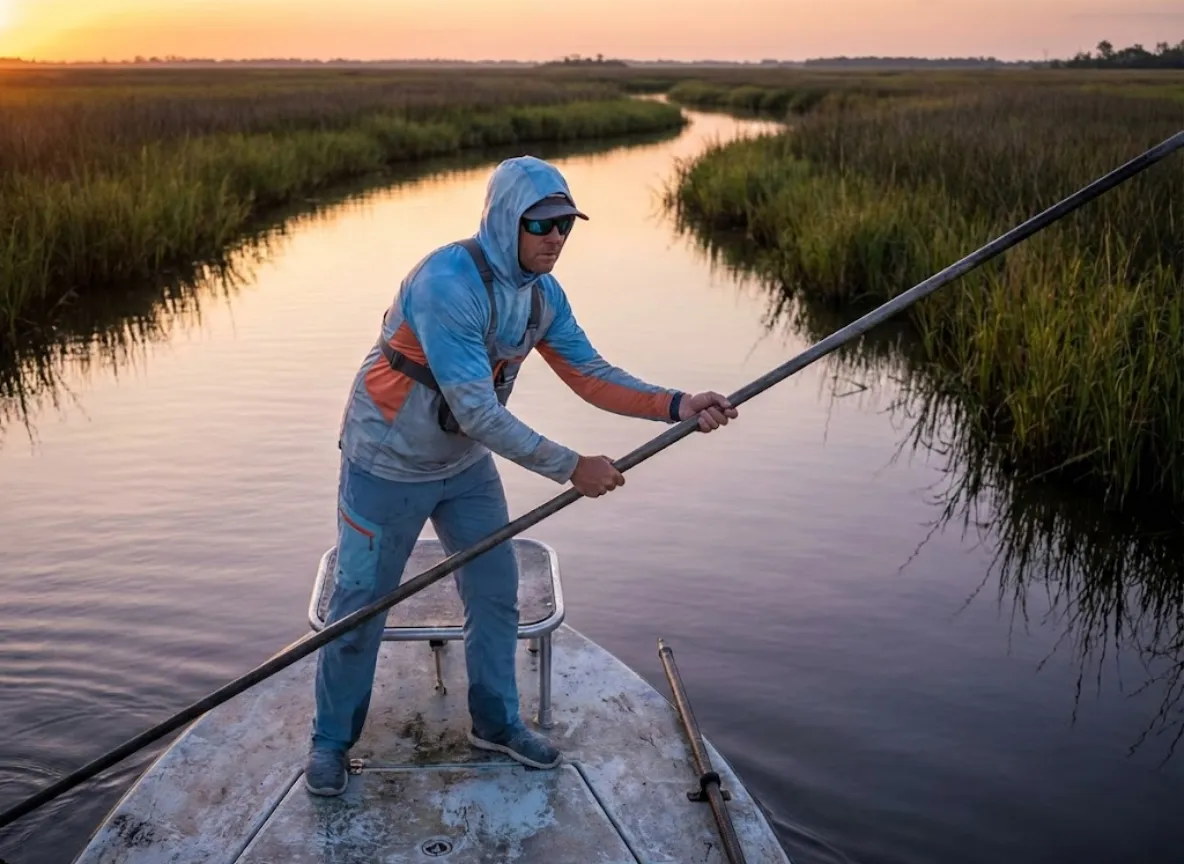
The salinity of the Gulf of Mexico changes everything. From the hyper-saline lagoons and estuaries of Texas to the river-fed deltas of Louisiana, this isn’t a static body of water. It is a living, breathing ecotone where freshwater meets the salt. I have spent decades poling skiffs and walking grass flats across this region, learning that understanding this dynamic environment is the only way to consistently locate the predator species that patrol its shallows.
This dossier dismantles the complexity of the inshore fishing Gulf of Mexico scene. We move beyond simple waypoints to reveal the biological and geographic matrix that dictates recreational saltwater angling success. Whether you are wade fishing the hard sand of the Laguna Madre or navigating the soft mud of the Mississippi Delta, the goal remains the same: predicting where the fish will be before you ever make a cast.
What Species Define the Inshore Grand Slam?
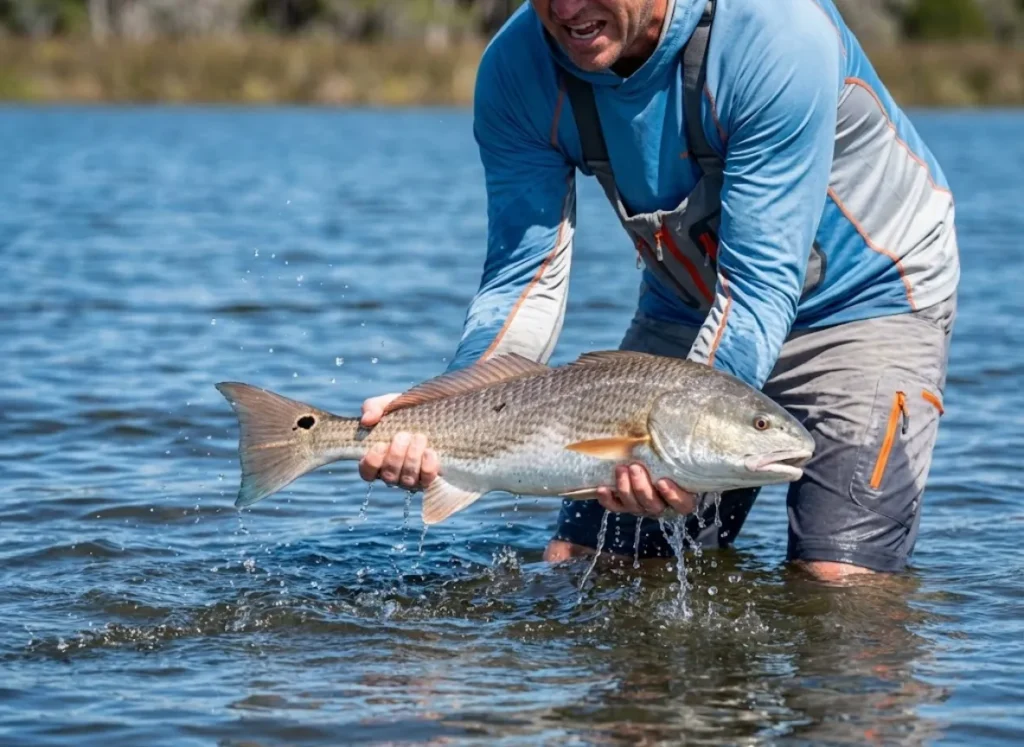
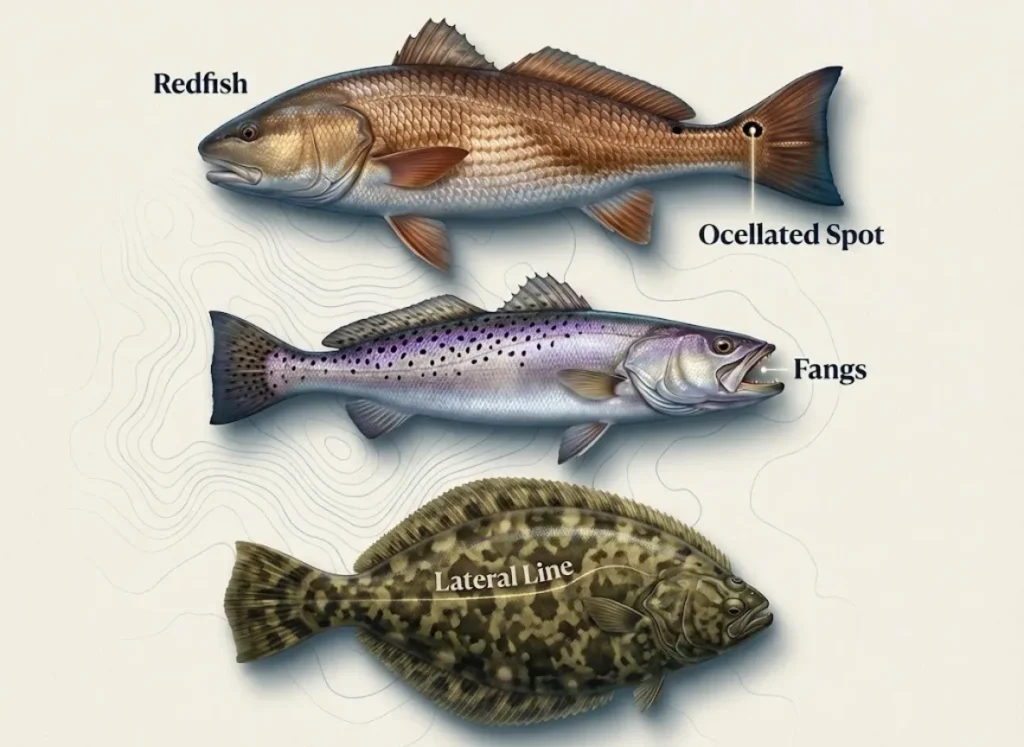
The Inshore Grand Slam isn’t just a checklist; it represents three distinct biological puzzles. This section profiles the Big Three not as trophies, but as organisms with specific behaviors, habitats, and vulnerabilities you must exploit. While Snook and Tarpon offer seasonal thrills, the core residents define the year-round fishery.
How do Redfish behavior patterns shift from marsh to pass?
Red Drum (Sciaenops ocellatus), commonly known as Redfish, exhibit a bifurcated lifecycle that demands two distinct tactical approaches: the pursuit of “Slot” fish and the hunt for “Bull” Reds. Juvenile fish, typically those under 30 inches, inhabit the interior salt marshes and grass flats for their first three to four years. They rely heavily on structure like oyster bars and shorelines for protection and forage.
You must recognize that “Slot” reds are behaviorally distinct. They are often visual feeders in shallow waters, “tailing” for crabs and shrimp, which makes them susceptible to stealthy sight fishing techniques. However, the abrasive nature of their habitat requires tying a leader for snook and reds that can withstand contact with sharp oyster shells without failing.
Upon sexual maturity, these fish migrate to nearshore waters, returning to passes, inlets, and jetties only to spawn during the “Bull Run” from August to November. Targeting these adult fish requires heavier tackle and bottom-fishing techniques using cut mullet or blue crab in high-current areas like Galveston or Pass a Grille. According to federal management guidelines for Red Drum stocks, harvest is prohibited in federal waters. Your pursuit of these giants is strictly a nearshore, catch-and-release game during their spawning migration.
Why are Spotted Seatrout considered the fragile specialists of the flats?
Spotted Seatrout (Cynoscion nebulosus), often called Speckled Trout, are ambush predators inextricably linked to submerged aquatic vegetation and healthy water quality. Unlike the roaming Redfish, Trout have a smaller home range and are highly sensitive to environmental stressors.
Successful targeting involves locating “mottled bottoms”—areas of broken grass and sand potholes—where Trout lie in wait to ambush passing baitfish or shrimp. Life history data indicates Spotted Seatrout are particularly vulnerable to rapid water temp drops. This often results in “cold stun” events where they become lethargic and cease feeding.
Physiologically, Trout possess thin membranes around the mouth, earning them the nickname “Paperline.” This necessitates a specific approach to decoding rod power and action. Using a heavy-power rod often results in pulled hooks. A Medium-Light power rod with a soft tip acts as a shock absorber, keeping the treble hooks of your topwater lures pinned without tearing the delicate mouth tissue during the fight. For those targeting trophy females, or “Gator Trout,” switching to larger suspending plugs or popping corks with live bait is often required.
What drives the seasonal migration of Southern Flounder?
Southern Flounder are defined by their autumn migration, a mass exodus from the bays to the Gulf triggered by the first significant cold fronts. During this “Flounder Run,” typically peaking in October and November, fish funnel through narrow passes and inlets. This creates high-density ambush points for fishermen who know where to look.
The primary tactic involves maintaining bottom contact. A jighead tipped with soft plastics (like a Gulp Swimming Mullet) or a Carolina Rig must be dragged slowly to mimic a scurrying crustacean. You need a clear understanding of the strategic breakdown of terminal tackle to build effective rigs that stay pinned to the floor without snagging on debris.
Pro-Tip: Flounder strikes are rarely violent. It usually feels like a “heavy wet sock” or a dull “thump.” When you feel this weight, wait three full seconds before setting the hook. Flounder hold prey in their teeth before swallowing, and a premature hookset will pull the bait right out of their mouth.
Stock assessments of Southern Flounder have led many states to implement strict closures during the peak run. Always check local fishing regulations, as protecting the spawning females exiting the bay is critical for the future biomass of the species.
Where Are the Best Locations Based on Accessibility?
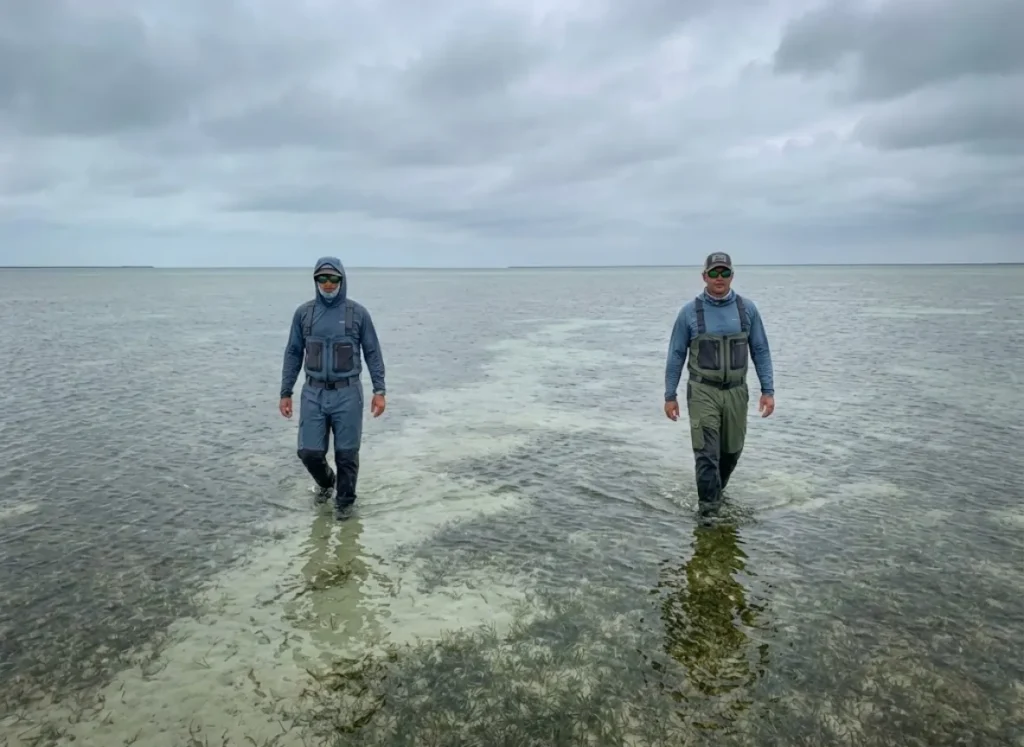
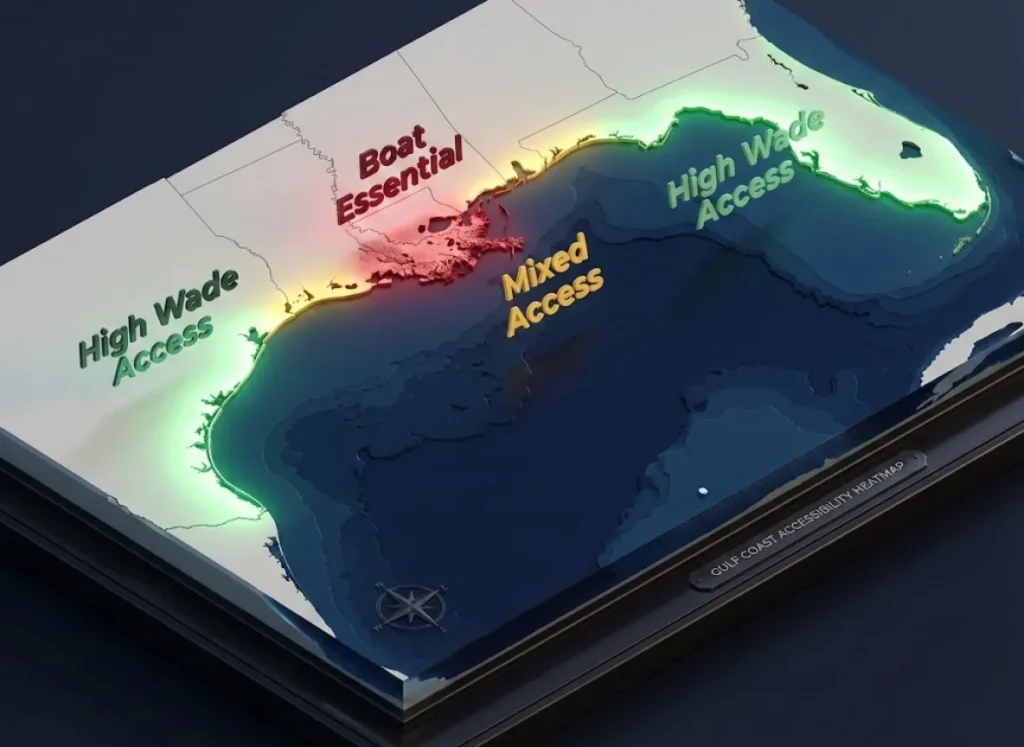
Not all water is created equal, and neither is the access. We can categorize the Gulf’s top fishing spots by the “Logistics of Access”—distinguishing between spots viable for the DIY wade fisherman versus those requiring a fishing vessel.
Which locations offer the best wade fishing opportunities?
The Texas coast, specifically the Laguna Madre near Port Aransas and Port O’Connor, represents the pinnacle of wade fishing. It offers firm, sandy bottoms and vast expanses of shallow seagrass. Public access points like Bird Island Basin allow anglers to drive up, walk in, and target world-class Redfish and Trout without a boat. This accessibility is supported by the National Park Service, which manages recreational access within the Laguna Madre.
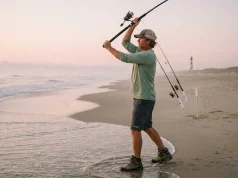
Gulf Shores and Orange Beach, Alabama, offer a different profile. Here, the focus is on surf fishing along the beaches and the protected waters of Little Lagoon. Success here requires mastering shore fishing techniques, specifically reading beach topography to find “cuts” in the sandbar where Pompano and Whiting travel. Similarly, the flats around Pensacola and Destin provide excellent sight-fishing opportunities for those willing to walk.
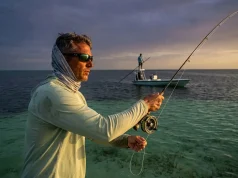
Successful wading requires “The Shuffle”—sliding feet along the bottom to alert and avoid Stingrays, which are prevalent in these shallow warm waters. The advantage of wading is stealth. A human profile disrupts the water far less than a hull slap, allowing for closer approaches to skittish fish in clear water.
Where is a boat or kayak essential for success?
Venice, LA, sits at the end of the Mississippi River Delta where the marsh is composed of soft mud and Roseau cane. Stepping out of a boat here is physically impossible and dangerous. This is a boat-dominated fishery where anglers navigate complex canal systems to find clean water mixing with river nutrients. This is the realm of the fishing guides and technical skiffs.
Similarly, the Florida Nature Coast (near Homosassa) and the Charlotte Harbor estuary (near Boca Grande) are labyrinths of limestone rocks, mangroves, and oyster bars that destroy gelcoat. In these zones, the vessel is not just transport but a tactical platform. Utilizing fishing kayaks under $1000 allows silent entry into “skinny water” (less than 6 inches deep) where Redfish back exposed out of the water.
Navigating these areas, including the Mississippi Sound and Mobile Bay, requires careful planning. Resources like the Mississippi Department of Marine Resources provide maps of public access launches, but once you launch, local knowledge of tides and hazards is vital.
When is the Prime Time to Target Specific Species?
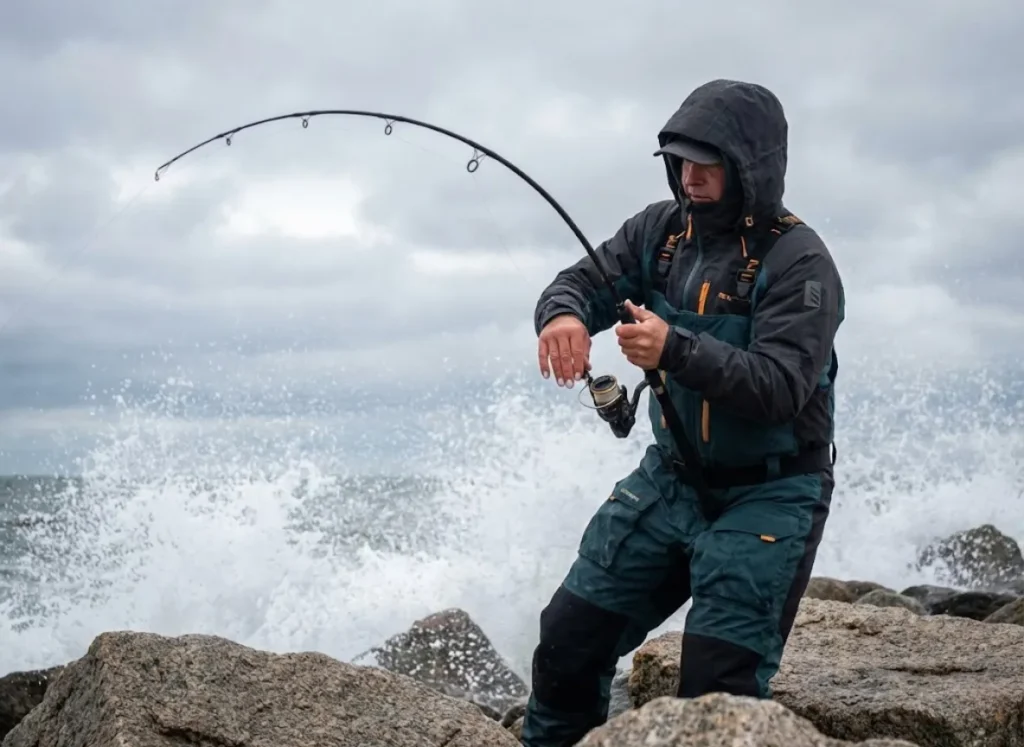
The calendar on the wall matters less than the thermometer in the water. We must overlay the biological clock of the fish onto the year to understand the peak months for booking your trip.
How does water temperature dictate winter tactics?
As Gulf water temp drops below 60°F, metabolism slows. Redfish, Trout, and Sheepshead seek thermal stability in deep channels, residential canals, docks, and bridges that retain solar heat. The “Winter Pattern” is defined by lethargy; fish will not chase fast-moving prey.
Anglers must shift to suspending twitchbaits worked with agonizingly long pauses. Understanding fishing barometric pressure shifts becomes critical here. The high pressure that follows a cold front often shuts down the bite entirely until the barometer stabilizes.
Pro-Tip: In winter, fish the “2 PM Window.” Dark, muddy bottoms absorb solar radiation throughout the day. By mid-afternoon, the water on a mudflat can be 3-4 degrees warmer than the surrounding area, drawing fish up from the depths to feed aggressively for a short period.
Ecosystem management reports on thermal habitats emphasize that tropical species like Snook and juvenile Tarpon face mortality risks during these drops. They retreat into freshwater springs or deep river bends where the water remains a constant 72°F. These specific refuges become the only viable option for winter fishing.
What Gear System Covers 90% of Inshore Scenarios?
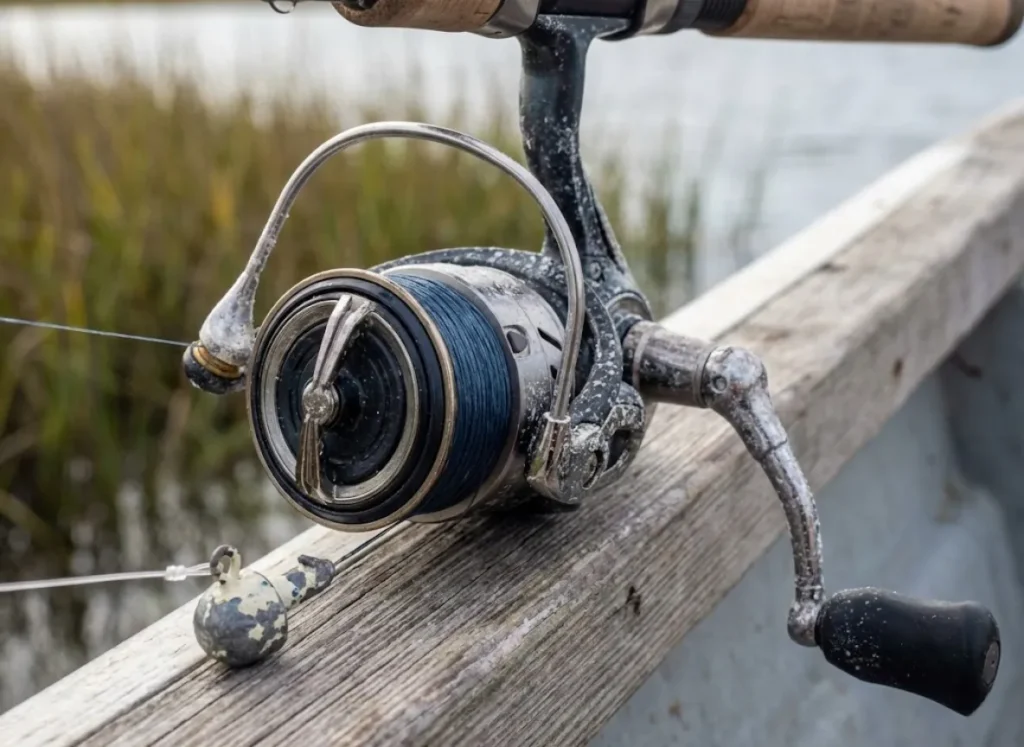
Marketing often complicates what should be simple. You do not need a golf bag full of fishing poles. A single, versatile light tackle system can handle the vast majority of inshore tasks.
Why is a Medium Power, Fast Action rod the universal tool?
The 7’0″ to 7’6″ Medium Power, Fast Action spinning rod is the “Skeleton Key” of inshore fishing, capable of handling 80% of situations from Texas to Florida. “Medium Power” provides the backbone required to drive a hook into the tough mouth of a Redfish and turn its head away from structure.
“Fast Action” refers to a flexible tip section that transitions quickly to the backbone. This tip sensitivity is critical for detecting the subtle tick of a Trout inhale or casting light jigheads. This setup should be paired with a field-tested saltwater spinning reel in the 2500 or 3000 size range.
This reel should be spooled with 10-15lb braided fishing line. Braid offers zero stretch, allowing for instant hooksets at maximum casting distance. Always verify regulations regarding legal tackle and gear in your specific state, but generally, this spinning setup is the industry standard for ethical and effective harvesting.
How Do Conservation Practices Ensure the Fishery’s Future?

The quality of the fishery depends entirely on the survival of the fish we release. Stewardship is not optional; it is the rent we pay for the resource.
What are the best practices for handling Bull Reds and Tarpon?
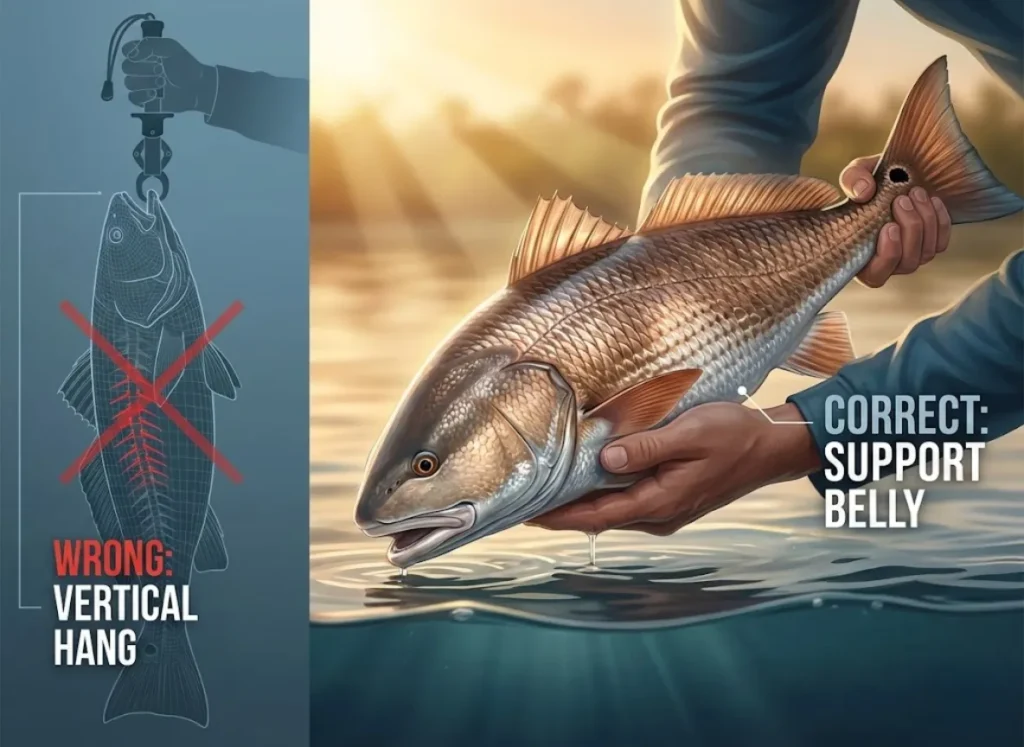
Large breeding stock, such as Bull Redfish (>30 inches) and Tarpon, are physiologically vulnerable after a long fight due to lactic acid buildup. Never hang a large fish vertically by its jaw. This can separate the vertebrae and detach internal organs, killing the fish even if it swims away.
You must support the fish horizontally with two hands—one under the belly and one gripping the tail—to distribute the weight of the organs naturally. Mastering the art of holding fish correctly is essential for any angler targeting trophy species.
Revival is active, not passive. Hold the fish facing into the current to force oxygenated water over the gills until it kicks strongly on its own. For Tarpon specifically, science-based catch and release guidelines from the FWC dictate that fish over 40 inches must remain in the water. Dragging them onto a boat deck is illegal and removes their protective slime coat, exposing them to infection.
Conclusion
The Gulf of Mexico is a mosaic of micro-ecosystems. Success doesn’t come from a lucky lure; it comes from matching the location—be it a lagoon or a delta—to the correct access method. Seasonality dictates your strategy, telling you to target the “Bull Run” in fall, thermal refuges in winter, and the beaches in summer.
The “Big Three”—Redfish, Trout, and Flounder—require distinct approaches: sight-fishing for Reds, finesse for Trout, and bottom-contact for Flounder. By arming yourself with a simple, high-quality light tackle system and respecting the resource through proper handling, you move from being a casual fisherman to a student of the Gulf.
Explore our comprehensive library of species-specific guides to refine your tactics further, or share your favorite Gulf Coast wade fishing spot in the comments below.
FAQ – Frequently Asked Questions about Inshore Fishing Gulf of Mexico
What is the best month for inshore fishing in the Gulf of Mexico?
October and November generally offer the peak experience known as The Fall Run. Cooling water temperatures trigger aggressive feeding from Redfish, Speckled Trout, and Flounder simultaneously as they prepare for winter or migration.
Do I need a boat to fish the Gulf Coast effectively?
No, specifically in areas like the Texas Laguna Madre or the beaches of Alabama and Florida, which are world-class wade fisheries. However, the Mississippi Delta in Louisiana is largely inaccessible without a vessel due to soft mud and vast distances.
What exactly is considered inshore fishing?
Inshore fishing refers to angling in the brackish and saltwater zones from the interior tidal line (marshes, bayous, and rivers) out to the state water boundaries. It focuses on shallow water species rather than deep-sea pelagics.
Does one fishing license cover the entire Gulf of Mexico?
No, each of the five Gulf states (TX, LA, MS, AL, FL) requires its own specific fishing license. There is no reciprocity for recreational saltwater angling licenses between these states.
Risk Disclaimer: Fishing, boating, and all related outdoor activities involve inherent risks that
can lead to injury. The information provided on Master Fishing Mag is for educational and informational purposes
only. While we strive for accuracy, the information, techniques, and advice on gear and safety are not a substitute
for your own best judgment, local knowledge, and adherence to official regulations. Fishing regulations, including
seasons, size limits, and species restrictions, change frequently and vary by location. Always consult the latest
official regulations from your local fish and wildlife agency before heading out. Proper handling of hooks, knives,
and other sharp equipment is essential for safety. Furthermore, be aware of local fish consumption advisories. By
using this website, you agree that you are solely responsible for your own safety and for complying with all
applicable laws. Any reliance you place on our content is strictly at your own risk. Master Fishing Mag and its
authors will not be held liable for any injury, damage, or loss sustained in connection with the use of the
information herein.
Affiliate Disclosure: We are a participant in the Amazon Services LLC Associates Program, an
affiliate advertising program designed to provide a means for us to earn advertising fees by advertising and linking
to Amazon.com. As an Amazon Associate, we earn from qualifying purchases. We also participate in other affiliate
programs and may receive a commission on products purchased through our links, at no extra cost to you. Additional
terms are found in the terms of service.