
In this article
Everyone on the boat had a Boga Grip. Fully equipped. The fish came to the boat and one angler picked it up by the jaw with the gripper — fish vertical, all six pounds hanging from the lower mandible — turned it sideways for the photo, three seconds, then dropped it back. The fish swam off. What happened below the surface was invisible: the jaw had been loaded at a leverage angle it wasn’t designed to handle. Whether that fish fed normally afterward, nobody knows. Most anglers don’t ask.
Lip grips are legitimate, useful tools. The Boga Grip specifically is one of the most thoughtfully designed fish handling products on the market. But there’s a specific misuse pattern that runs through recreational fishing — holding fish vertically by the lip grip alone — that causes real documented harm to several species. This guide covers exactly how the tool works, the one technique error that matters most, which fish can handle it and which can’t, and the maintenance that keeps the scale accurate when it counts.
⚡ Quick Answer: Hold the fish horizontally and support its body weight with your free hand for any fish over about two pounds. The Boga Grip’s jaws lock correctly onto the lower jawbone tip — not deep in the mouth, not on the soft tissue behind the lip. Vertical holds with full body weight on the jaw cause documented injury in bonefish and discomfort in bass. Used correctly, a lip grip is safe, effective, and preferable to bare-hand contact for toothy species.
What the Boga Grip Is and How the Mechanism Works
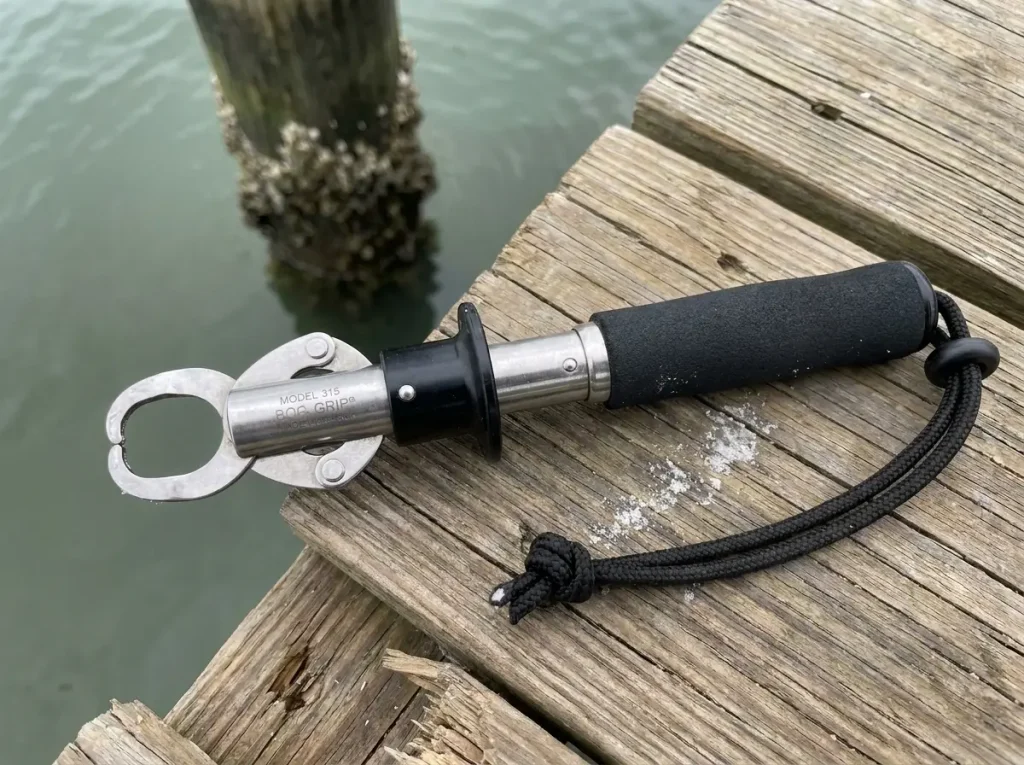
The tool and its design intent
The Boga Grip is a fish handling tool that clamps onto the lower jaw of a fish, allowing an angler to control and weigh the fish without direct hand contact with gills, eyes, or the fish’s protective slime coat. At its core it’s a spring-loaded jaw system on a cylindrical body with a built-in tension scale. The jaw opens when you pull back the trigger sleeve, clamps onto the jaw when you release it, and locks there until you pull the trigger again to release the fish.
The design includes a feature that most users don’t notice until a fish thrashes: the inner tube is free to rotate inside the outer grip sleeve. When a fish spins or twists after being gripped, the inner tube spins with it rather than torquing the jaw against the locked jaws. This prevents the tearing injury that happens when a fixed jaw grip holds stationary while a fish rotates. The rotating tube is the engineering that makes the Boga significantly safer than a fixed-jaw alternative during the fight.
The built-in scale — a coiled spring mechanism calibrated to read weight in pounds and ounces — allows single-handed weighing without a separate hanging scale. The standard Boga 130 reads to 30 pounds; the Boga 260 reads to 60 pounds. IGFA certifies these scales for record submissions if the Boga is sent in for calibration verification before a record fish is targeted.
The mechanism step by step
The jaw is designed to clamp the very tip of the lower jawbone — the dense gristle at the chin point. Pull the trigger, open the jaws, position the open jaws around the tip of the lower mandible, release the trigger. The spring-loaded jaws close and lock. Do not position the jaws deep into the mouth or on the soft flesh behind the jaw tip — that tissue tears under load. The hard cartilage at the jaw tip is what the design assumes you’re gripping.
When the fish hangs on the tool, the scale measures weight through the spring tension. For an accurate reading, the fish should be hanging still, not thrashing. A quick hold while the fish is briefly calm gives a more accurate reading than an average of a fighting fish.
How to Use a Boga Grip Correctly — Step by Step
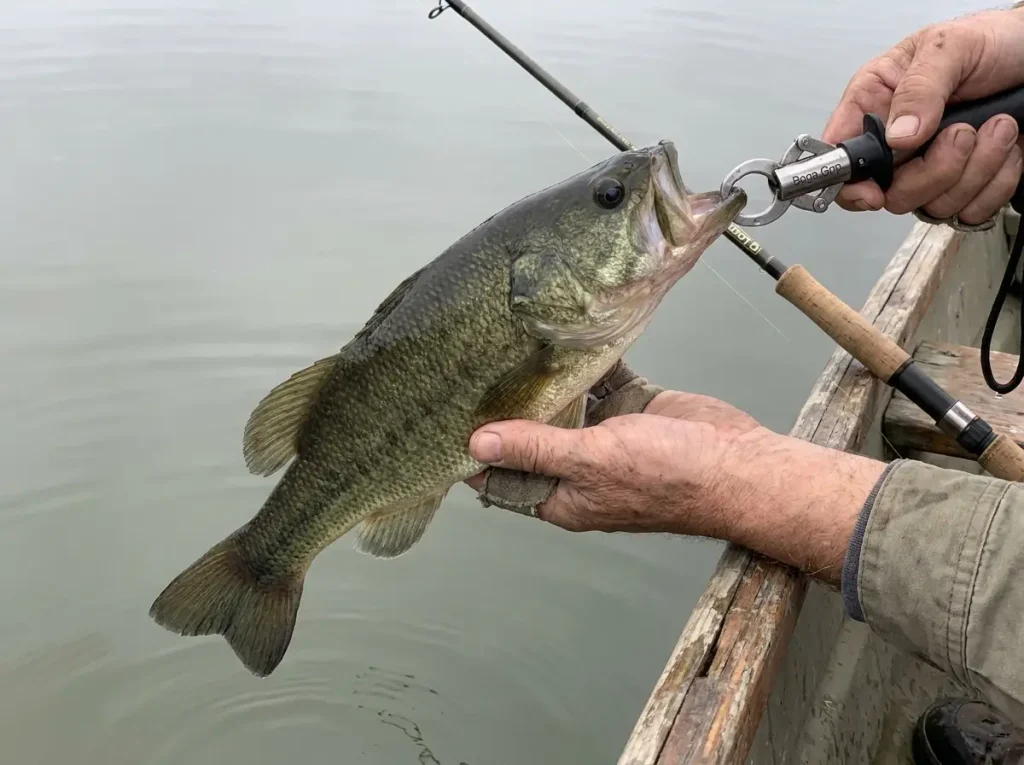
The grip sequence
- Bring the fish to the boat or shore. If the fish is still active, let it tire slightly or keep it in the water until it calms enough for a controlled grip.
- Hold the Boga Grip with your dominant hand, trigger facing inward. Pull back the trigger sleeve with your index finger or thumb to open the jaws.
- Position the open jaws around the tip of the fish’s lower jaw — the chin point, as far forward as the jaw extends. The dense cartilage here is the designed contact point.
- Release the trigger. The springs close the jaws and lock onto the lower jaw. You should feel the jaws seated on hard gristle, not sinking into soft tissue. If the grip feels like it’s on soft material, reposition.
- If you’re lifting the fish: immediately support its body weight with your free hand under the belly or pectoral fin area. The grip controls the head; your hand controls the weight.
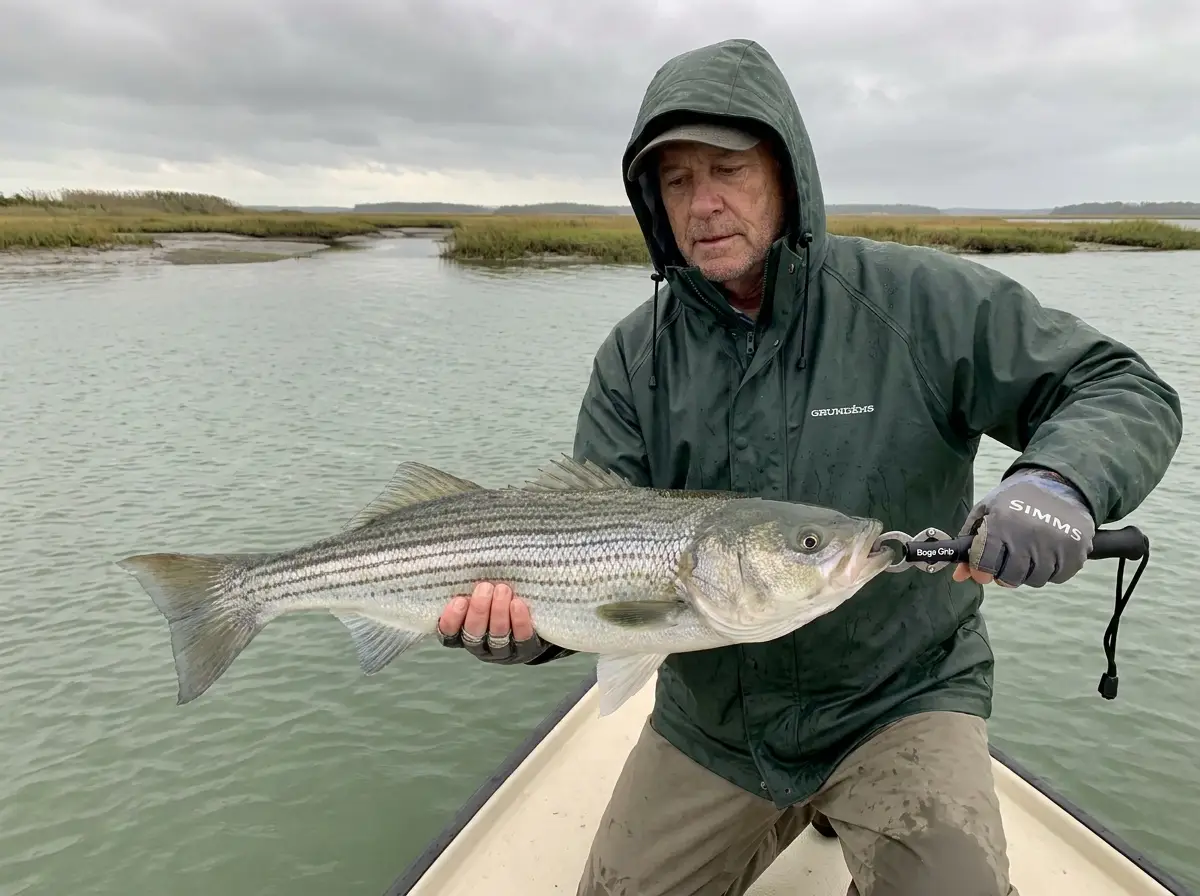
- For the photo: keep the fish horizontal. Rod or hand under the belly, Boga Grip on the jaw, fish parallel to the water. Quick photo — under five seconds in the air.
- To release: lower the fish to the water surface, pull back the trigger, and the jaws open. Let the fish swim free or hold it upright in the water for a moment if it needs to recover.
Reading the weight correctly
The scale reads accurately when the fish is hanging vertically and still. For a true weight, lower the fish from the grip until it hangs freely, wait for a still moment between thrashes, and read the scale. A fish that’s actively swimming or fighting will read lighter than actual weight because upward force from the fish’s movement reduces tension on the spring.
Pro tip: Zero your Boga Grip before each trip by hanging the empty tool and checking that the scale reads zero. A stretched spring from years of use reads light — if your 30-pound tool reads 28 lb on a certified hanging weight, it’s time to send it to Boga for calibration or replace the spring.
The Vertical Hold Problem — What the Research Shows
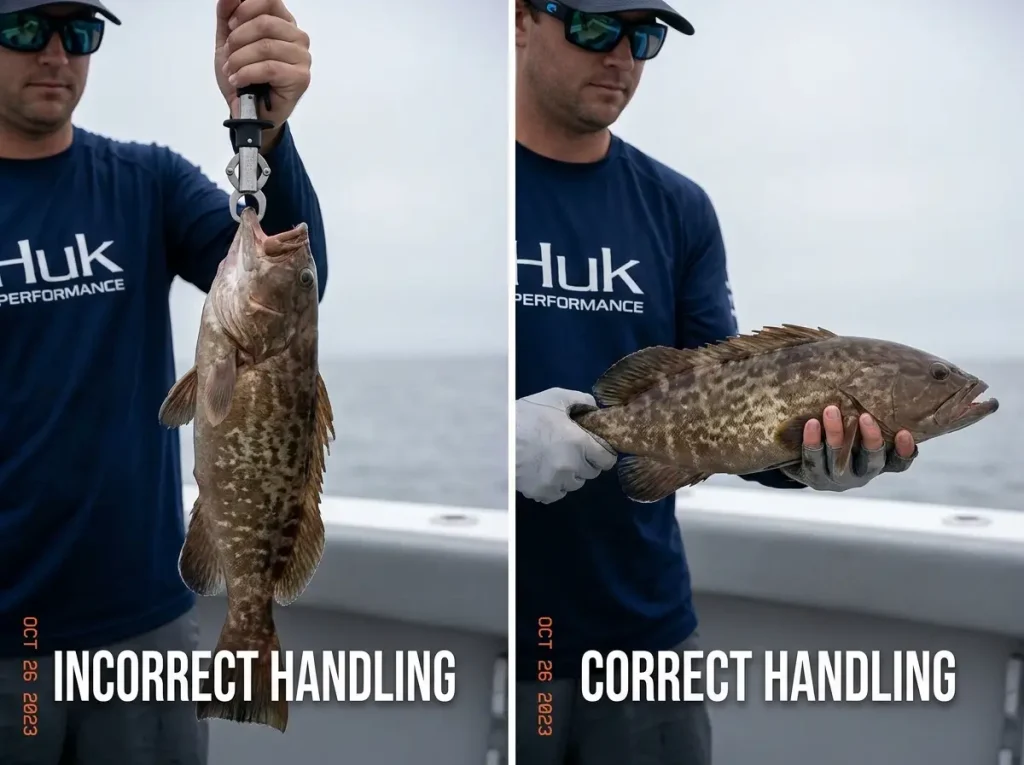
Why vertical matters for fish biology
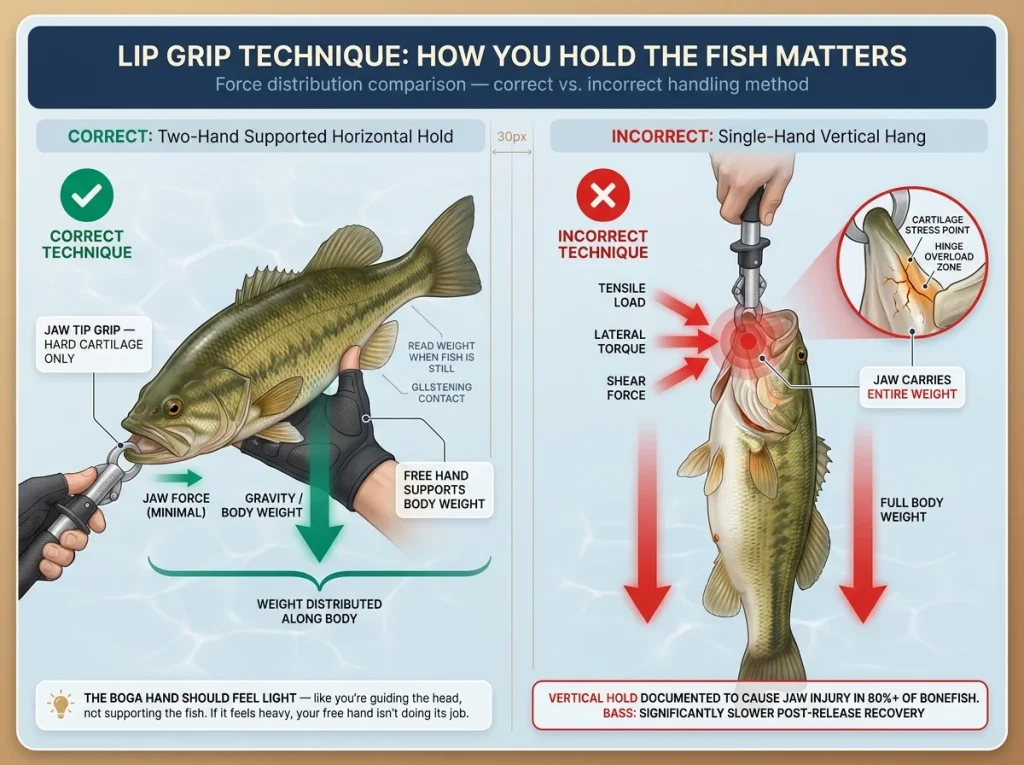
Fish are not designed to support their body weight on their jaw. In the water, the jaw experiences pulling and tearing forces — horizontal forces from struggling prey. Out of water, hanging a 3-pound bass fully vertical from the jaw tip means the entire body weight loads the jaw joint at an angle it has no structural reinforcement for. The jaw hinge of most fish is designed for horizontal force, not gravity-line tensile loading.
Research from Journal of Fish Biology and studies conducted at the Cape Eleuthera Institute documented the effects clearly: a study on bonefish found that lip-gripping devices caused mouth injuries in 80% of fish restrained in the water and 100% of fish held in the air, with 40% of injuries classified as severe — including separated tongues, jaw tears, and split mandibles. Bonefish are particularly vulnerable because of their small, delicate jaw construction.
For largemouth bass, the North American Journal of Fisheries Management study found less dramatic structural damage but documented that vertically-held fish took significantly longer to regain equilibrium after release — 33 seconds on average versus 7 seconds for fish handled with two-hand support. Longer recovery time means longer vulnerability to predators and more energy expenditure from the angling event.
The practical rule from the data
Fish over approximately two pounds: support the body with your free hand while the lip grip holds the jaw. No exceptions. The jaw carries the weight of the head; your hand carries everything else. This is not optional for conservation-minded anglers — it’s the technique that makes the tool work as intended.
For fish under two pounds, a brief vertical hold for a quick photo produces negligible documented harm for robust species like bass. For light-jawed species like bonefish, walleye, or crappie, support the body regardless of weight.
Pro tip: The quick test for whether you’re doing it right: the Boga Grip hand should feel light — like you’re just guiding the head, not supporting the fish. If the Boga hand feels heavy, your free hand isn’t doing its job.
Which Fish Tolerate Lip Grips — and Which Don’t
Species where lip grips make sense
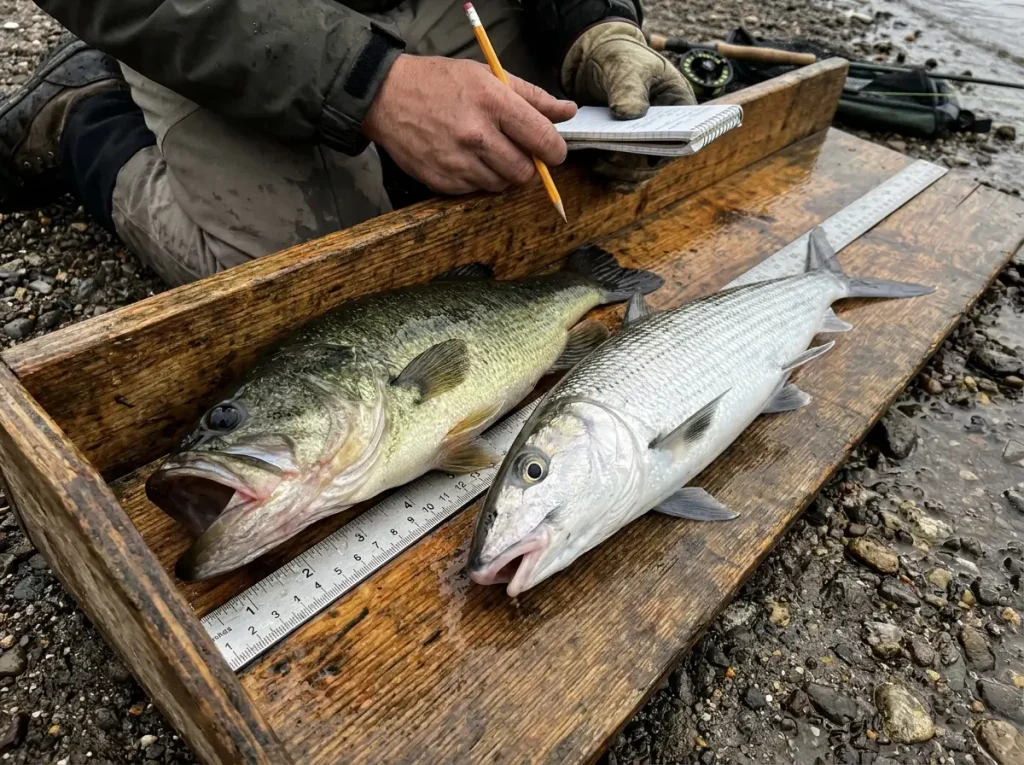
Lip grips are most appropriate for toothy species where bare-hand lipping creates real injury risk to the angler. Bluefish, king mackerel, snook, Spanish mackerel, pike, and musky all have teeth or gill plates that can cut or puncture a hand. A Boga Grip keeps the angler’s fingers away from the mouth while maintaining control of a fish that would otherwise require a net or a risky grip. This is the tool’s strongest use case — replacing a dangerous hand-lipping situation with a controlled, hands-free jaw lock.
Largemouth and smallmouth bass handle lip grips well. Their jaw construction is robust, and the hard cartilage at the chin tip takes a direct grip without damage when technique is correct. This is why lip grips became standard in bass tournament fishing — they provide consistent, reliable grip without the slime-stripping that hand contact produces.
Large inshore species — striped bass, red drum, snook — benefit from the Boga Grip because it allows one angler to control, weigh, and photograph a 20-pound fish without multiple people handling the fish. Less contact time, less slime removal, quicker return to water.
Species to handle differently
Bonefish should not be held by lip grip, period. The jaw injury data is clear and consistent across multiple studies. Bonefish should be cradled in the water and never lifted in the air — a wet-hand grip behind the head and under the body, keeping the fish horizontal and submerged during unhooking, is the correct handling protocol.
Trout, walleye, crappie, and panfish have relatively fragile jaw construction and are better handled with a wet-hand cradle or a gentle squeeze grip. The jaw cartilage on these species is thin enough that even a correctly placed lip grip creates more stress than necessary. Our fish hooking mortality coverage covers handling mortality by species in more detail.
Tarpon present a specific case: the jaw is strong enough, but tarpon should never be kept out of the water for extended periods and should not be taken aboard boats. For tarpon, a boat-side grip at the jaw for a quick photo while the fish remains in the water is acceptable; full air exposure with body hanging vertically is harmful regardless of the grip type.
Boga Grip vs Budget Alternatives
What the price difference buys
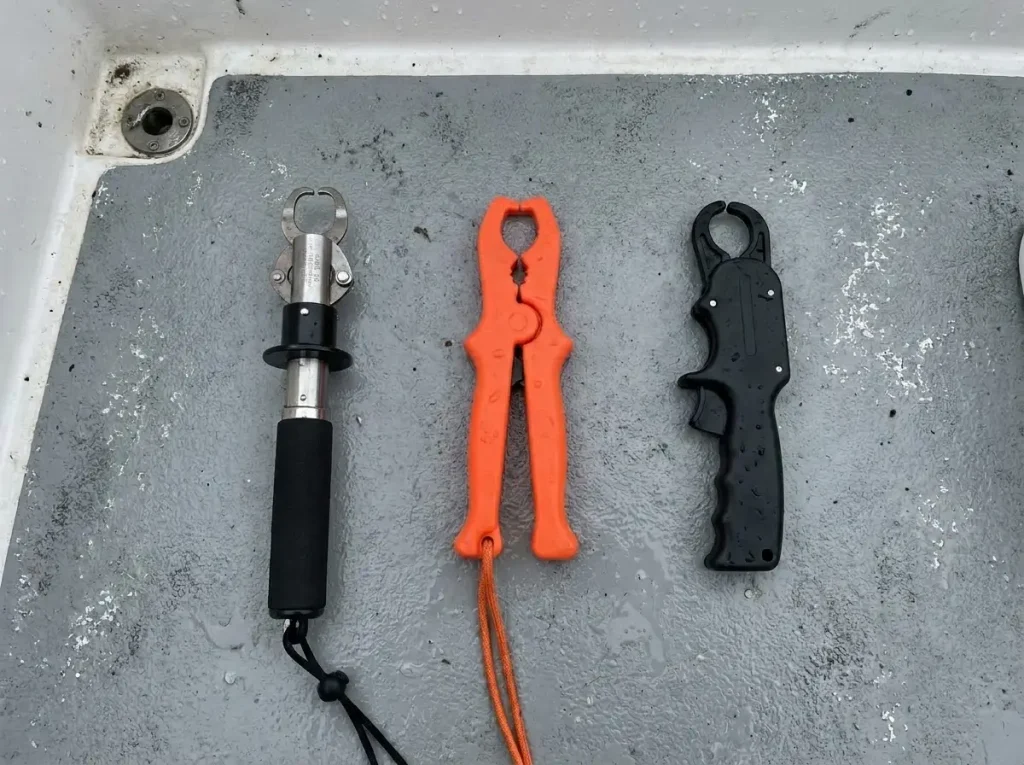
The original Boga Grip costs roughly $80-100 depending on model, which places it significantly above budget lip grippers at $15-30. The price difference buys three things: the rotating inner tube (critical safety feature), a IGFA-certifiable calibrated scale, and stainless/aluminum construction that handles years of saltwater use.
Budget pistol-grip style lip grippers — the Berkley Pistol Grip, Bass Pro pistol grip — are plastic-bodied tools that hold the jaw adequately for freshwater applications and casual saltwater use. They typically lack the rotating inner tube, which means they rely on the angler not letting the fish spin while gripped. For short presentations and quick releases on smaller fish, they’re adequate.
Floating plastic grips like the Rapala Floating Fish Gripper are useful for kayak and float tube anglers because they float if dropped, which a Boga Grip does not. They’re appropriately rated for bass and inshore fish under 20 pounds. They don’t include a scale.
Which to buy
If you fish for record-class fish or care about accurate on-the-water weights, the Boga Grip is the right tool. Its scale is the only lip grip scale certifiable with the IGFA, and the rotating tube construction is the most fish-safe option for large fish that thrash.
If you’re bass fishing or general inshore fishing without weight-specific goals, a quality mid-range pistol grip in the $25-40 range handles the job. Berkley, Rapala, and KastKing make durable versions. Spend the money you saved on a good pair of needle-nose pliers that you’ll use far more often.
Pro tip: Whatever grip you use, attach it to your PFD or tackle bag with a retractable lanyard or carabiner. Lip grips disappear overboard with surprising frequency, and a Boga Grip at the bottom of a lake is about $90 of lesson learned.
Maintenance, Calibration, and When to Replace
After every saltwater trip
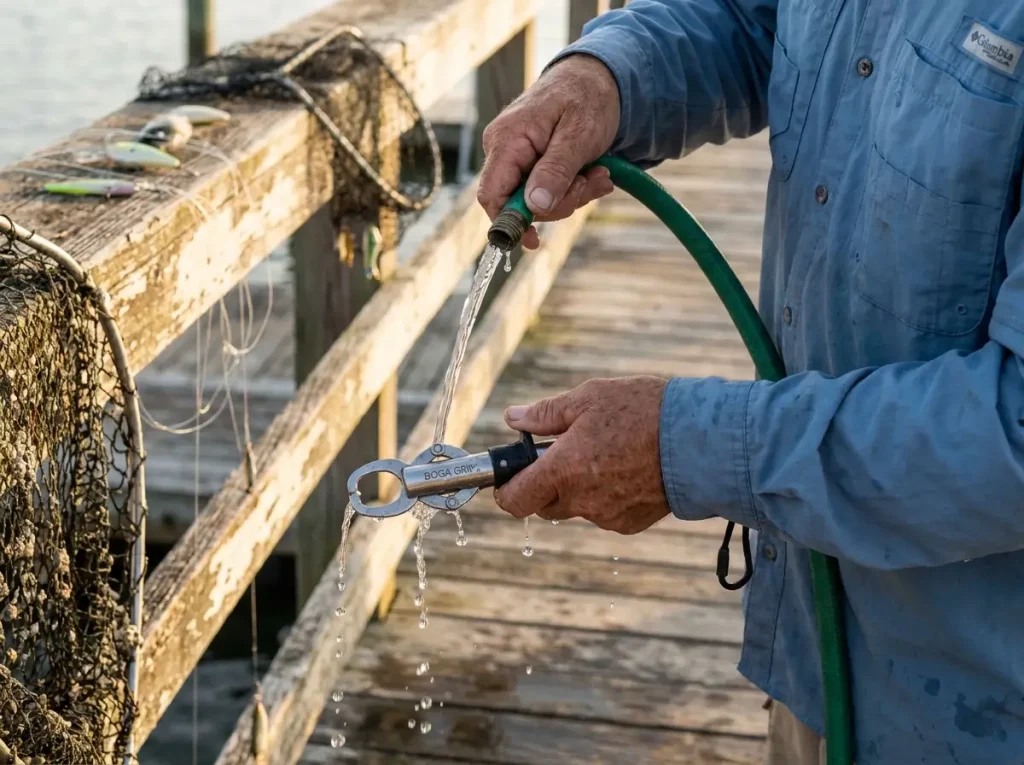
Rinse the Boga Grip thoroughly with fresh water after any saltwater use. Pay particular attention to the jaw mechanism — salt crystallizes in the spring housing and the trigger pivot, which degrades the trigger action over time. Hold the tool under running fresh water with the trigger activated several times to flush the mechanism. A brief soak in fresh water works better than a quick rinse for tools used in heavy saltwater.
Dry the tool and apply a very light coating of reel oil to the trigger pivot and the rotating joint between inner and outer tubes annually. Use WD-40 only as a rinse, never as a lubricant — it softens plastics and leaves a residue that attracts grit.
Scale accuracy and when it drifts
The internal spring scale stretches slightly over years of use under load, causing the scale to read light. This is normal. To check accuracy: use a known certified weight (a postal scale and an object of known weight works) and compare. A Boga Grip that reads 2 pounds light on a 20-pound fish is providing inaccurate weight data for any record documentation.
Boga Grip offers scale recalibration service. For competition or record fishing, send the tool in for IGFA verification before targeting a target species. For general fishing where exact weight doesn’t matter, a grip that reads 1-2 pounds light doesn’t affect its usefulness as a handling tool.
When to replace
Replace the tool when the jaws no longer close with firm spring pressure, when the trigger mechanism requires significant force to operate (corroded spring), or when the rotating joint has seized (the inner tube no longer rotates freely). A seized inner tube turns the tool from a safe fish-handling device into a fixed jaw grip that torques against fish movement — that’s the point where the tool is no longer performing its primary safety function.
Conclusion
The Boga Grip is an excellent tool used with poor technique by most people who own one. The technique is not complicated: grip the jaw tip on hard cartilage, support the body with the free hand, keep the fish horizontal, finish the photo in under five seconds, and get the fish back in the water. That sequence, executed consistently, makes the grip safe and effective for the fish species it’s appropriate for.
Three things to change immediately if you’re a standard lip-grip user: stop lifting fish over two pounds with the jaw alone — support the belly every time; stop using the grip on bonefish entirely; and rinse the mechanism in fresh water after saltwater use. The first two protect the fish; the last one protects your investment.
FAQ
How do you use a Boga Grip correctly?
Open the jaws by pulling the trigger, position the jaws around the tip of the lower jawbone (the hard cartilage at the chin point), and release the trigger to lock. For any fish over two pounds, immediately support the body weight with your free hand. Keep the fish horizontal during the photo and return it to the water quickly.
Can a Boga Grip injure a fish?
Yes, if used incorrectly. Holding fish vertically by the lip grip alone — allowing all body weight to load the jaw joint — causes documented harm in several species. Bonefish are especially vulnerable, with jaw injuries documented in studies in over 80% of fish held in the air by lip grippers. Bass tolerate correctly-used lip grips well, but all fish benefit from horizontal, supported holds.
What is the difference between a Boga Grip and a regular lip gripper?
The Boga Grip includes a built-in calibrated scale and, critically, an inner tube that rotates independently of the outer grip sleeve. This rotating design absorbs the torque when a fish twists, preventing jaw tearing. Budget lip grippers are typically fixed-jaw designs without this rotation feature. The Boga scale can also be IGFA-certified for record submissions.
Which fish should not be handled with a lip grip?
Bonefish should never be held in the air with a lip grip — the documented injury rate is too high. Trout, walleye, crappie, and most panfish are better handled with a wet-hand cradle. Tarpon should remain in the water during handling regardless of grip type. Lip grips are most appropriate for toothy species (bluefish, pike, king mackerel) and robust-jawed species (bass, stripers, red drum).
How often should I calibrate my Boga Grip?
Check the scale annually against a certified weight. For record fishing, send the tool to Boga for IGFA calibration before targeting a specific species. General-use scales that read 1-2 pounds light don’t affect the tool’s usefulness for fish handling but will produce inaccurate weights for documentation purposes.
Risk Disclaimer: Fishing, boating, and all related outdoor activities involve inherent risks that
can lead to injury. The information provided on Master Fishing Mag is for educational and informational purposes
only. While we strive for accuracy, the information, techniques, and advice on gear and safety are not a substitute
for your own best judgment, local knowledge, and adherence to official regulations. Fishing regulations, including
seasons, size limits, and species restrictions, change frequently and vary by location. Always consult the latest
official regulations from your local fish and wildlife agency before heading out. Proper handling of hooks, knives,
and other sharp equipment is essential for safety. Furthermore, be aware of local fish consumption advisories. By
using this website, you agree that you are solely responsible for your own safety and for complying with all
applicable laws. Any reliance you place on our content is strictly at your own risk. Master Fishing Mag and its
authors will not be held liable for any injury, damage, or loss sustained in connection with the use of the
information herein.
Affiliate Disclosure: We are a participant in the Amazon Services LLC Associates Program, an
affiliate advertising program designed to provide a means for us to earn advertising fees by advertising and linking
to Amazon.com. As an Amazon Associate, we earn from qualifying purchases. We also participate in other affiliate
programs and may receive a commission on products purchased through our links, at no extra cost to you. Additional
terms are found in the terms of service.