In this article
You watched the water temperature creep from 36 to 41 degrees over three days, drove an hour to the river before sunrise, and spent the morning dragging a jig through empty water. The walleye were there — they’d been there for a week. You just fished the wrong seam at the wrong speed.
Pre-spawn river walleye fishing has a reputation for being the best bite of the year, and it is — when you understand the narrow window you’re working with. These fish are staging in predictable spots, eating aggressively before the spawn shuts them down, and responding to presentations that most anglers overcomplicate. After years of chasing spring walleye in river current, here’s what actually puts fish in the net.
Quick Answer: To catch pre-spawn walleye in rivers, follow this approach:
- Target water temperatures between 40°F and 50°F — the peak feeding window
- Find current breaks: wing dams, tributary mouths, eddies, and riprap edges
- Use a 1/4 to 3/8 oz jig tipped with a live minnow, cast upstream, and drift it slow
- Match jig weight to current speed — maintain bottom contact without snagging
- Slow down your retrieve in water below 42°F — cold walleye won’t chase
Why Pre-Spawn Is the Best River Walleye Window
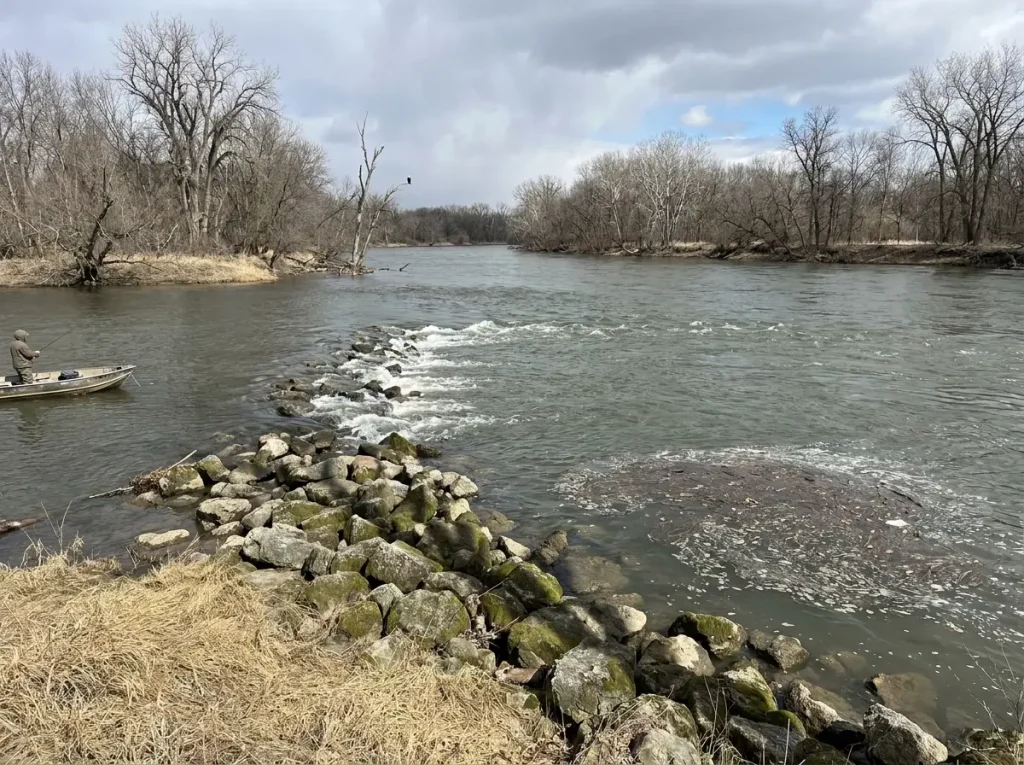
The pre-spawn period lasts roughly two to four weeks depending on your latitude and how fast temperatures climb. During this window, walleye are doing something they rarely do the rest of the year: stacking up in predictable, fishable locations while actively feeding.
Here’s what’s happening below the surface. As water temperatures push from the upper 30s toward the mid-40s, walleye leave their deep winter holding areas and begin migrating toward spawning grounds — typically shallow gravel bars, rocky shorelines, and tributary mouths with moderate current. But they don’t rush straight to the spawning flats. They stage.
What Staging Actually Means
Staging walleye park themselves on the last significant piece of structure between their winter habitat and the spawning grounds. In rivers, that usually means the downstream side of wing dams, the edges of deep scour holes below rapids, or the slack-water pockets where tributaries enter the main channel. These spots offer two things walleye need: relief from the main current and easy access to food drifting by.
The staging period is when walleye eat most aggressively. They’re building energy reserves for the spawn, which will shut down their feeding for one to two weeks. Once spawning actually begins — typically when water hits 45-50°F — the fish get lockjaw. The window between staging and spawning is your shot.
Why Rivers Fish Better Than Lakes in Spring
Rivers warm unevenly, and that’s an advantage. South-facing banks, shallow tributaries, and slack-water areas heat up faster than the main channel. Walleye concentrate in these micro-warming zones because baitfish do the same.
On a lake, pre-spawn walleye can be scattered across miles of structureless flats. In a river, current funnels them into spots you can identify from the bank.
Pro tip: The best pre-spawn bite often happens on a warming trend — three or four consecutive days where the water temperature climbs at least one degree per day. A single warm day after a cold snap doesn’t trigger the same movement. Track the USGS gauge data for your river and watch for sustained temperature trends, not one-day spikes.
Water Temperature Triggers That Time the Bite
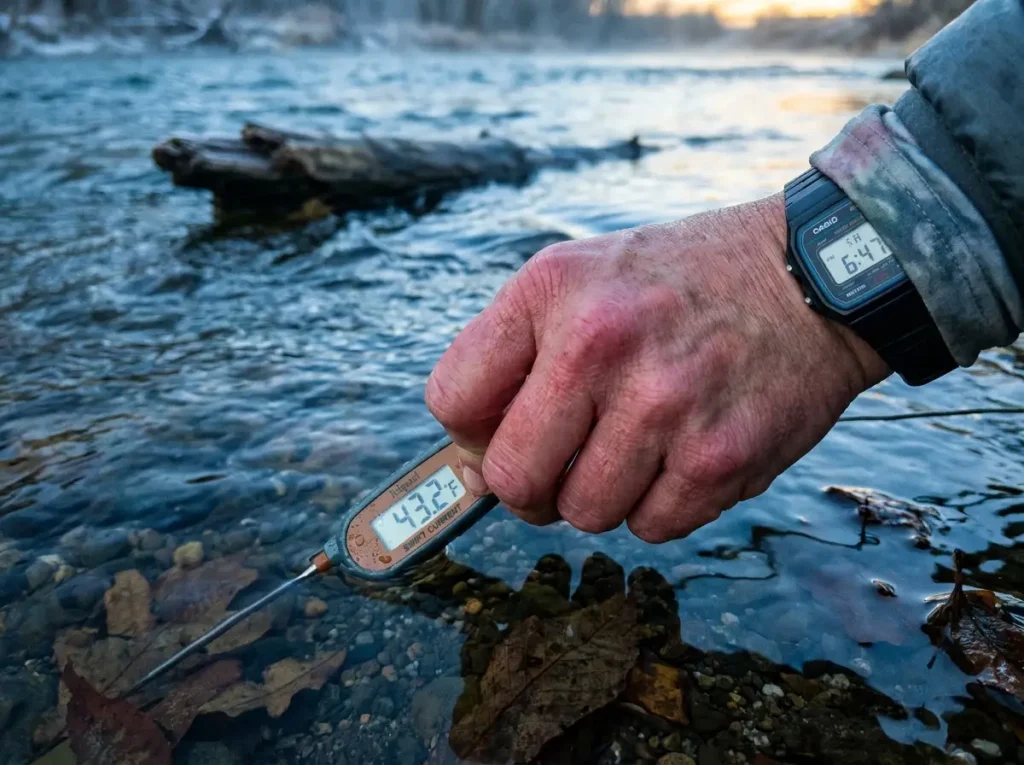
If you take one thing from this article, let it be this: water temperature controls everything about spring walleye behavior. Not the calendar, not the moon phase, not what your buddy says about “they were biting last week.” The thermometer tells the truth.
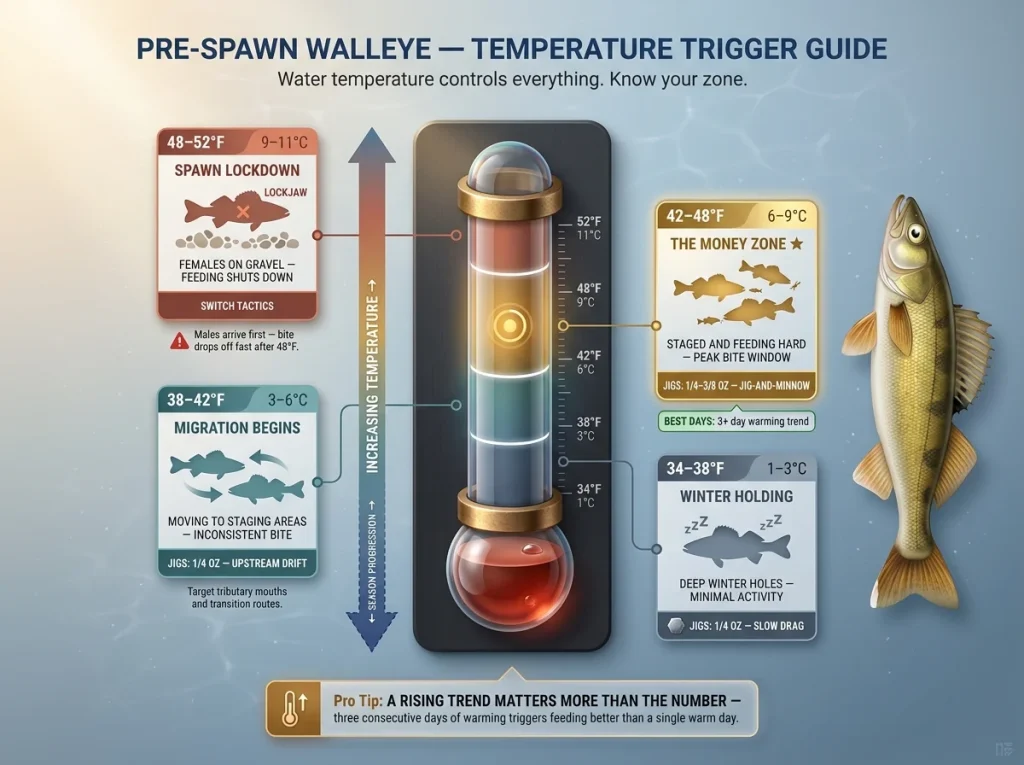
The Four Temperature Zones
34-38°F: Too early. Walleye are still in deep winter holes. They’ll eat, but slowly and sporadically. You can catch a few, but you’re working too hard for too little.
38-42°F: Migration begins. Fish start moving from wintering areas toward staging spots. The bite is inconsistent because walleye are traveling, not settled. Focus on the transition routes — deep channel edges, the upstream face of wing dams, and the mouths of tributaries that carry slightly warmer water.
42-48°F: The money zone. Walleye are staged and feeding hard. This is when the jig-and-minnow bite is at its peak. Fish are aggressive enough to hit a well-presented jig but still oriented to the bottom where your presentation needs to be. Two to three weeks of this is what you’re chasing.
48-52°F: Spawning imminent. Males move shallow first and become less interested in eating. Females follow and lock down on spawning substrate. The bite drops off fast. If you’re still fishing the staging areas and getting nothing, the fish have already moved past you.
How to Read the Trend, Not Just the Number
A rising trend matters more than the absolute temperature. Walleye that have experienced three days of steady warming from 40 to 44°F are far more active than walleye sitting in water that’s been stuck at 44°F for a week. The rate of change triggers feeding activity. Stable conditions after a rise produce the best days.
Check water temperatures at the same time each day. Morning readings before the sun hits the water give you the baseline. Afternoon readings on south-facing banks tell you where the warmest water is concentrating.
Where Pre-Spawn Walleye Stage in River Systems
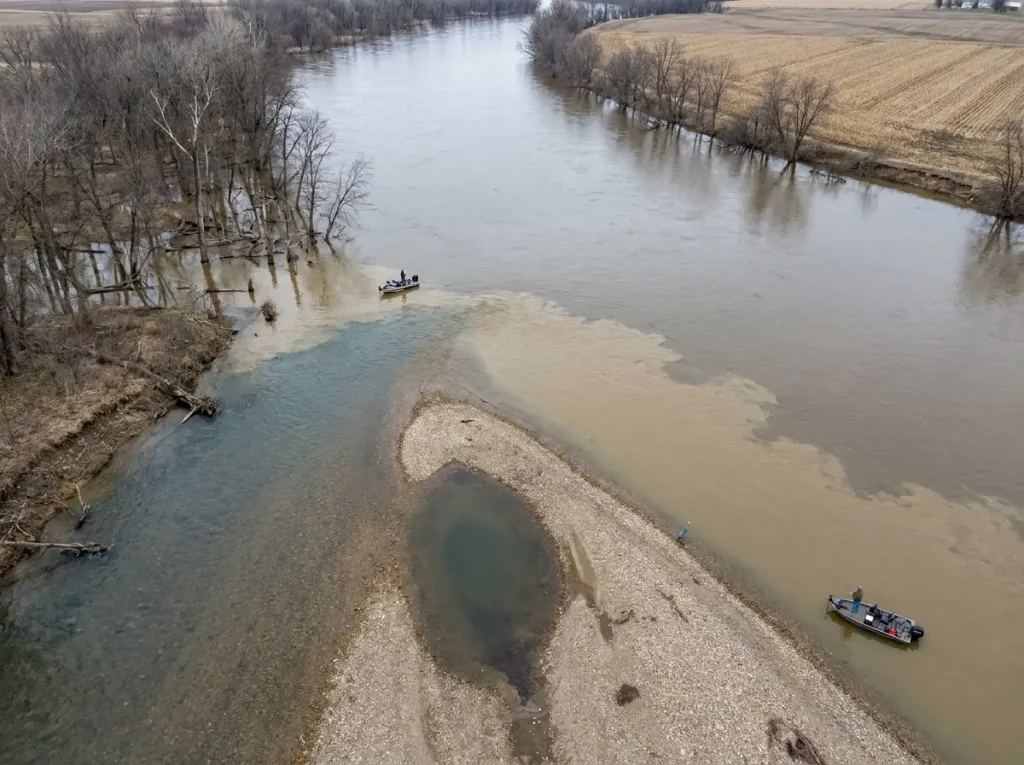
Finding the right water is 80% of river walleye fishing. You can have perfect technique and the right jig weight, but if you’re casting into dead water where no walleye are holding, none of that matters.
Wing Dams and Riprap
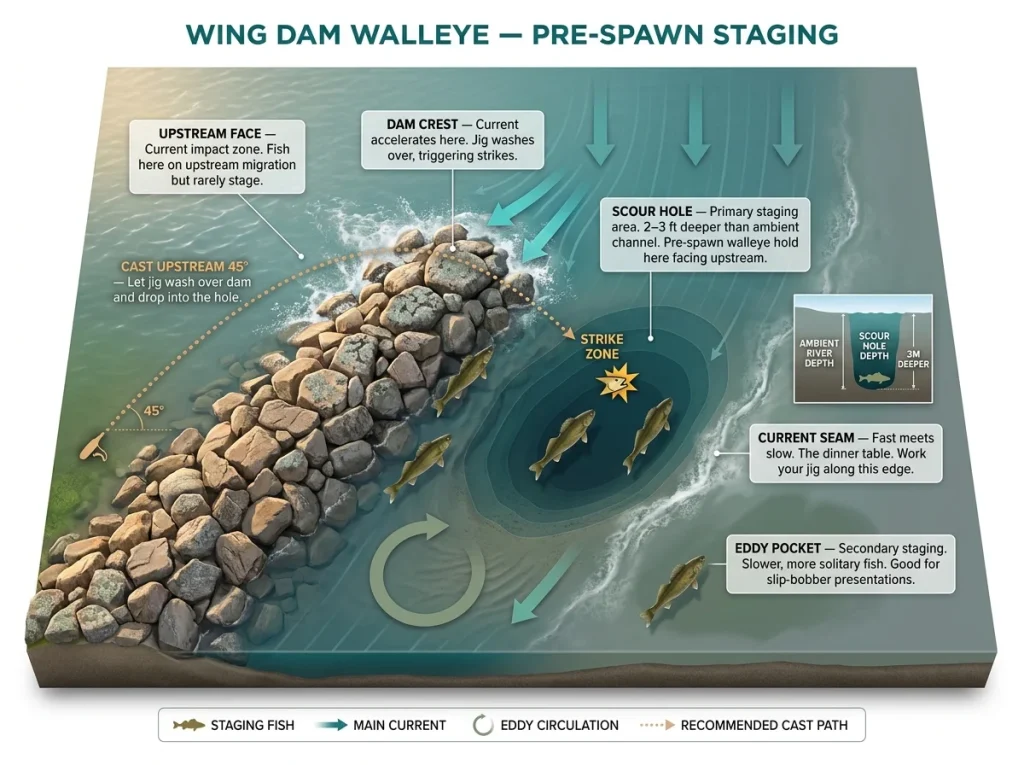
Wing dams are the classic river walleye structure, and they earn the reputation. These rock structures extend from the bank into the main channel, creating a current break on the downstream side and a scour hole where the water accelerates over the top. Pre-spawn walleye hold in the scour hole and along the downstream edge, facing into the current, picking off baitfish and crawdads that tumble over the dam.
Work the downstream side methodically. Cast your jig to the upstream face, let it wash over the dam with the current, and slow it down as it drops into the deeper water behind the structure. Most strikes happen in that transition zone where fast water meets slow.
Tributary Mouths
Where a smaller creek or river enters the main channel, you get a mixing zone that’s almost always a few degrees warmer than the surrounding water. Baitfish concentrate in these areas, and walleye follow. The gravel bars that form at tributary mouths also provide spawning substrate, so pre-spawn walleye stage nearby.
Fish the color line — the visible boundary where the clearer tributary water meets the murkier main river. Walleye sit on the clean-water side of that line, using the turbidity as cover while watching for bait coming out of the tributary.
Eddies and Slack-Water Pockets
Any place where the main current wraps around an obstruction and creates a pocket of slower water is worth a few casts. Bridge pilings, large boulders, fallen trees, and inside bends all create eddies where walleye can rest without fighting the current. These aren’t always the biggest fish, but on a slow day they’re often the most willing.
Pro tip: Don’t walk past the obvious spots just because you think everyone fishes them. On rivers, the best structure is the best structure every year. That wing dam that held walleye last March will hold them again this March. Fish the high-percentage spots first, then explore.
Jig-and-Minnow: The River Walleye Standard
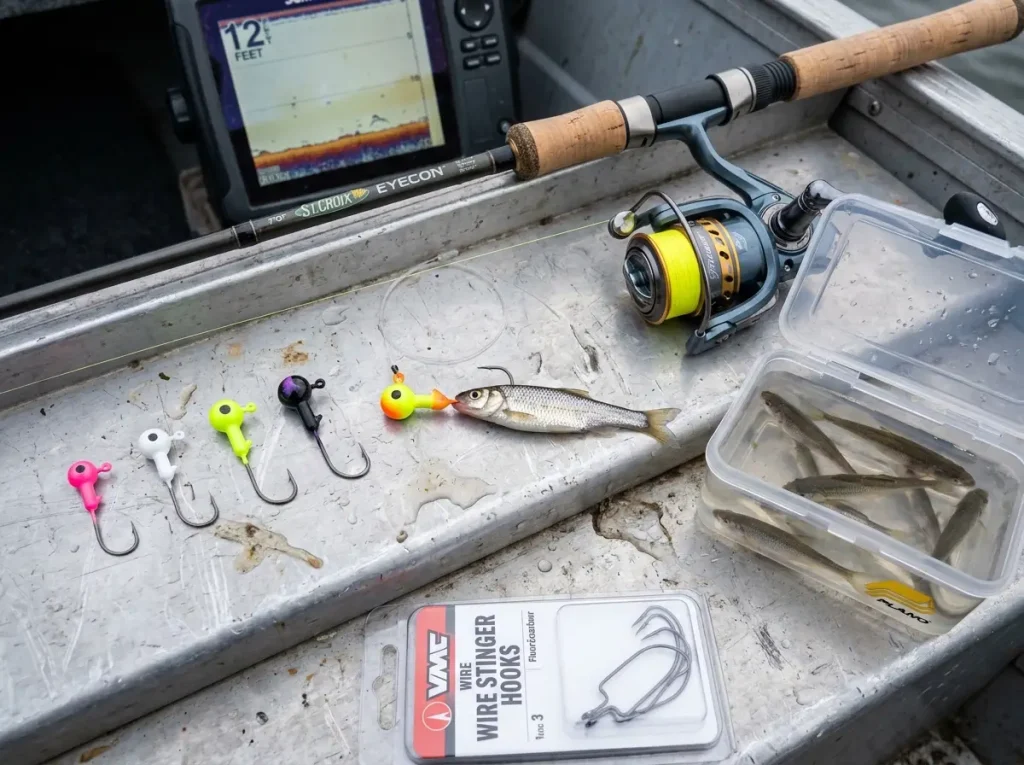
The jig and minnow has caught more river walleye than every other presentation combined, and there’s a reason: it puts a natural bait right on the bottom where pre-spawn walleye are holding, and it lets you control the speed precisely.
Matching Jig Weight to Current
This is where most anglers get it wrong. Too heavy and you’re dragging bottom, getting snagged on every rock. Too light and you lose contact and can’t feel the bite. The right weight keeps you ticking bottom — touching down every few seconds as the current pushes your jig downstream.
General guide: 1/8 oz in slack water or eddies. 1/4 oz in moderate current. 3/8 oz in main channel seams. 1/2 oz in heavy current or deep water. Adjust constantly — if you’re not occasionally losing bottom contact, you’re too heavy. If you can’t feel the bottom at all, you’re too light.
The Upstream Cast and Drift
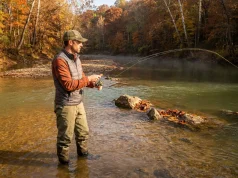
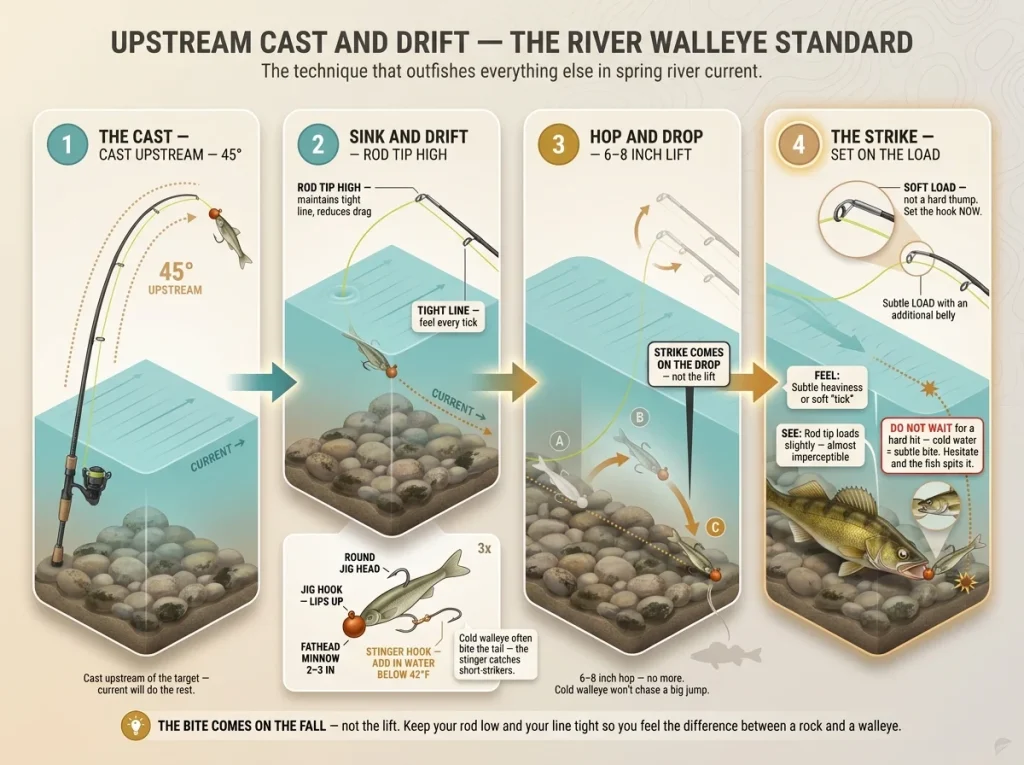
Cast upstream at a 45-degree angle and let the jig swing downstream with the current while maintaining a tight line. As the jig drifts, lift your rod tip in short hops — six to eight inches, then let it fall back. The bite usually comes on the drop.
Walleye inhale the jig as it pauses and settles. Set the hook when you feel a subtle heaviness or a soft “tick” — not a hard thump. Pre-spawn walleye in cold water don’t smash baits. They mouth them.
Minnow Selection and Rigging
Fathead minnows in the 2 to 3-inch range are the standard for pre-spawn walleye. Hook them through the lips from bottom to top on your jig — this keeps them alive longest and gives the most natural presentation in current. In water below 42°F, add a stinger hook (a small treble on a short wire leader attached to your jig) because cold walleye often hit short, grabbing the tail of the minnow instead of the head.
Beyond the Jig: Presentations for Tough Conditions
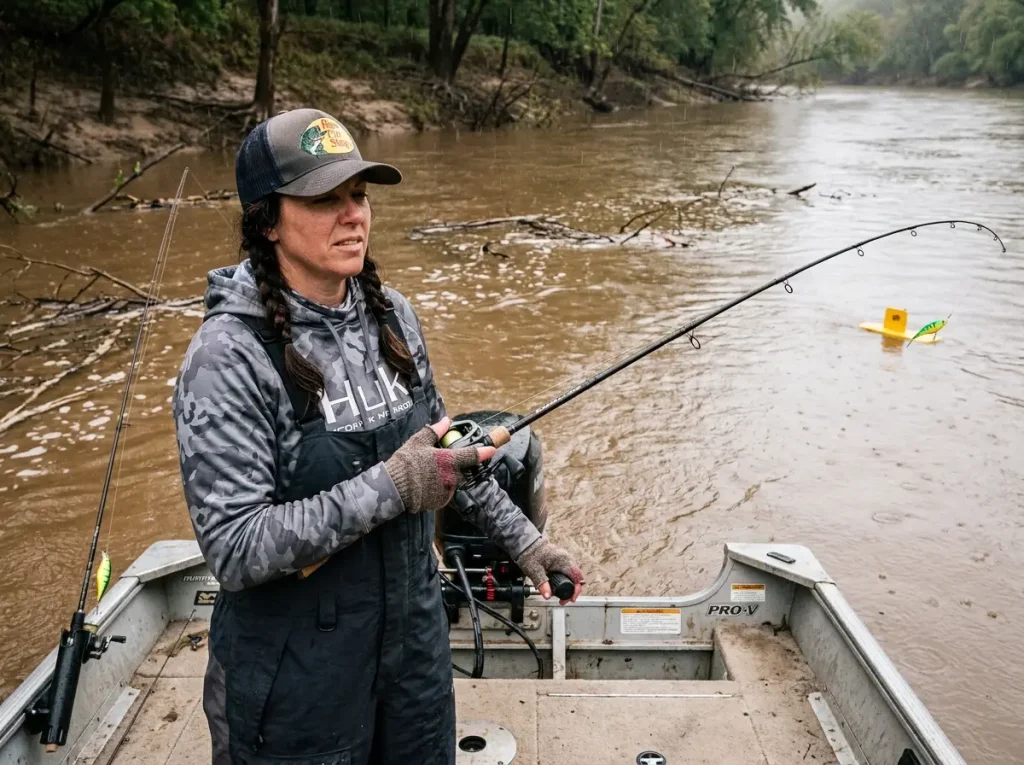
The jig-and-minnow is king, but it’s not the only tool. When conditions get difficult — high water, heavy mud, or walleye that just won’t commit to a jig — these backup presentations save the day.
Slow-Trolling Crankbaits in Stained Water
When the river blows out and visibility drops below six inches, walleye can’t see your jig well enough to track it. Switch to a shallow-running crankbait in bright colors — firetiger, chartreuse-blue, or hot orange. Slow-troll upstream against the current at barely above idle speed so the crankbait wobbles right above the bottom. The vibration and color give walleye something to home in on when they can’t use their eyes.
Stick with blade baits in water that’s too deep or fast for crankbaits. Vertical jigging a blade bait in slack-water pockets behind wing dams produces reaction strikes from walleye that won’t chase a horizontal presentation.
Slip-Bobber and Minnow for Finicky Fish
Sometimes pre-spawn walleye want a bait that’s sitting still. A slip-bobber rig with a live minnow suspended 6 to 12 inches above the bottom in an eddy or behind a wing dam is hard for a staged walleye to ignore. Set your bobber stop so the minnow hangs just above the structure where fish are holding. This works especially well in water below 40°F when walleye are sluggish and won’t move far to eat.
Soft Plastics on a Jig Head
When you run out of minnows — or when regulations prohibit live bait — a 3-inch paddle-tail soft plastic on a jig head fishes almost as well. The key is scent. Dip your plastic in a scent like Berkley Gulp or Pro-Cure, and fish it the same way you’d fish a jig-and-minnow: upstream cast, slow drift, bottom contact. The plastic gives you more durability — one bait lasts five fish instead of one — and the added vibration from the paddle tail can trigger strikes that a dead minnow won’t.
Pro tip: In really cold water (below 40°F), try tipping your jig with just the head of a minnow instead of the whole fish. The scent disperses faster, the profile is smaller, and cold walleye seem more willing to commit to a bite-sized offering. It sounds wrong, but the scent trail does the recruiting work.
Shore Fishing Tactics: No Boat Required
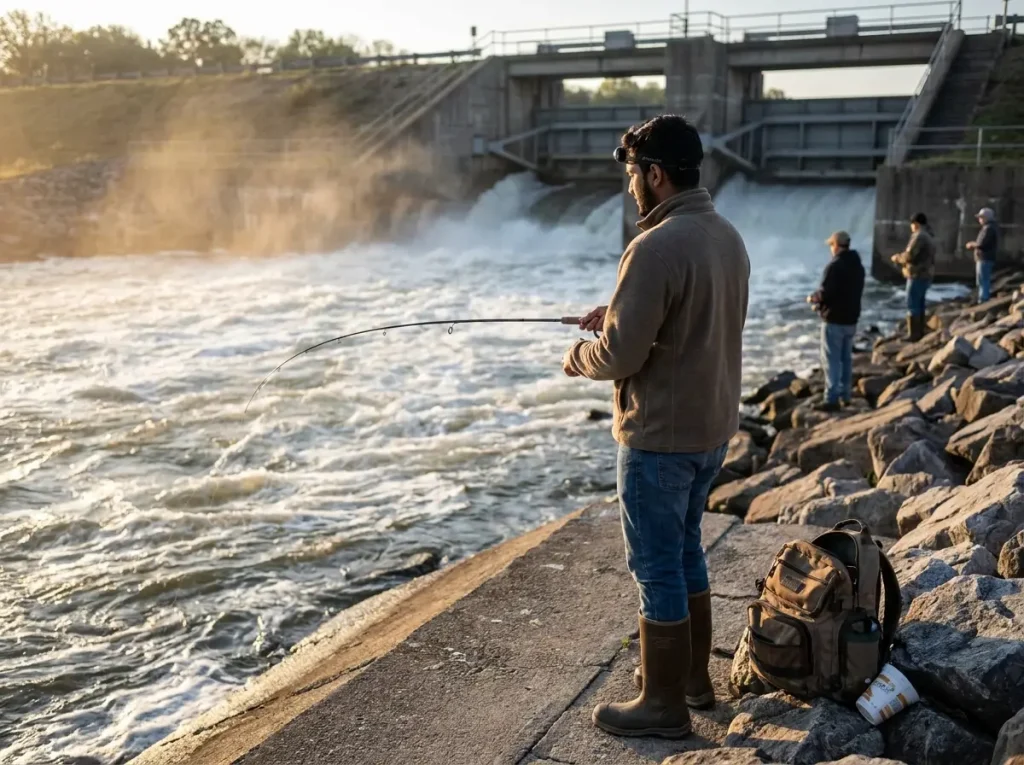
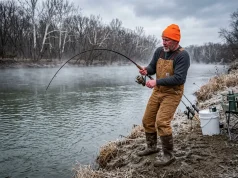
You don’t need a $40,000 boat to catch spring river walleye. Some of the best pre-spawn fishing happens from the bank, especially below dams and at public access points where walleye stack up during their upstream migration.
Dam Tailraces: The Great Equalizer
Below every river dam, there’s a tailrace where the discharge creates turbulent, oxygen-rich water that attracts baitfish and walleye. During the pre-spawn run, walleye pile up below these dams because they can’t migrate any farther upstream. The concentration of fish in a small area is the shore angler’s biggest advantage.
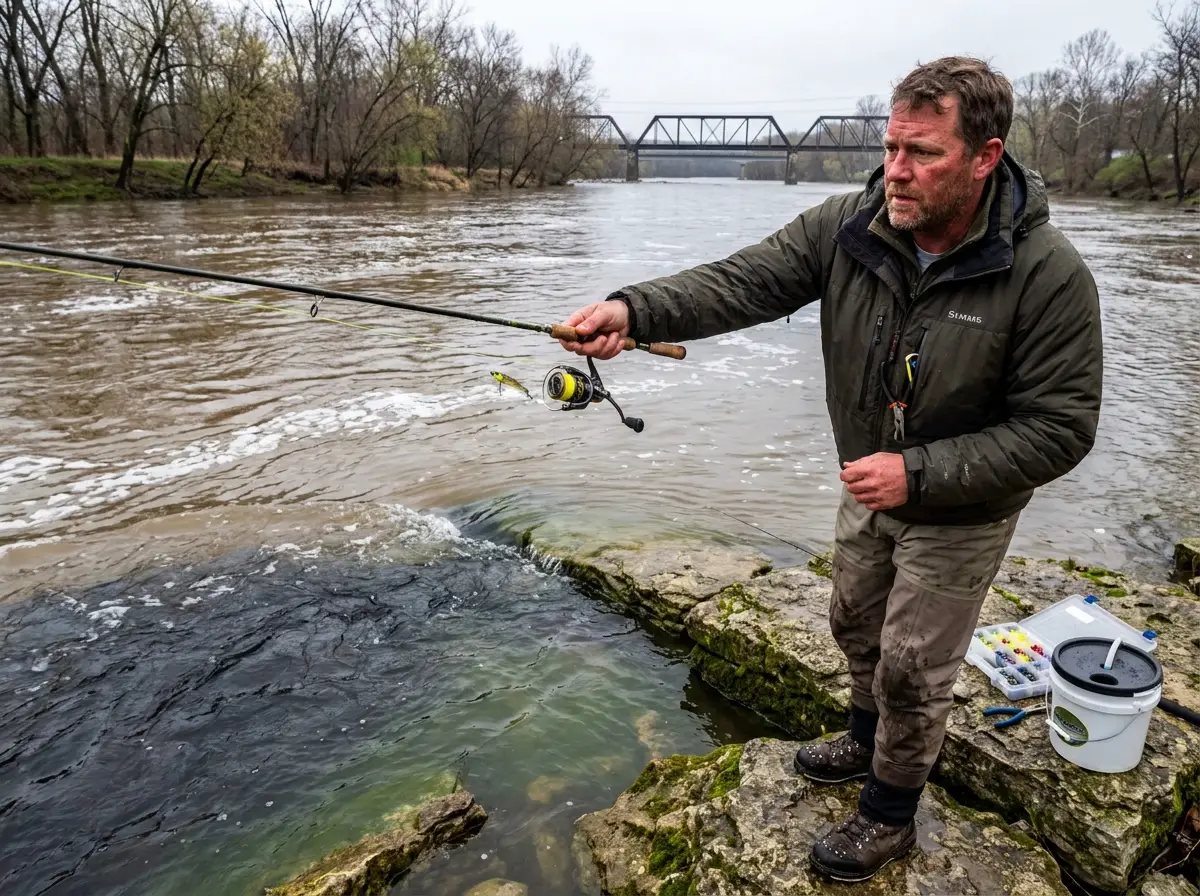
Fish the edges of the turbulent flow, not the whitewater itself. Walleye hold in the transition zone where the boiling water calms down, facing upstream and intercepting food tumbling through the discharge. A 3/8-ounce jig cast into the turbulence and allowed to wash into the calmer water mimics natural bait delivery.
Riprap Banks and Public Access Points
State highway departments built your best walleye spots. Bridge abutments, road causeways, and engineered riprap banks all create current breaks that hold walleye. Walk the bank slowly and fan-cast each section with your jig, working from the upstream end of the structure to the downstream end. Pay special attention to any point where the riprap transitions to natural bank — that change in bottom composition often concentrates fish.
Shore Gear Adjustments
From shore, you can’t reposition the way a boat angler can, so your rod needs to do more work. Use a 7 to 7.5-foot medium-light spinning rod for casting distance and sensitivity. Spool with 10-pound hi-vis braid and tie an 18-inch fluorocarbon leader to reduce visibility in clear water. The longer rod lets you reach seams and eddies that shorter rods can’t, and the braided line transmits every tick and bump from the bottom so you don’t miss the subtle cold-water bite.
Pro tip: If you’re fishing below a dam, check the generation schedule. Many hydroelectric dams release water on a schedule that creates predictable flow changes throughout the day. The best bite often happens during the first hour after a flow increase — fresh water pushes bait downstream and triggers a feeding response. The USGS gauge for your river shows these patterns.
Reading River Conditions: When to Go and When to Stay Home
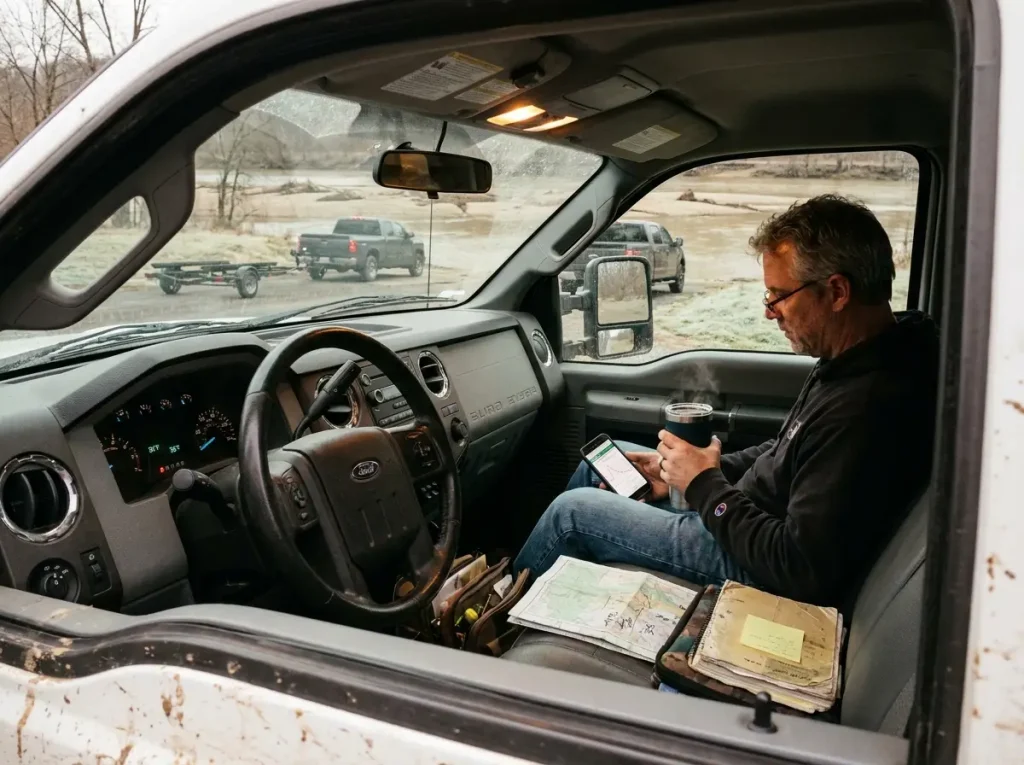
Knowing when NOT to fish saves you as many trips as knowing where to cast. River walleye fishing is entirely condition-dependent, and the best anglers check three things before they leave the house.
Water Level and Trend
Falling water is almost always better than rising water for river walleye. As the river drops after a rain event, walleye move out of flooded backwaters and concentrate along the main channel structures. Rising water scatters them into timber, brush, and flooded fields where they’re nearly impossible to target efficiently.
Check the USGS hydrograph for your river. You want a steady decline — one to two inches per day — after the peak. The sweet spot is usually two to four days after the river crests, when the water has cleared enough to fish but the level is still elevated enough that walleye are pushed tight to structure.
Water Clarity
Walleye are visual predators with exceptional low-light vision, but they still need some visibility to hunt. The ideal clarity for river walleye is 12 to 24 inches of visibility — enough for them to see your jig from a few feet away, but murky enough that they feel comfortable feeding during daylight hours.
Below 6 inches of visibility, switch from jigs to vibrating baits that walleye can find with their lateral line. Above 36 inches of clarity, fish early morning and late evening when the low light activates walleye feeding behavior. That midday bite that works in stained water shuts off completely in clear conditions.
Wind and Weather
A light upstream wind is the shore angler’s friend — it slows your jig’s drift and extends your presentation time in the strike zone. A strong downstream wind pushes your bait too fast and makes bottom contact impossible with reasonable jig weights. If the wind is howling downstream, fish the sheltered bank or wait for a calmer day.
Overcast, stable barometric pressure days produce the most consistent pre-spawn walleye activity. A rapidly falling barometer before a front can trigger a short burst of aggressive feeding, but the post-frontal high-pressure bluebird days are usually the worst. If you’ve got a choice, fish the day before the front, not the day after.
Conclusion
The pre-spawn window comes down to three decisions. First, time it right — watch water temperatures, not calendar dates, and fish the 42-48°F zone when walleye are staged and eating hard.
Second, find the current breaks. Wing dams, tributary mouths, dam tailraces, and riprap edges hold fish year after year because the structure doesn’t move. Third, slow down. Cold-water walleye don’t chase. A jig drifting at current speed with a live minnow, ticking bottom every few seconds, catches more fish than any aggressive technique.
The pre-spawn bite lasts two to four weeks. It’s the most predictable, concentrated walleye fishing of the year. Check your river’s gauge data tonight, rig a few jigs, and be on the water when temperatures push through 42 degrees. The fish are already there.
Q1 What water temperature do walleye spawn in rivers?
River walleye typically spawn when water temperatures reach 45-50°F, though males begin moving to spawning areas at 42-44°F. According to the Iowa DNR, spawning happens over gravel and rock substrate in areas with moderate current. The actual spawn lasts one to two weeks, during which feeding drops significantly.
Q2 Where do walleye stage before spawning in rivers?
Pre-spawn walleye stage on the downstream side of wing dams, in scour holes below rapids, at tributary mouths, and along riprap banks. They choose spots that offer current relief with easy access to food. These staging areas are usually the last major structure between deep wintering holes and shallow spawning flats.
Q3 What is the best bait for pre-spawn walleye?
A jig tipped with a live fathead minnow is the most effective pre-spawn walleye bait in rivers. Use 1 or 4 to 3 or 8 oz jig heads matched to the current speed and hook the minnow through the lips. Add a stinger hook in water below 42°F because cold walleye often grab the minnow’s tail first.
Q4 How do you fish for walleye in river current?
Cast upstream at a 45-degree angle and let your jig drift downstream while maintaining bottom contact. Lift the rod tip in short hops and let the jig fall — strikes come on the drop. Match your jig weight to the current so you’re ticking bottom every few seconds without dragging or snagging constantly.
Q5 When do walleye start their spring run?
Walleye begin migrating toward spawning areas when water temperatures consistently reach the upper 30s to low 40s. In northern states, that’s typically late March through mid-April. The timing varies by latitude and by river system — southern rivers start earlier. Track your local USGS water temperature data rather than relying on calendar dates.
Risk Disclaimer: Fishing, boating, and all related outdoor activities involve inherent risks that
can lead to injury. The information provided on Master Fishing Mag is for educational and informational purposes
only. While we strive for accuracy, the information, techniques, and advice on gear and safety are not a substitute
for your own best judgment, local knowledge, and adherence to official regulations. Fishing regulations, including
seasons, size limits, and species restrictions, change frequently and vary by location. Always consult the latest
official regulations from your local fish and wildlife agency before heading out. Proper handling of hooks, knives,
and other sharp equipment is essential for safety. Furthermore, be aware of local fish consumption advisories. By
using this website, you agree that you are solely responsible for your own safety and for complying with all
applicable laws. Any reliance you place on our content is strictly at your own risk. Master Fishing Mag and its
authors will not be held liable for any injury, damage, or loss sustained in connection with the use of the
information herein.
Affiliate Disclosure: We are a participant in the Amazon Services LLC Associates Program, an
affiliate advertising program designed to provide a means for us to earn advertising fees by advertising and linking
to Amazon.com. As an Amazon Associate, we earn from qualifying purchases. We also participate in other affiliate
programs and may receive a commission on products purchased through our links, at no extra cost to you. Additional
terms are found in the terms of service.