
In this article
My favorite Shimano Curado started making a sound like grinding sand last spring — mid-retrieve on a spotted bass that was pulling hard toward a brush pile. The level wind locked to one side, the line piled up, and I lost the fish to a bird nest that would’ve embarrassed a beginner. Cost me 20 minutes of untangling and one fish I’m still mad about. The fix took five minutes once I got home. Five minutes I should’ve spent last month.
Here’s how the level wind system actually works under that cover plate, what goes wrong when you ignore it, and the maintenance routine that prevents the most common failures.
Quick Answer: Keep your level wind running smoothly with this routine:
- Clean the worm gear and pawl with a cotton swab after every 3-4 trips
- Apply one drop of reel-specific oil to the worm shaft — never grease
- Wipe the line guide slot with a toothbrush to clear debris
- Listen for grinding or clicking during slow retrieves — that’s your early warning
- Replace the pawl every 2-3 seasons if you fish 50+ days per year
How the Level Wind Mechanism Actually Works
The Worm Gear and Pawl — Your Reel’s Heartbeat
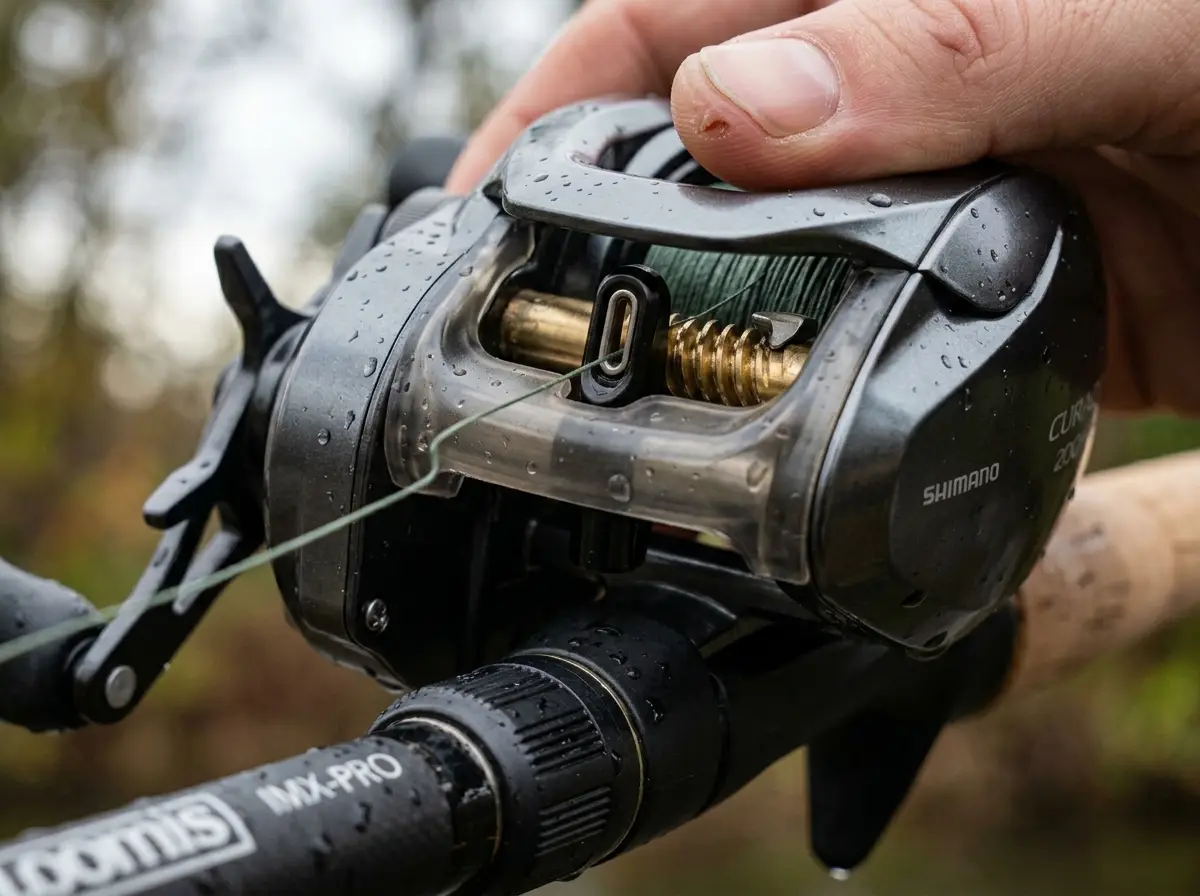
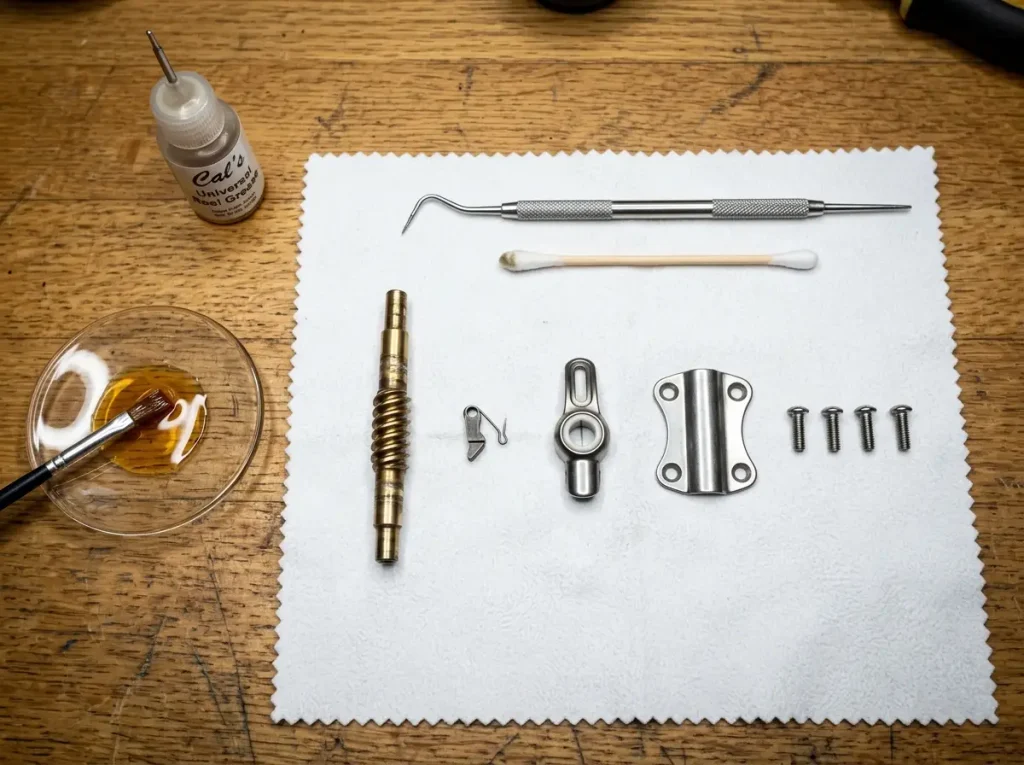
Every time you turn the handle on a baitcaster, a small gear inside the frame drives a spiral-grooved shaft — the worm gear. A tiny metal finger called the pawl rides inside that spiral groove. As the worm gear rotates, the pawl follows the groove left to right, carrying the line guide back and forth across the spool’s width.
That’s it. That’s the entire mechanism. One gear, one groove, one finger. But the tolerances involved are tighter than most anglers realize. The gap between the pawl tip and the groove walls is measured in thousandths of an inch. A single grain of sand in that gap changes everything.
The worm gear itself is typically brass — chosen for self-lubricating properties and corrosion resistance, not strength. The pawl is hardened steel or a specialized alloy designed to resist wear from tens of thousands of passes through the groove. The line guide rides on that pawl, threading your line evenly across the spool with every crank.
What Happens During a Cast
When you press the thumb bar to free-spool, one of two things happens depending on your reel design. In a non-disengaging system, the level wind stays connected to the drivetrain — meaning the line guide stays in whatever position it was when you cast. Line exits through that stationary guide at an angle that changes as the spool empties.
In a disengaging system (found on most modern bass baitcasters), a clutch decouples the worm gear when you press the thumb bar. The line guide parks — usually centered or to one side — and stays completely still during the cast. Line flows out at a more consistent, shallower angle.
Why Even Line Lay Matters More Than You Think
Uneven line distribution does three things, all bad. First, it creates high spots that catch outgoing line during the next cast — instant backlash. Second, line concentrated on one side of the spool creates uneven drag pressure when a fish pulls. Third, line buried under other line on one side experiences more friction and heat during hard runs, weakening it prematurely.
Your level wind prevents all three. When it fails, they happen simultaneously.
Pro tip: After landing a fish that peeled drag, do three slow empty retrieves with your thumb guiding the line. This lets the level wind redistribute any line that stacked up during the fight before your next cast.
Internal mechanics aside, the relationship between your baitcaster’s gear ratio and your level wind speed is fixed by the manufacturer — faster gear ratios mean faster level wind traverse, which is why high-speed reels lay line slightly differently than power-cranking models.
The Casting Distance Question — Level Wind vs No Level Wind
How Much Distance Do You Actually Lose?
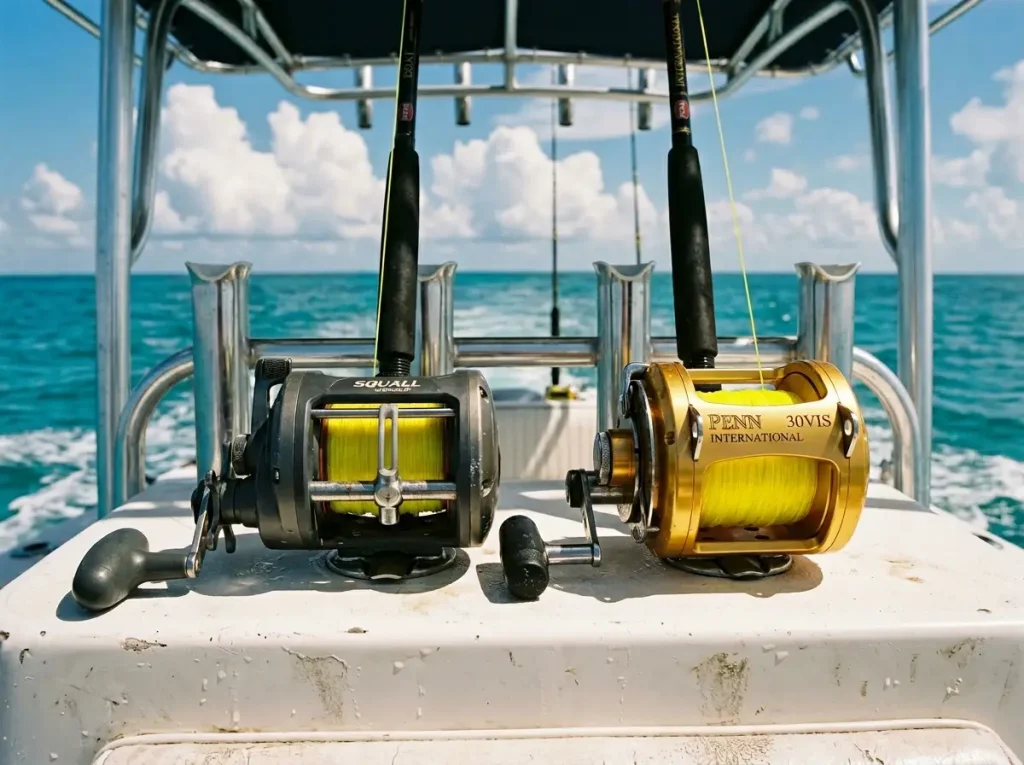
The honest answer: 10 to 15 percent on most casts. That’s the friction penalty for threading line through a guide aperture rather than letting it fly straight off the spool. On a 40-yard cast, you’re losing 4 to 6 yards — noticeable in a tournament, irrelevant on a Tuesday afternoon crappie session.
Where the loss gets real: heavy braid on a full spool. Braid’s slick surface and thin diameter means it exits the spool fast — and any friction point at the level wind aperture creates more line dig-in at high speeds. This is exactly the problem that led to modern innovations in level wind design.
Non-level-wind conventional reels (common in saltwater) skip this issue entirely. Line comes straight off the spool to the first guide with nothing between them. The trade-off: you thumb-guide the line during retrieves or accept that line piles up and you manually redistribute it. Most anglers find this acceptable for bait soaking but miserable for constant casting.
When Going Without Makes Sense
For trolling and bait fishing where you’re not casting constantly, non-level-wind reels earn their keep. Less mechanical complexity means fewer parts to fail in salt spray. For anything involving repetitive casting — jigs, crankbaits, spinnerbaits — the level wind earns its friction penalty ten times over in time saved not managing line lay.
The physics behind conventional reels vs baitcasters goes deeper than just the level wind — spool mass, frame metallurgy, and drag design all factor in.
Disengaging vs Non-Disengaging on Cast Performance
The disengaging clutch was specifically engineered to minimize that 10-15% distance penalty. When the line guide parks during the cast, line exits at a consistent shallow angle rather than a changing angle as the guide sits off to one side. The result: smoother line flow, less friction, fewer bird nests from line catching on the guide edge.
If casting distance matters to your fishing, buy a reel with a disengaging level wind. It’s one of those features that costs you nothing in everyday use but saves real yards when you need them.
The Oil vs Grease Debate (And Why It Matters)
Why Grease Destroys Worm Gears in Freshwater
Here’s where 80% of level wind failures start: someone applies grease to the worm gear because “gears get grease.” Sounds logical. It’s wrong — at least for freshwater applications.
Grease sits on the worm gear surface and attracts every particle of dirt, sand, pollen, and microscopic debris that enters the reel frame. The tolerances between the pawl and groove are so tight that contaminated grease acts as grinding paste. One season of greased worm gear in freshwater environments can wear the groove enough to create play in the pawl — and play means uneven line lay.
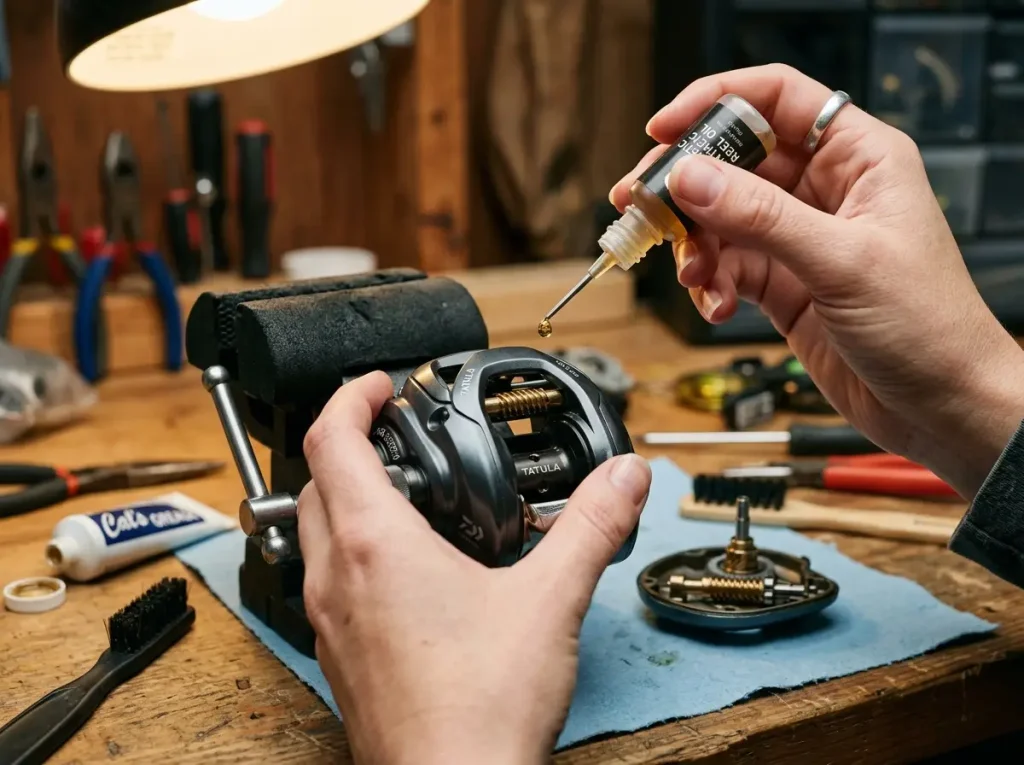
Oil does the same lubricating job but doesn’t hold particles the same way. Dirt passes through oil film rather than embedding in it. One drop of reel-specific synthetic oil on the worm shaft creates a thin film that reduces friction without trapping grit.
The Saltwater Exception
Saltwater is different. Salt crystallizes when it dries, and those crystals are harder than the dirt particles in freshwater. A thin film of marine-grade grease on the worm gear provides a protective barrier that prevents salt crystal formation directly on the brass surface. If you’re fishing salt regularly, light grease on the worm gear is correct — but you’re also cleaning it after every trip, which is the real protection.
What Goes Where — The Complete Map
The old reel tech rule: grease gears, oil everything else. For the level wind specifically:
The worm gear gets oil (freshwater) or light grease (saltwater). The pawl tip gets one drop of oil regardless of environment — you want it moving freely in the groove with zero resistance. The worm shaft cover gets one drop of oil where the line guide slides over it — that thin film is what lets the guide glide rather than scrape.
Pro tip: Never use WD-40 on any reel component. It strips existing lubricant, leaves a residue that attracts grit, and evaporates within hours. Use purpose-built reel oils from Shimano, Abu Garcia, or Cal’s — they’re formulated for the specific metals and tolerances in fishing reels.
Modern Level Wind Designs — TWS and Beyond
Daiwa’s T-Wing System — What It Actually Solves
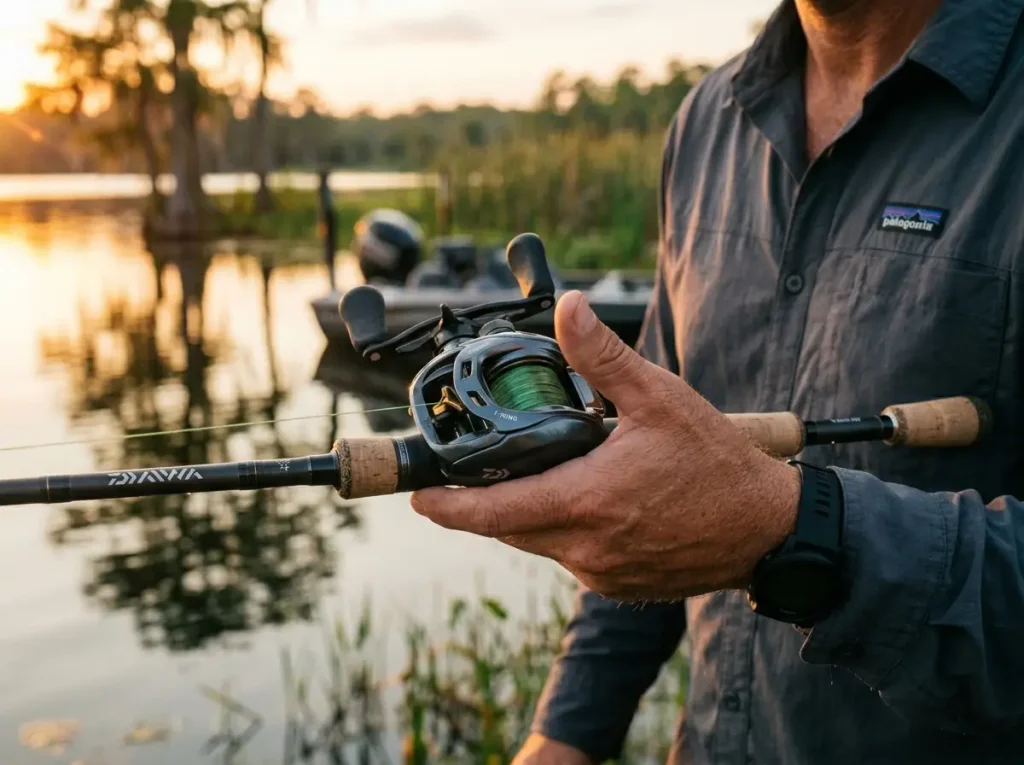
The T-Wing System (TWS) reimagines the line guide aperture itself. Instead of a fixed-diameter hole that line threads through, TWS uses a T-shaped opening that pivots between two positions: wide open on the cast, narrow on the retrieve.
During the cast, the wide top section of the T allows line to exit at the shallowest possible angle — almost straight off the spool — reducing friction to near zero. During retrieve, line drops into the narrow lower channel where it’s guided precisely onto the spool. The transition happens automatically when you engage the handle.
The practical result: you get non-level-wind casting performance with level-wind retrieval convenience. It’s the closest anyone has come to eliminating the casting distance penalty entirely.
Shimano’s Synchronized Approach
Shimano took a different path on many of their conventional-style reels, synchronizing the level wind speed with spool rotation during the cast. Rather than parking the guide, the guide moves in sync with where line is exiting the spool — maintaining a near-zero angle throughout the entire cast. More mechanically complex, but effective.
What This Means for Maintenance
More sophisticated level wind designs mean more components that need attention. A standard worm gear and pawl system has two moving contact points. Daiwa’s TWS adds a pivoting aperture with its own lubrication needs. Shimano’s synchronized systems add clutch mechanisms that can accumulate debris.
The maintenance principle stays the same: clean, oil sparingly, check for wear. But the where changes — and your owner’s manual matters more with these designs than with a simple Ambassadeur-style level wind.
For understanding how spool tension interacts with your level wind system during casts, proper spool tension settings reduce the strain on the level wind mechanism during thumb-bar release.
Diagnosing Level Wind Problems by Sound and Feel
What Healthy Sounds Like
A properly lubricated level wind makes a soft, consistent ticking sound during slow retrieves — one click per groove pass. The rhythm is perfectly even and barely audible over ambient noise. You’ll only notice it in a quiet room. This is your baseline.
Train yourself to hear it by doing a few slow empty retrieves in silence before your first trip of the season. That sound is the standard everything else gets compared against.
The Warning Sounds
Grinding: Metal-on-metal contact where debris is between the pawl and groove. The level wind still moves, but it’s eating itself. Clean immediately — this can score the worm gear within a single trip if the debris is sand.
Clicking that changes rhythm: The pawl is skipping grooves. Either the pawl tip is worn and no longer engaging fully, or the worm gear groove has a damaged section. Pull the cover and inspect visually.
Silence where there should be sound: The pawl has disengaged or broken. Your line guide is either stationary (line piling up on one side) or free-floating (moving randomly with line tension). Stop fishing and inspect.
Scraping: The line guide itself is dragging against the worm shaft cover rather than gliding on an oil film. Add one drop of oil to the cover surface. If scraping continues, the cover may be bent or the guide worn.
The Touch Test
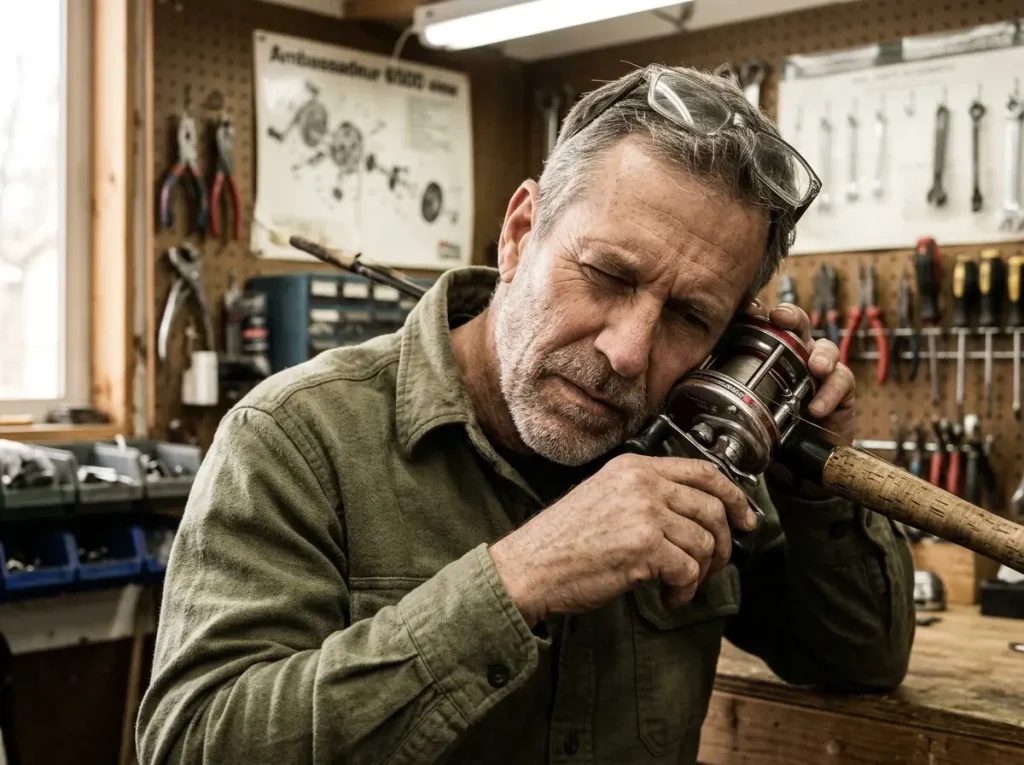
Close your eyes, hold the reel at your ear, and retrieve slowly. Can you feel any hitch or resistance through the handle? A healthy level wind adds no perceptible resistance to the crank. If you feel periodic hesitation in the handle rhythm — even subtle — something in the traverse system is binding.
Pro tip: Do this test once a month. It takes 10 seconds and catches problems weeks before they become failures. The difference between a $2 cleaning and a $40 pawl replacement is often just two weeks of ignored sounds.
If you’re already troubleshooting other reel issues, check whether your anti-reverse mechanism might be the real culprit — similar symptoms, different fix.
The 5-Minute Level Wind Service Routine
What You Need
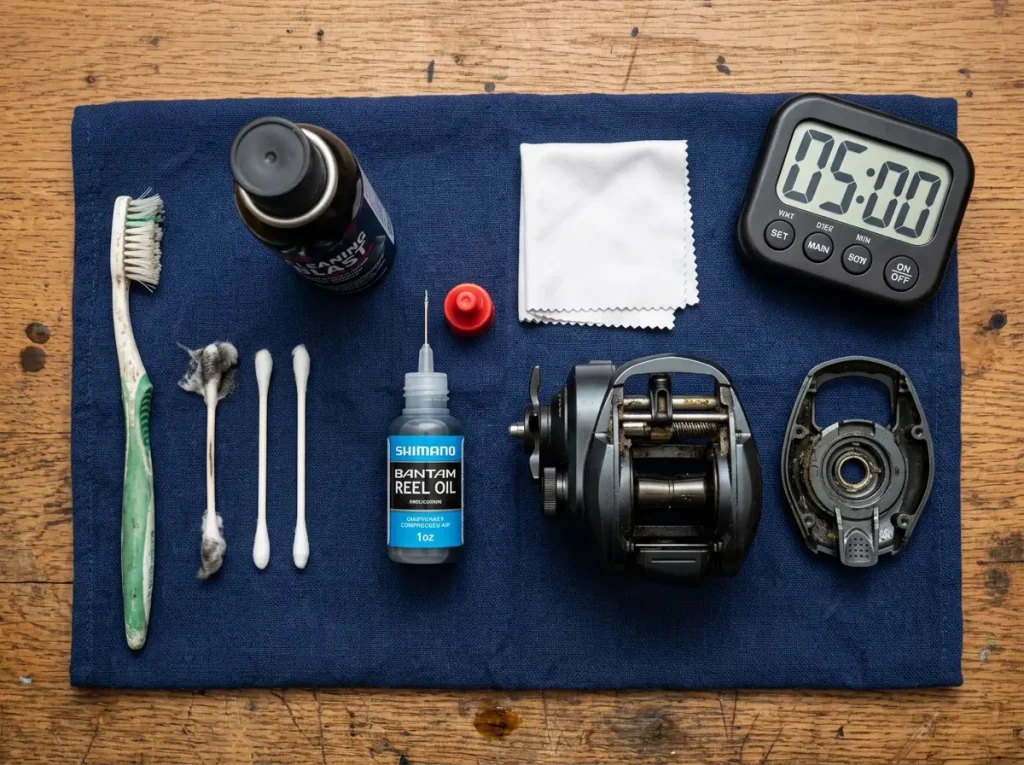
A soft toothbrush, two cotton swabs, reel-specific oil (not WD-40, not sewing machine oil, not 3-in-1), and five minutes. That’s it. You don’t need to remove side plates or disassemble anything beyond the worm shaft cover — and on most modern baitcasters, that cover is held by two screws or snaps off by hand.
Step-by-Step (Every 3-4 Freshwater Trips or After Every Saltwater Session)
Start by removing the worm shaft cover. On Shimano and Daiwa, this is usually two small Phillips screws. On Lew’s and some Abu Garcia models, it snaps off with thumb pressure. Set the cover aside — don’t lose those screws.
Take a dry cotton swab and run it through the worm gear groove, following the spiral from one end to the other. Watch the swab — if it comes out gray or black, your gear was running dirty. If it comes out with visible sand grains, you just prevented a failure.
Use the toothbrush to sweep the frame area around the worm gear. Debris collects in the corners where the gear shaft enters the frame. Get those corners.
Take your oil bottle and place exactly one drop on the worm gear shaft — not on the groove, on the shaft itself. Crank the handle slowly three full turns to distribute the oil across the full traverse length. Then one drop on the pawl tip where it contacts the groove.
Replace the cover, place one drop of oil on the outside where the line guide slides over it, and crank three more times. Done.
Seasonal Deep Clean (Once Per Year Minimum)
Once a year — or immediately after any saltwater trip where the reel got submerged — do the full version. Remove the cover, pull the line guide assembly off the worm gear if your model allows it, and soak the worm gear in isopropyl alcohol for five minutes. Dry completely with compressed air. Re-lubricate with fresh oil. Inspect the pawl tip under magnification for wear — a rounded tip means it’s time to order a replacement.
The same attention you give your reel bearings should extend to the level wind — both are precision components that fail silently until they don’t.
Pro tip: Keep a small bottle of reel oil and one cotton swab in your tackle bag. If your level wind sounds off mid-trip, you can do a 60-second field service that gets you through the day without risking gear damage.
Conclusion
Your level wind system runs thousands of traverses per fishing trip on a mechanism with tolerances measured in thousandths of an inch. Sand, dried salt, and old lubricant are the three things that turn those traverses from smooth into grinding.
Clean the worm gear every 3-4 trips, use oil instead of grease in freshwater, and listen for changes in rhythm during slow retrieves. Those three habits alone prevent 80% of level wind failures. The other 20% comes from worn pawls and scored grooves — problems you’ll catch early if you’re already doing the first three things.
Five minutes of maintenance saves $40 in replacement parts and the fish you’d lose to a mid-fight bird nest. Grab a cotton swab and check yours tonight.
Q1 How does a level wind system work on a fishing reel?
A spiral-grooved brass shaft called the worm gear rotates when you crank the handle. A small metal finger called the pawl rides in that groove and carries the line guide back and forth across the spool width, distributing line evenly with every turn.
Q2 Should I oil or grease my level wind worm gear?
Oil for freshwater fishing — grease attracts and holds grit particles that act as grinding compound against the brass. For saltwater, light marine grease is acceptable because it prevents salt crystallization, but clean and reapply after every trip.
Q3 Why does my level wind get stuck on one side?
Debris jammed between the pawl and worm gear groove is the most common cause. Remove the worm shaft cover, clean the groove with a cotton swab, and add one drop of oil to the pawl tip. If it still sticks, the pawl tip may be worn and needs replacement.
Q4 Do level wind reels cast shorter than non-level wind?
Roughly 10 to 15 percent shorter on average due to line friction through the guide aperture. Modern disengaging systems and Daiwas TWS reduce this penalty significantly by parking or widening the guide opening during the cast.
Q5 How often should I service my baitcaster level wind?
Every 3-4 freshwater trips for a quick oil and wipe, after every saltwater session without exception, and one full deep clean per season minimum. If you fish 50-plus days per year, replace the pawl every 2-3 seasons preventively.
Risk Disclaimer: Fishing, boating, and all related outdoor activities involve inherent risks that
can lead to injury. The information provided on Master Fishing Mag is for educational and informational purposes
only. While we strive for accuracy, the information, techniques, and advice on gear and safety are not a substitute
for your own best judgment, local knowledge, and adherence to official regulations. Fishing regulations, including
seasons, size limits, and species restrictions, change frequently and vary by location. Always consult the latest
official regulations from your local fish and wildlife agency before heading out. Proper handling of hooks, knives,
and other sharp equipment is essential for safety. Furthermore, be aware of local fish consumption advisories. By
using this website, you agree that you are solely responsible for your own safety and for complying with all
applicable laws. Any reliance you place on our content is strictly at your own risk. Master Fishing Mag and its
authors will not be held liable for any injury, damage, or loss sustained in connection with the use of the
information herein.
Affiliate Disclosure: We are a participant in the Amazon Services LLC Associates Program, an
affiliate advertising program designed to provide a means for us to earn advertising fees by advertising and linking
to Amazon.com. As an Amazon Associate, we earn from qualifying purchases. We also participate in other affiliate
programs and may receive a commission on products purchased through our links, at no extra cost to you. Additional
terms are found in the terms of service.