In this article
Walk any boat ramp on a Saturday and you’ll spot the beginner with the $200 tackle bag, the one who can’t find a single hook in all that gear while a kid forty feet down the bank fills a stringer with bluegill on a coffee can of split shot and a red-and-white bobber. The box that catches fish isn’t the full one. It’s the sorted one. Ask anyone who’s packed a giant bag, hauled it all day, and ended up tying on the same three baits the whole trip: what earns a spot in a first box is a lot shorter than the store wants you to believe. Once you’ve sorted the rod, reel, and line in your first fishing setup, this is the gear that actually goes in the box, what each piece does, what size to buy, and what to leave on the shelf.
Why a Smaller Box Out-Fishes a Bigger One
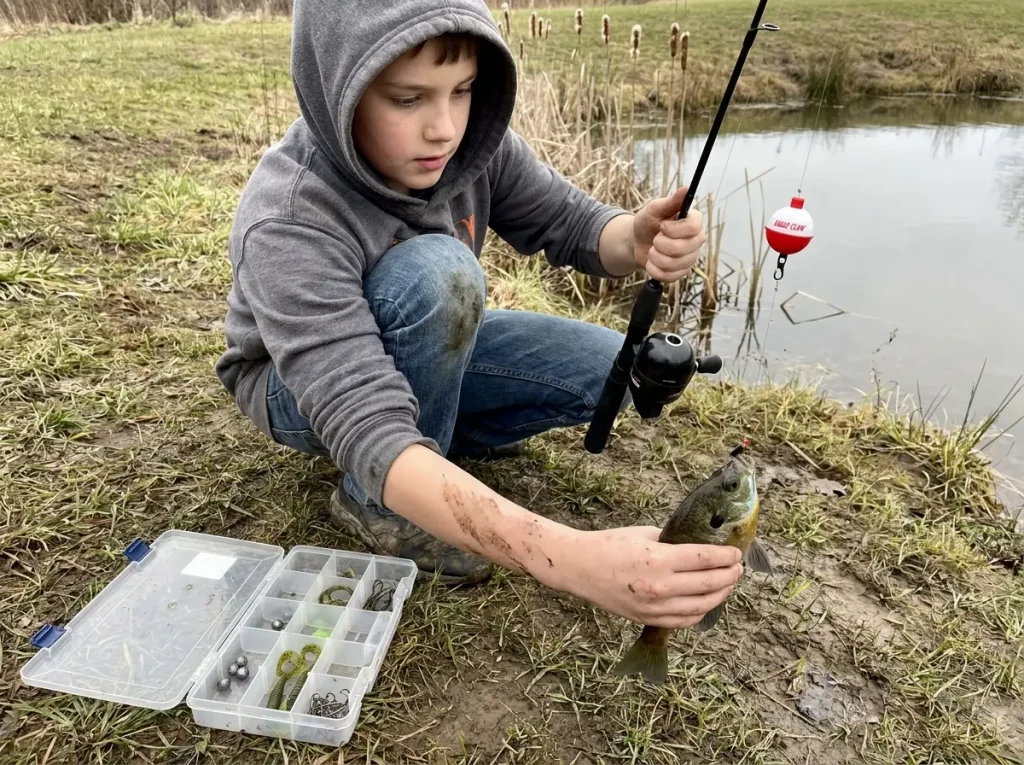
The $200 Bag That Catches Nothing
The tackle industry is huge for a reason. Recreational fishing pumps more than $115 billion into the economy, and roughly $48 billion of that is gear, which means a beginner walking into a store is a target. You stand in the lure aisle, and every package promises the bait that will change everything. Veteran anglers have a name for chasing it: magic lure syndrome, the fishing version of the fountain of youth. You buy the gimmick, it sits in the tray, and you never tie it on.
You’re joining a crowd, at least. A record 57.7 million Americans went fishing in 2023, the highest participation rate in sixteen years. Most of them did fine with a fraction of what they own.
Why Less Tackle Makes You a Better Angler
Here’s the part that sounds backward. A bass angler can fish every level of the water column effectively with about ten lures in one small box. Not fifty. Ten. And the limit is the point: when you only carry a handful of baits, a slow day forces you to change the type of lure instead of digging for another color of the same thing. That switch, from a worm on the bottom to a popper on top, is often the exact thing that gets you bit.
A full bag lets you fiddle. A small box makes you adapt. Adapting is the skill.
Buy hooks and weights in assortments first, not single-size packs. A season in, you’ll know exactly which two sizes you reach for every trip, and you can stock up on those. Until then, the assortment teaches you what you actually use.
What to Leave on the Shelf (For Now)
Skip the expensive braided line, the crankbait collection, and every gadget that promises to find fish for you. None of it helps a beginner catch more, and most of it just fills compartments you’ll never open. If you want the honest breakdown of the short list of gear a beginner actually needs, it’s shorter than a single aisle. The same goes for price: there’s a real difference between where cheap tackle performs and where it quietly costs you fish, and almost none of those trade-offs live in the lure aisle.
If you want to see how little it really takes, this walkthrough fills an actual box item by item:
Start With the Box and the Line
The Box, Small on Purpose
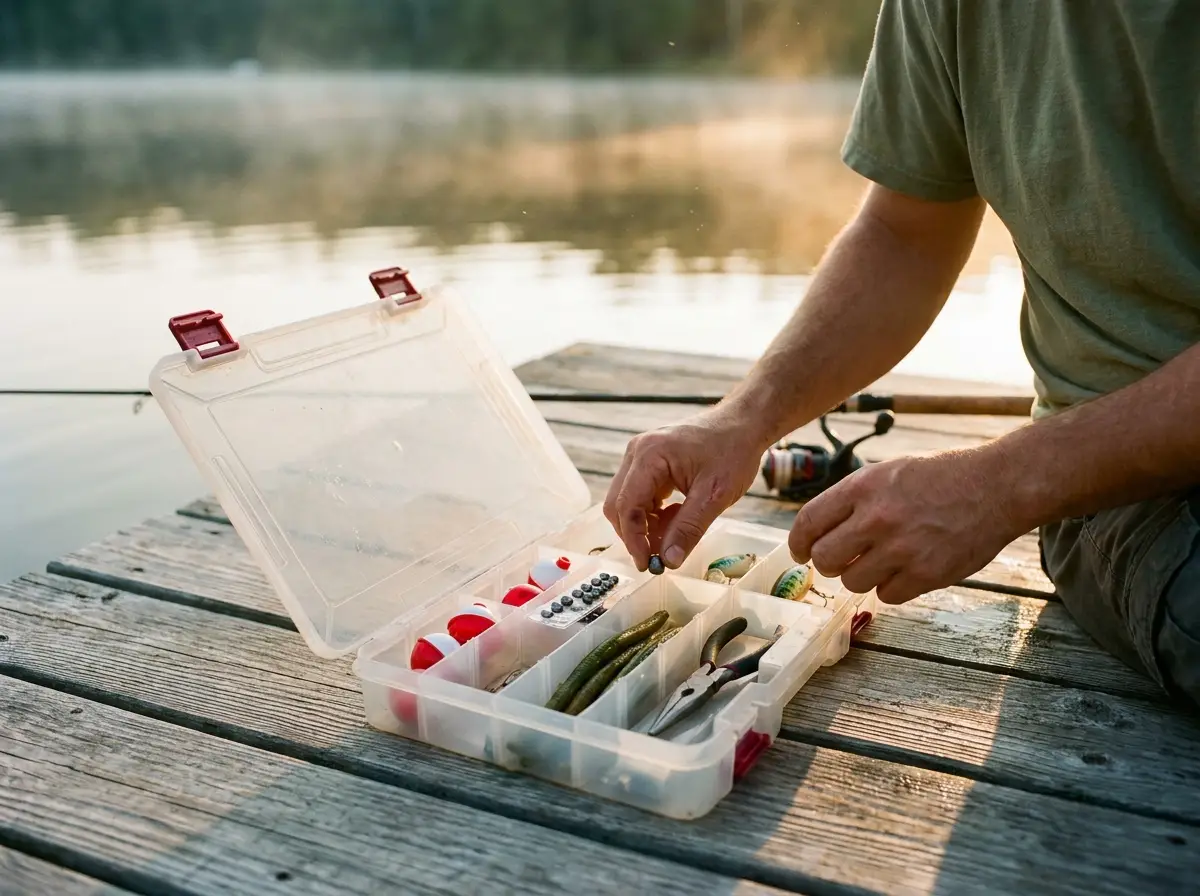
Everything else lives in here, so buy the box that forces discipline. A 3600-size case is the default first box for a reason: it has adjustable compartments, lids that actually latch shut, and it slides into any bag or backpack. Small is the feature. You can’t overpack a box that doesn’t have room for your worst impulses.
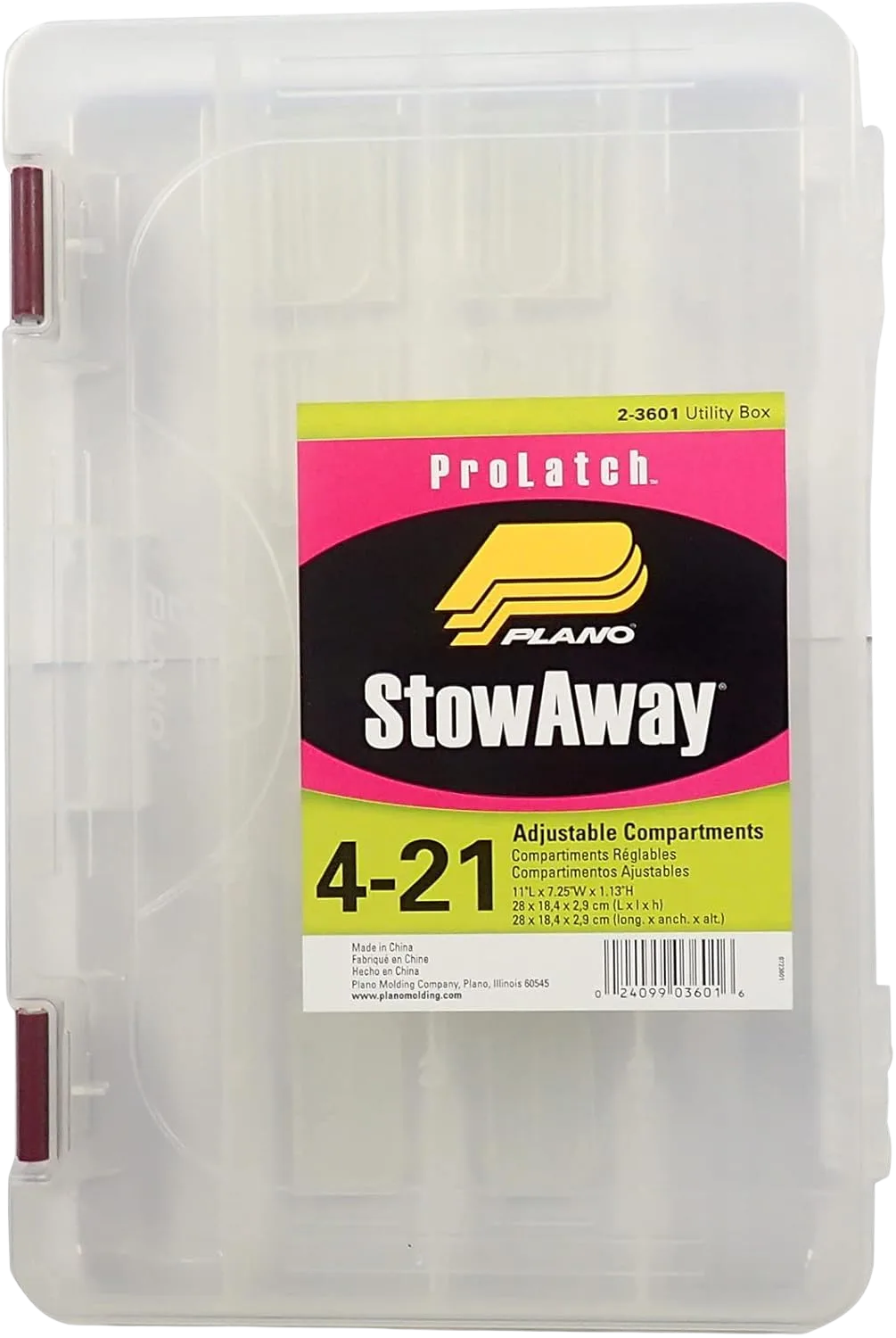
If you’d rather buy the box and a starter stock of tackle in one shot, an all-in-one kit like the AGOOL 223-piece set drops a filled tray and a case in your cart together, then you cull what you don’t use.
The Line, One Forgiving Spool
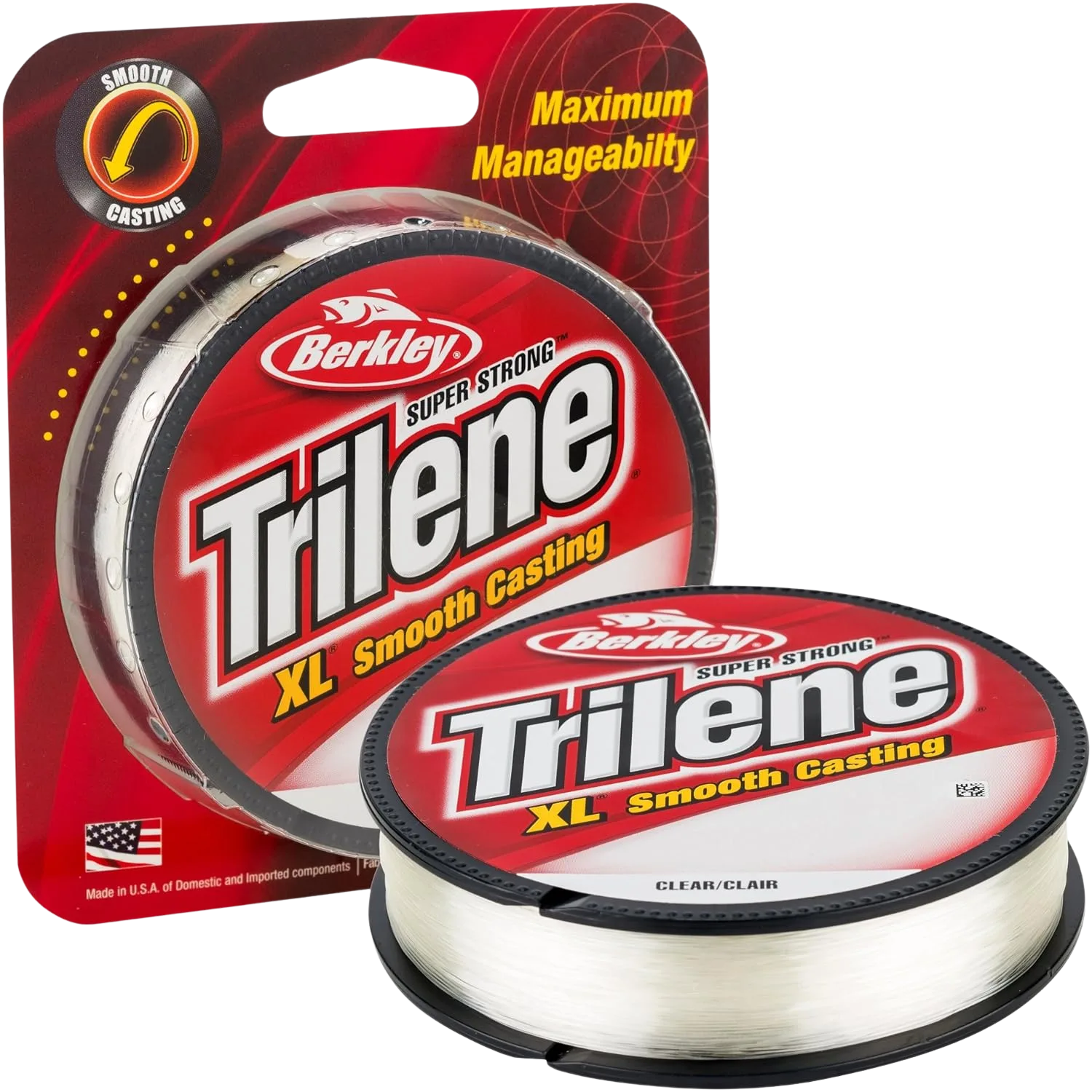
Spool monofilament first. It’s cheap, it stretches (which forgives a late hookset and a so-so knot), and it ties easy when your fingers are cold. An 8-pound test covers everything from bluegill to a solid largemouth, which is the whole range a beginner fishes. Braid and fluorocarbon have their place, but that place is later. If you want the full reasoning, here’s why monofilament is the line to learn on before fluoro or braid.
Why a Backup Spool Beats a Backup Box
Line is the one thing that fails mid-trip and ends the day. A wind knot, a nick from a rock, a tangle you can’t pick out, and you’re done unless you can re-spool on the bank. One spare spool in the box buys you a fresh start, turning a trip-ender into a five-minute re-spool on the bank.
Hooks, Go Small Before You Go Big
The Three Hook Types You Actually Need
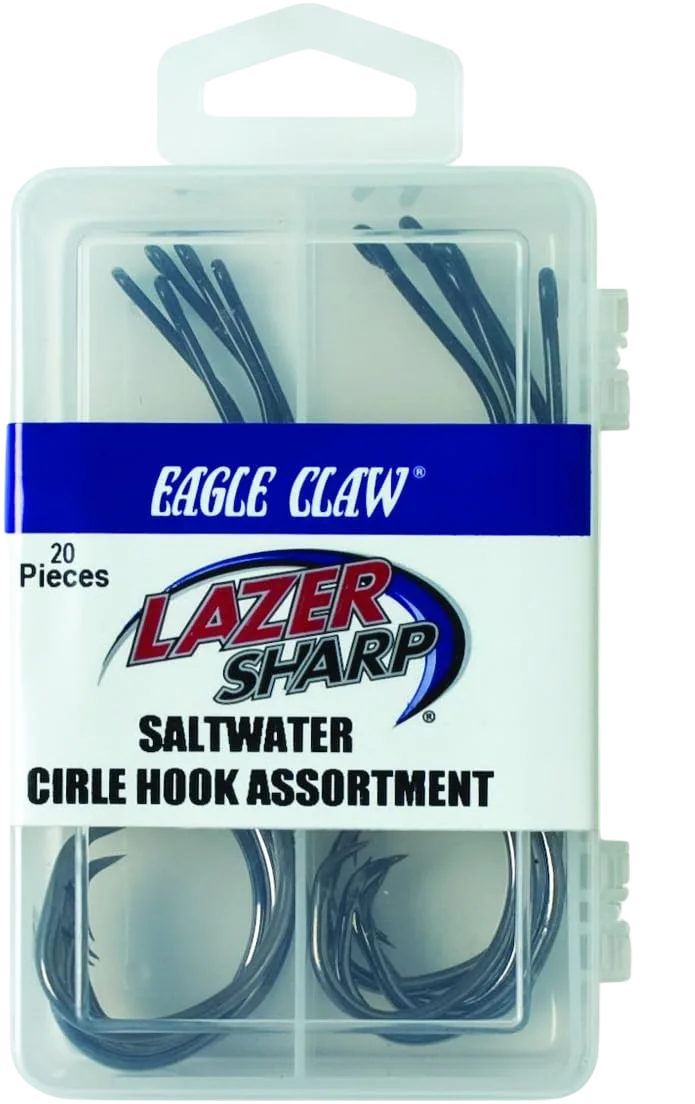
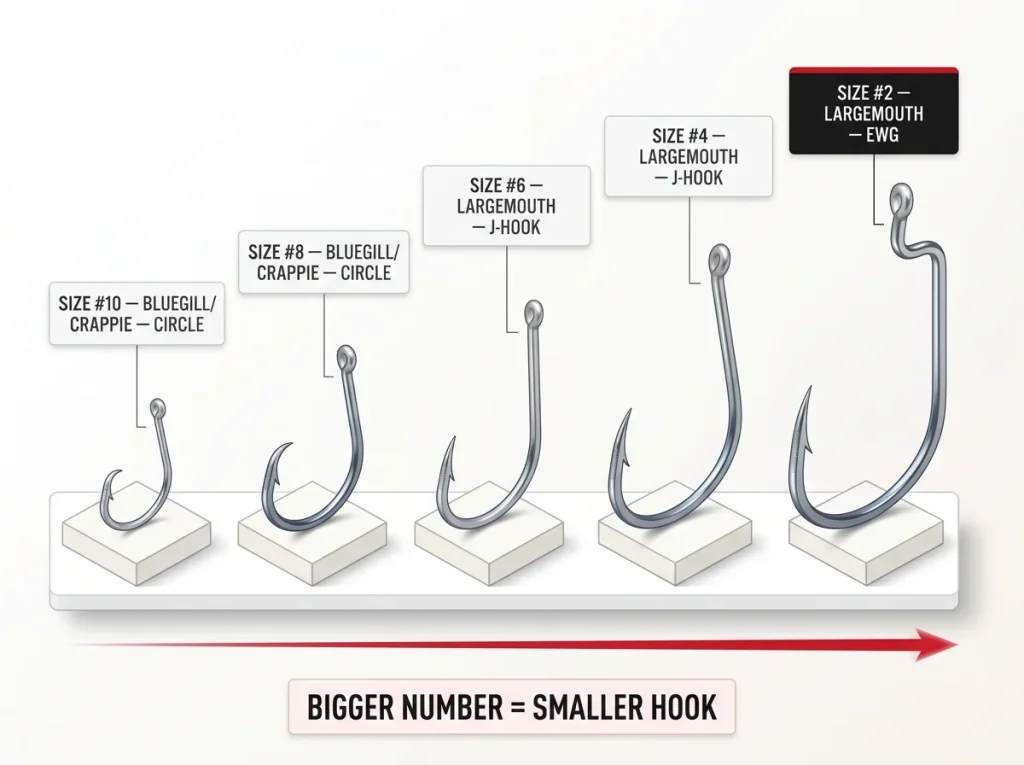
You don’t need a drawer of hooks. Three styles cover a first box. A circle hook is the bait-fishing hook that sets itself when a fish turns and runs, so you hook fish in the corner of the mouth instead of deep, which matters for catch and release. A J hook is the all-purpose shape for live bait and general use. An EWG (extra-wide-gap) hook is the one you’ll want once you start rigging soft plastics weedless on a Texas rig for bass. Buy those three and you’ve covered nearly everything a beginner fishes.
Sizing With a Reason (#10 for Panfish, #2–#6 for Bass)
Here’s where most beginners go wrong: they buy bass-size hooks for a panfish trip, and the bluegill just steal the bait off a gap that’s too wide to grab their small mouths. Match the hook to the fish. A #10 is the panfish sweet spot, with sizes 6, 8, and 10 covering most bluegill and crappie. Step up to #2 through #6 for largemouth, because a bass inhales and spits a bait fast, so a wider gap grabs on the strike. Remember that hook sizes run backward: the bigger the number, the smaller the hook.
One Assortment Beats Ten Single Packs
Pair that hook with the bait it’s built for. A nightcrawler threaded right stays on through casts and short strikes, and there’s a real method to it, covered in how to rig a live worm so it stays put. Do that on a #8 circle hook under a float, and you’ve got a rig that catches almost anything that swims in freshwater.
Weights, Floats, and Swivels
Removable Split Shot (Buy the Squeeze-Off Kind)
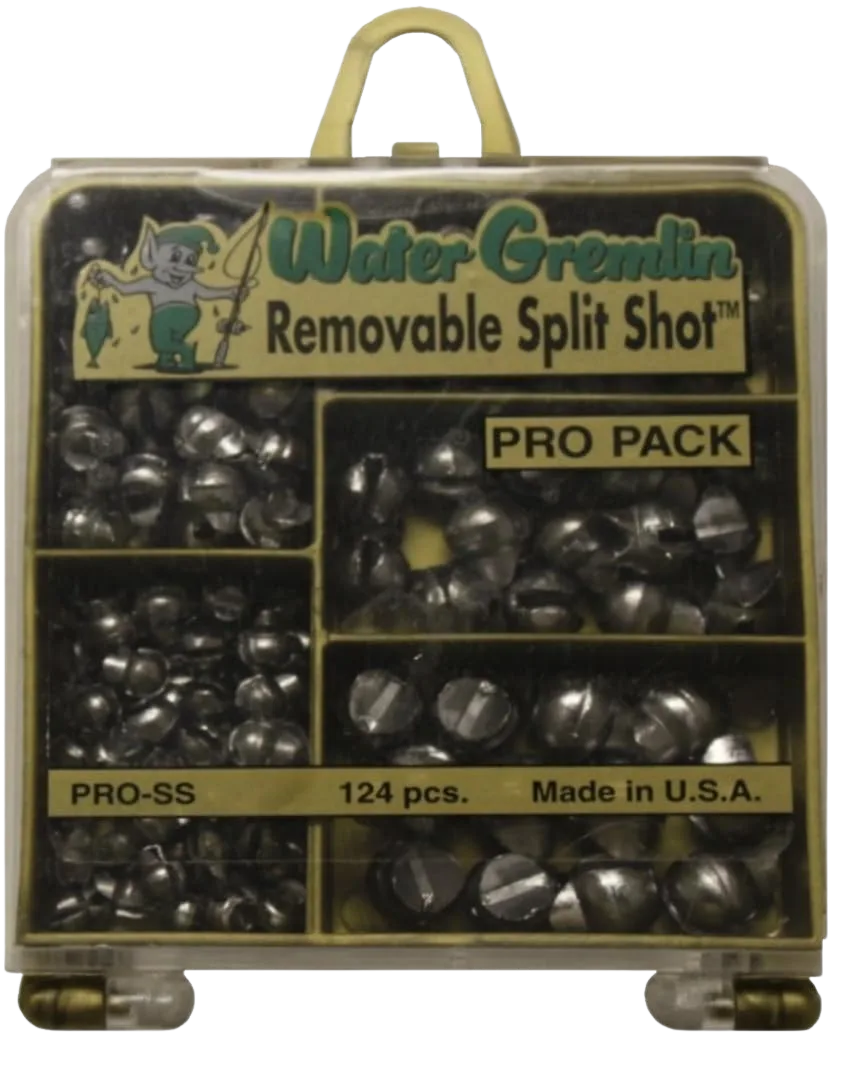
Split shot are the tiny weights that pinch onto your line to sink a bait, and the kind to buy is the removable type with little ears, so you can squeeze them back off. That’s the difference between re-tuning your depth in seconds and cutting your line every time a fish is holding deeper than you guessed. They’re the most useful weight in a panfish or trout box.
The Red-and-White Float That Just Works
Nothing teaches a beginner faster than a float that disappears when a fish takes the bait. The classic red-and-white snap-on bobber clips onto the line without re-tying, and an assorted pack lets you run a small one for finicky bluegill or a bigger one to suspend a livelier bait. When you’re ready to fish deeper than a fixed float allows, you can step up to a slip bobber for panfish, but start here.

The Swivel That Does Two Jobs
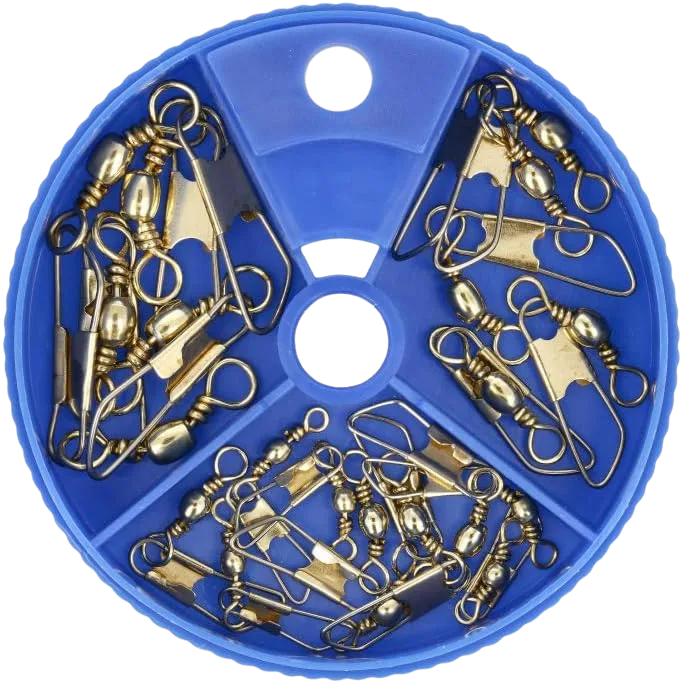
A swivel costs about twenty cents and does two things a beginner doesn’t expect. It stops line twist, the slow kink-up that ruins a whole spool when you fish spinners or let a bait spin on the retrieve. It also acts as a stopper for a sliding sinker in a Carolina rig or other bottom rig, so your weight slides down to the swivel and your bait floats above it. A 20-piece assortment is more than you’ll burn through in a season.
A #8 circle hook, one split shot eighteen inches up, and a small red-and-white float is the rig that catches a beginner’s first fish more often than anything else. Master that one before you touch a lure, and you’ll out-fish people with ten times your gear.
Two Lures That Cover the Whole Water Column
The Senko, Do Nothing and Still Catch
If you own one soft plastic, own a Senko-style stick worm in green pumpkin. It’s the most beginner-proof bass bait there is, because the fish-catching action happens when you do nothing. Rig it weightless or wacky, cast it out, let it sink on a slack line, and the subtle shimmy does the work. The hardest part is trusting it enough to wait.

The Popper and the Surface Strike
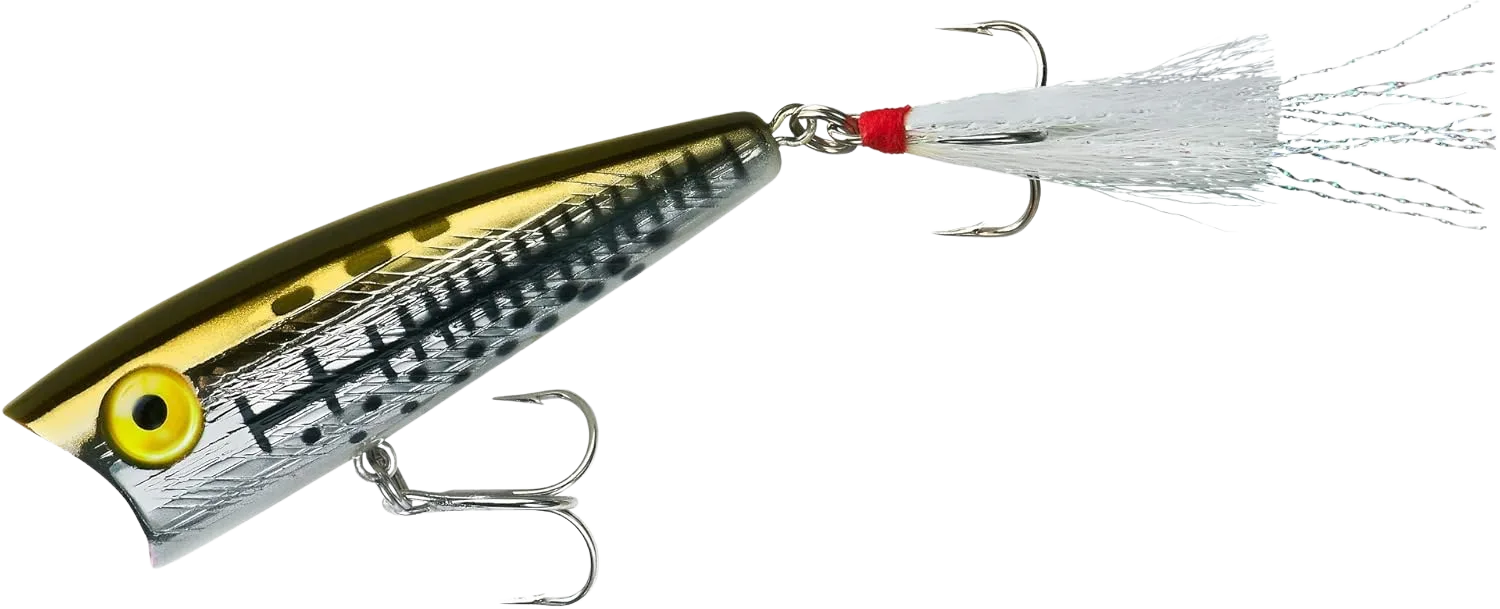
The other lure to own is a small topwater popper. It floats at rest, throws a little spit of water when you twitch it, and draws the kind of explosive surface strike that hooks people on fishing for life. A popper teaches you to fish the top of the water column, which is the other half of the lesson the Senko starts on the bottom.
Why Two Lure Types Beat Fifty Colors
A worm on the bottom and a popper on top cover the whole water column between them, and that’s the point. When the bottom bite dies, you go to the top, and that change of type gets bit far more often than the fifth shade of green in your tray. Build confidence in two baits before you add a third, and let the rest of the lure tray fill in only as your water tells you what’s missing.
The Tools and Safety Items Beginners Skip
One Pair of Pliers (The Tool a Box Can’t Skip)
You’ll regret skipping pliers the first time a hook is buried past the barb in a fish’s jaw, or in your own thumb, three hours from the truck. One pair of needle-nose fishing pliers unhooks fish, opens split rings, and cuts line, which is three tools in one slot. It’s the single non-tackle item a box can’t do without.
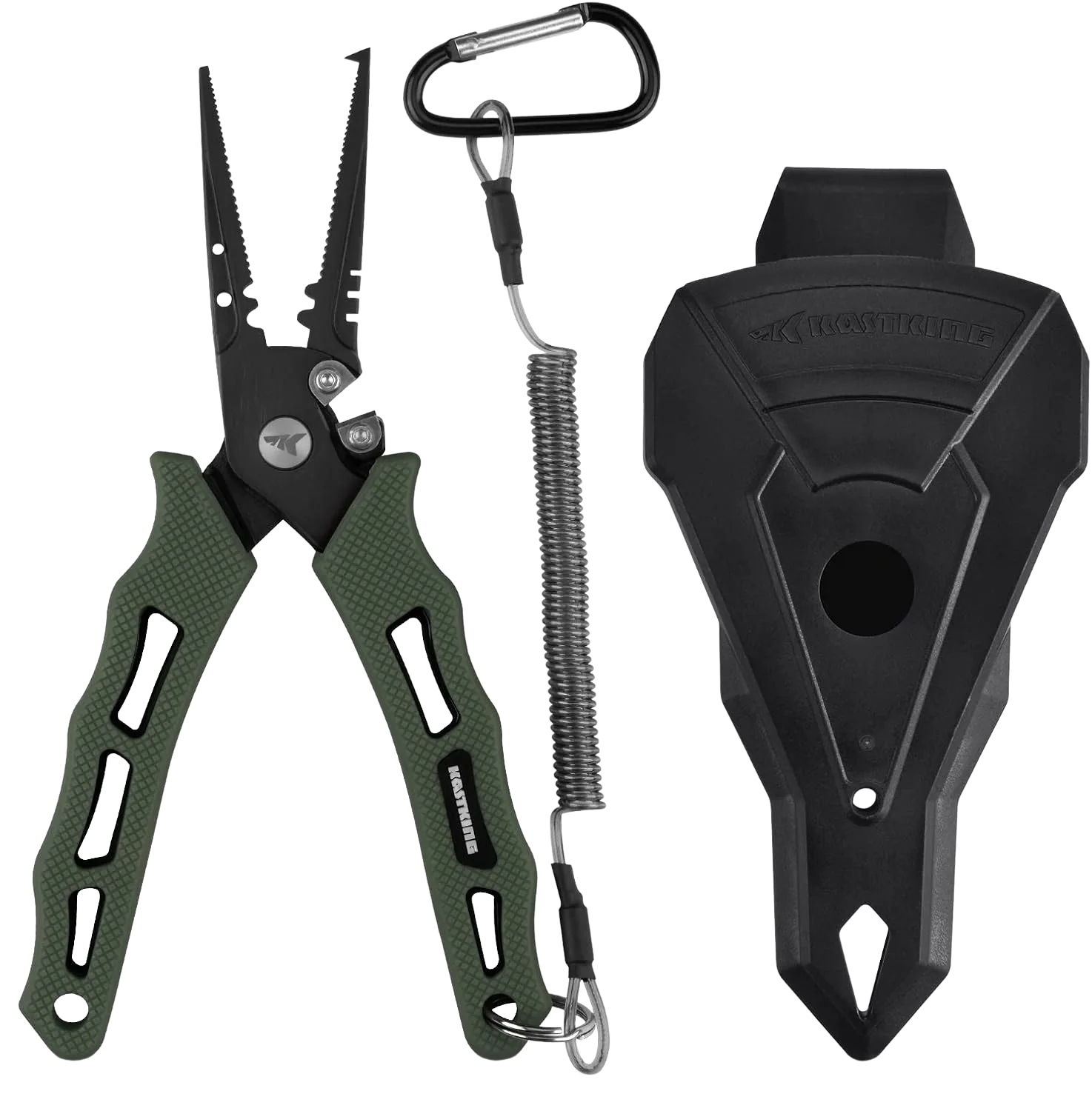
A budget aluminum pair like the Piscifun pliers does the same three jobs if you want to spend even less.
The License, Your Most Important “Tackle”
The cheapest item on this list is also the one you can’t fish without. A fishing license costs less than a couple of lures, and skipping it can cost you a hefty citation. It’s also the closest thing to a sure investment in your own fishing: license sales and gear taxes send around $1.7 billion a year to fish conservation, funding the stocking, access ramps, and habitat work you benefit from on every trip. That money flows through the federal Sport Fish Restoration program your license dollars feed. Buy it before you buy a single hook.
The First-Aid Pinch (Five Small Things)
You don’t need a trauma kit, just five small things in a zip bag: forceps or nippers, an antiseptic wipe, a couple of adhesive bandages, tweezers, and sunscreen. Hooks find skin, the sun finds everyone, and a wound cleaned on the bank beats one that ruins a week. And before you go, check your state’s recreational fishing regulations, because seasons and limits change by water and by year.
Pinch the barbs down on a couple of your hooks with those pliers before you fish. Barbless hooks back out of a fish (or a finger) far easier, you’ll lose almost no fish on a tight line, and the one time it’s your thumb instead of a bluegill, you’ll be very glad you did.
Packing a Box That Survives the Water
Keep Soft Plastics Away From Everything Else
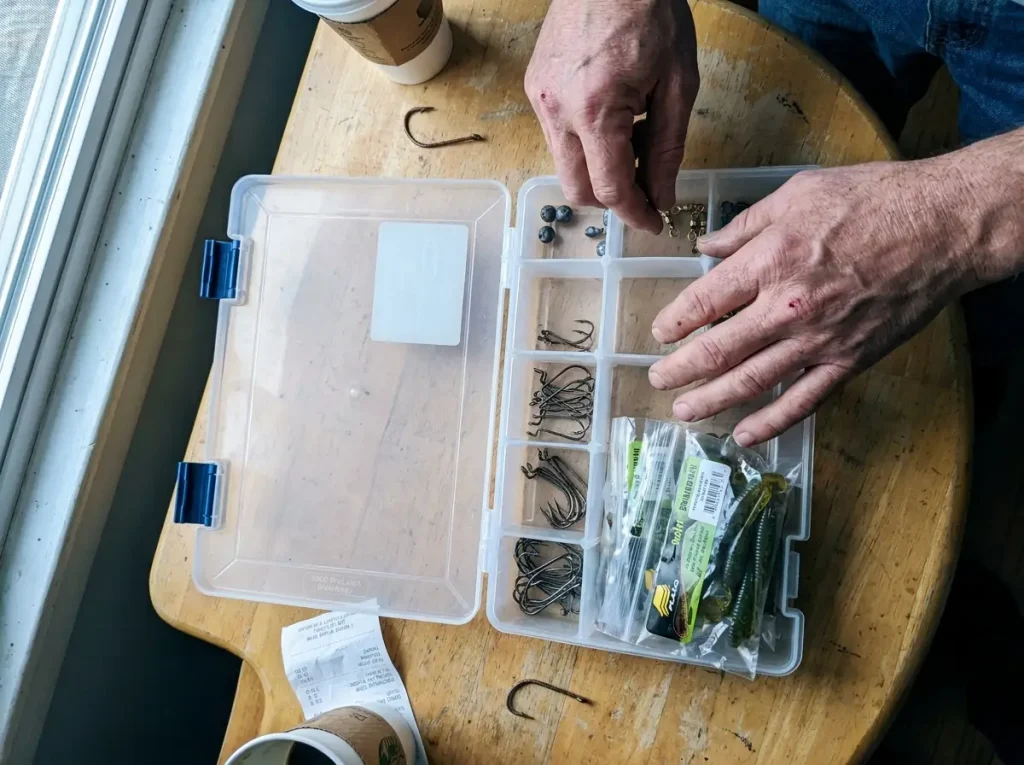
Here’s the one nobody warns you about. Soft plastics like that Senko leak a plasticizer oil that chemically attacks hard baits and the box itself, melting and warping anything they sit against. Keep them sealed in their bags, quarantined in their own compartment, away from your crankbaits and the plastic tray. Open a box next season where a worm sat loose on a hard lure, and you’ll find both ruined and fused together.
Dry Your Hooks or Lose Them to Rust
Steel hooks and the box go in the truck wet, and they come out rusted and seized if you close the lid on the moisture. Wipe your hooks and let the open box air out at home before you snap it shut. The same goes for trebles on your lures, and there’s a simple routine for keeping hooks from rusting between trips. A rusted hook point doesn’t penetrate, so this small habit saves you fish, not just gear.
This short walkthrough shows the layout a beginner box wants, soft plastics and hardware kept apart:
One Box, Two Setups (Pond vs. Surf)
The same small box adapts to where you fish with a swap or two. For a pond or lake, you’re set: split shot, #10 hooks, a red-and-white float, and the two lures. Take it to the beach and you change the weights and hooks, because surf needs pyramid sinkers that dig into the sand and bigger hooks for bigger mouths. The principle holds either way, but what changes when you take that box to the salt is worth knowing before your first trip to the coast.
Conclusion
The real beginner tackle box essentials come down to this: buy the small box on purpose, and let what you actually tie on tell you what to add. Stock assortments and sizes with a reason behind each one, not the whole lure wall. And remember the license and the pliers matter more than a fifth crankbait you’ll never fish.
Fill the box once, fish it hard for a season, and you’ll know your own gaps better than any list could guess them. When you’re ready to round out the rest of the kit, pair it with a balanced beginner setup that’s ready to fish, and go catch something.
Frequently Asked Questions
01How many lures does a beginner really need?
About ten, and you can start with two. A soft stick worm and a small popper cover the top and bottom of the water column, which is most of what a beginner needs. Add lures only as you learn what your water actually wants.
02What size hooks should a beginner buy?
A #10 is the panfish sweet spot, with sizes 6, 8, and 10 covering most bluegill and crappie. Step up to #2 through #6 for largemouth bass. Hook numbers run backward, so a bigger number means a smaller hook.
03Do I need a fishing license to fish?
Almost everywhere, yes, once you’re past a certain age, which varies by state. It’s cheap, it’s required, and the fee funds the stocking and access you use. Buy it online from your state wildlife agency before you go.
04Mono, fluoro, or braid for a first reel?
Monofilament. It’s cheap, it stretches enough to forgive mistakes, and it ties easy. An 8-pound test covers panfish through bass, and you can move to braid or fluorocarbon once you know what you’re missing.
05What two lures should a beginner start with?
A Senko-style stick worm and a small popper. The worm catches on a do-nothing sink, and the popper draws surface strikes, so between them you fish the whole water column with two baits and one light setup.
Risk Disclaimer: Fishing, boating, and all related outdoor activities involve inherent risks that
can lead to injury. The information provided on Master Fishing Mag is for educational and informational purposes
only. While we strive for accuracy, the information, techniques, and advice on gear and safety are not a substitute
for your own best judgment, local knowledge, and adherence to official regulations. Fishing regulations, including
seasons, size limits, and species restrictions, change frequently and vary by location. Always consult the latest
official regulations from your local fish and wildlife agency before heading out. Proper handling of hooks, knives,
and other sharp equipment is essential for safety. Furthermore, be aware of local fish consumption advisories. By
using this website, you agree that you are solely responsible for your own safety and for complying with all
applicable laws. Any reliance you place on our content is strictly at your own risk. Master Fishing Mag and its
authors will not be held liable for any injury, damage, or loss sustained in connection with the use of the
information herein.
Affiliate Disclosure: We are a participant in the Amazon Services LLC Associates Program, an
affiliate advertising program designed to provide a means for us to earn advertising fees by advertising and linking
to Amazon.com. As an Amazon Associate, we earn from qualifying purchases. We also participate in other affiliate
programs and may receive a commission on products purchased through our links, at no extra cost to you. Additional
terms are found in the terms of service.