In this article
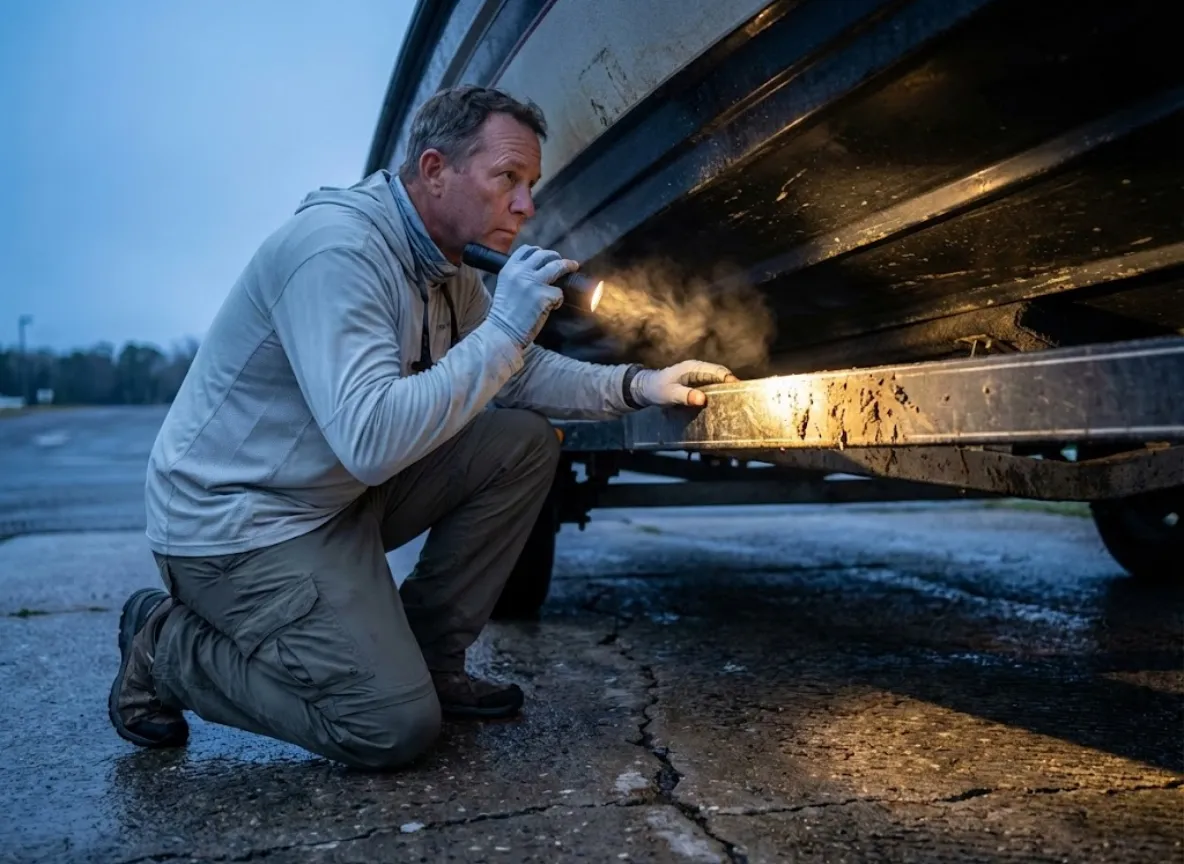
The modern boat ramp is no longer just a launch point; it is a border crossing. When you back a trailer into the water or step into a freestone stream, you are entering a battlefield where the combatants are microscopic and the stakes are the collapse of entire ecosystems.
I have spent decades wading rivers and navigating lakes, watching fisheries shift from diverse, vibrant webs of life into sterile monocultures. We are past the era of passive observation. The “Homogenocene”—an era of biological uniformity—demands that every angler evolve from a recreational user into a tactical steward, accepting the angler’s burden of preventing biodiversity loss.
This field guide moves beyond basic awareness. We will dissect the taxonomy of the threat, calculate the “gear tax” these invaders levy on your equipment, and establish a decontamination protocol that relies on chemistry and physics rather than just a garden hose.
What Actually Defines an Aquatic Invasive Species?
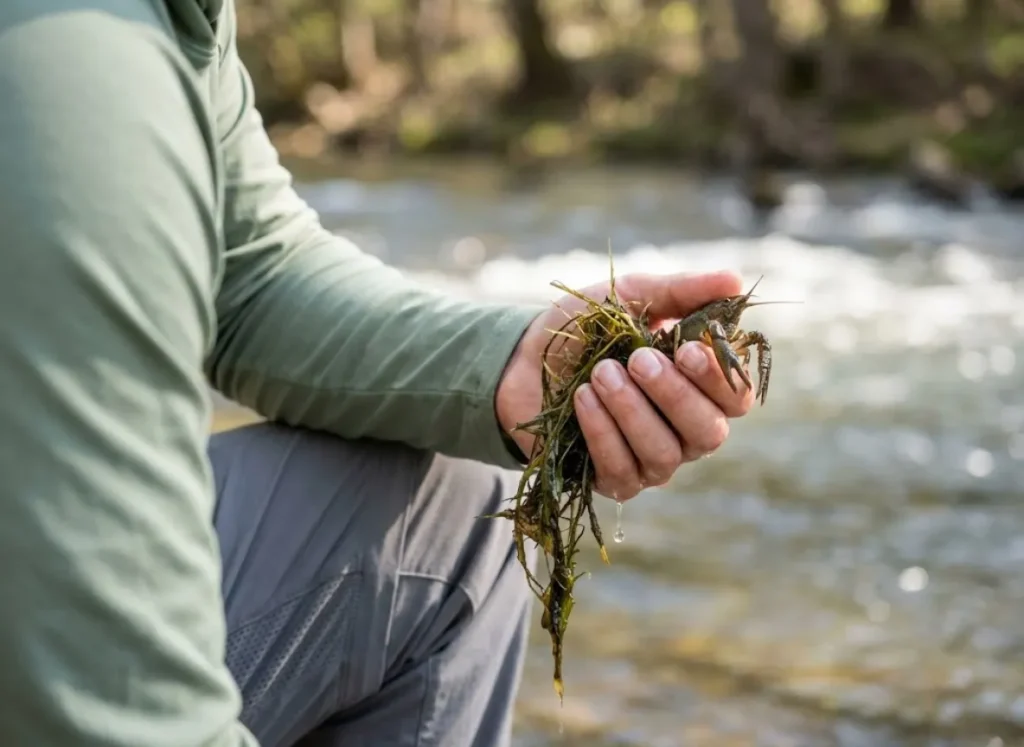
An invasive species is defined by the specific “harm threshold” it crosses. It is a non-indigenous organism that causes confirmed environmental damage, economic loss, or harm to human health, distinguishing it from non-native species that may be benign or economically valuable.
How do we distinguish between non-native, nuisance, and invasive species?
To fight the enemy, we must first name them correctly. Not every fish that swims outside its evolutionary native range is a villain. For example, Pacific Salmon introduced into the Great Lakes are “Non-Indigenous,” but they are managed as massive economic assets rather than threats.
Contrast this with “Aquatic Nuisance Species” (ANS). These organisms disrupt human activity, such as clogging intake pipes or fouling aquaculture. However, the legal and biological definition of “Invasive” hinges on that crucial harm threshold. As outlined in the definitions provided by the National Invasive Species Information Center (NISIC) and the U.S. Fish & Wildlife Service, federal funding and legal bans (like the Lacey Act) are triggered only when a species threatens the stability of the environment or the economy.
The spread of these species is rarely natural. It is driven by “Propagule Pressure”—the frequency and volume of introductions caused by human vectors. Ballast water from transoceanic ships and the release of aquarium pets are primary means of introduction. This relentless transport of organisms contributes to the “Homogenocene,” a global blending of distinct biological communities into a uniform, less resilient soup. This is why our understanding of invasives must be integrated into broader fish conservation efforts; we cannot save the fish if we do not save the water they swim in.
Why Should Anglers Care About the “Silent Siege”?
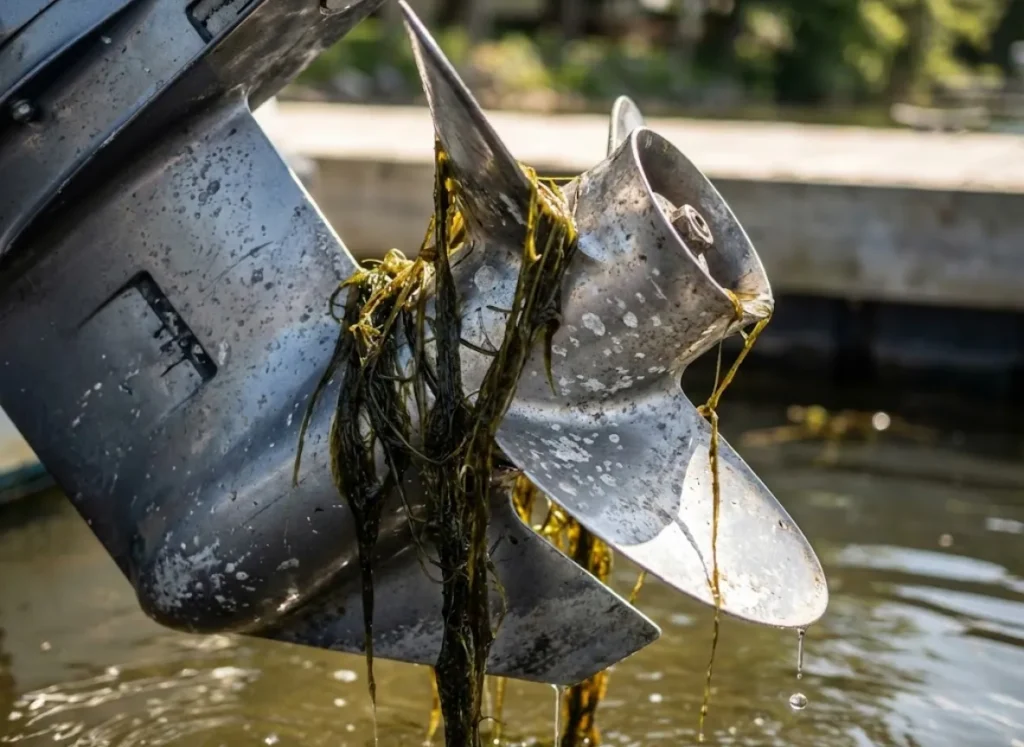
Invasive species do not just harm the ecosystem; they physically destroy fishing gear and impose a direct financial tax on the angler through equipment failure, mandatory inspection fees, and lost access to waterways.
How do invasive species physically damage fishing gear and boat components?
If the ecological argument feels abstract, the hit to your wallet is tangible. Dreissena mussels (Zebra mussel and Quagga mussel) create a “Razor Wire” effect on structure. Their shells are incredibly sharp; if you are finesse fishing near infested pilings or rocks, your fluorocarbon leaders will shear instantly, making certain presentations nearly impossible.
Then there is the “Biofouling” mechanism. Mussels colonize hard surfaces with concrete-like adhesion, including the lower units of outboard motors, boat hulls, and water intake screens. This leads to overheating engines, costly repairs, and significant infrastructure damage.
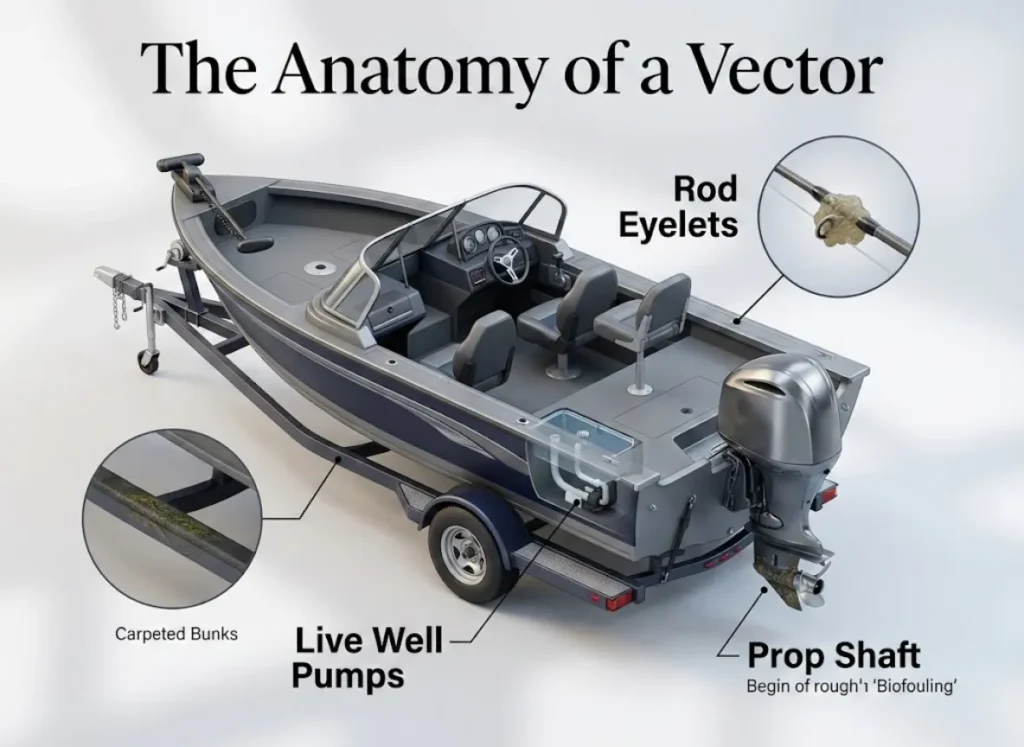
On the line itself, the Spiny water flea creates a “Jelly” phenomenon. These microscopic organisms clump together on fishing reels and lines, clogging rod eyelets and rendering high-end drag systems useless during a fight.
Pro-Tip: If you fish waters infested with Spiny Water Fleas, switch to a strictly monofilament main line. The fleas slide off mono easier than braid, preventing the dreaded “jelly” buildup at your rod tip.
The economic “tax” is severe. Anglers have had to replace expensive felt-soled boots due to bans in states like Alaska, Missouri, and Rhode Island. According to an estimated economic impact on the Great Lakes region, the cost runs into the hundreds of millions annually, affecting everything from fisheries revenue to waterfront property values. This damage necessitates a rigorous approach to sustainable fishing gear maintenance, not just to keep your reel smooth, but to keep your boat legal and operational.
Which Invaders Are Most Dangerous to Our Fisheries?
The most dangerous invaders are categorized by their method of ecological destruction: invertebrates that starve the food web from the bottom up, and botanical invaders that physically alter the structure of the waterway.
How do invertebrate threats like Mussels and Water Fleas alter the water column?
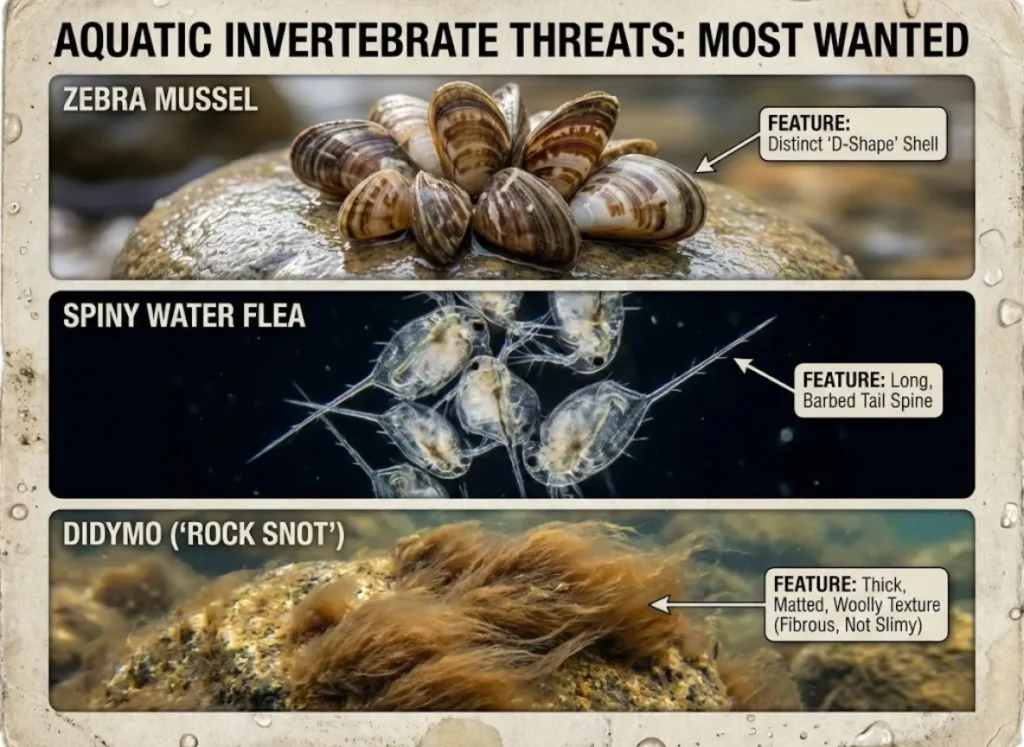
The Zebra and Quagga mussels are the architects of “Ecological Shunting.” By filtering massive amounts of plankton, they cause plankton depletion, starving native baitfish like Alewives. This forces energy to the bottom of the lake (Benthification), causing food web disruption that collapses the pelagic systems supporting salmon and trout. While Zebra mussels prefer shallow, hard surfaces, Quagga mussels can colonize deep, soft substrates, leaving nowhere for the ecosystem to hide.
The Spiny Water Flea creates a “Trophic Cul-de-Sac.” They reproduce via parthenogenesis (cloning themselves rapidly) and eat the zooplankton that baby fish need. Worse, small native fish cannot eat the Fleas because of their sharp spines. The energy stops with the Flea, starving the rest of the chain.
Other threats like the Round goby and Tubenose goby aggressively eat the eggs of native sport fish, leading to native fish displacement. The New Zealand mudsnail is another survivor; it can seal its opening and survive in the damp felt of waders for weeks, resisting desiccation.
In rivers, the Rusty crayfish acts as an “aquatic lawnmower,” clear-cutting weed beds that fish use for cover. Their “Aggression” factor drives them to displace native crayfish and predate heavily on fish eggs. This creates a specific challenge when landing that elusive smallmouth bass, as their spawning beds are primary targets for Rusty predation. For a detailed analysis of these mechanisms, the science of aquatic invasive species in the Mississippi River offers grim but necessary data on habitat alteration.
How do botanical invaders like Didymo and Milfoil ruin the physical structure?
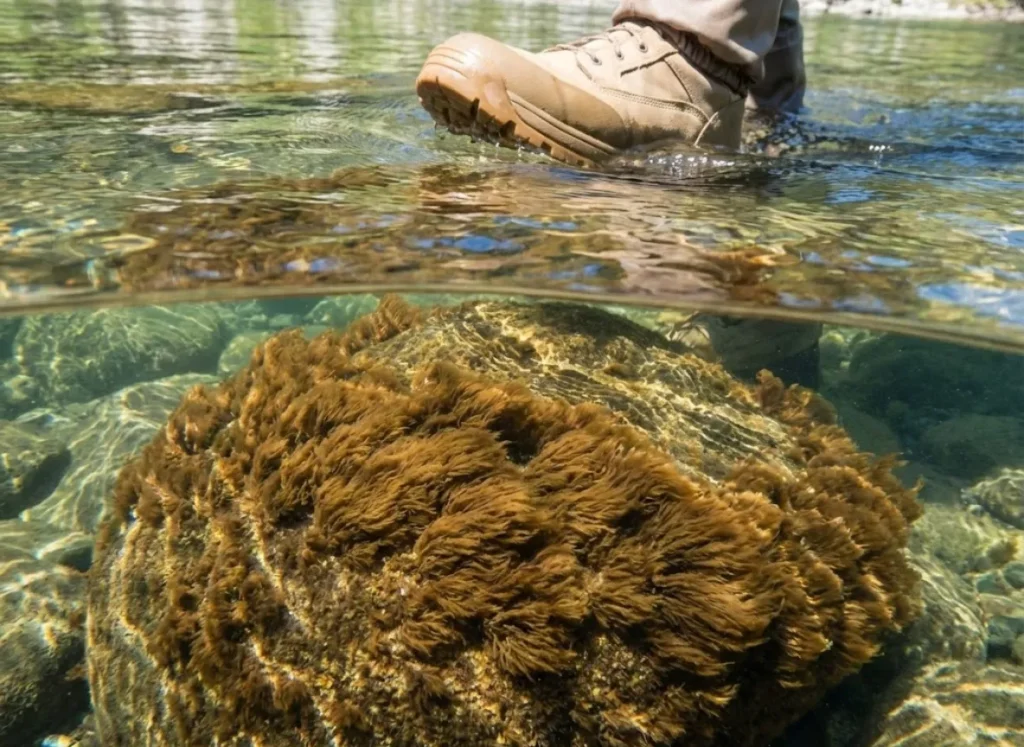
Didymosphenia geminata, known as Didymo or “Rock Snot,” is actually a diatom, not a slime. It feels like wet wool and creates “Benthic Smothering.” These thick mats cover 100% of the stream substrate, choking out the stoneflies and mayflies that trout rely on.
Eurasian watermilfoil, Curly-leaved pondweed, and Hydrilla attack differently, forming dense canopies that shade out native plants. When these massive weed beds die off, their decomposition depletes oxygen, leading to fish kills. The risk of “Fragmentation” is high; a single strand of Milfoil on a trailer bunk can infest a new lake. Emerging threats like Starry stonewort and Flowering rush are compounding the issue, creating monocultures that obstruct lure retrieval.
This biological reality directly impacts gear selection. The spread of Didymo cells via damp felt soles is the primary driver for bans, forcing anglers to be meticulous when selecting the right fly fishing waders. State agencies take this seriously; recent containment alerts for Didymo infestations demonstrate how quickly a waterway can be shut down to prevent spread.
Where Do We Draw the Line Between Sport Fish and Invaders?
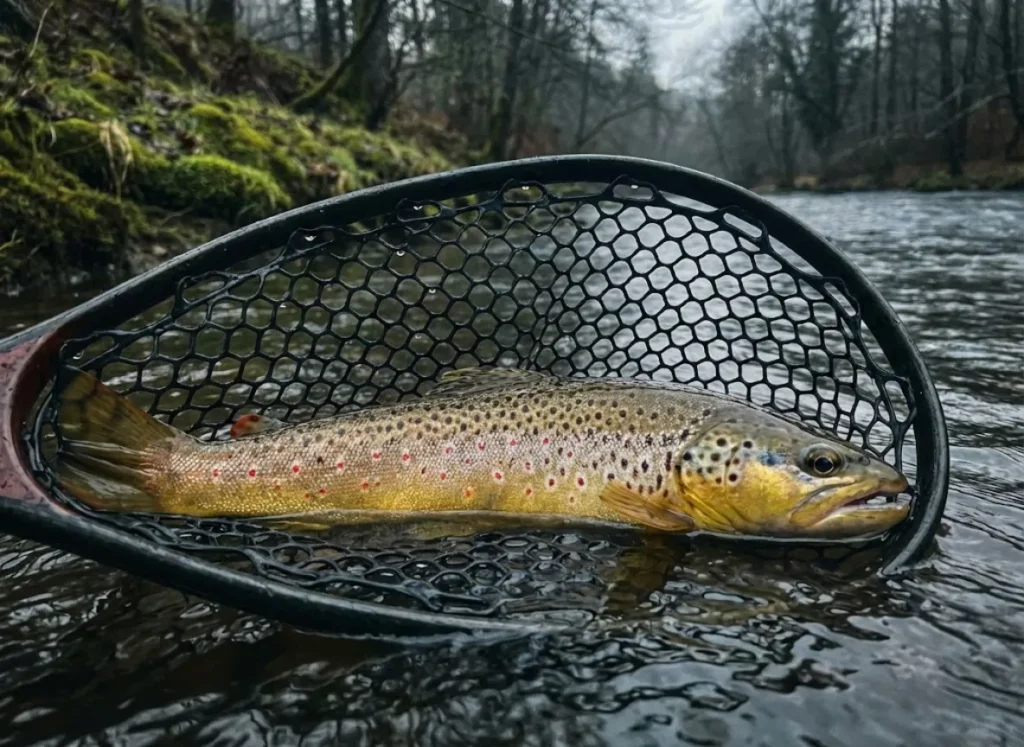
The distinction between a prized sport fish and an invasive pest is often a matter of geography and management goals, best illustrated by the complex status of the Brown Trout.
Why is the Brown Trout considered a “Paradox” in modern fisheries management?
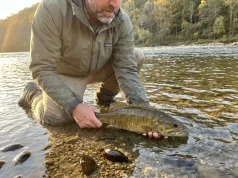
The Brown Trout (Salmo trutta) is the embodiment of the angler’s dilemma. A European import, it supports multi-million dollar industries in places like Montana and Pennsylvania. In these altered tailwaters, they are “Naturalized” resources—economic engines that drive tourism.
However, move that same fish to a high-elevation stream in the Rockies, and it becomes an ecological villain. Brown Trout are aggressive predators that outcompete and eat native Cutthroat Trout. This leads to “Management Schizophrenia,” where agencies stock Browns in a reservoir while simultaneously poisoning a nearby tributary with Rotenone to remove them.
This “Native Pivot” is gaining traction through groups like the Western Native Trout Initiative, prioritizing native biodiversity over general recreation. It forces anglers to confront a cognitive dissonance: we practice “Catch and Release” in one river and “Kill on Sight” in another.
This complexity extends to other species. The Common carp, introduced via historic stocking, is now ubiquitous, while the Asian carp complex (Bighead carp, Silver carp, Black carp, Grass carp) represents a catastrophic threat to the Great Lakes. Even Goldfish released from aquariums can grow to football size, disturbing sediment and causing water quality degradation. A synthesis of Brown Trout as an invader explores this duality, framing it as “Place-Based Ecology.” The right fish must be in the right watershed. This paradox mirrors the issues seen in rainbow trout facts and conservation, where hatchery genetics often threaten wild native strains.
How Can Anglers Effectively Neutralize These Threats?
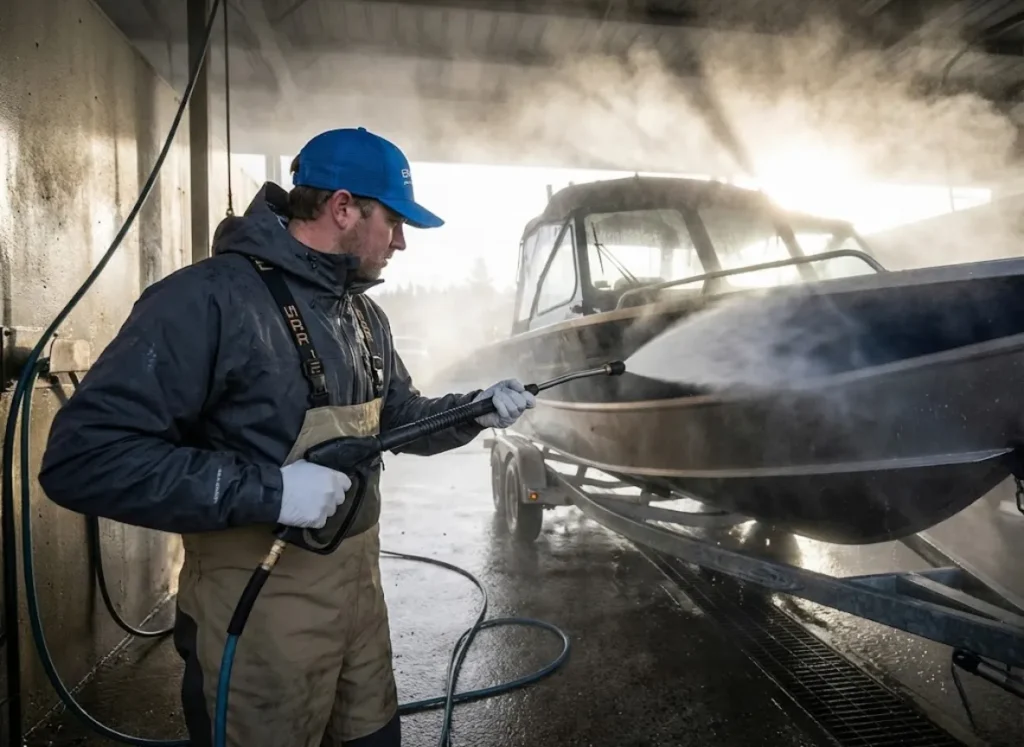
Effective neutralization requires moving beyond simple rinsing to “lab-grade” decontamination protocols using thermal shock (140°F) and chemical sterilization (Virkon Aquatic) to kill microscopic threats.
What are the limitations of the standard “Clean, Drain, Dry” protocol?
The standard slogan—Clean Drain Dry—is a good baseline, but it has failure points. “Cleaning” often misses microscopic veligers (mussel larvae). “Draining” rarely eliminates all residual water in bilge water or lines. And the “Dry” step is the most dangerous fallacy; in humid conditions or within damp felt soles, organisms can survive for days.
To truly sterilize a boat, we must address the “Live Well Loop.” Recirculating pumps can harbor larvae deep in the plumbing, which are then pumped into the next lake. In states like Minnesota, you have an “Affirmative Duty” to prevent spread, meaning you are liable even if no inspector is present.
Advanced gear decontamination is necessary when you cannot wait the recommended 5+ days for drying time. Following protocols from the Invasive Mussel Collaborative ensures you are killing the organism, not just hoping it dies. This level of hygiene is critical for effective livewell management and hygiene to ensure you aren’t transporting a biological time bomb alongside your bait.
How should specific gear like waders and reels be chemically decontaminated?
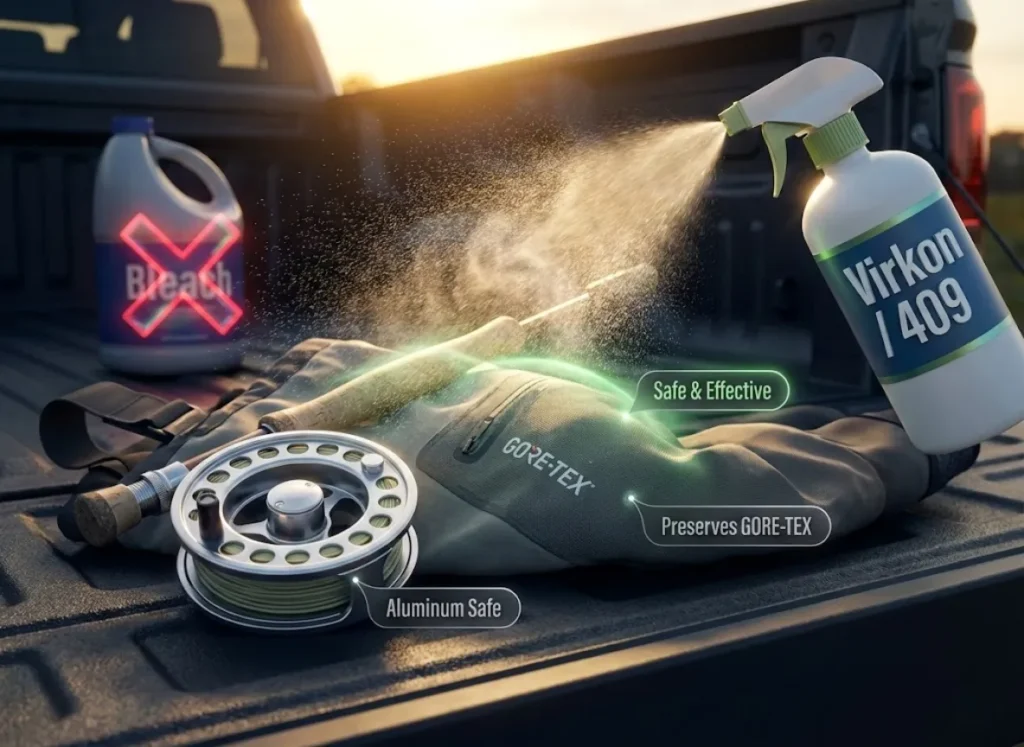
When you need to be certain, you need chemistry. Virkon Aquatic (1-2% solution) is the gold standard; it is a broad-spectrum killer that is safe for gear. While bleach (Sodium Hypochlorite) is effective against pathogens, it is highly corrosive to aluminum reels and will delaminate GORE-TEX waders. Save the bleach for hard, non-porous surfaces only.
For those without access to Virkon, common household Formula 409 (which contains QACs) is effective against snails and Didymo. For freshwater veligers, a simple saltwater soak can induce fatal osmotic shock.
Thermal decontamination is the most effective physical method. The “Magic Number” is 140°F (60°C) for 10 seconds to flash-kill mussels. However, use caution: 140°F can melt the glue on wading boots. For waders, freezing them overnight is a safer, highly effective alternative. Swapping to rubber lugs instead of felt can also reduce transport risk. For boats, use a “Flush Muff” to run hot water through the engine’s cooling system. These standards align with California Department of Fish and Wildlife decontamination protocols and guidelines from Fisheries and Oceans Canada. Regular decontamination also provides the perfect opportunity for inspecting rod guides and parts, ensuring no Spiny Water Fleas are hiding in the ceramic inserts.
Pro-Tip: Keep a spray bottle of Formula 409 or a dilute Virkon solution in your truck bed. Spray down your trailer bunks and wader boots immediately after exiting the water. It kills hitchhikers before they dry and harden onto your gear.
Final Thoughts
Invasive species are not just a chapter in a biology textbook; they are operational hazards that destroy gear, close fisheries, and degrade the experience of being on the water. The “Paradox of the Sport Fish” challenges us to be thoughtful anglers, understanding that a Brown Trout is a prize in a tailwater but a plague in a headwater.
True stewardship requires us to evolve our tactics. We must move beyond the “rinse and repeat” mentality and adopt thermal and chemical sterilization as standard prevention protocols. Before you trailer your boat to a new watershed, consult the USGS NAS database to know exactly what you are fighting. Equip your kit with the right chemistry, check the prohibited species list, and hold the line.
FAQ – Frequently Asked Questions
What is the difference between an exotic species and an invasive species?
An exotic (non-native) species is simply one living outside its native range, while an invasive species is a non-native that actively causes economic, environmental, or health harm. Not all exotics are invasive (e.g., most agricultural crops).
Does bleach ruin breathable waders?
Yes, bleach degrades the DWR (Durable Water Repellent) coating and the microporous membrane of fabrics like GORE-TEX, leading to leaks and delamination. It is safer to use freezing, hot water (under 120°F), or specific cleaners like Virkon.
Are felt-soled wading boots illegal?
They are banned in several states (including Alaska, Missouri, Maryland, Rhode Island) and countries (New Zealand) because the porous felt traps microscopic organisms like Didymo and mussel larvae for extended periods, making them a primary vector for spread.
Can I eat Asian Carp?
Yes, Silver and Bighead carp are clean, white-fleshed fish that are delicious when prepared correctly. The main challenge is their complex, free-floating bone structure, which requires specific filleting techniques to process effectively.
Risk Disclaimer: Fishing, boating, and all related outdoor activities involve inherent risks that
can lead to injury. The information provided on Master Fishing Mag is for educational and informational purposes
only. While we strive for accuracy, the information, techniques, and advice on gear and safety are not a substitute
for your own best judgment, local knowledge, and adherence to official regulations. Fishing regulations, including
seasons, size limits, and species restrictions, change frequently and vary by location. Always consult the latest
official regulations from your local fish and wildlife agency before heading out. Proper handling of hooks, knives,
and other sharp equipment is essential for safety. Furthermore, be aware of local fish consumption advisories. By
using this website, you agree that you are solely responsible for your own safety and for complying with all
applicable laws. Any reliance you place on our content is strictly at your own risk. Master Fishing Mag and its
authors will not be held liable for any injury, damage, or loss sustained in connection with the use of the
information herein.
Affiliate Disclosure: We are a participant in the Amazon Services LLC Associates Program, an
affiliate advertising program designed to provide a means for us to earn advertising fees by advertising and linking
to Amazon.com. As an Amazon Associate, we earn from qualifying purchases. We also participate in other affiliate
programs and may receive a commission on products purchased through our links, at no extra cost to you. Additional
terms are found in the terms of service.