
In this article
Most gear lists hand you sixteen items like they all matter the same. Spend a season on the water and you learn the truth fast: four tools come out every single trip, and the rest mostly ride in the bottom of the bag. Ask anyone who fishes a lot and they’ll give you the same short list, then shrug at the gadget they bought and never touched again. This guide walks every category of fishing tools and accessories worth owning, ranked by how often you actually reach for it, and flags the one thing nobody says plainly: saltwater quietly wrecks cheap tools, so material is the real buying line.
What You Actually Reach For Every Trip
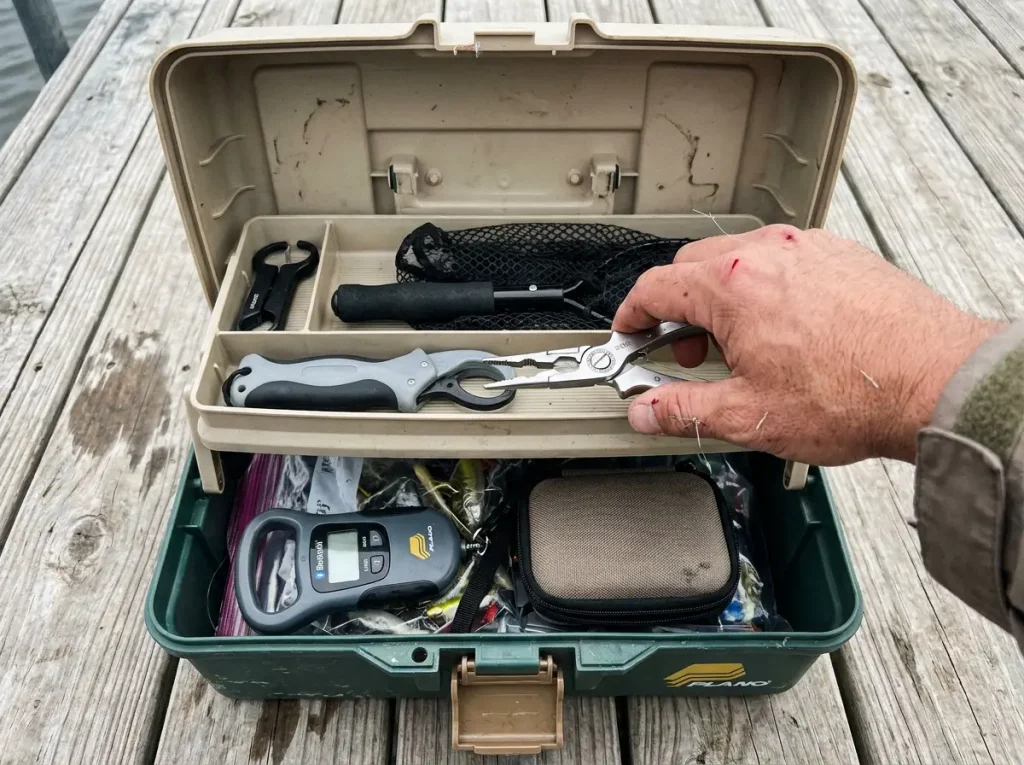
Here’s where most gear guides get it backwards. They rank tools by price or by how clever they look in a photo. Out on the water, your hands tell a different story, and they reach for the same four things over and over while the expensive gadget stays buried.
The four tools that come out every trip
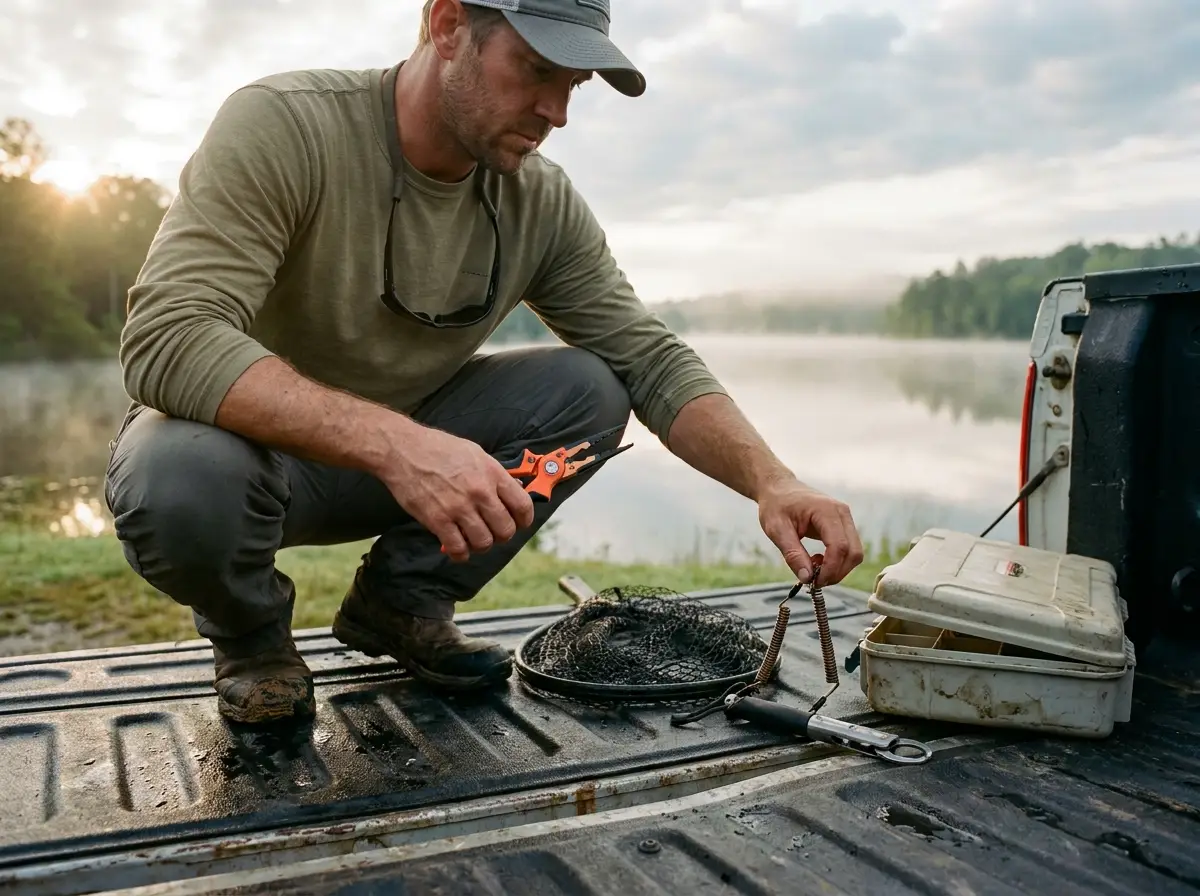
Pliers, a line cutter, a landing net, and a lip grip. That’s the working core. Pliers handle hooks and crimps, the cutter trims tag ends and braid, the net saves the fish at the boat, and the grip controls anything with teeth. Everything else is situational. If you only ever buy four things, buy these, and buy them before you buy a second rod.
The honest test is the bag itself. The tools you use live in the top tray or clipped to your chest pack, within a one-second grab. The stuff you bought because a video told you to ends up at the bottom, under the spare line and the granola bar wrapper.
Clip your pliers and your line cutter to a floating retractor or a lanyard. Tools go overboard when, not if, and a floating tether is the cheapest insurance on the boat.
The gear that lives in the bottom of the bag
A Bluetooth scale, a fish finder, the gadget-of-the-month. None of it is useless. It just doesn’t earn a top-tray spot for most anglers. Rank your purchases by how often your hand goes for the tool, not by how impressive the spec sheet reads, and you’ll spend your money where it actually works.
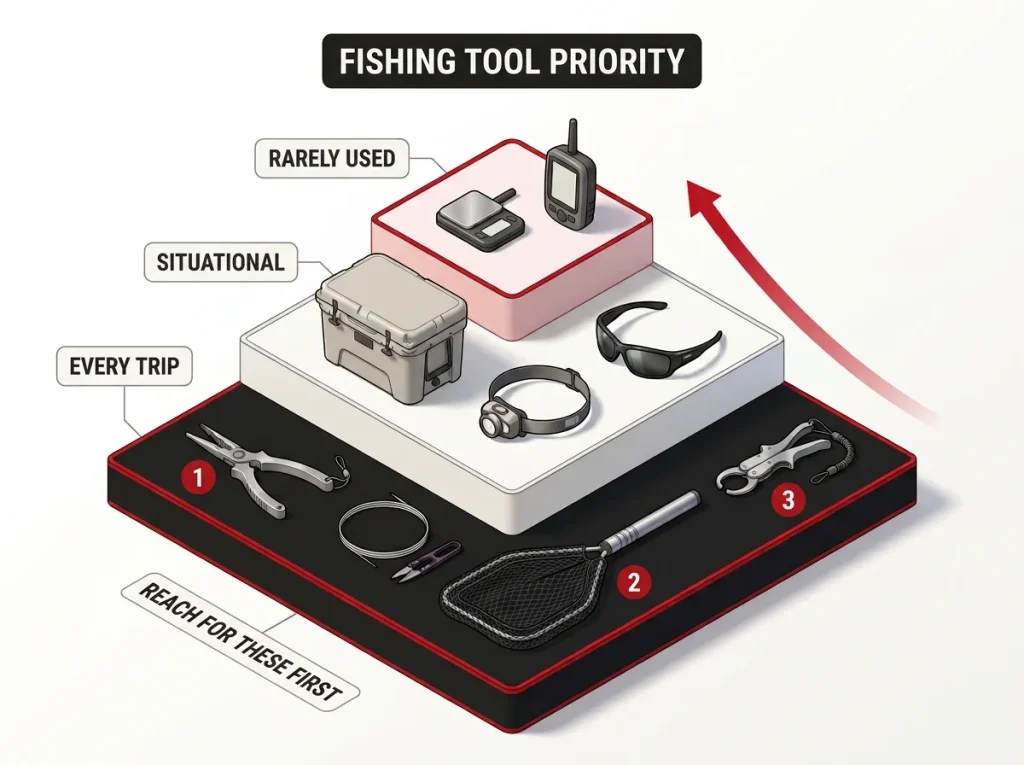
How to spend your first hundred dollars
Pliers and a net first. A lip grip next. Then a tackle box to hold what you’ve got. The budget versus premium call only matters once you know which tools you actually lean on, so skip the scale and the electronics until you’ve fished enough to know you’ll use them. If you’re still building your kit from scratch, it helps to sort out what to actually pack for a day on the water before you start buying one of everything.
Why Saltwater Eats Cheap Tools
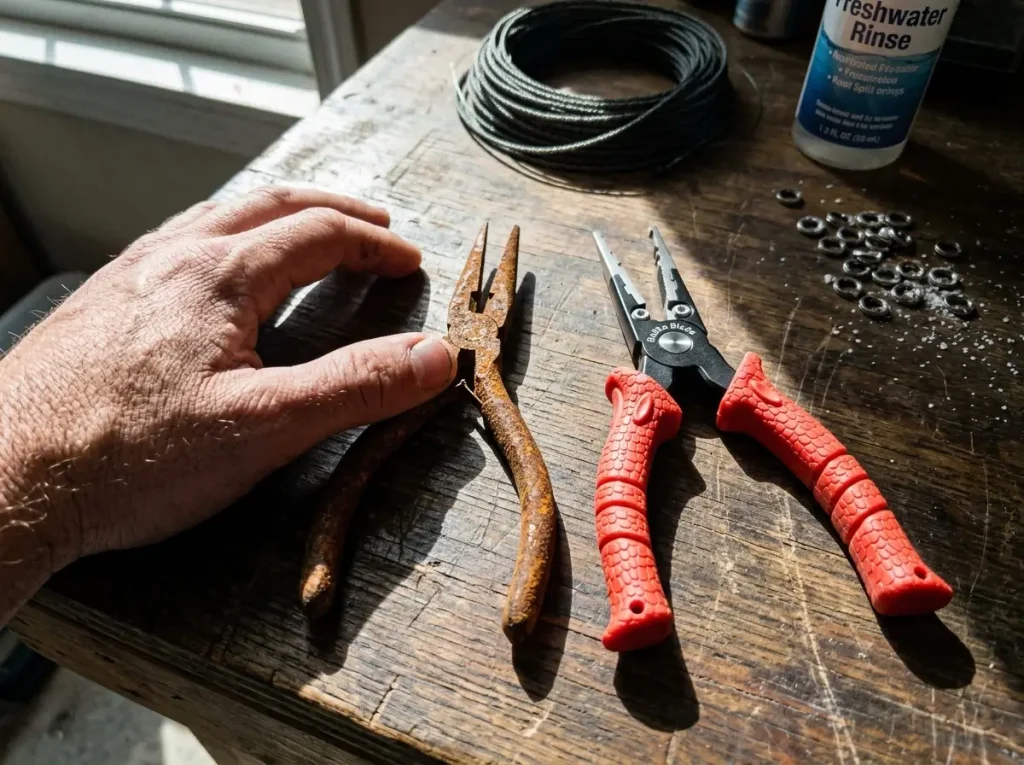
There’s a boat-ramp moment that sells you on good tools forever: a fish hooked at the side of the boat and a pair of pliers rusted shut so tight they won’t open. Cheap tools rust, flex, and round off, and they almost always fail at the worst time. This is the part no competitor states plainly, so pay attention, because material is the real buying line.
Stainless, aluminum, and what the coating really does
Stainless steel runs about 46% harder than aluminum and roughly three times the bending strength, so cheap aluminum jaws flex and round off where stainless holds its edge prying split rings. But there’s a twist most people miss: anodized aluminum actually resists corrosion and pitting better than even high-grade stainless, as long as you rinse it. The label that matters most isn’t the alloy at all. It’s the corrosion-resistant coating. A 420 stainless body with a Teflon or polymer coat, what manufacturers label marine-grade stainless steel, is the standard saltwater-tool spec, and uncoated bargain tools rust to junk within a season.
The rinse habit matters more than the alloy on the label. A two-minute freshwater rinse after every saltwater trip, then let the tool dry before it goes in the box, outlasts any marketing spec.
Carbide cutters and when they actually matter
Tungsten carbide cutters cleanly slice monofilament, fluorocarbon, and braid, where standard steel cutters fray braid into a fuzzy mess that won’t pass through a rod guide. Here’s the honest part: carbide only matters if you fish braid. If you run mono or fluoro, plain steel cutters are fine and you can save the money. One trick the spec sheets skip is to position braid at the back of the cutter, near the hinge, for maximum leverage. Cutting braid at the very tip is where cheap cutters lose.
The rinse habit that beats any alloy
No coating survives neglect. The most expensive saltwater-rated tool in the world still seizes up if you toss it wet and salty into a damp box trip after trip. The $10 to $20 premium for a coated, saltwater-rated tool buys you durability only if you back it up with a rinse. Spend a little more up front on material, then protect that investment with two minutes at the hose.
Fishing Pliers and Line Cutters
If you buy one non-tackle tool, buy pliers. They earn their spot every trip, doing five jobs at once: hook removal, line cutting, knot tightening, crimping split shot, and split-ring work. Nothing else in the bag is that versatile.
What makes a pair worth carrying
Look for needle-nose reach to get a hook out of a deep-set jaw, a split-ring tip for swapping trebles, carbide side cutters if you fish braid, a corrosion-resistant build, and a lanyard hole. That’s the whole checklist. Length matters too: a 7-inch plier reaches most freshwater fish, while toothy saltwater species call for something longer to keep your fingers clear.
Needle-nose, split-ring, and crimping jobs
A good pair pulls a hook, crimps a sleeve on a leader, opens a split ring, and trims your tag end without you ever switching tools. Anglers who want specialized pieces sometimes add a dedicated hook extractor, a hook hone or sharpening stone to keep points sticky, or a set of braid shears for fine work, like the Bubba Blade long-nose pliers and matching shears, but a single quality plier or a fishing multi-tool covers most of it. For the deeper breakdown on the specialty tools, the full rundown on rigging, handling and repair tools goes further than we can here.
A pair that survives salt and braid
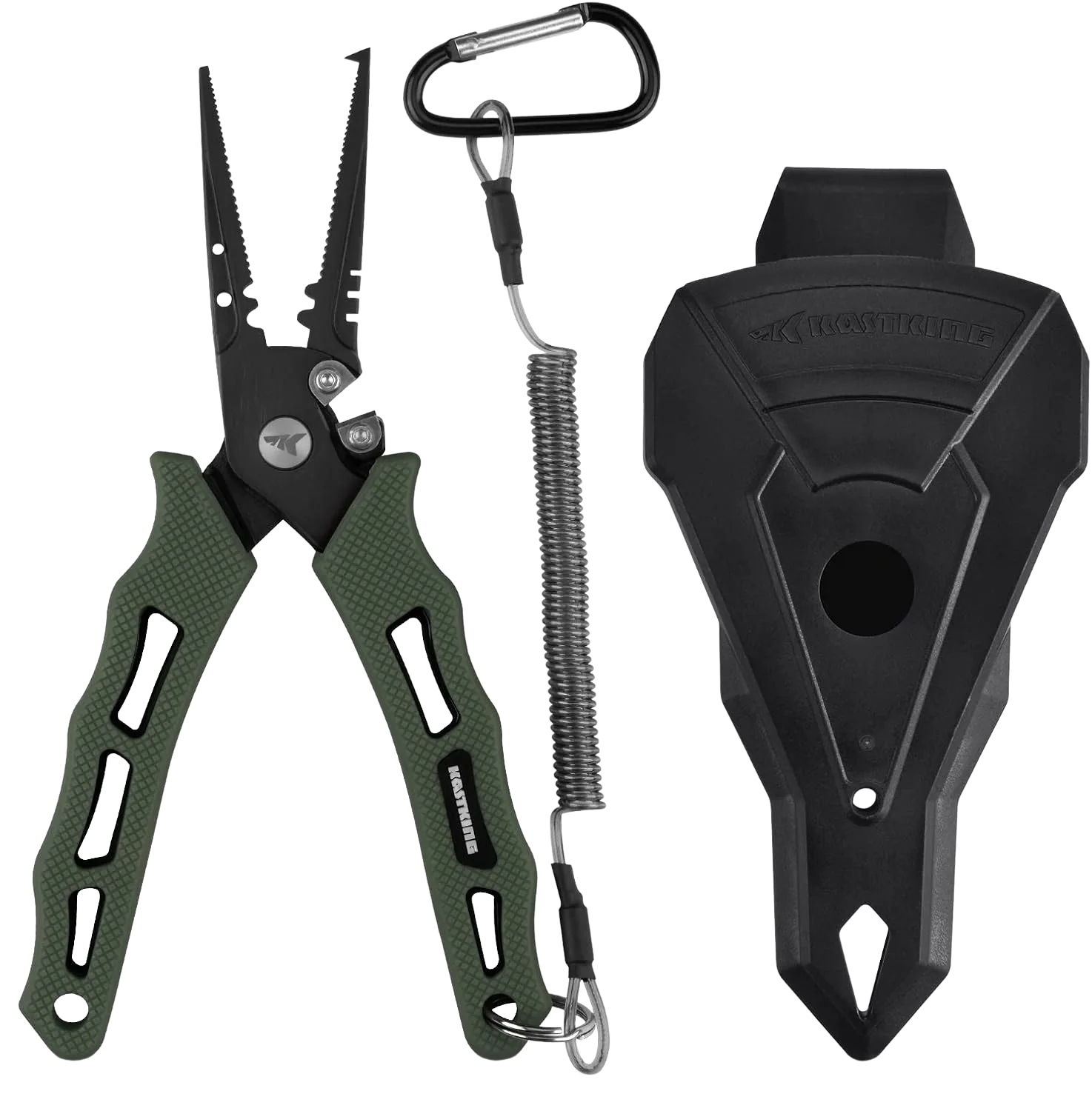
Carry it on a retractor and it becomes the tool you forget you’re wearing until a hook needs pulling. The carbide cutters are the part that separates it from a bargain plier, and they only justify the spend if you fish braid, so match the tool to your line.
The Starter Tool Kit Question
Here’s where beginners burn money: buying ten tools one at a time, each on a separate trip to the tackle shop, when a single kit would have covered the whole loadout for less. The combo-versus-piecemeal call is worth thinking through before you start clicking buy.
When a combo kit is the smart buy
For a first kit, a combo wins. One purchase covers pliers, a fillet knife, braid scissors, a floating lip gripper, a hook remover, and a retractor, which is most of a beginner’s non-tackle list in a single box. You don’t yet know which tool you’ll use hardest, so paying for a bundle beats guessing.
When to buy standalone pieces instead
Once you’ve fished a season, you’ll know. Maybe you cut braid constantly and want a dedicated carbide plier. Maybe you never touch the fillet knife. That’s when you upgrade the one piece you lean on and leave the rest. A good starter kit gives you the full spread cheap; standalone pieces are for the tools you’ve earned an opinion about. The same logic applies to your tackle: knowing what belongs in a first tackle box keeps you from over-buying there too.
A kit that covers the basics
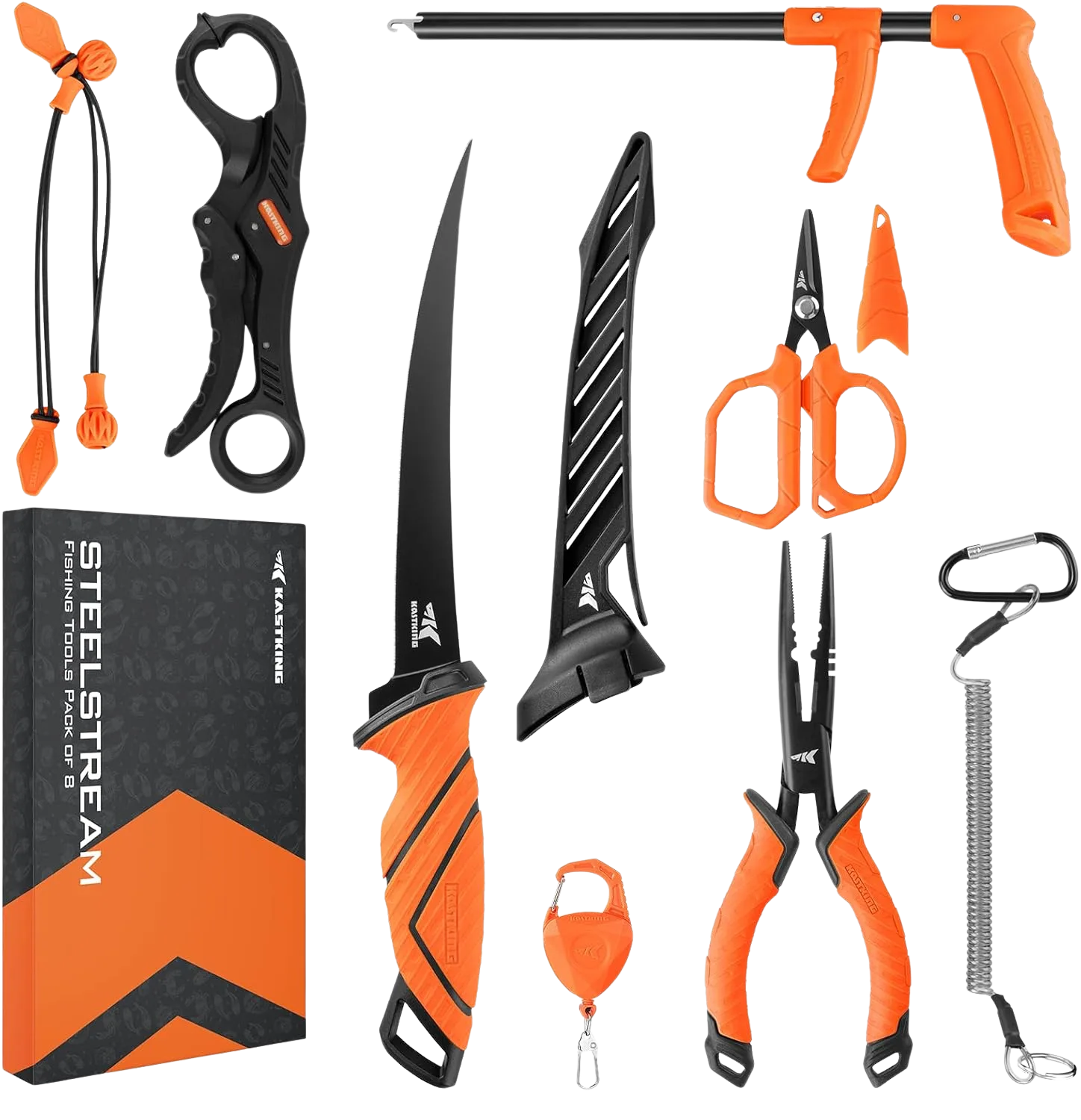
No single piece in a kit is the best version of that tool. The point is coverage, not perfection. You get a working set for the price of one premium plier, and you replace pieces as you learn what you actually use.
Landing Nets and Why Mesh Matters
After pliers, the net is the tool you’ll reach for most, and the one beginners skip until they lose a good fish. The highest-loss moment in fishing is lifting a fish by the line alone at the boat or bank, right when the leverage works against you. A net turns that gamble into a sure thing.
Rubber mesh vs nylon and the slime coat
This is where gear becomes conservation. A knotted nylon net scrapes off the slime coat, the protective mucus layer that fights infection, and frays fins in the process. A knotless rubber mesh net does neither. The saltwater-tools rundown from Take Me Fishing makes the same point: the net isn’t a luxury, it’s part of releasing a fish that actually survives. If you plan to let fish go, rubber mesh isn’t optional.
Handle length, hoop size, and packability
Match the net to how you fish. A short handle works from a kayak, a longer telescoping handle reaches from a high bank or a boat deck, and hoop size should fit the fish you target. A folding, telescoping net stows small and rides in the truck without eating your whole back seat. For the full breakdown by situation, our boat, bank, and kayak net picks go deeper on sizing.
A fish-friendly net that folds down
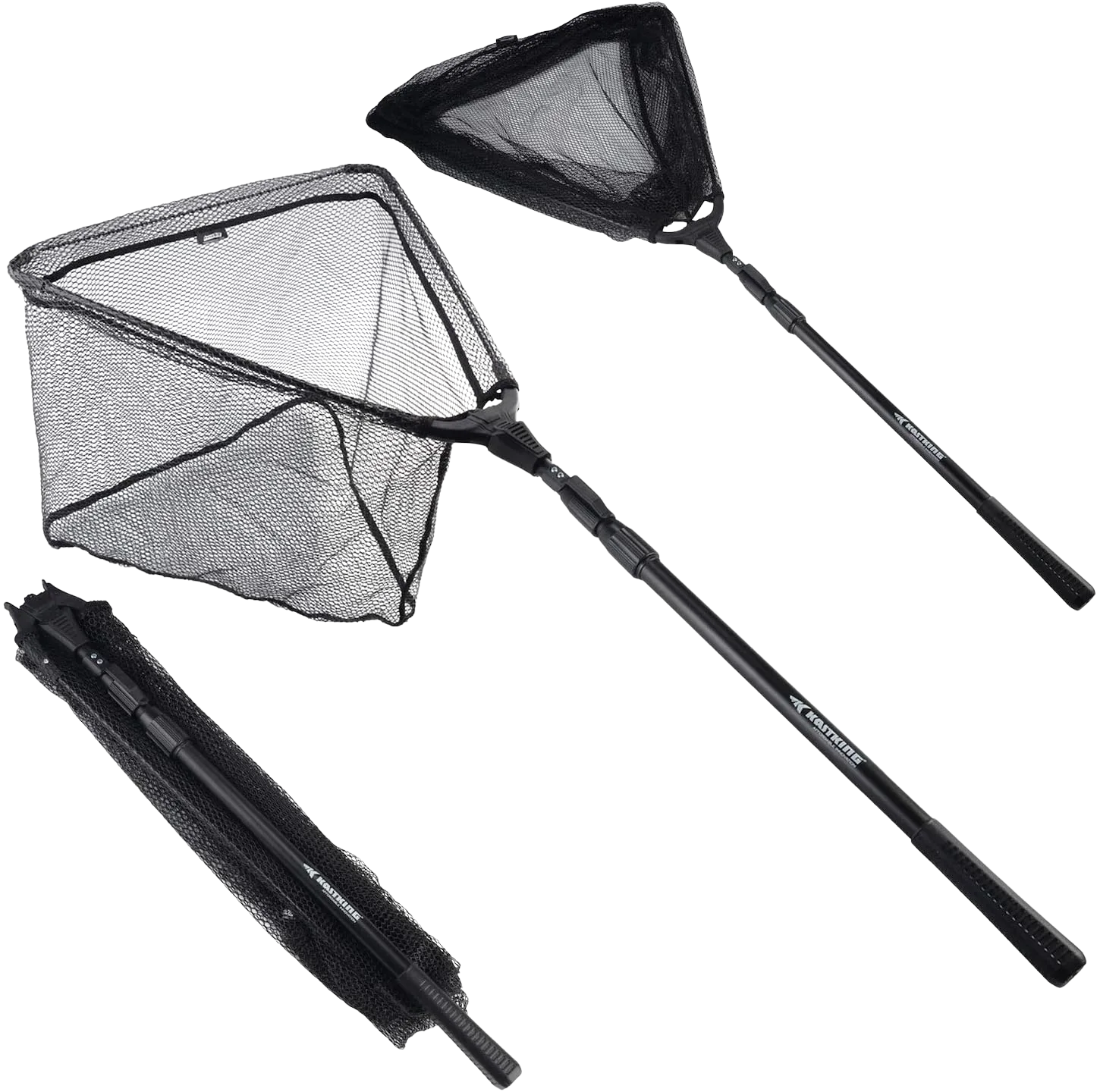
A net you can fold and forget is a net you’ll actually bring. The ones that stay home are the rigid, oversized models that won’t fit anywhere, and a net in the garage saves exactly zero fish.
Fish Grips and Scales
A lip grip and a scale get lumped together, but they earn very different spots in your kit. One is a genuine handling tool. The other is a nice-to-have most anglers can skip.
What a lip grip is for (and what it’s not)
A lip grip is for control and hook removal on toothy fish, holding and releasing them without your fingers in the gills or mouth. Bare-handed lipping a pike, walleye, or blue shreds your thumb, and the grip protects both you and the fish. It should be non-corrosive aluminum or stainless with trigger-open jaws. What it’s not is a photo prop. Anglers call any lip-grip-plus-scale tool a “Boga,” after the original Boga Grip, and the right way to use a lip-grip tool matters more than the brand on it.
Do you actually need a scale
For most anglers, no. A Bluetooth fish scale is a tournament and record-chasing tool, and it ranks near the bottom of the reach-for hierarchy for everyone else. If you weigh fish often enough to justify it, a good digital scale is accurate and durable, and our digital scales breakdown covers how they stack up. If you don’t, that money goes further on pliers or a better net.
A budget grip and a tournament scale
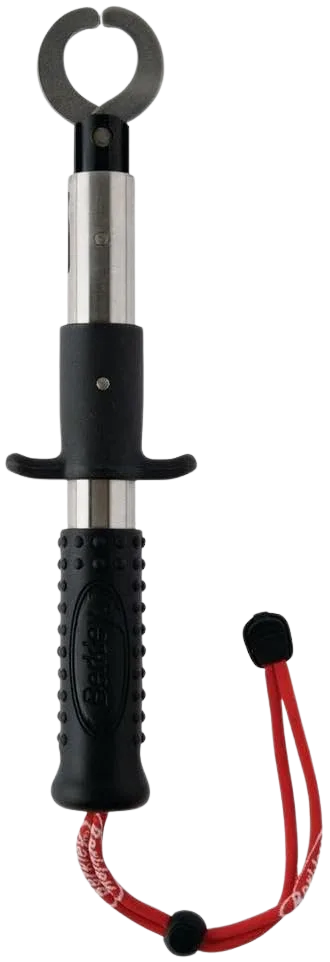
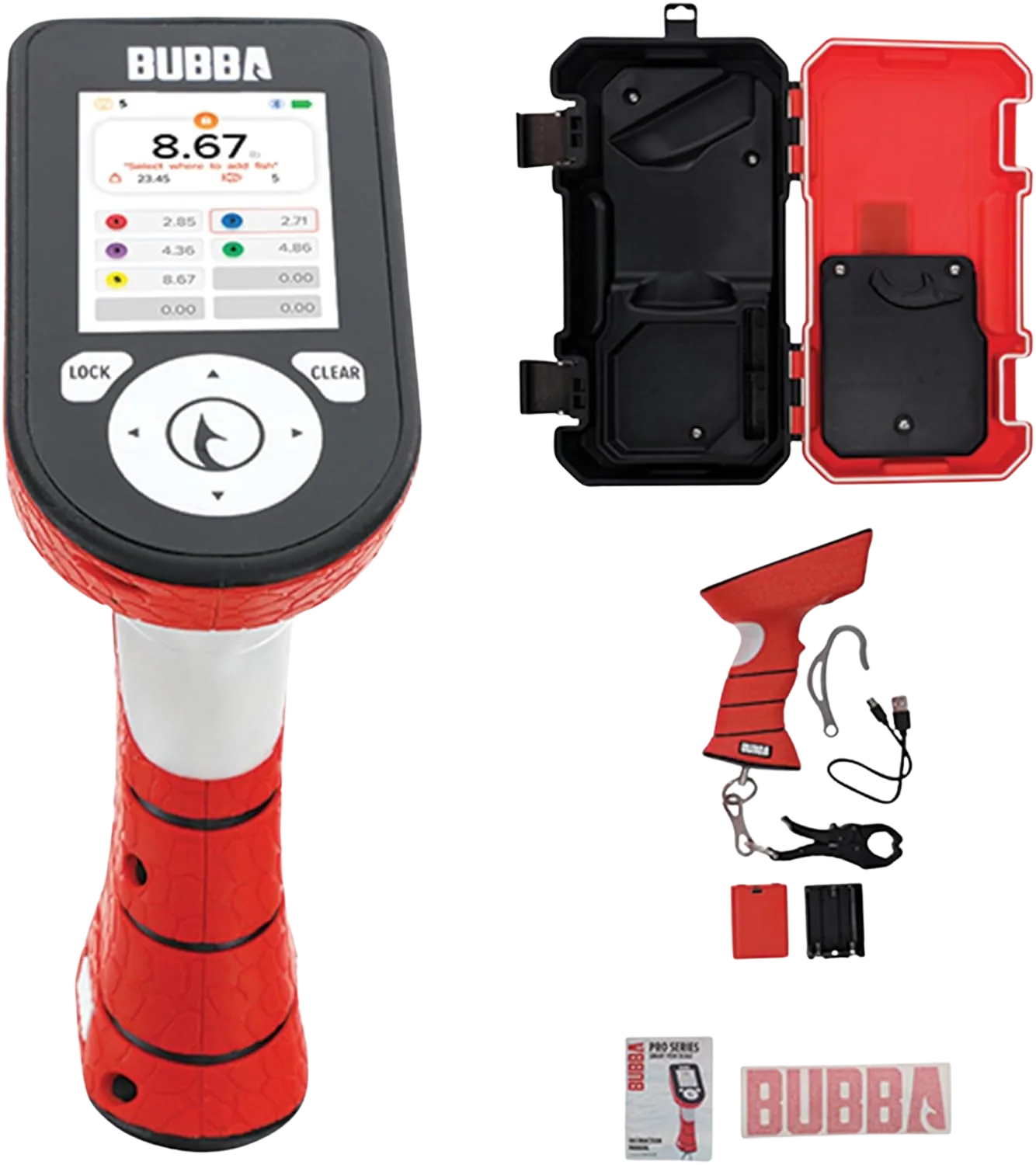
If you want grip and weight in one tool on a budget, the Berkley Pistol Lip Grip with a built-in scale splits the difference. It’s less accurate than a dedicated smart scale but covers both jobs for the casual angler who just wants a rough number.
Handling Fish Without Hurting Them
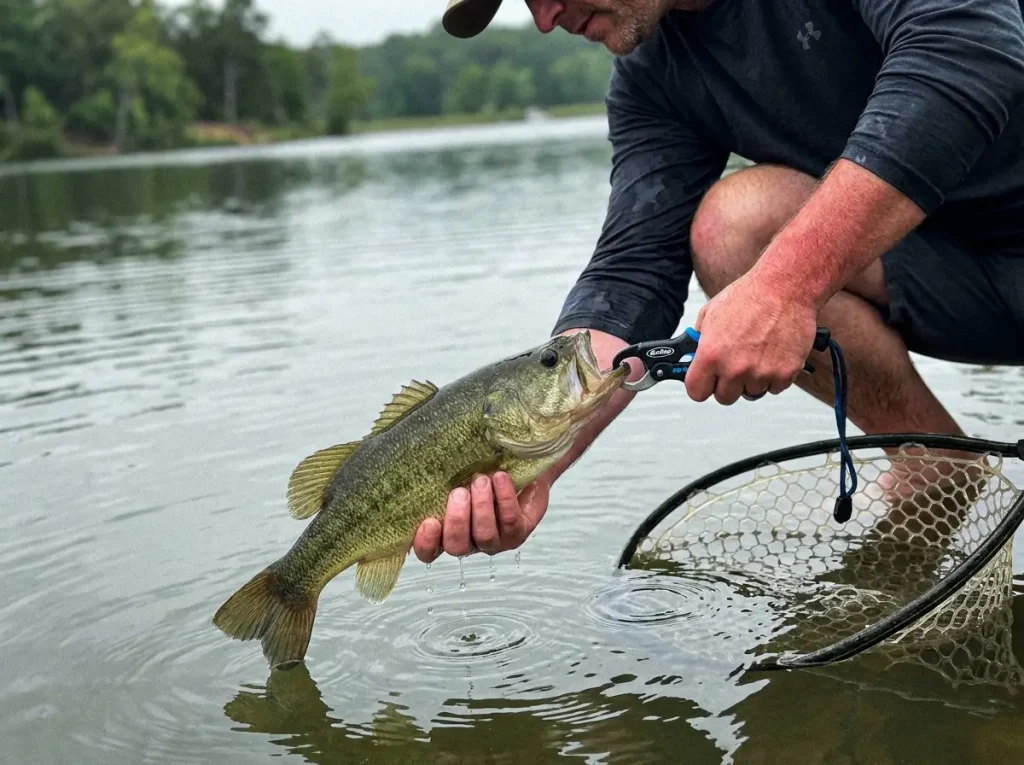
The same tools that make fishing easier make releasing fish safer, if you use them right. This is where gear talk becomes stewardship, and where a few small habits decide whether the fish you let go actually swims off or dies an hour later.
The 20-second rule and horizontal holds
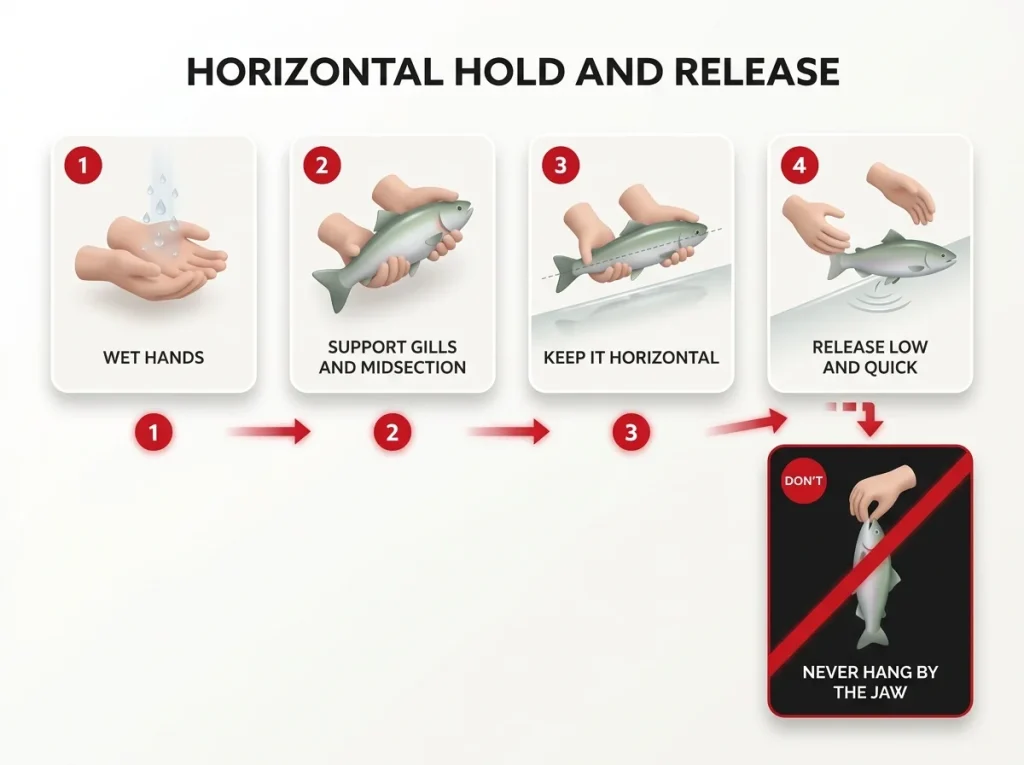
NOAA’s catch-and-release best practices lay it out simply: hold the fish horizontally, support it behind the gill plate and under the midsection, and keep air exposure under about 20 seconds. The clock starts the moment it leaves the water. Get your camera ready before you lift, not after, so the fish spends those seconds out and goes right back.
Why you never hang a fish by the jaw
A lip grip is for control, not for dangling a fish vertically by the jaw for a hero photo. Hanging a heavy fish by the lower jaw can break or dislocate it and damage internal organs, and a fish that swims off looking fine can still fade days later from that handling. Support the fish. Always. The grip holds the head steady while your other hand takes the weight underneath.
Wet hands, rubber nets, and a clean release
Wet your hands before you touch a fish, because dry hands strip the slime coat that works as its immune system. A rubber net, a wet grip, and a quick horizontal hold are the whole formula for a clean release. If you handle a lot of toothy fish, a fishing glove helps, and the trick is finding a glove that still lets you tie knots instead of turning your hands into oven mitts.
Keep the fish in the net, in the water, while you ready your pliers and phone. Do all your fumbling before the lift, then it’s one smooth motion: out, hold horizontal, quick shot, back in.
Tackle Storage, Boxes and Bags
Your tools are only as good as your ability to find them. A disorganized pile of tackle costs you fishing time and corrodes your gear, so storage is less glamorous than a new reel but it earns its keep every trip.
Hard boxes vs soft bags
A hard tackle box gives you the most capacity and crush protection for a fixed kit that lives in the boat or truck. A soft tackle bag or a tackle backpack holds modular utility trays and is easier to carry and rearrange, which suits an angler who moves around or fishes from the bank. Plenty of anglers skip the box entirely and wear their gear instead, and the chest pack vs vest comparison is worth a look if you fish on the move.
Keeping moisture and rust out
This is the part that quietly ruins gear. Tools and terminal tackle corrode in a damp, sealed box, so let everything dry before it goes away and crack the lid at home. A soft bag breathes better but offers less protection from rain, and knowing how to keep a soft bag’s contents dry makes the difference in a downpour.
A high-capacity box and a budget starter
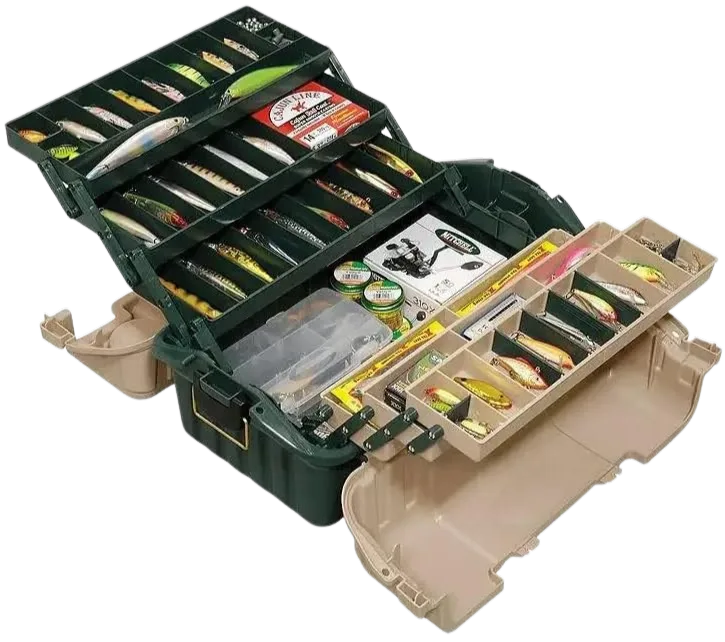
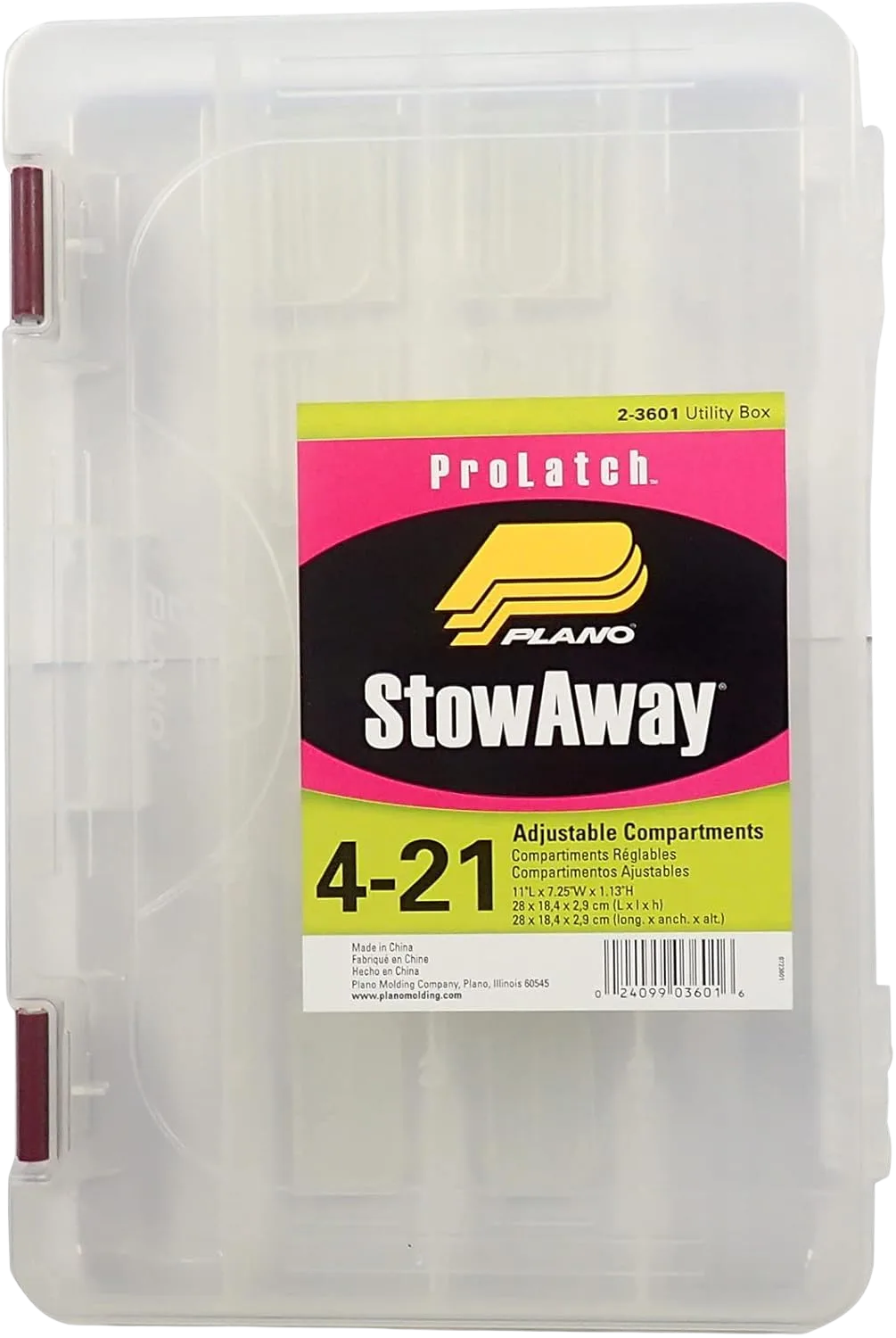
Most anglers should start with a couple of 3600 utility boxes and a soft bag to carry them, then graduate to the big hip-roof box once their tackle outgrows it. Buying the giant box first usually means hauling a half-empty case around for a year.
Sunglasses and Sun Protection
Polarized lenses aren’t comfort gear. They’re a fish-finding tool, and a long day in unfiltered glare punishes your eyes in a way you feel for the next two days. This is a category where paying up pays off.
Why polarized lenses change what you see
Polarized sunglasses cut the surface glare bouncing off the water, and suddenly you can see structure, depth changes, and the fish themselves. That’s the whole game in clear water: sight fishing is impossible without them. They also block the UV that wears your eyes down over a full day on the water.
Lens color, hats, gaiters, and covering up
Lens tint matters more than people think, and the right color depends on water clarity and light. A copper or amber tint pops contrast in stained water, while gray suits bright open conditions, and matching lens color to the water and light is worth getting right. Past the eyes, covering up beats slathering on sunscreen every hour. A wide-brim hat, a neck gaiter for the sun, and a UPF sun shirt that covers you all day do more than any lotion.
A budget polarized pick
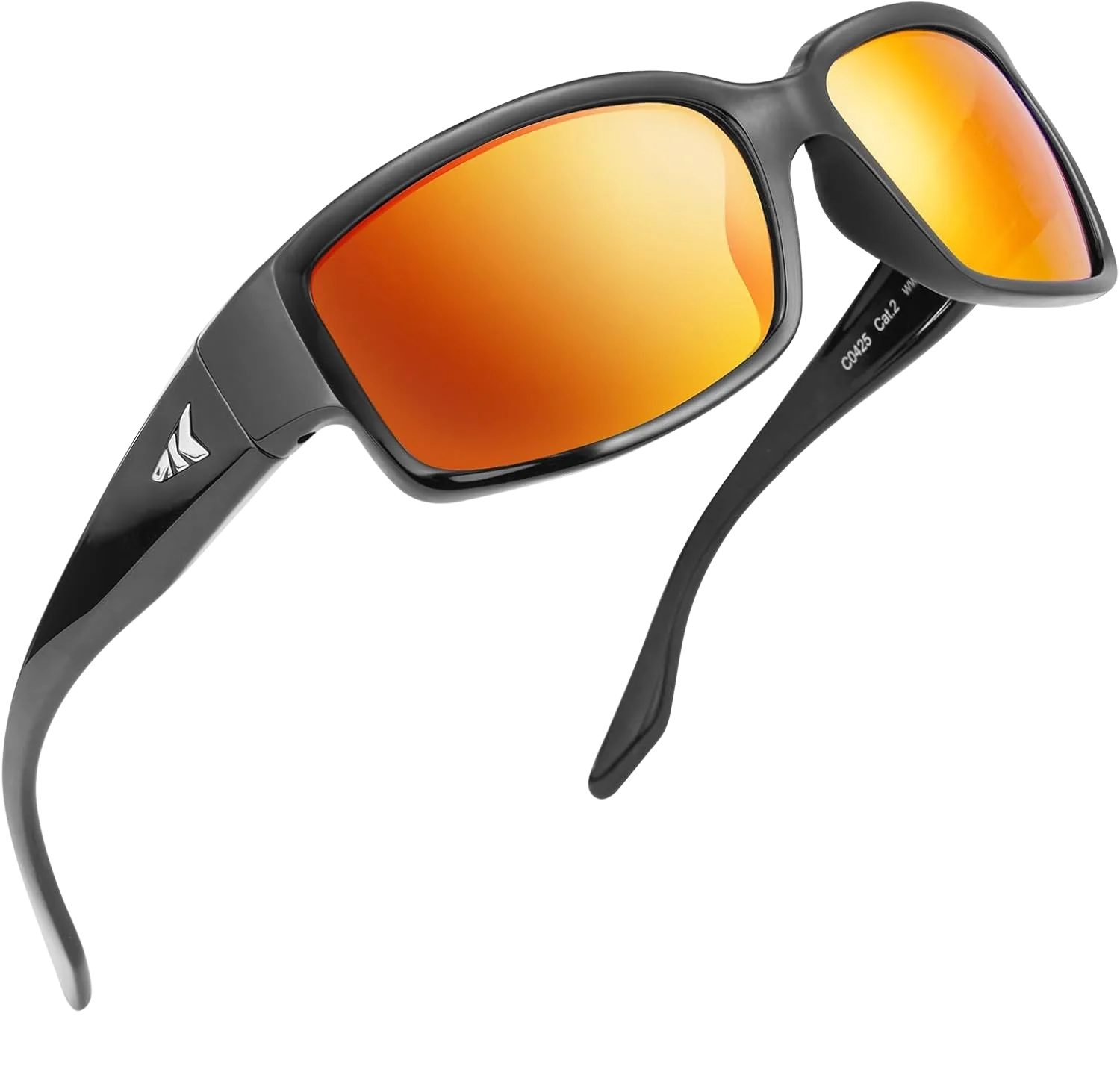
If you fish a lot of clear, bright water and want glass-clarity lenses that last for years, the Costa King Tide is the premium step up. For most anglers, a budget polarized pair you won’t cry over when it goes overboard is the smarter buy.
Coolers, Headlamps, and the Optional Gadgets
This is the “depends on how you fish” tier. A real cooler if you keep fish, a waterproof headlamp if you fish low light, and the honest truth that a fish finder is a nice-to-have, not a must.
Coolers and dry bags for keeping the catch
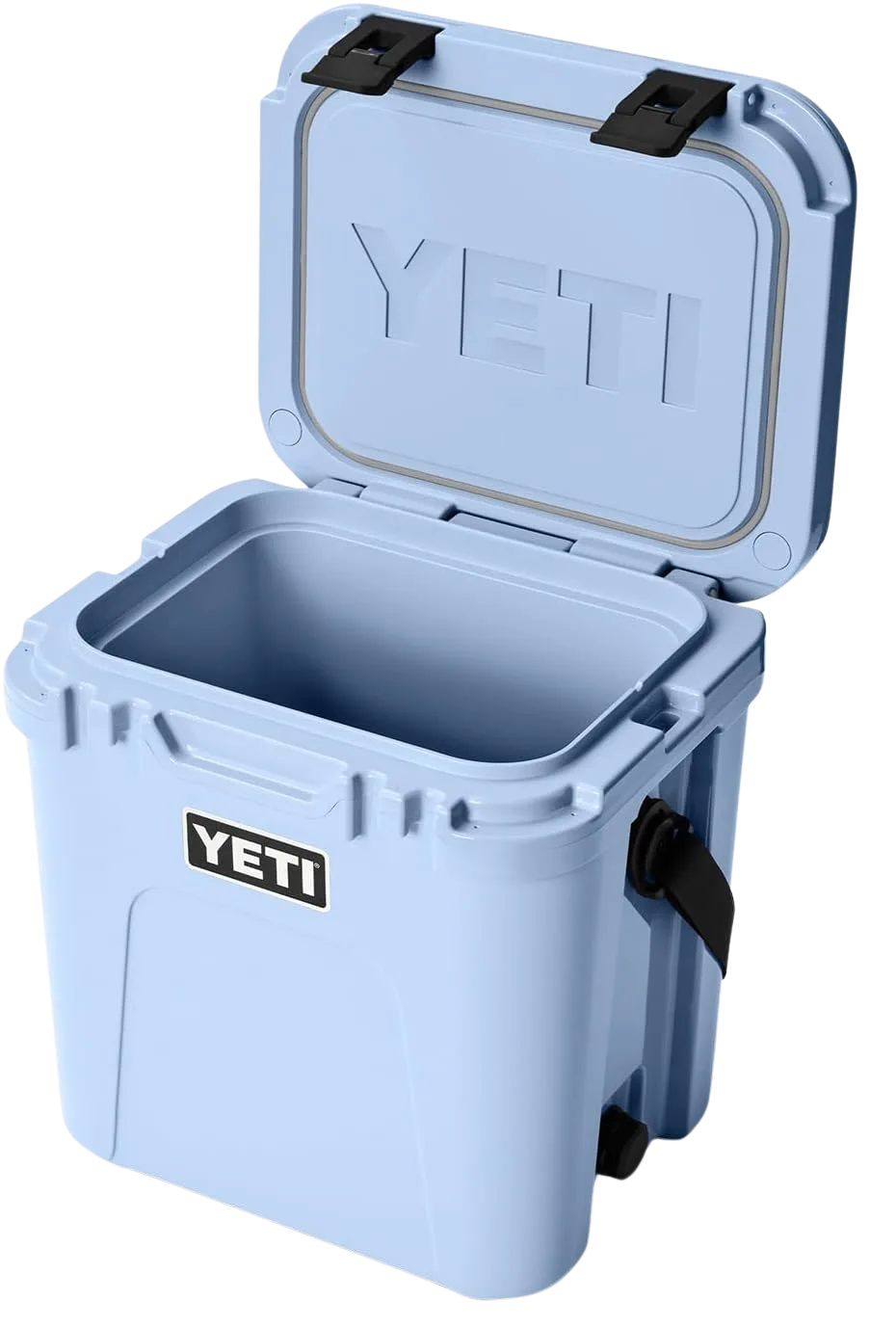
If you harvest fish to eat, a rotomolded cooler keeps your catch cold all day in summer heat where a budget cooler quits by lunch. The trade-off is weight and price, so match the size to your trips and keep food and catch in separate coolers. For shorter outings, soft cooler bags that keep a catch fresh weigh less and stow easier. A floating dry bag for your phone, keys, and wallet rounds out the wet-weather kit.
Headlamps for low-light fishing
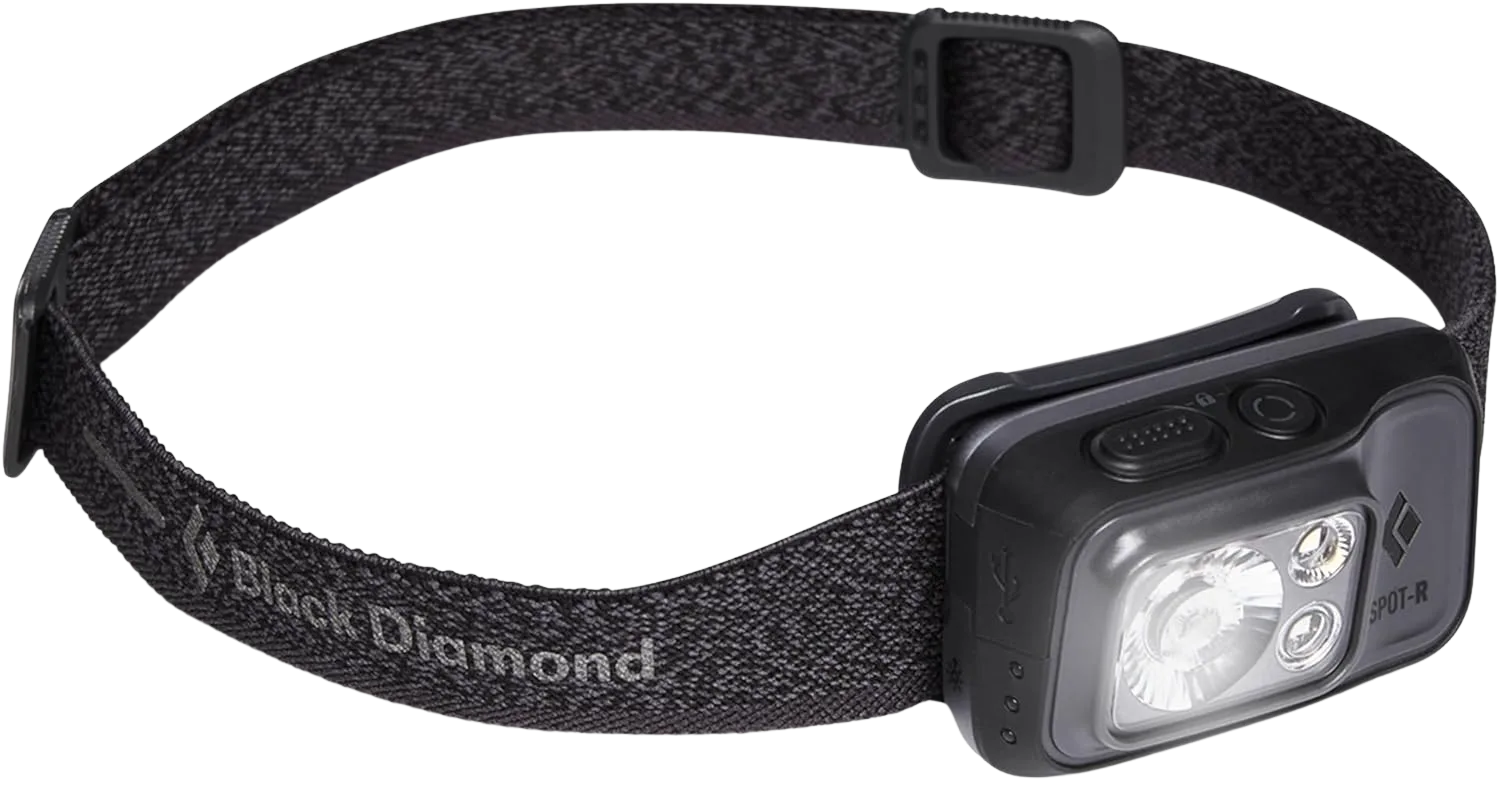
Pre-dawn launches and night bites need a waterproof headlamp with a red mode, and a phone flashlight won’t cut it. The red light keeps your night vision intact while you tie knots, and a real IP-rated lamp survives the splash and the inevitable drop in the water. Our best headlamps for night fishing covers the field in depth.
Fish finders and the nice-to-haves
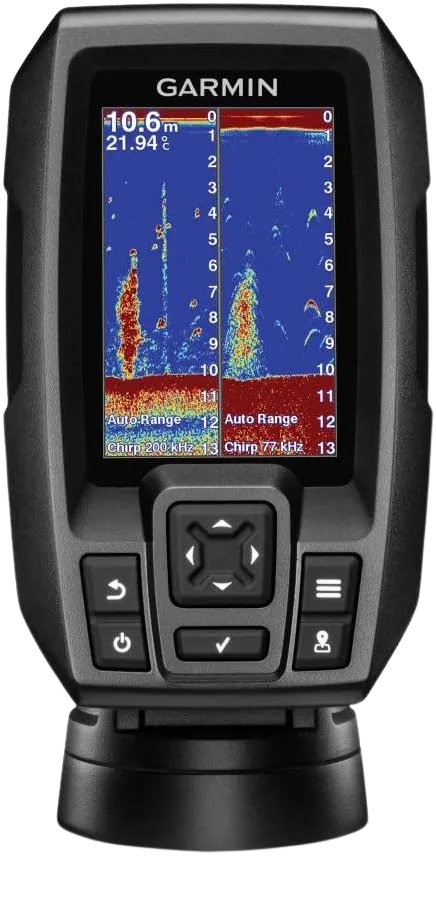
A fish finder helps you read depth, structure, and bait, but it ranks low on the reach-for hierarchy, so call it what it is: a useful gadget, not an essential. A budget GPS-and-sonar unit is plenty for most anglers, and you can fish a lifetime without one. The other situational extras, from a fishing watch that tracks bite windows to packing smart for travel, are genuine nice-to-haves. If you fly to fish, getting your gear through TSA and onto a plane saves real headaches, and fishing watches that track solunar and tide windows are a fun extra once the basics are covered.
Conclusion
Buy by what you reach for. Pliers, a line cutter, a net, and a grip come out every trip, so they get your money first, and the gadgets wait their turn. Material is the buying line, especially in salt: coated stainless or anodized aluminum plus a two-minute rinse beats replacing cheap tools every season. And the gear that handles fish well, a rubber net and a grip used right, is the same gear that protects the catch you release.
Build your kit one category at a time, starting with the tools your hands reach for most. Check each category’s deep guide before you buy, and you’ll end up with a complete kit and no drawer full of gadgets you never use.
Frequently Asked Questions
01What tools do you actually need to start fishing?
Four tools cover almost everything at the start: fishing pliers, a line cutter (often built into the pliers), a landing net, and a lip grip for handling. Add a tackle box, polarized sunglasses, and a small first aid kit and you have a complete, no-gaps kit.
02What is the difference between a tackle box and a tackle bag?
A hard tackle box gives you the most capacity and crush protection for a fixed kit that stays in the boat or truck. A soft tackle bag holds modular trays and is easier to carry and rearrange, which is better if you move around or fish from the bank.
03Do I need fishing pliers, and what kind should I get?
Yes. Pliers are the one tool you use every trip, for hook removal, line cutting, crimping, and split rings. Look for a corrosion-resistant build in coated stainless or aluminum, a split-ring tip, and carbide side cutters if you fish braided line.
04Are expensive fishing tools worth the money?
For pliers, polarized lenses, and a cooler, paying up usually pays off because better materials last and resist corrosion. For line cutters, a basic net, and tackle trays, the cheap version is fine. Spend where the tool works hardest.
05How do I keep my fishing tools from rusting?
Rinse them in freshwater after every trip, especially in saltwater, and let them dry before storing. That single habit matters more than the alloy on the label. Choose coated stainless or anodized aluminum tools, and keep them in a dry, ventilated box rather than a damp one.
Risk Disclaimer: Fishing, boating, and all related outdoor activities involve inherent risks that
can lead to injury. The information provided on Master Fishing Mag is for educational and informational purposes
only. While we strive for accuracy, the information, techniques, and advice on gear and safety are not a substitute
for your own best judgment, local knowledge, and adherence to official regulations. Fishing regulations, including
seasons, size limits, and species restrictions, change frequently and vary by location. Always consult the latest
official regulations from your local fish and wildlife agency before heading out. Proper handling of hooks, knives,
and other sharp equipment is essential for safety. Furthermore, be aware of local fish consumption advisories. By
using this website, you agree that you are solely responsible for your own safety and for complying with all
applicable laws. Any reliance you place on our content is strictly at your own risk. Master Fishing Mag and its
authors will not be held liable for any injury, damage, or loss sustained in connection with the use of the
information herein.
Affiliate Disclosure: We are a participant in the Amazon Services LLC Associates Program, an
affiliate advertising program designed to provide a means for us to earn advertising fees by advertising and linking
to Amazon.com. As an Amazon Associate, we earn from qualifying purchases. We also participate in other affiliate
programs and may receive a commission on products purchased through our links, at no extra cost to you. Additional
terms are found in the terms of service.