
In this article
You’ve threaded the plastic, buried the hook point, made a textbook pitch into that brushpile where the hawgs live—and three seconds later you’re hung up again. The third $2 tungsten weight you’ve lost today. You followed every tutorial, bought the “weedless” hooks, and yet your rig finds every branch, every rock crevice, every submerged log like it’s magnetized to the structure.
Here’s the uncomfortable truth that most rigging guides won’t tell you: weedless is a misnomer. No rig is truly weedless. The correct term is “snag-resistant“—and the gap between those two concepts is where most anglers fail. After years of losing tackle in heavy cover and finally cracking the code, here’s the systems approach that dramatically cut my snag rate—and it’ll do the same for you.
⚡ Quick Answer: Most “weedless” rigs still snag because of three mechanical failures: weight diameter too large (use tungsten instead of lead for 30-50% smaller profile), hook point exposed from bait sliding down the shank (use superglue to lock soft plastics), and wrong hook geometry for the cover type (match straight shank to vegetation, offset to wood, EWG to open water). Fix these three variables and your snag rate drops dramatically.
The Physics of Snagging: Why “Weedless” is a Myth
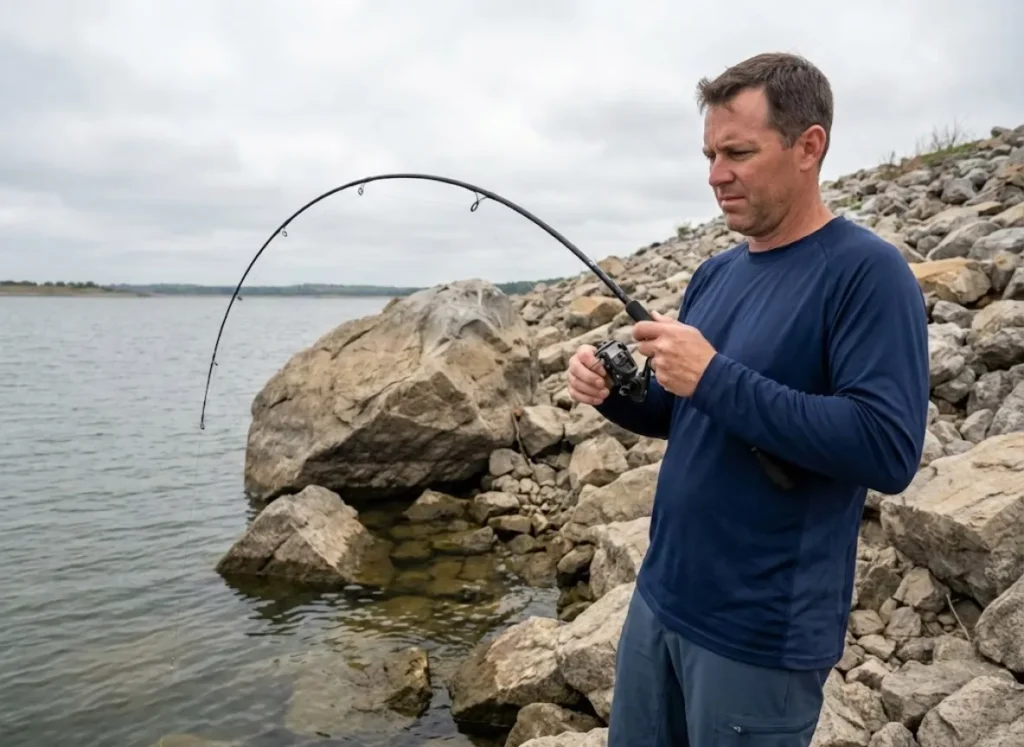
Remove the word “weedless” from your vocabulary. At best, you’ve got something that “sort of catches less weeds.” That community insight from Reddit’s r/BassFishing sums up what experienced anglers already know—a weedless rig is really about mitigation, not elimination.
A snag happens when your rig’s forward motion gets arrested by friction or mechanical lockup with underwater structure. Understanding how that happens is the first step to preventing it. There are two primary failure modes, and they require completely different solutions.
The Wedge Event: How Rock Swallows Your Weight
The Wedge Event dominates in rocky substrates—riprap, boulder fields, and gravel bottoms. Your sinker enters a V-shaped crevice that narrows to a width smaller than its diameter. The forward momentum of the cast drives it deeper into that trap.
Here’s where material matters. Lead is soft and ductile. When a lead weight strikes rock with force, it deforms—literally molding itself to the shape of the crevice. That molding effect jacks up friction to the point where extraction becomes nearly impossible without breaking your line.
Tungsten tells a completely different story. It’s hard and brittle. Instead of molding into the crack, it bounces. A 1/2 oz tungsten weight has 30-50% less volume than an equivalent lead weight—which means it slips through apertures that would permanently trap lead.
Pro tip: Most rock snags are V-shaped traps. If you’re losing weights consistently in riprap, the issue is your sinker diameter, not your technique.
The Rotation Event: When Wood Wins
The Rotation Event prevails in wood cover—laydowns, brush piles, and submerged timber. Here, your sinker typically clears the obstruction just fine. The problem is what happens next.
The separation between your weight and hook allows the hook to pivot independently. As the weight falls over a limb, the hook trails behind. If your retrieval speed is too slow to maintain lift, or if the center of gravity of your soft plastic is off, the hook shank rotates downward. Now you apply tension to lift over the limb—and the hook point drives directly into the wood. Your pull just became a snag accelerator.
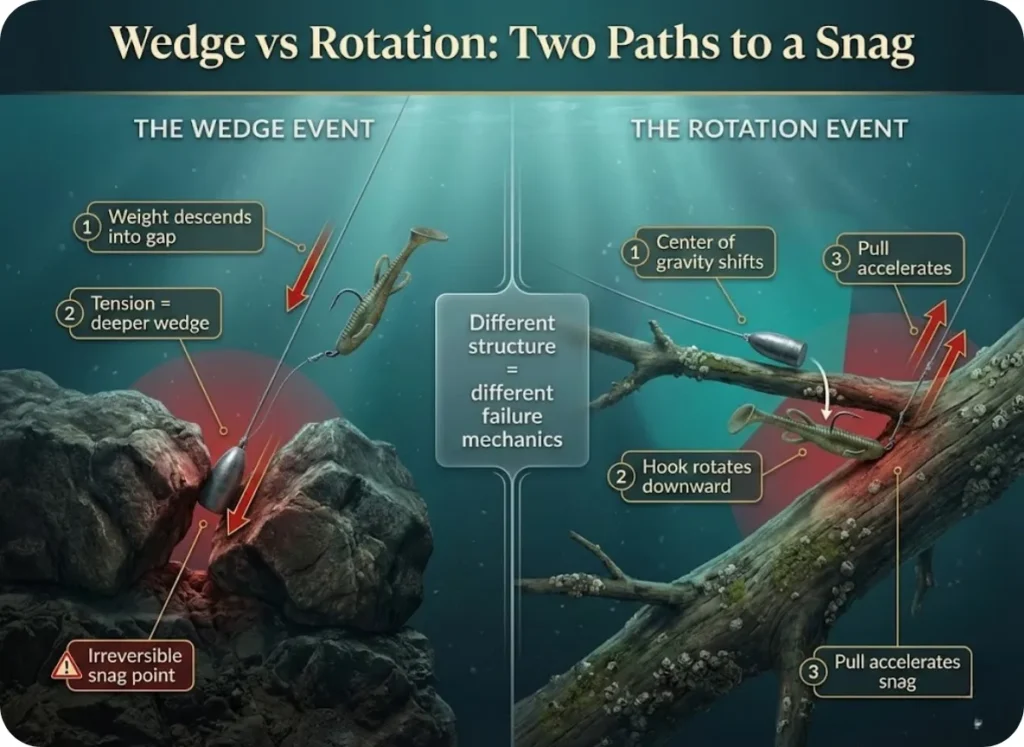
Pro angler Matt Stefan calls this the “counting limbs” problem: “If you’re not counting each limb, you’re fishing too quickly.” By slowing down and feeling your bait “tick” over each individual branch, you prevent that rotation from happening.
The Density Differential: Why Tungsten Beats Lead Every Time
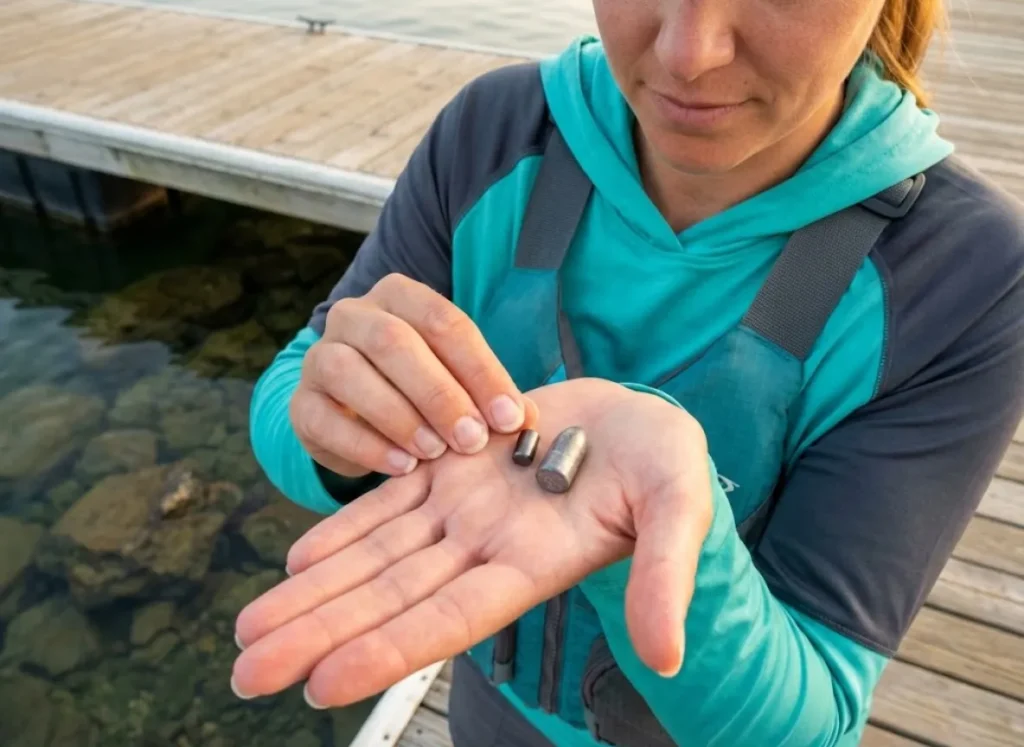
The single biggest hardware upgrade for reducing snags is ditching lead for tungsten weights. Tungsten is roughly 1.7 times denser than lead. For a weight of equal mass, the tungsten version occupies 30-50% less physical space.
The Volume Equation That Changes Everything
Think about what that smaller profile means in practice. Your 1/2 oz lead bullet weight has a larger cross-sectional area—more surface to contact rock sidewalls. Your tungsten bullet of the same weight “ticks” through the same aperture without touching anything, or slides through with minimal friction.
But density isn’t the only advantage. Lead absorbs impact—it dampens the feedback. When lead strikes rock, you get a dull “thud” and potential deformation. Tungsten reflects impact. You feel a crisp, high-frequency “click” that travels up your line, letting you visualize bottom composition in real time.
That tactile feedback is an early warning system. When you feel your tungsten enter a complex rock pile, you can slow down and finesse through. The dull feedback of lead often means you’re pulling hard into a snag before you realize you’re in trouble.
Pro tip: Tungsten’s hardness produces a distinct “tick” sound when striking structure—some anglers believe it even mimics crawfish clicks, potentially triggering more strikes.
The Cost-Benefit Analysis Most Anglers Get Wrong
Let’s talk money. Lead weights cost roughly $0.10-$0.20 per unit. Tungsten runs $1.50-$2.50 each. That sticker shock sends most anglers straight back to the lead bin.
But here’s the calculation most people miss: if tungsten reduces your snag rate by 50%—and in rock, that’s a conservative estimate—your long-term costs equalize or even favor tungsten. Combine that with tungsten and other lead-free materials like ElaZtech soft plastics that can catch 50+ fish without tearing (versus PVC baits that shred after one or two), and you’ve got a “high-efficiency” system that’s actually cheaper over a full season.
There’s also the conservation angle. According to the U.S. Geological Survey, lead is a potent toxin—waterfowl like loons and swans ingest lost sinkers, mistaking them for grit, and a single lead weight can cause fatal poisoning. The U.S. Fish & Wildlife Service has already banned lead tackle on multiple National Wildlife Refuges effective 2026. Switching to tungsten isn’t just about catching more fish—it’s future-proofing your tackle box against inevitable regulation.
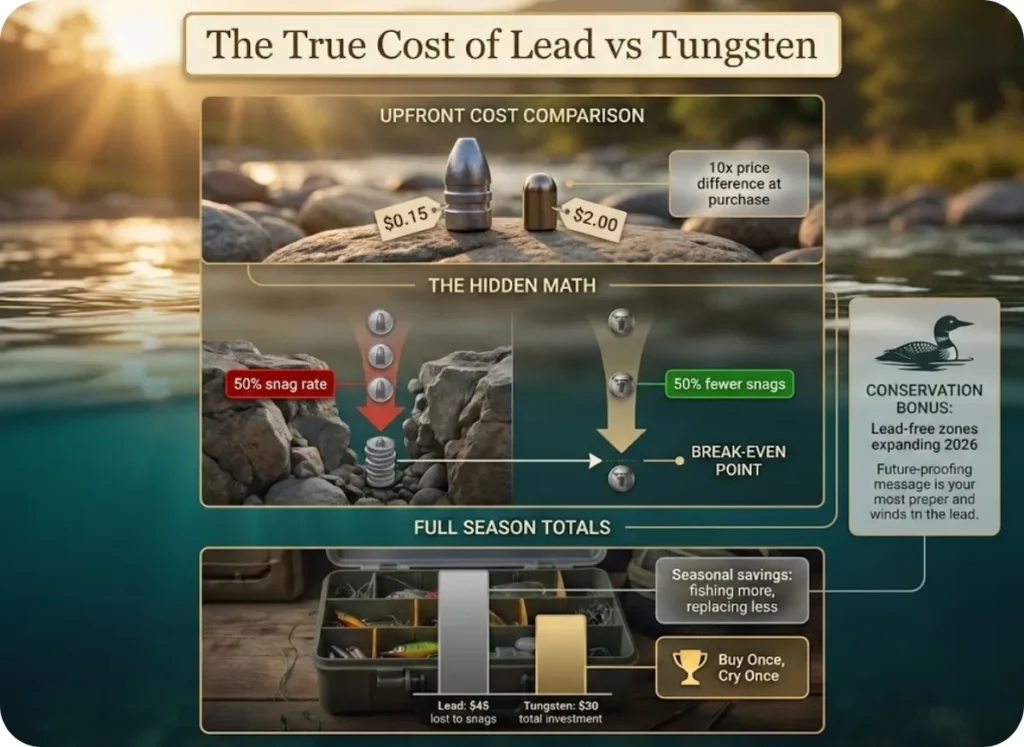
The community consensus? Tungsten is a “Buy Once, Cry Once” investment for anyone fishing technical structure.
Hook Geometry: The Chassis That Determines Success or Failure
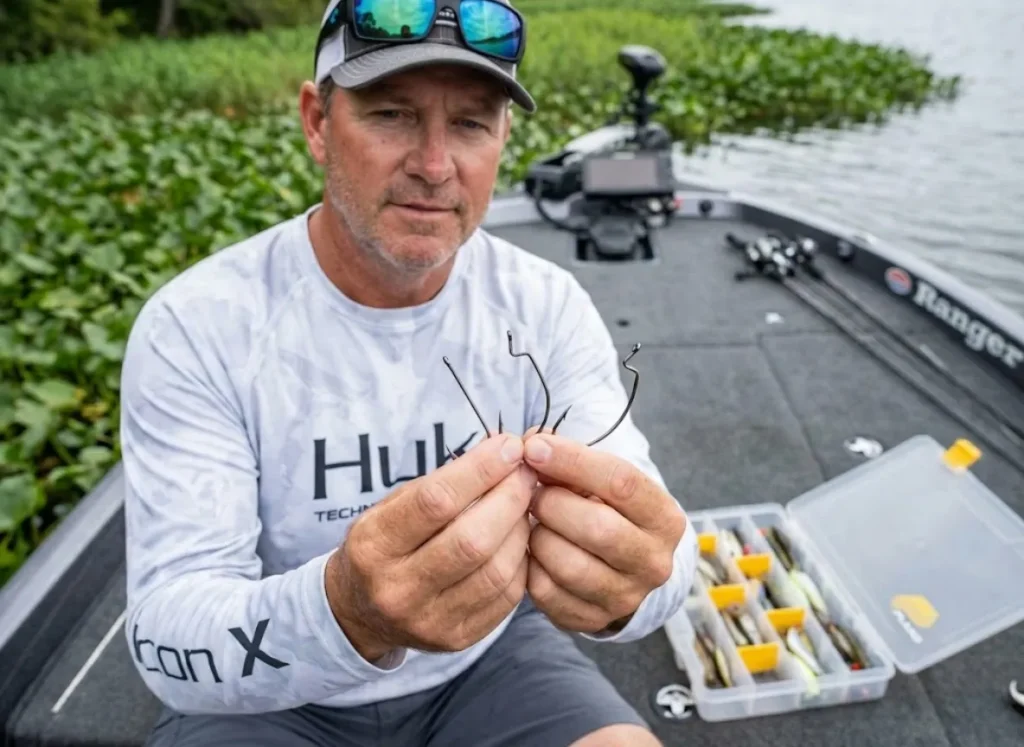
The hook is the chassis of your weedless rig. Pick the wrong chassis for the terrain and mechanical failure is guaranteed. Most anglers default to the EWG hook for everything—and that’s exactly why they snag so much.
The EWG Paradox: Popular But Problematic
The Extra Wide Gap hook is the most popular choice for Texas rigging. But its geometry creates a specific problem: the wide, protruding bend hangs lower than the line tie, acting like a bowstring or keel.
Even with the point buried, that belly can catch on a limb in heavy branch cover. And if your bait slides down the shank—common with slick plastics—the point becomes exposed. Your “weedless” rig just became an open-hook snagging machine.
EWG does shine in specific situations. The wide gap allows bulky plastics—creature baits, beavers, thick worms—to collapse fully for a solid hookset. Pro angler John Crews reserves EWG for long casts in open water or sparse grass, where the line angle is acute and hookup power matters more than snag resistance.
Straight Shank: The Heavy Cover Championship
For “combat” fishing—pitching and flipping into heavy vegetation, mats, or dense wood—pros like John Crews and Seth Feider reach for the terminal tackle engineering of a straight shank flipping hook every time.
The straight shank hook forces a direct force path. Energy travels in a straight line from eye to point. The hook rarely rotates unexpectedly, and it’s designed to work with a Snell knot that levers the point upward into the roof of the fish’s mouth.
The trade-off? Straight shanks require a keeper barb—shrink-wrapped or molded—to hold the bait. But for snag resistance in brutal cover, nothing else comes close.
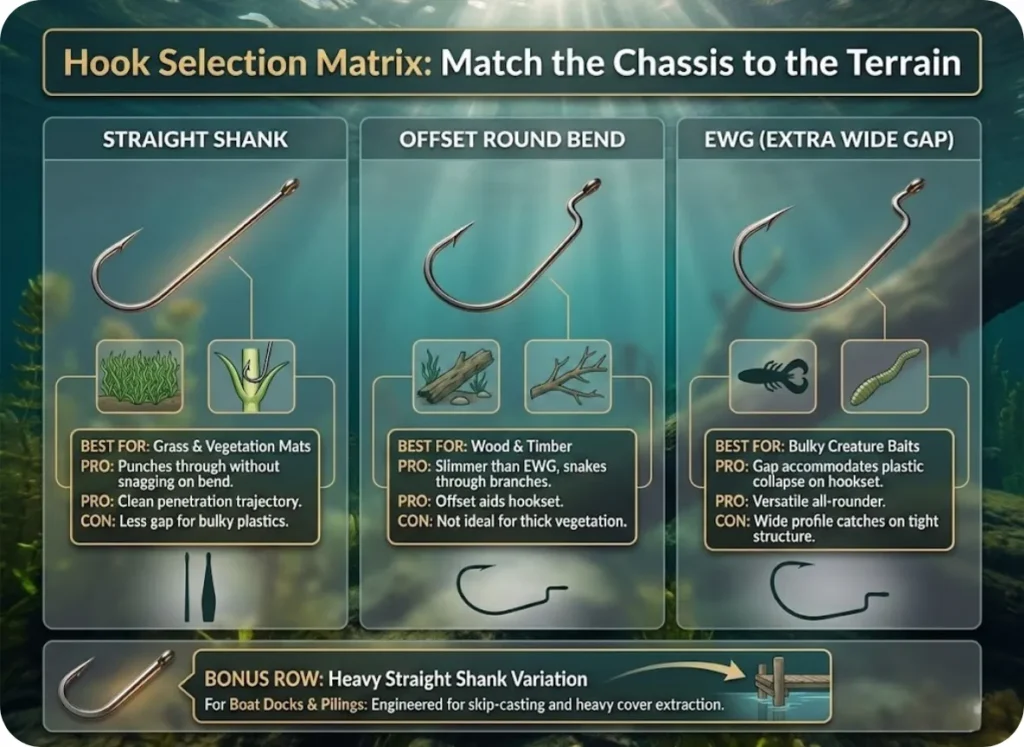
Cover-to-Hook Matching: A Decision Matrix
Stop using EWG for everything. Match the chassis to the terrain:
- Grass and vegetation mats: Straight shank—punches through without catching on the bend
- Wood and timber: Offset round bend—slimmer profile than EWG, snakes through branches
- Bulky creature baits: EWG—needs the gap for plastic collapse
- Boat docks and pilings: Heavy straight shank with skip casting trajectory
The ElaZtech Problem: Rigging Super-Durable Plastics Without Losing Your Mind
ZMan’s ElaZtech material represents a leap in soft plastic bait durability. One bait can catch 50+ fish. But that same material introduces a unique rigging failure that turns your weedless setup into a snag magnet.
Why Your ZMan Baits Keep Sliding Down the Hook
ElaZtech is a thermoplastic elastomer—chemically different from the PVC plastisol in traditional soft plastics like Zoom or Berkley. This material can stretch up to ten times its length. Great for durability; terrible for keeping a hook point buried.
In a standard Texas rig, many anglers “skin hook” the bait—running the point just under the surface (Tex-pose style). With ElaZtech, the plastic slides down the hook shank the moment it hits water or bumps cover. You end up with a ball of plastic at the bend and a completely exposed hook point. Your weedless rigging just failed.
Elite Series pro Seth Feider specifically warns against wire keepers—they tear the material instead of gripping it.
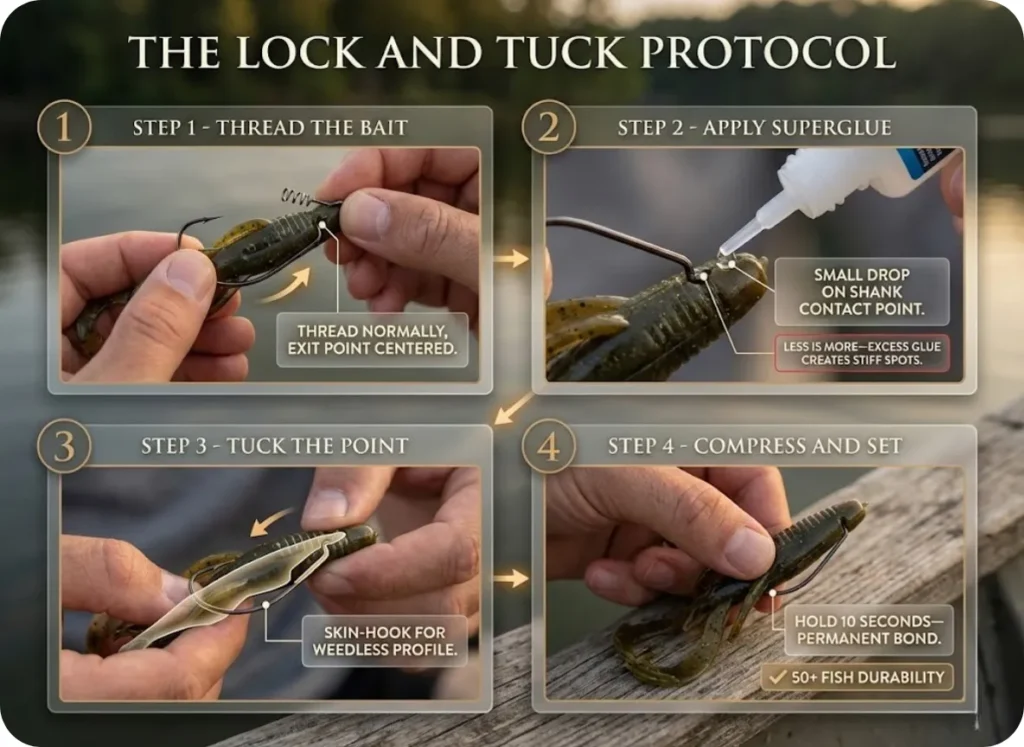
The “Lock and Tuck” Protocol That Actually Works
Here’s the rigging sequence that pros and the Reddit community have standardized:
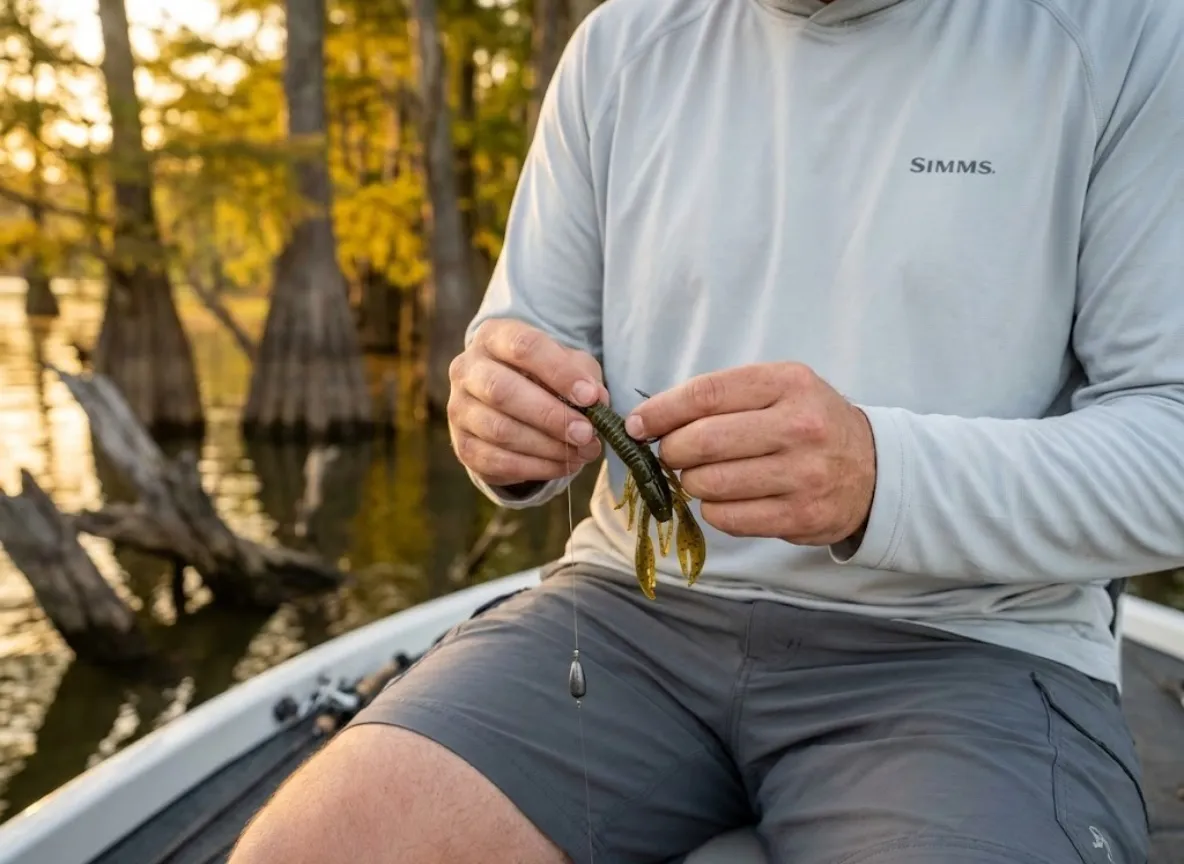
- Thread: Insert the hook through the nose more deeply than you would with PVC
- Pass: Push the hook point all the way through the body
- Pinch and Tuck: Don’t just rest the point on the skin—pinch the plastic and pull it forward, then bury the point deep within the channel of the bait
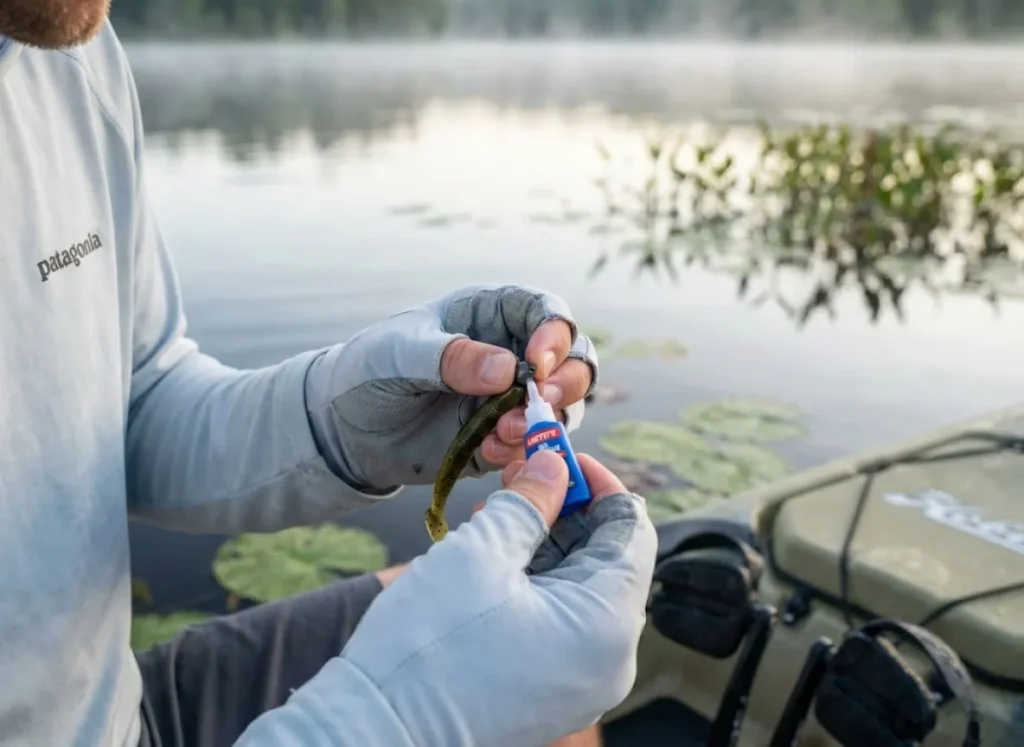
- Adhesion: Apply a drop of gel superglue on the hook shank before sliding the bait up—the material bonds beautifully with superglue, creating a permanent seal
That extra 30 seconds of rigging saves hours of frustration and dozens of lost tungsten weights.
Pro tip: The ChinlockZ and SnakelockZ hooks from TT Lures (Tackle Tactics) are specifically designed for ElaZtech materials, featuring integrated keeper systems that grip without tearing.
The Chemical Reactivity Warning: Storage Matters
One more thing about ElaZtech that trips up newer anglers: it reacts chemically with PVC plasticizers. Store your ZMan baits in a standard Plano tackle box made of certain polymers, and the plasticizers migrate into the material—dissolving your expensive baits into a sticky, fused mess.
The fix is simple: keep ZMan products in their original resealable bags. Use PP (polypropylene) trays that don’t react. Never mix with traditional soft jerkbaits or other PVC plastics.
Retrieval Mechanics: The Technique Failures No One Talks About
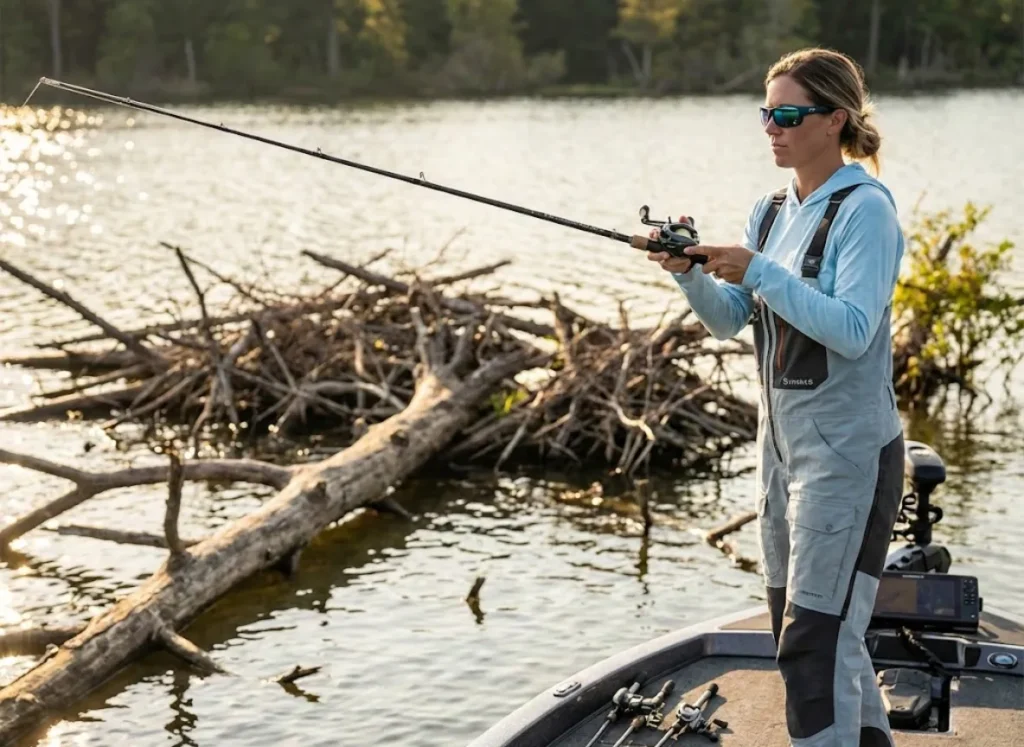
You can have perfect tackle—tungsten, matched hooks, locked plastics—and still snag constantly if your retrieval technique is wrong. The way you work a bait through cover matters as much as the hardware.
The Rod Angle That Saves Your Rig
In wood cover, a low rod tip drags the bait horizontally—pulling it into structure. A high rod tip lifts the bait vertically—pulling it over structure.
Keep your rod between the 10:00 and 12:00 position when working through laydowns and brush piles. When your weight clears a limb, the hook trails behind. With a low rod, you pull the trailing hook directly into the wood. With a high rod, you lift it over.
Matt Stefan’s “counting limbs” technique is the key to mastering heavy cover fishing: feel the bait tick over each individual branch before moving. Snagging is often a retrieval error—pulling too fast to notice the rotation event happening.
When to Peg (And When Not To)
Pegging—using a rubber stop to secure the sinker directly to your line—reduces the separation between weight and hook. Less separation means fewer rotation events.
Peg when fishing heavy vegetation mats (punching) or dense wood where you need the rig to fall as a single unit. Don’t peg in open water or light cover—the natural separation between weight and bait gives you a more subtle, realistic fall that draws more fish strikes.
Pro tip: If you’re getting stuck on the same piece of cover repeatedly, move your boat position and pull from the opposite direction—sometimes a 180-degree angle change is all it takes to pop free.
Knot Selection: The Overlooked Snag Variable
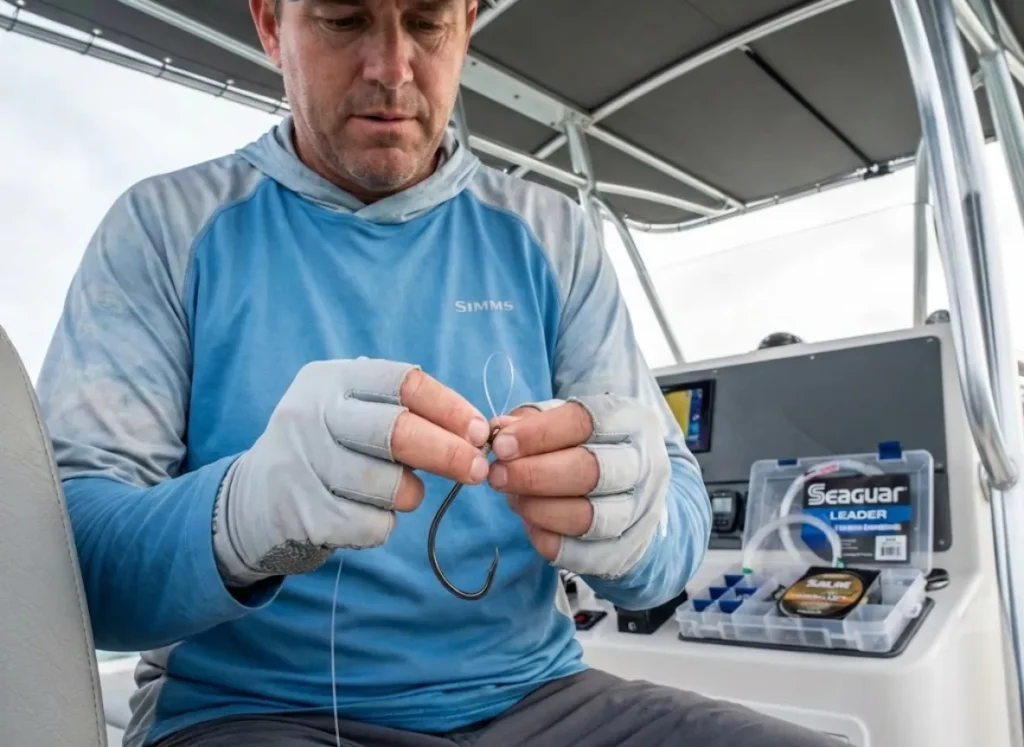
Your connection point affects more than just strength. The knot you tie changes how your hook moves and responds to cover contact.
Snell vs Palomar: What the Pros Actually Use
The Snell knot ties to the shank below the eye. When you’re using a straight shank hook with a heavy tungsten weight, the sinker acts as a fulcrum. Pull the line tight and the hook point levers upward—perfect for burying hooks in the roof of a fish’s mouth.
The Palomar knot ties through the eye with nearly 100% line strength retention. For fluorocarbon applications with offset hook or EWG styles, Elite Series pro Brandon Palaniuk argues the Palomar provides superior “freedom of movement”—allowing the bait to deflect naturally off snags rather than being rigidly levered into them.
The Snell’s leverage that aids hooksets can also lever the hook into cover if your bait isn’t perfectly streamlined. Know your situation: Snell for straight shanks and punching; Palomar for everything else where you want the bait to flow. Learn both with our guide to fishing knot fundamentals.
Conclusion
Upgrade your weight material. Tungsten’s 30-50% smaller profile slips through rock that would trap lead. The upfront cost equalizes quickly when you stop losing tackle—and the tactile feedback lets you feel structure before you snag.
Match the hook to the cover, not just the bait. EWG for bulky plastics in open water. Straight shank for vegetation mats and heavy wood. Offset for snaking through branch cover. Most anglers use EWG for everything—and that’s why they snag.
Master the ElaZtech rigging sequence. Don’t skin-hook ZMan baits like PVC. Use the Lock and Tuck protocol with gel superglue. Those 30 extra seconds of rigging save you hours of frustration.
The next time you pitch into cover and feel that bait work cleanly through the branches, you’ll understand what made it possible. A “weedless rig” will never be snag-proof—but a snag-resistant system built on the right materials, geometry, and technique turns heavy cover from a tackle graveyard into a fish-holding advantage that most anglers are too frustrated to fish.
FAQ
What is the best hook for weedless rigging?
There’s no universal best—it depends on cover type. Use EWG hooks for bulky plastics in open water, straight shank for heavy vegetation and wood, and offset round bend for snaking through branch cover. Matching hook geometry to structure matters more than brand.
How do you make a Texas rig completely weedless?
You can’t—weedless is a misnomer. Maximize snag resistance by using tungsten weights for smaller profiles, burying the hook point deep into the plastic bait body (not just skin-hooking), applying gel superglue to prevent bait slide, and maintaining a high rod angle in cover.
Why does my weedless rig still get snagged?
Most snags result from three mechanical failures: weight selection too large (switch to tungsten), hook point exposed from bait sliding down the shank (use the Lock and Tuck method with glue), and wrong hook selection for the cover type. Retrieval speed and rod angle also directly impact rotation events in wood cover.
Is tungsten worth the extra cost?
Yes, if you fish around structure. Tungsten reduces snag rates significantly in rock due to its smaller profile, and its hardness provides tactile feedback that helps you navigate cover. Factor in reduced tackle loss and seasonal costs often equal or beat lead.
Can you store ZMan ElaZtech baits with regular soft plastics?
No. ElaZtech reacts with PVC plasticizers found in traditional soft plastics. Contact dissolves the ElaZtech into a sticky mess. Always store ZMan products in their original bags and use PP (polypropylene) trays—never standard tackle boxes.
Risk Disclaimer: Fishing, boating, and all related outdoor activities involve inherent risks that
can lead to injury. The information provided on Master Fishing Mag is for educational and informational purposes
only. While we strive for accuracy, the information, techniques, and advice on gear and safety are not a substitute
for your own best judgment, local knowledge, and adherence to official regulations. Fishing regulations, including
seasons, size limits, and species restrictions, change frequently and vary by location. Always consult the latest
official regulations from your local fish and wildlife agency before heading out. Proper handling of hooks, knives,
and other sharp equipment is essential for safety. Furthermore, be aware of local fish consumption advisories. By
using this website, you agree that you are solely responsible for your own safety and for complying with all
applicable laws. Any reliance you place on our content is strictly at your own risk. Master Fishing Mag and its
authors will not be held liable for any injury, damage, or loss sustained in connection with the use of the
information herein.
Affiliate Disclosure: We are a participant in the Amazon Services LLC Associates Program, an
affiliate advertising program designed to provide a means for us to earn advertising fees by advertising and linking
to Amazon.com. As an Amazon Associate, we earn from qualifying purchases. We also participate in other affiliate
programs and may receive a commission on products purchased through our links, at no extra cost to you. Additional
terms are found in the terms of service.