
In this article
The tackle tray looked like a crime scene—$200 worth of Zoom trick worms fused into what can only be described as a “gluggy mess,” their pearl bellies stained purple from the Junebug Senkos that had liquefied beside them. Three hours before a tournament. That’s when I learned that soft plastic lure storage isn’t about organization—it’s about chemistry.
After two decades on the water managing everything from a weekend warrior’s collection to pro-level inventories topping 300 pounds, I’ve seen the melted lure disaster scenario play out dozens of times. The good news? It’s completely preventable once you understand what’s actually happening inside those tackle boxes.
This guide breaks down the polymer chemistry behind why lures melt, delivers a brand-by-brand compatibility matrix, and gives you the five-rule protocol that pros use to protect their investments in any climate. You’ll walk away knowing exactly which lures can touch, which need isolation, and how to safeguard your baits whether you fish Florida flats or Minnesota ice.
⚡ Quick Answer: Keep soft plastics in their original packaging—this is the single most important rule. Never mix Z-Man ElaZtech or Berkley Gulp! with standard plastisol lures. Store between 50°F–90°F, use only worm-proof tackle trays made from polypropylene, and separate by color to prevent color bleeding.
Why Your Soft Plastics Are Destroying Themselves
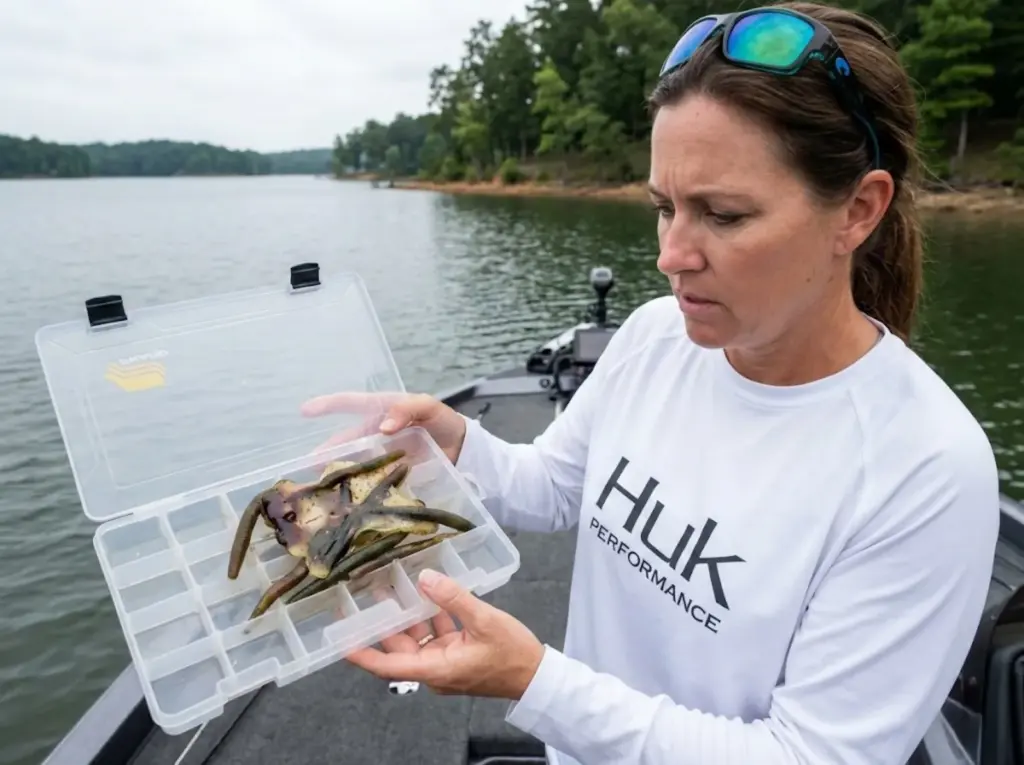
That sticky, fused mess in your tackle tray isn’t really “melting” in the way you might think. The technical term is plasticizer migration—and understanding this process is the key to prevention.
Plasticizer Migration: The Silent Killer
Here’s what’s happening at the molecular level, explained in plain language. Plastisol lures are made from PVC particles suspended in liquid plasticizers. Those plasticizers keep the bait soft and fishable, but they’re not permanently locked into the plastic. They exist in a dynamic state, constantly trying to escape.
When two different polymer materials touch, the plasticizers from one lure can penetrate and dissolve another. High-oil TPE lures like Z-Man products act as aggressive solvents when they contact plastisol-based baits—the oils penetrate and expand the PVC matrix until it liquefies. This happens at room temperature. Heat exposure accelerates the reaction, but chemical incompatibility causes it.
Migration speed approximately doubles for every 18°F increase in temperature. That explains why your boat deck becomes a chemistry experiment on hot summer days. But even in a 68°F garage, incompatible materials left touching overnight can fuse together. The EPA has identified significant concerns about phthalate plasticizers used in PVC products due to their tendency to migrate from the plastic matrix—the same process that destroys your tackle.
Pro tip: If you’re buying used tackle, always assume mixed materials until proven otherwise. I’ve salvaged countless trays where the previous owner learned this lesson the expensive way.
Outgassing: The Phantom Threat
The danger goes beyond direct contact. Soft plastics release volatile organic compounds that create vapor pressure in sealed containers. These fumes can “set off” other plastics without physical touch—I’ve personally seen warped tackle box lids, dissolved styrofoam bobbers, and ruined crankbait finishes from nothing more than proximity.
This is why some Plano boxes now include ventilation holes for gas release. Cheap ABS plastic boxes are particularly vulnerable—they’re “high energy” surfaces that bond readily with plasticizer oils, leading to the infamous “fused lid” scenario where the lure literally becomes part of the box. Investing in worm-proof tackle boxes with proper seals prevents both outgassing damage and chemical compatibility failures.
The Material ID Lab: Know What You’re Storing
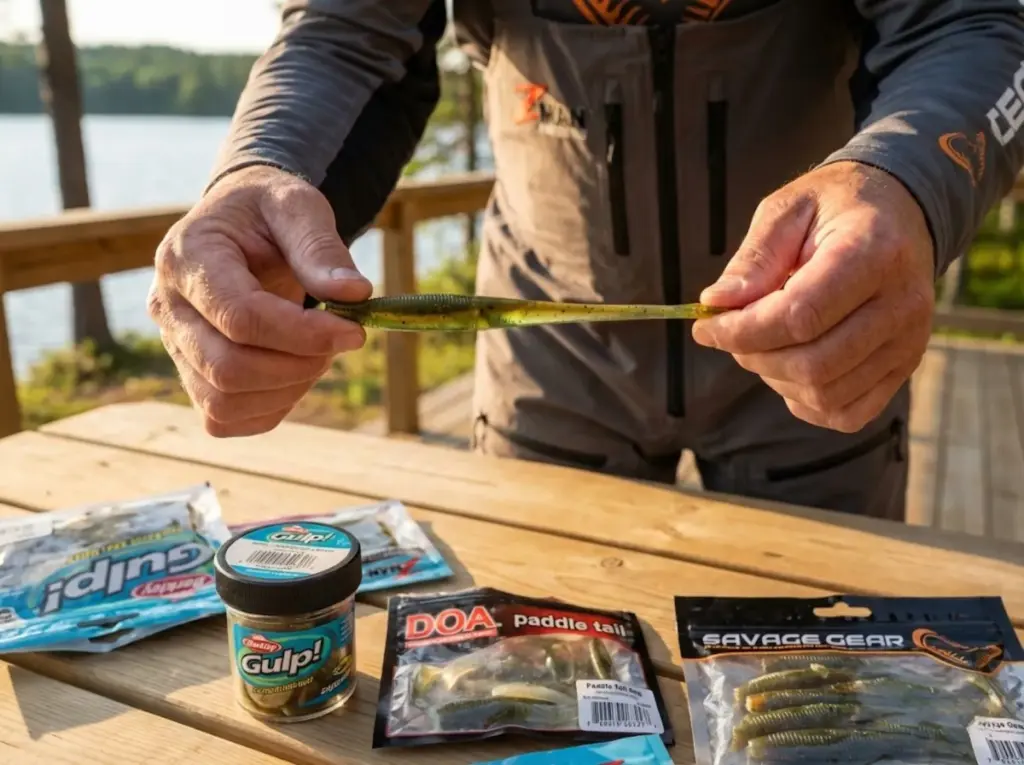
Before you can organize your tackle safely, you need to identify what you actually own. The three major polymer families behave completely differently, and mistaking one for another is how disasters happen.
The Three Polymer Families
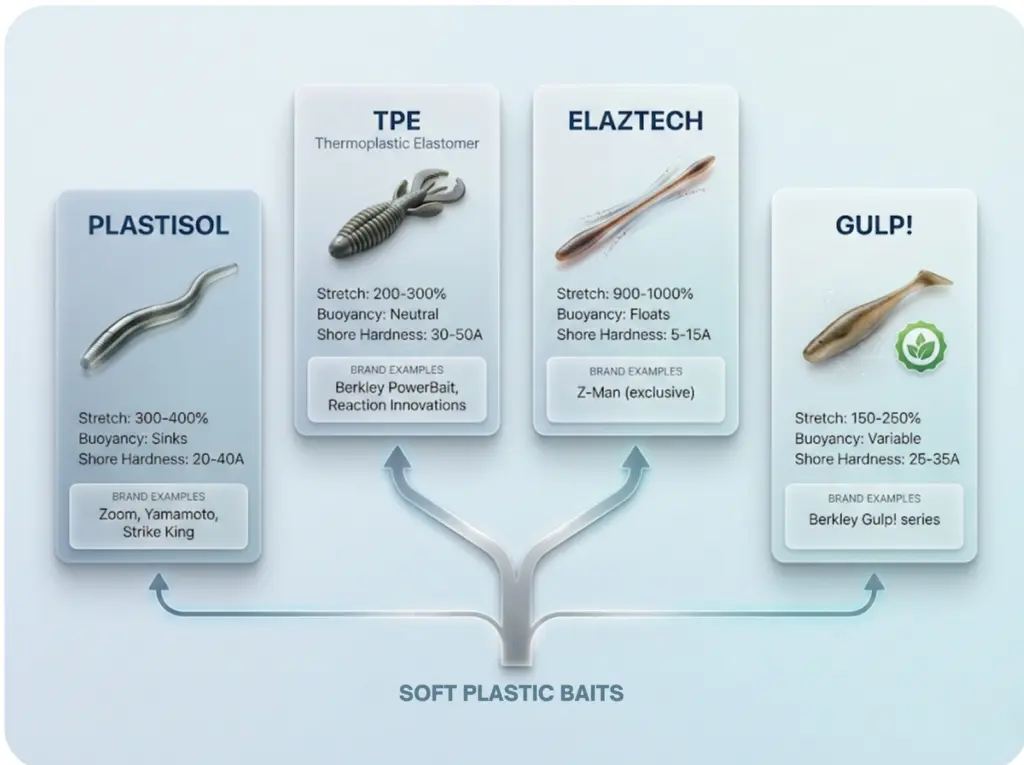
Plastisol (PVC) dominates traditional soft plastic lure manufacturing. Brands like Zoom, Yamamoto, DOA, Slam Shady, and Alabama Leprechaun all use this material. During production, PVC particles fuse in plasticizer at 320°F–350°F, then cool into flexible baits with hardness ratings between 40A and 90A on the Shore scale.
Thermoplastic Elastomers (TPE) represent the next evolution. Savage Gear, Chasebaits USA, Vudu Shrimp, and Monster 3x use this hybrid class of materials that stretch farther and last longer than traditional plastisol. They’re often buoyant, which matters for certain presentations.
ElaZtech is Z-Man’s proprietary material—approximately 20% styrenic TPE plus 80% medicinal-grade oil with heat-resistant stabilizers. It contains zero PVC, zero phthalate plasticizers, and delivers 10X the toughness of conventional plastics. This stuff stretches up to 12 times its original length without tearing.
Berkley Gulp! is the outlier. It’s manufactured from 98% biodegradable natural materials using a water-based resin system. It acts like a hydrated sponge, not a plastic—which means it requires moisture maintenance rather than chemical isolation.
The Stretch Test Protocol
Here’s a simple field test when you’re unsure about a bait’s material. Plastisol lures stretch 2–3 times their length, tear relatively easily, and return to shape slowly. ElaZtech stretches an absurd 12X without rupture and snaps back instantly—you’ll know it immediately when you feel it. Standard TPE falls in between: 4–6X stretch, moderate tear resistance, typically buoyant.
Gulp! doesn’t stretch like plastic at all. It has a rubbery, sponge-like texture that hardens when dry. The float test works as a backup: ElaZtech and most TPE float, while plastisol sinks. When you’re identifying the right Senko for wacky rigging, material matters for both action and storage.
The Compatibility Matrix: What Can Touch What
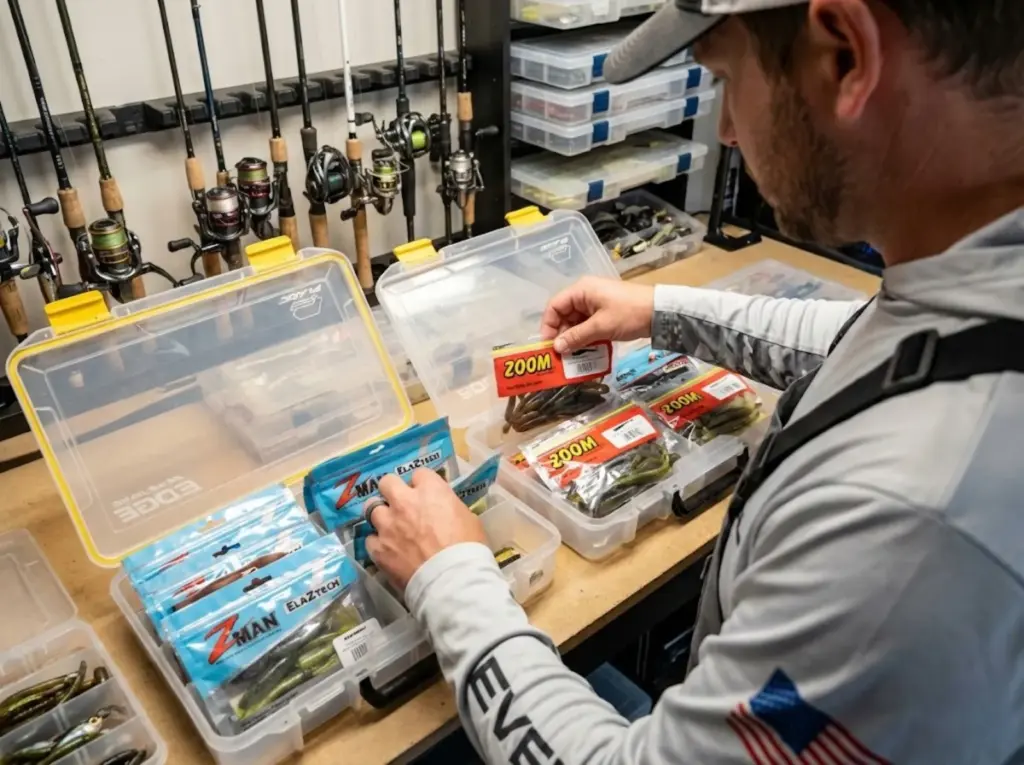
This is the section that will save you hundreds of dollars. Mark Kitteridge, an industry veteran and Z-Man expert, describes the relationship between ElaZtech and Berkley Gulp! as “kryptonite to Superman“—the reaction is immediate and severe.
The “Kryptonite” Interactions
When Z-Man baits touch Gulp!, the water-based resin interacts catastrophically with ElaZtech’s high oil content, turning the TPE into unrecognizable “jelly” within hours. This isn’t minor damage—total destruction.
Z-Man plus standard plastisol is nearly as bad. The oils in ElaZtech dissolve plastisol matrix surprisingly fast. Pro Charlie Hartley, who manages over 300 pounds of soft plastics for Elite Series competition, maintains absolute brand separation for this exact reason. His bulk storage system treats Z-Man products like quarantined materials.
The Safety Zones
Here’s your chemical compatibility matrix in plain terms. Plastisol to plastisol brands are structurally safe—Zoom, DOA, Yamamoto, and similar conventional plastics can share space without melting together. But color bleeding remains a real risk. Dark dyes like Junebug or Black penetrate lighter materials like Pearl or Chartreuse irreversibly.
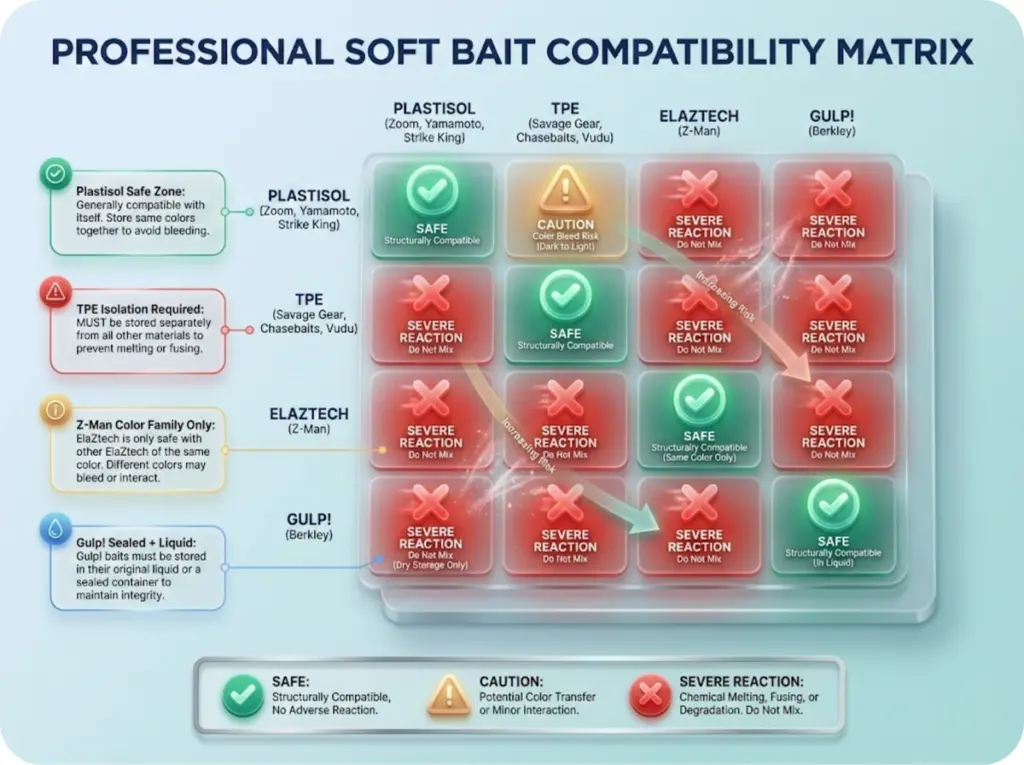
TPE brands from Savage Gear, Chasebaits, and Vudu Shrimp are “highly reactive” and should touch nothing else—including other TPE formulations unless they’re the identical product from the same manufacturer. Z-Man (ElaZtech) shares containers only with other Z-Man baits of the same color family. And Gulp! stays in its own sealed world, requiring submersion in attractant liquid to survive.
Pro tip: When in doubt, keep it separated. The cost of a single ruined tackle tray exceeds what you’d spend on a lifetime supply of Ziploc bags for isolation.
The 5-Rule Storage Protocol
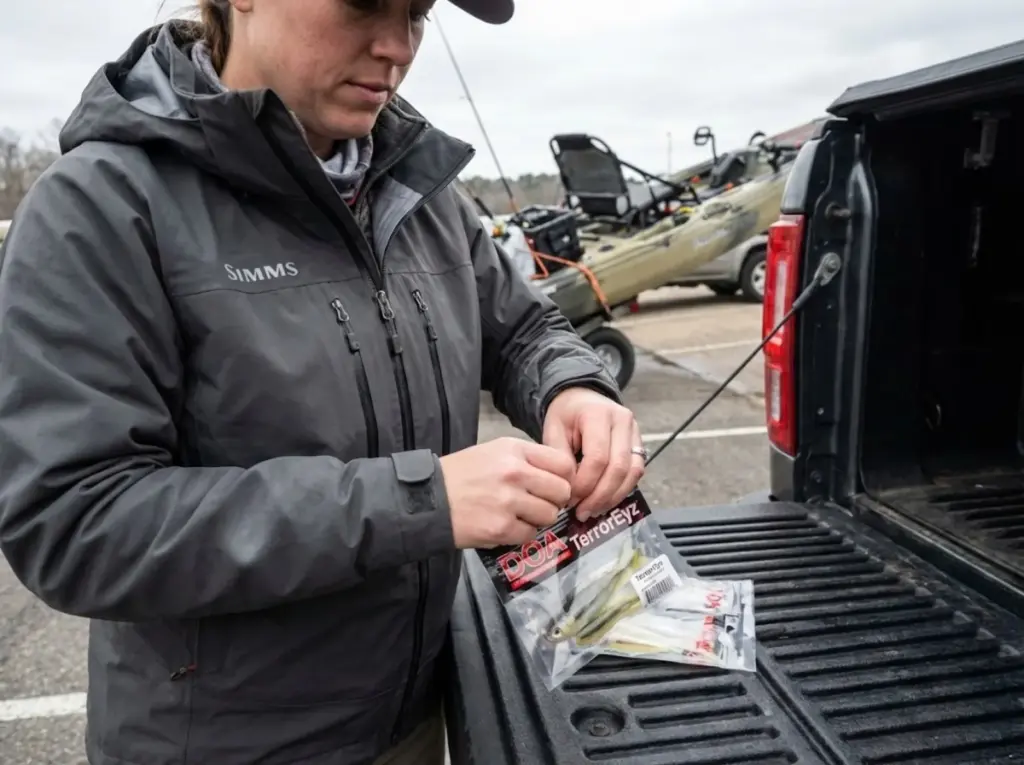
Tournament pros who manage hundreds of pounds of tackle all follow variations of the same basic system. Here’s the distilled wisdom from years of collective experience.
Rule 1: Original Packaging Is Non-Negotiable
This is the featured snippet answer: Keep soft plastics in their original packaging whenever possible. Factory bags maintain chemical isolation AND keep lures straight to prevent memory bending. The consensus among pros like Tony Acevedo at Salt Strong is unanimous on this point—no aftermarket solution works as well as the pack it came in.
If bags tear, transfer to individual Ziploc bags. Never dump loose baits into bulk containers where they’ll touch each other without barriers.
Rule 2: Absolute Material Separation
Never mix Z-Man (ElaZtech) or reactive TPE brands with standard plastics. Create dedicated containers for each material class. Technique-based grouping naturally accomplishes this: your Ned Rig box contains only ElaZtech, your finesse box holds soft plastisol, and your heavy cover box stores durable PVC creatures.
This approach also makes you faster on the water. When you’re rigging ElaZtech weedless for heavy vegetation, your specialized baits are already isolated and organized.
Rule 3: Color Stratification
Even within the same material class, separate colors to prevent migratory pigment transfer. The general rule: dark to light organization in storage systems prevents the worst bleeding scenarios. Keep your watermelon red and black baits far from your pearl and chartreuse inventory.
Rule 4: Climate-Controlled Storage
The optimal range is 50°F–90°F in a climate-controlled indoor environment. Boat decks and vehicle storage areas regularly hit 120°F–140°F—TPE softens significantly at these temperatures, and the “greenhouse effect” inside clear packaging accelerates reactions even when air temperatures seem moderate.
Here’s the catch most anglers miss: cold weather storage matters too. Sustained exposure below 20°F causes ElaZtech oil to leach out, resulting in permanent shrinkage and lost flexibility. Store Z-Man products indoors during winter. Never leave them in unheated garages or vehicles overnight when temperatures drop.
Pro tip: If you fish from a truck or SUV, invest in an insulated cooler bag for your active tackle rotation. It buffers both heat and cold extremes.
Rule 5: Polypropylene-Only Containers
“Worm-proof” refers specifically to the container’s resistance to plasticizer solvation. Polypropylene (PP) is the industry gold standard—high melting point around 320°F, excellent impact resistance across temperature ranges, and a “low energy” surface that resists bonding with plasticizer oils.
Avoid polystyrene and cheap ABS plastics. Premium systems like Plano EDGE incorporate silicone gasket seals for airtight environments. For Gulp! baits, airtight containers are mandatory—without submersion in attractant liquid, they’ll shrivel and harden within days. Consider worm-proof tackle boxes rated for soft plastic storage as a long-term investment.
The 3-Tier Organization System
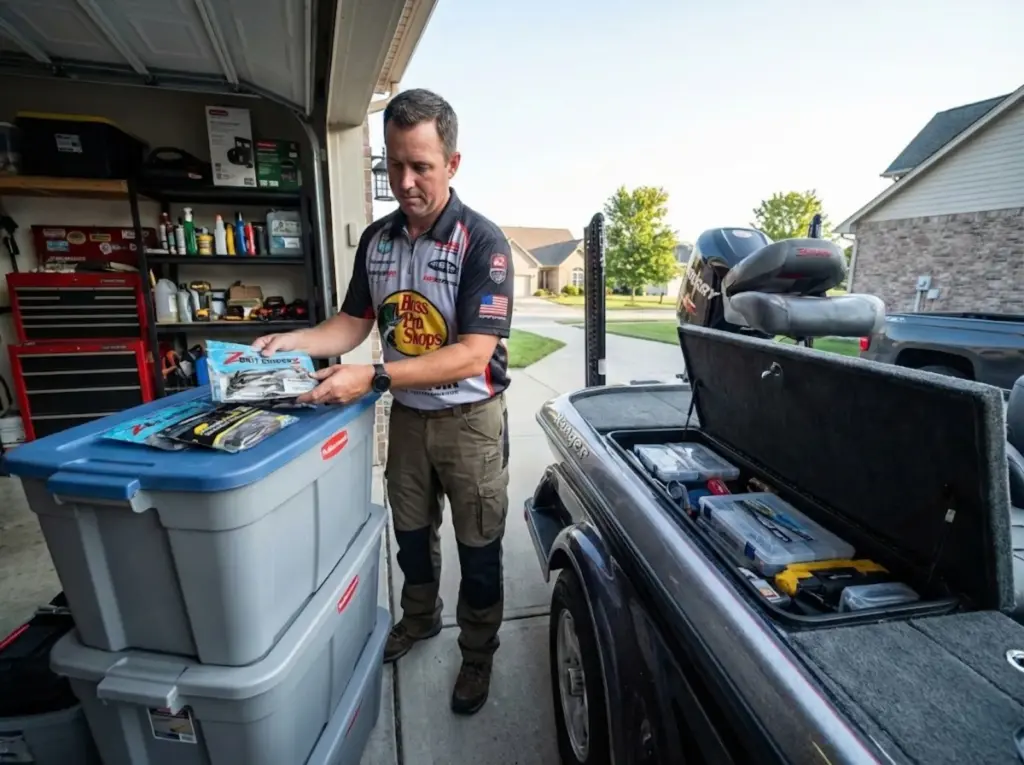
Pros managing tournament-level inventories use a tiered architecture that balances long-term preservation with on-water accessibility.
Tier 1: Bulk Inventory (Home Storage)
Keep 200+ packs in a temperature-stable location like a basement or dedicated tackle room. Baits remain in original packaging inside large six-quart or shoebox-sized Rubbermaid totes. Group by type—all four-inch worms in one bin, all paddle tails in another—for easy seasonal rotation. Adding Pro-Cure or menhaden oil to bags helps prevent drying over long-term storage.
Tier 2: Seasonal Rotation (Binders & Wraps)
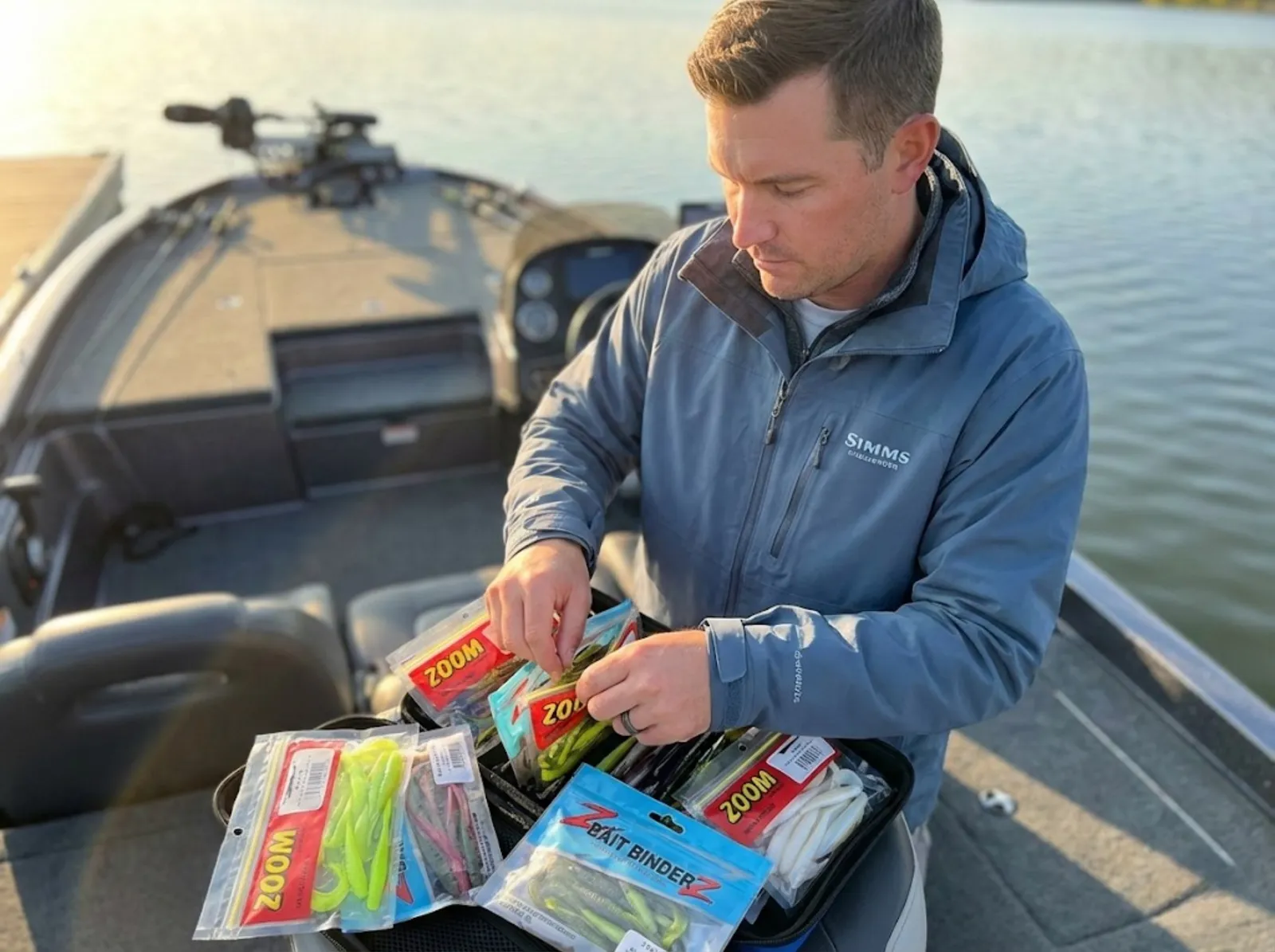
Soft-sided worm binders and wraps like Z-Man Bait LockerZ and Plano Guide Series Worm Wrap accommodate pre-punched holes on standard bags. Flip through your selection like a book—multiple brands in one binder without physical contact between reactive materials. Maintain 50–100 packs for regional and seasonal adaptation.
This tier connects directly to off-season preparation. When you’re winterizing your soft plastic inventory, the binder system lets you quickly audit and reorganize before spring.
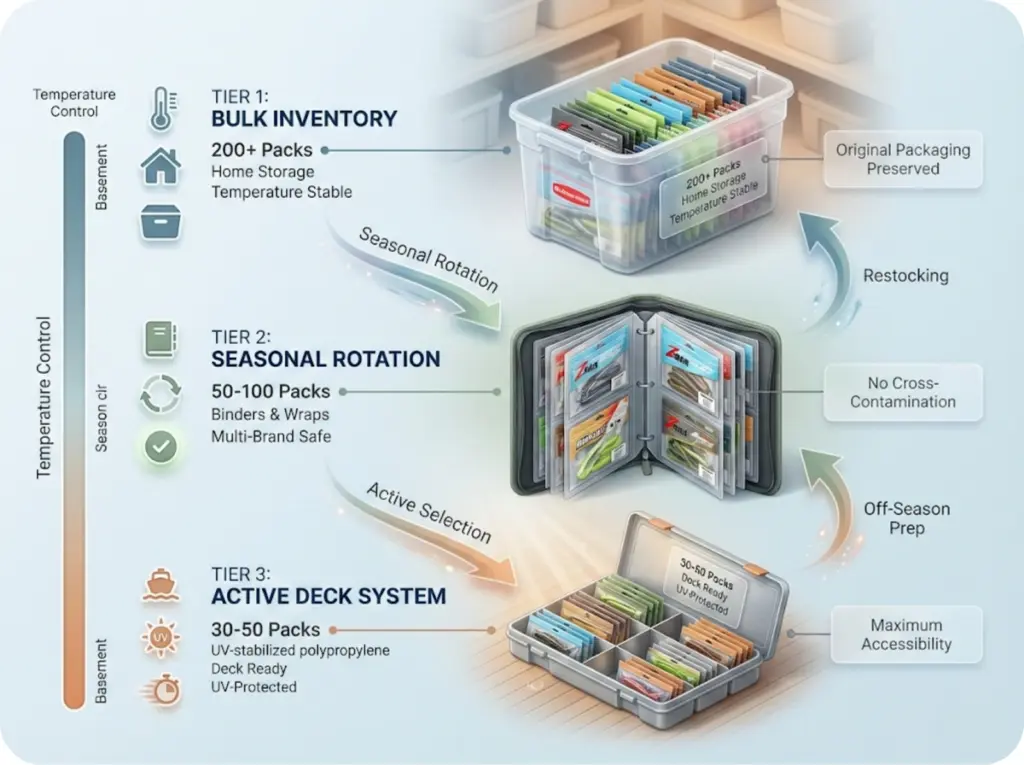
Tier 3: Active Deck System (Worm-Proof Trays)
Active lures for tournament or day-trip use go in utility trays for immediate access. This is the highest-risk environment—deck exposure to sun and heat exposure accelerates reactions dramatically. Use only certified worm-proof UV-stabilized polypropylene trays. Maintain 30–50 packs maximum on deck at any time, and keep trays covered or in hatches during idle periods.
Recovery Triage: Can This Lure Be Saved?
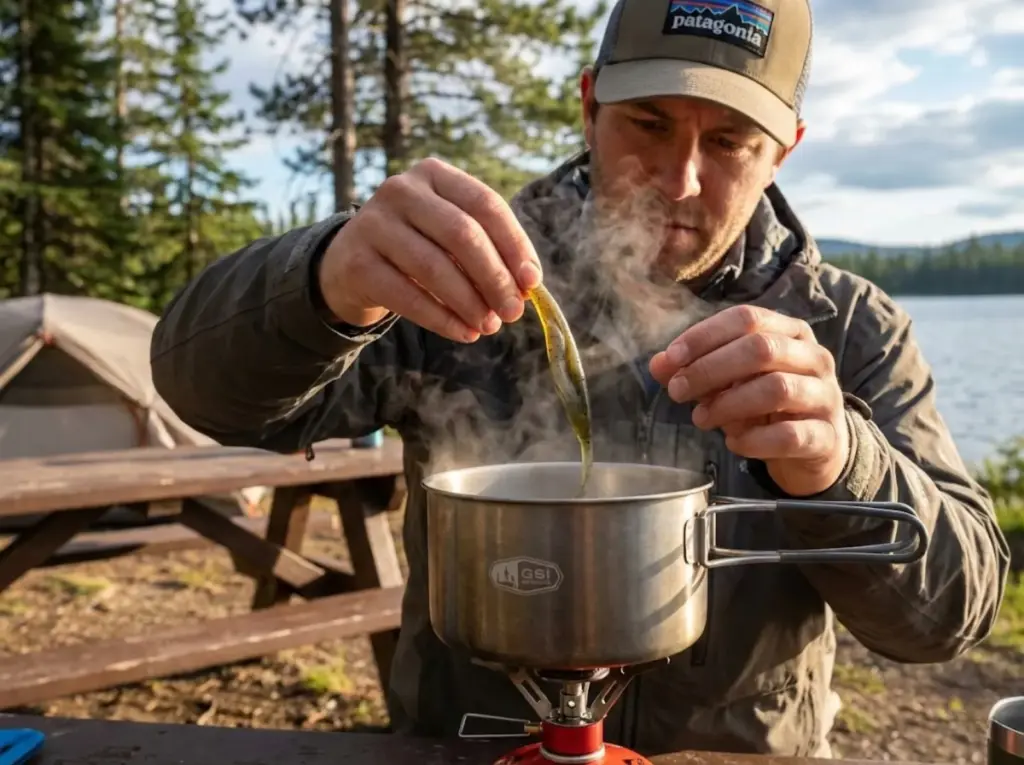
When prevention fails, you have limited options—but some baits can be salvaged with the right technique.
The Thermal Reset Methods
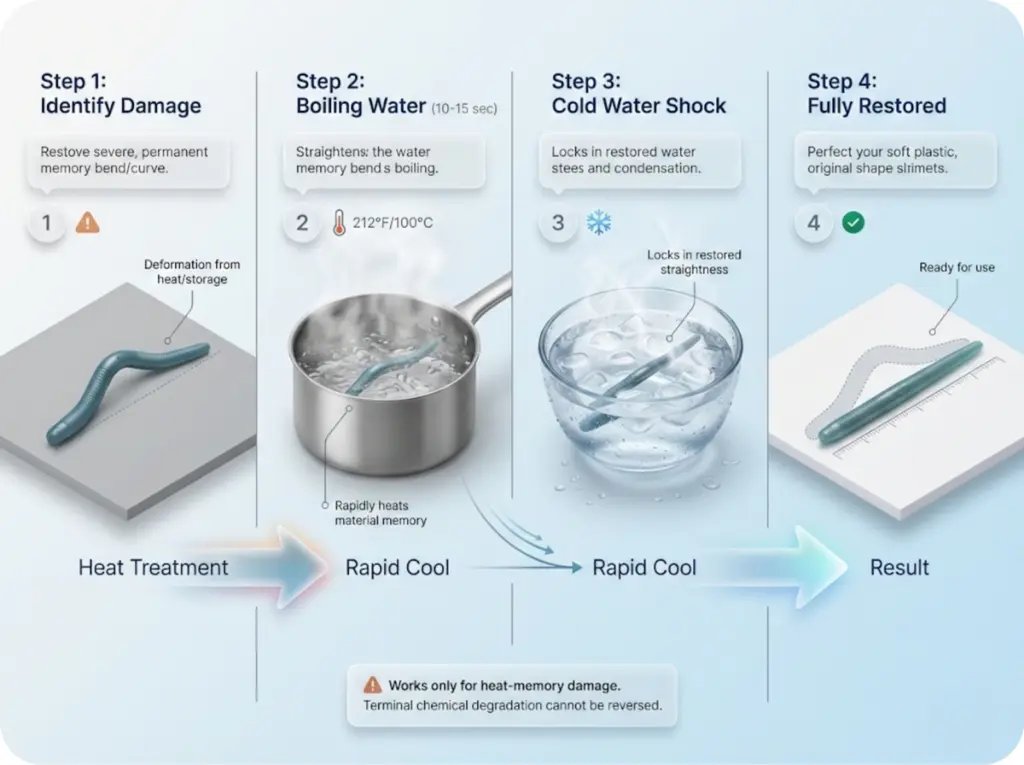
Bent or warped baits respond to heat treatment. The boiling water method works for most plastisol lures: dip the affected area into boiling water for 10–15 seconds. High heat relaxes polymer chains, allowing the bait to return to its original mold shape. Immediately plunge into cold water to “set” the position, then lay flat to cool completely before repackaging.
The hair dryer method offers more control for intricate baits—apply targeted heat for roughly two minutes while watching the material’s response. Stop when you see the bend relaxing, before the plastic over-softens.
Identifying Terminal Damage
Some damage is permanent. Sticky residue that remains after cooling signals terminal failure. Secreting oils that won’t re-absorb mean the polymer structure has broken down. Permanent “memory bending” that doesn’t respond to boiling indicates the material has chemically degraded beyond repair.
Chemically fused lures—where two baits have actually bonded through plasticizer migration—cannot be restored to their original state. Your options: discard them, or salvage for home pour projects where you can chop fused plastics and remelt them into custom shapes.
Conclusion
Three things separate successful soft plastic stewardship from the $300 meltdown. First, know your materials—Plastisol, TPE, ElaZtech, and Gulp! are four different chemical systems with different storage rules. Second, separate religiously—original packaging, material isolation, and color stratification prevent 95% of disasters. Third, control your environment—50°F–90°F, no direct sunlight, worm-proof containers only.
The next time you open your tackle tray before a tournament, it should reveal organized rows of factory-fresh baits ready to land fish—not a liquefied chemistry experiment. Your wallet will thank you.
FAQ
Why do soft plastic lures melt together in the first place?
They don’t technically melt—they undergo plasticizer migration, where plasticizer molecules from one lure penetrate and dissolve another. This happens when incompatible polymers like ElaZtech and Plastisol touch, even at room temperature. Heat exposure accelerates the process but doesn’t cause it.
Can you store Z-Man baits with other soft plastics?
No. Z-Man’s ElaZtech material is approximately 80% oil and reacts aggressively with plastisol-based lures. ElaZtech must be stored separately—ideally in original packaging—and should never touch Berkley Gulp!, which industry experts describe as kryptonite to Superman for this material.
What temperature do soft plastics melt at?
Plastisol fuses during manufacturing at 320°F–350°F, but storage problems occur at much lower temps. Heat above 100°F accelerates plasticizer migration. Cold storage below 20°F causes ElaZtech oil to leach and the material to shrink permanently. The safe range is 50°F–90°F in climate-controlled environments.
How do you store soft plastics in a boat?
Use worm-proof polypropylene trays (not ABS plastic), keep trays covered or below deck to avoid direct sunlight, and limit your active deck selection to 30–50 packs. Boat deck environments regularly hit 120°F–140°F—the highest-risk zone for meltdowns.
Can you fix melted fishing lures?
Partially melted or bent lures can sometimes be restored using boiling water (10–15 second dip) or a hair dryer to relax polymer chains. However, lures with sticky residue, secreting oils, or permanent memory bends are terminally damaged and should be discarded or salvaged for home pour projects.
Risk Disclaimer: Fishing, boating, and all related outdoor activities involve inherent risks that
can lead to injury. The information provided on Master Fishing Mag is for educational and informational purposes
only. While we strive for accuracy, the information, techniques, and advice on gear and safety are not a substitute
for your own best judgment, local knowledge, and adherence to official regulations. Fishing regulations, including
seasons, size limits, and species restrictions, change frequently and vary by location. Always consult the latest
official regulations from your local fish and wildlife agency before heading out. Proper handling of hooks, knives,
and other sharp equipment is essential for safety. Furthermore, be aware of local fish consumption advisories. By
using this website, you agree that you are solely responsible for your own safety and for complying with all
applicable laws. Any reliance you place on our content is strictly at your own risk. Master Fishing Mag and its
authors will not be held liable for any injury, damage, or loss sustained in connection with the use of the
information herein.
Affiliate Disclosure: We are a participant in the Amazon Services LLC Associates Program, an
affiliate advertising program designed to provide a means for us to earn advertising fees by advertising and linking
to Amazon.com. As an Amazon Associate, we earn from qualifying purchases. We also participate in other affiliate
programs and may receive a commission on products purchased through our links, at no extra cost to you. Additional
terms are found in the terms of service.