
In this article
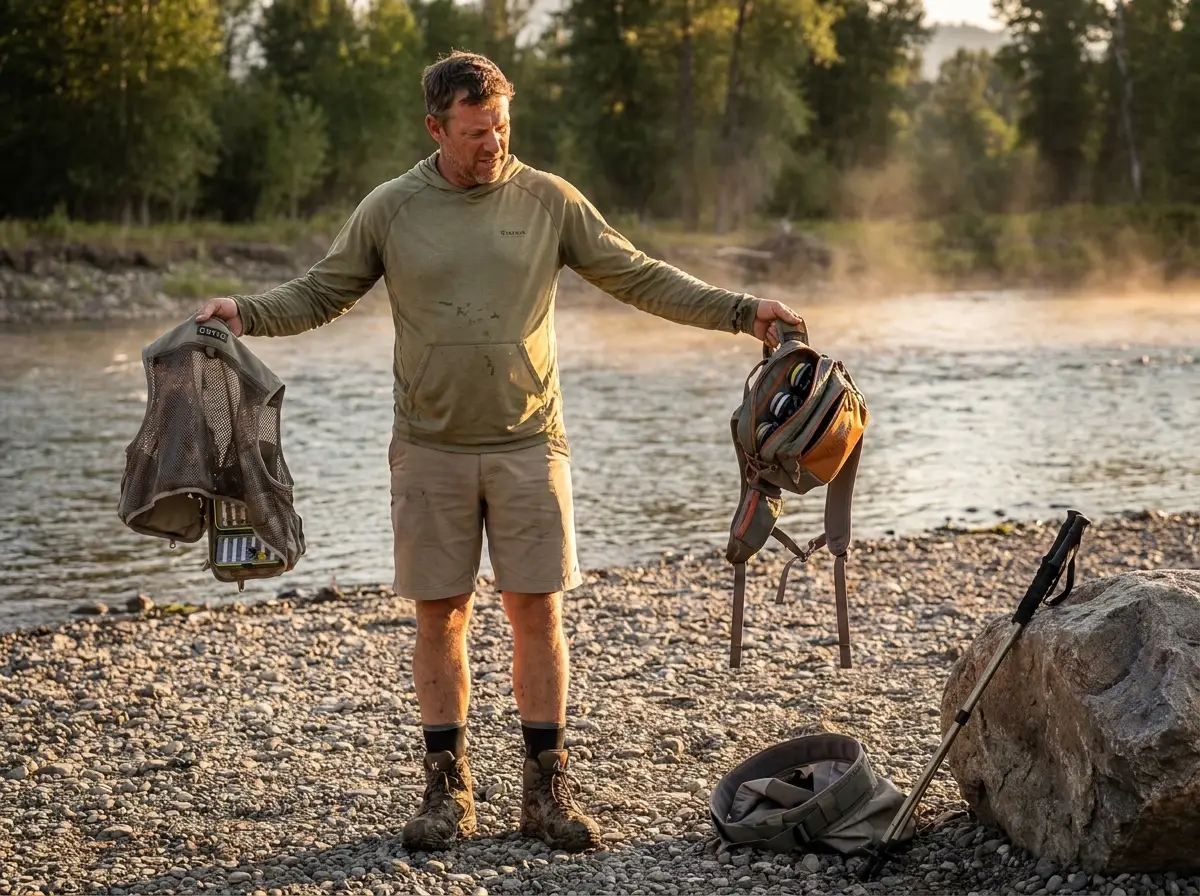
I grabbed my vest on autopilot for years. Every trip, same routine — load the pockets, clip the hemostats, stuff a rain jacket in the back, go fish. Then one July on the Deschutes, three hours into a 95-degree afternoon, I peeled that vest off mid-drift and shoved it under the boat seat. My shoulders were wrecked and my back was soaked. That was the day I started paying attention to what I was actually wearing on the water — and why.
Here’s what I’ve learned after running both systems across freestone rivers, tailwaters, spring creeks, and summer smallmouth floats. This comparison covers the real trade-offs between chest packs and fishing vests so you can pick the right one for how you actually fish.
Here’s how the two systems compare at a glance:
| Chest Pack vs. Fishing Vest: Feature Comparison | ||
|---|---|---|
| Feature | Chest Pack | Fishing Vest |
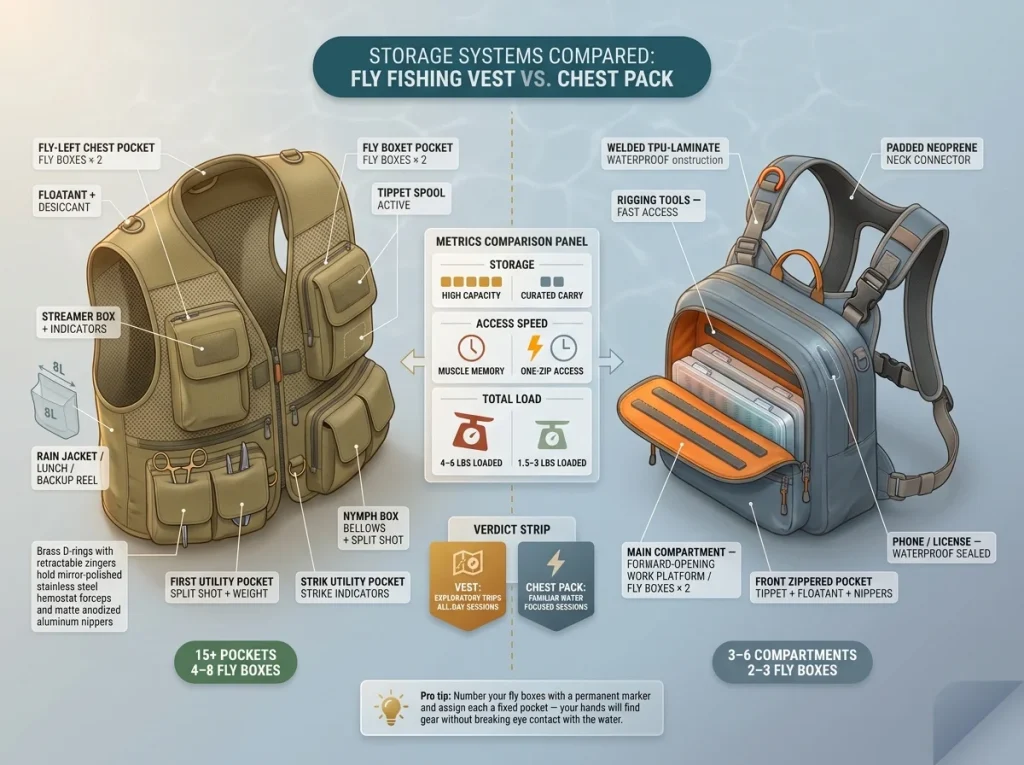
| Storage capacity | 3–6 compartments, 2–4 fly boxes | 15–20+ pockets, 4–8 fly boxes |
| Weight distribution | Sternum and neck straps | Across shoulders and back |
| Wading depth safety | Rides above waist, stays dry | Submerges in chest-deep water |
| Gear accessibility | Fast front-zip access | Muscle memory pocket system |
| Summer comfort | Cooler, less torso coverage | Traps heat, even mesh versions |
| Best for | Minimalist trips, familiar water | Exploratory trips, all-day sessions |
Storage and Pocket Organization Head to Head
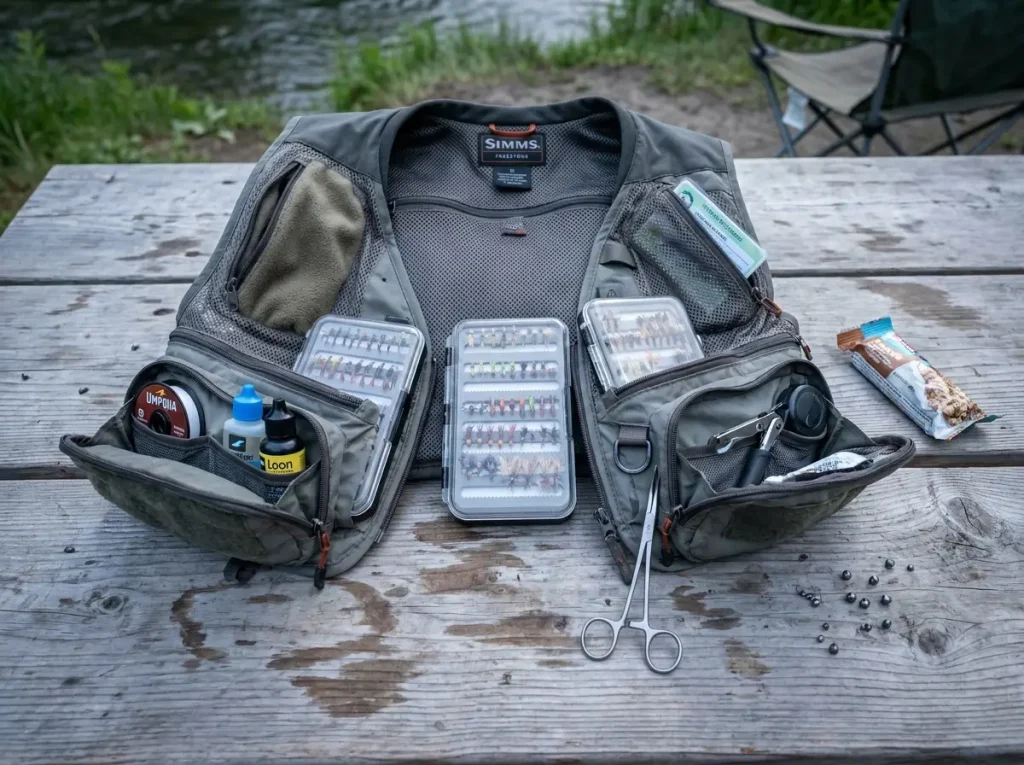
The Vest Advantage: Dedicated Pockets for Everything
A well-designed fishing vest gives you a pocket for every piece of gear you carry. After a season of use, your hands find things without looking — hemostats top left, tippet inside right, floatant lower front. That pocket organization becomes muscle memory, and it’s worth more than most anglers realize.
The Simms Freestone Vest runs 15+ pockets with a mix of zippered, Velcro, and open-top designs. The Orvis Ultralight Vest keeps it slimmer but still fits four standard fly boxes across the front panels. Both include rear cargo pockets big enough for a compressed rain jacket or a sandwich wrapped in foil.
Pro tip: Number your fly boxes with a permanent marker and assign each one a specific pocket. After a few trips, you’ll swap flies without breaking eye contact with the water.
The Chest Pack Trade-Off: Less Space, Faster Access
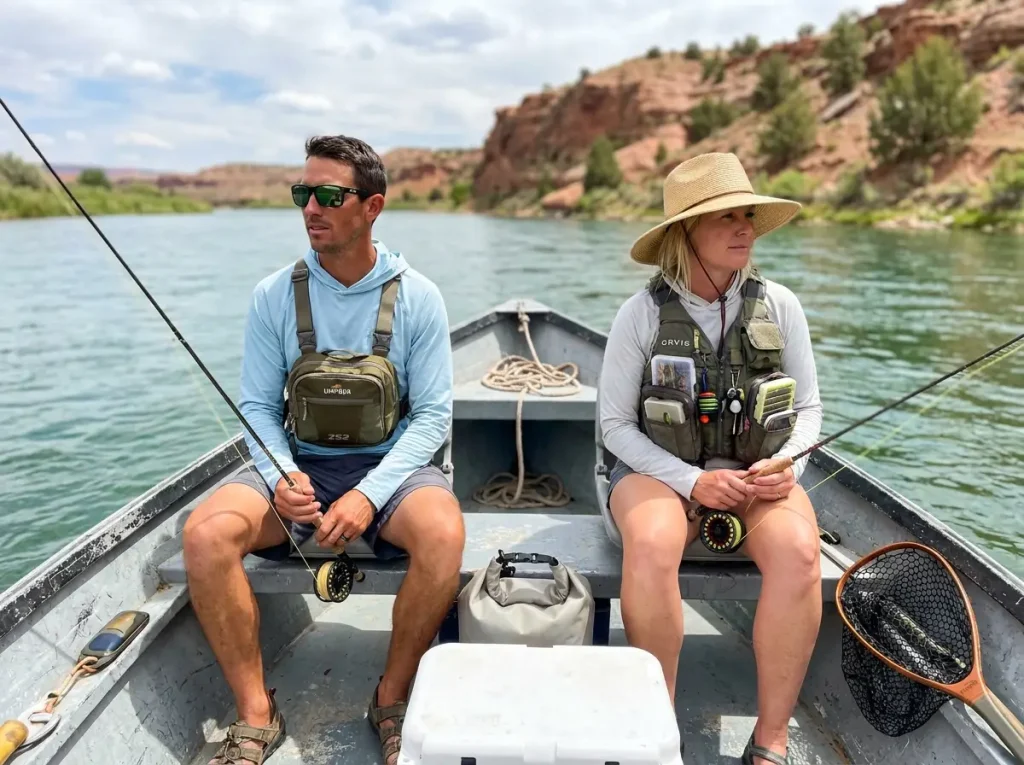
A chest pack like the Fishpond Thunderhead gives you three to six compartments — period. That sounds limiting, but it forces a discipline that vest anglers rarely develop. You carry only what you need, and you reach it in one zip.
The main compartment on most quality chest packs opens forward into a flat work surface. That flap becomes a fly-tying bench mid-stream — lay out your boxes, swap patterns, retie leaders without fumbling. Vests can’t do that.
Capacity vs. Curation
Here’s the real question: do you need 20 pockets, or do you need the right four? If you fish familiar water and know your patterns, a chest pack holds everything that matters. If you’re exploring a new river and want options — terrestrials, nymphs, streamers, plus backup tippet in three sizes — the vest earns its bulk.
Comfort and Weight Distribution Over a Full Day
Where the Weight Sits Matters
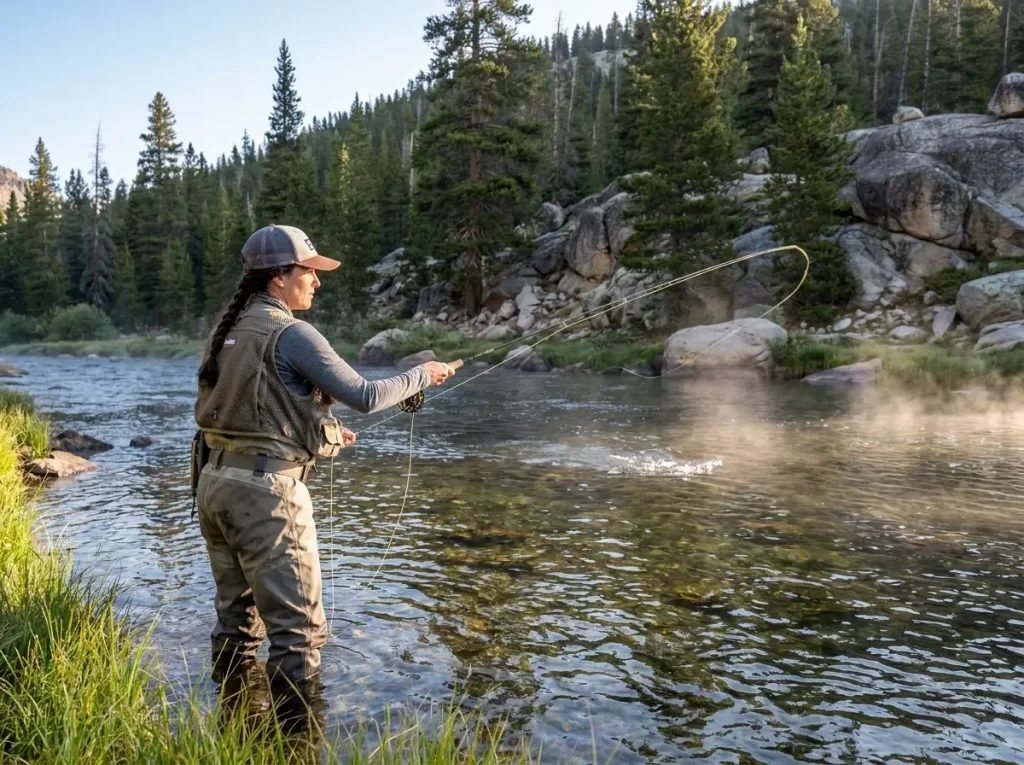
A loaded fishing vest distributes weight across your shoulders and upper back like a wearable shelf. That works fine for the first three hours. By hour six, the downward pull on your trapezius muscles starts talking. By hour eight on a guide’s schedule, your neck and shoulders are filing complaints.
A chest pack concentrates weight on the sternum strap and a single neck or shoulder connection. The total load is lighter — most chest packs top out around 2 to 3 pounds loaded versus 4 to 6 for a full vest — but the pressure point is smaller. Some anglers get sternum soreness if the pack isn’t fitted right.
The Casting Interference Factor
Vest anglers rarely notice casting interference because the gear rides against the torso. Chest pack users sometimes catch the pack on a forward stroke, especially with streamers or heavy nymph rigs. The fix is simple — adjust your wader suspender system to position the pack higher, and cinch the sternum strap snug so nothing bounces.
Long-Haul Comfort: Who Wins?
Neither system is comfortable when overloaded. The vest wins for even weight distribution over an 8-hour day if you keep it under 4 pounds. The chest pack wins for total load reduction — carrying less weight means less fatigue, period. A guide I know switched to a chest pack his first summer specifically because the vest was leaving him sore after long days on the oars.
If you’ve dealt with shoulder or forearm pain after long fishing days, the problem might go deeper than your carry system — tackle ergonomics play a bigger role than most anglers think.
Pro tip: Weigh your loaded vest and your loaded chest pack on a kitchen scale. Most anglers are surprised — the vest usually carries twice the weight, and half of it is gear you didn’t touch last trip.
Wading Depth and Water Protection
The Chest Pack’s Biggest Structural Advantage
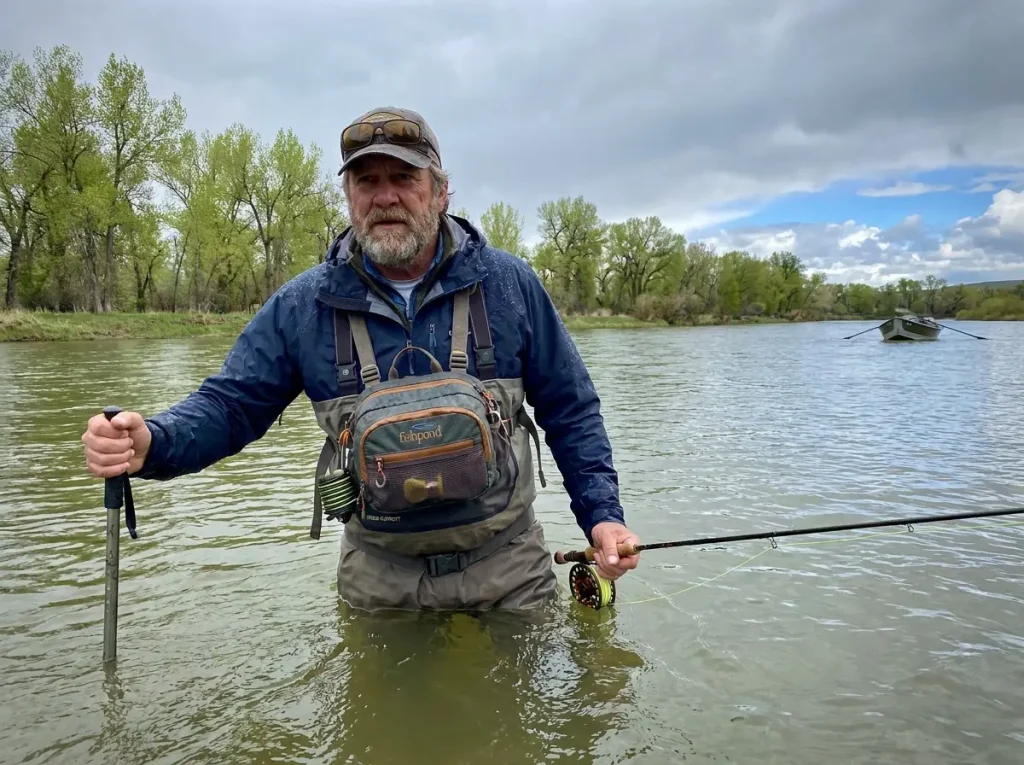
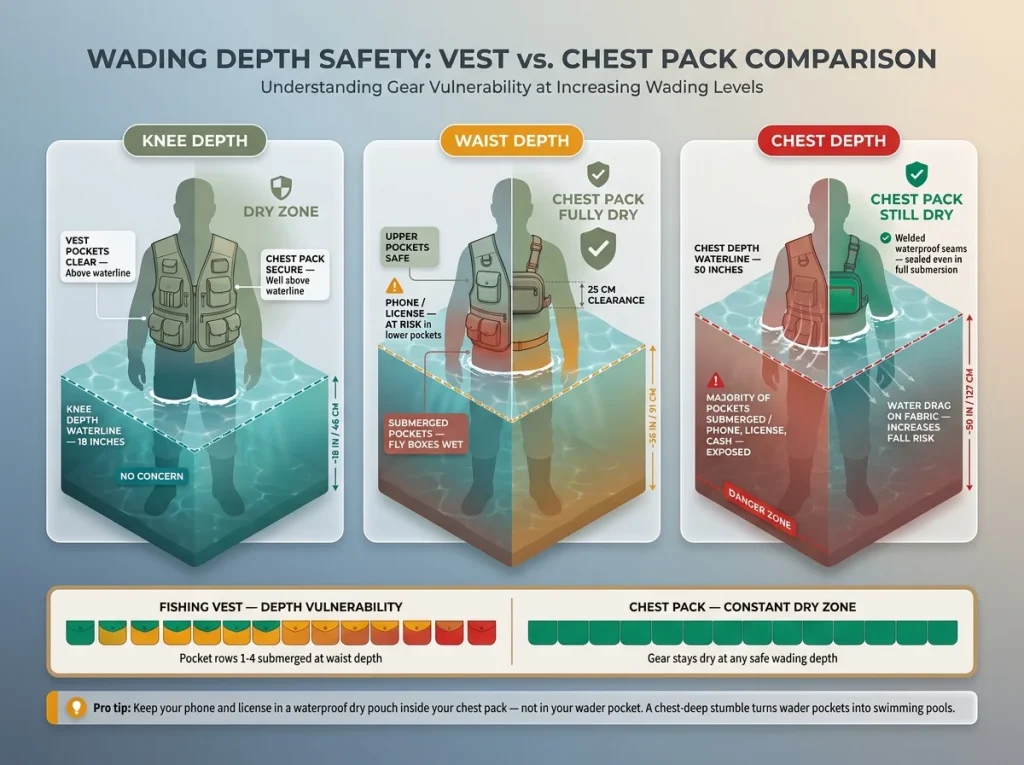
This is where the chest pack pulls away from the vest, and it’s not close. A chest pack rides at collarbone level. When you’re waist-deep in a tailwater run, your gear stays bone dry. When you hit an unexpected hole and suddenly you’re chest-deep, a vest submerges your bottom row of pockets. Fly boxes survive water just fine — but your phone, your license, and that emergency cash don’t.
The Fishpond Cross-Current Chest Pack uses a welded waterproof main compartment that stays sealed even in a stumble. Most vests rely on mesh and open-top pockets that offer zero water protection.
Wading Safety Considerations
Any gear you wear in the water adds drag if you take a spill. A waterlogged vest is heavy and restricts arm movement during a self-rescue. A chest pack is compact enough that it doesn’t become an anchor — but it does block your downward vision to your feet, which matters when navigating slippery river bottoms.
Always wear a wading belt regardless of which system you choose. The U.S. Fish & Wildlife Service recommends wearing a belt with any chest-level wading gear to prevent water from flooding your waders in a fall. That $10 strap is the single most important piece of safety equipment you own on the water.
The Fording Reality
If your fishing involves regular crossings above the waist, the vest is a liability. Period. Wet pockets mean wet gear, and drying out a fully loaded vest at the truck takes longer than the fishing that got it wet. Chest pack stays above the splash zone and keeps fishing.
Pro tip: If you wade deep regularly, put your phone and keys in a waterproof dry pouch inside your chest pack — not in your wader pocket. A chest-deep stumble turns wader pockets into swimming pools.
When a Chest Pack Wins and When a Vest Wins
Scenario 1: Small Stream Wading
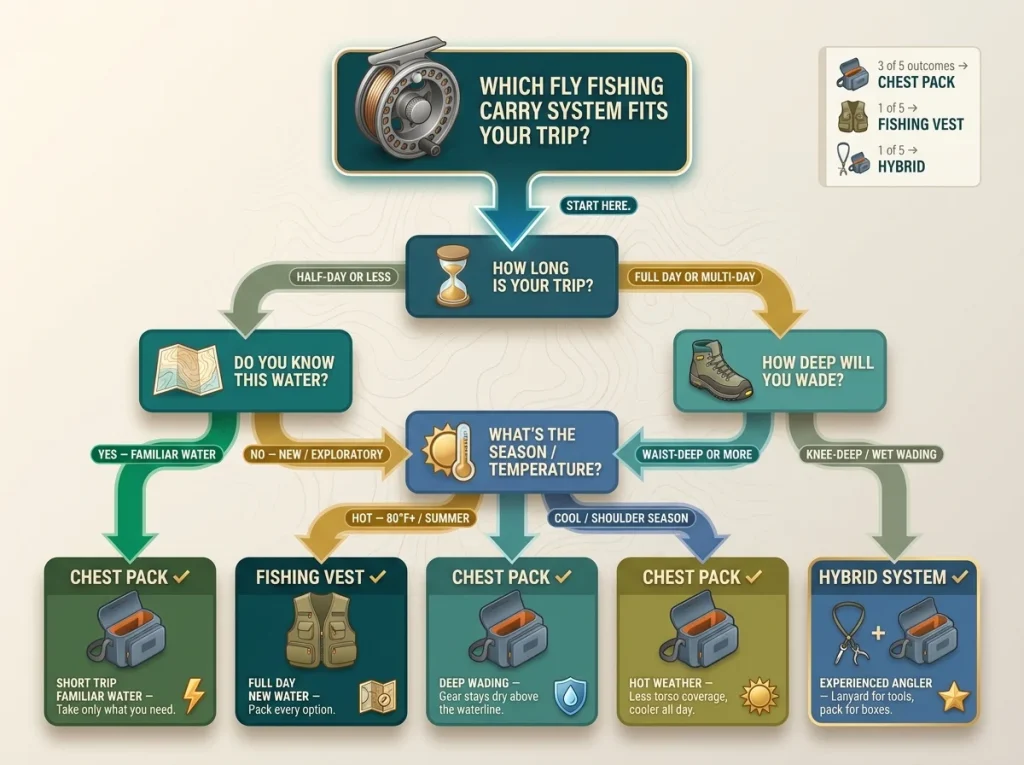
Tight water with overhanging brush, short casts, and a lot of walking between pools. The chest pack wins here. Low profile, light weight, and you’re not snagging vest pockets on every branch. Carry one box of dries, one of nymphs, tippet, and floatant — that’s the whole inventory for a creek session.
Scenario 2: All-Day Float Trip
You’re on a drift boat for 8 hours with a guide who’s putting you on different water all day. Vest wins. You want options — streamer box, nymph box, dry box, plus backup tippet, leaders, split shot, and indicators. The vest’s distributed storage means you can access different fly boxes from different pockets without digging through one central compartment.
Scenario 3: Summer Evening Hatch
You drove to the river after work with 90 minutes of light left. You know the water, you know what’s hatching. Chest pack. Grab the box that matches the hatch, clip your tippet and nippers, go. The vest stays in the truck because you don’t need 15 pockets for a focused evening session.
Scenario 4: Exploring New Water
First time on an unfamiliar river. You don’t know the depth, the bottom structure, or what the fish are eating. Vest. Pack every option. Forum anglers consistently say the same thing — vest for new water, chest pack for water you have dialed in.
The Heat Factor: Summer Ventilation Compared
Why Vests Turn Into Ovens
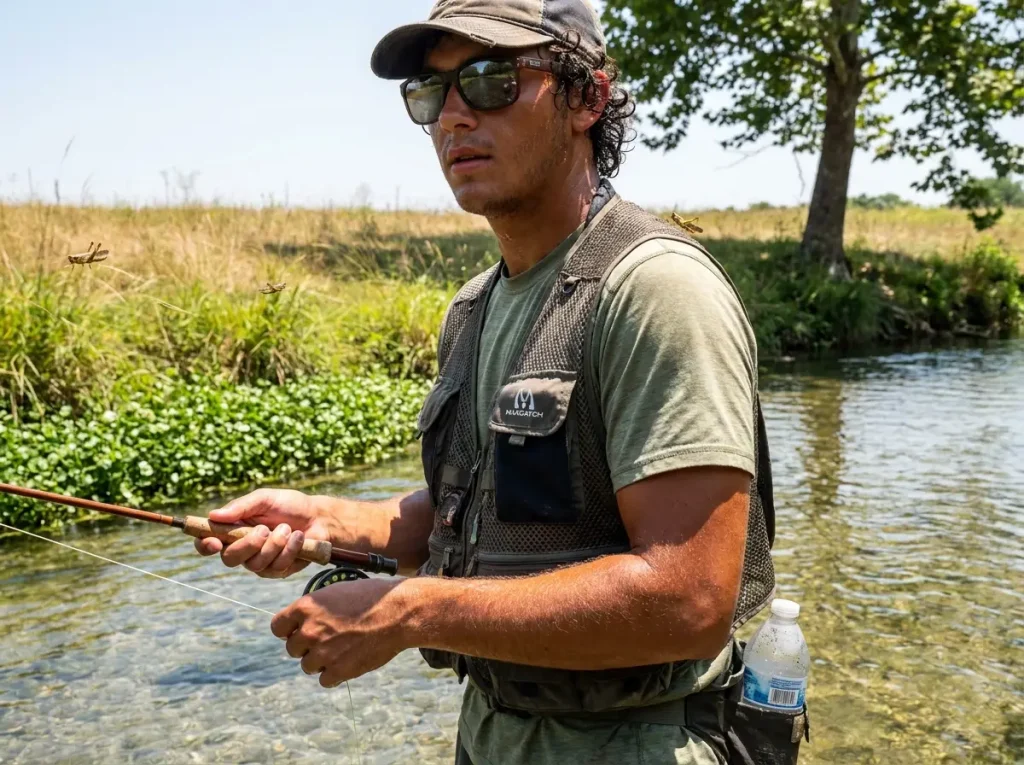
Even mesh vests trap heat against your torso. The fabric sits directly on your shirt across the shoulders, chest, and back — and in summer, that contact zone becomes a sweat factory. At 85°F and above, a fully loaded vest feels like wearing a weighted blanket while hiking. Your casting arm mobility decreases as sweat makes the vest stick to your skin.
The Chest Pack Thermal Advantage
A chest pack covers roughly 30% of the torso surface area that a vest does. Your back is completely free. Your sides are open. Air circulates. On summer days when you’re wet wading in shorts and wading boots, a chest pack is barely noticeable.
The temperature threshold where this matters most is around 80°F. Below that, either system is fine. Above that, the vest becomes progressively less tolerable — and by 90°F, most vest anglers have either stripped it off or wished they had.
What to Do If You’re a Vest Loyalist in Summer
Switch to a dedicated mesh vest with maximum ventilation panels. The Simms Freestone and Allen mesh models keep the pocket layout you’re used to while cutting fabric coverage by 40% or more. Pair it with a moisture-wicking sun hoodie underneath instead of cotton, and the combination breathes well enough for most summer mornings. But if you’re fishing the afternoon heat window — chest pack, no contest.
Hybrid Systems and the Lanyard Alternative
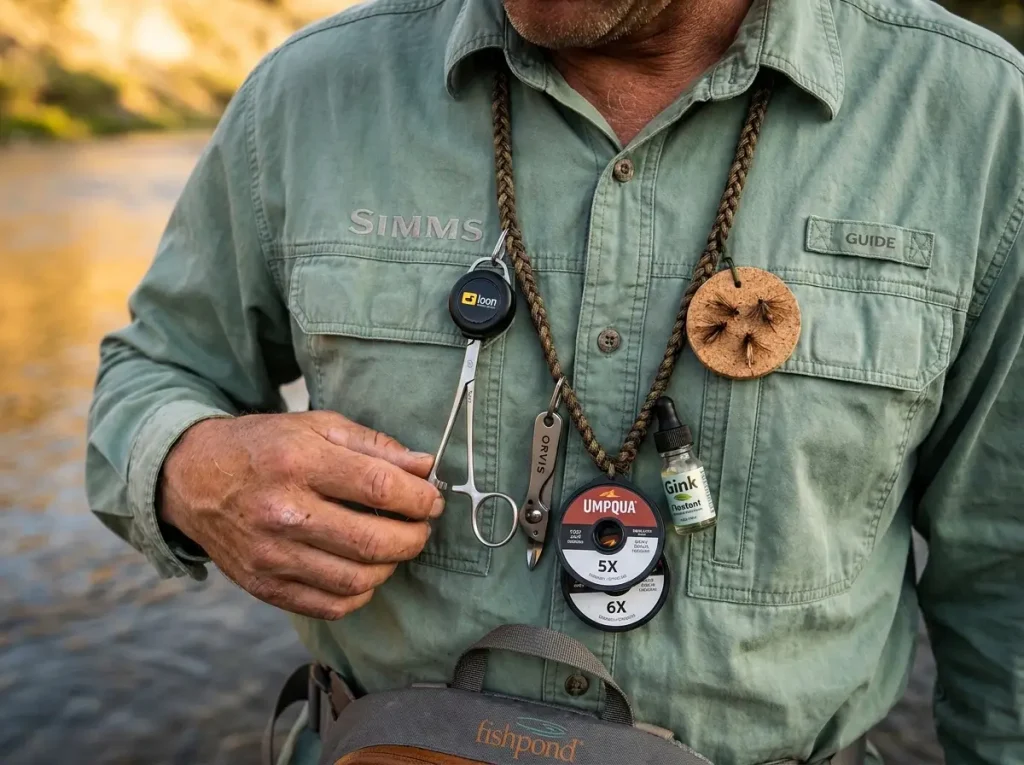
The Lanyard: The Minimalist’s Edge
A fly fishing lanyard holds your nippers, hemostats, tippet spools, and floatant on retractable zingers around your neck. Total weight: ounces. Total access speed: instant. No pockets to dig through, no zippers to fumble with cold hands.
The lanyard isn’t a replacement for a vest or chest pack — it’s a complement. Run a lanyard for your most-used tools and a chest pack underneath for fly boxes and backup supplies. That hybrid system gives you the speed of a lanyard with the storage of a pack, and it’s what a surprising number of experienced guides actually run on the water.
Building a Practical Hybrid Setup
Start with the lanyard holding only tools you reach for every 15 minutes: nippers, hemostats, floatant, and one tippet spool. Everything else goes in the chest pack. The rule is simple — if you use it between fish, it goes on the lanyard. If you use it between spots, it goes in the pack.
Some anglers pair a chest pack with a hip pack or sling for all-day sessions where they need more capacity than the chest pack alone but don’t want the full vest commitment. The hip pack carries extra fly boxes and a water bottle; the chest pack handles the active-fishing essentials.
When Hybrid Gets Ridiculous
There’s a point where stacking systems becomes worse than just wearing a vest. If you’ve got a lanyard, a chest pack, and a hip pack all running simultaneously, you’ve built a vest with extra steps — and more failure points. The hybrid approach works best when you pick two systems maximum and assign clear roles to each.
Pro tip: The fastest rig change on the water is nippers-to-tippet-to-fly — keep all three on the lanyard within 12 inches of each other, and you’ll retie in half the time it takes to dig through vest pockets.
Conclusion
The chest pack versus fishing vest question isn’t really about which one is better — it’s about which one matches the day you’re about to have on the water. Chest packs win on summer heat, wading depth, and quick-access minimalism. Vests win on total capacity, organized storage, and exploratory fishing where you need options.
Most experienced anglers end up owning both and reaching for different ones depending on the trip. That’s not indecision — that’s the same logic as owning a 5-weight and an 8-weight. Different tools for different water.
Start with whichever one matches the fishing you do 70% of the time, and add the other when you feel the limitation. Your shoulders, your gear, and your time on the water will tell you exactly when that day comes.
Q1 Is a chest pack or fishing vest better for fly fishing?
Neither is universally better — chest packs suit minimalist anglers on familiar water, while vests fit exploratory trips needing more fly options. Most experienced fly fishers own both and choose based on the day’s conditions and water.
Q2 What is the advantage of a fishing chest pack?
A chest pack rides above the waist, keeping gear dry during deep wading. It covers less torso area than a vest, runs cooler in summer heat, and forces you to carry only what you actually need for that session.
Q3 Can you wear a chest pack with a backpack?
Yes, most chest packs mount on sternum and shoulder straps that work over or alongside a small daypack. The Fishpond and Simms models include attachment points designed to integrate with backpack shoulder straps for backcountry access trips.
Q4 What should I look for in a fishing vest?
Prioritize pocket count that matches your fly box collection, mesh panels for ventilation, a rear cargo pocket for rain gear, and D-rings for hemostats and zingers. Fit matters most — carry only gear that earns its pocket and weigh the vest loaded before buying.
Q5 Are fishing vests still popular?
Vests have regained popularity after years of losing ground to packs and slings. Modern mesh designs from Simms and Orvis cut weight by 40% compared to older models while keeping the pocket layout anglers relied on for decades. The vest never disappeared — it just got lighter.
Risk Disclaimer: Fishing, boating, and all related outdoor activities involve inherent risks that
can lead to injury. The information provided on Master Fishing Mag is for educational and informational purposes
only. While we strive for accuracy, the information, techniques, and advice on gear and safety are not a substitute
for your own best judgment, local knowledge, and adherence to official regulations. Fishing regulations, including
seasons, size limits, and species restrictions, change frequently and vary by location. Always consult the latest
official regulations from your local fish and wildlife agency before heading out. Proper handling of hooks, knives,
and other sharp equipment is essential for safety. Furthermore, be aware of local fish consumption advisories. By
using this website, you agree that you are solely responsible for your own safety and for complying with all
applicable laws. Any reliance you place on our content is strictly at your own risk. Master Fishing Mag and its
authors will not be held liable for any injury, damage, or loss sustained in connection with the use of the
information herein.
Affiliate Disclosure: We are a participant in the Amazon Services LLC Associates Program, an
affiliate advertising program designed to provide a means for us to earn advertising fees by advertising and linking
to Amazon.com. As an Amazon Associate, we earn from qualifying purchases. We also participate in other affiliate
programs and may receive a commission on products purchased through our links, at no extra cost to you. Additional
terms are found in the terms of service.